

The Academy of Macroeconomic Research (AMR) is a research institution under the direct supervision of China’s National Development and Reform Commission (NDRC), the ministry in charge of economic development and planning.
As a “national high-end thinktank”, the AMR’s Energy Research Institute is a well-respected body conducting energy transition research and providing vital suggestions on the energy transition to Beijing.
At this year’s COP29 in Baku, it launched the executive summary of 2024 China Energy Transformation Outlook (CETO), a key report describing China’s pathways to net-zero.
The launch was attended by a number of high-level officials, including climate envoy Liu Zhenmin and the head of the International Energy Agency, Dr Fatih Birol.
Carbon Brief’s Wanyuan Song was granted a rare – and lengthy – joint interview with its director general, Prof Lyu Wenbin, and director, Prof Bai Quan, who is also the lead author of the report, to hear their views about China’s energy transition.
- On China’s commitment to climate action: “Climate change doesn’t just affect China, it affects every country in the world…Climate change is not fake. It is happening and we are all on the same boat.”
- On international collaboration: “The joint work [on energy transition pathways] was meant to allow for a deeper grasp of the problems, making the research findings more scientific and [suggestions] more reasonable.”
- On an early emissions peak: “[W]e would love to try our best…but we can’t rule out all possibilities to peak even earlier than planned.”
- On updates in this year’s outlook: [This year w]e have also placed more emphasis on international cooperation.”
- On the need for global cooperation: “To achieve the best scenario, China shouldn’t be the only country that puts efforts into energy transition.”
- On stimulus and carbon reduction: “China’s ‘two new’ (“两新”) policy – large-scale equipment renewals and trade-ins of consumer goods – is one of [the policies]. The first three aspects [of ‘two new’] directly promote carbon reduction.”
- On managing electricity grids and markets: “China has never faced this kind of challenge before. The demand for electricity is huge, and soaring.”
- On China’s coal use: “With renewable energy becoming more powerful and energy storage becoming cheaper and more flexible, coal plants can play the role of ‘firefighters’ in the system – used in an electricity crisis whenever it is needed.”
- On the role of “green hydrogen”: “[I]t is very expensive at the moment…Commercial and technology innovation are needed to reduce costs.”
- On calls for greater ambition from China: “It can’t be the case that developing countries need to cut more emissions than developed countries – that would break the UN’s principle of ‘common but differentiated responsibilities’.”
CB: Why is China so determined to achieve its energy transition and combat climate change?
Bai Quan: Climate change doesn’t just affect China, it affects every country in the world. No one is excluded from it. China is one of the victims of extreme weather. The horrifying typhoon in Shanghai in recent months has blown windows off of skyscrapers – Shanghai didn’t have that many typhoons in the past. Autumn in Qinghai province [in west China] used to be cool and dry, but now it has become rainy. The weather forecast [once] said there was light rain in Beijing, but the heavy rain in the neighbouring province Hebei drowned people. Summer is getting hotter and winter is getting colder – this is climate change, and no one can survive alone. If Shanghai was drowned, would London be spared, would New York be OK? Climate change is not fake. It is happening and we are all on the same boat.
Combating climate change is a must, it is one of our core needs, and the primary thing we need to do to secure life and production. Low-carbon issues have been part of China’s policy for a long time but it wasn’t as big of a focus until President Xi vouched for climate action with the “dual-carbon” goal. The [“dual-carbon” goal] promise to the world is serious and, after President Xi announced it in 2020, it has become a hot topic [in media and among ordinary people]. The energy transition, as a sustainable solution, helps the “dual-carbon” goal to be realised.
CB: Your institute is working with national and international partners to produce an annual “China energy transformation outlook”. Can you tell me how that collaboration came about and what the aims of the project are?
Lyu Wenbin: The Chinese government has proposed the “dual-carbon” goal, and the energy transition is an important part of this process. Now that a goal has been clearly set, what we should do to deliver it is to choose the best pathway. Our research was conducted along with the Danish Energy Agency and Columbia University. The joint work was meant to allow for a deeper grasp of the problems, making the research findings more scientific and [suggestions] more reasonable.
CB: We covered your CETO 2023 report, in which you listed three stages of transformation. The first of these phases is the peaking phase, which lasts until 2030. With China rapidly expanding renewable energy this year and hitting its wind and solar capacity targets six years early, do you think China could peak even earlier than planned – “before 2030”?
BQ: There are many uncertainties and changes in the world economy, geopolitics and even military actions at the moment. Uncertainty also exists in climate change. China’s electricity consumption grew faster than expected and we would love to try our best to overcome all the difficulties to meet China’s carbon peaking goal before 2030, but we can’t rule out all possibilities to peak even earlier than planned.
CB: What differences are there in your outlook for China’s energy transition this year, compared to 2023?
BQ: The scenarios are different, although they are basically aligned. We have also placed more emphasis on international cooperation. The report itself has absorbed experiences from different places, such as Denmark’s experience in heating, for modelling, pathway design and other suggestions in the report. We would be very interested in discussing more new ideas and sharing our experience with everyone else.
CB: What would be needed for China to realise the most ambitious energy transition scenario featured in your report?
BQ: To achieve the best scenario, China shouldn’t be the only country that puts efforts into energy transition. China, as a developing country, at the government level and at the individual level, has already done a lot. The energy transition needs global cooperation. More people will realise the urgent need to combat climate change if we all join hands together. Solving some problems, such as commercialising hydrogen, also needs more joint research.
CB: You have previously said China’s energy transition relies on comprehensive policy support for green industry, “effective” investment in the green and low-carbon sector as well as promoting green consumption. Do you see signs of this in government plans for economic stimulus?
BQ: Yes, many! China’s “two new” (“两新”) policy – large-scale equipment renewals and trade-ins of consumer goods – is one of them. In the document issued by the State Council [China’s central government], there are four aspects: “implementing equipment updates, trade-in of consumer goods, recycling, and improving standards”.
The first three aspects directly promote carbon reduction. The first one is to service industrial sectors, the second one is to serve the general public, and the third one is for China’s “circular economy”. The last aspect indirectly serves energy saving and carbon reduction goals, by setting standards [for energy usage, emissions and recycling] to prevent people from re-purchasing outdated equipment with low energy efficiency.
In the past, it was difficult to recycle old production equipment, such as large motors. One obstacle is the challenge of acquiring a “first receipt” to be eligible for tax deductions. [Scrapped product sellers often cannot provide the purchase receipt – the “first receipt” – to the resource recycling companies for value-added tax deductions.] The new policy allows an ordinary invoice to be used for pre-tax deduction, solving the problem. This is a very important incentive to meet the 2027 goals [of the “two new” policy].
For the ordinary people, the “two new” policy also benefits their daily life. For example, they can receive subsidies for about 10-20% of a new purchase, with up to 2,000 yuan ($276) to trade-in a new fridge. [Trade-in subsidies for home appliances cover fridges, washing machines, televisions, air conditioners and computers.] They can get new energy saving electronics appliances at a very low price.
The “two new” policy documents clearly state the delineation of responsibilities of both the central and local governments, including funding they should provide. [The central government accounts for about 90% of funding and has issued a 300bn yuan ($41bn) bond to support this effort.] China holds regular press conferences stating progress on the “two new” policy, including on the renewal of outdated solar and wind equipment.
Another vital policy is the “guidelines to ramp up green transition of economic, social development” issued by the Central Committee of the Communist Party of China and the State Council. [See Carbon Brief’s China Briefing for more.] That is to say, it’s not just the [state-affiliated] State Council that promotes the “green transformation”, the Central Committee [the leading body of the Communist party] also really values it. There was a green transition policy before, but this new policy is a top-level design of “full green transition” [across every aspect of society]. It is a blueprint of China’s transition in industry, building [construction], transportation, energy and many other areas. Together with the “two new”, which is an implementation document for this top-level design, we now have both a direction and a manual for the energy transition.
CB: China is attempting to upgrade its electricity grids and markets to manage the variability of wind and solar power. What are the biggest challenges it faces in this area?
BQ: China has never faced this kind of challenge before. The demand for electricity is huge, and soaring. Reforms in the electricity pricing system and grid management are underway, and so are many other reforms. These reforms need to be economical, fair and feasible. Reforms, in general, have less impact on the rich than the poor. In the end, we can’t just ignore energy safety and cut electricity supply, nor ignore the poor being unable to afford it. This is a big challenge for the government to achieve in such a short time, especially if we are to peak carbon before 2030. Current price reform, in terms of whole reform effort, is happening very quickly, with the medium-to-long term contract reforms, as well as the spot market and the ancillary market reforms. However, it is a complicated matter, with each province facing different situations. Industrial usage and civilian usage are also different – we need to protect ordinary people’s needs.
CB: There has been significant international criticism of China’s decision to use coal-fired power plants as “flexibility providers” in its energy transition. Will coal continue to be necessary for China’s energy mix as it approaches carbon neutrality in 2060 and beyond, and how effective are China’s current efforts to develop low-carbon coal-fired power?
BQ: China’s principle is “construction new before destruct old” (先立后破), which is also translated as “build before breaking”. [See Carbon Brief’s articles from 2021 and 2022 for background.] The challenge China faces is different [from other countries], our electricity consumption is growing too fast. Energy security for us is most important, and cutting coal out completely does not match the basic principle of energy supply. What we can do is to increase the share of green electricity when improving the overall quantity and quality of electricity supply. Power grids also need to improve capacity for electricity generated from renewable sources, to counter their variable nature. Energy storage is an ideal solution for us, but it is too expensive at the moment.
The only pragmatic solution at the moment is asking coal plants to “tiao feng” (调峰, part-load operation, which means run below full-capacity). The old design of a coal-fired power plant was to operate for 5,500 hours annually, but they are at about 4,000 hours now. With renewable energy becoming more powerful and energy storage becoming cheaper and more flexible, coal plants can play the role of “firefighters” in the system – used in an electricity crisis whenever it is needed.
Overall, electricity is the core of future development. Reforms in electricity generation, power grids, electricity usage and electricity demand are all needed. Developing countries in particular face harder challenges. It is not only China – Vietnam and India also are exploring solutions to their power problems. Therefore, we emphasise global cooperation, which is vital for finding a solution for us all.
CB: Will “green hydrogen” play a significant role in China’s future energy mix and, if so, when do you think it will be deployed at scale?
BQ: Yes. Green hydrogen is a great alternative for fossil fuels in the chemical industry and the transportation sector. We were excited about it when it was first discovered, but it is very expensive at the moment. To deploy green hydrogen, commercial and technology innovation are needed, to reduce costs.
China’s carbon pricing has not reached the chemical industry yet, but it might change with changes in the market. The commercialisation of hydrogen is very important, a hydrogen fuel-cell vehicle needs to be affordable. We face the same problem that the EU faces and we would love to learn from them.
CB: Recent research has suggested that China should reduce emissions to at least 30% below 2023 levels by 2035, to align with the Paris Agreement goal of limiting warming to 1.5C. Some Chinese scientists have called this 30% figure “too ambitious”. Do you think a 30% reduction would be achievable?
BQ: I haven’t read the paper so can’t comment on it. I am not sure if there are suggestions for other countries in this research paper. [International expectations for China’s climate goals] need to be fair for China, as a developing country. [They] need to consider the shared responsibilities of the developed countries, including the US and EU. It can’t be the case that developing countries need to cut more emissions than developed countries – that would break the UN’s principle of “common but differentiated responsibilities”. China has not yet reached carbon peak, it still has some ways to go.


The post The Carbon Brief Interview: Prof Lyu Wenbin and Prof Bai Quan appeared first on Carbon Brief.
The Carbon Brief Interview: Prof Lyu Wenbin and Prof Bai Quan

Bhima Yudhistira Adhinegara is the Executive Director of the Center of Economic and Law Studies (CELIOS), an Indonesia-based economic think tank. Muhammad Zulfikar Rakhmat is the Director of the China-Indonesia desk at CELIOS.
Indonesia produces around 60% of the world’s nickel, a metal used to manufacture batteries for electric vehicles (EVs) – more than any other country in the world. But in 2026, the government sharply reduced how much of its nickel can be extracted from the ground.
Production quotas were reduced by around 40% this year compared to 2025. Weda Bay, the largest nickel mine on Earth, had its allowance cut by more than 70% and exhausted its full-year quota by the end of May, halting mining entirely; it cannot resume large-scale extraction until next year unless regulators grant an extension.
The policy has sparked a vivid debate in Indonesian policy circles: how can the country shift its strategy from a decade of mining vast quantities of cheap nickel to producing a high-value and low-carbon material that the rest of the world wants for EV batteries.
The cuts aren’t a silver bullet to clean up Indonesia’s nickel industry, whose smelters are powered by coal – the most polluting fossil fuels. But alongside stricter enforcement of environmental rules, it is one side of efforts to produce more sustainable nickel for a premium.
Restricting Indonesia’s nickel output
Production quotas were introduced to stop the collapse of nickel prices because of oversupply in the market. Prices had fallen more than 40% in 2023 alone and kept sliding as Indonesian supply kept growing, hitting a four-year low of around $13,900 a ton in late 2025.
Critics called the recent tightening of production quotas proof that Indonesia’s nickel strategy has failed, arguing that the industry shouldn’t need to throttle its own output to survive. But when assessed against what the policy was supposed to do – push up nickel prices – it has worked. Prices jumped to $20,000 a ton in May, the highest since 2024.
-
Big banks’ lending to coal backers undermines Indonesia’s green plans
Foreign banks involved in Indonesia’s $20-billion Just Energy Transition Partnership have also funded companies working on coal power expansion, a TBIJ and Climate Home News investigation reveals -
Southeast Asia’s fragile grids threaten billions in clean energy investment
Renewables developers need reliable electricity infrastructure and stable policies to help the region meet climate goals and surging demand for power

Chinese industry groups representing companies that have invested billions to mine and refine the country’s nickel were furious, warning Indonesia’s president Prabowo Subianto that the cuts put $50 billion worth of investment at risk. But much of that Chinese capital is sunk into smelters and processing plants built specifically to run on Indonesian ore, and cannot simply be moved elsewhere. That gives Jakarta more room to hold its ground than the warning suggests.
Stronger environmental enforcement
Since the start of the year, Indonesia’s forestry task force has seized more than four million hectares of land from mines and plantations operating illegally in protected forests, collecting over two trillion rupiah ($113 million) in fines.
This included 148 hectares seized from Weda Bay for lacking a forestry permit. The share of nickel produced from illegal small-scale mining also fell from about a quarter in 2022 to roughly 10% by 2024.
The crackdown responds to serious environmental damages in the nickel industry. On Obi Island, a waste pond collapsed after heavy rain in June 2025, flooding three villages and killing a resident. Internal company tests found chromium-6 – a carcinogen – in the water, in quantities far above the legal limit. The footprint of another mine near Raja Ampat, which is home to some of the world’s richest coral reefs, grew 60-fold in just eight years.

The market is responding to early cleanup efforts. Low-carbon nickel now sells for a real premium, roughly $18,800 to $19,300 a ton compared with $17,900 to $18,300 otherwise, as carmakers seek to source cleaner materials to comply with the European Union’s new emissions rules for imports.
In turn, this is incentivising the industry to do more to green its operations. Vale Indonesia’s smelter in South Sulawesi now runs almost entirely on hydropower, for example.
None of this addresses coal use, however. Major Indonesian nickel producers still emitted an estimated 15 million metric tons of greenhouse gases in 2023. Indonesia may be cracking down on illegal mining and rewarding cleaner producers but it is still running its mines on the dirtiest fuel available.
Unequal benefits
For Indonesia to truly benefit from producing cleaner and high-value nickel, it needs to reap the economic benefits too. Although the industry has boosted the country’s economic growth, the reality on the ground tells a different story.
Konawe in Southeast Sulawesi is home to a major smelting complex. Growth in the district jumped from 6% to 22% between 2015 and 2023, driven almost entirely by the nickel industry, according to a study by the Lowy Institute study. At the same time, poverty levels increased slightly and unemployment remained unchanged.
-
Nickel mining for electric vehicles is destroying lives in Indonesia
Indonesia’s abundant nickel reserves are crucial for a low carbon world. But extracting them is ruining local peoples’ lives and causing rampant deforestation -
Indonesia turns traditional Indigenous land into nickel industrial zone
Indonesia supplies the EV industry with critical battery materials but the sector’s rapid expansion is infringing the rights of Indigenous peoples -
Indonesia’s failing Just Energy Transition Partnership is a cautionary tale
The government has abandoned its plan to shut down a major coal plant, which was a key part of the deal, raising doubts about the donor-backed approach


In Halmahera, another epicentre of the nickel industry, spending by the poorest fifth grew just 5% between 2019 and 2022, compared with 28% for the wealthiest fifth, according to a separate study.
Part of the reason for this inequality is the system for transferring mining royalties to district authorities where the mines are located. In theory, they are entitled to the largest share. But in practice, payments are delayed, companies routinely dispute what they owe and royalties are pooled and distributed across a larger area.
The Natural Resource Governance Institute has found that decentralisation handed local governments power to approve new mines faster than they could build their capacity to manage them. Higher output raises national income on paper, but local governments remain constrained by fiscal rules and infrastructure costs that scale with mining.
None of this makes the 2026 quota cuts a mistake. Indonesia has every right to defend its pricing power over a resource it controls. But limiting extraction isn’t going to fix underlying issues around environmental enforcement and revenue-sharing. That requires rules that are consistently enforced, royalties that reach communities living by the mines, and a plan to wean smelters off coal.
The post Indonesia’s nickel production cuts are not enough to create a sustainable industry appeared first on Climate Home News.
Indonesia’s nickel production cuts are not enough to create a sustainable industry
Climate Change
Risk of “catastrophic” oil spill reaching Kimberley coast found in Woodside’s Scott Reef gas drilling plans
SYDNEY, Monday 24 August 2026 – New analysis of Woodside modelling released by Greenpeace Australia Pacific and Environs Kimberley has revealed the oil and gas corporation’s plans to drill at Scott Reef could cause an oil spill up to 30 times bigger than the 2009 Montara disaster, impacting the Kimberley coastline and reaching as far as Indonesia.
The new analysis details the “catastrophic” oil spill risk put to environmental regulators for approval by Woodside in its Browse to North West Shelf Project (Browse) plans, the worst-case scenario being a blowout directly below Scott Reef, polluting whale migratory pathways and covering isolated turtle nesting ground with oil condensate.
An FOI application (F348) revealed the federal environment department (DCCEEW) asked offshore oil and gas regulator NOPSEMA to look into the oil spill risk in 2025. NOPSEMA’s response to the application refused access to its report, and one document shows DCCEEW sought further advice this year.
Greenpeace and Environs Kimberley are calling on the Federal Government to publicly release the NOPSEMA report given the risk of an uncontrolled release of oil condensate from directly below Scott Reef.
Hannah Schuch, Senior Campaigner at Greenpeace Australia Pacific, said: “Woodside is aware that drilling at Scott Reef risks a massive oil spill that would have severe, far-reaching consequences. It appears environmental regulators are aware too.
“The state and federal governments need to take this risk from Woodside’s drilling plans seriously, as they could end up allowing the worst oil spill in Australian history.
“The pygmy blue whales that migrate up and down the WA coast with their newborns each year could be swimming and feeding in toxic, oil-slicked water. Woodside’s proposal to drill at Scott Reef is an environmental disaster waiting to happen, and the WA and federal governments have one surefire way to prevent catastrophe — reject Browse.”
Martin Prichard, Executive Director at Environs Kimberley, said: “A catastrophic oil spill by Woodside would be disastrous not just for marine life in the area but also for the Kimberley’s $500 million tourism industry.
“The state and federal governments will see five marine parks on the Kimberley coast included in the risk area of a catastrophic Woodside oil spill.
“The Montara oil spill was disastrous for West Timor with the toxic oil destroying seaweed farmers’ livelihoods. The Kimberley dodged a bullet with Montara, we were lucky the spill didn’t head our way. Myself and a crew flew over the Montara oil spill and followed it as far as we could. It was like a scene from a disaster movie.”
After the WA Environmental Protection Authority deemed Browse “unacceptable” due, in part, to oil spill risk, Woodside submitted a mitigation plan based on technology that has never been used “in anger”, a weakness stated in an independent expert review of the plan.
Professor Richard Steiner, independent oil spill expert, said: “A large offshore spill is impossible to effectively contain or recover. Historically, only 2-6% of total spill volume is recovered and the ecological injury from the release of toxic hydrocarbons in the sea can be severe, extensive, and long-term.
“Here in Alaska, government research concludes that several marine populations injured by the 1989 Exxon Valdez oil spill, including whales, fish, and seabirds, are still not recovering today, 37 years later. We should expect similar long-term ecological impacts in Western Australia if there were to be a major oil spill. The only sure way to avoid the risk of a catastrophic marine oil spill is to not develop oil and gas projects in marine environments.”
-ENDS-
Media contact
Emma Sangalli on emma.sangalli@greenpeace.org or 0431 513 465
What if Australia’s worst offshore oil spill hasn’t happened yet?
I’m terrified by the thought.
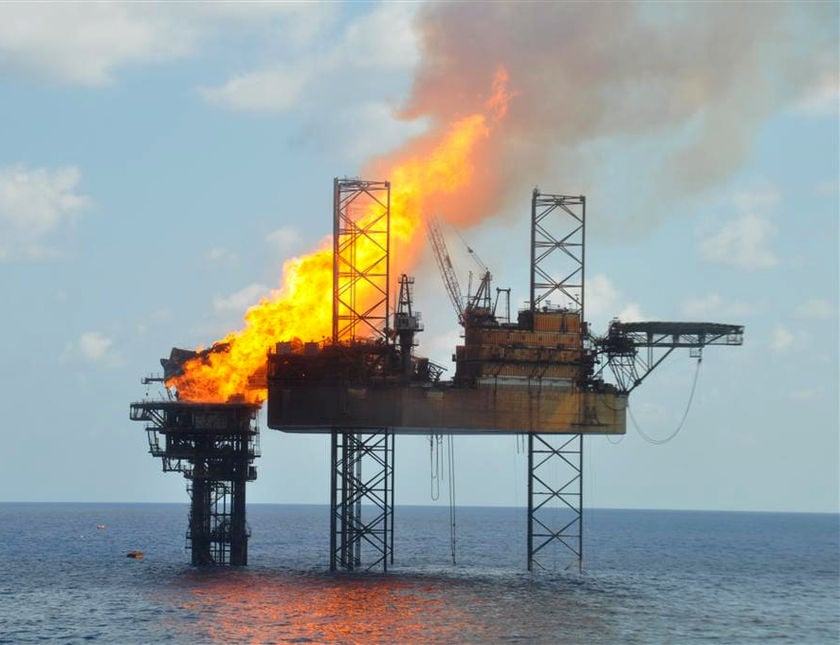
Our new report in partnership with Environs Kimberley analyses Woodside’s own oil spill modelling and it reveals a worst-case blowout at the corporation’s proposed Browse gas project at Scott Reef could be up to 30 times larger than the Montara oil spill – one of Australia’s worst environmental disasters to date.
Woodside’s own modelling warns that oil pollution could spread across Scott Reef, the Kimberley coast and beyond, with impacts Woodside itself describes as “severe”, “potentially irreversible” and “catastrophic”.
What’s at stake?
Scott Reef really is like nowhere else on Earth.
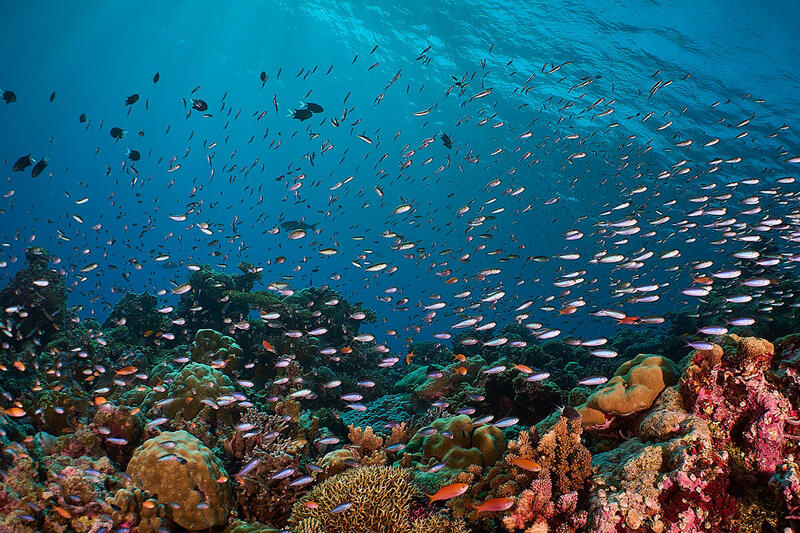
Scott Reef is Australia’s largest freestanding oceanic reef, a pristine marine ecosystem that has thrived for around 15 million years. About 270 kilometres off the Kimberley coast, it supports more than 2,000 marine species, including endangered pygmy blue whales, nesting green sea turtles, the endangered dusky sea snake and ancient corals.
Yet Woodside wants to drill up to 57 toxic wells around and underneath it, causing decades of deafening seismic blasting, light and noise pollution, shipping traffic and, of course, the risk of a ‘catastrophic’ oil spill.
What did Woodside’s modelling find?
Before Browse can be approved, Woodside is required to assess what could happen if something goes wrong. We analysed the corporation’s own environmental assessment documents, and the findings are deeply concerning.
Woodside’s modelling shows that the most severe Browse scenario would be the worst oil spill in Australian history, releasing up to 893,739 barrels of condensate into the Timor Sea. For context, the Montara oil spill released 30,000 barrels of oil.
A blowout of this scale could see oil spread hundreds of kilometres, reaching some of Australia’s most important marine environments, extending into Indonesian and Timor-Leste waters and even washing up along parts of the Kimberley coast. Entrained oil – oil mixed throughout the water column – is predicted to travel up to 863 kilometres from the spill site.
The modelling identifies potential impacts to at least nine marine parks, eight reefs and three Indigenous Protected Areas, as well as important habitats for endangered species, including pygmy blue whales, green sea turtles, seabirds and other marine life.
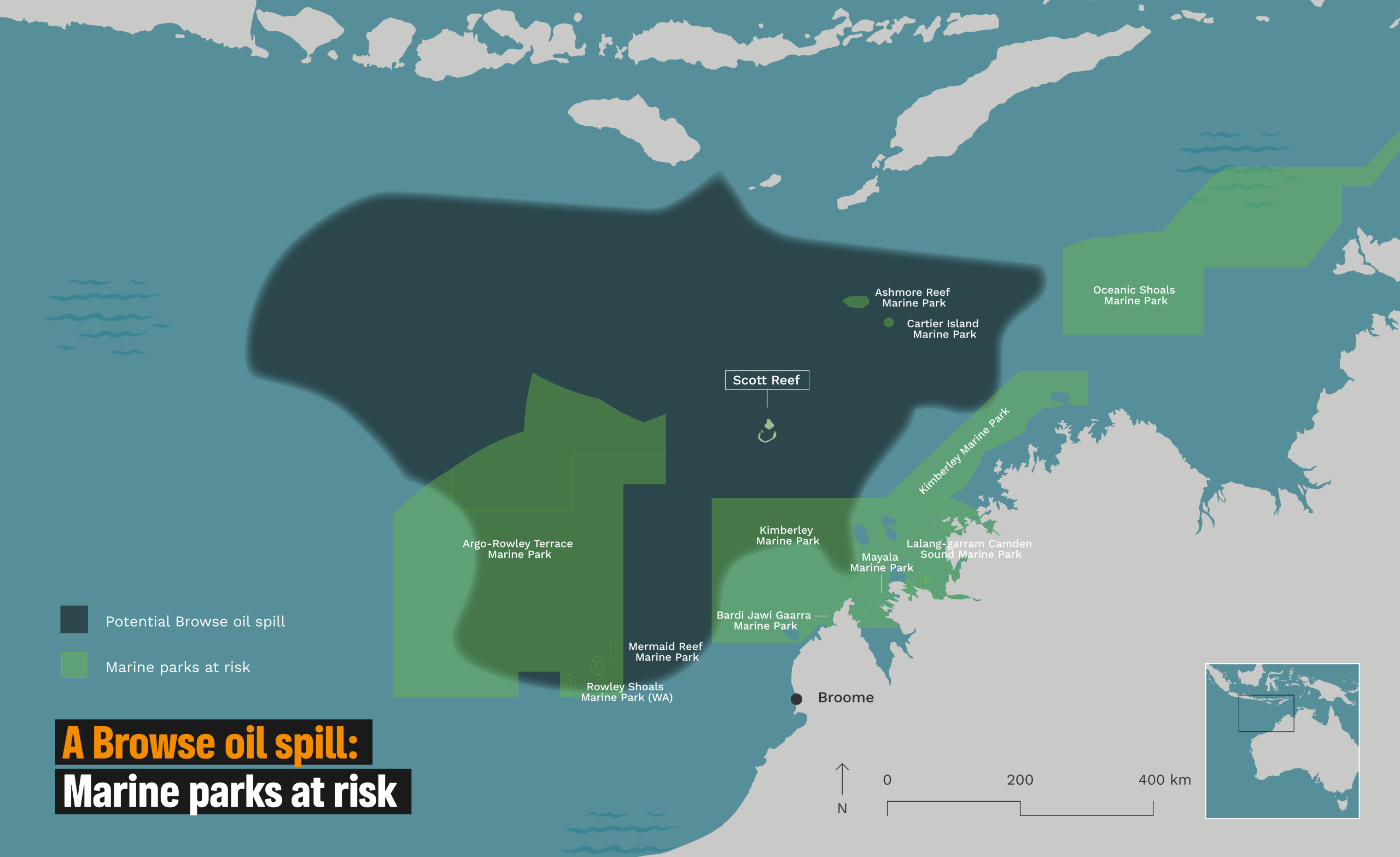
These aren’t just places on a map. They are globally significant marine ecosystems that support ancient coral reefs, endangered wildlife, tourism, fisheries and coastal communities. A spill of this scale wouldn’t simply affect one reef; it has the potential to impact an entire connected marine ecosystem.
Why this matters now
The most important thing is that Browse has not yet been approved. That means there is still time to stop Browse and the serious risks outlined in Woodside’s own modelling.
The science has been done. The risks have been modelled. The decision now rests with the Australian Government.
Governments are often forced to respond after environmental disasters happen. This is one of those rare moments where they have the opportunity to act before one does.
What you can do
Together, we still have the power to stop Woodside and save Scott Reef.
You can help by:
- Sending an email to Environment Minister Murray Watt and Prime Minister Anthony Albanese, calling on them to reject Browse.
- Sharing this story to help more Australians understand what’s at stake.
- Encouraging your friends and family to take action.
The more people who support saving Scott Reef, the harder it is for governments to approve Woodside’s drilling plans – Browse.
Together, we can ensure a reef that has existed for millions of years is known for its incredible biodiversity – not as the site of Australia’s worst oil spill.
Let’s save Scott Reef.
What if Australia’s worst offshore oil spill hasn’t happened yet?



-
Climate Change1 year ago
Guest post: Why China is still building new coal – and when it might stop
-
Greenhouse Gases1 year ago
Guest post: Why China is still building new coal – and when it might stop
-

 Greenhouse Gases2 years ago
嘉宾来稿:满足中国增长的用电需求 光伏加储能“比新建煤电更实惠”
-

 Climate Change2 years ago
嘉宾来稿:满足中国增长的用电需求 光伏加储能“比新建煤电更实惠”
-
Climate Change2 years ago
Bill Discounting Climate Change in Florida’s Energy Policy Awaits DeSantis’ Approval
-

 Renewable Energy10 months ago
Sending Progressive Philanthropist George Soros to Prison?
-
Greenhouse Gases1 year ago
嘉宾来稿:探究火山喷发如何影响气候预测
-

 Carbon Footprint2 years ago
US SEC’s Climate Disclosure Rules Spur Renewed Interest in Carbon Credits