

In Africa, pastoralism is serious business.
There are an estimated 200-300 million pastoralists – livestock herders – who provide the continent with 75% of its milk and half of its meat. In some countries, the trade can make up more than one-third of GDP.
It might seem surprising then that this vital sector doesn’t have a stronger political voice and that its concerns are not a major priority for many governments. Yet it has long been the case that nomadic groups of herders are likely to be marginalised more than other food producers – or even ignored.
The centuries-old practice of pastoralism now faces a constellation of threats that are pushing some communities permanently out of business. In some places, the long-term viability of pastoralism is at risk, buffeted by multiple, overlapping factors – both related to climate change, and unconnected to it.
Conflict concerns
Pastoralists make a living by raising animals – including goats, cattle and sheep – and move with their herds across vast distances between seasons. Historically, they have enjoyed a resilient and adaptive lifestyle, allowing them to travel where the weather and grazing conditions are most favourable and avoiding disease and potential disasters.
The practice also has environmental benefits – periodic grazing improves soil health and prevents the land and vegetation from becoming degraded while improving biodiversity.
The problem facing pastoralists today is that their livelihood has come into direct competition with a range of public and private interests. More and more land traditionally used by herders is being given over to other uses: large-scale commercial farming, mining or energy operations, urbanisation and even conservation areas.
These are often the economic priorities of national governments, which see them as more productive, and so hand farmers and companies stronger rights to manage the land. This puts them in conflict with pastoralists who are forced to graze their livestock on someone else’s land – in some cases leading to violence.
Thousands of deaths have been reported in West and Central Africa over the past decade as a result of this kind of conflict. Clashes are particularly prominent in Nigeria, Mali and Burkina Faso, where tensions cross ethnic, religious and social lines.
In Nigeria – home to some of the worst fighting – state governments have enacted controversial anti-grazing laws which they claim are designed to prevent further fatalities. Pastoralist groups have pushed back, arguing that the legal restrictions reflect a longstanding bias against nomadic herders and will make it even harder for them to earn a living.
Despite agreements to allow the free movement of herders, some countries in West Africa have closed their borders, citing the prevalence of livestock disease. With smaller areas of land to graze on and migratory routes closed off, pastoralists are being boxed into a corner.
Climate risk
Climate change serves to pile on the pressure. Persistent drought, more intense rainfall and extreme temperatures are creating difficult conditions for pastoralists. Many animals die on long treks with little water and less productive lands to graze on.
This creates the conditions for conflict with settled farmers – but on the ground, the situation is more complicated, experts say. Camille Laville, a research fellow at ODI Global, a London-based think tank, told Climate Home: “There is an oversimplification in our understanding between herder-farmer conflicts and the role of climate change.”
“We can start this discussion with the climate, but we can also start it with years of political changes, ethnic differences, religious differences. There are many ways to frame this subject and the climate is just one of them,” she added.
Aid agencies grapple with climate adaptation in fragile states
Climate change creates harsher conditions and increased vulnerabilities, but existing social and political factors weigh heavily on herders’ livelihoods.
Fiona Flintan, a senior scientist at the Nairobi-based International Livestock Research Institute (ILRI), said “climate change may not be the biggest problem that pastoralists face”.
Among the many different users of land, pastoralists “as ‘masters’ (and ‘mistresses’) of adaptation can be the most resilient and skilled at adapting to climate change”, she added. But trouble can start to mount up when they aren’t given the right kind of support.
Flintan sees land security as the main gap for pastoralists. “If they have guaranteed security to their land and resources, they will be better positioned to deal with shocks and stresses,” she explained. “And more than that, pastoralists will then be willing to invest in their land to support biodiversity, soil health, and emissions reduction. It will resolve a lot of challenges.”
Yet, in many parts of Africa, obtaining secure access to the land is a complex process, and some national governments are more willing to recognise land rights than others.
Kenya’s Community Land Act, for example, offers pastoralists a route to seeing their land claims recognised and their rights protected. But the challenge in places like Kenya or Ethiopia – which has also adopted a Pastoral Development Policy – is defining in a legal context the unwritten customs and traditions of many different pastoral communities.
As Flintan notes, governments often lack resources and sometimes the technical expertise to prioritise land use strategies. “It’s about having proper planning and governance, supported by a skilled team and adequate funds in place to ensure it happens,” she said.
Greener pastures
Getting to the root cause of the challenges facing pastoralists could mean missing the urgency of more immediate problems, while difficulty in trying to untangle all of the interwoven factors could slow progress.
This complexity leads some researchers, such as Laville, to call for more practical responses, while accepting that there isn’t a perfect answer. “If we wait to fully understand this issue, we will never have sufficient time for action,” she said.
Some experts point to the need to raise the profile of pastoralists both within countries and on the international stage. The latest COP summit of the UN Convention to Combat Desertification is taking place in Saudi Arabia this month – reportedly the largest UN land-focused conference to date.
Can climate funders overcome fear to tread in conflict zones?
Marginalised groups often lack a voice at UN talks – and while pastoralist civil society organisations will be in Riyadh, they need a stronger presence at the negotiating table in order to be able to influence what is decided there, experts say.
“We are getting better at listening to herders, but we need to be cautious not to bring our own preconceptions to the discussion,” said Laville, commenting on the UN COP process. “There isn’t a one-size-fits-all approach to this problem.”
Scientists have argued for some time now that UN member states could benefit from pastoralists’ expertise in tackling emerging threats including biodiversity loss and global warming. Being open to learning from those who know the land intimately and how it is changing could pay practical dividends, they say.
Pastoralism is a livelihood that has lasted for generations and weathered many storms. The first step for any government is recognising the significant economic and environmental contributions it makes, researchers told Climate Home.
“It’s not a job; it’s a cultural identity. This doesn’t get eradicated by droughts or government policy,” added Flintan.
Sponsored by SPARC (Supporting Pastoralism and Agriculture in Recurrent and Protracted Crises), a six-year research programme that informs policies, practices and investments to better support the resilience of dryland communities in Africa and the Middle East.
Adam Wentworth is a freelance writer based in Brighton, UK.
The post The world is getting smaller for pastoralists facing multiple threats appeared first on Climate Home News.
The world is getting smaller for pastoralists facing multiple threats

After witnessing the effects of sea-level rise in the low-lying island nation of Tuvalu, Pacific leaders on Tuesday used the pre-COP31 summit in Fiji to voice their frustration at the difficulties they have experienced in tapping the global climate finance system.
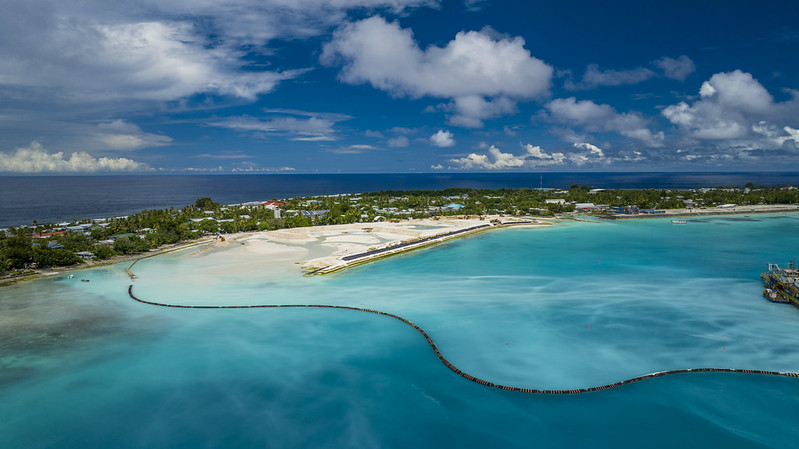
A small group of government leaders, climate negotiators and heads of development banks and climate funds took a trip to Tuvalu’s Funafuti atoll on Tuesday morning, travelling by road over land just 10-20 metres wide to visit a project that is building barriers to keep the sea from the land.
They then flew to Fiji for the pre-COP summit, where several Pacific leaders said they had been let down by the insufficient quantity, bad terms and slow speed of international finance to help them adapt to a warming climate that is bringing higher oceans, drought and more powerful storms to their shores.
“Right now, our islands are like a canoe that has been rammed by a massive foreign ship. Our canoe is taking on water, we are sinking, and what is the world’s response?” asked Palau’s President Surangel Whipps Jr.
“They hand us a tiny patch to cover a gaping hole,” he continued, “but the bureaucratic process just to receive that patch is so slow that the water fills the hole while we wait. Then to rebuild the vessel so that we can survive the next storm, we are offered loans, debt that adds weight to a sinking boat packaged in red tape so thick we can barely access it. And while we wait, the water continues to fill.”

Pacific leaders and Australia called again on governments to invest in the new Pacific Resilience Facility (PRF), which has been designed by the Pacific Islands Forum and is seeking $500 million in investments by COP31 in November.
It has around $180 million so far, but did not receive additional pledges during the UN General Assembly in New York. The PRF aims to invest to generate annual returns which it can give to projects like water tanks for drought-hit communities.
Witnessing sea level rise
The annual pre-COP gathering is usually a low-profile technical meeting of climate negotiators. But this year, Australia – which is the president of negotiations at COP31 – partnered with the Pacific to introduce a “leaders segment” in an attempt to shine a spotlight on climate issues affecting the region.
Fourteen government leaders – from Australia, Timor-Leste, Mauritius and the Pacific – made the trip. They were joined by the European Union’s climate commissioner Wopke Hoekstra, the heads of the Green Climate Fund and the Asian Development Bank and former Australian prime minister Julia Gillard.
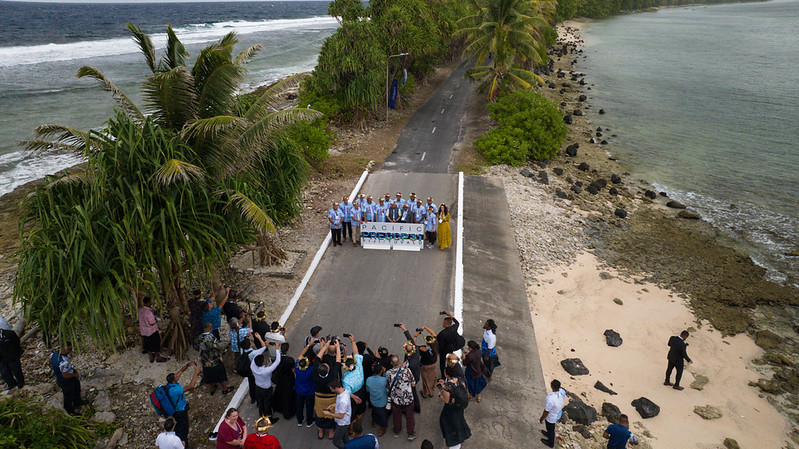
On their return to Fiji, Solomon Islands Prime Minister Matthew Wale told the pre-COP leaders roundtable that the sea level rise they had witnessed was personal for him.
“Tuvalu was not just a site visit for me. I saw the story of my own saltwater people,” he said, adding that he, his daughter and his grandfather had lost their houses to sea level rise and that three-quarters of his electorate live on land that will be underwater in the next 30 years.
From the other side of the world, Antigua and Barbuda’s environment minister Michael Joseph said Tuvalu’s problems felt similar to those of his own Caribbean islands. “I saw vulnerable communities… just metres from the sea and people determined to remain on their land, preserve their culture and way of life,” he said.
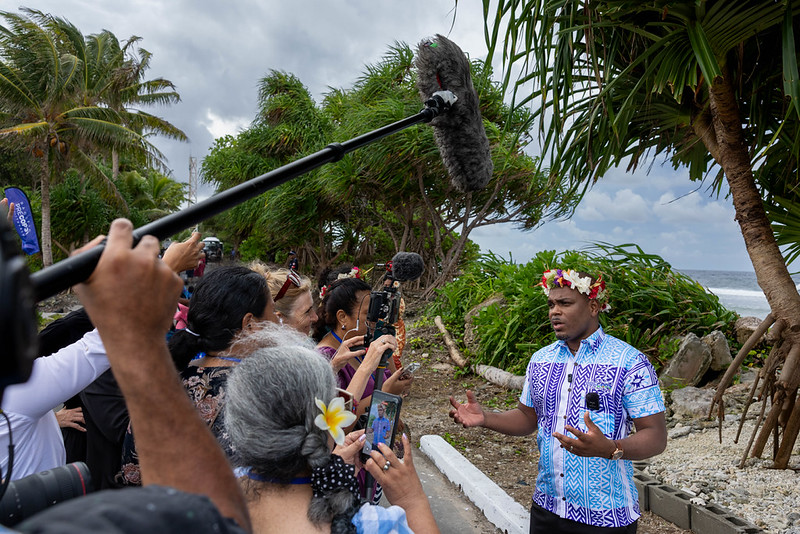
A group of Fijian schoolchildren told the leaders it was not just sea level rise the Pacific struggles with but also heatwaves, droughts and storms, which worry their families and prevent them from learning.
Climate finance red-tape
Several Pacific leaders criticised the world’s leaders for not doing enough to combat climate change. Cook Islands Prime Minister Mark Brown expressed disappointment that only two non-Pacific leaders had come to the pre-COP, a fact Australian media widely picked up on to label the event a flop and question its A$20 million (US$14m) price tag.
“We’ve heard a lot of numbers these last two days,” Brown said. “Let me share one of my own. More than 50 invitations extended to world leaders… to see for themselves what high emissions are doing to our nations and our ocean – an ocean that covers nearly one-third of the Earth’s surface.”
-
Pacific islands seek backing for new regional fund ahead of COP31
Pacific leaders will appeal for pledges to a new regional fund designed to swiftly channel climate finance to local communities -
The Pacific made history in the courts – now we must do it in the negotiations
Legal clarity alone will not lead to reduced emissions, more finance or stronger national climate plans – political will is key to meeting states’ obligations -
Civil servants warn fossil fuel exploration could harm New Zealand’s climate reputation
Advice to politicians says revoking a ban on oil and gas drilling could damage relations with Pacific neighbours and risk lawsuits


He called for more climate finance for the Pacific, asking “if the world is prepared to assess our suitability for climate finance, why is it not equally prepared to scrutinise whether those responsible for delivering it are meeting their obligations?”
Like Palau’s president Whipps, Naoero’s President David Adeang criticised the red tape that is hindering access to climate finance as well as a lack of money, complaining especially about “complicated procedures, heavy reporting, delays in approval and disbursement”.
Adeang added that “the way we assess vulnerability matters”, adding that it should be measured by more than income. Naoero, for example, is classified by the World Bank as high-income, restricting which climate finance it is eligible for.
Action plan to improve access
On Thursday, the Australian government will present a statement and action plan on improving access to climate finance for small island developing states and least developed countries, which it is asking other countries and organisations to endorse.
The statement addresses some of these Pacific complaints as well as acknowledging that progress has already been made on simplifying access by multilateral development banks and climate funds.
In Fiji, Asian Development Bank head Masato Kanda said his institution is “tailoring our finance and operations to island realities” because “your children and their children should be able to grow old in the countries their ancestors have called home for millennia”.
The executive director of the Green Climate Fund (GCF), Mafalda Duarte, said that the GCF-backed coastal adaptation project leaders visited in Tuvalu shows that “climate finance works” although – as the project took eight years to implement – “it takes time, and therefore we have no time to waste”.
Australia calls for optimism
While Pacific leaders expressed concern that the world is set to blast past its agreed 1.5C warming limit, endangering their nations, Australia’s Prime Minister Anthony Albanese called for “optimism”. “If people think there is no hope, then they will not strive to get the change that we need,” he said.
He said that when he attended his first COP in 2005, Australia’s renewable energy target was 2%. Its target is now 82% renewable electricity by 2030.
While Albanese promoted Australia’s success at electrifying homes and businesses and rolling out renewables, he has been criticised by climate campaigners for extending the production of fossil fuels, including coal – largely for export.

France’s Minister for Ecological Transition Monique Barbut defended the European Union’s climate action at the pre-COP meeting. She said the continent was heating up and reducing emissions faster and providing more climate finance than anywhere else in the world.
“It is time for all major emitters to step up and do their fair share” on climate finance, she said. Most developing countries with large emissions have fiercely resisted joining the club of climate finance donors, arguing they have played a disproportionately small historic role in causing climate change.
Barbut, as well as Palau’s president Whipps, called for the next flagship scientific assessment report of the Intergovernmental Panel on Climate Change (IPCC) to be finished by COP33 in 2028, in time to inform the next global stocktake of national climate action.
This timeline has been opposed by countries like India, Saudi Arabia and China, who argue it would put an unfair burden on developing countries. Barbut said countries should “support the work of the IPCC rather than sabotage its calendar”.
Barbut said that governments should agree at COP31 to aim to raise the share of “clean electricity” in final energy consumption to 35% by 2035. The Turkish and Australian governments have pushed for this goal although without specifying that the electricity should be “clean”. Barbut added that COP31 should also agree to cut emissions of methane, a particularly potent greenhouse gas.
The post Pacific leaders rail at climate finance failures after pre-COP trip to Tuvalu appeared first on Climate Home News.
Pacific leaders rail at climate finance failures after pre-COP trip to Tuvalu
Jacynta Fa’amau is a Pacific campaigner at global grassroots climate movement 350.org and a secretariat member of Pacific Climate Warriors.
The first thing that struck me was the sheer size of Queensland’s Saraji coal mine. Standing at the edge of the enormous pit, my brain scrambled for words as I scanned the earth’s open wound – a whole island could probably fit inside it.
Looking down, I noticed footprints of an emu and a koala, pressed and dried in what was once a puddle – signs of how drought had driven animals in desperate search of water, so dangerously close to the coal trucks and heavy machinery ahead.
Earlier this year, I joined a small group of Pacific Islanders on a journey through the Bowen Basin to learn from First Nations communities battling Australia’s mammoth coal industry. Of the more than 40 coal mines operating in the area, BHP & Mitsubishi Alliance’s Saraji mine is one of the largest. So it came as a painful shock to us when in August, the Australian government approved the mine’s extension just months after our visit.
-
As COP31 co-host, Australia should make its polluters pay for climate damage
With UN climate funds running short on cash, now is the time to start taxing the companies whose emissions are driving harm in the Pacific and other vulnerable parts of the world -
At pre-COP, UN climate chief warns of heat threat to mothers and babies
The spotlight on maternal health came on the first day of the pre-COP31 meeting in Fiji, where Pacific concerns are set to top the agenda as ministers gather for talks
Witnessing coal extraction is devastating. It is bad enough to see what pillaging tonnes of coal can do to a mine’s immediate surroundings: dry creek beds, dwindling wildlife, denuded land. But to know that this coal will be shipped across the ocean, bring air pollution, and eventually lead to the destruction of Pacific islands thousands of miles away is another kind of heartbreak.
Rising ocean waters
I’m an Australian-born Samoan. In 2002, I visited my family home for the first time. My father took me to the rural community where generations of my family were raised. He did not have the words to describe how much has changed since rising ocean waters had taken away almost a third of the beach.
I learned of how we had to relocate my great‑great‑grandparents’ grave to higher ground twice in the last 15 years. Of how my cousins have to paddle out further to sea to catch fish, since warmer waters have destroyed much of the reef. Of how the ocean crashes so close to my uncle’s home that he had to build a new house further away.
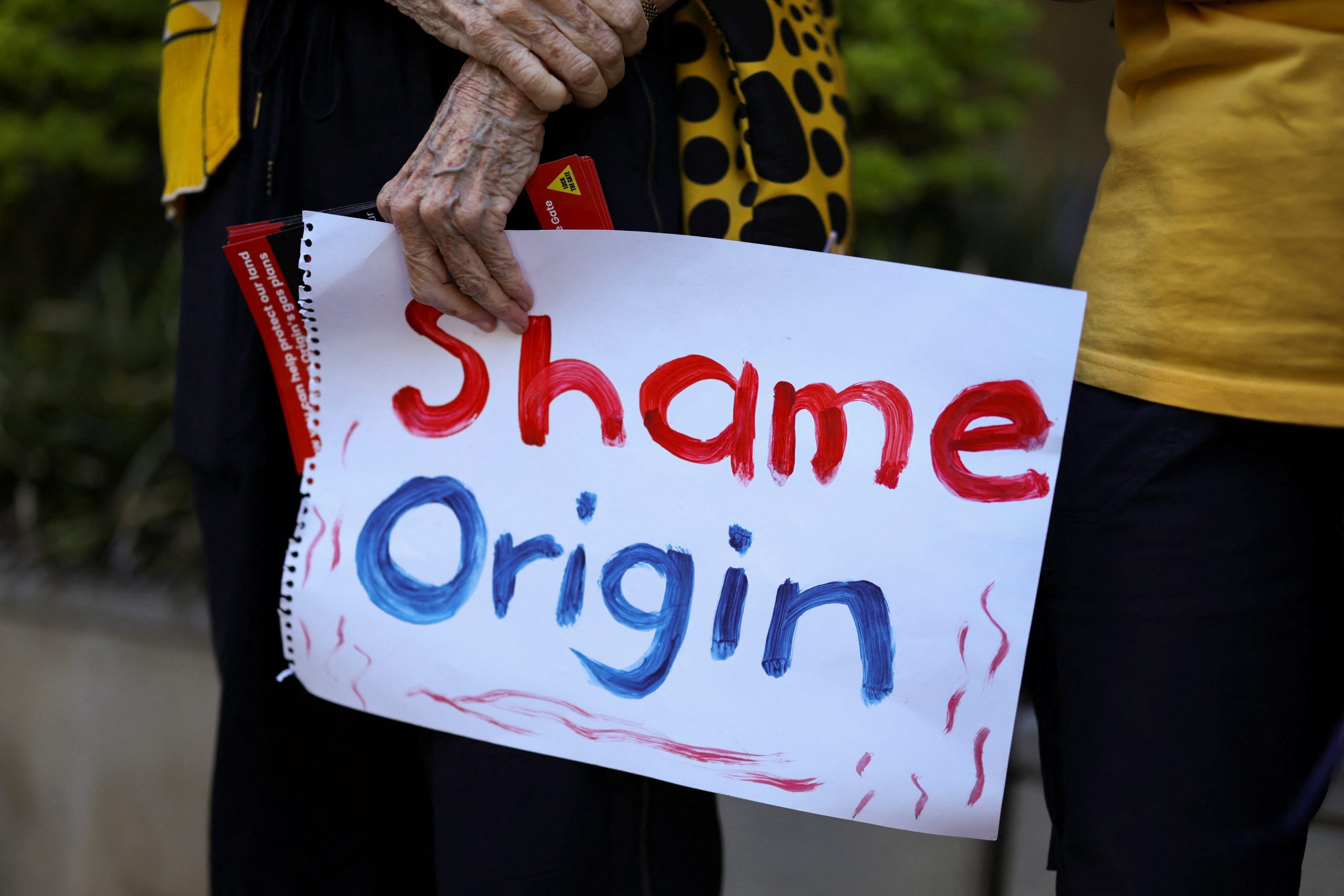
We saw reflections of our own climate destruction in the Pacific when we shared these stories with our First Nations relatives at the edge of the Saraji mine. Murrawah Johnson and Teila Watson, both Birri Gubba and Gangulu women, made clear connections between their struggles and ours. “We don’t get to inherit our land and we don’t get to inherit our traditional roles. We are fighting a war on extinction,” Murrawah said.
Coal extraction devastated their lands and cultures – totems have disappeared, fresh water has become scarce – while the effects of using it have devastated ours. “King tide, cyclones, all the violence that has been enacted on your country and people is because of the violence that has been allowed here, to us and our country,” Teila said.
Wearing the mantle of climate leadership
This week, Australia is assuming the mantle of climate leadership as co-president and head of negotiations of this year’s UN Climate Change Conference, COP31. It will lead on deliberating the summit’s priorities as world leaders and climate negotiators descend on Fiji and Tuvalu for the pre-COP meetings.
Ironically, just days before the pre-COP began, the New South Wales Independent Planning Commission approved the largest-ever coal project the state has seen, set to emit an extra 800 million tonnes of carbon emissions. I joined the Pacific Climate Warriors and other communities in submitting about 4,000 appeals to oppose the project – yet these all fell on deaf ears.