

Last Updated on June 20, 2024
Confession time: I used to be a shopaholic. At one point I had over 200 dresses alone in my closet.
I had a lot of vintage clothing. That includes dresses from the 40s, 60s, and 70s. I could immediately jump into any decade or any personality I was feeling whether that was preppy, rocker, or boho. It was like dress up for me.

But, while I still love clothing, I’ve really learned to listen to the styles that make me feel the best. And that meant really analyzing my closet and donating pieces that just didn’t suit me anymore.
I’ve since switched to a more minimalist approach to fashion. Minimalist clothing is a style that emphasizes simplicity, functionality, and elegance.
Sticking to minimalist clothing is of course beneficial to the environment too. After all, there are enough clothes on the planet right now to dress the next six generations of humanity.
We don’t need more cheap clothing that rips after a few wears; we need more durable built-to-last pieces that become wardrobe staples we can rely on.
Thing is, there’s a difference between minimalist mindset versus minimalist aesthetic in terms of fashion. We’ll talk more about that later, but surmise it to say, you don’t need to wear all black and white to have minimalist clothing.
Minimalist clothing, for me, is about fine tuning your personal style. It’s going with pieces that match your body shape, skin tone, and make you happier overall.
Two ways to home in on this are to study up on color analysis and kibbe body types. You can take tests that will help you better understand which colors complement your skin tone best, and how to dress to best complement your body’s shape.
Here’s how to choose minimalist clothing and build a sustainable capsule wardrobe you will feel great in, without harming the planet.

what clothes should a minimalist have?
There’s no magic number of clothes a minimalist should have, or any set rules. There’s also no specific brands you need to own to have a “minimalist” wardrobe.
In the past, I’ve done an 18 piece wardrobe experiment. Yes, it’s exactly what it sounds like: I picked out 18 pieces of clothing to wear for the entire year.
I made it about 8 months before throwing in the towel. I just couldn’t handle it. At first, I loved it. By the third month, I was tired of it. By the sixth month, the clothes needed to be repaired.
This approach can be a bit extreme. I think it can be empowering to some, but not necessarily for everyone.
Instead of focusing on a specific number, I think it is a good idea to choose pieces that you truly love and know will be worn again and again.
Minimalist clothing doesn’t have to be boring or monotone. It just means choosing pieces that can be mixed and matched, have versatility, and will be reworn often. Even just playing with different textures can make all the difference!
Fine-tuning your style is a big part of curating a minimalist wardrobe. Here are some ways I’ve defined my personal style over the years.
color analysis
Getting a color analysis is a great way to assess which colors to keep in your closet. I went to see Donna Fujii and left with a swatch book of shades that look best for my coloring. It was such a fun experience that helped me narrow down the colors to blush pink, navy blue, baby blue and wine red.
It turns out my color palette is a true summer. These entail cool, muted colors, like soft grey-blues, grey-violet and blue-purple tones.
Depending on your complexion, certain colors may clash or make you glow. I’d aim for 4-5 colors that flatter you for the sake of simplicity.
kibbe body type
Knowing your kibbe body type can also help you better define what clothing lines best suit your frame. There are 13 different kibbe body types and mine is considered Soft Classic.
The Soft Classic body type is defined by a blended balance between yin and yang, leaning slightly more towards yin. Therefore, it’s recommended my clothing lines should be clean, unbroken, and symmetrical, with waist emphasis. Aiming for smooth, soft, symmetrical silhouettes with slight shaping will compliment my body best.
I’m pear shaped which means that my hips are larger than my bust. I also have a small waist, so accentuating it with clothing is ideal. Shapeless clothing does nothing for me.

how to curate a minimalist wardrobe
step 1
Place all your clothes onto your bed and create 3 piles: Love, no and maybe.
The love pile: Clothes you absolutely adore and cannot part with
No pile: Clothes you definitely don’t want anymore, or just feel you’ve outgrown.
Maybe pile: Clothes you’re on the fence about.
step 2
Try on the clothes from your maybe pile to determine if you’ll keep them. Take a long hard look in the mirror, take photos, ask for opinions. Do whatever you have to do to decide if you truly love this piece or not.
Make sure to ask yourself if it came be hemmed or tailored first before getting rid of it. Sometimes, that’s all a piece needs to go from okay to awesome!
step 3
Whatever you don’t want anymore, responsibly get rid of through donating, selling, or gifting to your loved ones. Always check with loved ones first, as you will know exactly where your clothes are going. This increases the likelihood they’ll get re-worn!
A large portion of donated clothes typically aren’t suitable for someone else to wear because they are in poor condition. Those unwanted clothes can then become a problem if they get shipped overseas or worse, incinerated or landfilled.
It’s important to donate clothes to small, local thrift stores over big chains or random donation bins. Local churches and community clothing swaps and drives are also excellent places to donate used clothes in good condition.
RELATED: Textile Recycling Near Me: Where to Recycle Your Clothes

what does minimalist mean in clothing?
Minimalism in terms of clothing means not having a wardrobe jam packed with stuff you never even wear.
Feeling like you have nothing to wear, even though you have so many options to choose from, is the opposite of what a minimalist wardrobe is.
Instead, minimalist clothing should mean having a curated selection of clothing you keep coming back to. This can be an 18 piece wardrobe, or 100 pieces – as long as you are genuinely and frequently wearing every single piece and getting the most out of each one.
This doesn’t mean your wardrobe has to be bland or colorless either. Just that it has to be clothes you carefully assess, love wearing, and know you’ll rewear again.
For example, according to my color analysis session, one of my best colors is blue – so it makes sense to keep a good selection of blue clothes I adore in my wardrobe.
Observe which colors you find yourself reaching for the most, and which you avoid. This will help you better narrow down your wardrobe to pieces that better reflect your personal style, and flatter your skin tone.

how to style a minimalist outfit?
There are so many ways to style a minimalist outfit. Utilizing shoes, accessories like jewelry or bags, makeup, and hair can really elevate an outfit.
But before we get into that, it’s important we differentiate between minimalist the aesthetic and the mindset.
The aesthetic of minimalist clothing just refers to how your clothes look: Aka, no flashy designs, patterns or embellishments. It’s typically characterized by neutral colors, timeless silhouettes, and high-quality fabrics.
However, the mindset of minimalist clothing is about opposing trends and instead sticking to what’s recognizable. It’s dressing as a signature and fine-tuning your personal style. This mindset ensures there’s overall less clothes in your wardrobe and more quality pieces you love and use daily.
Having a minimalist mindset can truly help you refine your personal style and reduce overconsumption.
For instance, I wear my pearl earrings every day because when people see pearl earrings, I want them to think of me. Or a certain shade of blue I wear all the time, that people now associate that color with me. Having a signature scent or color – it’s so much more powerful than being trendy. It creates an instant sense of recognition.
To have a truly minimalist approach to clothing, you don’t need to dress in all black and white solid colors. You just need to have a curated selection of clothing you keep coming back to.
methods to help style clothes sustainably and mindfully:
- Home in on which colors you gravitate towards, and which complement your skin tone.
- What style of clothing makes you feel your best? Tailored and fitted clothes, or loose, drapey pieces? Discovering your body shape and kibbe body type can help you understand what style of clothes better suit you.
- Do you enjoy textured, thick fabrics? Sheer and soft fabrics? Something in between?
- Does gold or silver look better on you? What kind of jewelry do you gravitate toward most: Rings, necklaces, bracelets?
- Do you have any pieces that can help you layer and build off a base outfit, like cardigans, jackets, leggings and tights?
- Are you dressing for what you do? Sit down and write out what activities you normally participate in throughout the week so you can buy appropriate clothes for certain occasions. For example, 7x a week I’ll be working from home so my wardrobe primarily consists of jeans and sweaters.
- Learn how to play up and play down an outfit. For example, starting with a white crew neck t-shirt as the base, you can play it causal with a pair of jeans, a jacket, sunglasses, and a necklace. Or, you can play it up by pairing it with a denim mini skirt, bold accessories/makeup, and voluminous hair.
what is a minimalist brand?
A minimalist brand focuses on crafting high quality, timeless pieces that will quickly become staples in your wardrobe. These brands make products designed to last and don’t typically use cheap materials that can easily break or tear like polyester.
A minimalist brand may also choose to stick to neutral colors and patterns that aren’t loud. But plenty of minimalist brands still use color in their clothes. What matters is if the pieces can be styled in various ways, and worn on a consistent basis for years to come.
Here are a few sustainable, minimalist clothing brands that value the mindset over the aesthetic.

1. pact
- Clothing basics, underwear + socks for both men, women, kids, + babies
- Made from organic cotton which uses up to 95% less water than conventional cotton + no harsh chemicals
- All of their clothing is sweatshop and child-labor-free

2. everlane
- Women + men’s elevated basics, shoes + accessories
- Each factory they use must score a 90+ when it comes to fair wages, reasonable hours, + environment
- They use natural fabrics, have a no-new plastic pledge, and their drops have different initiatives like carbon-neutral sneakers, organic cotton tees, recycled materials + more

3. organic basics
- Women + men’s basics
- Made from organic, recycled + plant-based materials
- With every purchase they donate one percent of your order value to a charity of your choice
- 1% For The Planet member

4. mate the label
- Women, men’s + kids clothing
- Made from organic, GOTS certified materials
- Eliminated all plastic in their labels + packaging
- Woman-founded
- Climate Neutral
- B Corporation
- Clothing recycling program
What’s your favorite way to curate a minimalist wardrobe? Let me know in the comments!
The post Minimalist Clothing: Everything You Need to Know to Build a Mindful Wardrobe appeared first on Going Zero Waste.
Minimalist Clothing: Everything You Need to Know to Build a Mindful Wardrobe

Just like fashion has been overrun by fast fashion, home goods and furniture have similarly seen a rapid decline in quality. Rugs are no exception.
And similar to fashion, these cheap goods come at a high cost — namely, to the planet and to people. In fact carpet and rug production is rampant with exploitation.
On the other hand, fair trade rugs present the best of what a rug can bring to your home: artistry, craftsmanship, and heritage.
The brands featured in this guide are partnering with (and fairly paying!) skilled artisans who are using generations-old — and sometimes even centuries-old — techniques. These artisans are sustaining long lines of crafts, preserving their cultural diversity, and celebrating the richness of their time-honored crafts.
There’s simply no replacement for a timeless, quality artisan-made rug — they’re like pieces of art you can lay out on your floor or hang on your walls.
So, enjoy browsing through this guide to sustainable rug brands listed out below and best of luck on your search for the right fair trade rug!
Where to Find Ethical and Fair Trade Rugs
Note that this guide includes affiliates and partners. As always, brands must meet high standards for ethics and sustainability to be featured and all opinions are my own.
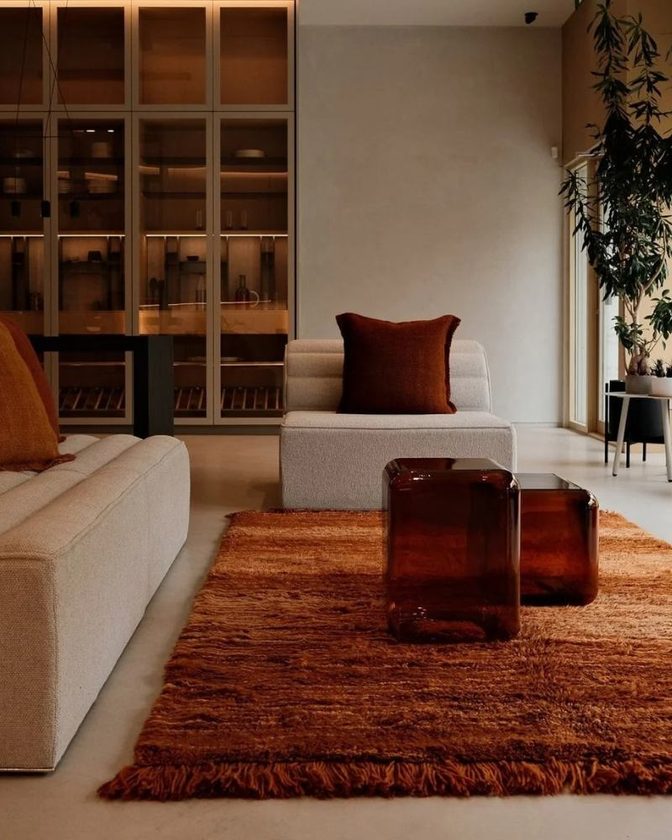
1. Obakki
Best for: warm-hued handwoven wool rugs
Categories: Area Rugs, Runners, Accent Rugs
Obakki partners with artisan weavers primarily in Oaxaca, Mexico — including individual makers like José — who hand-dyes and weaves rugs on a traditional pedal loom using locally sourced sheep’s wool and natural dyes derived from native plants. The brand also works with Rrres Design Studio, a Latin American studio dedicated to preserving traditional Oaxacan weaving techniques, and sources handwoven textiles from artisan communities beyond Mexico as well, including Morocco.
Each rug is made from 100% wool with no synthetic dyes or backing. Most pieces are made-to-order with a 4-8 week production window, shipped directly from the artisan partners.
Price Range: $460 – $4,159
Conscious Qualities: Natural Fibers, Natural Dyes, Craft Preservation
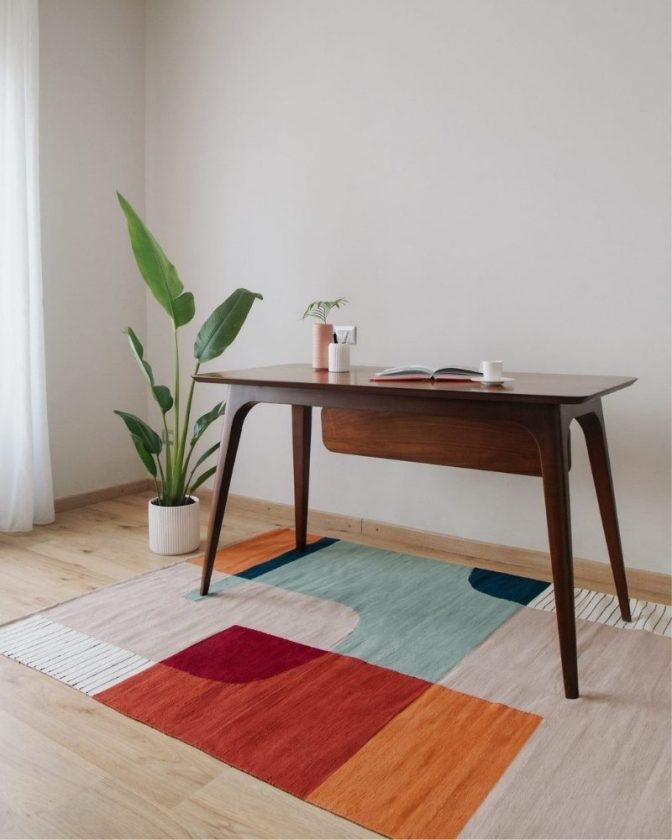
2. Kiliim
Best for: modern wool kilim rugs
Categories: Area Rugs, Accent Rugs
If you’re well-versed in rug terminology, you may recognize that this brand’s name looks similar to the word kilim.
Kiliim’s rug are made using authentic kilim rug craftsmanship by artisans in Egypt coming from generations of kilim artisans. To ensure ethical production and to support the preservation of this heritage craft, Kiliim pays living wages to all artisans.
Price Range: $95 – $4,812
Conscious Qualities: Ethical Production, Heritage Craft Preservation, Natural Fibers
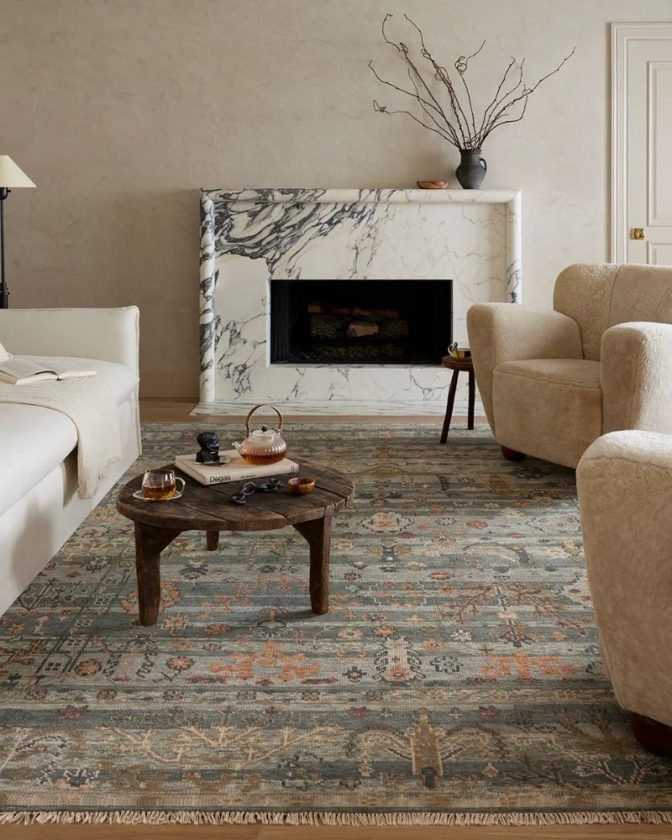
3. Urban Natural
Best for: browsing fair trade rugs in lots of styles and sizes
Categories: Outdoor, Area Rugs, and Accent Rugs
This natural home and lifestyle retailer has a beautifully curated selection of sustainably-made rugs crafted with materials like jute, sisal, wool, and cotton.
Several brands on Urban Natural are also ethically hand-loomed or hand-knotted, such as Loloi — a GoodWeave partner — and Jaipur Living — a brand that partners with thousands of local artisans to sustain heritage crafts.
Price Range: $259 – $9,755
Conscious Qualities: Eco-Conscious Materials
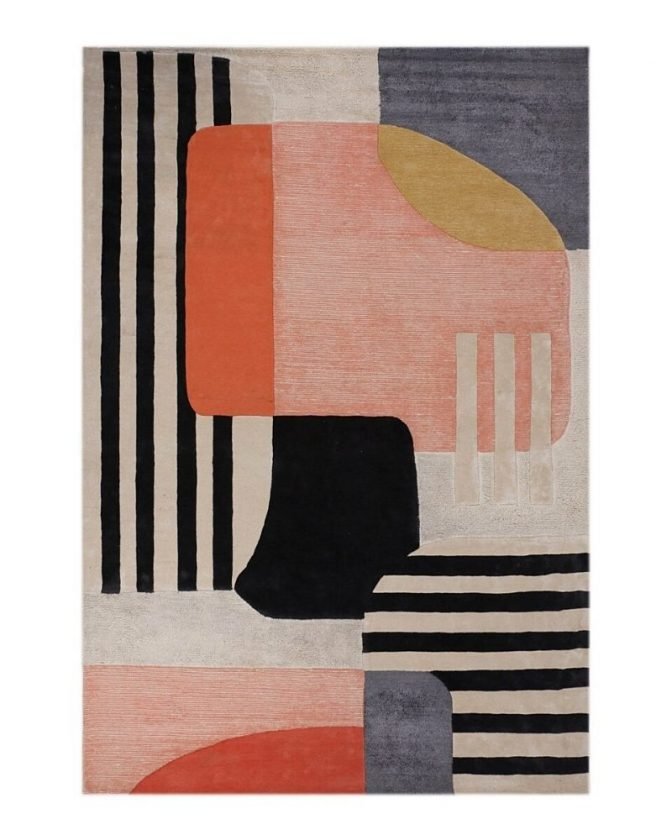
4. LOOMY
Best for: pet-friendly and performance rugs
Categories: Area Rugs, Accent Rugs, Runners, Outdoor Rugs
Founded by a weaver, LOOMY is dedicated to crafting beautiful artisan-made rugs that will last for decades to come.
LOOMY partners with highly-skilled artisan weavers who craft quality rugs made from eco-minded materials like banana silk, jute, and recycled cotton, plus performance options made from 100% recycled polyester built to withstand whatever life brings you.
Price Range: $298 – $8,298
Conscious Qualities: Natural Fibers, Craft Preservation, Vintage Options
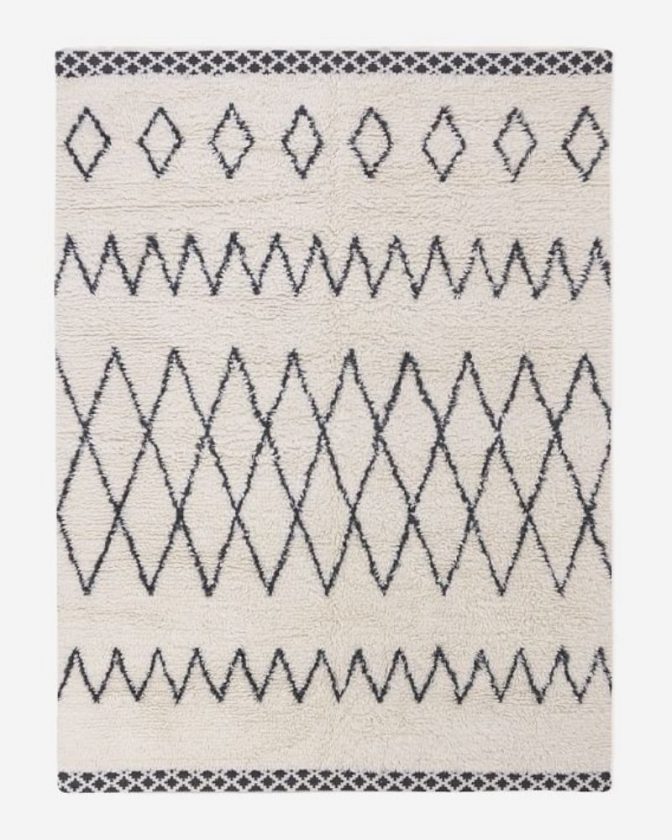
5. West Elm
Best for: fair trade rugs in on-trend mainstream styles
Categories: Area Rugs, Accent Rugs
West Elm is bringing ethical rugs to a broader market with their collection of Fair Trade Certified wool and cotton rugs. While I recommend browsing the smaller shops listed above first, West Elm is supporting the movement to responsibly-made, fair trade rugs.
Price Range: $$$
Conscious Qualities: Fair Trade production, Majority Natural Materials
6. Jubi
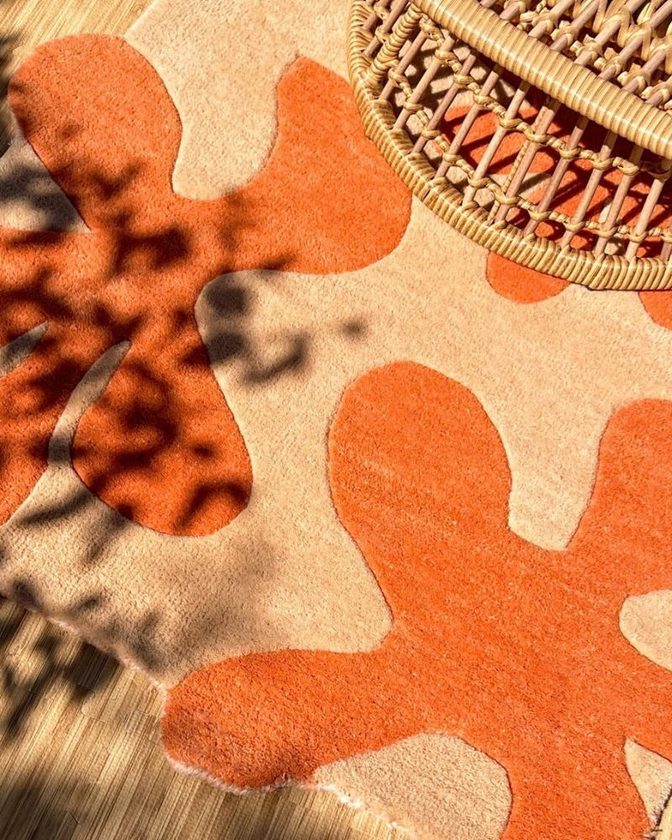
Best for: Modern rugs in vibrant prints
Categories: Accent Rugs, Circle Rugs, Runners
Jubi is a Brooklyn studio founded by textile designer Cassie Dagostino. Every rug is handmade from New Zealand wool by fourth-generation weaving families in Bhadohi, India using traditional techniques. Each rug is made-to-order, meaning no excess stock. Since everything is made to order, expect between 3 and 7 weeks for your rug, depending on the technique used.
Conscious Qualities: Pays Above Market Rates, 100% Wool, Made-to-Order
Price Range: $228 – $668
Shipping: Free worldwide shipping
7. Rejuvenation
Best for: Classic rug styles made in Fair Trade factories
Categories: Accent Rugs, Runners, Area Rugs
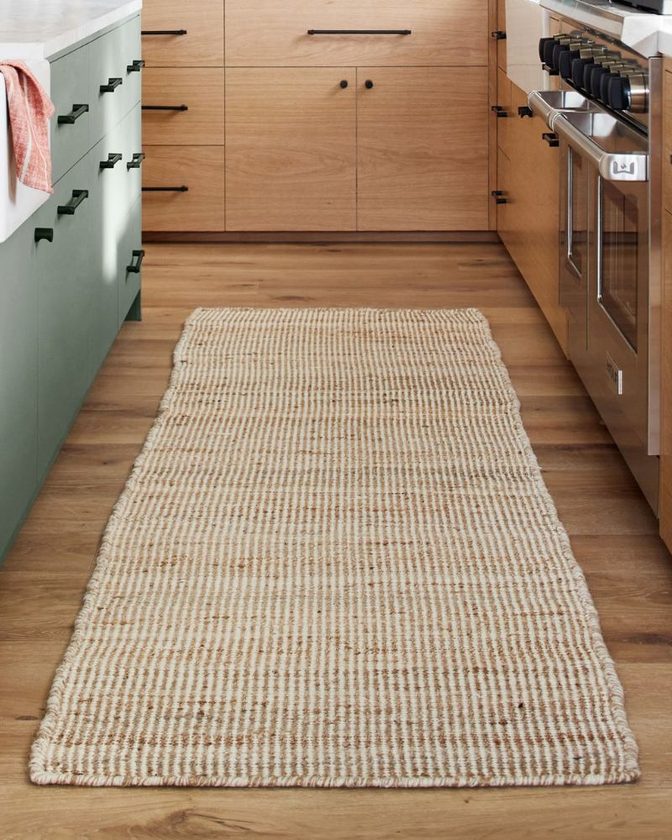
Home retailer Rejuvenation has a selection of rugs made in Fair Trade Certified factories. Their collection includes undyed hand-loomed rugs to geometric flatwoven wool rugs. And while I’d typically avoid synthetics, it tends to be unavoidable for outdoor rugs — so Rejuvenation’s Fair Trade 100% recycled poly rug is a good option.
Conscious Qualities: Fair Trade Certified, Mostly Natural Materials
Price Range: $79 – $1,649
Shipping: Contiguous U.S. shipping for 10% of product price (add $20 for HI, AK, and US. territorries)
Liked this guide to ethical rugs? You might also enjoy:
Ethical Home Decor Brands to Curate a Beautiful, Conscious Space
Eco-Friendly Furniture to Furnish Your Home Sustainably
Fair Trade and Eco-Friendly Blankets to Cozy Up With
The post 5 Best Ethical Fair Trade Rugs to Elevate Your Space appeared first on Conscious Life & Style.