

Weather Guard Lightning Tech

IntelStor Insights into Wind Turbine Blade O&M Costs
Phil Totaro, CEO of IntelStor, dives deep into the latest trends and data surrounding onshore wind turbine blade operations and maintenance costs. He discusses the strategies and innovations being employed to optimize blade performance, reduce downtime, and drive down costs.
Sign up now for Uptime Tech News, our weekly email update on all things wind technology. This episode is sponsored by Weather Guard Lightning Tech. Learn more about Weather Guard’s StrikeTape Wind Turbine LPS retrofit. Follow the show on Facebook, YouTube, Twitter, Linkedin and visit Weather Guard on the web. And subscribe to Rosemary Barnes’ YouTube channel here. Have a question we can answer on the show? Email us!
Pardalote Consulting – https://www.pardaloteconsulting.com
Weather Guard Lightning Tech – www.weatherguardwind.com
Intelstor – https://www.intelstor.com
Allen Hall: Welcome to the Uptime Wind Energy Podcast. I’m your host, Allen Hall. As the wind energy industry continues to grow and mature, the focus on reducing costs and improving efficiency has never Been more important. Operations and maintenance costs can account for a significant portion of the total cost of energy production, making it a critical area of concern for wind farm operators and energy users alike.
In this episode, Phil Totaro, CEO and founder of IntelStor, will share the latest data and trends related to Onshore Wind Turbine Blade Operations and maintenance costs, which everybody’s wondering about is going to provide some valuable insights into the current state of the blade industry and how we manage blades.
You also discussed some of the strategies, innovations being employed to optimize blade performance, reduce downtime, and ultimately. Drive down costs, so whether you’re a wind farm operator, an energy user, or just simply interested in the future of renewable energy, this is an episode you won’t want to miss.
Welcome again. Thanks, Allen. Thanks for having me. So the IntelStor report you just published, and there’s some news about it on LinkedIn, is really fascinating because Joel and I have been wandering around Oklahoma and Texas and other parts of the country looking at blades. And there is a lot of concern.
About the costs associated with damaged blades and how to forecast that and how to appropriately budget for them, particularly in terms of all the new types of blades that are being introduced, the bigger generators, the three megawatts, the four megawatts, the six megawatt machines versus the one and a half and two megawatts that we’re kind of used to it becomes really a guessing game for a lot of operators because they don’t have a sense of How much is it going to cost me to operate this turbine, and how do I manage that, and how do I appropriately schedule my technicians?
Like, how many technicians do I need for a season? These are subjects that come up all the time, and, and if you’ve been around anywhere in Canada or the United States over the last year, there’s so much more talk about it now. And this is where your new tool comes in, your Onshore tool. Basically estimator or looking at turbine size versus the types of damage a blade may suffer.
Phil, will you, will you walk us through what this tool is at the top
Philip Totaro: level? Sure. Of course. So, What we have been repeatedly getting asked about is, for the ISPs we work with, they want to understand the, a detailed market forecast. And the only way to get to a detailed market forecast is, we obviously know based on the work that we already do, how much capacity we’re expecting to be installed.
And that’s not based on like estimates, that’s based on actual pipeline of turbines. And so we know in markets like the United States or Brazil, where, there’s reasonably good detailed publication of those turbine sizes, we, we’ve built out that, that pipeline. But what we then needed to do was determine, all right, how many of those units are going to be online within the next, 10 years or so?
What’s the, most importantly, what are the top kind of failure modes? And then what’s the probability and, and kind of the annual failure rate for each one of those type of failure modes on the turbine as a whole. And then we started looking at blades in particular because it, as it turns out, most people will recall either anecdotally or through some previously published information that gearboxes were probably the most expensive.
Item in terms of downtime that you could have on a smaller turbine. But as we go bigger the gearboxes and generators have actually become more slightly more reliable. You still have, your, your periodic faults and failures. But they’ve developed a lot of technology through either modularization or other up tower cranes and things like that that allow you to service gearboxes, generators, etc.
in situ. Blades, if you’ve got a major issue, you probably still need to take it down. And that can either involve a single blade swap kind of, crane mechanism or a big crane. And it’s basically all that said, what’s happening now with bigger turbines is the bigger the turbines go, the The more cost is involved because of the amount of repair time and the crane cost associated with undertaking that type of repair.
So as compared to gearboxes or generators or pitch systems and, and maybe main bearings that used to be like the, the biggest causes of, O& M expense and, and the biggest impact on downtime. Blades are now kind of, unfortunately, taking the, the lead. And I guess right up your alley, lightning is probably still, like, one of the number one causes of both minor repairs and major.
Repairs and replacements.
Allen Hall: Yeah, so we’re seeing the, the common faults that existed on the one and a half megawatt machines and two megawatt machines when they move up to three and four megawatt machines. They didn’t always require a crane. Pretty much when you get to three megawatts, four megawatts, you’re going to require a crane from most of the, the major items.
Any sort of trailing edge bond line on the back end to lightning damage to any, anything internal. Boy, it just seems like there’s a real risk reward to using a larger turbine at the minute. And, and that’s where I think this data is very interesting because we, we are moving away from the one megawatt machines.
We obviously we’re kind of the one and a half to two range at the moment. Right. And then we’re going to be in the threes. What does that mean in terms of operational costs? What do we need to be planning for here? Do we need to be ordering more cranes? Do we need to have other plans
Philip Totaro: to deal with this? So there’s a couple of things at play here.
One is Besides lightning damage, one of the number one expenditures that you’re going to have is actually been a fatigue failure in the route. That’s again, according to the data we’ve got, as far as the probability of occurrence and, and the annual failure rate, that’s one of the highest impact repairs that you’re going to have.
Again, besides lightning damage and followed closely by transportation damage, which, unfortunately, transportation damage is just kind of part of the cost of doing business, so to speak. But it can, it can vary. You can get to site and notice that you’ve got a few little things, maybe in the chips in the top coat that you just need to fix, or you could actually have some some severe issues with leading or trailing edge cracking or other things, you might get to site and notice that you’ve got some, missing parts or, or things like that.
Maybe they’re the the root inserts weren’t weren’t aligned perfectly correctly or, or something like that, when you go and try to install. So. There’s all kinds of things that, that can, have an impact here, but those are, those are probably the, the top issues you’ve got.
And then, you’ve, you’ve still got, while it’s infrequent, a full separation of the blade is probably the, the number five thing that happens in terms of total cost impact. So we’re looking at just for the U. S. market, by the way this year, it’s about 2. 5 billion in blade repairs that we’re anticipating are going to be necessary.
By 2030, we’re talking about 3 billion. And by, we, we only did our projection out about 10 years, but by, within 10 years, it’s going to be around 3. 3 billion. And that’s assuming that you have turbines that have no service lift. For turbines with a service lift, thankfully and since most, three, four, five, six megawatt turbines are gonna be installed that way from, from now on We’re looking at, anywhere from about two and a quarter billion up to, maybe three billion within ten years.
So, whether you’ve got a service lift or not, we’re talking, close to three billion dollars in, in a blade repair market alone that is Going to need to be serviced and those costs are continuing to inch up. So the other aspect of this that, that you asked about was regarding the growth in turbine size and, and power rating.
And what we’re noticing is that it’s not necessarily reducing the. The frequency of occurrence and the annual failure rate for specific failure modes. You’re still seeing lightning damage. In fact, with longer rotors, you may we don’t have enough data, unfortunately, because there’s not enough turbines out there, but you may actually see an increase in lightning damage as a result of longer blades.
So the reality of this is these, we’re kind of considering these estimates to be a bit conservative at this point. And we’re, we’re looking at a scenario where as turbines are getting bigger, Yes, you get more power out of it but you also get a higher impact on your downtime because for a single turbine going down, you’re not only talking about the repair cost and time you’re also talking about the, the loss of production.
And with that much of a, of an impact on lost production, it’s actually just as financially impactful to the asset owner. Because keep in mind that when we calculate these repair costs and the numbers I’ve just quoted, that’s literally only the, the actual cost of repairs. That’s not even taking into account the downtime which we will be kind of factoring into this.
When we kind of expand on this analysis later, later this year we want to be able to get down to a point where we can see what that impact is going to be on, on owners depending on the, the frequency of occurrence and regional distribution and all that, that sort of thing.
Allen Hall: So what I have seen from the field is as operators have chosen larger turbines, it seems great, right?
There’s less wires in the ground, fewer pads. Concrete everything adds up on that side, right? So it’s just less stuff, but what I’m seeing on the blade side is blades are newer less service history Transportation tends to be more of a problem You see more blade damage from transporting and lifting because of the blades have just gotten bigger and they’re harder to manage On top of that the the unknowns are still there, right?
so instead of We don’t have a good understanding, in some cases, in the early in the design phase of some of the twisting moments and, and the weird things you see out in the field. So you just experience it once they get out there. So instead of having a one and a half megawatt machine in which you have a proven service history, you get it up with this new big massive blade out there.
And what I’m seeing is that the failure rates go up. Not down. So the, the history we have with smaller blades seems to stop with those smaller plates. That’s not, you’re not having a, like a 3 percent failure rate doesn’t seem to be steady across platforms. What seems to be happening as the platforms get larger, the failure rates go up.
So even though you’re putting in fewer turbines, you’re, you’re still working against the failure rate going up. So you’re still roughly losing, you’re losing more power out of the farm than you were previously by having larger turbines is what it So is there really a savings? And this is where I want to get to folks.
I think this is the interesting piece to the analysis is, is it actually less expensive to put more turbines in of a lesser
Philip Totaro: power rating? If the availability is better and the reliability of the components is better, then yes. And, but here’s the thing, here’s the catch on why everybody wants a bigger turbine is because it’s necessarily a bit lower upfront CapEx.
It can, it can lower the, like you said, it’s a fewer number of pads, fewer electrical connections, et cetera. So everybody thinks about it in terms of, Oh, I’ve got to finance this, this project. And we’ve got to reduce the upfront CapEx as much as possible. So how can we do that? Well, let’s get the biggest turbines we can get.
And that’s the mentality. That’s what’s being, so basically what’s happening is developers and. The asset owners that they’re, if they’re doing a build and transfer a business model the asset owners and the developers who originally built the projects, they aren’t necessarily taking into account this total cost of ownership.
They’re assuming that, certain fault and failure rates that are underestimating what we’re actually seeing. And what it’s resulting in is actually bigger losses because of all the things we just talked about, what you’re seeing in the field and what we’re seeing from data.
Allen Hall: So the end of store data becomes really critical here because if you’re making those decisions, you need to understand a craneless repair versus a crane repair.
And the fact that it multiplies it times a hundred, a lot of cases on the cost and then the business interruption and all the other things that come with it. There is a real trade off here. We are crossing this threshold, which you guys are identifying of size versus quantity, right? That’s what it is.
Bigger size or more quantity. You need to pick one. The data, we don’t have a lot of data yet, and this is where I think the end of store data becomes really critical to the decision process, right?
Philip Totaro: Well, we hope so. And, and look, we’re, we’ve built this based on a data set that’s been collected from various independent power producers ISPs, and some academic research papers.
But we need more. And so this is a call to action, and frankly, an opportunity for asset owners and operators will pay you royalties for access to some of this information. You don’t have to give us like necessarily site specific data. We would certainly prefer to have turbine specific data so that we could identify which OEMs are really kind of, or which products are really the, the red headed stepchild, if you will, of the, the product family.
But we need to be able to quantify it. I think a lot of people know, kind of anecdotally, it gets talked about, texts from different sites talk to each other, Oh, this thing’s a big pain in the butt. That thing’s not, but You know that we need to quantify it and and in quantifying it at the end of the day, the reason that we do what we do with all this data is we’re trying to tell a story and we’re trying to attract investors to this industry.
Okay, we’ve got a good story to tell. Despite the fact that we’re going to have this, this O and M challenge, we’ve got a really good story to tell in terms of cost of energy in terms of, greening the electric system there, there’s a great story to tell here, but we need data to be able to convince people that we’ve got, a place where they can feel confident in parking their money.
The more data we can get our hands on in terms of fault and failure rates, in terms of, time it takes to do a particular type of repair, which, frankly speaking, It doesn’t necessarily have to be that sensitive, okay? It’s, we’re, we’re just trying to, come up with the best estimates that we can so that we can all work together to try and attract more investment to this industry.
That’s ultimately what we need to be able to do, and, and having the data at our disposal as an industry to be able to tell that story is absolutely essential.
Allen Hall: Does this help us better understand where the next plateau of wind turbine sizes will be? Like GE and Vestas have done offshore at 15 megawatts, is there going to be a data point crossing where you say, All right, 3 megawatts is as far as we should go onshore because it is the most efficient machine we’re going to be able to build and transport and install and maintain today.
Anything bigger than that is going to be trouble. For Doesn’t that data lead us to that kind of decision matrix and also in terms of PPAs? Because the PPA market is a sort of a fixed market out there And if you know what that sort of ballpark cap is for PPAs You’re really trying to keep your costs well underneath those PPAs ideally
Philip Totaro: that’s going to have a decision matrix too, right?
Well, and keep in mind something that we’ve been analyzing recently, which was If you’ve got a PPA that’s below what you’re getting for production tax credit revenue, so basically if your PPA is below, like, let’s say 26 a megawatt hour or, 26. 80 or whatever it’s indexed to these days, if you’ve got a PPA below what you’re getting for PTC revenue, you are absolutely dependent not only on the PTC revenue, but you are absolutely dependent on high availability.
If you do not have high availability, you’ve got a big problem, a revenue problem, and you’re not only going to have to repower, but you’re probably going to have to repower with refinancing a substantial portion of your project site. In that repowering cost any residual value that you haven’t already paid off from the original project, you got to carry that over if you’re debt refinancing your project or whatever you’re doing you’re, you’re going to have a certain amount of, of money left over that you’re going to have to include in, in that refinance.
The more you can pay that down, the faster it, which again, translates back to high availability. The, the faster you can generate revenue on your project, the faster you can reduce the residual value of your project down to a point where you’ve, you’ve broken even and you’re seeing a net positive return on capital that is essential in terms of financial health and, and portfolio viability.
The good news is we’re seeing merchant market prices trend back up there around, 35 to 40 this year. But, going back a few years, I mean, you were seeing power purchase contracts in the U. S. market get executed down like 10, 11, 12 for, for some projects. Now they might have only been like a three or five year duration on that On that PPA, but it’s still a problem, like you, if you’re not going to be able to then transition into a merchant market, if you’re going back to these, power off takers that are only going to pay you like 15 bucks a megawatt hour, you have to be on top of your availability.
Because availability equals PTC revenue equals financial viability of your project. And that’s
Allen Hall: where the IntelStor data comes in, right? Because IntelStor has done the analysis in all the wind farms in the United States to look at availability, which then goes to how the turbines are maintained, the type of turbine that is installed, all those little variables that do produce an availability number.
In a store has, you can go back and look and say, well, this turban did really well in this part of the country because they’re using this type of maintenance scheme. Maybe I want to repeat that because I know what my output will be at the end of the day. Well, my payback
Philip Totaro: time will be right. Absolutely.
And this goes back to what I just talked about. We’re trying to tell a story about. If there’s a particular asset owner or operator that’s doing a really good job and has a really financially healthy portfolio, that’s the kind of, place that investors want to be able to park their money.
That’s the type of, the people who originally developed that project. They’re going to get, an easier time of it, trying to go get financing. The people who are owning and operating those projects are going to have an easier time of it going and getting financing. And it’s largely down to the fact that they’ve taken things like this O& M challenge seriously.
They, they’ve recognized the fact that we’re seeing these issues and they’re getting on top of it by being proactive with their maintenance. Because of, again, all these things we just talked about, you need high availability, you need to reduce your OpEx cost, you need to reduce the frequency with which things fail, and you need to be able to detect that something’s going to fail earlier, so that before you need to call out a crane, you can, you can address it, and you won’t have that that escalation of cost that you necessarily see.
Thank you. So this was, I mean, look, I’ll go back to when we had our IntelStor event the O and M in San Diego, back in February, there was an independent power producer who was there that specifically asked for this. They, they wanted to know how much, we’ve got a finite amount of, of budget to spend, how much can we realistically.
Get out of, addressing all the things that were like a cat 4, cat 5 damage on, on the blade that we have to address to be able to get it back up and running. But going down into things that were maybe cat 2 or cat 3. Should we really put off doing the maintenance on those or are we going to get to a point where we’re going to incur a substantially increased cost later because we’re going to have more crane callouts than we would otherwise have?
And anytime you can reduce crane time, everybody already knows inherently that’s, that’s critical. And I
Allen Hall: think this data from what I’ve reviewed of it drives you to some questions about continuous monitoring systems. very much. And other types of systems just to, to keep your turbine from, and that could be technicians having more touch time with the lifts inside the turbines where you can get up and down and take a quick look like, like blade bolts seems to be a big issue, pitch bearings, big issue, right?
That seems to be industry wide. You, you have to stay on top of these things where before, I think, five years ago, ten years ago, you weren’t as on top of them, you didn’t need to monitor them, your farms were smaller even, and now that we kind of crossed this threshold, we’re like, Sunzea, which is, I don’t know how many turbines, 650 turbines or something like that.
Those numbers are massive. There’s no way you’re gonna be able to monitor all those turbines. Doesn’t that, with the, especially with the data you have, and the failure rates, and the projections forward, doesn’t that really force your hand into some sort of continuous monitoring systems so that you can then keep track of what your failure rates are and get ahead of some of these maintenance items.
Philip Totaro: The good news is that the reason that condition monitoring had such a hard time getting adopted with smaller turbines was because of As a percentage of cost of the overall turbine capex, a condition monitoring system was just too expensive. But the technology’s improved, the cost per kind of installed megawatt, shall we say, has come down a little bit.
Over the years based on just economies of scale with deploying more CMS systems. But as turbines get bigger, you can more sort of easily afford I’ll, I’ll say a full kind of condition monitoring system. If you’re getting up to the point where you have a four, five, six megawatt turbine, you’re almost going to want this because you also frankly, whether you’ve got a service lift or not, if you can avoid sending a tech up tower, That right there is, or multiple techs up tower, that right there is saving you, potentially thousands if not millions of dollars across your entire fleet during the course of a year.
If, if we go back to the data we just calculated, Cost Delta between for just for blade repairs for if you assume nobody’s got a service lift versus there’s 100 percent service lift adoption, it’s a diff it’s a difference of 300 million just in the time that techs are taking to climb towers. And that’s, again, that’s just for blade repairs.
We haven’t even done the math on, pitch systems, main shafts. Gearboxes, generators, converters, et cetera. Everything else that might necessitate having a tech go up tower. So, not, we’re, we’re not necessarily doing a, an advertisement for, the service lift companies, but, if I’m, if I’m the sales guy at a service lift company, I should expect my phone to be off the hook at this point.
Allen Hall: Yeah, I would imagine. So the, the IntelStor data is pointing everybody in the right direction. And I think the industry is starting to wake up to what, what data IntelStor has and the power it has and the advantage it gives you going forward, particularly as we build out more turbines across the United States and all over the world.
This data becomes important in the decision making process. So, Phil, how do people get ahold of you and check out IntelStor’s data?
Philip Totaro: They can visit our website, www. intelstor. com, intelstor.com/contact. You can reach out to me on LinkedIn, any way you can get in touch. We’re always happy to have a conversation, and we’d love to be able to help you.
https://weatherguardwind.com/intelstor-wind-turbine-blade-om-cost/

Weather Guard Lightning Tech
Nordex Invests in Türkiye, Vestas Wins First V182 Order
Allen covers Nordex’s Türkiye expansion, Chinese turbine makers seeking European partners, Vestas’ first V182 order, and two Pennsylvania repowers.
The Uptime Wind Energy Podcast is brought to you by Weather Guard Lightning Tech, creators of the StrikeTape Ultra LPS retrofit. Subscribe to Uptime’s Substack newsletter. And check out Rosemary’s “Engineering with Rosie” Youtube channel. Have a question we can answer on the show? Email us!
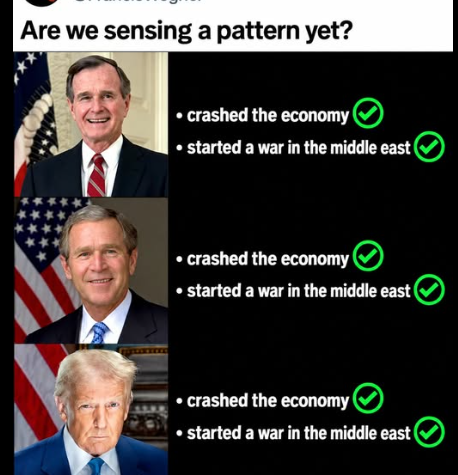 I’m not sure it’s as simple as this, insofar as Bush 41 and 43 weren’t criminal sociopaths.
I happened to be driving through Manhattan on the very day that Colin Powell was addressing the United Nations just a few miles away and claimed, and I think honestly, that Saddam Hussein had “weapons of mass destruction,” and must be stopped by a U.S. military invasion.
Contrast that against what we’re doing in Iran. Fifteen years ago, the Joint Comprehensive Plan of Action (JCPOA), included Iran, the P5+1 nations (the United States, China, Russia, France, the United Kingdom, and Germany), alongside the European Union made an agreement in which most of the developed world agreed that Iran must not have a nuclear weapon.
That stood firmly in place until Trump’s latest war crime, which is costing lives and choking the world economy, solely to defend our president’s neuroses.
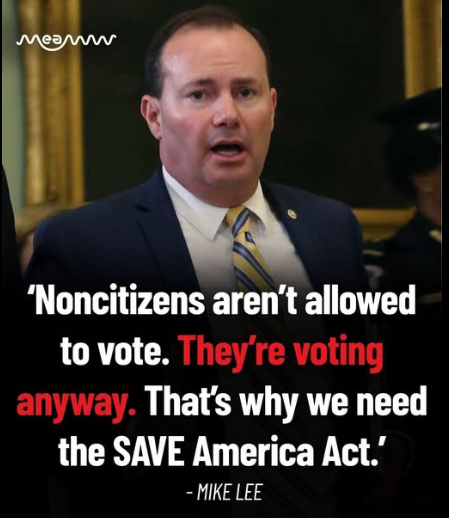 The Brennan Center at NYU’s seminal report on this issue, The Truth About Voter Fraud, found that most reported incidents of voter fraud are actually traceable to other sources, such as clerical errors or bad data matching practices. The report reviewed elections that had been meticulously studied for voter fraud and found incident rates between 0.0003 percent and 0.0025 percent.
Does that stop liars like Mike Lee from spreading disinformation of the subject? Of course not.
There is no judgement day. There is no Saint Peter standing in front of the Pearly Gates discerning good from evil and acting according.
That’s a lucky break for Mike Lee.



-
Climate Change1 year ago
Guest post: Why China is still building new coal – and when it might stop
-

 Greenhouse Gases2 years ago
嘉宾来稿:满足中国增长的用电需求 光伏加储能“比新建煤电更实惠”
-
Greenhouse Gases1 year ago
Guest post: Why China is still building new coal – and when it might stop
-

 Climate Change2 years ago
嘉宾来稿:满足中国增长的用电需求 光伏加储能“比新建煤电更实惠”
-

 Renewable Energy11 months ago
Sending Progressive Philanthropist George Soros to Prison?
-
Climate Change2 years ago
Bill Discounting Climate Change in Florida’s Energy Policy Awaits DeSantis’ Approval
-
Greenhouse Gases1 year ago
嘉宾来稿:探究火山喷发如何影响气候预测
-

 Climate Change2 years ago
Analysis: China’s CO2 falls 1% in Q2 2024 in first quarterly drop since Covid-19