

Welcome to Cited, your essential guide to new climate research.
In the news
SPRING HEATWAVE: Temperature records for May fell across western Europe as the region baked in an “exceptionally early” heatwave, reported the Associated Press. The outlet noted that temperatures reached 35.1C in the UK and 36C in France at the end of last month, with the latter’s national weather service stating that a “heat dome” had produced temperatures more than 10C higher than “usual”. BBC News said temperatures reached 40.3C in Portugal. Carbon Brief explored how the media covered the extreme weather and the role of climate change.
CLIMATE RESEARCH ‘STYMIED’: The White House released draft regulations that would “give political appointees the final word” on federal research grants and other funding across government agencies, reported Scientific American. According to Bloomberg, climate experts said the “sweeping” changes would “stymie research in the field”. At the same time, the Guardian reported the National Science Federation – a US government agency – announced it would be dismantling a $368m deep-sea observation system that provides “crucial” data on ocean systems and climate change. [For more, see ‘Spotlight’ below].
WMO WARNING: A report from the World Meteorological Organization (WMO) and UK Met Office, covered by Reuters, found that average global temperatures are forecast to reach “near-record levels” in the next five years. The newswire said the report projected that average temperatures each year over 2026-30 will range between 1.3-1.9C above pre-industrial levels, with one year where temperatures will top the warmest year on record, set in 2024.
Research picks
Impacts
- Climate change and population growth have led to a 51% increase in global exposure to extreme daytime heat in cities over the past two decades | Communications Earth & Environment
- Global warming interacts with poverty to “magnify educational disruption” and “deepen existing inequities” among children and young people | The Lancet
- Human-caused greenhouse gas emissions has increased the likelihood of “landfalling” oceanic heatwaves by a factor of nine | One Earth
Nature
- Wildfire “disturbances” have been shifting Canada’s forests from a carbon sink to a carbon source since the 2000s | Global Change Biology
- Following decades of rapid decline, mangrove forests around the world have been recovering since 2010, with both forest loss and degradation rates slowing | Science
- Large-scale cultivation of macroalgae has “low potential” for carbon dioxide removal and unintended consequences that “can be substantial” | Biogeosciences
Projections
- Global hailstorm-induced damage potential could increase by 37-42% by the late 21st century, depending on the emission scenario | Nature
- Even under a low-emissions scenario, 45% and 35% of mountain bird and mammal species, respectively, are at risk of seeing losses in habitat range by 2050 that outweigh any gains by at least 20% | Conservation Biology
- Future warming will likely boost natural methane emissions from freshwater, as methane-oxidising bacteria fail to keep pace | Nature Climate Change
Captured
China accounts for more “conventional” carbon dioxide removal (CDR), such as afforestation and reforestation, than any other country in the world. That is according to the third edition of the annual state of carbon dioxide removal report, published last week and covered in detail by Carbon Brief. China’s average conventional CDR of 539m tonnes of CO2 over 2014-23 is more than double that of the US, the next-highest country.
625
How many times greater cities in the global south experienced “compound” exposure to extreme heat and air pollution than global-north cities over 2003-20, according to an npj urban sustainability study.
Spotlight
AMOC observations at risk
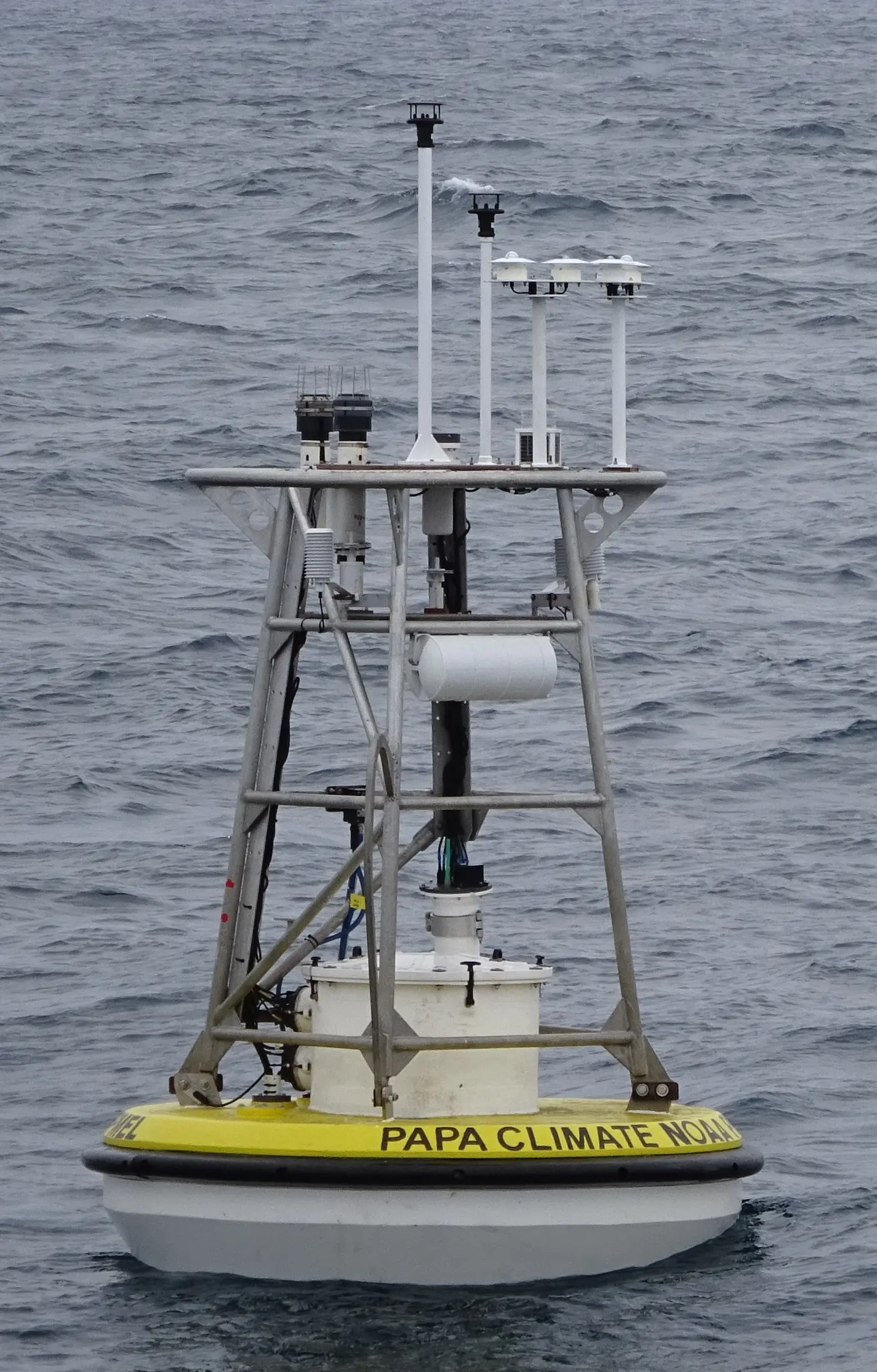
The Irminger Sea, a patch of frigid ocean east of Greenland, plays an outsized role in the Earth’s climate.
Here, surface water that has travelled thousands of kilometres from the tropics grows cold and dense enough to sink to the ocean’s depths – a transformation that must occur for the water to begin a long journey back to the southern hemisphere.
This makes the Irminger Sea an “action centre” for the mighty Atlantic Meridional Overturning Circulation (AMOC), the vast system of ocean currents that keeps temperatures in Europe mild.
Last week, the US government announced plans to dismantle ocean moorings installed in the Irminger Sea which, among other things, collect data on the health of the AMOC.
This came as part of a programme to “descope” the Ocean Observatories Initiative, a $368m network of ocean sensors installed in the Pacific and Atlantic oceans.
Two of the moorings earmarked for removal in the Irminger Sea form part of an internationally funded, trans-Atlantic AMOC monitoring array, known as OSNAP, that stretches from Canada to Scotland.
Experts told Carbon Brief the move by the Trump administration highlights the vulnerability of AMOC observation systems around the world. These deep-sea moorings – scattered across the Atlantic – collect real-time data on, among other things, ocean current, temperature, pressure and biochemistry.
Prof Penny Holliday, chief scientific officer of the UK National Oceanography Centre, told Carbon Brief that the OSNAP array, as well as the RAPID array at 26N, are “entirely dependent” on research grants that have to be “continually reapplied for”.
“Funding is perilous all the time,” she said.
A report prepared last month by scientists for Nordic ministers exploring the security of funding for AMOC observing systems warned that RAPID and OSNAP were in “critical condition” and faced “material exposure over an 18-month horizon”. Meanwhile, other key basin-wide and global components of the global AMOC observing system were rated as “at risk”.
It is not just US funding that is uncertain. The report notes, for example, that the five-yearly funding the UK provides to RAPID and OSNAP is “at risk from 2027 due to year-on-year budget reductions” at the Natural Environmental Research Council.
(RAPID is funded by the US and UK, whereas OSNAP is backed by five different countries, with the US contributing half of the total financial support.)
Report co-author Dr Femke de Jong from the Royal Netherlands Institute for Sea Research told Carbon Brief that “continued AMOC observations” are under pressure in “multiple countries”. She said:
“While the risk of a declining AMOC to society is starting to be recognised, there is not yet a system or institution in place to guarantee a way to monitor it.”
AMOC monitoring arrays are still in their infancy – RAPID, the oldest, was launched in 2004. Two decades of data captured so far shows that the AMOC is slowing down. However, scientists will need many more years of data to be able to confidently link the decline to climate change, rather than natural variability in the ocean.
NOC’s Holliday points to the disconnect between scientific and funder timelines:
“The timescale of observations needed in order to be able to detect a climate change signal from the very naturally variable ocean is around 40-60 years…. [And yet], in the Netherlands, they have to apply for a new grant for their ocean moorings every two years. They are going to have to do that for 40 years.
“This is a very inefficient way of getting funding for what should be critical infrastructure.”
Preprints to watch
Carbon Brief’s pick of new papers still going through peer review
- Urban areas were responsible for two-thirds of CO2 emissions from burning fossil fuels in 2022 | Nature portfolio
- Climate adaptation measures are responsible for one-quarter of greenhouse gas emissions and three-quarters of human freshwater withdrawals | Earth System Dynamics
- Global food miles – the emissions generated from transporting food – could be “lower than previously estimated”, at around 0.82bn tonnes per year | Nature portfolio
Noticeboard
- 10 June: AMS Washington Forum early registration deadline
- 10-12 June: Fourth international conference on carbon dioxide removal, Milan
- 11 June: Application deadline for postdoctoral research position in the political economy of net-zero at the University of Oxford; Salary: £39,424-47,779
- Mid-June: AGU annual meeting abstract submissions open
- 17 June: World Weaving climate research programme funding application deadline
- 17 June: CCMC lecture (online): “Temperature, health and adaptation: What actually protects people?”
- 21 June: Application deadline for postdoctoral research position in extreme event health impacts at Vrije Universiteit Amsterdam; Salary: £42,552-66,456
Cited is researched and written by Cecilia Keating, Robert McSweeney, Ayesha Tandon, Daisy Dunne and Dr Giuliana Viglione.
Please send tips, feedback and upcoming climate research to cited@carbonbrief.org
This is an online version of Carbon Brief’s fortnightly Cited email newsletter. Subscribe for free here.
The post Cited 9 June 2026: Europe’s ‘exceptional’ heatwave | Warming forecast | AMOC observations ‘at risk’ appeared first on Carbon Brief.
Cited 9 June 2026: Europe’s ‘exceptional’ heatwave | Warming forecast | AMOC observations ‘at risk’

This year’s so-called “super El Niño” is entering into record-breaking territory.
Sea surface temperatures in the tropical Pacific now equal the previous daily record set in 2015 and will likely keep rising in the days ahead.
El Niño is a naturally occurring climate phenomenon in the Pacific that reshapes weather patterns around the world and temporarily boosts global temperatures.
The current El Niño event – which has been underway since June and is expected to last until next year – has been developing faster than any previous event on record.
The strength of an event is tracked using the “Niño 3.4 anomaly”, which measures how much warmer sea surface temperatures in a section of the central Pacific are than average.
As of 19 September, the daily anomaly in the Niño 3.4 region stands at 3.07C, putting it in a statistical tie with the previous record of 3.08C.
Some scientists, using a different baseline for calculating the anomaly, have already called the new record.
Either way, this is remarkable, in part because of how early in the calendar year it is occurring. El Niño typically peaks in the winter months, most commonly in November or December.
Every strong El Niño on record has continued to strengthen after mid-September – and there is every reason to think that this one will as well.
(For more on El Niño, see Carbon Brief’s recent interactive explainer.)
Record territory
El Niño events are typically classed as “weak” when the Niño 3.4 anomaly reaches 0.5C, “moderate” above 1C, “strong” above 1.5C and “very strong” above 2.0C.
For this year’s event, the Niño 3.4 anomaly has now reached 3.07C, which puts it in a statistical tie with the record set on 18 November 2015, set during a “very strong” El Nino event.
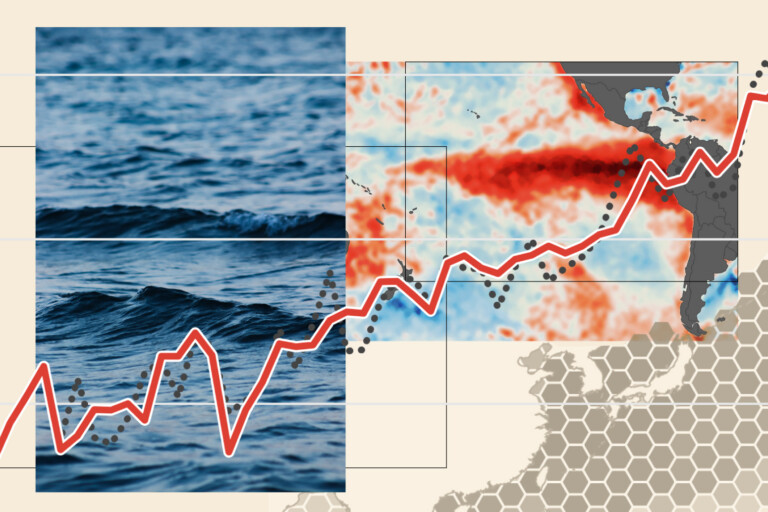
The chart below shows how the strength of the current El Niño (red line) is dramatically outpacing both 2015-16 (blue) and another “very strong” event in 1997-98 (light blue).
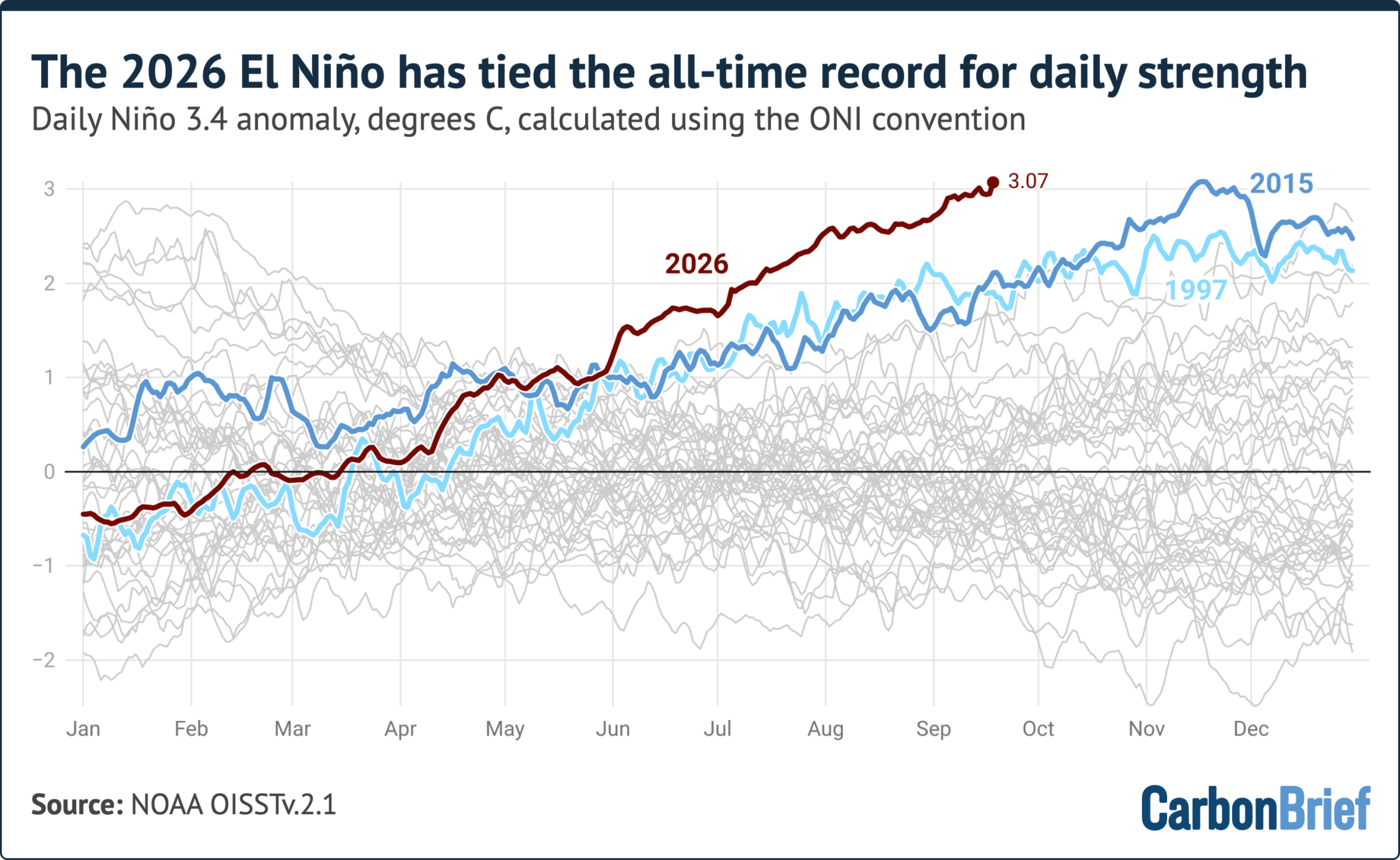
To analyse the developing El Niño, Carbon Brief followed the convention of the US National Oceanic and Atmospheric Administration’s (NOAA) Oceanic Niño index (ONI).
ONI is calculated by subtracting the latest 30-year average temperature in the Nino 3.4 region from daily sea surface temperatures. This approach allows for the most recent years to be compared against the most recent 30-year period. It removes much of the influence of longer-term, human-driven warming from the index.
(While meteorological organisations typically track changes to ONI on a three-month rolling average basis, Carbon Brief’s analysis looked at how the metric is changing on a daily basis.)
If ONI is calculated using a baseline of 1991-2020 then the current El Niño has already set a new record.
Since the start of June, El Niño’s strength has been greater than any other year. In early September in both 1997 and 2015, anomalies were around 1.9C – more than one degree below where they are this year.
An alternative index
There is another commonly used metric – the relative Oceanic Niño index (RONI) – used to study El Niño.
Introduced by NOAA in 2024, the RONI index adjusts for tropical ocean warming linked to human-caused climate change. To do this, it takes sea surface averages in the Nino 3.4 region and subtracts out temperature anomalies observed across the tropical oceans (between the latitudes of 20 degrees north and south).
This approach may better remove the influence of climate change in this specific region, but can also diminish the apparent strength of strong El Niño events, such as the current one, which extend well outside the Niño 3.4 region.
The chart below shows daily RONI values, which are record setting for this time of year, but remain below an all-time daily record set during the 1982-83 El Niño event.
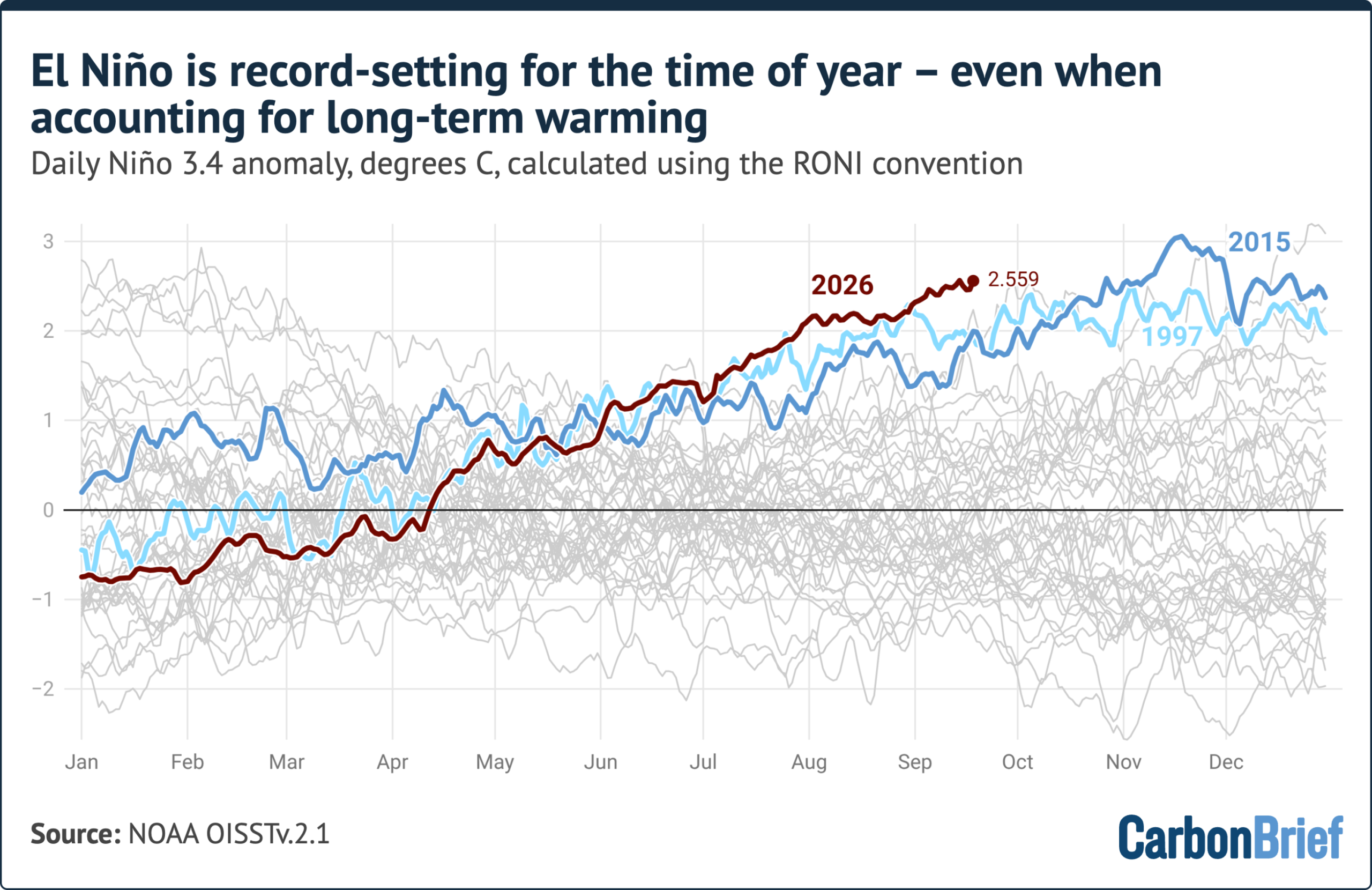
RONI stood at around 2.5C in mid-September, some 0.7C below the 1982 record.
However, that record was set in late December, at the peak of the event.
The 1982-83, 1997-98 and 2015-16 events added between 0.5C and 1.9C to their RONI values between mid-September and their peaks.
On track to smash monthly and seasonal records
Because daily El Niño values are noisy, scientists typically turn to monthly or seasonal averages to compare El Niño events.
The latest full calendar month for which data is available – August 2026 – had a Niño 3.4 anomaly of around 2.45C. This is higher than the peak of every prior El Niño event on record except 2015-16 – where the anomaly reached 2.75C – and 1877-78, when the anomaly sat at around 2.7C, based on a reconstruction of sea surface temperatures using sparse ship data.
The figure below shows the monthly evolution of the five strongest El Niño events on record alongside 2026, as well the current forecast from 14 seasonal forecast models.
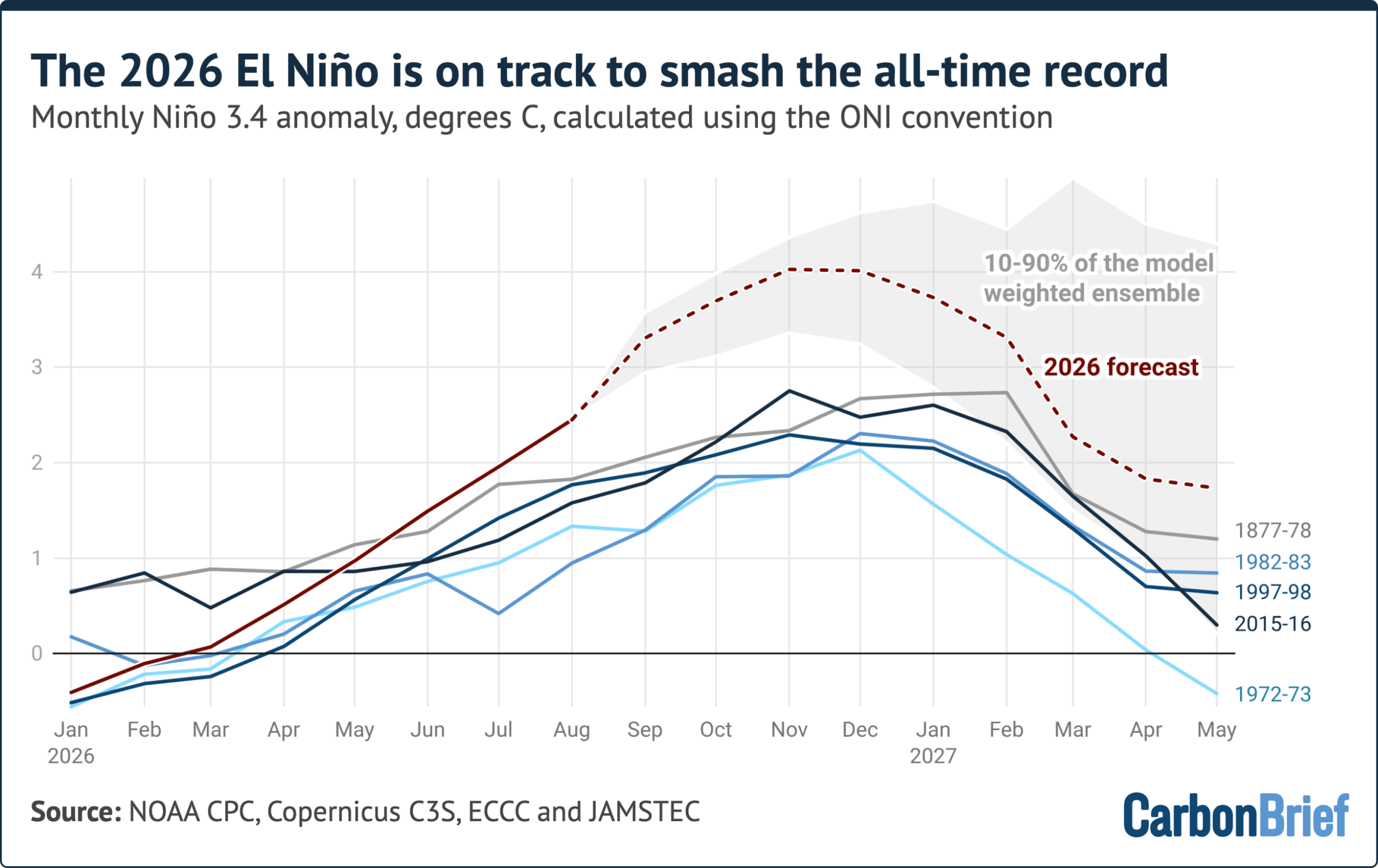
Taken together, the models project a peak monthly anomaly later this year of around 4.1C, with 80% of the 674 individual model runs falling between 3.4C and 4.6C.
Every single model run peaks above the 2015-16 record. The projected margin over that record, some 1.3C, is larger than the entire gap between the strongest and fifth-strongest El Niño of the past 150 years.
Some caution here is warranted, however. No seasonal forecast system has ever been verified against an event of this size, because none has ever occurred. The models also predicted temperatures slightly warmer than observed this summer, with real-world observations for August coming in around 0.3C below forecasts.
However, all strong El Niño events on record have continued to strengthen well into the winter – and the models are in near-unanimous agreement that this one will, too. If the forecast holds, the current event will peak between November and January at a level far beyond any event previously observed in the instrumental record.
El Nino’s effect on global temperatures typically lags rising ocean temperatures in the Pacific by several months, so most of the impact will be felt in 2027 rather than 2026.
Carbon Brief’s most recent “state of the climate” quarterly analysis found 2026 on track to be the warmest or second-warmest year on record. The next update in early October will examine what a record El Niño means for 2027.


The post Analysis: ‘Super El Niño’ reaches ‘remarkable’ all-time record appeared first on Carbon Brief.
Analysis: ‘Super El Niño’ reaches ‘remarkable’ all-time record
Artificial intelligence (AI) is set for a bigger role at this year’s UN climate summit, as Türkiye’s COP31 presidency seeks backing for a new pledge on the technology’s energy use.
In a statement on Monday, the COP31 hosts said they will launch the Antalya Pledge on AI, which they billed as a “political” commitment on how AI is “designed, procured, powered, deployed, measured and managed” in support of climate action.
“We must openly discuss AI’s growing energy consumption and it is time for governments to start setting the terms,” COP31 president Murat Kurum said in an emailed statement. “We expect companies to be transparent about their energy use and to power their operations with clean energy”.
No further details about the pledge have been made available so far, including whether it will include a clean energy commitment or whether governments and companies will be invited to sign on. The COP31 presidency said it would share a draft before the summit opens in Antalya in early November.
UN climate chief Simon Stiell went further in a New York speech on Monday, warning that AI leaders are “on thin ice when it comes to license to operate, and sinking deep underwater when it comes to public support”.
“Energy-guzzling artificial intelligence is driving up planet-heating pollution from coal, oil and gas, while ratcheting up energy costs for households and businesses,” he said, adding that data centre projects are being put on hold due to public opposition from New York to Texas.
Growing energy use and emissions
Concerns about the environmental impacts of AI infrastructure and its impact on rising electricity prices have led to a growing backlash in some communities, especially in the US.
Big Tech’s breakneck race to develop new AI models and build out the energy-hungry infrastructure supporting them has stoked fears over the technology’s growing climate impact.
Greenhouse gas emissions generated by data centres through their electricity use are set to more than double between 2024 and 2030, according to the International Energy Agency (IEA).
Data centres, which underpin various technologies including AI, are expected to consume more power than all but five countries by the end of the decade.
-
UN asks AI companies to reveal full environmental impacts
UN chief António Guterres says big AI firms should disclose the emissions, water and energy use of their data centres amid community opposition -
Explainer: Will AI data centres make or break the energy transition?
As grids struggle to meet soaring electricity demand for AI data-crunching, big tech is under pressure to cover the costs of boosting power supplies – which may be dirty or clean


The AI race is also driving a surge in new fossil gas investment in the United States, where Big Tech giants including Microsoft, OpenAI and Meta have struck up major deals with fossil fuel operators to power their infrastructure.
In China, the other major global AI force, coal provides around 70% of the electricity powering the country’s data centers, according to an IEA report published last year.
More space for AI at COPs?
Despite AI’s rapidly growing relevance for the world’s ability to limit global warming, high-level discussions on the climate impact of the technology have been largely absent at UN climate summits.
While the pledge is still being developed and scarce details have been made public so far, the Antalya initiative, alongside sharper rhetoric from Stiell, suggests that might be changing.
Climate Home News understands that the UN climate change body is encouraging AI companies to be present at COPs as the climate summits set the global direction for energy policy and tech firms now have a major stake in it.
Earlier this year, UN Secretary-General António Guterres launched an initiative aimed at holding AI companies accountable for their environmental impacts and repeated a call for all big AI companies to commit to powering every data centre with renewable energy by 2030.
Align AI with science
Stiell said that tech titans need to start showing why the benefits of AI outweigh its “skyrocketing costs”, by setting credible climate targets, coming clean about their energy use and powering data centres with renewable energy.
AI proponents claim that, despite its growing energy use, the technology’s widespread application would bring net benefits in the fight against climate change by driving massive energy efficiency gains and optimising renewable energy integration. The IEA estimates that existing AI applications could cut emissions by more than data centres add.
Fossil fuel expansion threatens COP31 hosts’ credibility, experts warn
But critics argue that it is wrong to compare theoretical gains with real-world emission growth and any gains are outweighed by the widespread adoption of AI tools by fossil fuel companies to extract planet-heating oil and gas faster and more cheaply.
Stiell said the tech industry needs to “respect science and start aligning with global climate efforts – urgently”.
Alongside the AI pledge, the COP31 presidency has also announced it will launch an ‘AI for Clean Technologies’ Initiative, which will develop a portfolio of AI-enabled clean-technology pilots in priority sectors, including smart energy and green industry.
This programme aims to demonstrate the responsible use of AI in practice, the COP31 presidency promised.
The post COP31 presidency announces AI pledge as UN climate chief says Big Tech ‘on thin ice’ appeared first on Climate Home News.
COP31 presidency announces AI pledge as UN climate chief says Big Tech ‘on thin ice’
Dola Oluteye, PhD, is a senior fellow in energy and transport policy at the UCL Energy Institute and founder of The Professional African Network Advisory Initiative.
At the June 2026 UN Climate Meetings in Bonn, the incoming Turkish COP31 Presidency introduced a headline target for the Action Agenda: raising electricity’s share of global final energy consumption from around 20% today to 35% by 2035.
Backed by the international Electrify Now campaign – also launched in June by the European Commission and governments across five continents, including Ethiopia – the aim is to replace fossil fuels with clean energy by shifting the way we travel and transport goods and commodities, cook and warm our homes and offices, and power our industries.
-
Made in Nigeria: The race to build an African solar industry from scratch
A solar power revolution is gathering pace in Africa and Nigeria wants a slice of the fast-growing industry, but competing with Chinese imports won’t be easy -
Q&A: How can African electricity access power jobs not just lightbulbs?
Carol Koech from the Global Energy Alliance says electricity connections in Africa should happen in a way that transforms communities and livelihoods -
Africa records fastest-ever solar growth, as installations jump in 2025
Africa’s solar power installations have increased sharply, driven by utility-scale projects and privately financed rooftop and commercial systems


On paper, this is a welcome signal. Yet, as world leaders line up behind global goals in the lead-up to COP31, African nations face a fundamental question: whose energy transition are we talking about? For the roughly 600 million people living without electricity on the continent, international climate targets often sound less like a lifeline and more like a conversation happening on another planet.
For developed countries, electrification is largely a replacement exercise – swapping petrol and diesel vehicles for electric ones, and gas boilers for heat pumps powered by existing, stable grids.
But across sub-Saharan Africa, the challenge is vastly different. The region accounts for 85% of the global population without electricity, up from 50% in 2010. Here, electrification is not a technology swap; it is the foundational building block of human dignity, economic sovereignty, energy access and modern development.
Electricity connections must deliver real development
Half of the number of people without electricity access in Africa live in three countries – Nigeria, Ethiopia and the Democratic Republic of Congo – while 900 million other Africans lack clean cooking solutions.
The proposed global electrification goal must not treat a continent with nearly half of its population without electricity the same way it treats mature Western economies.
To regard electrification merely as a tool for decarbonisation misses the core reality of our continent. Africa is not just transitioning an existing energy system; we are building one from the ground up in many places.
If a global electrification target of 35% by 2035 is to mean anything for Africa, it must be rooted in African realities. That begins with acknowledging that expanding power connections alone is insufficient.
China’s industrial engine starts to break its fossil fuel habit
Energy poverty does not end when a power line crosses a village; it ends when electricity is reliable, affordable and powered by clean sources that spur productive economic activities. Connecting households to a micro-grid they cannot pay to use does not deliver development.
Electrification can also help solve the critical issue of super pollutants in countries like Nigeria, notably the production of methane and black carbon, by replacing combustion-based systems with cleaner, electric alternatives.
Breaking from past extractive models
Equally critical is how the electricity is generated. Within some African policy circles, electrification has occasionally been viewed with scepticism – seen as a possible Trojan Horse to justify expensive nuclear projects or to expand long-term fossil gas lock-ins.
We must be clear: expanding electricity demand while increasing reliance on volatile fossil fuels or unviable, high-cost infrastructure is a false solution.
True electrification must be paired directly with the massive development of Africa’s unparalleled renewable energy resources.
Africa holds 60% of the world’s best solar resources, alongside immense hydro, wind and geothermal potential. Tying the global electrification push to renewable energy capacity and local battery storage is the only pathway that protects African economies from international fuel price shocks while keeping our climate commitments intact.
Global climate negotiations such as those ongoing at the International Maritime Organization (IMO) offer another building block for Africa’s green energy future.
International trade linked to 20% of global emissions – but imports ignored
Adopting a shipping carbon price at the IMO this year, through the Net-Zero Framework, would create a climate fund worth $12 billion a year. This finance could be used not only towards the electrification of Africa’s ships and ports, but also for building broader renewable energy production on the continent.
Furthermore, global initiatives must break from past extractive models. Africa cannot remain merely a site for extracting critical minerals – such as lithium, cobalt, and copper – to feed green supply chains elsewhere, only to import expensive finished technologies.
An authentic, inclusive campaign must support the development of local industry, mineral value addition and job creation on the continent.
Africa’s COP31 agenda should centre clean electrification
To achieve this, international campaigns like Electrify Now must deepen their partnership with Global South institutions. Western-centric messaging encouraging people to buy electric vehicles and install heat pumps at home must be paired with calls for robust transmission grids, decentralised mini-grids, industrial energy security and affordable clean cooking.
For this to happen, it would be great to see more African governments, businesses and civil society organisations join the Electrify Now campaign, where they can advocate for the challenges and opportunities on our continent.
Ethiopia is a great example, where a government policy to ban the importation of petrol and diesel cars has led to the country becoming a continental leader in the uptake of electric vehicles. Meanwhile, the Grand Ethiopian Renaissance Dam has seen the cost of electricity come down significantly and accounts for more than half of Ethiopia’s renewable energy generation capacity.
Türkiye says it has “final decision” at COP31 despite Australia running negotiations
The road to COP31 offers Africa a pivotal opportunity to place clean electrification at the very centre of its economic and climate agenda.
By taking ownership of this narrative, African leaders can insist that global targets deliver capital, technology sharing and infrastructure investments tailored to local needs.
Electrification is not a luxury or a secondary climate goal. Powered by renewable energy – the African sun and wind – it can be the engine of our green industrial transition. It is important for global climate architecture and Western governments to be aligned with that reality.
The post Why the global electrification agenda misses the point on Africa’s energy crisis appeared first on Climate Home News.
Why the global electrification agenda misses the point on Africa’s energy crisis



-

 Greenhouse Gases2 years ago
嘉宾来稿:满足中国增长的用电需求 光伏加储能“比新建煤电更实惠”
-
Climate Change1 year ago
Guest post: Why China is still building new coal – and when it might stop
-
Greenhouse Gases1 year ago
Guest post: Why China is still building new coal – and when it might stop
-

 Climate Change2 years ago
嘉宾来稿:满足中国增长的用电需求 光伏加储能“比新建煤电更实惠”
-

 Renewable Energy11 months ago
Sending Progressive Philanthropist George Soros to Prison?
-
Climate Change2 years ago
Bill Discounting Climate Change in Florida’s Energy Policy Awaits DeSantis’ Approval
-
Greenhouse Gases1 year ago
嘉宾来稿:探究火山喷发如何影响气候预测
-

 Carbon Footprint2 years ago
US SEC’s Climate Disclosure Rules Spur Renewed Interest in Carbon Credits