

 The other day, I ran into a young couple with an infant, who live in a rural part of the U.S. I happened to overhear the father saying that the quality of public education where they live is “terrible,” and that they’re thinking about home schooling. And so, as if it were any of my business, I asked him by what metric the schools in his area are, in fact, terrible.
He responded, “LGBTQ,” by which I’m sure he meant indoctrination into the idea that non-traditional sexuality is OK. He went on to qualify: “Now, that’s public schools. Private schools can at least be held accountable.”
Now, at this point I had my answer, and I had the good sense simply to thank him and politely cut the conversation off, but a few thoughts remained on my mind:
• Your kid isn’t walking and talking at this point. It seems that you’re trying to solve a problem that doesn’t actually exist.
• Let’s say that seven years from now he’ll be in third grade. How much interest do you think he’s going to have in learning about homosexuality at that point? How much interest do you think his teacher will have in introducing topics that are irrelevant and confusing in young students’ lives, like sex education?
• Do you seriously believe that discussion on this topic “grooms” kids to become gay? How did you become straight? When your blood serum testosterone hit a certain level, perhaps when you were 12 years old, you took on a sexual identity, quite independent of something you had seen on TV or in a movie.
• Are you suggesting that public school teachers have more latitude and less accountability as to how and what they teach than instructors in private institutions?
• If they have the financial means, parents can put their kids through private schools, and yes, those schools have distinctly different approaches to politics, religion, philosophy, and the overall approach to educational. If you want your kid to learn that the world is 6000 years old because the bible tells us so, you’ll need a deeply religious school, one that explicitly rejects science, to fulfill that task. In general, however, private education tends to be more liberal in terms of teaching techniques and subject matter than our vanilla public schools whose curricula is the joint work of thousands of bureaucrats.
Friends say I have too much time on my hands. Perhaps they’re right.
When Parents Say that Public Education Is Terrible, What Do They Mean?

Weather Guard Lightning Tech
Trump Targets Revolution Wind, Nordex Q3 EBITDA Doubles
Allen covers the Trump administration’s bid to reopen Revolution Wind’s permit, a bipartisan Senate permitting deal, Nordex’s doubled third-quarter profit, and GE Vernova’s new wind chief.
The Uptime Wind Energy Podcast is brought to you by Weather Guard Lightning Tech, creators of the StrikeTape Ultra LPS retrofit. Subscribe to Uptime’s Substack newsletter. And check out Rosemary’s “Engineering with Rosie” Youtube channel. Have a question we can answer on the show? Email us!
 Have you ever wondered why every dictator in human history follows the exact same playbook? Check this out
Plato nailed this 2400 years ago, and it’s been on “rinse/repeat” ever since.
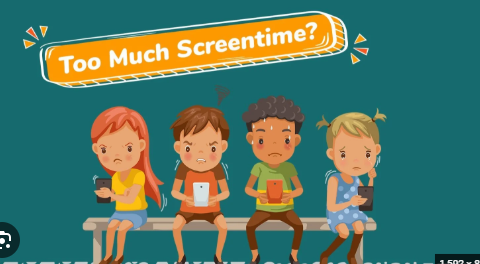 On average, I meet perhaps 50 K-12 teachers each year, and I often ask them: What is the biggest challenge you face that impacts your ability to connect with and educate your students?
Here’s a rough tabulation:
Screen time, how it robs kids of their ability to pay attention, impedes social interaction, and makes parenting more difficult: 80%
Everything else combined: 20%
Maybe this is a cynical viewpoint, but it seems like that world of today revolves around the mega-corporations profiting by punishing their customers.
In this case, we have the tech giants ruining the lives of our children. Elsewhere, we have healthcare industry driving people into bankruptcy, Big Oil ruining our planet, the gun lobby murdering our kids, and, of course, an ultra-corrupt government looting our treasury to pay off billionaire donors.
Note that this wasn’t the case when we boomers were growing up 60 years ago. This is a distinctive shift from the 1960s when corporate America was focused on things like color TVs and the Ford Mustang.

Trump Targets Revolution Wind, Nordex Q3 EBITDA Doubles

Protecting nature is a public duty, not a Wall Street profit opportunity
Greenpeace delivers 47 metre-long petition with half a million signatures to Woodside HQ following major gas protest
-
Climate Change1 year ago
Guest post: Why China is still building new coal – and when it might stop
-

 Greenhouse Gases2 years ago
嘉宾来稿:满足中国增长的用电需求 光伏加储能“比新建煤电更实惠”
-
Greenhouse Gases1 year ago
Guest post: Why China is still building new coal – and when it might stop
-

 Climate Change2 years ago
嘉宾来稿:满足中国增长的用电需求 光伏加储能“比新建煤电更实惠”
-

 Renewable Energy12 months ago
Sending Progressive Philanthropist George Soros to Prison?
-
Climate Change2 years ago
Bill Discounting Climate Change in Florida’s Energy Policy Awaits DeSantis’ Approval
-
Greenhouse Gases1 year ago
嘉宾来稿:探究火山喷发如何影响气候预测
-

 Climate Change2 years ago
Analysis: China’s CO2 falls 1% in Q2 2024 in first quarterly drop since Covid-19