

Less than 48 hours after the gavel came down at COP29, Carbon Brief ran a webinar to talk through all the key outcomes from the summit in Baku, Azerbaijan.
The team discussed the new climate finance goal adopted at COP29, the role of China in negotiations, the finalisation of Article 6 carbon trading rules and much more.
The discussion built on the Carbon Brief’s detailed summary of the key outcomes from the summit, outlining everything that happened both inside and outside the negotiating rooms.
A recording of the webinar (below) is now available to watch on YouTube.
The webinar was moderated by Carbon Brief’s editor and director, Leo Hickman, and featured the following Carbon Brief journalists:
- Dr Simon Evans, senior policy editor and deputy editor
- Daisy Dunne, associate editor
- Josh Gabbatiss, policy correspondent
- Molly Lempriere, section editor for policy
- Aruna Chandrasekhar, land, food systems and nature reporter
- Wanyuan Song, China section editor


The post Webinar: Carbon Brief journalists discuss COP29’s key outcomes appeared first on Carbon Brief.
Webinar: Carbon Brief journalists discuss COP29’s key outcomes

When José Antonio Kast took office as Chile’s new president in March, one of his first moves was to put the brakes on plans to expand two protected marine parks – raising doubts about the country’s high-profile bid to host the headquarters of the High Seas Treaty.
But during the UN General Assembly last month, the right-wing leader reaffirmed his leftist predecessor’s ambition for Chile to host the landmark global pact, which came into effect in January and provides a legal framework to protect the waters of the high seas beyond national jurisdiction that cover about two-thirds of the world’s oceans.
Hailing the country’s “maritime vocation”, Kast’s government said the bid to host the treaty’s secretariat in the port city of Valparaíso was state policy and testament to its commitment to multilateralism.
“For the government of Chile, it is of high interest to achieve this recognition, and we will carry out all the efforts to obtain the necessary support,” Foreign Minister Francisco Pérez Mackenna was quoted as saying by local media.
-
At pre-COP, UN climate chief warns of heat threat to mothers and babies
The spotlight on maternal health came on the first day of the pre-COP31 meeting in Fiji, where Pacific concerns are set to top the agenda as ministers gather for talks -
Big banks behind “net zero” alliance continued lending to coal firms
New data shows coal finance has stayed steady at the global level since 2022, as international efforts to cut the ties between lending and emissions faded -
Jordan’s mega-plan for water security risks locking in fossil gas demand
A giant desalination plant will help Jordan confront water scarcity, but solar power’s limited role in the energy-hungry project has raised questions about how climate adaptation finance is being spent

Tough competition from Chinese, Belgian bids
But to garner the votes it needs, Chile must fend off competing bids by Belgium – which has proposed its well-connected capital, Brussels – and China, whose well-funded bid includes the provision of free premises in the coastal city of Xiamen and five years of free utility costs.
Parties to the treaty, formally called the Agreement on Marine Biological Diversity of Areas Beyond National Jurisdiction (BBNJ), will choose the headquarters at their first summit (COP1), in New York from January 11 to January 22, 2027. They will seek consensus, falling back on a two-thirds majority in successive secret ballots.
Chile has offered to provide a restored waterside warehouse “at its own expense” as office space, pitching itself to developing countries as a Global South alternative to Europe-centred Brussels. Among richer countries, it is promoting its democratic credentials and greater transparency as an alternative to China.
Rolling back environmental safeguards at home?
While the South American country remains the top pick among environmental campaigners and other civil society groups, critics of Kast’s government say recent policy moves may make it harder for the country to garner the support it needs.
On March 12, the day after Kast took office, the Environment Ministry withdrew 43 decrees awaiting legal approval, including a push to expand the Mar de Juan Fernández and Nazca-Desventuradas marine parks – vast protected areas in Chile’s Pacific Ocean waters. Both remain under review, the ministry told Climate Home News.
The decrees also included an emission standard for coal power plants and regulations for Chile’s new biodiversity and protected areas service.
A month after holding up the decrees, Kast questioned aspects of Chile’s urban wetlands protection law, suggesting it was sometimes an unjustified obstacle to much-needed housing development, and his administration has also sought to ease the rules on salmon farming in the world’s second-largest producer.
In August, the Constitutional Court struck down the salmon farming reform after a challenge by opposition lawmakers and warnings from green groups including Greenpeace, which said it could help farms relocate into protected areas such as the Kawésqar National Reserve.
Valparaíso mayor Camila Nieto, from former leftist President Gabriel Boric’s party, backs the bid to host the High Seas Treaty, but said she hoped “the government’s support also translates into public policies consistent with the goals of protecting and conserving the oceans”.
“The decisions a country makes on environmental matters can influence international perceptions of its commitment to protecting the oceans. That is something we cannot ignore,” Nieto told Climate Home News.

China’s bid stirs concerns over data access, fishing
Chile’s past record on marine protection – it has protected 43% of its jurisdictional waters – could yet give it an edge.
“Chile deserves it for its conservation record as a state. For more than 15 years Chile has been following this path,” Liesbeth van der Meer, executive director at conservation group Oceana in Chile, told Climate Home News.
Concerns in some quarters about the rival bid by China – for example, over a potential conflict of interest due to the vast Chinese fishing industry – may also weigh in Chile’s favour, experts say.
Chinese-flagged vessels did about 30% of detected high seas fishing between 2022 and 2024, according to an Oceana analysis of Global Fishing Watch data. China also sponsors five of the International Seabed Authority’s 31 deep-sea mining exploration contracts, more than any other country.
The secretariat would host sensitive marine data, making transparency paramount, experts say.
China says hosting the secretariat in Xiamen would help make the treaty more globally representative, fostering cooperation between rich and developing countries and aiding equitable access to marine science and technology.
Wang Yi, China’s minister of foreign affairs, said in a statement that the country has “all along championed true multilateralism” and “firmly defended” UN institutions. Given Xiamen’s $38-billion ocean industry, the city lives up to the treaty’s “significance and promising future”, he added.
Meanwhile, Chile is proposing the treaty’s first high seas marine protected area for the Salas y Gómez and Nazca ridges, a chain of more than 110 seamounts stretching about 4,000 km from off Peru to Rapa Nui (Easter Island) that is rich in endemic fish and other marine species.
The ridges are “a true oasis of productivity”, said Carlos Gaymer, director of the Centre for Ecology and Sustainable Management of Oceanic Islands at Universidad Católica del Norte and co-author of a 2021 scientific review of the area.
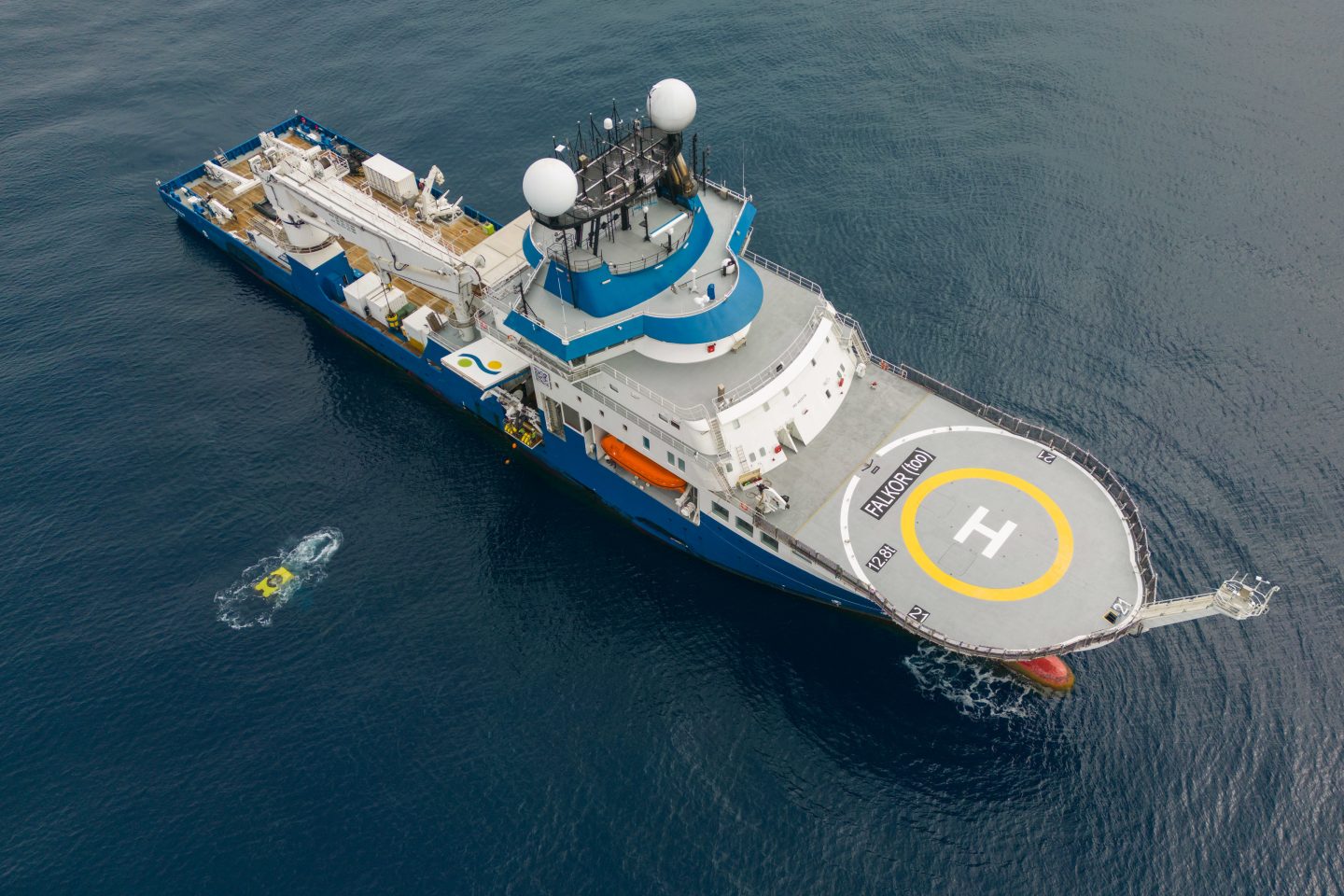
The water is so clear that phytoplankton thrive around 200 metres down, feeding zooplankton, small fish and, up the chain, sharks and seabirds. Whales, turtles and sharks use the ridges as “a real highway” across the Pacific, Gaymer said. Parts of the Nazca ridge are likely nursery grounds for jack mackerel and swordfish.
Chile has already asked the body that regulates the industry in the area – the South Pacific Regional Fisheries Management Organisation (SPRFMO) – to close the ridges to all fishing vessels. According to Chilean data, more than 80% of fishing in the area involves Chinese vessels.
Meeting on the Chilean request in early September, SPRFMO’s scientific committee agreed only to recommend closing the area to bottom fishing. SPRFMO’s commission will take the final decision at its next meeting, in early 2027.
For Gaymer, Chile’s push to close the area to fishing should be seen as a “starting point” for the treaty proposal.
“Every time there’s a new expedition, species new to science appear,” Gaymer said. “If you don’t protect areas like these … those species simply disappear from the planet.”
The post Race to host High Seas Treaty HQ heats up as Chile reaffirms bid appeared first on Climate Home News.
Race to host High Seas Treaty HQ heats up as Chile reaffirms bid
Mohamed Adow is the founder and director of Power Shift Africa.
What does it mean to ask a continent to adapt to a crisis it did little to create? For Africa, that question has stopped being philosophical as it is answered every day in flooded communities, failed harvests, disappearing livelihoods and public budgets stretched by disasters they cannot afford.
Africa produces a negligible share of global emissions, but between 1970 and 2021 it accounted for around 35% of climate-related deaths worldwide. The continent is therefore confronting a brutal contradiction that is exemplified by the fact that those who have contributed least to the climate crisis are carrying some of its heaviest costs.
And that explains why, for us, it is worrying that much of the climate debate treats adaptation as a technical exercise. Build better infrastructure, they say. Improve early-warning systems, they urge. Develop drought-resistant crops, they preach. Strengthen disaster preparedness, they yell. All of these things matter, but they do not answer the harder question of why some people and countries are so much more vulnerable in the first place.
At pre-COP, UN climate chief warns of heat threat to mothers and babies
That is the question we have spent the last couple of years trying to answer, and it culminates in our recently launched thought-provoking report that shows how Africa’s vulnerability is not an accident of geography, but has instead been shaped by history, economics and power.
Colonial extraction, unequal development, debt dependency, global economic asymmetries and exclusion from international decision-making have all constrained the resources and choices available to African countries, and climate change is intensifying those existing inequalities, shows the report, titled “A Just Transition for Adaptation: A Framework and Vision for Africa”.
Widening adaptation finance gap
I say it is ‘thought-provoking’ because it asks us to rethink adaptation itself – not as a collection of projects designed to help people cope with climate impacts, but as a question of justice, power and structural change.
That distinction might not sit well with some people, but for Africa it matters, because there is a danger in asking vulnerable countries simply to become more “resilient”. Resilient against what? How can you ask people to toughen up while letting them be strangled by a system that continues to reproduce the very inequalities that have made resilience so difficult?
If you want to know where the problem is, see where the money is coming from and where it is going. That becomes quite stark when you consider the fact that Africa’s annual adaptation needs are close to $70 billion but its adaptation finance flows are only around $14 billion.
Editor’s Desk: Nepal’s disaster has laid bare the world’s adaptation accountability gap
At the same time, a growing proportion of climate finance is being delivered through commercial loans rather than grants. That means countries already under severe fiscal pressure are being asked to borrow to protect themselves from climate impacts they did little to cause.
There is something deeply wrong with a system in which climate-vulnerable countries are spending more of their own public money on adaptation than they receive in international support, because that system turns climate injustice into a financial transaction, with those least responsible carrying more of the cost.
From extractivism to African ownership
And, as the new report shows, the problem goes beyond finance. Africa’s land, minerals, forests and other resources have become central to the global transition towards lower-carbon economies. Markets and green industrial projects may offer genuine opportunities, but without African ownership, participation and accountability, there is a risk that old patterns of extraction will simply be repackaged in the language of the green economy, and that is why we argue that a transition can be low-carbon and still be unjust.
It is precisely because of this risk that the report’s idea of a just transition for adaptation becomes important as it expands the idea beyond the familiar focus on emissions and energy systems. It asks what justice looks like when the goal is not simply to reduce carbon, but to enable societies to withstand a changing climate without reproducing the inequalities that made them vulnerable.
The report places four dimensions of justice at the centre: recognition, participation, distribution and restoration.
From Belém to Antalya – gains, gaps and challenges for a new Just Transition Mechanism
Recognition means taking African realities and knowledge seriously. Indigenous and local knowledge has too often been treated as peripheral to “real” climate expertise, even though communities possess generations of detailed understanding of ecosystems, rainfall, soils, water and livelihoods. That knowledge should inform adaptation policy from the beginning, rather than being added after decisions have already been made.
Participation means giving affected communities a genuine voice in decisions about their land, resources and futures. Adaptation governance should be inclusive, democratic, rights-based and rooted in free, prior and informed consent.
Climate justice must confront unequal development
Meanwhile, distribution asks who actually receives adaptation finance, technology and protection? Money that is announced internationally but fails to reach vulnerable communities does little to change their reality.
And, finally, restoration recognises that present-day vulnerability has a history. Climate justice cannot begin and end with today’s emissions, but must also confront the structural conditions that have shaped unequal development and continue to limit African countries’ room to respond.
This report, therefore, is an invitation to change the terms of the conversation on just transition. Africa definitely needs adaptation, but that should not mean endlessly adjusting to an unjust system. The real goal should be something more ambitious; a transition in which resilience, development and justice reinforce one another, shaped by African priorities and grounded in African realities.
The post Africa should not have to adapt to an unjust climate system appeared first on Climate Home News.
Extreme heat poses a growing threat to pregnant women and their babies, both before and after birth, the UN climate chief said on Monday, calling it “a new faultline in the global climate crisis, and one which is potentially fatal”.
Speaking on the first day of the pre-COP31 meeting in Fiji, where new research was launched on the issue, Simon Stiell warned: “This faultline must not become another deep chasm of climate-driven suffering, inequality and injustice.”
Rather than being a time of hope, he added, pregnancy is becoming “a time of anxiety, as climate impacts fill everyday life with risk”, straining health systems and threatening essentials like food, water and power – especially in poorer countries where many women work outdoors and live in informal housing far from under-equipped clinics.
-
What’s on the climate calendar for October 2026?
Brazilians are heading to the polls, diplomats are gathering in the Pacific for pre-COP, and it’s crunch time for the IPCC -
WHO issues new guidance on heat-health action plans, as El Niño sets in
Amid warnings of “unprecedented” weather extremes this year, the World Health Organization urges governments to strengthen protections for vulnerable groups
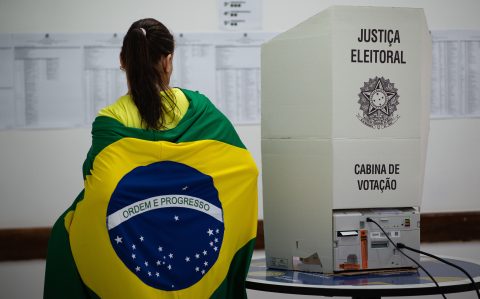

In a new international survey of 1,000 maternal healthcare professionals in Australia, Brazil, India, the UK and Zimbabwe, around three-quarters reported an increase in heat-related cases or complications affecting pregnant women, as well as foetal and newborn health, over the past five years.
Nearly all respondents in the survey commissioned by Wellcome, a global charitable foundation, said they had cared for a pregnant woman or baby whose health they believed had been affected by extreme temperatures.
Researchers have linked heat exposure with preterm birth, low birth weight, stillbirth and maternal complications. For every 1 degree Celsius rise in heat exposure, the odds of preterm birth increase by around 5%, while exposure to heatwaves is associated with a 25% higher risk of obstetric complications.
“No woman should have to fear that extreme heat will harm the baby she is carrying,” said Julia Gillard, chair of Wellcome and former Australian prime minister, adding “pregnant women must not be invisible”.