

Weather Guard Lightning Tech

Turbine Removal, Project Delays, Mining Rights – The High Costs Plaguing Wind Projects
This week we discuss Enel removing turbines from Osage Nation land, Dominion’s 2.6GW offshore wind farm, delays and fallout from offshore wind projects in MD, NJ and NY, the impacts of long project timelines, energy trading opportunities in Denmark, and differences in mining rights between the US and Australia.
Sign up now for Uptime Tech News, our weekly email update on all things wind technology. This episode is sponsored by Weather Guard Lightning Tech. Learn more about Weather Guard’s StrikeTape Wind Turbine LPS retrofit. Follow the show on Facebook, YouTube, Twitter, Linkedin and visit Weather Guard on the web. And subscribe to Rosemary Barnes’ YouTube channel here. Have a question we can answer on the show? Email us!
Pardalote Consulting – https://www.pardaloteconsulting.com
Weather Guard Lightning Tech – www.weatherguardwind.com
Intelstor – https://www.intelstor.com
Allen Hall: Okay, Rosemary, over in Turkey, there was an interesting flight. So they were headed from Istanbul to Riyadh, Saudi Arabia, and the passengers, weirdly, heard somebody in the cargo hold. Yelling for help and I thought oh my gosh. This is a horror movie scene. So the passengers Alerted the evidently the flight attendants or the stewardess is there and then they went to the cockpit and told the pilots Hey, wait, there’s somebody stuck in the cargo hold and They diverted the flight and when they got on the ground, they couldn’t find anybody.
Rosemary Barnes: Anymore.
Allen Hall: Oh, anymore which is what didn’t what the stories indicate.
Rosemary Barnes: Isn’t that the obvious Unless someone hit a tape recorder in a loudspeaker in their bag, I would like to think that’s what it was, but it doesn’t really seem you can divert the flight, but that’s surely only going to reduce the risk of harm to this stowaway by a tiny amount.
Once you’ve gone up to Altitude and gone down again, the landing gears come up and gone down and then, yeah, that’s horrible.
Allen Hall: Yeah, if they’re in the landing gear area, that’s not a good place to be.
Philip Totaro: If it was a stowaway, because there have been cases where baggage handlers have sometimes, unfortunately, been, like, caught in the plane.
And that’s happened even in the United States. It’s extremely rare, thankfully, but that does happen. But to land after everybody’s this is like a Twilight Zone episode, Allen. Everybody’s like hearing a knock on the thing, and somebody crying for help, and then there’s nobody in there?
What’s going on? Ghosts?
Allen Hall: That is so weird.
Rosemary Barnes: Was the Twilight Zone always so gruesome? I don’t know. This is the way to start in a high note for the episode Allen.
Allen Hall: I just thought of you when I was thinking of Rosemary when she flies. She’s got to fly for 14 hours at a time. What do you do when you’re over the Pacific Ocean and here’s everybody knocking from the cargo hold?
It’s that is a horror scene.
Philip Totaro: Hopefully you don’t, jeez.
Allen Hall: My, my first thought was hopefully it was like a cat or a pet that, sometimes cats can sound like humans and make that kind of helping noise or a bird or something, please let it be something like that. But Rosemary had to go to the human level and scare us all.
So there you go.
Philip Totaro: Gaslighting Rosemary again.
Allen Hall: All right, Rosemary, Equinor. Has entered into an agreement with BP to independently pursue separate offshore wind projects under bids for those New York actions that are going on. BP is going to take full control of Beacon Wind off the coast of Long Island, and then Equinor is going to take Empire Wind.
Which is right nearby. The deal provides both companies flexibility to pursue priorities, obviously, for their individual corporate strategies, so they broken the ties financially. This has financial impacts, though, Phil. Equinor is expected to have a write down of about 200 million, and I think BP is talking about a 600 million Right down at the moment.
This is more of the fallout, I think, from the Ørsted, New Jersey situation where a lot of these projects are not taking place and everybody’s trying to find their financial footing. Phil?
Philip Totaro: Keep in mind, too, that these were part of a portfolio of projects where they wanted to renegotiate the power purchase contract prices.
They were blocked by the state of New York from doing that. And I guess this is the easiest mechanism for each company to just go and pursue, split the projects where they were co developing and just pursue them independently. Although, to be honest, the indications that we have on the new bids are that, they’re gonna end up being about 170 a megawatt hour, up from around 120 per megawatt hour in the first place.
Anyway, so That’s, this goes back to, I don’t understand why they didn’t just negotiate, why did they force the rebid? And then, I’m also slightly confused about the divorce from the perspective that normally you bring in a partner on a project because it defrays, it’s a risk reduction, right? It defrays.
Some of the cost of and some of the liability associated with doing any one single project phase. I don’t know. It’s a bit of a curious one. Although again, yes, you’re right, fallout from, what everybody’s been feeling and saying, which is, Inflation bit, interest rates are still too high.
Everybody’s waiting for interest rates to come down, which we expect to do sometime this year. And when that happens, a 170 to 190 bid is gonna look a lot more competitive than the original strike price that they had, around 120.
Allen Hall: Wow. Cause this has fallout in other places like New Jersey, right?
New Jersey approved two projects leading light wind and attentive energy offshore. In the round three of offshore solicitations, both projects are going to be located really far offshore, 40 miles. And what they’re saying in the New Jersey press is that you could barely see the tips of the blade because of the curvature of the earth, there’s just very little of the turbine you’re going to be able to see.
It’s so far away, it’s going to, those two projects are going to be about 1600 megawatts, which should power about a little over 1. 8 million homes. Now a couple of things about this project, Phil, both projects is the PPA prices seem really low. So leading light is about 112 a megawatt hour and attentive is about 131 a megawatt hour.
And based upon what we’re seeing in New York, where 170, 190 is probably the range they’re going to end up at. That’s a huge delta. So have Leading Light and Attentive left a lot of money on the table, or are they going to be in financial constraints here, or are they going to have to back out? Because if somebody’s going to pencil this and figure, and do the counting and realize we’re going to come up short, right?
Philip Totaro: It’s, you know what, it’s interesting because what, what happened with, the companies that pulled out, so like Ocean Wind One some of the other projects in New York, where they pulled out of the existing, even Massachusetts for that matter, where companies have pulled out from the existing power offtake contracts they had, they did so because Interest rates were too high.
Now, what I think these companies are doing is because of the current development stage that these projects are in, which is to say they don’t have federal approval yet, they don’t have state approval for the electrical cables and interconnection and all that sort of thing. They still need to go through all their vital environmental permits, et cetera, et cetera.
So given the state that they’re in and given the anticipated reduction in interest rates, I think they’re betting on, although it is a bet, but I think they’re betting on, inflation and interest rates coming back down and the cost of money is going to make for a more attractive project where they can go back to quote unquote, normal.
prices between, 112 to 132. That said, it’s still, it’s, would still be on quite the low side of things especially for New Jersey where, you know, some of the previous projects had power purchase contracts that were already more expensive than that. So You know, I it’s good news for New Jersey, and New Jersey ratepayers.
They are correct that you’re theoretically not going to be able to see the turbines if they’re 40 miles offshore, but it’s also a more expensive development project when you factor in the extra cabling that needs to go all the way out there versus Something that was closer.
Allen Hall: So it’s the cables, it’s the jackup vessels being further out, everything’s further away, it takes more time to get there and to get back.
It adds a lot of cost to the project. And then, it adds wakes, right? Cause they’re on the back side. Of that byte region, right? So the, I thought this is one of the worst wake sites. So if they have development in front of them, the power they were expecting is probably lower than what they had originally calculated, I would assume.
So this project is, seems fraught with risk. It doesn’t make any sense.
Rosemary Barnes: Has anybody asked the Flat Earth Society for their comments on this? If the turbines are going to be invisible due to the curvature of the earth, what’s the, yeah, what’s the response?
Allen Hall: The moon landing didn’t happen.
So here’s the other rub Rosemary? I think being that far away sets us precedent because what New Jersey is telling everybody is you’re not going to see the turbines. So the expectation will be you’re not going to see the turbines. And if that’s going to be the general rule, then some of these sites that are a little bit closer where you can see more of the turbines will, be the less attractive ones.
If New Jersey is going to go down this pathway, it does seem odd, doesn’t it?
Rosemary Barnes: Yeah, I don’t know. I think maybe the first few projects, while people are, it’s such an unknown and. People are really concerned. It’s hard to look at a, artist’s impression of what this wind farm will look like from the shore and, figure out if it is going to bother you or not.
And seems at least plausible to me that as you have one project and you’re like, Oh, you can’t even see that at all. 40 miles is, like more than enough. And then maybe the next one’s 30. And then. 20 and, people are actually happy to see blurry wind turbines in the, in, on the horizon.
It turns out so yeah perhaps it’s smart to start off just super conservative and come in. But yeah, like you ran through some of the challenges of putting them far offshore. I would assume that wave loads would be higher out there as well. Yeah, just, it does seem excessively difficult, but I think, just get a few projects done and, maybe they’re not the, best engineering project, the cheapest that it could have been.
Yeah, the absolute best cited, but at least they’re there and it gives people, something to some sort of like foothold for the industry and something that developers can refer back to when people are concerned, have concerns about the unknown with a new development, they’ll be able to say in this one.
This is how it worked and maybe it’s the only way to actually get started because it does seem like the U. S. industry is really having a lot of trouble just building up some pace and moving forward.
Allen Hall: Does that indicate trouble down in Australia? If the United States do this on, does this on the East coast, is the star of the South that far offshore in Australia?
Is it 30, 40 miles out? I thought it was a lot closer.
Rosemary Barnes: I can’t remember. I don’t know. I wouldn’t I wouldn’t like to guess at whether Australians are going to be more bothered by offshore wind than Americans. My instinct would be that Australian, Australians culturally are somewhere in between.
The USA and Europe. Europeans totally fine with it. Americans, a lot of them seem to hate it, or at least a noisy minority hate it. So I would expect Australians to be more, more bothered to some extent, but I’d be surprised if they’re more bothered than the US.
Allen Hall: So down in Maryland, they’re having the same problem.
Ørsted is withdrawing from the skipjack. One and two projects in terms of getting the credit application in because they don’t think those projects are viable due to inflation and high interest rates and the supply chain issues. What Ørsted is going to do is basically continue on with the, all the other work that’s going to happen down in Maryland.
It’s about a one gigabyte project. But so they’re going to continue some of the development, like slow roll it a little bit until they can find a better PPA. Is that a smart move, guys? Is just waiting out, like New York realizing that the PPA prices are going to be 170 to 190, does it just take time for Maryland to realize that’s what it’s going to be down there too?
And then this all comes together?
Philip Totaro: It’s interesting because it’s not necessarily going to be the same prices in different states. Depending on the level of competition that you have from conventional power generation as well as onshore renewables, You may not have the same price range that you do in the Northeast.
The further north you go in the Northeast in the United States. Usually, the more expensive your electricity rates are. Just because of transmission lines, et cetera, et cetera, the, say, permitting, et cetera. The projects in New Jersey, both Leading Light and Attentive Energy 2, had the opportunity to potentially bid into New York, where they would have theoretically gotten a higher price.
But they chose New Jersey because they want to get steel in the ground, and I’m wondering if that has to do with PTC or ITC credits and just, getting things going as opposed to continue to wait for, the potential and possibility of a higher price. Again, I, like I said, I think they’re gambling and I think with Ørsted, with Skipjack, they’re also gambling that, the market’s going to turn around into a more favorable state.
Where, theoretically, they can get offtake in Maryland, they can get offtake in New Jersey, they can also get offtake in Delaware, or you could do something with the government and get offtake in D. C., or Virginia, theoretically, Northern Virginia depending on where they want to build transmission lines, this is You know the strategy that I think Ørsted wants to employ is more of a wait and see or let’s find out if offshore wind in the United States takes off and then somebody just buys this redheaded stepchild of our U.
S. offshore wind development portfolio out from under us.
Allen Hall: So let me ask you this question, because it’s an obvious question, but if you had signed a PPA and you get the project developed and you realize, Hey, this project is not making the money we thought it would, could you cancel the PPA and then go to New York and say, Hey, we’ve got all this power, we’re ready to go, just drop a cable in the water and we’ll sign a new PPA with you guys and move on?
Is that a thing? Is that possible?
Rosemary Barnes: But the point of a PPA is that you do know your revenue because it says the amount that you’re going to get per megawatt. You couldn’t be, you can’t be surprised in that sense. It’s, you might split your amount of generation that you’re expecting to get and have some of it accounted for the PPA and some of it you’re going merchant.
You’re at the whims of the market and so you could be surprised by the merchant part of it. But I can’t see how once the project is completed, I can’t really see how you’d have any surprises with the PPA part of it to the extent that would allow you a reason to get out of a contract.
Phil, more about this than me, but. I think it’s like the opposite of what a PPA is aiming for.
Allen Hall: But this is the opposite of an onshore project where you’re stuck in a state and you pretty much know you’re going to offload it in a specific way. On these offshore projects, because you’re in federal waters, you’re not specifically tied to a state.
Could you walk away from a PPA?
Rosemary Barnes: You might not be metaphorically tied to a state, but you are physically, you have to be tied somewhere. You’re not going to just build, like a number of grid connections to hedge your bets. I don’t think that’s going to work out well for anybody.
Allen Hall: Belgium did that, right? So Belgium tied four wind turbine projects together, right? So they had a wind turbine cable, a feeder cable break, right? And because they were tied to in a grid system, they could offload their energy a different direction, right? And they had two connections. So…
Rosemary Barnes: I guess it would makes Since if you are located between two markets, you connect each way and then you can, have a interconnector as well as the, wind farm generator and you’ve got some sort of hybrid business model.
It’s not a bad idea.
Philip Totaro: To go back to Allen’s question, we can technically, as an owner operator, if you want to break your PPA contract, you can do it. There are penalties. And it just comes down to math, whether or not you can get a better deal from another state. That said, if you’re in if you’re still in the development phase, and you want to pull out of one, even though you might have assigned PPA, if the project hasn’t been built yet, you’re gonna pay penalties, but they’re gonna be less than if the thing’s operational, because then there’s an expectation that power’s being delivered.
But yes, you could theoretically do that if Ørsted wants to try to run a cable, From Skipjack all the way up to Massachusetts or Rhode Island or something, they could do that, sure. If they want to, if somebody’s gonna pay for that.
Allen Hall: Yeah I don’t know what, why wouldn’t they?
Philip Totaro: I, they could try, I don’t think anybody’s gonna pay for that.
That’s the problem, I don’t, who’s gonna pay for that?
Allen Hall: Hey, uptime listeners. We know how difficult it is to keep track of the wind industry. That’s why we read P. E. S. Wind Magazine. PES Wind doesn’t summarize the noose. It digs into the tough issues, and PES wind is written by the experts. So you can get the in-depth info you need.
Check out the wind industry’s leading trade publication, PES Wind at peswind.com.
Okay, so this is the discussion that’s happening up in Denmark. So then that Bloomberg article that came out a couple of days ago, they were talking about. Basically energy traders up in Aalborg and Aarhus and Rosemary’s old neighborhood that are all Mark Zuckerberg in some office someplace doing energy trading and making hundreds of millions of dollars on the energy trading market.
It wouldn’t shock me if somebody had two cables coming off an offshore project and wherever they got the best price that day is where the energy is going. That would not shock me. I think that, that possibility is becoming more clear as they have trouble signing these long term agreements and realizing these projects aren’t as profitable.
Philip Totaro: But if you sign a fixed power purchase contract with somebody for offtake, there’s a certain amount of offtake that you’re guaranteeing. And then if you want to sell the rest of the power above that in a merchant market, you’re allowed to do that as the owner and operator of the project. But, it, that’s what kinda comes down to how do you set up a hedge strategy because there are necessarily gonna be days when you don’t meet your daily offtake requirement and you’re gonna have to buy power.
And this happens, by the way, even in onshore wind or solar or whatever, you have to buy power from a conventional power generator, usually with coal or gas or whatever. to make up the difference in whatever you were supposed to deliver under your off take contract. Yes, it’s theoretically possible to do what you’re suggesting, it’s just not trivial to do it, and it might make sense in Europe, where the cables, even though they’re in, serving multiple different countries, and there’s a mesh network and whatever, the cables are necessarily a lot shorter.
I think the longest export cable in Europe right now is something like, maybe, Between 50 and 60 kilometers. You’re talking about building 300 to 400 kilometers worth of cables, export cables to be able to handle all the different permutations of, I’m going to have a project down in Virginia, but I’m going to sell power to Massachusetts.
I don’t think it’s practical. And that’s why I’m saying it’s unlikely that happens in the U S it’s frankly it’s reminds me of the debate we have about like the train system that we have in the United States. It’s it works fine in like the Northeast. But the reason we don’t use commuter trains a whole lot in this, the middle part of the United States in the West is because it’s just too long of a distance between point A and point B.
It just doesn’t make sense to be able to do that.
Allen Hall: Rosemary, I still think we should open an office in Ahlberg and make some money on this energy trading business. I think there’s, I think there’s a future in that. And speaking of futures, did you also see that Dominion Energy received federal approval on their Dominion Wind?
Project which is a, which would be the largest one in the United States. It’s a 2. 6 gigawatt project. So they’re going to start building that soon. I think it’s going to be complete. I think the number, the latest date I seen is 2026, which is relatively close. So why is Dominion so easy and all these other projects are so difficult?
Philip Totaro: They’re their own power off taker, and which means they have no one to renegotiate with except themselves and. They also put a project budget in place, which was 9. 8 billion dollars for a 2. 6 gigawatt project. Which is a preposterous number. Now that does include transmission, however, that’s still they put a lot of extra margin in that project budget that they may not end up spending, but they’re building a project for themselves, so they don’t have anyone else to haggle with about power offtake.
Allen Hall: So the answer is to own both sides of the equation. Be the energy creator and the energy user. And that’s, and they get the state to back it up.
Philip Totaro: That’s the problem in New York and New Jersey. The utilities in New York and New Jersey and Connecticut, Rhode Island and Massachusetts for that matter, don’t want to own the projects or co own the projects.
They had the opportunity to, if you remember. PSEG in New Jersey Eversource, as you just mentioned. They are pulling out of these projects because they don’t think they’re gonna make money. And it could be that, again, Dominion just did a better job of putting the budget in place. Yeah I’m befuddled as to why more utility companies in the US don’t the benefit of a fixed price, power offtake contract that is well hedged.
Allen Hall: How does Avangrid look right now? Remember, they were one of the first ones to pull out a projects up in Massachusetts and they had a, like a $77 megawatt hour PPA. Now we’re talking about $170 megawatt hour. PPAs, they look like geniuses right now, don’t they?They got out early.
Philip Totaro: Yeah, and everyone was critical of it at the time, but again, as Inflation continued to go up and interest rates continued to bite and it’s trickled down into, supply chain costs and vessel availability and all these other things.
It’s just created a scenario where These companies, at the end of the day, are doing the right thing, because they can’t just build on profitable projects unless they’re gonna get some huge government subsidy to be able to do it, and nobody wants to see that, really. We don’t even want to see that in the industry.
We want projects to be able to operate profitably, and But, as we’ve talked about, I don’t know how many times now, if you have, natural gas or coal, and the price of natural gas goes, wildly out of sorts, then guess what? The power purchase contracts that they have in place is that the customer pays for that.
This is a different animal where you’re signing a fixed price contract and you have to make sure that the fixed price that you’re getting is profitable for, all potential scenarios, high inflation, low inflation, high interest rates, low interest rates. You have to make sure that the project’s going to necessarily work financially.
Otherwise it just doesn’t make sense. And that’s why the projects where the developer has pulled out are projects where it just doesn’t make sense at the price point that they struck when they struck the deal a few years ago. Now, the reality of this is. That we can have this debate about whether pulling out or not is a good thing.
But the fact of the matter is, these developers thought that was a fair price at the time and had the permitting not taken absolutely forever, then these projects would have already been under construction and nobody would have been pulling out of anything. Okay, if these projects were already under construction, then you wouldn’t, we wouldn’t even be having this whole debate.
And it’s just preposterous where the state holds no liability or culpability for the fact that their development process is ridiculously kludgy. You’ve had both New York and now places in New Jersey where they, and even Delaware and Maryland, where they’re highly resistant, if not outright blocking.
Transmission lines from being built to, to offtake the power. You can’t have it both ways, is the point. These state governments need to get out of their own way and let the market work and let the developers work.
Rosemary Barnes: Have you guys read that book, How Big Things Are Done? How Big Things Get Done?
Allen Hall: Yes.
Rosemary Barnes: That’s one of the key points that the author his name, Bent Fubier, he’s the Danish guy, but one of the main points that he makes about what causes like really huge overruns in budgets and timeframes is project duration. That’s one of the biggest risks because the longer that your project goes on, the more likely you are to have some, black swan that’s out of your control.
Like you can’t control something like a pandemic or, an earthquake or a change in government or hostile government. Those are all out of your control. But the more years that you drag on your project, then the more likely that you are to have something like that happen. And I think that was one of the big lessons that I think that, it would be good if organizations that have some say in, that are working with really big projects like transmission and wind farms and any other kind of energy infrastructure, that’s a lesson that they could definitely learn from that book is that, like you, you spend your time, you plan properly, but once money is getting spent at a decent rate, you move forward.
Very quickly through when you don’t, you minimize the amount of time that you spend on the actual construction phase of a project. And then you’re, yeah, you’re less likely to end up surprised with big cost or timeframe overruns.
Allen Hall: It’s Econ 101. Time is money. Gotta get the projects done.
Lightning is an act of God, but lightning damage is not. Actually, it’s very predictable and very preventable. Strike Tape is a lightning protection system upgrade for wind turbines made by Weatherguard. It dramatically improves the effectiveness of the factory LPS so you can stop worrying about lightning damage.
Visit weatherguardwind. com to learn more, read a case study, and schedule a call today.
The United States vs. Osage Wind LLC in the Northern District of Oklahoma awarded a permanent injunctive relief in favor of the Osage Nation. And the United States against the wind turbine farm developers in the form of ejectment, which means they have to remove all the turbines.
Ejectment is a funny word for removing your turbines. Osage Wind is owned by Enel. Now, alright, so let me give you a little bit of backstory here because this has so many implications in the United States that I don’t even know if the courts understand what they have done. So in 2011, the Osage Nation sued to block the construction of the wind farm, but they lost in the construction of the farm again in about 2013.
All right, Osage Nation has a different sort of category in U. S. law. So back in the early 1900s, the Congress severed the surface rights from the mineral rights. So the mineral rights were allotted to the Osage Nation. Okay. So just remember, there’s sort of two things going on in here in parallel, surface rights and mineral rights.
So the thought was like any oil or gas underneath the ground would belong to the Osage nation. Certainly fine. Okay. So that means you can’t just go ahead and start. Going on at Osage Nation if you own the surface rights, you can’t start putting an oil well there because you don’t own what’s beneath the surface.
Okay, so when the wind farm was built the Osage Nation started suing them the wind farm, and the United States government on behalf of the Osage Nation was doing all the prosecuting there, going to court, and they got them the court to agree that because And now, when they dug the foundations for the wind turbines, they dug up some rock.
They took that rock and they crushed up some of that rock and used it as a foundation. The fact that they used, they dug up rock from that site, used it in a commercial purpose means that they have done mining on Osage Nation property. And then we need a mineral lease. So they got to the, they got to the penalty phase and boom they convinced the court to remove all the wind turbines.
Now, Phil, this has a huge financial impact on Enel on a farm that was, is not that old, really 10 years old. So it’s probably in the realm of a repower realistically. They weren’t planning on it, but when you have to take everything out, like they’re telling them everything must be moved away, towers, turbines.
Transformers, pads, I assume pads at the same time, cables, everything’s got to be removed. That’s a huge expense, right?
Philip Totaro: Yes, and Enel’s come out and estimated that it’s going to cost them about 260 million. If not more, to be honest, because I think they’re likely to see, overruns and, with that because anything that they’re gonna take out, the question is then, do they have, they’re not necessarily re crushing any of the rock and then putting it back in the ground again, so presumably they’re gonna have all the permits they need to be able to do this.
But it’s interesting what you also just mentioned, because there, there’s first of all, let’s also talk about the fact that in addition to the 260 million that Enel thinks it’s going to cost them to do this the Osage Enel for damages, and there’s also a third implication financially, which is that Enel was actually created a a beneficiary fund for the local school districts and other people that were around the leased area eh, of the, of this wind farm who are now not going to see millions of dollars in revenue that they would otherwise be getting from the wind farm over the remaining, eight or nine years.
That thing was planned for. So the challenge here is that, it’s obviously, they can still theoretically appeal this ruling, although this has been in the federal district court, so the only way they can appeal it is to go to the federal, or the, I’m sorry, the U. S. Supreme Court. It’s unlikely that they have the grounds to be able to do that, although they could argue.
The following, which is, how do you not, how is anyone who is any kind of an EPC contractor, and I don’t care if it’s wind or solar or whatever, how is anyone that’s working on anything in the Osage Nation not mining? Because if you’re digging anything up, you’re necessarily going to pulverize some of the rock and put it back, or some of the whatever, dirt, something, put it back.
That would necessarily have to be considered mining. But the aspect that you just mentioned, Allen, that I think maybe takes this out of the realm of being totally preposterous, is the fact that it’s the Osage Nation that has this separation between the surface rights. And the underground mineral rights, or the, anything underground.
And that wouldn’t necessarily be applicable everywhere else in the United States. Look, the Osage Nation, I don’t quite know how big their, in terms of land mass and square miles they own, but And it’s a decent chunk and this, 1NL wind farm is not even the only one that touches the Osage Nation land.
So there’s, theoretically presumably other projects already had a permit or, for the mineral rights or it was deemed unnecessary or whatever. Because this one project has been a thorn in everybody’s side for a long time But yeah, I don’t this is a strange one But again, I think it’s brought on by the fact that it’s this unique scenario where They decided to, and to the nation’s credit, the Osage nation’s credit, they were able to segregate those rights because, the fact that there’s a lot of oil and gas mining in in Oklahoma, in that area that they own gives them the opportunity to commercially exploit that for their own end.
It’s just a, it’s a bit of a weird one.
Allen Hall: Does this roll into other wind projects that have maybe done something similar? I don’t know necessarily that the surface rights and the mineral rights are separate, except maybe in federal land. I think, isn’t that the case in some places around federal land and maybe in some states it’s like that?
I think the way England is set up is like that, right? Just in the crown on everything below the surface. But it does make you go back and wonder are you going to run into this problem again and again, especially once it’s established precedence in the court in the United States, then everybody else has to follow this practice.
I do think with Enel, the, at least in the press, the articles I saw said Enel would not deal with the Osage Nation for getting mineral rights because they didn’t think they needed it. And I think a rational person would say, I need to put a foundation in the ground. This is surface. I’m not using the rocks for any commercial purpose.
I’m not like selling the rocks or I’m not drilling for oil. Why would we need to go get mineral rights from the Osage, but to the letter of the law, it looks like they did.
Rosemary Barnes: Is it the same group that they would need to negotiate for the surface rights and the mineral rights?
Allen Hall: No, I don’t think so.
Rosemary Barnes: Because if it was the same owners, you’d have to say that’s pretty pretty dishonest to grant surface rights, knowing that they weren’t really allowed and that they would have to pull their turbines out after they built them.
Yeah, but if it’s different groups, then I guess it’s not the case.
Allen Hall: This court case has been going on for almost ten years.
Rosemary Barnes: Oh, at least they got half of their lifetime then out of the wind farm.
Allen Hall: But still the expensive part is the removal piece where they have to remove all the pads and everything else.
That’s going to be a lot of work on that site to get that done.
Philip Totaro: That project, based on our own analytics of looking at their power generation, their PPA price and their, the CapEx that they spent, that project has not yet broken even. and was not slated to break even until another five years or so.
So the thought was, when this originally came down, the thought was, why don’t they just try to appeal to at least stretch out the project to the point where they break even and then, yes, they’re going to still have to spend all this money to dismantle, but it’s money that they were already going to have to spend because it was budgeted for decommissioning.
The reality of it though is, just like everyone else who’s life extending or repowering, doing some kind of partial repowering of their project to requalify for the PTC, I think that’s the reality is if you can leverage the electrical infrastructure, the towers, the foundations that are already in the ground, And you just want to re nacelle and re blade your turbans, that’s a pretty easy way to just get, an extra at least 10 years out of this project and a ton more PTC revenue and PPA revenue.
Allen Hall: This has a really interesting connection to the federal government’s some say overreach into the state’s activities, right? The case that the federal government became a huge bureaucracy, was back in Indiana. It was in Indiana, Phil, right? With the farmers in Indiana, where they weren’t selling they wanted to sell their product within the state and, or decided not to, and they wanted to sell their product in the state, and the federal government said we can control that, what you, how you do that, and it went to the Supreme Court, and the Supreme Court eventually ruled, the mere fact that you.
Don’t sell it across state lines is commerce. Therefore, the Commerce Clause came into effect where, the mere fact you do nothing, and I feel like in this case, Enel feels like they did nothing, they still got penalized, right? And so we have the huge government bureaucracy on the federal side because of the Commerce Clause.
This feels very similar to that. The mere fact that you could have brought in rock and put, made those foundations and not have this happen if you had the, just because you use the rock that came out of the ground, crushed it and put it right back where it came from is a commercial purpose, therefore defined as mining.
If you’re brought in dump trucks full of CO2 emitting. Vehicles to go dump rock into those holes. They would not have a mineral rights problem. Am I right about that?
Philip Totaro: Yes, and that’s actually what’s a little concerning from the case law standpoint of this is you’re setting this legal precedent now where You know it’s questionable whether or not again in other states which may have segregation or federal lands which may have segregation of surface rights versus, underground and or mineral rights.
You’re necessarily talking about a situation where this can reoccur. Because this has now been established in federal district court, this can be made applicable to any other federal district. So you’re setting a pretty dangerous precedent where there are projects where people can go back retroactively and say, will you mind our project site?
On our, our without lease rights, without mining lease rights, you had lease rights to, to build the wind farm, but you didn’t have mining rights. Now that also begs the question, are other developers securing the mining rights when they know they’re gonna, if they know they’re gonna need them?
I don’t think that’s been happening, but it’d be curious, maybe we can get a developer on the show in the near future here and figure that out.
Rosemary Barnes: If this information was known or expected by anybody, obviously the only reason why these mining rights are super valuable now is because they have to remove the wind turbines to make it right.
But if they knew this upfront, the cost of the value of the mining rights is only the cost of bringing in gravel or, like it’s not significant. I was. If it was known ahead of time, which is why it’s so cynical, like it was never valuable except for a, this like gotcha loophole that they’ve found.
And so it’s only relevant to people that already have projects. Anybody in the future can just say yeah, I’m going to bring in a truck of gravel and everything’s fine. So there would be no point in asserting your mining rights.
Allen Hall: So the mineral, I think Rosemary’s nailed it, the mineral rights are only worth the rock.
You put in the hole. That’s it.
Rosemary Barnes: Ahead of time, but after the fact, they’re, like it’s extortion, basically, and I can understand why they don’t want to pay. They’ve got their arm twisted behind their back, and it’s you’re going to have to remove this you’re going to have to remove your whole wind farm unless you pay us what you want, what we want.
And that value is much higher now than it would have been if they had. being up front about this right at the start of it.
Allen Hall: It’s I think they were, right? So I think, I give the Osage Nation due credit. I think they were complaining about this from the very beginning, right? So this was a starting point and they did find an avenue when the United States government agreed with them and that’s why we have to, that’s why the government, the United States has pursued it.
But Enel’s point of view If they did the calculation you just did saying it’s worth a pile of rocks, all right, here’s 50 bucks a hole, or 100 bucks a hole, this is all we’re going to pay you, and the Osage Nation disagreed then you’re stuck then you’re in real trouble, but I can see it from Manel’s point of view, like that is not worth any value, and I shouldn’t be paying you a lot of money, I think Osage Nation didn’t want the wind turbines there to begin with, this is a way to eliminate them, clearly but it does have, to Phil’s point, Much broader implications not in Oklahoma, but all over this, right?
It could be well beyond the window street and it could be in all over the United States even in waters Phil think about the offshore Waters same thing there.
Philip Totaro: Not necessarily because the lease rights are entirely Orchestrated by BOEM unless you’re in State waters, which I believe the border only goes up to three miles offshore Yeah, which cables yeah, but you’re not all you’re doing is burying the cable I don’t think that actually counts as because you’re also dropping rock bags You’re not you’re trenching but it’s not you’re trenching whatever like three meters or something below the surface It’s not well, I don’t know although again, maybe that constitutes mining.
I don’t know now and see now you’ve opened a can of worms Maybe that constitutes mining now. This is the problem because now you’re creating a legal definition of what actually is mining, how deep is the surface, below the surface, oh my god yeah, I’m actually, I’m curious, though if this is similar or different to Australia, because certainly mining there is the number one industry, but it doesn’t sound like The same precedent would be applicable.
Rosemary Barnes: It’s really different. One main difference is in Australia, only the Australian government owns the mineral resources. So it’s not like you can’t strike it rich by discovering oil on your land in Australia. And then in terms of Indigenous people, there’s two different kinds of land rights. In Australia there’s land rights where the mining company would have to negotiate to get permission to mine.
And, but then once they’ve got permission, they don’t really get to say, pick and choose, like what happens. And then there’s native title, which is the, traditional recognition of traditional ownership of the land. And that’s a lot less like ownership of the land. So they have the right to negotiate with the mining company, but they don’t have the right to veto a project.
But I was actually listening to an audio book the other day, and I can’t remember, I’ve listened to two at once. One’s Material World by Ed Conway and one’s it’s called Climate Capitalism. They’re both really good, but I can’t remember which one it was. But in one of those, they mentioned that, though they had an interview with a mining executive in Australia.
And he said that. You can basically add 30 percent onto the cost of your development if you’re doing it against the the indigenous people’s wishes. So they have as, to make up for all of the protests and you, that, that sort of thing, it can make the political environment very difficult because, obviously people often get behind the indigenous peoples with their their wishes for their, traditional sacred lands.
So they do negotiate generally. There’ve been some, there’s a lot of examples of really nice partnerships between mining and indigenous people and mutually beneficial arrangements, but there are also some real shockers. The worst one was Rio Tinto a few years ago. They knew about, there was this site that they, yeah, there was a site that had rights to mine an area already.
But then there was an archeological discovery that showed continuous use of this particular cave system for at least 46, 000 years. So there were human artifacts in there, throughout all, continuously over that period, which makes it the longest in the world example of a continuous culture, a continuously human occupied site.
And Rio covered it up a bit, pretended that they weren’t going to blow it up. And then one day it’s just Oh yeah, by the way, the explosives are set and it’s going to happen. And it just, it did they blew it up. And it’s just, yeah it’s really, it really shocked Australians and probably, around the world a bit as well, because you don’t get something like that back again.
There’s no way to make that right after the fact. Yeah, so I would definitely not say that the system is perfect. It’s a long way from perfect, but these days you hear probably more cooperative good arrangements than bad. And yeah, I’ve never heard of a controversy surrounding wind turbines or digging for foundations for wind turbines.
But then again, I wouldn’t have believed that the situation that you’ve just described would be possible in the U. S. either. It sounds so implausible.
Allen Hall: The brave new world, Rosemary. Brave new world. That’s going to do it for this week’s Uptime Wind Energy Podcast. Thanks for listening and please give us a five star rating on your podcast platform and subscribe in the show notes below to Uptime Tech News, our weekly newsletter.
And check out Rosemary’s YouTube channel, Engineering with Rosie, where she discusses recycling of wind turbine blades. And we’ll see you here next week on the Uptime Wind Energy Podcast.
Turbine Removal, Project Delays, Mining Rights – The High Costs Plaguing Wind Projects

 For those who struggle with elementary school arithmetic, Trump won the election (50%+ approval) out of more than 150 million votes cast, and now his approval rating is in the low 30s.
That’s ~30 million voters who regret their choices, out of the common American.
Add in the Tucker Carlsons of the world.
Absolutely.
It must be done, because our country is home to some hateful morons who want to see honest, hardworking, taxpaying people with brown skin deported, and their families torn apart.
It wasn’t the American way until recently, but it sure is now.
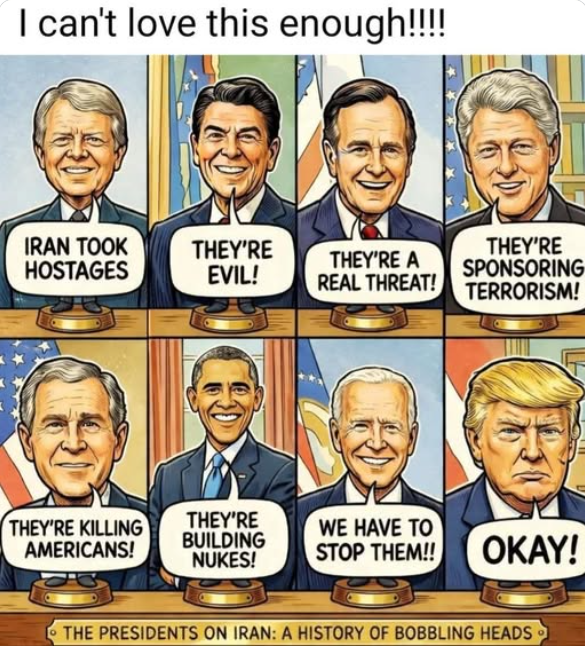 As shown at left, the United States is loaded with people who twist the facts to their liking.

Gas Industry Front Group Targets Democrats in Pennsylvania
As the Alabama Legislature Adjourns, Environmentalists See a Silver Lining
After a Slow Start on Climate, Zohran Mamdani Faces Scrutiny Over Parks Budget and Environmental Promises
-
Climate Change8 months ago
Guest post: Why China is still building new coal – and when it might stop
-
Greenhouse Gases8 months ago
Guest post: Why China is still building new coal – and when it might stop
-

 Greenhouse Gases2 years ago
嘉宾来稿:满足中国增长的用电需求 光伏加储能“比新建煤电更实惠”
-
Climate Change2 years ago
Bill Discounting Climate Change in Florida’s Energy Policy Awaits DeSantis’ Approval
-

 Climate Change2 years ago
嘉宾来稿:满足中国增长的用电需求 光伏加储能“比新建煤电更实惠”
-
Climate Change Videos2 years ago
The toxic gas flares fuelling Nigeria’s climate change – BBC News
-

 Renewable Energy6 months ago
Sending Progressive Philanthropist George Soros to Prison?
-

 Carbon Footprint2 years ago
US SEC’s Climate Disclosure Rules Spur Renewed Interest in Carbon Credits