

While US President Donald Trump has ripped up much of his predecessor’s climate and foreign policy, he has pushed forward with Joe Biden’s pursuit of metals and minerals abroad while shifting the strategic focus from clean energy to military use, analysts say.
Biden spent some of his final days as US leader in Angola, talking up a railway that will bring copper and cobalt from Central Africa to the continent’s west coast where the materials can be shipped to the US.
Since coming to power in January, Trump has discussed deals to provide military assistance to the war-torn nations of Ukraine and the Democratic Republic of Congo (DRC) in return for minerals, threatened to take over mineral-rich Greenland, and is reportedly considering a new law that would bypass UN discussions so as to allow mining of the deep seabed in international waters.
Explainer: Why the world is racing to mine critical minerals
This week, Massad Boulos, Trump’s senior advisor on Africa, travelled to DRC as his first port of call shortly after being appointed. In a meeting with DRC President Felix Tshisekedi, Boulos – father-in-law to Trump’s daughter – said the US had reviewed the DRC’s minerals proposal. He said he was “pleased to announce that the President and I have agreed on a path forward for its development,” according to a statement from the DRC government.
While the details of the mooted deal are not yet public, Boulos said he would work with Tshisekedi to build a deeper relationship that benefits both the Congolese and American people and “to stimulate American private sector investment in the DRC, particularly in the mining sector”.
A day earlier, Trump exempted key minerals like copper and cobalt from the new trade tariffs he slapped on nations around the world.
The big unanswered question is why his administration is so keen to secure supplies of these resources, which are increasingly sought after because they are key to advancing the clean energy transition.
Fadhel Kaboub, associate professor of economics at Denison University in Ohio, said Trump’s interest is likely driven primarily by the importance of critical minerals for military and high-tech purposes. “The Trump administration is known for its anti-climate action rhetoric,” he said, adding that its priority is definitely not the energy transition, but other competitive sectors such as defence.
Once extracted and processed, minerals like copper and cobalt – which the DRC has in abundance – can be used in clean technology or for military equipment, among other things. Copper can be used to channel green electricity or as a liner for anti-tank missiles. Cobalt can be used for electric vehicle batteries or alloys for fighter jets.
Stockpiling critical minerals
The Trump administration – which heavily favours fossil fuel extraction over clean energy expansion – has publicly emphasised the military uses of minerals. Adam Burstein, the Department of Defense’s technical director for strategic and critical materials, said in January that the US is committed to “stockpiling critical minerals” to reduce the risk of supply chain disruptions from China, which dominates the sector.
In February, US Secretary of State Marco Rubio was asked about the Dominican Republic’s minerals. He said the world needs these for “technologies that are used for defence” and other advanced technologies, adding that “we want to help develop this wealth”.
Explainer: What does it take to make clean energy technologies?
When asked if the US government’s rhetoric on sourcing minerals for defence could shift these materials away from clean technologies, Ellie Saklatvala, head of nonferrous metal pricing at Argus Media, said there may be times when “demand for metals for defence applications competes directly with demand for clean energy applications”.
When it comes to raw materials, Saklatvala added, the defence sector can usually pay more for supplies, and this can have a significant impact on overall price levels if large volumes are acquired quickly.
Thomas Kavanagh, editor for battery materials at Argus Media, said there is potential for competition between these two sectors to grow “especially as cobalt going into the US defence industry is quite limited to a small number of suppliers, mainly outside of the DRC”.
DRC lobbying campaign
While Ukraine is still working on a diplomatically tricky deal with Washington for access to its minerals and Greenland has so far resisted overtures and even threats from the US to annex it from Denmark, the DRC under Tshisekedi has actively lobbied for a deal with the Trump administration in exchange for protection from the Rwanda-backed M23 rebels which have grabbed swathes of the DRC’s east.
Shortly after Trump’s election, documents submitted to the US government under the Foreign Agents Registration Act show that the DRC began employing a Republican lobbyist called Karl Von Batten to lobby in Washington on its behalf.
By calling and emailing contacts at the House of Representatives foreign affairs committee, Von Batten managed to set up a Zoom call between its chair, Brian Mast, and Tshisekedi on February 11, according to a document published online by the US Department of Justice.
Von Batten then organised a five-day visit by a delegation from the DRC government to Washington in late February, at a cost of $350,000, where they met with US defence, state department and trade officials.
According to the official document signed by Von Batten, strengthening “military and investment ties” was on the agenda, as were “preliminary discussions about a potential meeting” between Tshisekedi and Trump and planning a media strategy on “public narratives surrounding DRC initiatives”.
Since that visit, Republican Congressman Ronny Jackson travelled to the DRC in March to meet with Tshisekedi. According to the DRC government, Jackson was acting as an envoy for Trump and said in the meeting: “We want to work so that American companies can come and invest and work in the DRC. And for that to happen, we must ensure that there is an environment of peace”.
Tshisekedi also went on Trump’s favourite TV channel – Fox News – to talk about the proposed deal. “We are very happy to say that with the Trump administration, things are moving a lot faster on both sides,” he said in French, adding, “I think the US is able to use either pressure or sanctions to make sure that armed groups that are in the DRC can be kept at bay”.
A troubled deal
Henry Sanderson, associate fellow at defence and security think-tank the Royal United Services Institute (RUSI), said the DRC is trying to “curry favour” and appeal to Trump’s “transactional” interests.
But a minerals deal with the DRC could face a “big hurdle”, Claude Kabemba, chief executive officer of Southern Africa Resource Watch, said in a policy brief.
The DRC mining sector’s “lack of transparency and accountability” could undermine a partnership, he argued, noting that “it would be difficult” for the US private sector to operate openly in the prevailing conditions of corruption and mismanagement.
Ending poverty and gangs: How Zambia seeks to cash in on the global drive for EVs
Another roadblock, according to RUSI’s Sanderson, is that the DRC wants security in return – and Trump has indicated that he does not want to get involved in foreign wars.
However, Kabemba warned that if the US does enter the DRC conflict, it could be on the other side, backing the rebels who currently control mineral-rich areas and are threatening to take over the capital Kinshasa. The rebels have, over the past year, advanced and occupied major cities in the country’s eastern region – including mining sites in North and South Kivu provinces – with large deposits of coltan.
Members of the European Parliament in February called on the European Commission to suspend an EU deal to develop sustainable raw materials value chains with Rwanda, until it stops interfering in neighbouring DRC, including exporting minerals mined from M23-controlled areas, they said in a statement. Rwanda denies that it is involved in such activities.
Kabemba believes Trump may have fewer qualms than his European counterparts. “A deal with the M23 rebels might be more appealing to Trump in the current situation,” he wrote. Trump could choose to do business with “the side that offers the best options for sustainable and long-term access to critical minerals and rare earth elements”, he added.
Making reference to the conflict during his visit this week, US Africa advisor Boulos said “there can be no economic prosperity without security”, adding that the US-DRC relationship has great potential and would involve multi-billion dollar investments which can only thrive in the most conducive business environment.
“We want a lasting peace that affirms the territorial integrity and sovereignty of the DRC, and lays the foundation for a thriving regional economy,” Boulos emphasised.
The post Trump follows the minerals trail – but for weapons not clean energy? appeared first on Climate Home News.
Trump follows the minerals trail – but for weapons not clean energy?

Next week, diplomats from around the world will descend on Yerevan, Armenia, to negotiate a series of decisions under the UN Convention on Biological Diversity (CBD).
Between 19 and 30 October, 196 parties will gather to hammer out the precise wording of the dozens of legal texts that make up the decisions under the Conference of the Parties (COP) to the CBD.
This year’s summit is particularly significant, as it marks the halfway point between the agreement of the Kunming-Montreal Global Biodiversity Framework and the deadline for achieving its targets.
The CBD has found that countries are currently not on track to meet 22 out of the framework’s 23 targets.
During the fortnight, delegates will also be negotiating decisions relating to the two supplemental protocols to the CBD: the Cartagena Protocol, which covers biosafety; and the Nagoya Protocol, which covers access and benefit-sharing for the use of genetic resources.
(The Cartagena and Nagoya Protocols, which are each governed by a “meeting of the parties”, or “MOP”, have fewer parties than the CBD as a whole, with 173 and 141, respectively.)
Carbon Brief is tracking the progress of countries towards consensus on dozens of negotiating texts using the interactive table below.
The tracker includes texts from the COP, as well as the MOPs for the Cartagena and Nagoya protocols. It also includes draft decisions from the most recent subsidiary body meetings, as these form the starting point for the negotiations in Yerevan.
The CBD has three subsidiary bodies: the subsidiary body on scientific, technical and technological advice (SBSTTA), the subsidiary body on implementation (SBI) and the subsidiary body on article 8(j) and other provisions (SB8J).
SB8J focuses on issues related to the Indigenous peoples and local communities. It was established at COP16 in Cali, Colombia, in 2024.
The first two columns of the interactive tracker list the topic of each agenda item and the relevant body, with subsequent columns including dates, page counts and links to the original documents.
The table is searchable and can be sorted using the arrows in the header.
Areas of disagreement in UN draft texts are denoted by square brackets. Counting the brackets in a particular iteration of a text therefore gives a sense of how far parties are from reaching consensus.
The bracket column is colour-coded, with dark green indicating a low number of brackets and red indicating a high number of brackets remaining.
Texts can also present parties with choices using “options” or alternatives (“alt”), which are counted together in the sixth column of the table.
The key discussions in Yerevan will centre around two agenda items in particular. The first is the global review, which will assess progress towards the GBF and make recommendations for accelerating action.
The second is finance, which can be separated into two parts: resource mobilisation and the financial mechanism. On resource mobilisation, biodiverse global south countries are likely to push for an increased amount of international finance for conservation.
Disagreement over the creation of the financial mechanism led to the suspension of COP16 in Cali in October 2024, as parties failed to find agreement on the mobilisation of finance before the end of the summit.
Global south countries want the establishment of a separate financial mechanism under the control of the CBD; global north countries largely prefer to maintain the existing mechanism, which sits under the Global Environment Facility.
At the resumed session of COP16 in Rome in early 2025, countries agreed on a roadmap that would lead to the establishment of a permanent mechanism.
related

Analysis: Lula presidency saved at least 20,000km2 of Brazilian Amazon since 2022
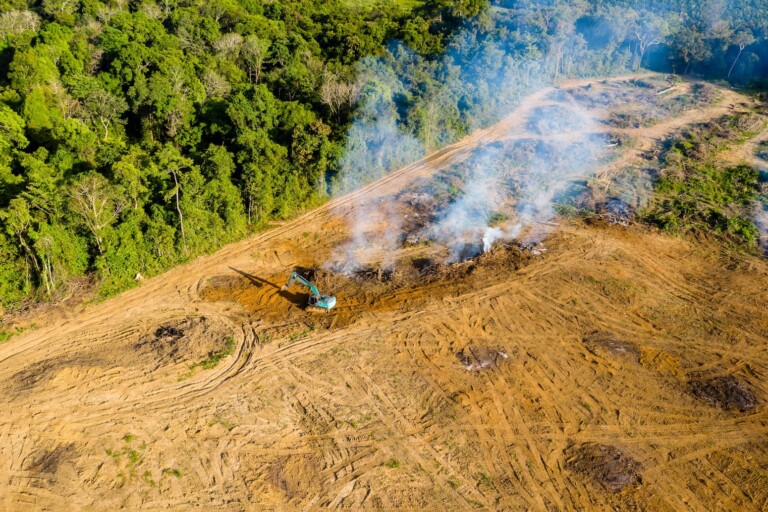
Why land-use emissions have fallen by a third this century – in six charts

Analysis: 84% of nations miss deadline to identify ‘nature-harming’ subsidies by 2025
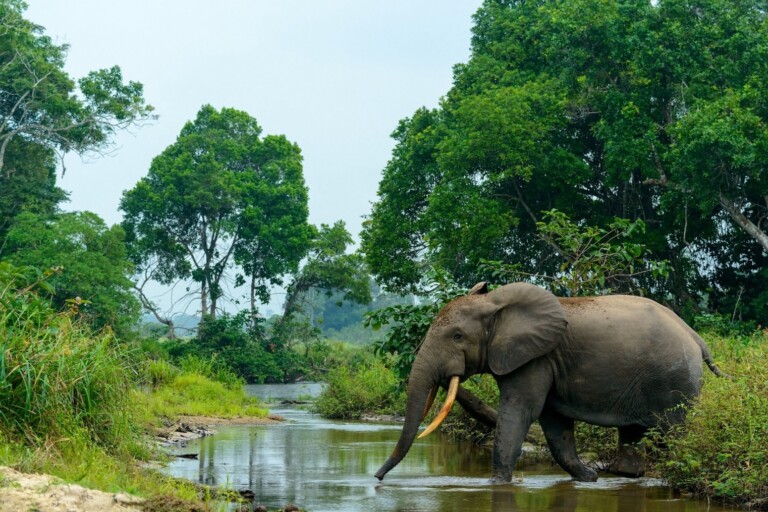
UK withdraws millions in funding from world’s second-largest rainforest in Congo
The post Interactive: Tracking negotiating texts at the COP17 biodiversity summit appeared first on Carbon Brief.
Interactive: Tracking negotiating texts at the COP17 biodiversity summit
A beacon of love
On an outer island of Fiji, two thousand nautical miles from Sydney, is a shining light of hope and resilience for our troubled world.
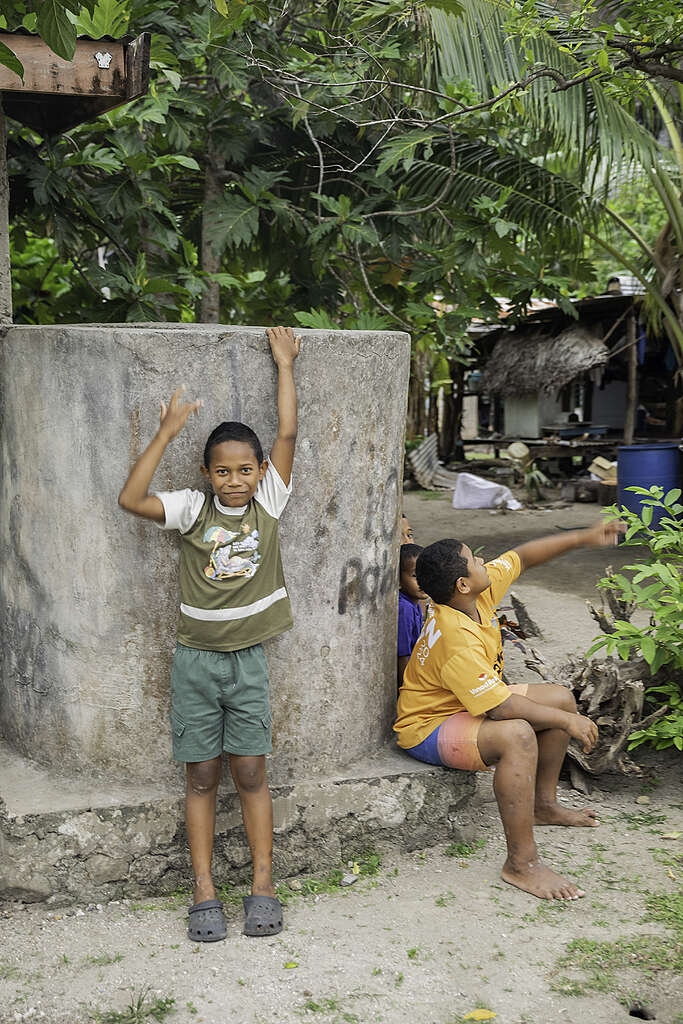
The island of Kioa is home to a Tuvaluan community who migrated from their atoll of Vaitupu in the late 1940s. It is a land of warm hearts, big smiles, and deep cultural roots; a place where the sound of a conch still summons the island together, where islanders paddle out to fish in carved outrigger canoes, and healthy happy children walk barefoot to school.
Here, culture is life. Kioans live sustainably through their traditional knowledge and practices. The island is alive with song, dance and the rhythms of a life tied to the tides, the winds, and the seasons.
Facing the future
Greenpeace has been lucky to have a relationship with Kioa for a number of years now, and we are continually learning from this remarkable community.
Last week, as part of our Voyaging Oceania project, we returned to the island. Our purpose was twofold —- to carry messages from the island to leaders gathering in Nadi this week for the Pacific Pre-COP, and to support the Kioa community in their efforts to improve water security for the island.
Unlike Tuvalu itself, with its eight atolls, Kioa is a mountainous, forested and richly fertile island. It will remain habitable far into the future. Kioans did not initially migrate from Vaitupu due to climate change, but the move was prophetic. They now have a lifeboat.
However, even Kioa faces challenges on our rapidly warming planet, in particular when it comes to water. Climate change is shifting once reliable rainfall patterns. On top of this, the island is already feeling the effect of this year’s intensifying El Niño event, which for Fiji means reduced rainfall and prolonged dry spells.
Right now, fresh water has to be carefully rationed, and is only available for a few hours a day. During last week’s visit aboard our campaigning ship Oceania, Greenpeace was privileged to work with the Kioa community on a new solar-powered water distribution project for the island.
Designed and led by the island, the project involves using a solar pump to move water from a reliable source to a storage tank and then using gravity to distribute the water around the village.
It was a lesson in how local knowledge and ingenuity can be the backbone of today’s climate solutions. To build a dam around the source, the local community knew the exact spot where they could gather gravel at low tide to mix with the cement. They took only what was needed, knowing that all resources must be carefully conserved. Kioa has no roads and no machinery, and it was an all-of-island effort to carry the materials up to the project site, including many heavy bags of sand and rock.
Such projects truly bring to life the vision of a resilient, locally-led, fossil fuel free Pacific.