

In the face of rapidly changing climate conditions, Canada’s Indigenous Peoples are drawing upon millennia of wisdom to adapt and thrive. This ancient knowledge, known as Traditional Ecological Knowledge (TEK), is proving to be an invaluable resource in the fight against climate change. But what exactly is TEK, and how is it shaping climate adaptation strategies across the country?
Understanding Traditional Ecological Knowledge
Traditional Ecological Knowledge is a cumulative body of knowledge, practices, and beliefs about the relationship between living beings and their environment. Passed down through generations via oral traditions, TEK is deeply rooted in the cultural and spiritual practices of Indigenous communities.
Unlike Western scientific approaches, which often compartmentalize knowledge, TEK embraces a holistic worldview. It recognizes the interconnectedness of all living things and emphasizes the importance of maintaining balance in nature. This perspective is particularly valuable in addressing the complex, interconnected challenges posed by climate change.
TEK in Practice: Climate Change Adaptation Strategies
Across Canada, Indigenous communities are applying TEK to develop effective climate adaptation strategies. These approaches often blend traditional practices with modern technologies, resulting in innovative solutions tailored to local environments.
Water Management and Conservation
In many Indigenous communities, water is seen as a sacred resource that must be protected and used wisely. Traditional water management techniques, such as the construction of small-scale dams and the use of natural filtration systems, are being revived and adapted to address changing precipitation patterns and increased flood risks.
For instance, the Okanagan Nation in British Columbia has been using traditional knowledge to inform their watershed management strategies. By combining TEK with modern scientific data, they’ve developed a comprehensive approach to water conservation that respects both ecological and cultural needs.

(Photo Credit: Zarif Ali, Unsplash)
Sustainable Hunting and Fishing Practices
As climate change alters animal migration patterns and affects fish populations, Indigenous hunters and fishers are adapting their practices to ensure sustainable harvests. This often involves adjusting hunting seasons, diversifying catch methods, and implementing stricter conservation measures.
In Nunavut, Inuit hunters are using their intimate knowledge of sea ice conditions to adapt to rapidly changing Arctic environments. By closely observing ice formation patterns and animal behaviours, they’re able to adjust their hunting strategies while ensuring the long-term sustainability of wildlife populations.

(Photo Credit: Byron Johnson, Unsplash)
Traditional Agriculture and Food Preservation
Indigenous agricultural practices, developed over centuries to withstand environmental fluctuations, are proving remarkably resilient in the face of climate change. Many communities are reviving traditional crop varieties that are better adapted to changing conditions.
In Ontario, Anishinaabe communities are reintroducing traditional “three sisters” agriculture – interplanting corn, beans, and squash. This method not only improves soil health and increases crop yield but also enhances the resilience of food systems to climate impacts.
Case Studies: TEK in Action Across Canada
Coastal First Nations’ Ocean Management in British Columbia
The Coastal First Nations of British Columbia have been at the forefront of integrating TEK into ocean management strategies. Their Guardian Watchmen program combines traditional stewardship practices with modern conservation techniques to monitor and protect marine ecosystems.
Through this program, Indigenous communities are able to track changes in ocean temperatures, monitor fish populations, and implement sustainable harvesting practices. This approach not only helps in adapting to climate change but also ensures the preservation of cultural practices tied to the ocean.

(Image Credit: Getty Images [licenced photo], Unsplash)
Cree Communities’ Fire Management in the Boreal Forest
In the boreal forests of northern Canada, Cree communities are reviving traditional fire management practices to reduce the risk of catastrophic wildfires. These controlled burning techniques, passed down through generations, help maintain forest health and biodiversity while reducing fuel loads that contribute to larger, more destructive fires.
By integrating these traditional practices with modern firefighting techniques, Cree communities are creating more resilient forests better equipped to withstand the increased fire risks associated with climate change.

(Photo Credit: Izzy Edey, Unsplash)
Inuit Weather Prediction in Nunavut
In Nunavut, Inuit elders are sharing their traditional methods of weather prediction with younger generations and climate scientists. These methods, based on careful observation of cloud patterns, wind directions, and animal behaviors, are proving remarkably accurate in predicting short-term weather changes in the rapidly changing Arctic environment.
By combining this traditional knowledge with modern meteorological data, communities are better able to prepare for extreme weather events and adapt to changing seasonal patterns.
Challenges and Opportunities
While the value of TEK in climate adaptation is increasingly recognized, challenges remain in fully integrating this knowledge with Western scientific approaches. Issues of intellectual property rights, cultural appropriation, and skepticism from some in the scientific community can create barriers to collaboration.
However, there are growing efforts to bridge these gaps. Many universities and research institutions are now partnering with Indigenous communities to conduct collaborative research that respects and incorporates TEK. Government agencies, too, are beginning to recognize the importance of TEK in policymaking, particularly in areas related to environmental management and climate adaptation.
The Future of TEK in Climate Adaptation
As the impacts of climate change intensify, the role of TEK in developing effective adaptation strategies is likely to grow. Indigenous communities across Canada are leading the way in demonstrating how ancient wisdom can be applied to modern challenges.
For non-Indigenous Canadians, there is much to learn from these approaches. By respecting and integrating TEK into broader climate adaptation efforts, we can develop more holistic, effective strategies for facing the challenges ahead.
As we move forward, it’s crucial that we continue to support Indigenous-led climate initiatives and create more opportunities for knowledge sharing between Indigenous and non-Indigenous communities. Only by working together and respecting diverse knowledge systems can we hope to build a more resilient, sustainable future for all Canadians.
– By Rye Karonhiowanen Barberstock
The post Traditional Ecological Knowledge: The Cornerstone of Indigenous Climate Adaptation in Canada appeared first on Indigenous Climate Hub.
Traditional Ecological Knowledge: The Cornerstone of Indigenous Climate Adaptation in Canada

Climate Change
Large flotilla brings Pacific voices and message to leaders at Pre-COP meeting: Keep 1.5C Alive
NADI, FIJI Wednesday 7 October 2026 — Around 80 people including Pacific and Torres Strait community members, Elders and youth activists travelled as part of a colourful flotilla past the Pre-COP venues with a message for leaders: ‘Keep 1.5°C Alive’.
High res footage and images available here
The large flotilla included traditional Fijian voyaging vessel the Uto Ni Yalo, six 6-person outrigger canoes, and Greenpeace campaigning vessel the Oceania which sailed from Sydney to the Pre-COP in Nadi. On board were Elders, climate-vulnerable communities members from across the Pacific and Torres Strait, youth activists and poets, and campaigners and climate experts from across the region.
Messaging on canoes and banners said ‘Hold the Line at 1.5°C’ and ‘Keep 1.5°C Alive’ — a reminder to leaders that the climate limit established under the Paris Agreement is a non-negotiable survival line.
Shiva Gounden, Head of Pacific at Greenpeace Australia Pacific, said: “People from across the Pacific and Australia have come together today to make sure the voices of our communities are heard by leaders meeting here in Nadi for the Pre-COP climate talks. The Taku Pakasoa Declaration adopted here at Pre-COP means ‘Strength in Unity’, and that’s how we’re coming together today.
“Our message is clear: Hold the Line on 1.5°C and centre those most impacted by the climate crisis in your decision-making. Our children’s futures must not be stolen away so that polluting nations can continue down the fossil-fuel path.
“Limiting global heating to 1.5°C is a non-negotiable survival line for Pacific communities and for humanity. Every cyclone, every storm now blows with the deadly force of accumulated emissions and gives a warning of what is to come as we face a dangerous summer of climate-fuelled extreme weather. Do not ignore our voices.”
On board, Aigagalefili Fepulea’i-Tapua’i, Pacific youth climate advocate and poet from Aotearoa Climate Action Network, said: “To hold the line on 1.5C for our Pacific family, New Zealand, as the only country where the connection between environmental protection and indigenous rights is legally validated by our constitutional document, must protect the rights of Māori.”
ENDS
Media contact: Kate O’Callaghan in Nadi on +61 406 231 892 (Whatsapp/Signal)
Large flotilla brings Pacific voices and message to leaders at Pre-COP meeting: Keep 1.5C Alive
Climate Change
A ‘victory’ for communities as High Court rules climate impacts from coal and gas must be considered even where fossil fuels are exported
SYDNEY, Wednesday 7 October 2026 — In response to the landmark High Court ruling that climate impacts of fossil fuel projects must be considered by NSW planning authorities, the following lines can be attributed to Joe Rafalowicz, Head of Climate and Energy at Greenpeace Australia Pacific
“The High Court decision today is a victory for communities that bear the brunt of the storms, bushfires and extreme weather fuelled by Australian fossil fuel corporations.
“Coal and gas companies have claimed they are not responsible for their pollution because it happens overseas, but today Australia’s highest court sided with common sense and scientific evidence to find that every new coal and gas approval in this country could put us at risk, no matter where it is sold or burnt.
“As leaders meet at the Pre-COP talks in Fiji this week, Pacific communities are reaffirming the importance of the 1.5C temperature limit as a survival line for humanity, and is a scientific, moral and legal obligation as affirmed by the landmark Pacific-led ICJ Advisory Opinion. The highest court in the world, and now in Australia, have been clear: it is legally imperative that all of the pollution from fossil fuel projects be considered before approving a new project.
“Now is the moment for the Australian Government, as COP31 President of Negotiations, to find the courage, leadership and grit our country is known for to chart a new course away from fossil fuels. This begins with showing leadership at home by ending new coal and gas approvals.”
-ENDS-
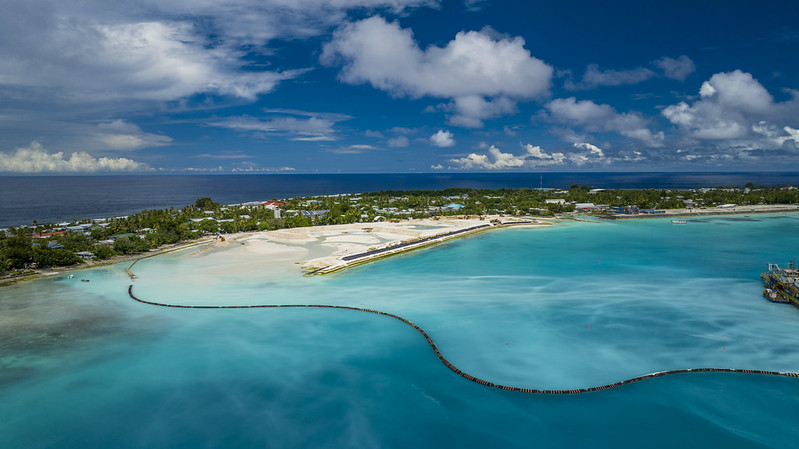
After witnessing the effects of sea-level rise in the low-lying island nation of Tuvalu, Pacific leaders on Tuesday used the pre-COP31 summit in Fiji to voice their frustration at the difficulties they have experienced in tapping the global climate finance system.
A small group of government leaders, climate negotiators and heads of development banks and climate funds took a trip to Tuvalu’s Funafuti atoll on Tuesday morning, travelling by road over land just 10-20 metres wide to visit a project that is building barriers to keep the sea from the land.
They then flew to Fiji for the pre-COP summit, where several Pacific leaders said they had been let down by the insufficient quantity, bad terms and slow speed of international finance to help them adapt to a warming climate that is bringing higher oceans, drought and more powerful storms to their shores.
“Right now, our islands are like a canoe that has been rammed by a massive foreign ship. Our canoe is taking on water, we are sinking, and what is the world’s response?” asked Palau’s President Surangel Whipps Jr.
“They hand us a tiny patch to cover a gaping hole,” he continued, “but the bureaucratic process just to receive that patch is so slow that the water fills the hole while we wait. Then to rebuild the vessel so that we can survive the next storm, we are offered loans, debt that adds weight to a sinking boat packaged in red tape so thick we can barely access it. And while we wait, the water continues to fill.”
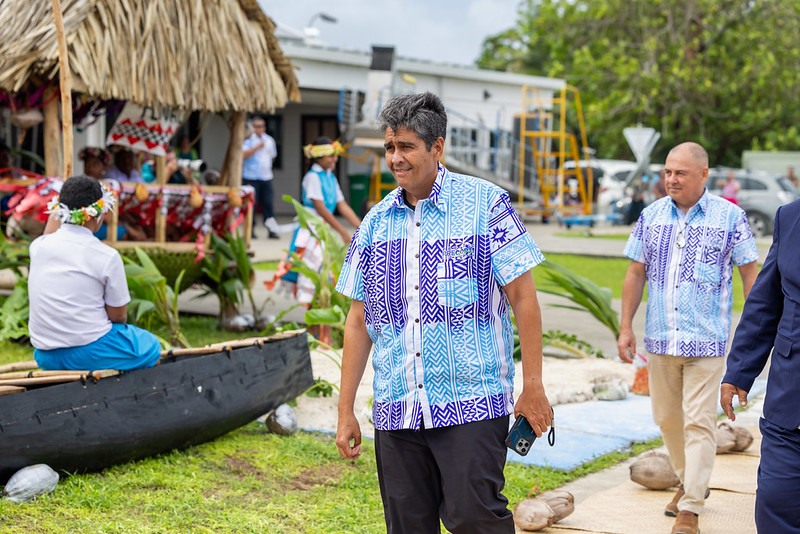
Pacific leaders and Australia called again on governments to invest in the new Pacific Resilience Facility (PRF), which has been designed by the Pacific Islands Forum and is seeking $500 million in investments by COP31 in November.
It has around $180 million so far, but did not receive additional pledges during the UN General Assembly in New York. The PRF aims to invest to generate annual returns which it can give to projects like water tanks for drought-hit communities.
Witnessing sea level rise
The annual pre-COP gathering is usually a low-profile technical meeting of climate negotiators. But this year, Australia – which is the president of negotiations at COP31 – partnered with the Pacific to introduce a “leaders segment” in an attempt to shine a spotlight on climate issues affecting the region.
Fourteen government leaders – from Australia, Timor-Leste, Mauritius and the Pacific – made the trip. They were joined by the European Union’s climate commissioner Wopke Hoekstra, the heads of the Green Climate Fund and the Asian Development Bank and former Australian prime minister Julia Gillard.
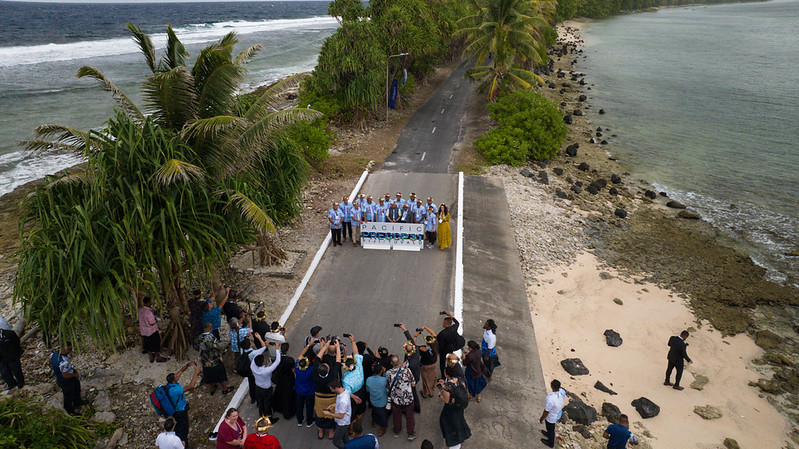
On their return to Fiji, Solomon Islands Prime Minister Matthew Wale told the pre-COP leaders roundtable that the sea level rise they had witnessed was personal for him.
“Tuvalu was not just a site visit for me. I saw the story of my own saltwater people,” he said, adding that he, his daughter and his grandfather had lost their houses to sea level rise and that three-quarters of his electorate live on land that will be underwater in the next 30 years.
From the other side of the world, Antigua and Barbuda’s environment minister Michael Joseph said Tuvalu’s problems felt similar to those of his own Caribbean islands. “I saw vulnerable communities… just metres from the sea and people determined to remain on their land, preserve their culture and way of life,” he said.
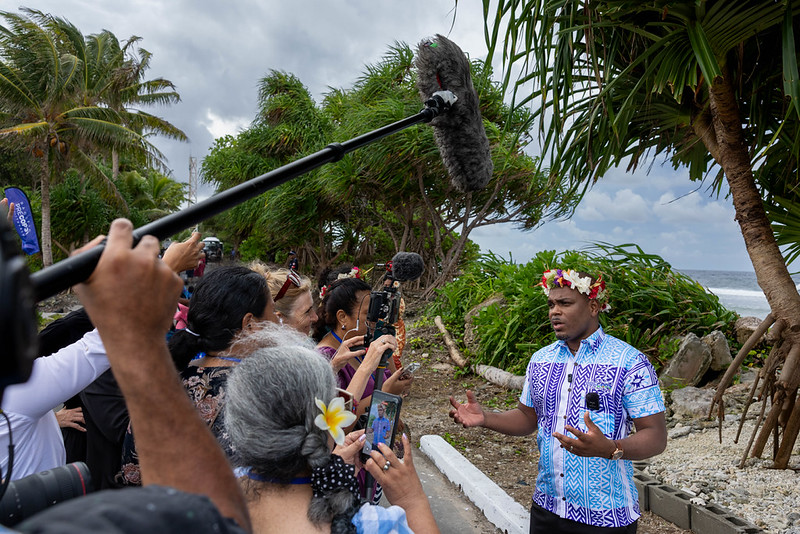
A group of Fijian schoolchildren told the leaders it was not just sea level rise the Pacific struggles with but also heatwaves, droughts and storms, which worry their families and prevent them from learning.
Climate finance red-tape
Several Pacific leaders criticised the world’s leaders for not doing enough to combat climate change. Cook Islands Prime Minister Mark Brown expressed disappointment that only two non-Pacific leaders had come to the pre-COP, a fact Australian media widely picked up on to label the event a flop and question its A$20 million (US$14m) price tag.
“We’ve heard a lot of numbers these last two days,” Brown said. “Let me share one of my own. More than 50 invitations extended to world leaders… to see for themselves what high emissions are doing to our nations and our ocean – an ocean that covers nearly one-third of the Earth’s surface.”
-
Pacific islands seek backing for new regional fund ahead of COP31
Pacific leaders will appeal for pledges to a new regional fund designed to swiftly channel climate finance to local communities -
The Pacific made history in the courts – now we must do it in the negotiations
Legal clarity alone will not lead to reduced emissions, more finance or stronger national climate plans – political will is key to meeting states’ obligations -
Civil servants warn fossil fuel exploration could harm New Zealand’s climate reputation
Advice to politicians says revoking a ban on oil and gas drilling could damage relations with Pacific neighbours and risk lawsuits
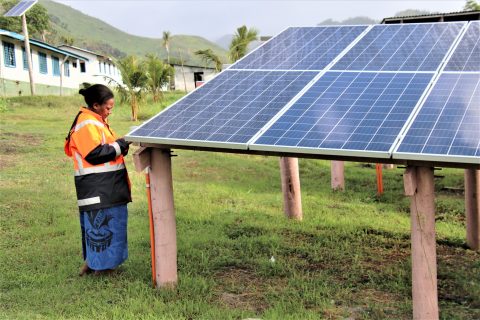


He called for more climate finance for the Pacific, asking “if the world is prepared to assess our suitability for climate finance, why is it not equally prepared to scrutinise whether those responsible for delivering it are meeting their obligations?”
Like Palau’s president Whipps, Naoero’s President David Adeang criticised the red tape that is hindering access to climate finance as well as a lack of money, complaining especially about “complicated procedures, heavy reporting, delays in approval and disbursement”.
Adeang added that “the way we assess vulnerability matters”, adding that it should be measured by more than income. Naoero, for example, is classified by the World Bank as high-income, restricting which climate finance it is eligible for.
Action plan to improve access
On Thursday, the Australian government will present a statement and action plan on improving access to climate finance for small island developing states and least developed countries, which it is asking other countries and organisations to endorse.
The statement addresses some of these Pacific complaints as well as acknowledging that progress has already been made on simplifying access by multilateral development banks and climate funds.
In Fiji, Asian Development Bank head Masato Kanda said his institution is “tailoring our finance and operations to island realities” because “your children and their children should be able to grow old in the countries their ancestors have called home for millennia”.
The executive director of the Green Climate Fund (GCF), Mafalda Duarte, said that the GCF-backed coastal adaptation project leaders visited in Tuvalu shows that “climate finance works” although – as the project took eight years to implement – “it takes time, and therefore we have no time to waste”.
Australia calls for optimism
While Pacific leaders expressed concern that the world is set to blast past its agreed 1.5C warming limit, endangering their nations, Australia’s Prime Minister Anthony Albanese called for “optimism”. “If people think there is no hope, then they will not strive to get the change that we need,” he said.
He said that when he attended his first COP in 2005, Australia’s renewable energy target was 2%. Its target is now 82% renewable electricity by 2030.
While Albanese promoted Australia’s success at electrifying homes and businesses and rolling out renewables, he has been criticised by climate campaigners for extending the production of fossil fuels, including coal – largely for export.
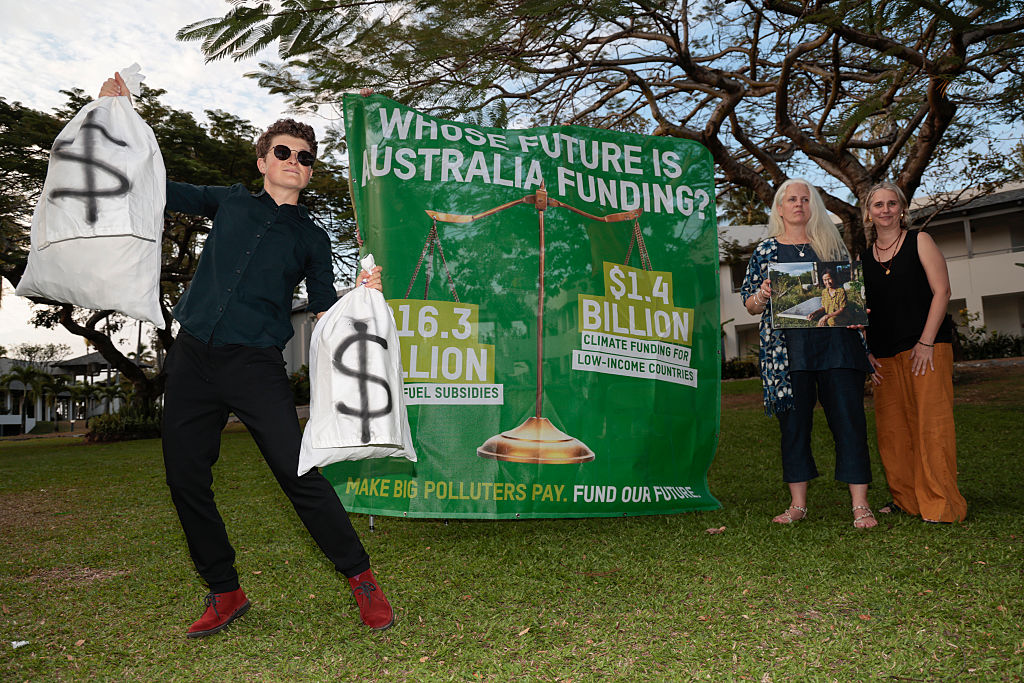
France’s Minister for Ecological Transition Monique Barbut defended the European Union’s climate action at the pre-COP meeting. She said the continent was heating up and reducing emissions faster and providing more climate finance than anywhere else in the world.
“It is time for all major emitters to step up and do their fair share” on climate finance, she said. Most developing countries with large emissions have fiercely resisted joining the club of climate finance donors, arguing they have played a disproportionately small historic role in causing climate change.
Barbut, as well as Palau’s president Whipps, called for the next flagship scientific assessment report of the Intergovernmental Panel on Climate Change (IPCC) to be finished by COP33 in 2028, in time to inform the next global stocktake of national climate action.
This timeline has been opposed by countries like India, Saudi Arabia and China, who argue it would put an unfair burden on developing countries. Barbut said countries should “support the work of the IPCC rather than sabotage its calendar”.
Barbut said that governments should agree at COP31 to aim to raise the share of “clean electricity” in final energy consumption to 35% by 2035. The Turkish and Australian governments have pushed for this goal although without specifying that the electricity should be “clean”. Barbut added that COP31 should also agree to cut emissions of methane, a particularly potent greenhouse gas.
The post Pacific leaders rail at climate finance failures after pre-COP trip to Tuvalu appeared first on Climate Home News.
Pacific leaders rail at climate finance failures after pre-COP trip to Tuvalu
