

The Clean Energy Generation is making progress every day here in the Southeast. From a conservative Florida county switching to electric school buses to a South Carolina Domino’s serving a slice of solar, to Tennessee refusing to pump the brakes on its EV charger program, our clean energy future is becoming a reality. Take a look at just six of the many encouraging signs of clean energy adoption in the Southeast we’ve seen so far this year.
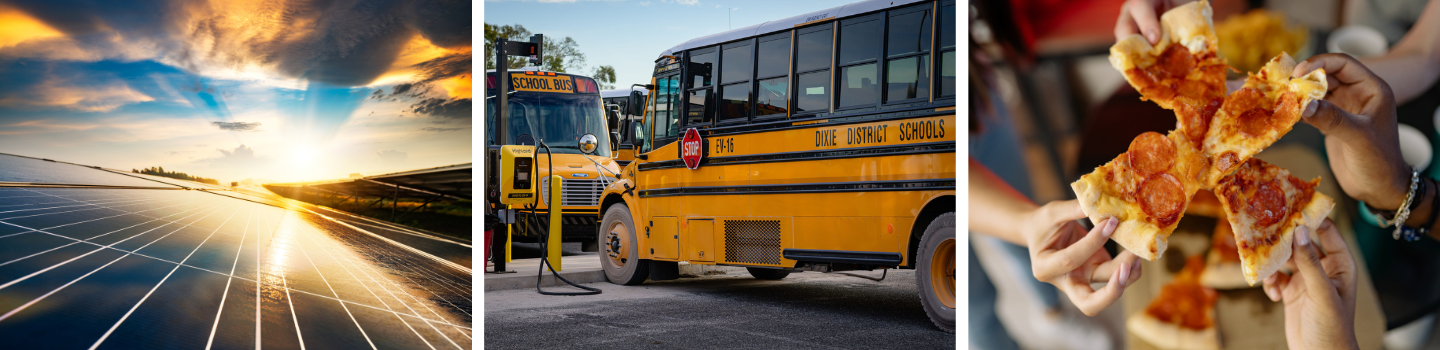
Middle photo of Dixie County’s new electric school buses courtesy of Highland Electric
No other energy source came close to matching solar’s rate of growth in 2024
Here’s some bright news for ya: Solar remains the fastest-growing source of U.S. electrical generation, as solar generation for the first 11 months of 2024 increased by over 26%. New solar capacity also easily surpassed all other energy sources during the first 11 months of 2024, followed by wind. In fact, the solar added in 2024 should generate almost six times more electricity than newly added nuclear power or methane gas. Meanwhile, newly added wind should generate nearly the same amount of electricity as newly added nuclear or gas. Read more.
Small Florida county makes switch to electric school buses
At a time when clean energy has been put in the political crosshairs, Dixie County is proving that protecting student health doesn’t have to be political. The conservative Florida county recently debuted its fleet of 23 new school buses — all of them electric. For school officials, the biggest motivator wasn’t reducing emissions — it was increasing comfort. Unlike their predecessors, the district’s new electric buses have air conditioning. This not only keeps the drivers and students cooler but allows them to keep the windows up, dodging the dust that typically floods through. Read more.
The first solar-powered Domino’s of its kind has opened in the US, in York County, SC
A slice of solar. South Carolina is now home to one of the world’s first solar-powered Domino’s. The new York County location is the first Domino’s in the world to operate on solar power to this degree, with solar panels on its roof, integrated into its exterior, and powering its parking lot lights. The parking lot itself also features two EV charging stations, allowing customers to charge while they eat. “We are a family-owned franchise of Domino’s,” said a representative for the new solar spot. “And wanted to lead by example for the brand.” Who wants to grab a slice? Read more.
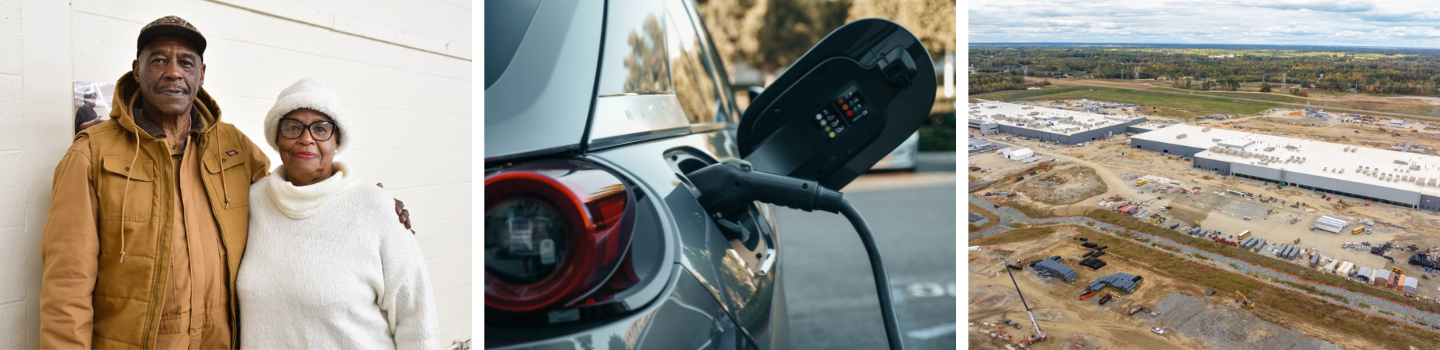
Left photo of Otis and Carlyn Jones courtesy of Lucille Lannigan/The Albany Herald; right photo of Toyota’s battery plant in Liberty, North Carolina courtesy of Toyota Motor Corp.
Rural southwest Georgia community homes receive free, energy-efficient appliance upgrades
Carlyn Jones had gone 18 years relying on propane-fueled space heaters to keep her warm…until Rewiring America installed a new HVAC unit. As of last month, 75% of the homes in rural DeSoto, Georgia were outfitted with brand-new, energy-efficient appliances that cost residents nothing. Thanks to the Inflation Reduction Act, these energy-efficient upgrades are not only slashing energy costs but are providing modern, working appliances to homes that have long gone without. Read more.
Tennessee’s own EV charging program still running as Trump hits brakes on federal grants
States are taking up the charge. Tennessee is moving ahead with its state-level grant program designed to build new EV chargers along the state’s interstates and highways. The goal of Tennessee’s program is to establish a network of fast-charging stations at least every 50 miles along the state’s major arteries. This push for EV chargers corresponds with a rise in EV manufacturing in Tennessee, which is anticipated to create thousands of jobs, particularly in the state’s rural communities. Read more.
Toyota’s expanded $14B North Carolina EV battery plant ready to roll
States aren’t the only ones charging ahead: Toyota is too. The batteries produced at the automaker’s newly expanded North Carolina plant — which will be used in hybrids, plug-in hybrids, and fully electric vehicles built in North America — will begin shipping in April. The plant, which is Toyota’s first in-house battery manufacturing facility in the U.S., will employ about 5,000 workers. Toyota Motor North America reported sales of just over 1 million electrified vehicles in 2024, a 53.1% increase from the year before. Read more.
Follow along each week
 These stories highlight just a few of the positive things happening in our area! Every day, we see signs of hope. The Clean Energy Generation is creating a future powered by clean energy that leads to clean air and water, good jobs, and vibrant communities.
Would you like to see more stories like this? We’ve got just the thing for you! Every Thursday, we share the latest clean energy news on Instagram with #CleanEnergyNews. Join us as we celebrate the progress and signs of hope in the clean energy transition.
Join the Clean Energy Generation
Together, all of us who are taking action are part of the Clean Energy Generation movement. We’re coming together to create healthier communities and a more secure and sustainable environment, starting now. No matter your age, income, zip code, or abilities, you can play a role. You don’t have to have the answers; learning more is a great way to start. Join us, and we’ll share ideas, resources, tools, and practices to show how we can all be part of the transformation.
Join the Clean Energy Generation
The post Solar-Powered Domino’s and 5 Other Encouraging Signs of Progress in the Southeast appeared first on SACE | Southern Alliance for Clean Energy.
Solar-Powered Domino’s and 5 Other Encouraging Signs of Progress in the Southeast

Nordex Q3 Orders Jump 30%, Vestas Bets on Australia
Nordex Q3 orders jump 30% and Vestas lands about a gigawatt in Australia. Plus why turbine factories skip Australia, high project costs, and whether batteries can replace coal.
The Uptime Wind Energy Podcast is brought to you by Weather Guard Lightning Tech, creators of the StrikeTape Ultra LPS retrofit. Subscribe to Uptime’s Substack newsletter. And check out Rosemary’s “Engineering with Rosie” Youtube channel. Have a question we can answer on the show? Email us!
 There are people who believe that our national problems stem from Hillary Clinton (never president) and Barack Obama (twice president and ranked #7 by historians).
These people are called idiots.
Weather Guard Lightning Tech
Trump Targets Revolution Wind, Nordex Q3 EBITDA Doubles
Allen covers the Trump administration’s bid to reopen Revolution Wind’s permit, a bipartisan Senate permitting deal, Nordex’s doubled third-quarter profit, and GE Vernova’s new wind chief.
The Uptime Wind Energy Podcast is brought to you by Weather Guard Lightning Tech, creators of the StrikeTape Ultra LPS retrofit. Subscribe to Uptime’s Substack newsletter. And check out Rosemary’s “Engineering with Rosie” Youtube channel. Have a question we can answer on the show? Email us!



-
Climate Change1 year ago
Guest post: Why China is still building new coal – and when it might stop
-

 Greenhouse Gases2 years ago
嘉宾来稿:满足中国增长的用电需求 光伏加储能“比新建煤电更实惠”
-
Greenhouse Gases1 year ago
Guest post: Why China is still building new coal – and when it might stop
-

 Climate Change2 years ago
嘉宾来稿:满足中国增长的用电需求 光伏加储能“比新建煤电更实惠”
-

 Renewable Energy12 months ago
Sending Progressive Philanthropist George Soros to Prison?
-
Climate Change2 years ago
Bill Discounting Climate Change in Florida’s Energy Policy Awaits DeSantis’ Approval
-
Greenhouse Gases1 year ago
嘉宾来稿:探究火山喷发如何影响气候预测
-

 Climate Change2 years ago
Analysis: China’s CO2 falls 1% in Q2 2024 in first quarterly drop since Covid-19