

Major solar developers, conservation groups, agricultural organizations, environmental and environmental justice groups, and tribal entities have announced an agreement to advance large-scale U.S. solar development while championing land conservation and supporting local community interests.
The agreement is the result of a 20-month “Solar Uncommon Dialogue” convened by Stanford’s Woods Institute for the Environment, the Solar Energy Industries Association (SEIA), and The Nature Conservancy (TNC).
Over the next 10 years, U.S. solar energy output is expected to increase five-fold. The rapid increase in utility-scale solar also means that the industry must address various issues, including agricultural land conversion, wildlife and habitat impacts, and community engagement. The Solar Uncommon Dialogue agreement stresses that the development of large solar projects must be transparent, equitable and efficient and acknowledges that this will require many trade-offs.
Signatories to the Solar Uncommon Dialogue agreement have committed to improving large-scale solar development based on the “3Cs”: climate, conservation, and community.
- Climate emphasizes minimizing carbon emissions through clean energy sources, like solar energy and other tools, including natural climate solutions;
- Conservation seeks to minimize impacts on natural and working lands; and
- Community commits to equitable distribution of renewable energy project benefits.
The signatories are convening six working groups that will address key issues and opportunities including community engagement, siting-related risk assessment and decision-making, energy and agricultural technologies, tribal relations, and policy solutions.
These working groups will focus on advancing the 3Cs via improved public participation practices, solar siting mechanisms, regulation, financial incentives, information tools, and other means. The goal is to create best practices that solar companies, local governments, and other stakeholders can use to effectively site solar projects.
“Major U.S. solar projects are critical to fighting climate change but are increasingly opposed across the nation due to significant community and land conservation concerns,” said Stanford energy scholar Dan Reicher, who launched and leads the Solar Uncommon Dialogue. “It’s exciting how motivated the parties are to avoid these conflicts and develop high-impact solutions – a triple play for climate, conservation, and community.”
The post SEIA and Partners Balancing Boom in Solar with Need for Conservation appeared first on Solar Industry.
SEIA and Partners Balancing Boom in Solar with Need for Conservation

 It’s not as if the United States has held the moral high ground throughout its history, with its slavery, the butchering of the Indians, Jim Crow, the support of tyrannical dictatorships around the globe, and the corrupt suppression of the working class in favor of Trump’s billionaire donors.
Yet, it was very recently that the entire nation became a force for the destruction of civil society.
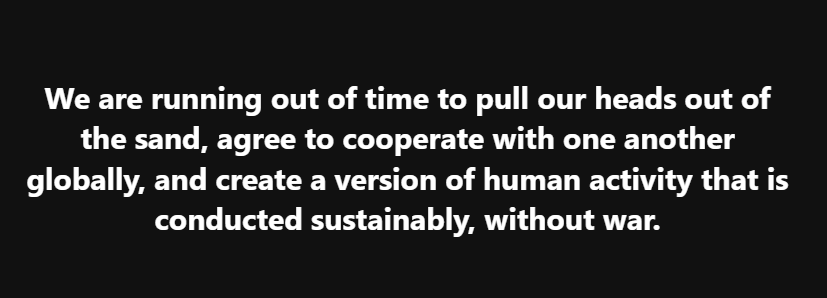 There really are threats to human civilization that seem to be mounting in intensity:
• World fascism. (If it can happen in the U.S., it could conceivably happen anywhere.)
• Environmental collapse.
• Malicious use of AI.
• Pandemics, as misinformation on vaccinations spread and the frozen tundra melts, releasing pathogens never seen by humans.
• Nuclear war.
Addressing the point made at left, is there any scenario in which world governments agree to cooperate so as to stave off the end of an organized society here on Earth? One supposes so, though it sounds far-fetched in today’s world in which the leaders of most of the 200+ sovereign nations are trying so desperately to cling to power.
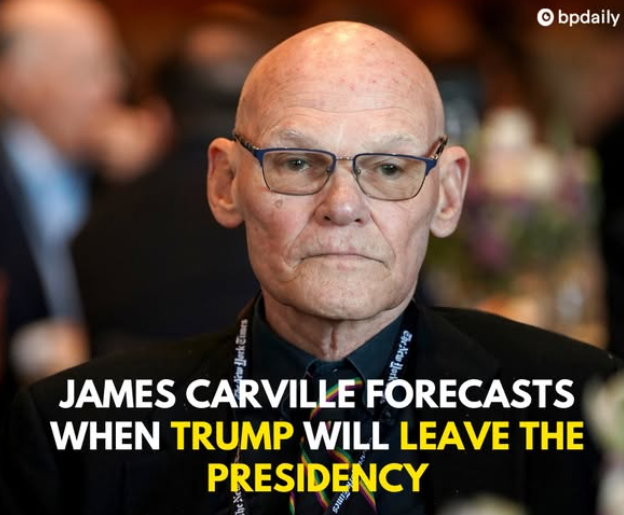 Obviously, James Carville has been wrong before, but it appears that he’s onto something here.
An ever-increasing number of Americans are realizing that Trump is criminally insane, and is leading this nation to destruction.


-
Greenhouse Gases7 months ago
Guest post: Why China is still building new coal – and when it might stop
-
Climate Change7 months ago
Guest post: Why China is still building new coal – and when it might stop
-

 Greenhouse Gases2 years ago
嘉宾来稿:满足中国增长的用电需求 光伏加储能“比新建煤电更实惠”
-
Climate Change2 years ago
Bill Discounting Climate Change in Florida’s Energy Policy Awaits DeSantis’ Approval
-

 Climate Change2 years ago
嘉宾来稿:满足中国增长的用电需求 光伏加储能“比新建煤电更实惠”
-
Climate Change Videos2 years ago
The toxic gas flares fuelling Nigeria’s climate change – BBC News
-

 Carbon Footprint2 years ago
US SEC’s Climate Disclosure Rules Spur Renewed Interest in Carbon Credits
-

 Renewable Energy5 months ago
Sending Progressive Philanthropist George Soros to Prison?