




 Ayn Rand was “a thing” when I was growing up of the 1960s and 70s, though most people today wonder how that was possible.
Here’s an AI summary of what liberals/altruists gave us:
Liberalism has historically driven the establishment of fundamental rights, social safety nets, and regulatory protections in the U.S. Key contributions include the Bill of Rights, Social Security, Medicare/Medicaid, civil rights legislation, the 40-hour work week, women’s suffrage, and environmental protection laws, focusing on individual liberty and equality.
Fundamental Rights & Freedoms: Promotion of freedom of speech, religion, the press, and separation of church and state.
Social Safety Nets: Creation of Social Security, Medicare, and Medicaid to protect vulnerable populations.
Labor Protections: Establishment of the 40-hour work week, child labor laws, overtime pay, and safe working conditions
Consumer & Environmental Safety: Implementation of the Pure Food and Drug Act and regulations for cleaner air and water.
Public Infrastructure: Expansion of public education and investment in infrastructure.
Weather Guard Lightning Tech
Tilt Renewables’ Dr. Liz Beavis on Wind O&M in Australia
Dr. Liz Beavis, Asset Manager at Tilt Renewables, joins to discuss O&M contracts, balance of plant, and lessons from Australia’s biggest and oldest wind farms. Contact Liz on LinkedIn or by email.
Sign up now for Uptime Tech News, our weekly newsletter on all things wind technology. This episode is sponsored by Weather Guard Lightning Tech. Learn more about Weather Guard’s StrikeTape Wind Turbine LPS retrofit. Follow the show on YouTube, Linkedin and visit Weather Guard on the web. And subscribe to Rosemary’s “Engineering with Rosie” YouTube channel here. Have a question we can answer on the show? Email us!
Intro: [00:00:00] Welcome to Uptime Spotlight, shining Light on Wind. Energy’s brightest innovators. This is the Progress Powering tomorrow.
Allen Hall: Liz, welcome to the program. Thanks,
Liz Beavis: Alan. I feel I’m a long time listener. First time caller, so it’s exciting.
Allen Hall: You are a long time listener and thanks for doing that. Uh, and Liz, I just find you to be a wealth of knowledge and, uh, we met on a couple occasions since I’ve been in Australia and it’s just, uh, a fun to connect here because I think a lot of the things that are happening in Australia need to be spread around the world.
A lot of, uh, good o and m practices happening in Australia, uh, from hard lessons learned. So that’s what I want to dive into today. And then the first one is, I don’t think many people realize this, that you went. From commissioning, Australia’s largest wind farm, Cooper’s gap to managing seven [00:01:00] of the 10 oldest operational wind farms in the country.
So you got some of the biggest, newest to some of the oldest assets. Uh. Uh, my question is like, when you started that, did you just kind of assume like wind, wind farms or wind farms or wind turbines or wind turbines and you could just basically own and end them the same, or do, or did it just occur to you immediately like, I need to take a different plan of attack here?
Liz Beavis: I think I, I knew nothing about wind farms when I turned up at Cooper’s Gap, so, so yeah, I got my, well, okay, we’ll go right back to the start. So I was working at a thermal power station and I was just thinking. There’s no future in coal. How do I get into renewables? And then a wind farm got built like 50 kilometers from my house.
I can, I can see it in the horizon. Um, and I thought, oh, they’re not gonna need a chemical engineer there, but I wonder if they need a site manager or something. And then the site manager role came up, I applied for it. So the services site manager. So, [00:02:00] um. That was July, 2020. That’s when I first started listening to the podcast.
’cause I thought I better find out something about this industry before I do my job interview. And so I’ve been listening ever since. But, um, yeah, so I don’t know. I was just lucky to get that role. And I turned up and, um, I think it was the end of September, 2020 first time I’d ever set foot on a wind farm ’cause of COVID and everything.
I didn’t, I didn’t go there for the interview. My manager was in Thailand. I just turned up. And, um, so they, they’d finished construc, they’d built all the towers where they hadn’t finished commissioning. And so we’re still working out of construction, dongas, you know, temporary buildings and um, and there was hundreds of people on site and it was just the absolute chaos of.
Constructing a two hundred, a hundred and twenty three turbines. You know, like there’s just people everywhere. And I thought, wow, I’ve just gotta figure out what I’m supposed to be doing here. There were a few technicians. I found out how many technicians I supposed to have. Just started recruiting, started figuring out what I was supposed to be doing there, and I just [00:03:00] learned so much.
In the two years we took over the new r and m building. We had failed gear, boxes, generators, transformers, overhead line, underground line, pretty much. Anything that could fail failed, and I got to see what we needed to do. Um, but through all of that, I was also thinking, oh, how do I manage this wind farm better?
I don’t know anything about wind farms, and I’m reaching out to the other GE sites, but the, the next biggest site was 75 turbines, and all of the rest of them are 30 and 40. So they’re saying to me, oh, you just get a team to go around. And I’m thinking. Well, that’s six weeks of work. You know, like, like everything is so much bigger on a bigger wind farm.
And then I’d reach out to the, the American sites. That had big wind farms, but their contracts were so different, and I didn’t understand at first, I started to realize, well, their contracts are completely different and their focus is different, and so they’re not facing the same issues that I’m facing.
Um, and then, you know, even speaking to a wind farm in [00:04:00] Sweden that was a similar size, but they, you know, they. They have to think about climate and what work they can do in winter. So I started to, as you said, you start to think, well actually everyone farms very different. And it’s, um, you know, you can learn from others, but you really need to understand how your conditions are affecting what you can and can’t do.
Um, and then, so then I got the job at Wally Power Services with as a portfolio manager for the renewables, um, fleet There. And yeah, a whole lot of really old turbines. And it was just so interesting to see that contrast between the new turbines and the old ones and um, and also being a independent service provider, what we could do and what the technicians.
So many clever technicians out there on wind farms, just figuring stuff out and, and fixing things that if you tried to do that within the OEM, you get really hamstring Engineers say, oh no, you can’t. You can’t do that. You can’t fiddle with that. Whereas once you’re released from that, for better or worse, [00:05:00] the technicians are just off sorting things out.
So that was really interesting to see that contrast. And now I’m with, um, tilt Renewables. So I’m the asset manager for Cooper’s Gap and Silverton Wind Farms. So I’m, I’m now seeing from the owner’s point of view how we actually manage these contracts with the OEMs and with ISPs and how we, how can we do r and m better?
Matthew Stead: And from the, um, from the ISP, um, experience, um, compared to your experience now, what are some of the biggest differences that you’ve observed between the old, the other sites and the, and the new site?
Liz Beavis: Yeah, I think it, it’s really just that you’re on your own. Um, so you’re relying on good technicians. To figure things out, you can, you need a parts and service agreement with the OEM, um, so you can reach out to them and ask for support, but they’re, you are the lowest priority.
So yeah, you don’t always get information, [00:06:00] so you just gotta be set up to figure things out. But then that does give you the freedom to make changes and to, to fix the things that you’re saying, whereas. Often the OEMs are so, uh, stuck with that mindset of, oh, we, we don’t want people to know we’ve got a serial defect.
So we’ll just keep kind of patching things up and hopefully, hopefully no other sites find out about this. You know, instead of just saying, Hey, we know this is an issue, here’s a good way of fixing it. ’cause just all I understand, all of the liability that throws, that, that flows from that, uh, you know. You can’t handle it.
Allen Hall: Does that change your perspective, knowing all those things? Do you have a, just a unique background in so many ways where you’ve seen, uh, pretty much all sides of wind operations. How do you think about that now? How are you, are you are addressing contracts differently or are you thinking about the way you staff differently just from your experience?[00:07:00]
How does that play into it?
Liz Beavis: Yeah, so definitely from a owner’s point of view. I understand what the limitations are of the OEMs and the ISPs, and so I know, I know what I can push them to do and what I can’t push them to do. And even though you’ve got the contract in front of you and you know it, it says you’re gonna do this, there’s certain things where you, you know, that you need to let it slide because it’s just not reasonable to push it.
You just, you just know that they can’t achieve things. Um. But then also going into new r and m contracts, you kind of know what’s critical, what to ask for, what, you know, what, what we need to make sure that we’re getting right from the start.
Allen Hall: How do you sort that out? Because I’ve heard, uh, I’ve talked to many operators.
that are doing O&M and they look at the contract much like you, and then they, they look at the contract and go, okay, here’s are the things I can probably get. Here’s the things I can’t get. How did you come to that determination is just because you’ve been so close at all this time? Because I think a [00:08:00] lot of people in wind that are new look at that contract, as the rule of law and you’re gonna get everything in there.
But I think the more experienced people realize it’s more of a negotiation or starting point, even
Liz Beavis: particularly, uh, like Comparing construction to O&M I say, construction’s the. sprint and O&M’s the marathon, and you’re in a relationship with this O&M provider for 10, 15, 25, 30 years, depending on your contract terms.
So you can’t go in at year three and just have a big fight with each other And you know you, need to, You need to be able to work together. So it’s understanding what the value drivers are on both sides and, um. And focusing on that. So, you know, for us as the owner, we, we just want generation.
So even though availability is what’s in the contract, really what we want is generation. So if we can figure things out together to get the maximum generation, and maybe that helps the O&M [00:09:00] provider save some costs because, they’re not just doing what’s in the contract, but they’re doing what actually helps us get generation.
That’s, that’s kind of the. That’s how we work. And then the contracts there. If, everything falls apart, you’ve got a legal document underpinning where you can say, hold on, you were supposed to do this. This is the damages we can claim. And this is where we can go with it.
But you’re not just enforcing every, clause. Because some of it’s been written so long ago, it’s not even relevant.
Allen Hall: Does that lead you down the path of shadow monitoring then?
Liz Beavis: My view is I would rather have, I would rather be at a point where I have a relationship with the OEM where we can agree that there’s no point me spending money that they’ve already spent and that.
That we get access to their data. Even if I pay half of what I would spend on shadow monitoring as an additional fee to the OM provider, so they get some revenue and they provide me with the data, I think that’s a better outcome for both parties than to [00:10:00] feel like I’m there looking over their shoulder monitoring what they’re doing.
So, I mean, it depends on what your relationship is, but our, our preference would be. That we’re working together and that we’re both benefiting from something rather than spending more money than we need to on doing something twice.
Matthew Stead: Maybe a question, Liz, in terms of your, you know, former, you know, thermal, uh, background, what, what sort of lessons learned or, or things did you sort of bring across from that, that previous um, experience?
You know, although six years ago,
Liz Beavis: I think that the first thing was safety. There was, um. There’s a big difference and, and particularly coming into a construction site, that’s, it’s always a challenge because there’s just this time crunch and cost crunch and, and it’s all just, we need to just jump in and get everything done.
We can’t stop and make sure we’re doing this safely or properly. Um, so getting my [00:11:00] team to stop thinking like that. We are here, we’re doing o and m. We’re here for the long term. If we’re gonna do it, we’re gonna do it properly. If we need to wait a couple of days to have the right tooling, that’s what we’re gonna do.
And just kind of slow everyone down and then, and get the right procedures and the equipment and, and everything. Uh, so we did that. Um, and then. I think the other thing I’ve probably just brought across is understanding of the market. So I was quite involved, um, with thermal generation and, um, market and bidding and um, and I think if you come into Wind Farm o and m, you’re kind of separated from that because you are just there to maintain the turbines and you, you don’t care what the market’s doing, but your owner cares what the market’s doing.
So being able to, to think about, well, what. What does my owner actually need? Um, and, and do that, you know, support that as well. Then you, you’re better at [00:12:00] delivering the o and m,
Allen Hall: right? Because it does add a little bit of perspective to it. I see a lot of operations and maintenance where availability is a thing, but it’s not like the top priority.
It’s, it’s odd how they think about it. At the end of the day, you’re producing power, and I know Tilt Renewable, having been to your offices there. Is focused on availability. You’re selling power to the grid. You need to be looking at what the prices are. You’re actually monitoring that. There’s, it’s a complicated enterprise.
It’s much more complex than I think, uh, you would think of a old power company, uh, particularly in the states where everything just kind of runs and it’s, it just happens in Australia. It’s a lot more freewheeling, I would say, and there’s more emphasis on. Making sure the assets are running, that they’re available and they are producing power.
That must change the way you think about managing the assets and particularly. You, you, there will be problems, right? There’s always problems. Are you, are you trying to then categorize [00:13:00] problems and trying to assess when you’re gonna take turbines out? Or you’re just saying, Hey, we just can’t fix this thing until next year.
There must be some sort of organization going on there. How do you think about that in terms of keeping your availability so high?
Liz Beavis: That’s one thing that I had to change my mindset. From thermal to wind because there’s a lot of work you can do on a thermal power station while it’s running. Whereas anything, anything you wanna fix on a wind turbine, you’re taking it down.
And then on a thermal power station, you have a six or eight week outage where everything’s shut down, 200 people turn up, everything gets fixed. And then you run it back up again and then you hope that it doesn’t come back down. Yeah. Whereas the wind turbine, it’s like, it’s, the way I see it is just if it’s running, it’s running.
You don’t go and stop it for any reason. You know, so it’s you, you only, you’re going there to do reactive work. When it stops and you’re going to do proactive annual maintenance work every 12 months, [00:14:00] and it’s really about getting the scope of your annual maintenance, right, so that you’re addressing everything.
And you know, the goal is like, this is what was drilled into me with GE was the goal is you go to that turbine once a year or twice a year if it has a semi-annual. Maintenance requirement, but that’s, that’s what you’re trying to achieve. So you’re trying to get the reliability to a point where you only need to go there when it breaks, and Oh, so you only need to go there for the annual maintenance and it shouldn’t be breaking down in between.
Unfortunately, that’s. Very difficult to achieve. I think. I think what it was interesting to see the older turbines, um, have a lot more engineering, uh, margin in them. Everything sort of does perform better.
Allen Hall: Well, that’s what I wanted to ask you because I do think there’s a difference between a slightly older turbine, even a turbine that was manufactured 20 years ago versus today.
It does seem like there’s a lot more knowledge about those turbines. Maybe it’s just, uh, tribal knowledge. Over time you’re gonna learn more about them, but there, there is a huge knowledge [00:15:00] gap. Between on a new turbine, you just, you just don’t know what you don’t know. How are you trying to address that?
Are, are you getting involved in RCAs or are you, are you trying to be proactive monitoring scada, the, it’s just a lot of your plate here. How do you try to manage all that and what’s your process there?
Liz Beavis: So the way the contract is structured, that’s all the OEM’s responsibility. Uh, but what, what we’re trying to do is say, well, we’ve got a lot of expertise in our asset management team.
Involve us. Like, we’d like to help. We can ask the questions, we can tell you what we’ve seen on other sites. We can, you know, we, we can actually help with this. Um, it’s, yeah, it’s, it’s kind of awkward that, um. There’s no requirement in the RM phase for them to provide us with an RCA under this contract. So, you know, there’s some, there’s some contracts where they may have to, but, um, yeah, [00:16:00] I think that’s an oversight because we’re kind of guessing or we’re, we’re getting given.
Part of the information, but we don’t necessarily have the whole story. And I think the advantage that the OEM has is that they’ve got hundreds of thousands of turbines out there and they, they’re monitoring all of them. They, they should be able to figure out what’s going on a lot easier than I can. I’m looking at two sites and saying, oh, hey, is, is that an issue?
Or is, you know, they’ve got all that data. And, and that was the challenge with an RSP is that you, you’re only looking at a limited. Subset of sites, you’re not necessarily being able to put everything together, but I’m not sure that we all get the value of that knowledge, whether, whether they’re actually crunching the data or whether they’re keeping it to themselves because they don’t want us to know about serial issues.
Um, but yeah, I, I feel like the OEMs could be leveraging that more.
Allen Hall: Are you able to bridge that gap sometimes with the [00:17:00]OEMs? I do feel like the OEMs have. Pretty good. Uh, at a minimum. I mean, I think a lot of times they’re really good on the back offices, on the engineering side of the technical expertise and the subject matter experts do exist there, and they are pretty quick to get to the root cause of a problem.
But are you able to get to those back offices, to those engineering experts and to talk to them? Have you found a way to do that, that that kind of works for, for both sides of that, of that business?
Liz Beavis: Something I found really helpful is, um. We’ve joined some international groups. There’s a few groups around that say the O2 O, they’ve, they were O2 O wind, they’re now O2 O renewables and also epr, um, electric Power Research Institute.
So we’ve joined them. We are sharing sort of general, um, breakdown information and issues. Um. Within those groups. And so then we are hearing from, you know, there’s a wind farm in Scotland that says, oh yeah, we’ve got the same [00:18:00] component. We are seeing this issue. And then I say, oh, well I better go check if we’ve got that problem.
And then, you know, so, so we’re, we’re kind of owner to owner learning things, so that’s quite helpful.
Allen Hall: So you’re leveraging the other, uh, operators of the same turbines or, or really something similar to what you’re operating globally? That’s a, that’s a smart move and a lot of operators do not do that. I mean, and maybe in the States there’s a couple of, of organizations in the states, EPRI being one of them.
O2 O is, I think, uh, definitely popular in Europe. They’re both very effective. So in instead of having to rely on the OM all the time, you’re basically word of mouth with other operators saying, I have this problem. Does anybody else have this problem? Have you solved it? Or maybe what the OEM has said, maybe the OEM has has told another operator what the answer is.
Uh, is that the way you’re kind of thinking about attacking that problem?
Liz Beavis: Yes, but we’re not sharing any confidential information [00:19:00]through those forums.
Allen Hall: Never gonna do that. However, it does, I mean, if you get some heads nodding in those discussions, like an oh two, oh, uh, uh, meeting or even an EPRI meeting, uh, or e-cig in the United States.
Basically doing something very similar. A lot of times I don’t think operators use them, the, maybe the way that they should, they, they, they turn into kind of complaint sessions instead of solutions, uh, that could be shared. Are you finding that you’re able to get to some solutions through those organizations?
Liz Beavis: I probably found out more about failure modes and things to look out for. Necessarily then solutions. But yeah, it, it’s definitely, it’s definitely been valuable.
Matthew Stead: Um, and Liz, we went for a bit of a drive around your site. Once
Liz Beavis: I be how many days, Matt? You’re like, oh, come up for a day. And then I said, you’re gonna need to come for longer.
Matthew Stead: The one day turned into three days. It was a wonderful time. Um, um, however, I think a part of our conversation was about. All the extra balance [00:20:00] of plant. And, um, I know you’ve got a few te uh, pet topics around balance of plant, including, um, toilet facilities. So maybe you could, uh, share your thoughts on, you know, the, the forgotten part of the, the site.
Liz Beavis: Okay. Well, I can talk about toilets. Um, I think, I think we got away with. Um, small wind farms with just an o and m building and, um, technicians could drive back to the toilet pretty easily. Now. Cooper’s Gap Wind Farm is um, uh, 123 turbines. The furthest turbine is an hour’s drive. No one’s driving, you know.
Back from the turbine and then to the r and m building and then back to their work site. So, um, we need to, we need to consider that in the design phase, but also I’ve just been talking about it every opportunity ’cause um, people just aren’t aware and that we need to think about what facilities we’re providing to our technicians.
And particularly in Australia, we’ve got a big [00:21:00] energy transition we’re trying to deliver and we’re not gonna get the workforce. If people think that wind farms aren’t nice places to work, so I, I think it’s really important. So I’ve, um, I have purchased a demountable containerized toilet facility that’s gonna go out into one of our furthest corners of the wind farm.
Um, so I’m gonna establish that and then look at where else we need to put them. And that was, um, $50,000 Australian delivered. So it’s really. A small cost considering everything else we spend on that one farm. Um, just to provide suitable facilities for our workforce. So, uh, I’m encouraging people to think about that and I’ve had some good conversations since I brought it up at wma, so it’s been good.
Matthew Stead: Yeah, it also struck me several, um, several challenges were a much bigger issue than you may have thought them to be at the start.
Liz Beavis: I think what I found interesting is, uh, o over all the different wind farms is, um, it’s [00:22:00] really difficult to predict what the civil cost is gonna be. You, you can have some wind farms that are just dead flat and have very minimal civil costs, but as soon as you build a wind farm.
On a ridge, you know, ridge line and you’ve got lots of bridges and steep roads and drainage issues. Yeah. And then depending on the erod ability of the soil and the rainfall, suddenly you’re out there grading pretty regularly. Um, I have now learned way too much about civil engineering, and it’s not my area of interest, but, um, I think there’s, there’s better decisions that can be made during construction and.
Design stage of the wind farm. There’s, you know, there’s some roads, uh, I’ve driven around as a civil contractor at one of my sites and, um, he was involved during construction and he’s also a landholder and he said, well, I told them to put the road over there where it would’ve been sort of gentle slope up the hill, but they wanted to just build a shorter road.
So they [00:23:00] just put a straight up the hill and then they had to bring, um, extra machines in to tow all the components up the hill. ’cause they made it too steep. But that’s then what they’ve left us. For RM to maintain, you know, so that it’s just bad decisions and, and I think it’s, yeah, it gets very fraught during construction.
And then, um, you know, towards the end you’re just trying to get the project finished and you’re trying to get handover and you’re just worried about the turbines, you know, like what’s happening with these generators. And all of that becomes a focus. And meanwhile, the, the civil work hasn’t been finished to the standard and the drains haven’t been built to the drawing.
And, and that’s just. The last thing on anyone’s list. ’cause we’re trying to get the turbines right. Um, but yeah, it’s, it’s a cost that you then wear for the rest of the project, so it’s worth thinking about. Um, and in Australia we’ve also, it’s quite common for the electrical balancer plant to be maintained by the OEM.
Um, and we’re starting to find it’s not really their area of [00:24:00] expertise. They’re not really set up for it. You know, there’s sort of a question mark whether that’s. The best approach or whether, uh, as an owner, we are better to split that out and look after it ourselves, but then that complicates availability guarantees.
And who’s responsible for the underground cable? Yes. And there’s, there’s a lot to think about.
Allen Hall: I was gonna ask you about that because that is an important difference, uh, in Australia where the BOP seems to be, uh, more, or the responsibility of the operator than the OEM, and that must be at least somewhat Australian specific because of the nature of the country and the difficulties that are involved there, but.
Does that mean that as you, as the operator need to be bringing on people that know, uh, substation, architecture, underground cables, transformers, pads, uh, roads, all that, is that something that you just have decided that it makes more sense to do and we can probably do it [00:25:00] better, uh, as a, to make availability better and make the site more accessible?
Is that, is that the thought process that went into that?
Liz Beavis: I think the driver was, um. The lenders. So, so finance, um, they, and that’s, that’s why that there was a real trend for the fully wrapped contract. So a, a 25 year fully wrapped contract and, and the finance world is de-risked, you know, it’s magically de-risked because, because you’ve locked it in and it’s all just gonna get done.
And it’s, and now I think everyone’s realizing, well, it’s not actually DeRoot. Like there’s, there’s a lot. That we need to manage and, and now we’ve lost control over it. And actually maybe we’d like to pull that back, but it, it’s, it’s site specific. You know what you. What makes sense to, to give to the o and m contractor versus separating it out and managing it
Allen Hall: Well then let’s talk about the two wind farms you are involved with day to day, Silverton [00:26:00] and Cooper’s Gap, and now they are not next door to one another.
Silverton’s in New South Wales, far west. Right. And then, uh, Cooper’s Gap is up in Queensland, way up north Counter by Brisbane. Uh, those are what, 500,000 miles apart from one another. They’re a long ways away.
Liz Beavis: Yeah, I haven’t looked at how far they’re, but um, so I live near Cooper’s Gap, so everyone in Melbourne’s quite pleased with that because it’s a pain for them to get here.
’cause it, I, it’s a three hours, I’m three hours drive from Brisbane. That’s not even North Queensland. That’s, I’m still in Southeast Queensland. Really.
Allen Hall: Right. True. Yeah.
Liz Beavis: So then for me to get to Broken Hill, I have to drive to Brisbane and then fly to Sydney or fly to Adelaide and then fly into Broken Hill.
So it’s two flies. So we did have, we’ve got another asset manager who was very involved with Silverton, uh, for a long time, and she lives in Sydney. And so I. When I came in, because I lived near Cooper’s Gap, obviously I took Cooper’s Gap and then it made sense for me to also have Silverton because it’s another [00:27:00] GE three X site.
So that’s why I’ve got those two. Yeah. Uh, even though it’s not my closest site, so I go out to Silverton about four times a year. Um. I make sure I spend a week there and I drive around and look at everything, and I go up tower and I spend time with the team and I, I do feel like I don’t have as much control over that site as Cooper’s Gap.
I’m here most days and I’m, and I’m in the pre-start and I see where all the teams are going, and I go and talk to them. Yeah, so I, I get a lot more information and I think as an asset manager, it’s really important to be on site and to be up tower and to be talking to everyone. Um, so when I do go to Silverton, I make sure I go there for a long time, or I see some owners will just pop in for the day, or they, they’ll sort of come in at 10 o’clock in the morning and, and then leave.
So they don’t even see preset. You can’t really get a feel for what’s going on in site if you’re not. Um, so I would like to be at Silverton more often, but [00:28:00] I just don’t like the 12 hours of traveling it takes me to get there. Um, but um, we have, so teams is amazing, right? Like what we can do remotely now.
Um, I have a fortnightly call with the site manager and we go through what turbines are on and what’s off and what’s he working on and what issues. And, um, so I do get a lot of information. Um, not being on site and, and all the systems that we have access to, I’m constantly spying on them. They all know that.
But also I’m there to help. Like, I’ll, I’ll read the fault code and go, what does this fault code mean? That sounds really bad. And they’re like, oh yeah, we better go check that. So, um, yeah, we we’re working together. Um. And it’s really just, yeah, they know that we’re, we just wanna try and get the availability up.
We don’t wanna be charging them damages all the time. We, it, it doesn’t really cover our costs. So it’s better for all of us that we just improve the availability and it doesn’t matter who’s doing it, we just need to figure it out. [00:29:00]
Allen Hall: Well, Liz, you’re a busy person and in your off time you co-founded an organization called Power Up Queensland and you mentor female engineers.
Uh, and you have done that for a while throughout your career. What’s your message to women that are considering entering the wind energy sector?
Liz Beavis: Oh, we need more women in wind. Onsite, not just in the, in the head office. And, um, I’m fixing the toilet situation, so I’ve got it under control. Um, yeah, it’s, it’s really sad when I sort of look around at preset and there’s, I’m, I’m the only woman in the room usually.
Um, but yeah, I, like, I go up tower and, um. I think it’s, it’s a lot of fun if you’re, if you’re someone that likes heights and doing something a bit more physical. And I think also the, um, for the, from the trade point of view, you get to work across mechanical and electrical. So if you’re not, uh, you know, if you’re interested in sort of working across your trade instead [00:30:00] of just a purely being a mechanic or an electrician, I think it’s a really interesting, um, uh, workplace to be in.
You get. And, and there’s lots of civil work to do and, um. And then as an asset manager, you know, you can, you can come into that from a, from a mechanical engineering, electrical engineering, or mechanical engineer. There’s, there’s lots of civil work to do, but even in our team, we’ve got people from finance and accounting backgrounds and, um, trade backgrounds.
So it’s, it’s, um, something that you can come. From a broad range of, um, disciplines. Um, and I just, I love being out and about this morning before I came on the call, I had to go out and put some signs out for a biosecurity issue. So, so I like, that’s the kind of thing, like I, I’m not stuck in the office. I just go for a drive and put some signs on the gate and yeah.
So it’s, you’re not stuck in the office. I think it’s, it’s really. It’s, it’s a really awesome job. [00:31:00] So I encourage, yeah, people that want, don’t wanna be in the office and actually be outdoors and involved and doing some physical stuff. It’s a good job.
Allen Hall: Well, Liz, you’re a wealth of knowledge and uh, it’s always great to see you in Australia and thanks for coming to the Woma event.
If people wanna reach out to you and connect about o and m issues or entering the wind industry, how can they do that?
Liz Beavis: Um, so I’m on LinkedIn. Maybe I can just put my email in the show notes because I get, I get a lot of LinkedIn connection requests and I sort of don’t know who’s who.
Allen Hall: We’ll definitely put your email in the show notes, and I know we’ve had a lot of discussions of, of getting you on this podcast.
I’ve been really looking forward to this discussion, and this has been great. We need to have you on more often. So, Liz, the invitation is. Thank you so much for joining us on this podcast and yeah, we’ll see you soon.
Liz Beavis: Thanks [00:32:00] El.
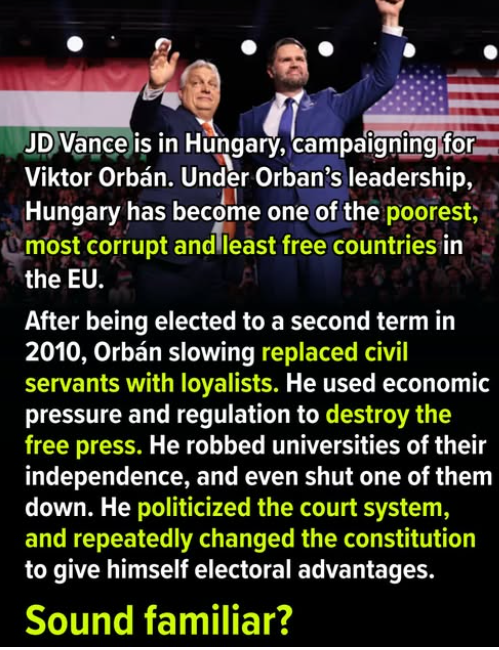 It’s not enough that the United States has itself become an autocracy. We’re actively pushing fascism around the globe.

Solar Plus Batteries Can Meet 90% of India’s Electricity Needs, Says Ember
Bioleaching Breakthrough in Canada: How MIRARCO’s Pilot Facility Turns Mine Waste into Critical Minerals
Iran Energy Shock Tests Limits of Trump’s Vision of US Energy Dominance
-
Climate Change8 months ago
Guest post: Why China is still building new coal – and when it might stop
-
Greenhouse Gases8 months ago
Guest post: Why China is still building new coal – and when it might stop
-

 Greenhouse Gases2 years ago
嘉宾来稿:满足中国增长的用电需求 光伏加储能“比新建煤电更实惠”
-
Climate Change2 years ago
Bill Discounting Climate Change in Florida’s Energy Policy Awaits DeSantis’ Approval
-

 Climate Change2 years ago
嘉宾来稿:满足中国增长的用电需求 光伏加储能“比新建煤电更实惠”
-
Climate Change Videos2 years ago
The toxic gas flares fuelling Nigeria’s climate change – BBC News
-

 Renewable Energy6 months ago
Sending Progressive Philanthropist George Soros to Prison?
-

 Carbon Footprint2 years ago
US SEC’s Climate Disclosure Rules Spur Renewed Interest in Carbon Credits