

Weather Guard Lightning Tech

Revolutionizing Wind Assessment with First Airborne
We’re joined by Boaz Peled, co-founder and CEO of First Airborne, to discuss their groundbreaking technology that revolutionizes wind resource assessments. First Airborne’s cloud-based anemometer system, suspended from a remotely controlled drone, allows highly accurate measurements of wind speed and direction across existing wind farms, significantly improving the efficiency and optimization of wind turbines.
Sign up now for Uptime Tech News, our weekly email update on all things wind technology. This episode is sponsored by Weather Guard Lightning Tech. Learn more about Weather Guard’s StrikeTape Wind Turbine LPS retrofit. Follow the show on Facebook, YouTube, Twitter, Linkedin and visit Weather Guard on the web. And subscribe to Rosemary Barnes’ YouTube channel here. Have a question we can answer on the show? Email us!
Pardalote Consulting – https://www.pardaloteconsulting.com
Weather Guard Lightning Tech – www.weatherguardwind.com
Intelstor – https://www.intelstor.com
Allen Hall: Welcome to the special edition of the Uptime Wind Energy Podcast. I’m your host, Allen Hall, along with my co host, Joel Saxum. Our guest today is Boaz Peled the co founder and CEO of First Airborne, an innovative company that is revolutionizing wind resource assessments. First Airborne has developed a cloud based cutting edge anemometer system that is suspended from a remotely controlled drone, allowing highly accurate measurements of wind speed and direction at various heights and locations across an existing wind farm.
The groundbreaking technology is poised to significantly improve the efficiency and optimization of wind turbines. We’re excited to have Boaz join us to discuss First Airborne’s unique solution and his insights on leveraging drones and advanced sensor technology to enhance wind energy production.
Boaz, welcome to the show. Thank you very much. Thanks for having me. This is going to be an interesting discussion because First Airborne has some new technology, and in wind energy, you don’t see a lot of sort of earth shattering technology, but this is one where it’s a power producer, right? In the wind business, we’re here to produce power.
The power comes from the wind. We need to know as much about the wind as we can. Problem is if you have an existing wind farm with a couple of met towers it can be hard to discern what’s happening on a complex site. That’s where First Airborne comes in. And would you just briefly describe what your product is?
I gave a little summary and introduction, but it’s unique.
Boaz Peled: The best way to think of First Airborne’s technology which we call Windborne by the way, it’s actually very easy to explain for wind power people. Because what it is a windmast, but it can fly. So it’s a flying windmast.
Imagine your windmast just grew wings and started flying any way you’d like to within your wind farm. And back to the question of complex terrain. I think I’d suggest that is simply let’s say one kind of exotic application. But the question, which wind is hitting my turbine? Is I think the most maybe sought after question in wind power.
And if you have a flying wind mast, you position it anywhere you like for any for this turbine or the next, and you’ll get that answer.
Allen Hall: Because once they’ve done a site survey, and usually there’s a pre survey done before the wind turbines are installed, that survey is pretty good. Depending how old that survey is, that survey may be 20 years old.
It could be that old, right? And things change. And the one that happens mostly in the United States, Joel has pointed out numerous times on the podcast, is there’s another wind farm installed in front of your wind farm. And another wind farm in front of that one. So the winds you are now receiving are not what you had initially planned on.
And then trying to understand what those winds are and how to maximize production in that environment is almost impossible without your kind of technology, right?
Boaz Peled: I think I love that example. I think it’s a, it’s a microcosm of a lot of other things, but it’s a really good way to understand that actually in today in wind power, I’ve been an operator for many years and first airborne has really come out of kind of my, Let’s say the shortcomings that I, that myself and my co founders have seen in the industry and to try to figure out how to solve that.
And the first and foremost thing is my turbine producing as it should? That’s the most commonplace, expected question you, you may ask, is and the problem specifically with wind turbines, let’s say, as opposed to solar farms or let’s say other generation types, is that By definition, the fact that the wind turbine is inside the wind is distorting the wind reading.
And then you need a remote sensing device, which is reading the wind that’s about to hit your turbine, but not the one that’s actually there. Now, given the size of wind farms and the variety of layouts and terrains, and then other, as you say, turbines, which are affecting my turbine, depends on the wind direction.
If I’m stationary, there is just so much data and a lot of invalid data coming in, whether it’s because it’s waked or because it’s interrupted by the own machine. But if you’re moving around, in our case, being deployed on an aircraft, if you’re moving around, then you’re actually picking and choosing where is the right place to measure that free wind, which is going to tell me really what.
The production level should be at that point in time, and then that opens up a world of opportunities on tuning, optimization control settings, software upgrades blade repairs, you name it. The fact of the matter is at the moment, wind power operators simply really, I hope this doesn’t sound too large, just don’t know whether their machines are operating, what they’re producing, what they should be producing.
Joel Saxum: We can look at it at the foundational level, right? So this is talking outside of first airborne solutions, right? But it is a few met towers and basically a model, right? And that’s modeling on the, on a statistical or mathematical models that have been developed, and one of the things that Alan and I learned on another with from another guest on the podcast was that, When we talk complex terrain can be as much as a ditch on the side of the road in the middle of a wind farm that isn’t perfectly flat.
So when a model is based on basically what a piece of paper flat is, there’s, there is no wind sites that are out there that are like that, right? So you’re relying on data from the beginning. That is, it’s acceptable for the most part, but it’s not fundamentally correct because it is based on a mathematical model, and that doesn’t fit what the actual real world situation is, and then once you get into oper and that’s at the developmental stage.
You get into operations, and the anemometer on the back on the that you’re getting your wind reading from is on the back of the nacelle, where the wind has already come through the blades and messed it up anyways. The, what you guys are bringing to the market is really a kind of it’s, it, not it is a first of its kind solution to measure ACTUAL wind resource.
Boaz Peled: Exactly. That’s the asset you as a developer, that’s the asset you bring to the table, right? That’s, that’s your fuel.
Joel Saxum: Yeah. Yeah.
Boaz Peled: Now here’s the thing. We’re talking about site assessment in general. So then whether it’s FAT or they model complex rain any assessor will tell you that the errors on, on, on flow models are like 20 percent up and down, in, in some cases, and nobody will argue with that.
That’s that’s why there’s, a lot of drive for within site assessment also to place LIDARs, like what we call roaming LIDARs, move them around to narrow down that that error. But then when you’re moving on to operating, when the situation is no more, it’s not static, you have maintenance, you have, you have inspections, you have people playing around with your turbine, you have like weather conditions, which are not considered in your model.
The model is good for financing, I think, when you, when, at the time when you’re taking over your wind farm, at that very moment, as when you’re, you switch on the turbines, and is that the thing I actually bought? Those models go out the window. They’re irrelevant at that stage, because that turbine is there real.
Let’s measure what’s really hitting it and what it’s really giving us in return. And then, other devices do this kind of thing. And actually sometimes very accurately. Some LIDARs are very good problem is they can’t move and when they can’t move, it’s a lot, there’s a lot of filtering of data and very few turbines, which are actually can be tested.
Once you have a flying LIDAR or a flying windmast, all of a sudden those five or six machines, which you could have, In the best case, maybe tested in a year, turn into maybe 206 machines tested in a year.
Allen Hall: Okay, that’s a huge difference. I, it’s, if you haven’t seen the First Airborne website, you need to go to firstairborne. com and then take a look because you can see the drone and the anemometer being deployed. The anemometer Boaz, I want to just walk through this real quick for everybody who’s listening on the audio platforms. So it’s a drone. It’s a standard quadcopter kind of thing. Then on the bottom of it, it has what looks like to be a submarine, basically an anemometer submarine.
Boaz Peled: I’m going to call it a torpedo, yeah.
Allen Hall: Okay, a torpedo. That falls out of the bottom that’s on a data line. And that anemometer just sits there and records data while the drone hovers above it to hold it. And then that data is then recorded in telemetry back to whoever’s recording it. Okay. But that allows you to like, to take long duration samples, like several hours worth of data, or to take data over multiple tournaments at the same at one time, right?
Boaz Peled: Absolutely. I think it’s spot on. So if we can take a deeper look at the technology, it’s actually, yeah, most of you most of of of the people who’ve seen it are actually surprised at how lightweight it is. It’s eight, eight, all of 80 grams, but it’s packed with tech. It looks like something you may have seen before, maybe one instrument or another, but it’s entirely proprietary.
It’s it has, it sustains itself with its own energy, its own communication link wireless by the way the tether that tethers it to the aircraft is also designed to have very low drag. So actually the smarts of this is that actually what you do have is a sensor, which is flying in there, or stationed in the air, which has zero impact of the aircraft above it.
Aircraft create their own climate. And you need to basically eliminate the climate of the aircraft on the measurement. And then what you have is a sensor standing still. In space or in the on the air and then I should say um, and there’s a lot of smarts going into, we measure acceleration, wind speed, wind direction, humidity, temperature, tilt in 3d 3d vectors.
It’s basically a multi sensor meteorological station, all packed into 80 grams. And I think the most interesting thing for the wind power operators or service providers out there is to know that this is now Third party validated by Deutsche Windgardner, this Europe’s leading um, consultancy for certification and for accreditation and so on.
All LIDARs in Europe, they’ll go in, they’ll validate against their windmast. And we have done the same thing over a four week field trial. And we’ve come out. With first class results. The windborne sensor now the windborne system, which also includes the architecture of the software architecture, which resides with the aircraft.
Is now third party validated and basically tantamount to a first class wind measurement device, the best, we’ve seen maybe the best LIDARs come up to, to, to that degree of accuracy on wind speed and wind direction.
Allen Hall: That’s impressive. So the accuracy is really high, higher than most things you’d be able to deploy.
I’ll give you the case study for America. I’ve got a hundred turbines. I’m in Oklahoma. Oklahoma. And I am not getting the power out of the turbines that I think that I should, and I don’t know what to do about it. And obviously the first place to look should be the wind to make sure that I have the wind that I thought that I had.
How does First Airborne attack that problem? What, can you step through that process?
Boaz Peled: So what would actually, if you were walking onto the site and you were seeing the our system being deployed, What you would see is actually what you see every day in a wind farm wind turbines turning But the other thing you may notice is that you have two technicians.
Basically, looking up in the air Because they’re not flying an aircraft. They’re just supervising and it’s all done in entirely automatic. They they there’s a pre programmed mission set, which basically depends on the wind direction at the time, which is the big advantage of moving away or moving away from wakes or moving within the wind direction.
Which is the one that’s hitting the turbine at the time. And then, um, they’re basically supervising the mission by the way, that’s coming down to one technician very soon because the the next version is much, much more simplified and actually works out of your phone.
Interestingly, we threw an app. But but yeah so what you would see is is a couple of guys a few hundred meters away from the turbine. And you see the aircraft flying in the air in a very stable payload in the air, taking the measurements. And that’s all that’ll be different from a common day in, in the wind farm.
And then that aircraft will come back every now and again for a change of battery. And a minute or two, I will after that we’ll go back to the same position or a different position, depends on the campaign. So that’s actually what you would see and that’ll go on. In the case of a hundred machines, if we want to test each and every one of them, we probably get it done within.
I think a couple of months maximum, probably less.
Allen Hall: So the, are you deploying one airborne sensor at a time or are there multiple sensors being deployed?
Boaz Peled: It depends, really. It depends. That’s mostly a logistical question, not a technological one. So we could so called attack a wind farm, deploy like 10 of them, and run through the wind farm very quickly.
That’s definitely possible. So we have, we’ve developed the system so that it doesn’t interfere, Two systems don’t interfere with each other from a comms perspective. That is something that really has to be paid the had to be paid attention to. And then and then but currently at the moment we have one system running in each of the wind farms that we’re servicing that may change in the near future.
Allen Hall: So it will the drone and then is. Is it moving to different positions for a particular wind turbine? Is it taking like a grid? Is that what it’s doing in height?
Boaz Peled: Then the nice thing is very little interface with even the customer in terms of absorbing their time. And definitely not with a turbine.
You don’t touch the turbine. That’s the whole point. Never touch the turbine. And nobody can come and, wave those warranty documents in your face. So we’ll map out the measurement locations in advance. Usually a single location is good to measure three or four machines. Such as think of it like a windmast, but not in a particular wind direction in any wind direction.
And then and then we move on once we have accumulated a sufficient amount of data, the drone will fly out to the next batch of turbines, and that’s how you go through the entire wind farm.
Allen Hall: Okay, that makes a lot of sense. Let me understand the business model just briefly. Is the business model that you provide the technician and the drone and the anemometer at the, as a unit?
Or will you lease out the drone and anemometer so that, Some of these massive sites that are existing in the United States can go out and use your technology when they just to keep track of how the winds are on the site.
Boaz Peled: So far we’ve been validated mid last year and since then quite a few big names have come on board and deployed the technology, but they’ve always done it We’ve always done it so far with ourselves servicing the end customer, the operator, the owner of the winter of the wind farm.
The next version, which is coming out Q3 is is a self let’s say it’s it’s a self controlled or self deployed system which basically allows you to basically attach the payload the windborne sensor. To any industrial aircraft any, anyone that’s been using it in the market and use it at will basically you acquire the technology and you use it at will, wherever you like, whenever you like in your own wind farm.
So that’s, and that will really create, I think, a real rollout that will. Create a lot of utility because it’ll reduce a lot of the logistics of having to have people coming in from here or there and scheduling and so on. You just, you’re worried about something, go out, measure it for a day.
Come back. Let’s see what’s going on.
Joel Saxum: That, that’s a game changer, right? I think that the majority of drone companies in the wind world are going to that inspections and crawlers and all kinds of, because it’s just not. cost effective, standby time, all those good things you have to extra to pay for.
So congrats on that one. Good, good move. Another, so I want to address another thing that you, we had talked about earlier. So a K a case study with yaw misalignment. We talked about one where you told me that you did a site and it was like 11 percent of the turbines in the site were more than five degrees misaligned.
Boaz Peled: I think it was more than that. 11, 11 were considerably misaligned, but I think I’ll tell you what we’ve been seeing. We’ve tested hundreds of turbines within the last 12 months on across different platforms. Okay. Ranging from Siemens.
What else have we done? I think we’ve done some GE, not many and Enercon we’ve done. So I’ll tell you what we see. 25, let’s say between, yeah, you’re right. 11 percent was actually the best site. There was one site. I’ll even say which one it was a Siemens one. So that’s so there, so I take it as a compliment.
I suspect was actually the best one that we’ve seen in terms of misalignment ratios. But it will range. We’ve seen 11 percent on the best case and 29 percent on the worst case. Of all what we call considerably misaligned, which means beyond five degrees. Okay, so that’s five degrees or more.
And the rest of them have fallen in between. And that’s and that is something that I don’t know what to say we were surprised by, because really the fact of the matter is, and I can say this as an operator, you just don’t know. We just simply don’t know, there are, because of the difficulty to measure what’s powering your turbine, there is so much unknown out there that we assume or presume or whatever, but there is just, no empiric data to back that up.
So even the question is, once we fix misalignment, how long does it take it to come back? It’s something that, it’s something that the industry is. It really has, again, some assumptions on, but there is no, to date, there has no really not been a good way to validate that, you know?
So yeah, and we, for example one of the sites we’re servicing in America, we do it seasonal. So we run a campaign in the summer. We see what the turbines are saying on misalignment. And then we, before we fix them before we actually suggest the the vein adjustment offset We basically test them again in the winter, and so far we’re seeing very consistent results.
What’s happening in the summer is very much what’s happening in the winter on the very same turbines.
Allen Hall: So there’s no seasonal movement or differences in the anemometer?
Boaz Peled: Not statistical. It’s, we’re, when you specifically address the question of your misalignment, you’re actually addressing your static misalignment, okay, or static your misalignment.
What is the innate offset or bias that the turbine has towards? Wherever it’s turning, dynamic is an entirely different question is more of a control or software question. And then or a strategy by the OEM, but the question of static misalignment should theoretically appear over and over if we’re measuring correctly and at the right spots.
Allen Hall: So your customers that, which you’ve identified these large percentage of misalignments must be thrilled that you’ve identified them.
Boaz Peled: Absolutely. And those who have good some of them who some of them who are actually maintaining their own fleets Have a really easy life. They just offset them because they’re taking care of their own controls.
They just offset the veins Seven degrees six degrees five degrees nine degrees, whatever the case is and they’re good to go, right? Those who are you who are being serviced by OEMs and have good relationships with them again simpler situation And those who are or a little let’s say what’s the word, uh, having a harder time, maybe with with their service providers, whoever they may be, may have some lag time and some, sometimes some argumentation, which is commonplace in our industry, to get through the OEM.
Okay for lack of a better definition.
Allen Hall: So the extra revenue must be a pleasant surprise to these operators.
Boaz Peled: Absolutely. The nice thing about in the case of, we do several kinds of testing whether it’s the cell transfer function, which we’ve done a couple of campaigns now in France and Italy whether it’s which basically in turn, turns into a power curve assessment.
Which is a bigger story in, in, in that sense. But then if you’re looking at your misalignment, the nice thing is there’s no, because of the mechanics of wind turbines or the aerodynamics of wind turbines, really don’t need to argue that much about it. If my turbine is misaligned, it’s lift by definition is reduced.
Everybody in the industry knows that, a reduction of, let’s say or let’s say a misalignment of say, Two and a half, three, four degrees will result in somewhere around, since some cases up to 3 percent of AEP, two to 3 percent of AEP. And that’s because it’s coming back, it’s no argument needs to be made.
It’s the aerodynamics. That’s just what they are. There’s no lift. If your turbine is turning 45 degrees away from the wind, it will not move irrespective of what the wind is. It’s feathered.
Allen Hall: This is amazing technology. I’m really fascinated by it. And it sounds like you have some good case studies going on at the same time.
And so just because this is going to be a universally needed product. How do people get ahold of First Airborne? How do they get ahold of you to discuss how to implement this new tech?
Boaz Peled: So we have our contact details on the website. I think you mentioned earlier, firstairborne. com. Everything is in there.
So I think, if you want to get ahold of us and want to understand what your wind is, and I think that’s like the most, the first thing you want to understand as a wind power operator, then as I did anyways. Then then it’s it’s pretty simple to, to get in touch with us and we respond very quickly.
Allen Hall: It’s been tremendous to have you on the program. I’m really interested to see how the season goes for you and to learn more about the technologies that we see in deployed in the field. It’s been fantastic. Thanks for being on the podcast.
Boaz Peled: Thank you very much for this. Really a pleasure.
https://weatherguardwind.com/wind-assessment-first-airborne/

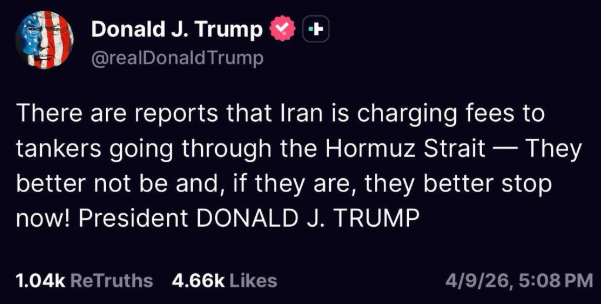 At left see we what it’s like when a formerly great country is being led be a moron.
Will “they better stop now!” lay this issue, the precursor to World War III, to rest?
https://www.2greenenergy.com/2026/04/10/there-are-costs-for-a-world-superpower-to-be-led-by-a-spoiled-child/
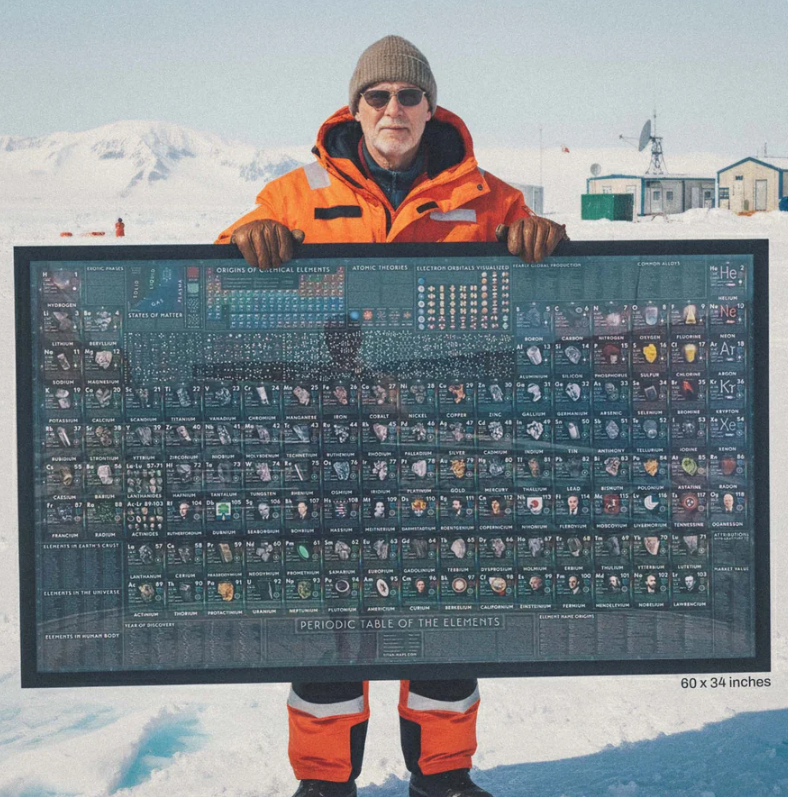
 In their ad, the folks offering “The Most Complete Periodic Table Ever” claim that, if your kid is struggling with chemistry, she can improve with this product, which is essentially tons of useless information.
Who discovered molybdenum? In what year? What is its market value?
We are a society in which our facility with science is now in free-fall. If you think that blunting whatever may remain of your child’s natural curiosity with crap like this a good idea, here’s where to shop.
 Poor and working-class Americans are struggling with the current economy.
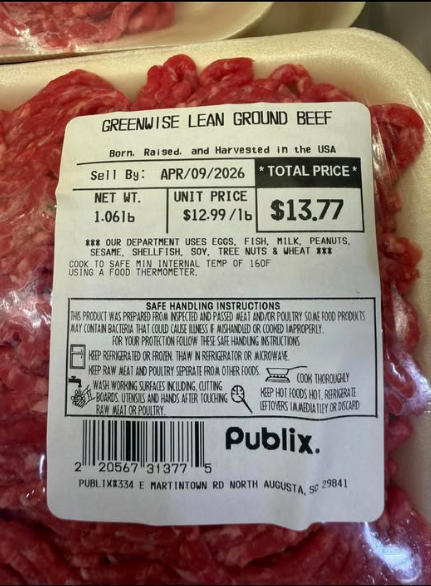
The MAGA base must be going insane. Trump’s telling them that the economy is great while they’re paying $6/gallon of gas and $12.99 for a pound of hamburger.



-
Climate Change8 months ago
Guest post: Why China is still building new coal – and when it might stop
-
Greenhouse Gases8 months ago
Guest post: Why China is still building new coal – and when it might stop
-

 Greenhouse Gases2 years ago
嘉宾来稿:满足中国增长的用电需求 光伏加储能“比新建煤电更实惠”
-
Climate Change2 years ago
Bill Discounting Climate Change in Florida’s Energy Policy Awaits DeSantis’ Approval
-

 Climate Change2 years ago
嘉宾来稿:满足中国增长的用电需求 光伏加储能“比新建煤电更实惠”
-
Climate Change Videos2 years ago
The toxic gas flares fuelling Nigeria’s climate change – BBC News
-

 Renewable Energy6 months ago
Sending Progressive Philanthropist George Soros to Prison?
-

 Carbon Footprint2 years ago
US SEC’s Climate Disclosure Rules Spur Renewed Interest in Carbon Credits