

Disseminated on behalf of PowerBank Corporation.
PowerBank Corporation recently announced a new treasury strategy that includes holding Bitcoin. This move combines innovative finance with the company’s ongoing mission to develop clean energy projects. PowerBank aims to hold Bitcoin on its balance sheet. It has also teamed up with Intellistake Technologies Corp., a company focused on blockchain and digital asset custody and treasury management.
PowerBank intends to acquire Bitcoin as part of its treasury assets. This allows the company to tap into the long-term value of the cryptocurrency. Also, it remains dedicated to environmental responsibility and sustainability.
Linking Bitcoin with Clean Energy
Bitcoin mining is often criticized for high energy consumption and its impact on the environment. Some experts and companies think Bitcoin can help renewable energy grow. This is true when it is linked to clean power sources. That is the approach PowerBank follows.
PowerBank states that all Bitcoin transactions it completes will use net cash flow from verified renewable energy sources. This helps maintain its focus on sustainability.
So, Why Bitcoin?
PowerBank views Bitcoin not just as an investment but as a strategic reserve asset. Holding Bitcoin on its balance sheet can help the company hedge against inflation and economic uncertainty. This trend includes more than 40 public companies that hold Bitcoin as of 2024, says Galaxy Digital.
Bitcoin is decentralized and has a limited supply of 21 million coins. This makes it appealing for companies that want a long-term hedge against inflation. PowerBank has committed to transparency with its future Bitcoin holdings and will report them openly.
A Smart Power Duo: PowerBank x Intellistake
PowerBank has teamed up with Intellistake Technologies Corp. This partnership will help PowerBank with technical advice, custody, digital asset security, blockchain infrastructure, and treasury management. All these services support PowerBank’s Bitcoin strategy and related plans.
Through this collaboration, the company gains access to Blockchain infrastructure and digital asset custody.
Expanding Clean Energy Finance Through Digital Assets
PowerBank’s Bitcoin strategy positions it as a pioneer in linking digital assets with clean energy development. Bitcoin purchases with net cash flow generated from renewable energy can offset the electricity used in Bitcoin mining.
Research from groups like the Energy Web Foundation and the Cambridge Centre for Alternative Finance backs this idea. Using low-carbon energy for Bitcoin mining can turn it from a problem into a tool for grid management, and PowerBank is using a similar indirect approach through the use of net cash flow from renewable energy projects to acquire Bitcoin.
The announcement has attracted attention from ESG-focused investors and the broader crypto community. It shows a rising interest in how renewable energy developers can use blockchain and digital assets in their financing models.
A Bloomberg NEF survey found that approximately 60% of renewable energy developers are exploring blockchain or digital asset solutions to support project financing. If PowerBank’s approach works, it may inspire other clean energy companies to try similar strategies.
Beyond Bitcoin: Energy on the Blockchain
In addition to Bitcoin, PowerBank is advancing blockchain-based finance through its partnership with Intellistake. Intellistake specializes in blockchain, capital markets, and decentralized AI infrastructure.
Under this agreement:
- PowerBank plans to accumulate Bitcoin as a long-term reserve asset.
- Intellistake provides custody, digital security, and treasury management tools.
- Both companies will look into tokenizing real-world energy assets. This includes solar farms and battery storage systems.
Tokenization is turning physical assets into digital tokens. These tokens can be traded or sold in regulated markets. This can lead to:
- Easier access to renewable energy investments.
- Faster, transparent transfers of ownership.
- New ways to raise capital through fractional ownership.
Intellistake’s CEO, Jason Dussault, has stated that tokenization is no longer just a concept but an inevitable step for capital markets.
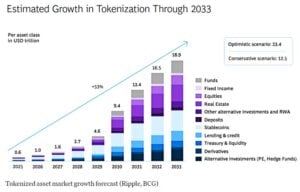
Analysts say tokenized real-world assets might reach a $30 trillion market by 2034, while some projected it to reach almost $19 trillion by 2033. Clean energy is a major use case because of its stable, asset-backed value.
Reasons for Bitcoin as a Treasury Asset
PowerBank’s Bitcoin treasury plans reflect a broader corporate trend. Many companies view Bitcoin as:
- Scarce and resistant to inflation.
- Easily transferable with global liquidity.
- Increasingly adopted by blockchain-based financial systems.
Firms like MicroStrategy, Block, and Tesla have added Bitcoin to their balance sheets to diversify reserves beyond bonds and cash. PowerBank has not yet confirmed any Bitcoin purchases.
The company plans to make decisions based on market conditions, liquidity needs, and cash flow. PowerBank wants to keep full control of its digital assets. So, it has Intellistake providing custody infrastructure, which means no need for third parties.
A New Model for Clean Energy Finance
PowerBank generates steady revenue from its renewable energy projects. The company might use these revenues to invest in digital assets. They plan to connect clean energy with advanced financial technologies.
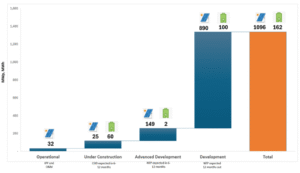
PowerBank has developed over 100 megawatts (MW) of renewable energy projects in the U.S. and Canada. It also has a pipeline of about 1 gigawatt (GW). This gives PowerBank a solid base to try out new financing methods.
The company’s integration of Bitcoin and tokenization may change how energy developers manage their finances. The company intends to combine renewable energy projects with treasury diversification and blockchain finance. This approach opens a new frontier for decarbonization and financial technology.
As investors and utilities seek sustainable, high-yield options, PowerBank’s approach could open new value opportunities in both the energy and finance sectors.
Please refer to “Forward-Looking Statements” in the press release entitled “PowerBank and Intellistake Announce Strategic Alliance to Pioneer Digital Currencies, including Bitcoin Treasury Integration and RWA Tokenization” for additional discussion of the assumptions and risk factors associated with the statements in this report.
Intellistake and PowerBank are presently evaluating the regulatory framework for tokenization. Any tokenization will be subject to it being completed in compliance with applicable law, regulatory requirements and terms of any underlying agreements associated with PowerBank assets. The actual structure of such tokenization, the assets that would be subject to tokenization, and the associated timeline, have not yet been determined. Intellistake and PowerBank will provide further updates as material developments related to this tokenization strategy occur.
The actual timing and value of Bitcoin purchases, under the allocation strategy will be determined by management. Purchases will also depend on several factors, including, among others, general market and business conditions, the trading price of Bitcoin and the anticipated cash needs of Intellistake or PowerBank. The allocation strategy may be suspended, discontinued or modified at any time for any reason. Intellistake will support PowerBank’s establishment of custody for its digital currency purchases and PowerBank no longer intends to utilize Coinbase for this service. As of the date of this press release, no Bitcoin purchases have been made.
Disclosure: Owners, members, directors, and employees of carboncredits.com have/may have stock or option positions in any of the companies mentioned: None.
Carboncredits.com receives compensation for this publication and has a business relationship with any company whose stock(s) is/are mentioned in this article.
Additional disclosure: This communication serves the sole purpose of adding value to the research process and is for information only. Please do your own due diligence. Every investment in securities mentioned in publications of carboncredits.com involves risks that could lead to a total loss of the invested capital.
Please read our Full RISKS and DISCLOSURE here.
The post PowerBank Embraces Bitcoin and Tokenized Energy in Bold Treasury Shift to Digital Finance appeared first on Carbon Credits.

EU carbon credit claims changed on 27 September 2026, the day the Directive (EU) 2024/825 began to apply across the European Union. The change is narrow. It changes how a company can talk about the credits it buys. A product can no longer be called neutral on the strength of compensation alone; however, every specific, evidenced statement about what a company measured, reduced, and funded stays fully available.

The post Promoting Improved Cooking Practices in Nigeria appeared first on Terrapass.



-
Climate Change1 year ago
Guest post: Why China is still building new coal – and when it might stop
-

 Greenhouse Gases2 years ago
嘉宾来稿:满足中国增长的用电需求 光伏加储能“比新建煤电更实惠”
-
Greenhouse Gases1 year ago
Guest post: Why China is still building new coal – and when it might stop
-

 Climate Change2 years ago
嘉宾来稿:满足中国增长的用电需求 光伏加储能“比新建煤电更实惠”
-

 Renewable Energy12 months ago
Sending Progressive Philanthropist George Soros to Prison?
-
Climate Change2 years ago
Bill Discounting Climate Change in Florida’s Energy Policy Awaits DeSantis’ Approval
-
Greenhouse Gases1 year ago
嘉宾来稿:探究火山喷发如何影响气候预测
-

 Climate Change2 years ago
Analysis: China’s CO2 falls 1% in Q2 2024 in first quarterly drop since Covid-19