


Nike Inc. (NYSE: NKE) leads the fight against climate change with smart material choices and cleaner supply chains. The sportswear giant uses new materials to lower emissions across its business. The company’s stock bounced back—rising about 10% after strong Q4 2024 earnings and a plan to shift production to the U.S.
For investors and sustainability advocates, Nike’s approach shows how big brands can protect the planet while staying profitable. Its Flyleather and recycled polyester efforts highlight how fashion and the environment can both win.
Stock Performance and Financial Strength
Nike’s stock faced headwinds in 2025, falling about 17.4% due to tariff concerns and competition. But momentum is shifting. Following its earnings release, the stock jumped 10% in premarket trading after upbeat forecasts and plans to shift China production to the U.S.

In Q4 2025, Nike reported $11.1 billion in revenue, down 12% year-over-year but still beating analysts’ forecasts. Its net income was $211 million, or 14 cents per share, above expectations despite being lower than last year’s $1.5 billion profit. This quarter was Nike’s third under new CEO Elliott Hill, who took the helm in October 2024.
Analysts rate Nike a “Moderate Buy.” Based on 33 Wall Street estimates, the average price target of $78.11 suggests about 7% upside from current prices. Investors view Nike’s strength in sustainable products and its ability to return cash to shareholders—shown through rising dividends (23 years of growth) and share buybacks—as major positives.
How Nike’s Smart Materials Strategy Led to Emissions Drop
Nike centers its strategy on improving materials. It’s part of its “Move to Zero” effort, its sustainability initiative to achieve a zero-carbon and zero-waste future for the brand.
Its Flyleather innovation blends at least 50% recycled leather fibers. This reduces carbon emissions by 80% compared to standard leather. The material also uses 90% less water, weighs 40% less, and is five times stronger.
Meanwhile, Nike’s recycled polyester clothes come from plastic bottles. Once cleaned and processed, these bottles become yarn that cuts emissions by about 30%.
The scale is impressive: in 2024, 24% of Nike’s product materials came from recycled or renewable sources. It also uses 99% recycled rare earths in magnets and 99% recycled cobalt in batteries. Many products include 100% recycled aluminum cases. Innovations like “Nike Forward” use 75% less carbon than traditional knit fleece.
Nike’s Carbon Emissions and Net Zero Sprint
Nike publishes clear carbon goals. It aims to cut Scope 1 and 2 emissions by 65%, and Scope 3 emissions by 30%, both by 2030 (from 2015 levels).

- It also plans to reach net zero by 2050. As of the end of 2023, Nike had already reduced its Scope 1 and 2 emissions by around 73%, beating its target.
Scope 3 emissions—those from its supply chain—make up more than 90% of Nike’s total carbon footprint. Most of that comes from raw materials (40%) and production (30%).
The company works closely with suppliers in countries like Vietnam and Indonesia through its Supplier Climate Action Program (SCAP). This program helps factories shift to renewable energy, improve efficiency, and build climate plans.
Nike has also moved toward cleaner logistics. It has cut air freight by 80% since 2020 by aligning production with ship schedules and using ocean transport instead of planes. In Europe, Nike even piloted hydrogen-fueled barges for shipping. These actions support its aim to source 100% renewable energy at all owned and operated facilities by 2025, helping hit its net-zero goals.
Cutting Scope 3 Emissions: Nike’s Biggest Challenge
Scope 3 emissions are Nike’s biggest environmental challenge. They represent the bulk of the company’s total carbon footprint. These emissions come from Nike’s supply chain, from raw materials to product disposal. For ESG investors, Nike’s approach to managing these emissions shows the company’s long-term green strategy.

Nike Chief Sustainability Officer Noel Kinder calls Scope 3 emissions “one of the things that keep me up at night”. The company has found two main ways to cut supply chain emissions.
- Innovating materials: It focuses on recycled polyester, rubber, and leather alternatives. It is also testing bio-based foams for shoes.
- Clean energy in factories: Through SCAP, Nike works with manufacturing partners to bring in renewable energy and reduce fossil fuels.
Raw materials make up about 40% of Nike’s carbon footprint. This makes materials innovation crucial for cutting emissions. The sportswear giant focuses on recycled polyester, rubber, and leather alternatives. The company is also looking at bio-based replacements for traditional fossil-based foams in shoes.
The second way involves energy supply chains in manufacturing regions like Vietnam and Indonesia. Nike works with suppliers to use renewable energy. It has launched the SCAP to encourage complete climate plans across its supplier network.
These efforts target the two largest emission sources—about 70% of the total—but Nike still needs more action to reach its 2030 targets and 2050 net-zero commitment.
Industry Leadership and Carbon Offsetting
Nike drives the industry forward with material and circular economy breakthroughs. Its products support longer wear and easier recycling. Examples include Flyleather shoes and Space Hippie trainers made from factory scraps and recycled plastic.
Nike Forward reduces carbon by 75% compared to traditional fleece. It also replaced harmful SF gas with nitrogen in Air Max shoes to reduce environmental impact. Nike’s circular services—like refurbished gear and product-care content—also minimize waste.
These innovations often become standard in sportswear, helping Nike maintain brand strength and win ESG-conscious consumers.
Nike focuses first on reducing carbon emissions, not buying credits. However, it may start using some carbon offsets to help reach net zero. For example, it partners with EFM to offset emissions from outbound shipping.
Nike uses global reporting frameworks like GRI and TCFD to track climate action. This provides transparency to investors and regulators.
Nike’s Path Forward: Why Investors Are Watching NKE
For ESG-focused investors, Nike presents a compelling mix of materials innovation, supply chain transformation, and financial strength. The company’s leadership in sustainable materials creates multiple value streams that benefit both environmental goals and shareholder returns.
Financially, Nike remains healthy. It returned over $1 billion to shareholders in Q2 2025 via buybacks and dividends. Its services revenue grew to $26.6 billion with 11.6% growth, adding stability to its green investments.
Moreover, Nike’s approach to Scope 3 emissions management provides insights for the consumer goods sector. The company’s success in cutting materials-related emissions while keeping product performance shows that sustainable business models can work in competitive markets.
Nike’s material innovations—particularly Flyleather, recycled polyester, and Nike Forward—help cut Scope 3 emissions and reduce carbon across its supply chain. Its strong emission reduction targets anchor its strategy for long-term change.
The company is making good progress on emissions, logistics, and supplier engagement. It shows how big brands can cut emissions while making profits—and influence entire industries to become greener.
The post Nike’s Green Leap: Cutting Carbon, Boosting NKE Stock and Net Zero Goals appeared first on Carbon Credits.

Most businesses have a clear picture of what happens inside their own operations. They track energy consumption, manage waste, and monitor the emissions produced on-site. What they often cannot see is everything that happens before a product reaches their facility, and everything that happens after it leaves.

Carbon Footprint
Texas-Based EnergyX’s Project Lonestar™ Signals a Turning Point for U.S. Lithium Supply
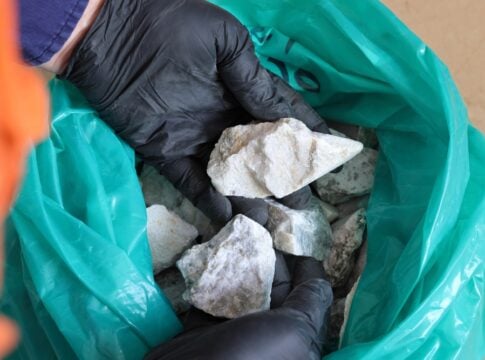
Energy Exploration Technologies, Inc. (EnergyX), led by CEO Teague Egan, has moved the United States closer to building a reliable domestic lithium supply chain. The company recently commissioned its Project Lonestar™ lithium demonstration facility in Texas, marking a key milestone in scaling direct lithium extraction (DLE) technologies.
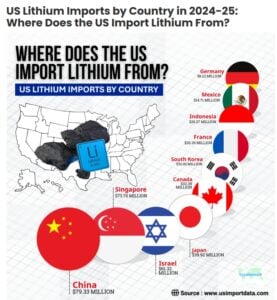
This development comes at a time when lithium demand is rising sharply due to electric vehicles and energy storage systems. At the same time, the U.S. remains heavily dependent on foreign processing, particularly from China.
- According to the US import data and Lithium import data of the USA, the total value of US lithium imports reached $432.36 million in 2024, a 9% decline from the previous year.
- The total value of US lithium imports (cells & batteries) accounted for $205.29 million in the first 6 months of 2025.
Against this backdrop, EnergyX’s progress offers both technological validation and strategic value.
From Concept to Reality: How Project Lonestar™ Works
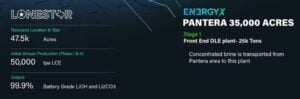
Project Lonestar™ is EnergyX’s first major lithium project in the United States and its second globally. The demonstration plant, located in the Smackover region spanning Texas and Arkansas, is now operational and uses industrial-grade systems rather than small pilot equipment.
- The facility produces around 250 metric tons per year of lithium carbonate equivalent (LCE).
While this output is modest compared to global supply, its importance lies in proving that EnergyX’s proprietary GET-Lit™ technology can efficiently extract lithium from brine. The plant processes locally sourced Smackover brine, a resource that has historically been underutilized despite its lithium potential.
Unlike traditional lithium production, which often relies on hard-rock mining or evaporation ponds, DLE technology directly extracts lithium from brine using advanced filtration and chemical processes. This reduces production time and may lower environmental impact.
- More importantly, the Lonestar™ plant can supply 5 to 25 tons of battery-grade lithium samples to customers.
This allows battery manufacturers to test and validate the material before committing to large-scale supply agreements.
Scaling Up: From Demonstration to Commercial Production
The demonstration plant is only the first phase of a much larger plan. EnergyX aims to scale Project Lonestar™ into a full commercial operation capable of producing 50,000 tonnes of LCE annually across two phases.
- The first phase alone targets 12,500 tonnes per year, which would already place it among the more significant lithium producers in the U.S.
- Significantly, the company has invested approximately $30 million in the demonstration facility, supported in part by a $5 million grant from the U.S. Department of Energy.
- For the full-scale project, EnergyX estimates total capital expenditure at around $1.05 billion.
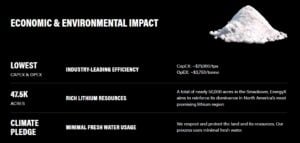
Cost metrics suggest strong economic potential. The company estimates capital costs at roughly $21,000 per tonne of capacity and operating costs near $3,750 per tonne. If these figures hold at scale, the project could compete effectively with global lithium producers, particularly in a market where cost efficiency is becoming increasingly important.
Teague Egan, Founder & CEO of EnergyX, said,
“Bringing the biggest integrated DLE lithium demonstration plant online in the United States is a foundational milestone for EnergyX and for U.S. domestic lithium production in general. This facility not only validates the performance of our technology on an industrial scale under real-world conditions, but also establishes EnergyX as the lowest cost producer in the U.S. Ultimately this benefits all our customers who need large volumes of lithium for EV and ESS applications, as well as any lithium resource owners looking to implement best-in-class DLE technology whom we are happy to license to.”
Breaking the Bottleneck: Why U.S. Refining Matters
One of the biggest challenges facing the U.S. lithium sector is not resource availability but refining capacity. While lithium deposits exist across the country, most battery-grade lithium chemicals are processed overseas.
China dominates this segment, controlling roughly 70 to 75 percent of global lithium chemical conversion capacity. This concentration creates a structural dependency. Even when lithium is mined in the U.S. or allied countries, it is often shipped abroad for processing before returning as battery materials.
Project Lonestar™ directly addresses this gap. By integrating extraction and refining into a single domestic operation, EnergyX is working to build a complete “brine-to-battery” value chain within the United States. This approach could reduce reliance on foreign processing and improve supply chain resilience.
U.S. Senator Ted Cruz highlighted the project’s importance, noting that domestic lithium production supports both energy security and defense readiness, particularly for applications in advanced battery systems.
- CHECK: LIVE LITHIUM PRICES
The Current Landscape: Limited Supply, Big Ambitions

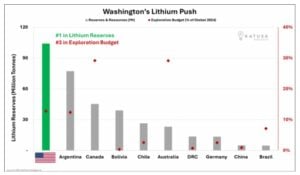
Investment is flowing into regions such as Nevada, North Carolina, and Arkansas. If even a portion of these reserves is converted into production, the U.S. could significantly reduce its reliance on imported lithium.
Active Resources and Future Potential
At present, U.S. lithium production remains relatively small. The only active large-scale operation is the Silver Peak Mine in Nevada, which produces between 5,000 and 10,000 tonnes of LCE annually, depending on market conditions.
However, several projects are in development that could significantly expand capacity. The Thacker Pass project, for example, is expected to produce around 40,000 tonnes per year in its first phase once operational later in the decade.
In addition, brine-based developments in the Smackover region aim to produce tens of thousands of tonnes annually, with long-term plans exceeding 100,000 tonnes across multiple sites.
These projects indicate a shift from a niche domestic industry to a more substantial production base. Still, timelines remain uncertain due to regulatory and financial challenges.
Demand Surge: Batteries Drive the Lithium Boom
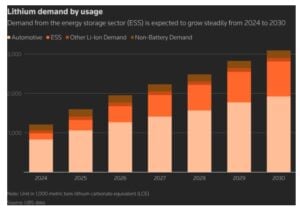
The urgency to expand lithium production is driven by rapid growth in battery demand. Electric vehicles, renewable energy storage, and grid modernization are all increasing lithium consumption.
According to S&P Global, U.S. lithium demand is expected to grow at an average rate of 40 percent annually between 2024 and 2029. Canada is projected to see even faster growth, albeit from a smaller base, with demand rising by around 74 percent per year over the same period.
Globally, battery capacity is forecast to approach 4 terawatt-hours by 2030. This expansion highlights lithium’s central role in the clean energy transition. Without sufficient supply, battery production—and by extension, EV adoption—could face constraints.
Why Progress Takes Time
Turning lithium reserves into operational mines and processing facilities is not straightforward. Projects often face long permitting timelines, environmental scrutiny, and legal challenges. Financing can also be difficult, especially in a volatile commodity market.
Local opposition can further complicate development, particularly in areas with high environmental concerns. These factors can delay projects by several years, slowing the pace of expansion.
To address these barriers, the U.S. government is increasing its involvement through funding, policy support, and efforts to streamline permitting. The Department of Energy’s backing of EnergyX reflects a broader strategy to accelerate domestic critical mineral development.
Conclusion: A Strategic Shift in Motion
Project Lonestar™ represents a meaningful step toward reshaping the U.S. lithium landscape. By proving the viability of direct lithium extraction at an industrial scale, EnergyX has laid the groundwork for larger, commercially viable operations.
The project also aligns with national priorities around energy security, supply chain resilience, and clean energy transition. While challenges remain, the combination of technological innovation, government support, and rising demand creates a strong foundation for growth.
As the world moves toward electrification, lithium will remain at the center of the transition. Projects like Lonestar™ show that the United States is beginning to close the gap between resource potential and real-world production—one facility at a time.
The post Texas-Based EnergyX’s Project Lonestar™ Signals a Turning Point for U.S. Lithium Supply appeared first on Carbon Credits.


Analysis: How ‘plug-in solar’ can save UK homes £1,100 on energy bills
Georgia’s New Public Service Commissioner Says She Will Put Affordability and Transparency First
What Nature Based Solutions Actually Mean for Corporate Climate Strategy
-
Climate Change8 months ago
Guest post: Why China is still building new coal – and when it might stop
-
Greenhouse Gases8 months ago
Guest post: Why China is still building new coal – and when it might stop
-

 Greenhouse Gases2 years ago
嘉宾来稿:满足中国增长的用电需求 光伏加储能“比新建煤电更实惠”
-
Climate Change2 years ago
Bill Discounting Climate Change in Florida’s Energy Policy Awaits DeSantis’ Approval
-

 Climate Change2 years ago
嘉宾来稿:满足中国增长的用电需求 光伏加储能“比新建煤电更实惠”
-
Climate Change Videos2 years ago
The toxic gas flares fuelling Nigeria’s climate change – BBC News
-

 Renewable Energy5 months ago
Sending Progressive Philanthropist George Soros to Prison?
-

 Carbon Footprint2 years ago
US SEC’s Climate Disclosure Rules Spur Renewed Interest in Carbon Credits