


The Bonn climate talks, held from June 16 to 26, 2025, provided a crucial bridge to the upcoming COP30 in Belém, Brazil. While tangible victories were limited, the sessions clarified where global climate efforts stand—and where they need to be stronger.
Delegates discussed many topics covering national climate plans, climate finance, and just transition. They also talked about adaptation and energy sector reform. Here are the key takeaways to note in line with the upcoming COP30 talks.
1. National Climate Plans: The 1.5°C Gap
One of the most urgent issues at Bonn was the slow pace of updated Nationally Determined Contributions (NDCs). Most countries missed the February 2025 deadline, which slowed efforts to limit global warming to 1.5°C.
Brazil, the host of COP30, asked nations to submit stronger NDCs by September. This way, the NDCs can be reviewed before the summit in November.
Yet, those early submissions fall far short of what’s needed. Delegates warned that current NDCs would still result in warming well above 1.5°C, and possibly near 2°C. With no plan B, COP30 will need to push for NDC 3.0, urging countries to adopt bolder actions by 2025.
2. Climate Finance: Debt Over Diplomacy
Bonn was marred by bitter disputes over climate finance. Developing nations pressed wealthier countries to fulfill previous pledges—such as mobilizing $1.3 trillion per year by 2035—to support adaptation and loss & damage. A South African delegate remarked bluntly, “There is no money,” highlighting how little has materialized.
Developed countries said private finance can help. But critics argued that public grants, not loans, are what really matter. Without firm commitments and timelines, many adaptation plans for vulnerable countries may remain unfunded.
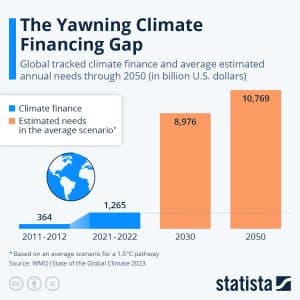
According to an analysis, the world needs around $9 trillion annually to close the financing gap by 2030, and more by 2050.
3. A Just Transition Wins Ground
Bonn made real progress on the Just Transition Work Programme (JTWP). This program helps workers and communities affected by moving away from fossil fuels.
Caroline Brouillette, Executive Director, Climate Action Network Canada highlighted the importance of this program, noting:
“The UNFCCC feels increasingly disconnected from the real world. Amidst the dark clouds of these existential challenges to the planet and to this process, there is a ray of sunshine: parties are finding common ground around a Just Transition. The text forwarded to Belem offers us a fighting chance to a COP30 outcome that truly connects workers, communities and Peoples with the Paris Agreement.”
Negotiators agreed to create a Belém Action Mechanism, which will share strategies for fair and inclusive economic transitions. This breakthrough gives civil society more influence and sets a foundation for stronger action at COP30.
4. Reforming UN Climate Governance
The Bonn talks focused on procedural issues for days. They debated what should be on the agenda and how to make the negotiation process smoother. Countries proposed to limit agenda items, cap delegation sizes, and rush old initiatives toward their end.
The goal:
“to make UN climate talks less bureaucratic and more action-oriented—an issue now officially flagged for COP30.”
5. Adaptation and Gender Equity: Quiet Wins
Though overshadowed by finance fights, Bonn achieved meaningful progress on adaptation and gender equity. Delegates improved indicators for the Global Goal on Adaptation (GGA). They also outlined steps for National Adaptation Plans. They also began drafting a Gender Action Plan, pushing for more inclusive and representative climate policymaking.
Richer countries often blocked funding indicators. This raised concerns that adaptation gains might not have enough resources to succeed.
6. Fossil Fuel Language and Methane Agenda Lag
Decades after the fossil-fuel phase-out entered UN discussions, Bonn again failed to adopt strong language on it. Fossil-energy interests continue to slow reforms. Meanwhile, calls to include methane targets in NDCs gained traction, despite slow movement on actual text or enforcement measures.
7. What These Results Mean Ahead of COP30
The outcomes of the Bonn Climate Conference 2025 are crucial as the world heads toward COP30 in Belém, Brazil. The climate talks didn’t bring big breakthroughs. However, it helped shape important choices about climate goals, funding, and global cooperation.
The talk also highlighted continued tensions between developed and developing nations. The former urged stronger emissions cuts, while the latter stressed the need for greater financial and technical support.
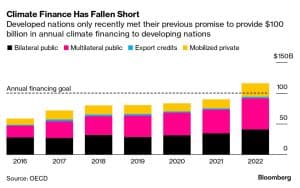
Progress on the new collective quantified goal (NCQG) for climate finance was limited. The $100 billion target, first set in 2009, has been missed for years. Many vulnerable nations are now calling for a new target in the trillions, not billions, to fund adaptation, mitigation, and loss and damage.
The conference also moved forward technical discussions on the Loss and Damage Fund, created at COP28. However, disagreements remain on how to fund it long-term and ensure fairness in access and governance.
Carbon markets were another hot topic. Talks under Article 6 showed big gaps in transparency and environmental integrity. Still, there’s momentum to finalize rules that could attract more private-sector investment.
- INTERESTING READ:COP29 Breakthrough: UN-Backed Global Carbon Market Takes Shape
Finally, Bonn served as a key follow-up to the Global Stocktake, which warned that current climate action is far off-track. COP30 is now expected to be a major “course correction” moment where countries must align policies with the 1.5°C goal.
In summary, Bonn laid the groundwork but left tough choices for COP30—where ambition, equity, and accountability will be at the heart of the talks.
Heading to Belém: What to Watch at COP30 Summit
The upcoming COP30 in November now faces big tests:
- NDC Submission: Will countries deliver substantial, 1.5°C-aligned plans by September?
- Climate Finance Roadmap: Can Brazil and global north nations agree on timelines and sources for $1.3 trillion/year target?
- Just Transition Showcasing: Will the Belém mechanism emerge with concrete funding and implementation plans?
- Fossil Fuel and Methane Language: Will COP30 firm up phase-out commitments and stronger methane cuts?
- UN Process Reform: Will Belém adopt streamlined, efficient formats for future conferences?
Fragile Gains, High Stakes: The Path Forward
Bonn laid important groundwork—but left most major questions unresolved. Delivering a just transition and better adaptation indicators shows that civil groups can shift priorities. However, the lack of NDCs, weak finance plans, and fossil fuel resistance could undermine COP30.
The upcoming climate summit must show dramatic progress. COP30 presents an important opportunity to move from fragmented pledges toward more unified climate action and to reinforce confidence in the Paris Agreement.
The outcomes of the summit will have significant impact for vulnerable nations, workers, and global stability, highlighting the importance of translating commitments into tangible results.
The post Key Takeaways from Bonn’s Climate Talks Ahead of COP30 appeared first on Carbon Credits.

Most businesses have a clear picture of what happens inside their own operations. They track energy consumption, manage waste, and monitor the emissions produced on-site. What they often cannot see is everything that happens before a product reaches their facility, and everything that happens after it leaves.

Carbon Footprint
Texas-Based EnergyX’s Project Lonestar™ Signals a Turning Point for U.S. Lithium Supply

Energy Exploration Technologies, Inc. (EnergyX), led by CEO Teague Egan, has moved the United States closer to building a reliable domestic lithium supply chain. The company recently commissioned its Project Lonestar™ lithium demonstration facility in Texas, marking a key milestone in scaling direct lithium extraction (DLE) technologies.
This development comes at a time when lithium demand is rising sharply due to electric vehicles and energy storage systems. At the same time, the U.S. remains heavily dependent on foreign processing, particularly from China.
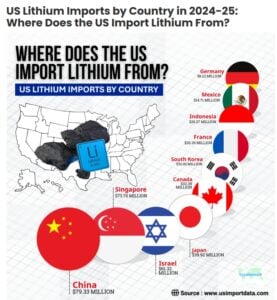
- According to the US import data and Lithium import data of the USA, the total value of US lithium imports reached $432.36 million in 2024, a 9% decline from the previous year.
- The total value of US lithium imports (cells & batteries) accounted for $205.29 million in the first 6 months of 2025.
Against this backdrop, EnergyX’s progress offers both technological validation and strategic value.
From Concept to Reality: How Project Lonestar™ Works
Project Lonestar™ is EnergyX’s first major lithium project in the United States and its second globally. The demonstration plant, located in the Smackover region spanning Texas and Arkansas, is now operational and uses industrial-grade systems rather than small pilot equipment.
- The facility produces around 250 metric tons per year of lithium carbonate equivalent (LCE).
While this output is modest compared to global supply, its importance lies in proving that EnergyX’s proprietary GET-Lit™ technology can efficiently extract lithium from brine. The plant processes locally sourced Smackover brine, a resource that has historically been underutilized despite its lithium potential.

Unlike traditional lithium production, which often relies on hard-rock mining or evaporation ponds, DLE technology directly extracts lithium from brine using advanced filtration and chemical processes. This reduces production time and may lower environmental impact.
- More importantly, the Lonestar™ plant can supply 5 to 25 tons of battery-grade lithium samples to customers.
This allows battery manufacturers to test and validate the material before committing to large-scale supply agreements.
Scaling Up: From Demonstration to Commercial Production
The demonstration plant is only the first phase of a much larger plan. EnergyX aims to scale Project Lonestar™ into a full commercial operation capable of producing 50,000 tonnes of LCE annually across two phases.
- The first phase alone targets 12,500 tonnes per year, which would already place it among the more significant lithium producers in the U.S.
- Significantly, the company has invested approximately $30 million in the demonstration facility, supported in part by a $5 million grant from the U.S. Department of Energy.
- For the full-scale project, EnergyX estimates total capital expenditure at around $1.05 billion.
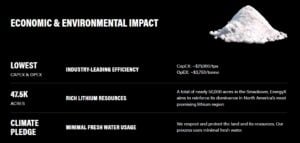
Cost metrics suggest strong economic potential. The company estimates capital costs at roughly $21,000 per tonne of capacity and operating costs near $3,750 per tonne. If these figures hold at scale, the project could compete effectively with global lithium producers, particularly in a market where cost efficiency is becoming increasingly important.
Teague Egan, Founder & CEO of EnergyX, said,
“Bringing the biggest integrated DLE lithium demonstration plant online in the United States is a foundational milestone for EnergyX and for U.S. domestic lithium production in general. This facility not only validates the performance of our technology on an industrial scale under real-world conditions, but also establishes EnergyX as the lowest cost producer in the U.S. Ultimately this benefits all our customers who need large volumes of lithium for EV and ESS applications, as well as any lithium resource owners looking to implement best-in-class DLE technology whom we are happy to license to.”
Breaking the Bottleneck: Why U.S. Refining Matters
One of the biggest challenges facing the U.S. lithium sector is not resource availability but refining capacity. While lithium deposits exist across the country, most battery-grade lithium chemicals are processed overseas.
China dominates this segment, controlling roughly 70 to 75 percent of global lithium chemical conversion capacity. This concentration creates a structural dependency. Even when lithium is mined in the U.S. or allied countries, it is often shipped abroad for processing before returning as battery materials.
Project Lonestar™ directly addresses this gap. By integrating extraction and refining into a single domestic operation, EnergyX is working to build a complete “brine-to-battery” value chain within the United States. This approach could reduce reliance on foreign processing and improve supply chain resilience.
U.S. Senator Ted Cruz highlighted the project’s importance, noting that domestic lithium production supports both energy security and defense readiness, particularly for applications in advanced battery systems.
- CHECK: LIVE LITHIUM PRICES
The Current Landscape: Limited Supply, Big Ambitions

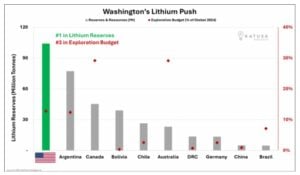
Investment is flowing into regions such as Nevada, North Carolina, and Arkansas. If even a portion of these reserves is converted into production, the U.S. could significantly reduce its reliance on imported lithium.
Active Resources and Future Potential
At present, U.S. lithium production remains relatively small. The only active large-scale operation is the Silver Peak Mine in Nevada, which produces between 5,000 and 10,000 tonnes of LCE annually, depending on market conditions.
However, several projects are in development that could significantly expand capacity. The Thacker Pass project, for example, is expected to produce around 40,000 tonnes per year in its first phase once operational later in the decade.
In addition, brine-based developments in the Smackover region aim to produce tens of thousands of tonnes annually, with long-term plans exceeding 100,000 tonnes across multiple sites.
These projects indicate a shift from a niche domestic industry to a more substantial production base. Still, timelines remain uncertain due to regulatory and financial challenges.
Demand Surge: Batteries Drive the Lithium Boom
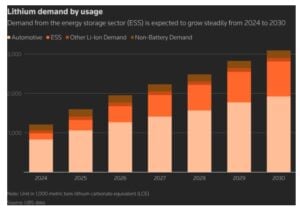
The urgency to expand lithium production is driven by rapid growth in battery demand. Electric vehicles, renewable energy storage, and grid modernization are all increasing lithium consumption.
According to S&P Global, U.S. lithium demand is expected to grow at an average rate of 40 percent annually between 2024 and 2029. Canada is projected to see even faster growth, albeit from a smaller base, with demand rising by around 74 percent per year over the same period.
Globally, battery capacity is forecast to approach 4 terawatt-hours by 2030. This expansion highlights lithium’s central role in the clean energy transition. Without sufficient supply, battery production—and by extension, EV adoption—could face constraints.
Why Progress Takes Time
Turning lithium reserves into operational mines and processing facilities is not straightforward. Projects often face long permitting timelines, environmental scrutiny, and legal challenges. Financing can also be difficult, especially in a volatile commodity market.
Local opposition can further complicate development, particularly in areas with high environmental concerns. These factors can delay projects by several years, slowing the pace of expansion.
To address these barriers, the U.S. government is increasing its involvement through funding, policy support, and efforts to streamline permitting. The Department of Energy’s backing of EnergyX reflects a broader strategy to accelerate domestic critical mineral development.
Conclusion: A Strategic Shift in Motion
Project Lonestar™ represents a meaningful step toward reshaping the U.S. lithium landscape. By proving the viability of direct lithium extraction at an industrial scale, EnergyX has laid the groundwork for larger, commercially viable operations.
The project also aligns with national priorities around energy security, supply chain resilience, and clean energy transition. While challenges remain, the combination of technological innovation, government support, and rising demand creates a strong foundation for growth.
As the world moves toward electrification, lithium will remain at the center of the transition. Projects like Lonestar™ show that the United States is beginning to close the gap between resource potential and real-world production—one facility at a time.
The post Texas-Based EnergyX’s Project Lonestar™ Signals a Turning Point for U.S. Lithium Supply appeared first on Carbon Credits.

Which State Leads in Battery Energy Storage? It Depends on How You Measure.

Analysis: How ‘plug-in solar’ can save UK homes £1,100 on energy bills
Georgia’s New Public Service Commissioner Says She Will Put Affordability and Transparency First
-
Climate Change8 months ago
Guest post: Why China is still building new coal – and when it might stop
-
Greenhouse Gases8 months ago
Guest post: Why China is still building new coal – and when it might stop
-

 Greenhouse Gases2 years ago
嘉宾来稿:满足中国增长的用电需求 光伏加储能“比新建煤电更实惠”
-
Climate Change2 years ago
Bill Discounting Climate Change in Florida’s Energy Policy Awaits DeSantis’ Approval
-

 Climate Change2 years ago
嘉宾来稿:满足中国增长的用电需求 光伏加储能“比新建煤电更实惠”
-
Climate Change Videos2 years ago
The toxic gas flares fuelling Nigeria’s climate change – BBC News
-

 Renewable Energy5 months ago
Sending Progressive Philanthropist George Soros to Prison?
-

 Carbon Footprint2 years ago
US SEC’s Climate Disclosure Rules Spur Renewed Interest in Carbon Credits