

After Hurricane Melissa devastated Jamaica this week on its way across the Caribbean, expert analysis suggests the island nation is in line for hundreds of millions of dollars in payouts from innovative forms of insurance policies like catastrophe bonds to help it recover.
Jamaica’s finance minister Fayval Williams said in June that the country had disaster financing coverage worth 130.6 billion Jamaican dollars (US$820 million). The country has insurance with the Caribbean Catastrophe Risk Insurance Facility (CCRIF) and a $150-million catastrophe bond, which experts say is likely to pay out in full.
Finance and climate researchers praised the Jamaican government’s foresight in arranging cover, which is likely to bring much-needed and relatively fast funds to help the country cope and rebuild. Sara Ahmed, advisor to the Climate Vulnerable Forum, commended Jamaica for “its leadership in deploying a mix of risk financing tools as climate change intensifies tropical storms and hurricanes”.
The executive director of the UN’s Green Climate Fund (GCF) Mafalda Duarte told Climate Home News on Thursday that, while the GCF currently has limited involvement in insurance, it is exploring more such investments. “A lot more needs to be done in this area,” she said.
-
Global South’s climate adaptation bill to top $300 billion a year by 2035: UN
Warning over massive shortfall in climate adaptation funding comes days before COP30 in Brazil, where the issue is set to be a major theme -
Business-as-usual: Donors pour climate adaptation finance into big infrastructure, neglecting local needs
A deep-sea port project in Bangladesh highlights how some major donor nations are labelling funds for industry-friendly transport and energy projects as adaptation finance, reporting by Climate Home News shows


But, while praising Jamaica’s government, other climate and finance analysts warned that the scale of the payouts is unlikely to come close to covering the losses from the hurricane and argued it is an injustice that small-island taxpayers who contributed little to the climate crisis are the ones who pay the insurance premiums – which are now likely to rise after this week’s disaster.
Catastrophe bonds
Catastrophe bonds originated in the US in the 1990s as a way to get investors – rather than insurance companies – to cover the risk of events like hurricanes and earthquakes deemed rare but severe. The World Bank has since promoted their roll-out to developing countries like Jamaica.
Earlier this year, finance minister Williams told Bloomberg: “We are situated in the hurricane belt and when the hurricane hits us, it can hit us very hard and damage roads, infrastructure – it takes us out for a while.”
She said Jamaica had issued catastrophe bonds because “the day the [meteorological] office tells us that a very severe hurricane is on the way towards us – it’s too late to do the planning; so you plan well ahead of the eventuality of that catastrophe.”
The scale of the economic damage from Hurricane Melissa is still unclear but is likely to run into tens of billions of dollars, according to preliminary estimates. Pepukaye Bardouille, special adviser on resilience to the government of Barbados, told a press briefing on Friday that a $150-million payout was a “drop in the ocean” but useful as part of a stack of solutions.
Connor Meenan, a disaster risk specialist from the UK-based Centre for Disaster Protection, told Climate Home News that “the real value” of insurance is that “on day one, they’ve got certainty about a significant amount of money that they can call on in the near term so they can focus on directing that where it needs to be spent”.
“It’s certainly put them in a better position than it would have been had they not made all these efforts to put their finances in place ahead of time,” he said.
Unsustainable and unfair?
Ritu Bharadwaj, IIED’s director of climate resilience and loss and damage, warned that as the Earth’s climate heats up and catastrophes become more frequent, investors become less willing to bet against them happening, demanding higher premiums to do so. “It will become uninvestable,” she said.
Critics also raised climate justice concerns. Jamaica is in line for payouts because its government has been paying insurance premiums, which have to be large enough to entice investors to take on the risk of a disastrous hurricane occurring. Many countries whose governments are paying catastrophe bond premiums do not suffer catastrophes and so lose their money.
-
Political backing more important than money for new forest fund at COP30, Brazil says
The Tropical Forest Forever Facility is seeking $25bn in startup capital from donors but doesn’t need to hit this goal before its launch in Belém, Brazil’s finance ministry tells Climate Home event -
COP30 could confront “glaring gap” in clean energy agenda: mining
Energy transition minerals may be tackled at UN climate talks for the first time, as resource-rich developing nations and Indigenous groups call for the industry’s costs and benefits to be fairly shared -
Bolivia’s shift to the right renews ambition to mine vast lithium reserves
The election of a centre-right president after 20 years of socialist rule could open up the nation’s lithium reserves to foreign investment – the US is paying attention


Bharadwaj said it was “unfair” that taxpayers in countries like Jamaica are having to pay to insure against climate disasters they only played a small part in creating. Jamaica’s per-person emissions are about half the world average.
Conditions on when bonds pay out can also be strict, based on triggers like agreed wind speeds and central air pressure, with exact criteria varying in different parts of a country depending on historic precedents.
Last year, Jamaica missed out on a payment because, despite Hurricane Beryl causing about $1 billion of damage to the island, these triggers were not met.
Fending for themselves
Bharadwaj added that financial support from wealthy countries – like that in the UN’s new Fund for Responding to Loss and Damage (FRLD) – is insufficient to meet countries’ needs. The FRLD has $407 million in its bank account, which she said is likely far less than the losses suffered by Jamaica, let alone all the other countries in need of funding after climate-driven disasters.
Because of this “failure” of developed countries, multilateral development banks and the private sector to offer adequate funding, developing countries have to “fend for themselves”, she said.
As well as catastrophe bonds, she said governments should issue bonds – as Fiji has done – to raise money to invest in resilience measures. This can include dedicated resilience projects like flood defences and sea walls or making infrastructure like coastal hotels in Jamaica better able to withstand extreme weather, she said.
This spending, she said, should be seen as “not just doing good, not just impact investing [but] an investment that will yield benefit in the future” by preventing loss and damage.
Avinash Persaud, climate adviser to the president of the Inter-American Development Bank, argued in a recent article for Climate Home News that developing countries should have some of their debt written off if they invest in resilience.
Persaud’s native Barbados launched the world’s first of these debt-for-resilience swaps last year and a “multi-guarantor debt for resilience facility” is expected to be launched by international development banks at COP30 this month to make such swaps available to more countries.
Persaud and Bardouille have also argued for more lenders to introduce clauses saying that debt repayments will be paused when a disaster like a hurricane strikes.
The post Jamaica set for post-Melissa payout but experts warn of limits to hurricane insurance appeared first on Climate Home News.
Jamaica set for post-Melissa payout but experts warn of limits to hurricane insurance

When oil and gas shipments stopped flowing through the Strait of Hormuz at the start of the Iran war, Southeast Asian nations were left reeling as the supply crunch laid bare their acute reliance on fossil fuel imports.
As prices soared, governments in the region scrambled to introduce emergency energy-saving measures – from a four-day working week to curbs on air conditioning. Thailand revived decommissioned coal plants while the Philippines, which imports nearly all of its oil, declared a “national energy emergency”.
But the crisis has also prompted renewed resolve to find a long-term solution to their vulnerability at a time when electricity demand is booming to power the region’s growing industry, cooling needs and the mushrooming of energy-hungry data centres.
At the heart of Southeast Asian nations’ response is a longstanding infrastructure project to connect the region’s power grids by 2045 and enable cross-border trading of clean electricity through a network of underground and subsea interconnectors.
-
Southeast Asia’s fragile grids threaten billions in clean energy investment
Renewables developers need reliable electricity infrastructure and stable policies to help the region meet climate goals and surging demand for power -
UN backs push to upgrade grids slowing clean power uptake in Africa and SE Asia
The Global Grids Accelerator will help turn national and regional plans to expand electricity infrastructure into viable projects on the ground -
China keeps Indonesia’s battery dream afloat but future less certain
Chinese capital and technology turned Indonesia into the world’s top nickel supplier, but its dependence on China and the rise of nickel-free batteries could upset its battery ecosystem plans
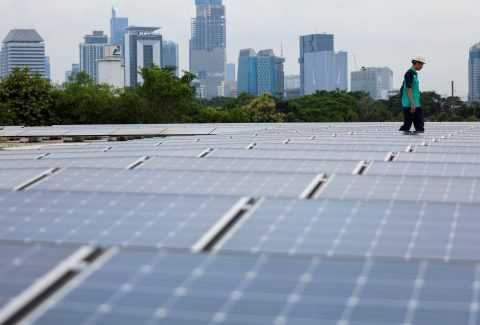
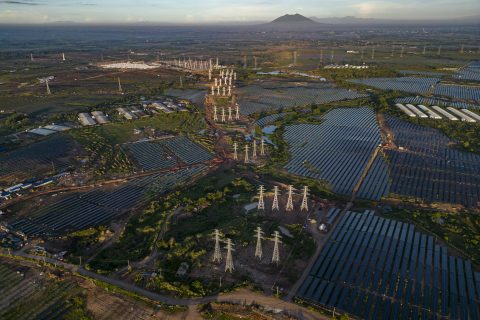
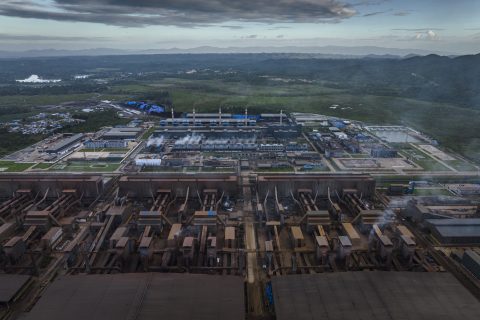
The plans will allow nations with high renewable energy generation potential to trade surplus power to their neighbours and major demand centres like Singapore, helping to integrate more renewables into the power mix and reduce reliance on fossil fuel imports.
“[It] will give us more energy security,” the Philippines’ energy secretary, Sharon Garin, told a press conference after a meeting of the Association of Southeast Asian Nations’ (ASEAN) energy ministers last week, when they discussed accelerating the delivery of the regional grid as part of measures to respond to the energy crisis.
“The Philippines is rich in solar power, Malaysia is rich in hydropower and Indonesia has geothermal: different countries have different resources. [The ASEAN Power Grid] will optimise the utilisation of renewables to the benefits of each member state,” said Garin.
But turning this decade-old political vision into a reality has been slow, held up by painstaking work to harmonise a patchwork of regulatory and legal frameworks and mobilise the private capital needed to build cross-border infrastructure.
More than $300 billion is needed to expand and modernise the region’s fragile grids to support the projected energy demand increase by 2050. This includes $27 billion required to deliver the cross-border interconnections by 2040, according to the International Energy Agency (IEA).
Every year of delay could cost the region billions of dollars in additional fuel costs and lock in new gas infrastructure for decades to come, according to analysis by global energy think-tank Ember.
The building block for energy security
With electrification high on the agenda of the COP31 climate talks in Türkiye next month, there is growing attention on the need to modernise and expand grid infrastructure to cope with growing electricity use and more renewables in the power mix.
Clean electrification and energy efficiency could deliver about a third of cumulative carbon emission reductions between 2026 and 2050, according to the International Renewable Energy Agency’s World Energy Outlook. But delivering that would require doubling annual global grid investment to $1 trillion between now and 2035.
Last month, the UN launched an initiative to accelerate investment into expanding and modernising grids in Southeast Asia and Africa.
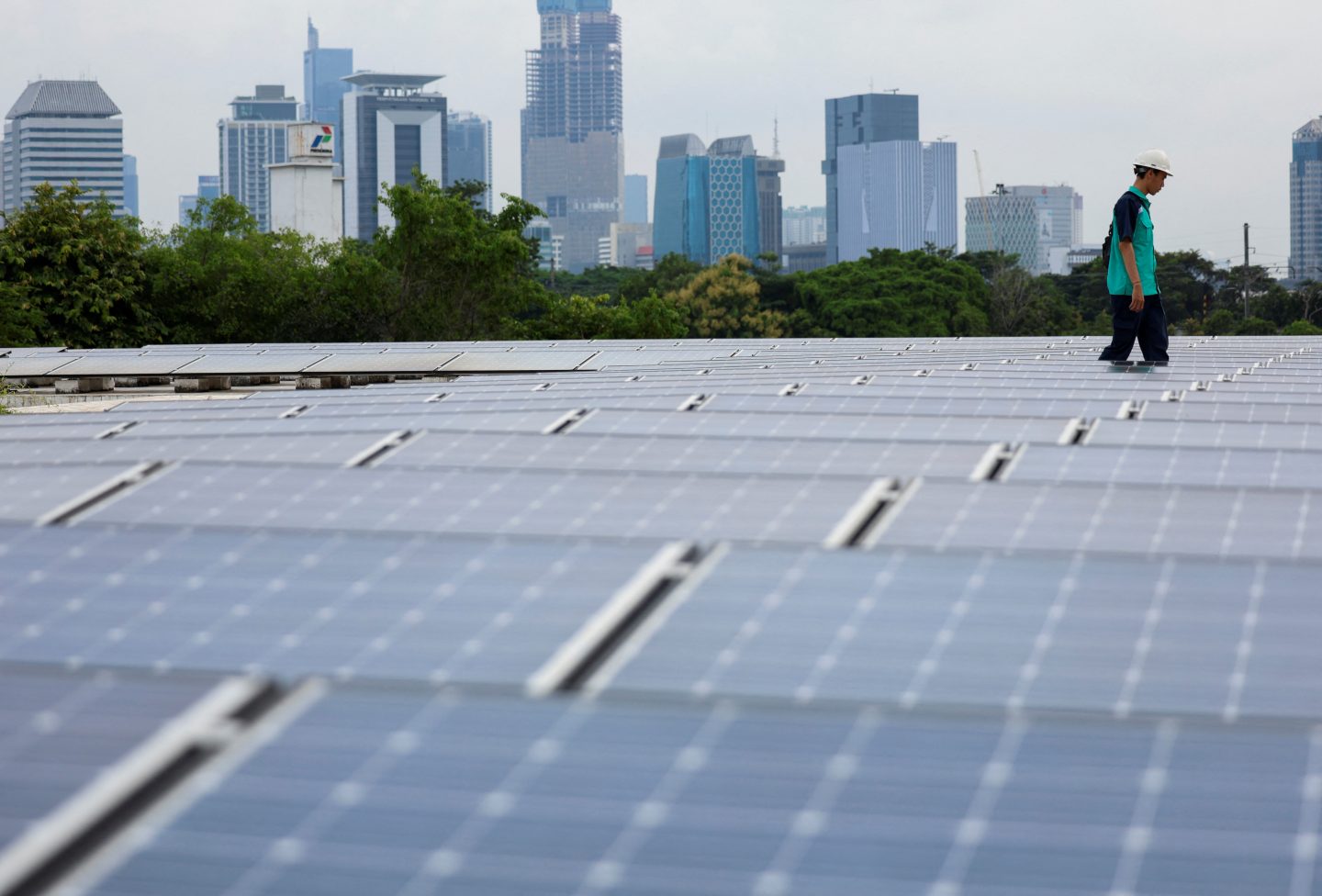
First conceptualised in 1997, the ASEAN Power Grid has gained fresh impetus in recent years as countries turn to renewables to cut their emissions and move away from volatile fossil fuel markets.
Energy supply disruption caused by wars in Ukraine and the Middle East has strengthened the case for regional grid connections. Before this year’s conflict began, the Middle East accounted for 60% of Southeast Asia’s crude oil imports. Competition for fewer, more expensive oil and gas shipments has left Southeast Asia facing a $160 billion energy import bill this year. Based on current policies, this could rise to $400 billion by mid-century.
In the Philippines last week, energy ministers agreed on an enhanced planning framework to deliver the ASEAN Power Grid and made progress on regulatory guidelines.
Garin said ministers were considering accelerating the project’s delivery. “The first study was to connect [by] 2045 – that’s too far,” she said.
A strong business case
The economic benefits of the plan have “captured the political imagination” of leaders in the region, Robert Cooke, grids advocacy lead at the Global Renewables Alliance, told Climate Home News. “The business case is stronger than ever,” he said.
“If countries were to go about building their own separate grids, of course that would be an expensive endeavour. But the discussion around the ASEAN Power Grid includes what costs could we share in building out this grid,” added Tiza Mafira, director of the Indonesia office for the Climate Policy Initiative.
Stronger grids would help the region meet collective targets to increase the share of renewable energy in total primary energy supply from 14% to 30% and in installed power capacity from 34% to 45% by 2030.
Connecting and pooling dispersed renewable resources would also help smooth local power shortages caused by daily and seasonal variations, reducing the need for backup gas plants and battery storage.
The IEA found the ASEAN Power Grid could help unlock some of the 20 terawatts of untapped solar and wind potential across Southeast Asia – an amount around 55 times the region’s current total power capacity.
From lines on a map to shovels in the ground
Rather than building a single unified network, the ASEAN Power Grid is developing cross-border links between neighbouring countries and smaller groups of nations.
As of 2025, nine of 18 priority interconnection projects are operational – accounting for around 10 GW of capacity with an additional 13.7 GW planned by 2040.
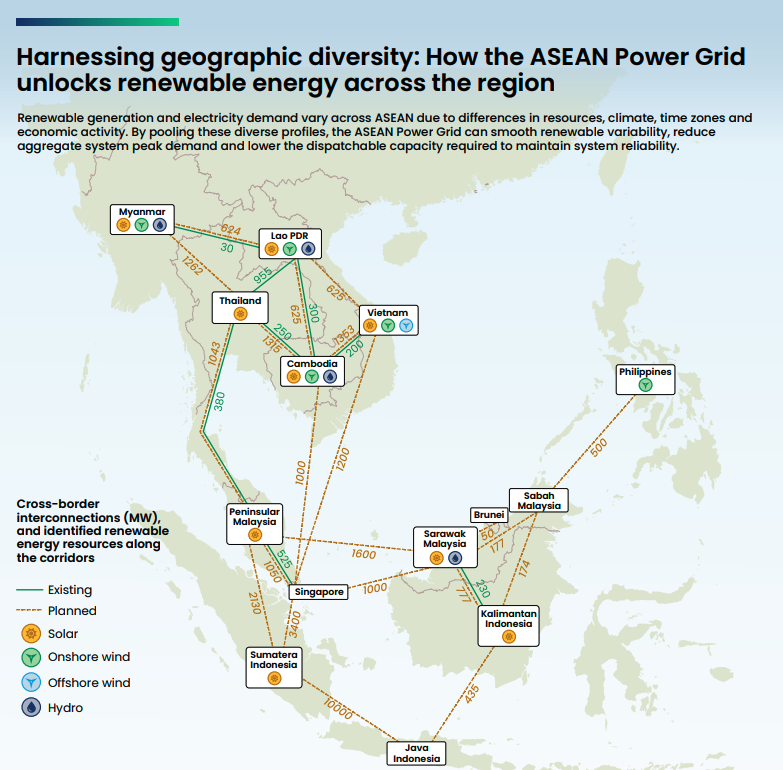
Source: Ember
A power line channelling up to 200 MW of clean electricity generated from hydropower in Laos to Singapore via Thailand and Malaysia has emerged as a key building block for grid-to-grid trading.
Progress on technical discussions will also help provide the clarity the private sector needs to invest in bankable projects, said Cooke.
In 2025, the Asian Development Bank and the World Bank announced a dedicated funding initiative to support the project.
“The enabling pieces are emerging,” said Monalisa Dimalanta, former chair of the Philippine Energy Regulatory Commission and the National Renewable Energy Board. “But the timelines remain unclear and a 2045 vision cannot answer today’s emergency,” she said.
“A power grid… that exists only on paper will not keep the lights on.”
Singapore: the delivery test
The implications of failing to deliver the ASEAN Power Grid are most acute in Singapore.
Constrained by space, with few renewable energy resources and dependent on gas for more than 90% of its electricity mix, Singapore has emerged as a leading proponent of a regional power grid as it seeks to achieve net-zero emissions by 2050.
To meet its power needs, the city-state aims to import 6 GW of low-carbon electricity by 2035, around one-third of its energy demand – a target which it is