

If you stop commuting, your work-related carbon footprint could drop by more than half. However, this only happens if you make smart choices at home and recognize the growing environmental impact of the digital tools that enable remote work.
Remote and hybrid work have grown rapidly since the pandemic, and research is now reflecting this shift. A 2023 study from Cornell University and Microsoft found that full-time remote workers can lower their work-related carbon footprint by up to 54% compared to office workers. However, this reduction depends a lot on your lifestyle, where you live, and how your home is powered. There is also a new factor to consider: AI tools are now part of most remote work setups, and they bring their own environmental impact that needs attention.
What the Latest Research Actually Shows
The Cornell/Microsoft study is the most comprehensive analysis to date, and its conclusions are more nuanced than the headlines suggest. Remote workers who log four or more days at home each week achieve the biggest emissions reductions — up to 54%. Hybrid workers, depending on arrangement, reduce their footprint by 11% to 29%. But working from home just one day a week? The benefit nearly disappears, largely offset by non-commute trips and residential energy use.
The study’s most surprising finding is that information and communication technology — your laptop, your router, your video calls — has a negligible impact on total carbon footprint compared to commuting and office building energy. The big variables are how you get around on non-work days, whether your home runs on clean energy, and whether your employer reduces office space when people stop working there regularly.
Seat sharing is one overlooked lever: hybrid workers sharing desks under full building attendance can cut office-related emissions by up to 28%. Companies that maintain empty office space for remote employees are effectively double counting their environmental footprint.
A 2025 survey found that 62.3% of Americans believe remote work has had a positive impact on the environment, and 95% of people working from home report that they behave more sustainably without trying by using reusable mugs, reducing printing, and cooking at home. Those behavioral shifts are real, even if they’re harder to quantify than commute math.

The AI Variable Adds Emissions
AI tools are becoming common for remote workers, and they’re not free from an emissions standpoint.
Every AI query you send, whether for a meeting summary, a draft email, or a research lookup, draws power at a data center. A December 2025 study in the journal Patterns estimated that AI systems running in data centers could produce between 32.6 and 79.7 million tons of CO₂ in 2025 alone. Our own coverage of AI’s carbon footprint found that always-on AI agents, the kind that continuously scan inboxes, monitor projects, or run background analysis, can consume orders of magnitude more energy than occasional conversational use.
AI’s efficiency picture is mixed, but improving as chips, data centers, and prompts are refined. Google reported a 33x reduction in energy per median prompt over one year. But historically, efficiency gains in computing are overwhelmed by growth in usage — and AI-assisted remote work tools are proliferating fast. The World Economic Forum said in September 2025 that without intentional design, the hidden carbon footprint of remote digital collaboration could grow unchecked, offsetting the gains from reduced commuting.
For example, on hour-long HD video call can emit between 150 and 1,000 grams of CO₂, depending on how the data center is powered. Switching to standard definition or turning the camera off entirely for large-group updates can dramatically reduce that impact.
Location Still Drives the Math
Where your employees live influences the sustainability calculus more than almost anything else. Urban workers who can bike or take transit to a coworking space on hybrid days often outperform both full-remote and office-commuter models. Suburban and rural remote workers, especially those in single-occupancy gas-powered vehicles, can neutralize the home energy savings quickly.
Electric vehicles shift that equation, but only if the regional grid is clean. The Cornell study notes that emissions reductions from EVs depend on the extent of power grid decarbonization. A remote worker in West Virginia charging an EV from a coal-heavy grid will not see the same benefit as one in the Pacific Northwest.
There’s also an equity dimension that sustainability analyses frequently miss. A 2023 study in the journal Resources, Conservation and Recycling found that low-income workers who are least likely to hold remote-eligible jobs shoulder a disproportionate share of the burden in carbon reduction scenarios centered on telework. A green work policy that only works for knowledge workers isn’t a complete climate strategy.
The Home Office Is Where Individuals Have the Most Control
Your home energy source matters most. Workers with solar panels, heat pumps, or access to renewable energy tariffs capture substantially more of the commute-reduction benefit. Those heating with natural gas or cooling with inefficient window units can erode the benefit considerably.
Choosing ENERGY STAR-rated equipment is the baseline. Beyond that, the Cornell study found that non-commute travel is the sleeper variable because remote workers who use their schedule flexibility to run more errands by car, or who move farther from urban centers, can significantly offset what they save by not driving to an office. Bike-accessible errands and transit-friendly neighborhoods matter.
Use AI tools intentionally rather than as a default for tasks you can do quickly without them. Turn off always-on AI agents when continuous monitoring isn’t necessary. Check whether your preferred platforms disclose their energy sourcing, and push the ones that don’t.
What Employers Can Do Differently
Research findings clearly suggest that remote work’s environmental benefits are not automatic. They require active choices by organizations, not just individuals. Companies tracking carbon neutrality should include the emissions of their remote workforce in their accounting, not treat off-site employees as zero-emission by default.
Concrete organizational steps supported by research:
- Reduce or eliminate dedicated office space for fully remote employees; shifting a desk hoteling strategy to make room for people when they are in the office.
- Implement seat sharing for hybrid arrangements in existing offices.
- Incentivize public transit and active commuting for hybrid workers.
- Audit AI tool deployments to understand which agents run continuously and whether batch processing could serve the same function at a fraction of the energy cost.
- Normalize lower-bandwidth video defaults: turn off HD video for large meetings and encourage camera-optional norms for all-hands updates.
- Choose cloud and collaboration platforms that disclose renewable energy commitments, and pressure those that don’t to be transparent.
Actions To Take At Home
The most impactful individual moves, in rough order of significance:
- Power your home using clean energy. Solar panels, a green energy tariff, or a community solar subscription capture the full benefit of eliminating your commute.
- Drive less on days off. Non-commute car trips are the biggest wildcard in remote work emissions. Combine errands, bike when you can, and stay aware of the trips you’re adding back.
- Use AI tools intentionally. Every query has a cost. Treat AI the way you’d treat any other energy-using appliance — useful, but worth using mindfully.
- Lower video call resolution. Switching from HD to SD in video meetings — or turning your camera off for large presentations — can cut conferencing emissions significantly.
- Buy refurbished or Energy Star equipment. A refurbished laptop avoids new materials extraction. Energy Star monitors and peripherals reduce idle-state draw.
- Advocate for your building. If you’re in a hybrid arrangement, push your employer to implement seat sharing and right-size the office footprint.
Related Reading on Earth911
Your AI Carbon Footprint: What Every Query Really Costs
Greening the Cloud: How AI Is Reshaping Data Center Power Demands
What Is the Carbon Footprint of Video Streaming?
Editor’s Note: This article was orginally published on March 13, 2018, and was substantially updated in March 2026.
The post Is Working from Home Really More Sustainable? appeared first on Earth911.
https://earth911.com/business-policy/telecommuting-sustainable/

Curating a conscious home is a thoughtful process involving much consideration — who made my products, how they were made, and what are they made from — and this guide aims to support you on your journey towards finding ethical and sustainable home decor you truly love.
What is Sustainable Home Decor?
Sustainable home decor includes any home decor that is made in a way that takes into consideration both the makers and the planet. Sustainable home decor will be ethically made using eco-friendly and natural materials. Eco-friendly decor will also be produced using sustainable supply chain practices. This includes using renewable energy and recycled or compostable packaging.
While there are numerous sustainable home decor brands, some of which are featured below, first consider what’s already been made in order to prevent contributing to new waste. Secondhand, used, or DIY home decor options are typically more sustainable than buying new.
What is Ethical and Fair Trade Home Decor?
Ethical and Fair Trade home decor is produced in a way that adheres to Fair Trade standards and is, ideally, Fair Trade Certified. Fair Trade means paying artisans and makers a fair, living wage and providing ethical working conditions. Ethical home decor also includes supporting goods made by artisans using traditional heritage techniques and art forms. Many cultures around the world are at risk of losing their age-old artisanal crafts forever in the age of mass manufacturing.
It’s important to note that sometimes a major brand may use an “eco” fiber while still supporting irresponsible labor practices, and excessive production amounts that inevitably lead to a lot of waste. This is not true sustainability in my mind!
Most artisan-made home decor is ethically produced and directly supports the makers. However, it’s important to check if a brand or marketplace is transparent about their business practices to ensure they are ethical or Fair Trade.
Where Can You Find Sustainable Home Decor?
In terms of environmental sustainability, looking secondhand and vintage is always a great first place to look for sustainable home decor.
But if you’ve scoured those options and haven’t found what you’re looking for and/or if you’re looking to financially support artisans and traditional crafts around the globe, this shopping guide is designed for you. You’ll discover many brands with artfully designed and artisan handmade goods for furnishing any space among this list of decor brands.
All of the brands in this guide use natural and/or recycled fibers and avoid the use of virgin synthetics like polyester; however, some brands do use materials that are not the most environmentally-friendly option on the market, such as conventional cotton.
And of course, I wanted to choose brands that followed slow, thoughtful production practices, prioritizing artisan handmade over factory labor and quality over quantity.
So without further ado, here are my favorite small-batch, artisan-made, and ethical home decor brands.
Note that this guide includes affiliate links — as always, we only curate brands vetted for sustainability that we love (and that we think you’ll love too).
1. Urban Natural
Categories: Accent Pillows, Tabletop, Lighting, Wall Art & Mirrors, Blankets & Throws
Eco-friendly home retailer Urban Natural is on a mission to curate high-quality furniture (and other home goods) built with quality and free of toxic chemicals. Urban Natural carries several sustainable home decor brands, including artisan brands Ethnicraft and Jaipur Living as well as ethically USA-made brands Farmhouse Pottery and East Fork.
2. GOODEE
Categories: Pillows, Lighting, Wall Decor, Planters, Baskets, Blankets, Candles
GOODEE is an ethical marketplace featuring numerous sustainable artisan brands and designers. You’ll find a variety of beautifully crafted home decor goods to suit a wide range of styles. Goodee is a Climate Neutral and B Corp Certified company. They publish an annual impact report so you can easily ensure their business practices align with your values.
Our favorite brands on Goodee are Texidors, Baba Tree, Makaua, and Tensira.

3. Healthier Homes
Categories: Rugs, Lighting, Tabletop, Baskets, Wall Decor & Wallpaper
Founded after years running an award-winning healthy home building firm and publishing a book by the same name (Healthier Homes) this retailer is a go-to online destination for finding non-toxic home goods. The eco-friendly home decor on Healthier Homes is primarily made with natural materials like clay, cotton, seagrass, mango wood, and bamboo,

4. Will & Atlas
Categories: Baskets, Tabletop
Will & Atlas is a women-owned small business making most of their homewares from plant materials like jute, palm leaf, and hogla grass. Their natural fiber baskets are flexile but sturdy built to hold blankets, pillows, laundry, magazines, toys, or just to stand alone as a decor piece. You’ll also find jute coasters and placemats in their tabletop collection.
The brand is committed to ethical practices, partnering with nonprofit fair trade artisan groups in Bangladesh and craftspeople in the U.S. to build long-lasting production relationships.

5. Ten Thousand Villages
Categories: Baskets, Pillows, Throws, Candles, Wall Art, Planters & Vases
Founded 80 years ago, Ten Thousand Villages is the original fair trade store. Throughout the decades, the nonprofit business has continued their commitment to fair wages, safe working conditions, as well as sustainability.
As a founding member of the World Fair Trade Organization, with artisans around the world from under-resourced communities. Most of the products they carry are made from recycled, upcycled, and natural materials.

6. MagicLinen
Categories: Curtains, Kitchen Linens
Linen is an exceptional material for home decor — there’s a reason we say “kitchen linens!” It’s natural, beautiful, and is often high quality.
I purchased a set of linen curtains from Magic Linen one year ago and they remain one of my favorite home decor pieces. The fabric they use meets the OEKO-TEX® STANDARD 100, meaning its been tested for harmful substances.

7. Passion Lilie
Categories: Pillow Covers, Table Linens
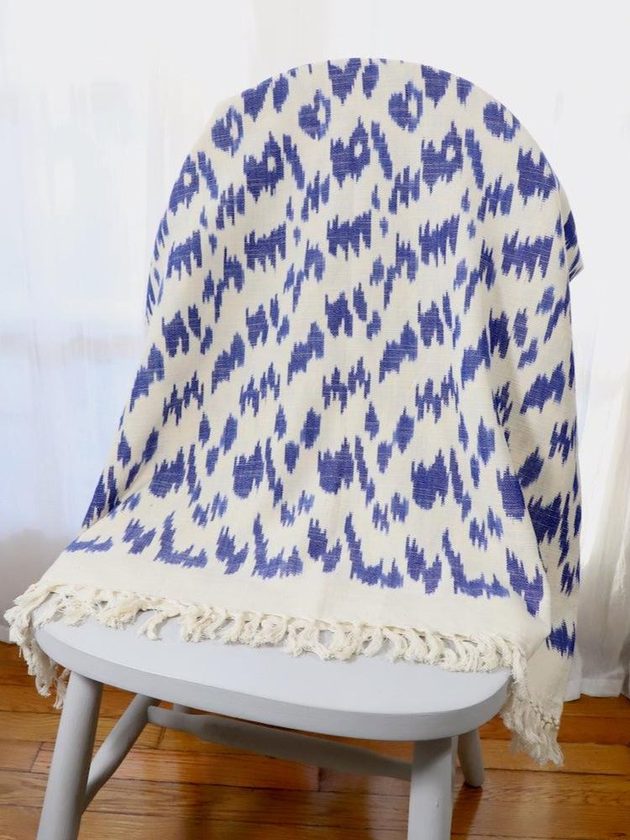
Passion Lilie is a fair trade fashion and lifestyle brand with ethically made home decor, too. The Fair Trade Verified brand has handwoven cotton blankets, organic cotton kitchen linens, unique ornaments, and hand-dyed throw pillow covers.
Each piece is made by Passion Lilie’s partners in India who pay living wages and ensure a safe working environment. Beyond this, the brand supports efforts to enable artisans to continually develop their skills and creates opportunities for community development.
8. 54kibo
Categories: Throw Pillows, Wall Hangings & Artwork, Mirrors, Baskets, Rugs, Lighting
A destination for modern African artisanal decor, 54kibo curates a stunning selection of ethically made home decor. The pieces on 54kibo are made with time-honored techniques using locally sourced materials with rich histories. The designs are exceptional, but the stories behind them make the pieces beautiful additions to your home beyond the surface.

9. The Citizenry
Categories: Baskets, Planters & Vases, Tabletop, Wall Decor, Mirrors
The Citizenry partners with artisans around the world, ensuring safe conditions, fair wages, and offering grants to their artisan partners so that they can expand their businesses.
Their online collection features small-batch artisan-made home goods made from locally-sourced and natural materials like palm leaves and indigo dyes.

More Sustainable Home Guides:
Sustainable Furniture Brands to Furnish a Conscious Home
Best Eco-Friendly and Zero Waste Kitchen Products
Easy Swaps for a Low Waste, Sustainable Bathroom
The post 9 Beautiful Places to Source Ethical and Eco-Friendly Home Decor appeared first on Conscious Life & Style.
9 Beautiful Places to Source Ethical and Eco-Friendly Home Decor
Take a look at why hemp is heralded as a hero material and discover 14 hemp clothing brands that have tapped into its sustainable potential.
The exploration of fabrics has always been a starting point for sustainable innovation in fashion. After all, fabrics provide tangible proof that change is possible while having a direct impact on the environment in one way or another. Plus fabrics are responsible for an outsized proportion of a fashion brand’s carbon footprint and overall environmental impact, including biodiversity loss and pollution.
So, What is Hemp Fabric?
Hemp is a bast fiber produced from the cannabis sativa plant, where every part of the plant can be utilized for over 25,000 industrial uses including clothing, biofuel, bricks, paper, and textiles.
Contrary to its popular association, hemp is actually the sober sister to marijuana. Unlike its recreational sibling that’s grown for its psychoactive THC (tetrahydrocannabinol) properties, hemp contains less than 0.3% THC, a value that was the driving force behind the legalization of hemp production in the 2018 Farm Bill. So while you can’t really get high from hemp, you can definitely enjoy its material benefits — which are plenty!
What is Hemp Clothing?
The simple answer is that hemp clothes are garments made from hemp fabric! But the important caveat here is that most hemp clothes on the market today are not made from 100% hemp fabric. They are usually blended with other fibers, like cotton.
At this point, hemp fabric manufacturing is not at the scale or technological level that the manufacturing of cotton (the most popular natural material) is, making 100% hemp clothing more expensive to produce. Also, pure hemp fabric is also known to be quite stiff until a couple dozen washes later, so blending it with a fiber like cotton can make it softer and easier to wear on the offset.
100% hemp fiber content clothing does exist, it’s just rare at this point. Though we do think this will change with more sustainable material investment happening in the textiles industry.
Is Hemp Clothing Comfortable?
It depends! The softness of hemp clothing will vary based on how the fabric was produced and if it is blended with other fibers like cotton or lyocell. Pure hemp clothing can be rougher than cotton, but hemp is known to get softer with every wash.
Also, since hemp is a natural bast fiber that comes from the softer parts of the plant’s stalk or stem, it is softer than the coarser leaf fibers.
Can Hemp Clothing Protect From The Sun?
A lesser known benefit of hemp clothing is that it can reportedly even help shield you from harmful UV rays. According to skin cancer research, a fabric’s UPF (Ultraviolet Protection Factor) value is a number that coincides with the fraction of UV rays it allows to pass through and hit your skin — the higher the UPF number, the better the protection.
Research claims that hemp has a UPF of >50 (according to European standards) due to natural pigments and lignin within the fibers, which act as UV absorbers.
Is Hemp Clothing Sustainable?
There are a lot of benefits to hemp clothing. But don’t just take our word for it, we’ve listed some of hemp’s most impressive sustainable qualities below:
1. Hemp is not resource-intensive
Hemp can be grown under a variety of agricultural and ecological conditions and has a capacity to grow rapidly.
Hemp clothing vs. cotton: With a high yield of 250% more fiber than cotton, hemp requires less land to grow, has no need for harmful pesticides or chemicals, and needs as little as 1/3rd of the water compared to conventional cotton. (Though individual use cases may vary based on the region that each of the crops are grown.)
2. Hemp is a restorative plant
Growing hemp can also help contribute to the maintenance of soil quality, courtesy of its anchored roots which prevent soil erosion and nutrient loss.
In fact, research shows that hemp can be used to restore contaminated soils through ‘phytoremediation’ — a process that has proven successful in the early 90s when industrial hemp was planted in some of the polluted Ukrainian regions near the Chernobyl disaster where much of the land was rendered useless. The experiments showed that hemp helped remove radioactive elements from the soil.
3. Hemp can absorb carbon more than other plants
Hem can act as a carbon sink. According to a Cambridge University researcher, a hectare of hemp can absorb between 8-15 tonnes of CO2, giving hemp plants a vital role in reversing carbon emissions.
Impressed yet? Ahead, discover 14 brands that have some of the best takes on this sustainably versatile fiber.
Note that this guide includes affiliates. As always, all brands meet very high standards for sustainability and are brands we love that we think you’ll love too.
Where to Find Sustainable Hemp Clothing
1. Patagonia
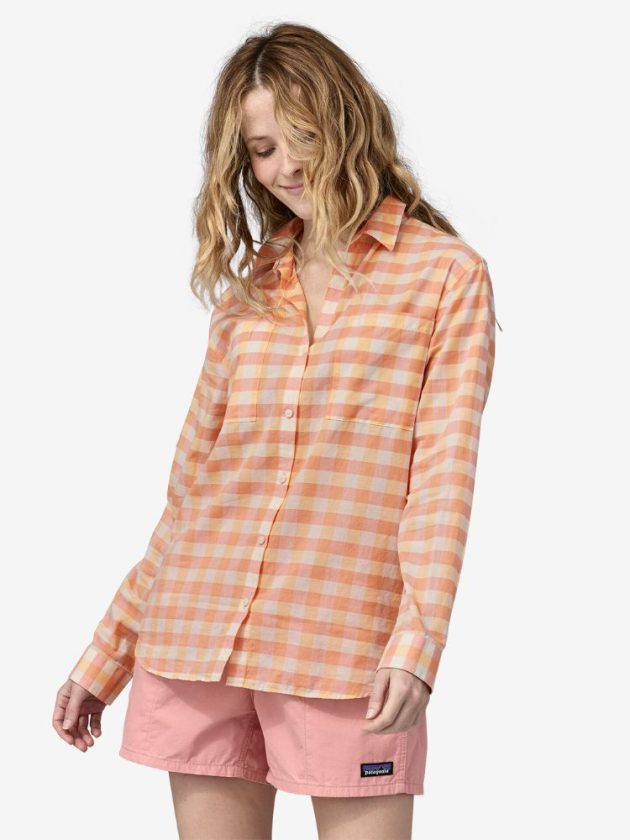
Have an outdoor adventure coming up? Run for the hills in some of Patagonia’s functional hemp styles that’ll have you covered no matter what path you set foot on. Whether it’s a jacket, sweatshirt, pair of overalls, or technical pants, these styles are hard-wearing and made to last.
Patagonia stands by hemp as one of its hero fabrics and claims to consciously partner with suppliers that use unique processing techniques to minimize waste. The brand has also created unique performance materials by blending hemp with organic cotton, recycled polyester, and TENCEL lyocell.
Many of Patagonia’s clothes and gear are sewn at Fair Trade Certified factories that ensure all workers earn a living wage.
Size range: US 0–18
Price: $$-$$$
2. tentree
If you’re on the lookout for easy hemp styles that make you want to lounge around in them all day long but still look cool enough for a coffee run, tentree has you covered. Taking an earth-first approach with everything they do, this Canadian brand has been sowing the seeds of sustainability throughout its operations and supply chain. Their clothes are ethically manufactured and workers are provided with li