

This is a republication of November’s edition of The Climate Agenda – a subscriber-only newsletter designed to keep you informed of the key events, negotiations and announcements happening every month. If you want to receive The Climate Agenda straight to your inbox at the start of each month, sign up as a subscriber today.
COP31 begins in one week, and we’ll have five specialist reporters on the ground in Antalya, Türkiye, bringing you every development as it happens. From the negotiations to leaders’ speeches and side events, we’ll be there to dissect what it all means for international climate policy on electrification, just transition, adaptation finance and much more.
Here’s what you need to know for November, why it matters and what to expect.
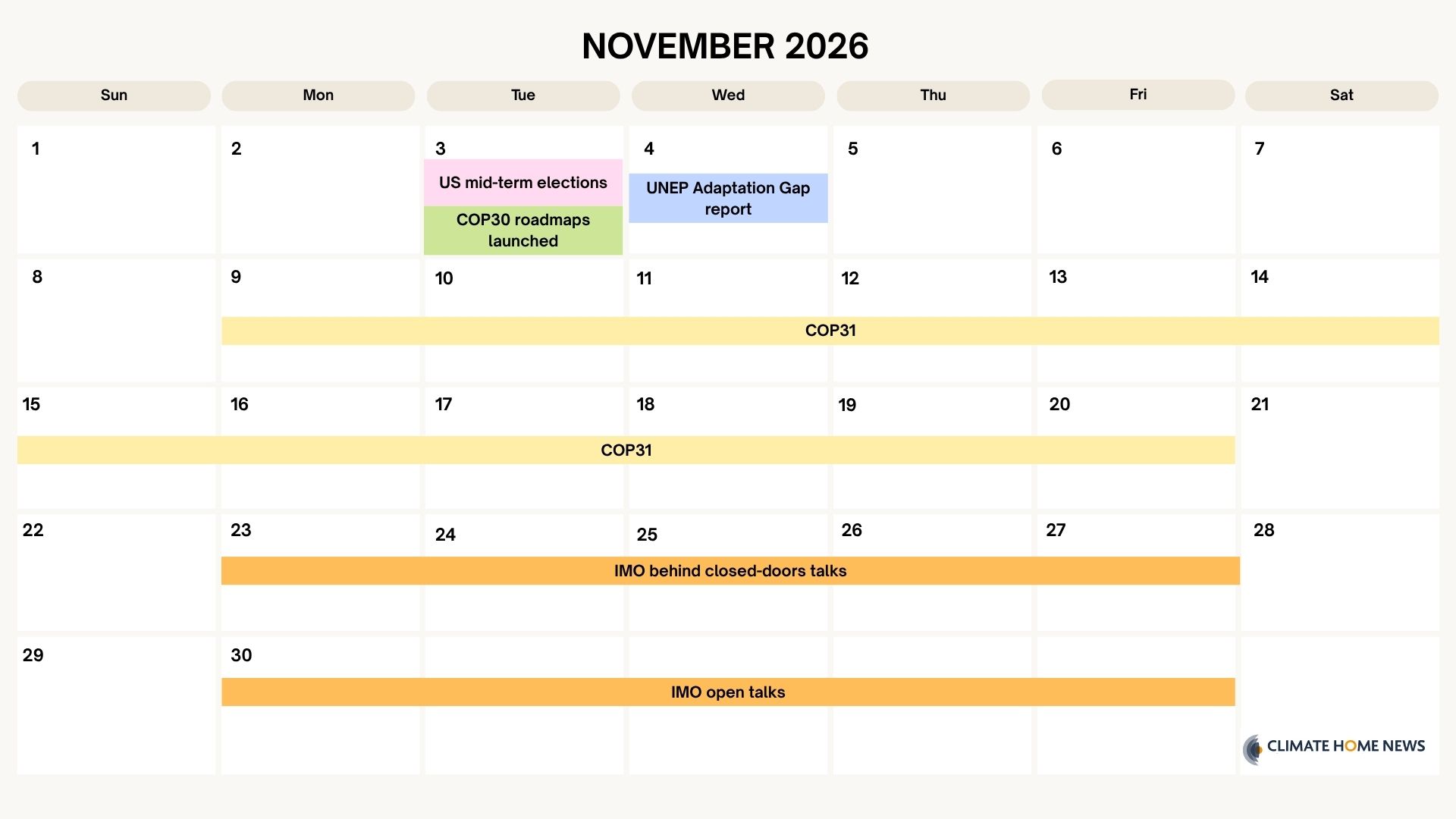
US midterm elections
Tuesday 3 November – United States
The geopolitical highlight for the first week of November is the US midterm elections, which will show whether American voters are in any mood to forgive President Donald Trump for failing to bring down the cost of living. From an energy perspective, his pro-oil and gas stance hasn’t led to cheaper prices for consumers, pushed up by the US-instigated Iran conflict. And his diesel deal with Russia won’t yet have made a difference at the pump.
The key issue for climate and energy policy is whether the Republicans hold onto their governing trifecta. If so, then expect continued dismantling of regulations that protect the environment, as well as strong backing for fossil fuel production. If the Democrats regain control of Congress, which polls suggest is possible, it could trigger a push to restore Biden-era clean energy tax credits, and support states wanting to restart mothballed wind and solar projects.
Data centres have been a hot-wire issue, with growing community opposition to their expansion – partly due to concerns over rising utility bills as the facilities gobble power. Whether Republicans or Democrats win Congress, both are likely to make tech firms pay for the extra electricity production they need, with the latter favouring renewable sources.
Governor races are also taking place in key states for climate issues, including Democrat-run California, which has used the courts to fight Trump’s attacks on clean energy.
Read more: National climate plans now promise half the emission cuts expected by UN
Read more: The more Europe relies on the US for energy, the more it’s vulnerable to pressure by Trump

COP30 Deforestation and Fossil Fuel Transition Roadmaps
Tuesday 3 November – Brazil
Brazil is set to unveil two global roadmaps: one for transitioning away from fossil fuels, the other for ending deforestation.
The COP30 presidency promised them in the dying hours of the Belém summit last November as a last-minute fix to break a political impasse. Since then, it has been consulting with countries, experts and campaigners around the world to gather ideas and sketch out the elements to include in these blueprints.
Don’t expect the roadmaps to offer any new global targets or give direct instructions on what countries must do, either to cut fossil fuel production and consumption or better protect forests. Rather, Brazil has said the documents will identify barriers and priority actions, highlight existing mechanisms and present a range of options that can be adapted to different national contexts.
It remains unclear what will happen with the reports once they are delivered on Tuesday. At the Bonn talks last June, a group of European and small island nations called for the roadmaps to be brought into the official negotiations, warning that a one-off report won’t cut it. But such efforts would undoubtedly face stiff opposition from fossil fuel-producing nations that objected to drafting the energy transition roadmap within the formal UN process last year.
Read more: European, island states seek clear future for global roadmap to cut fossil fuels
Read more: COP30 roadmap to end deforestation will invite countries to draft domestic plans
Read more: What we need to see in the roadmap to transition away from fossil fuels
UNEP Adaptation Gap Report
Wednesday 4 November – Nairobi, Kenya
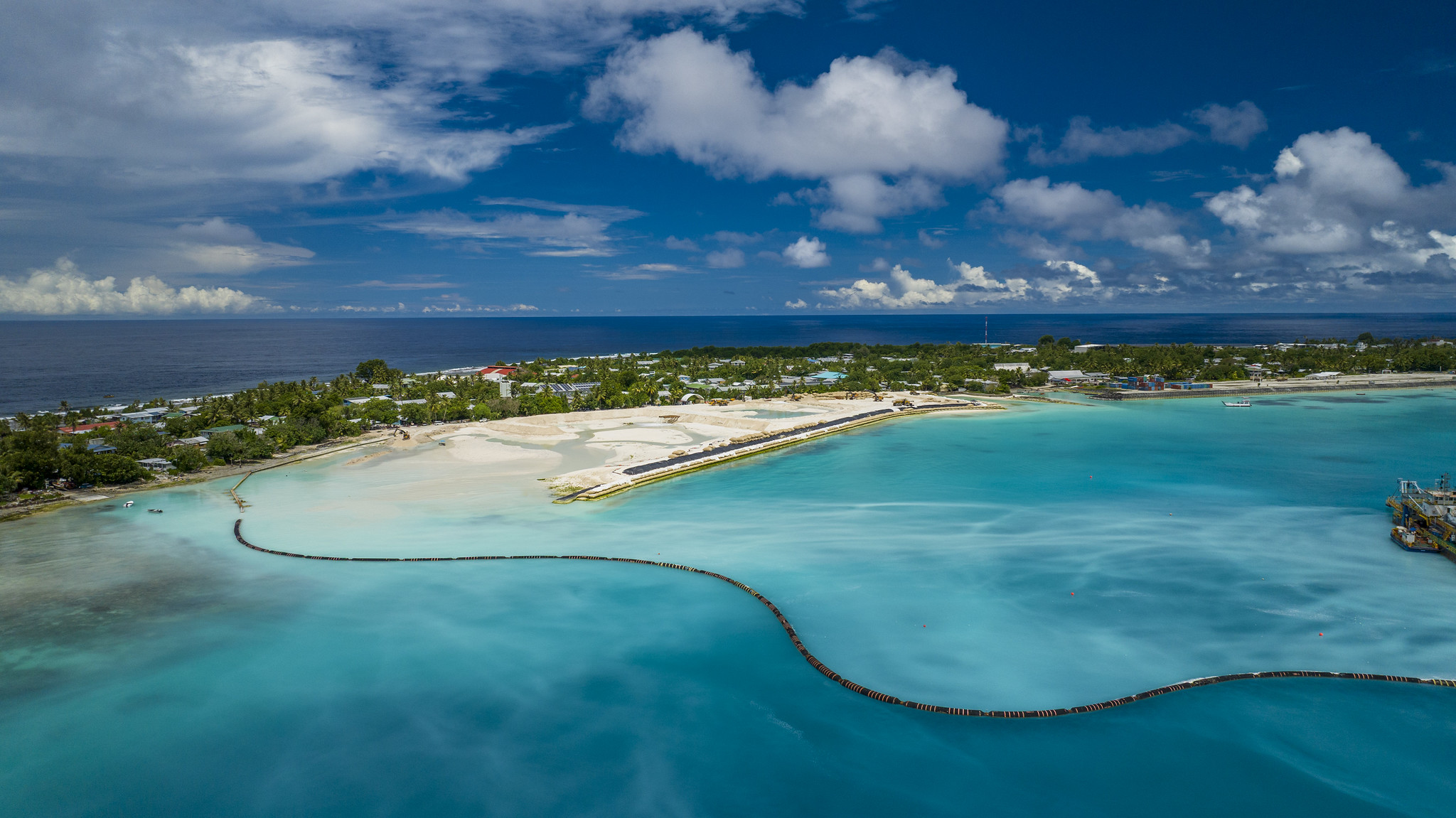
The UN Environment Programme (UNEP) will publish its annual assessment of how well the world is planning, implementing and – crucially – financing measures to cope with worsening climate impacts.
Past editions have made for grim reading. Last year’s report warned of a widening gap between what developing countries need for adaptation and what they can access. It estimated they will need $310–365 billion a year by 2035, which is 12 to 14 times current international flows. The report also found that a goal of doubling international public adaptation finance by 2025 was likely to have been missed.
This year’s edition will be closely watched with adaptation expected to be a big-ticket item at COP31. Governments are likely to discuss the specifics of a commitment to triple adaptation finance for developing nations by 2035, agreed at COP30 last year – particularly what the baseline for that pledge is. Negotiators will be debating how to track progress against the 59 indicators of the Global Goal on Adaptation.
Read more: Editor’s Desk: Nepal’s disaster has laid bare the world’s adaptation accountability gap
Read more: Bonn climate talks end in “gridlock” on adaptation and emissions-cutting
Read more: New data shows rich nations likely missed 2025 goal to double adaptation finance
COP31 Climate Conference
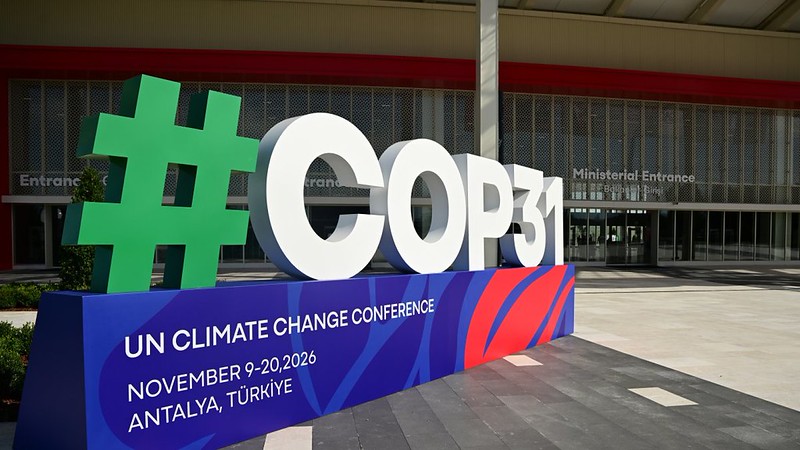
Monday 9 November – Friday 20 November – Antalya, Türkiye
The climate community’s attention turns this month to Antalya for the annual UN climate summit. From the outset, COP31 will have an unprecedented, and potentially explosive, set-up: Türkiye is COP president overseeing the non-negotiated Action Agenda, while Australia runs the negotiations.
Billed, once again, as an “implementation COP”, the talks come amid a global energy crisis largely sparked by the actions of the US government, which is not expected to show up on the Turkish Riviera. It is also the first COP in the era of climate overshoot, coming just weeks after the UN officially confirmed the 1.5C warming limit will be breached and set out a narrow pathway to bring temperatures back down to the most ambitious Paris goal.
Unlike most recent COPs, the formal negotiations lack a clear headline item. Countries are due to establish and define the scope of the Just Transition Mechanism agreed in Belém last year, including its rules, governance and possible funding arrangements. On adaptation, vulnerable countries want a clearer path to delivering last year’s pledge to triple finance by 2035 and to putting the new progress indicators to work on the ground.
Governments are also likely to clash over next steps on the transition away from fossil fuels, and especially over whether the mitigation work programme – the forum dedicated to emission-cutting measures – has any future beyond this year.
Notable events to look out for in Antalya:
Opening session (9 November): The summit kicks off with the customary first-morning plenary. After the usual pageantry from the host nation, negotiating blocs and individual countries will deliver statements setting out their stall for the next two weeks. Watch out for a potential fight over the summit’s agenda – perhaps on issues relating to finance and trade following submissions requesting additional items – also a COP tradition.
Electrification (10 November): On Energy Day, the Turkish presidency is expected to formally launch its flagship electrification pledge, revealing which countries have signed up. Signatories will voluntarily commit to raising electricity’s share of global final energy consumption to 35% by 2035, though the current text does not require that power to come from clean sources. There is also a question mark over whether and how this can be included in the political cover decision the COP co-hosts have said they will aim to produce.
Leaders Summit (11-12 November): Heads of state and governments will jet into town for the traditional high-level segment in the middle of the first week, where world leaders typically talk up their climate record, air their grievances and call for more action.
Relatively few powerful leaders are on the list this time. Brazil’s Lula is set for another star turn this year, fresh from his surprise election win in October. The UK’s Andy Burnham, Spain’s Pedro Sanchez and China’s vice-premier Ding Xuexiang are expected, alongside Türkiye’s Recep Tayyip Erdogan and Australia’s Anthony Albanese. In addition, African and small island nations will feature prominently.
Our COP31 Briefing newsletter will offer a more in-depth preview of the talks later this week.
Read more: Early speakers’ list suggests few powerful leaders will attend COP31
Read more: COP31 electrification pledge leaves out clean power commitment
Read more: From Belém to Antalya – gains, gaps and challenges for a new Just Transition Mechanism
International Maritime Organization (IMO) Shipping Talks
Monday 23 November – Friday 4 December – London, United Kingdom
One year on from explosive talks in which Trump’s officials teamed up with Saudi Arabia to delay a deal to make the shipping industry greener, governments will gather on the banks of the Thames for another attempt to reach agreement.
The Net Zero Framework, provisionally agreed in October 2025, includes a series of emissions reduction targets for the owners of large ships along with penalties for not meeting them, rewards for doing so and measures to make the maritime transition fair.
The framework is likely to be either tweaked or radically rewritten so that it’s more acceptable to the US and Saudis. Brazil and Japan have submitted compromise proposals. Analysts find those will move shipping further away from being able to meet its climate goals.
There will be closed-door talks between November 23-27 and a second week of talks open to accredited media from November 30 to December 4. Agreement on a proposal, perhaps decided through a vote, is expected after long and technical negotiations. The shipping industry’s 3% share of the world’s emissions is at stake.
Read more: London talks raise hopes for green shipping deal
The post What’s on the climate calendar for November 2026? appeared first on Climate Home News.

Australian indie-folk duo Hollow Coves have found a special way to combine their love of music and the natural world. They have lent their, very soothing, voices to the Save Scott Reef campaign by recording a music video of their much-loved song Coastline at the reef.
We sat them down on the Rainbow Warrior to talk about their musical inspiration, their experience on the reef, and why they believe it’s so important to protect these incredible places for future generations.
1. Tell us a little about Hollow Coves and the music you make.
Matt: Our music is acoustic indie folk. We like bands like Angus and Julia Stone, Ben Howard, Mumford and Sons – acoustic music like that.
Ryan: Historically, a lot of our music has been inspired by travelling and seeing beautiful places in nature, and just writing about experiences in the world.
We both live on the east coast of Australia, on the Gold Coast, and we’re surrounded by nature. We’ve got beautiful oceans, amazing hinterland spots and some really cool rock pools.
2. Your music is often inspired by nature and the outdoors. What is your personal connection to the ocean?
Matt: I’m in the ocean as much as I can. I surf, and I’ve always loved the ocean. I grew up just outside Brisbane, and we would catch the ferry across to North Stradbroke Island. A lot of our mates would just camp over there on the weekends. It’s been a natural part of my life.
Ryan: I don’t surf, but I have an appreciation of the ocean. When we were writing Coastline, I was actually living in Canada, and being away from the ocean made me realise how much I missed it. There’s something about living near the ocean and being able to go and be by the ocean. It’s just a different feeling.

3. You recently joined Greenpeace aboard the Rainbow Warrior to visit Scott Reef and film a music video for Coastline. What made you want to get involved?
Ryan: We’ve been so fortunate to have the success that we’ve had with our music, and when this opportunity came up, we were like, man, it just feels so fitting to give back in whatever way we can. The music has been so inspired by these places of beauty, and so we just want to do our part to protect and preserve these places so that future generations can appreciate them in the same way that we do.
Matt: Collaborating with Greenpeace has just been so aligned with our mission as well. We love nature, we love singing about it, and I think it’s so important to protect these places that are vulnerable and unique to the world. They really are just a natural wonder.
4. What was it like seeing Scott Reef for the first time?
Matt: The first time was really magical. I didn’t realise there was even this amazing coral shelf out off the Kimberley Coast. Just being able to go snorkelling every day and see the wildlife and what’s actually underneath the water – the whole world around is just something else.
Ryan: The first day we arrived at the reef, the sun was rising and this pod of about 50 dolphins greeted us as we entered. It was like, wow, this place is just so brimming with life. It was really beautiful to see, and the colour of the water – everyone was just like, oh my gosh, this water is insane!
Matt: You just always forget that when you’re sailing, it’s obviously beautiful, and every sunset’s magical, but you forget there’s this whole world underneath the ocean and just how lively and vibrant it is.
5. Tell us about filming the Coastline music video. What was it like performing on that tiny island?
Matt: It was an amazing opportunity to be alongside this project and get on the Rainbow Warrior, see Scott Reef and go play on this amazing little sandbank island in the middle of the ocean. We were losing our minds with the beauty of it.
It was a big team effort. The island only comes out at low tide, and on the day we arrived it was completely submerged. We had to wait for the right opportunity to get onto the island safely.
Ryan: When we first got on there, the waves were still crashing over it from either side. As the tide kept going down, a bit more of the island was revealed.
Matt: There was a whole film crew, with a drone flying around to capture the scale of how small this little island is and how big the ocean is. It was just so magical, like a pinch-me moment. Something we’ll remember for the rest of our lives.

6. What surprised you most about Scott Reef and the marine life you discovered?
Matt: The third day was the highlight for me. I got to see a turtle swim by, a little reef shark and another sea snake which tried to chase me, which was pretty scary! But it was cool.
Ryan: Just the colours, all the coral and so many beautiful, colourful fish. It’s such a crazy experience to be down there.
Matt: I think you just forget there’s this whole world underneath the ocean. It just felt really cool to be down there and a part of it.
7. Before this trip, how much did you know about Scott Reef, and why do you think it’s important to raise awareness about it?
Ryan: Prior to this trip, we knew very little about Scott Reef, and I think that’s part of the problem. It hasn’t been very common for people to know about this place. Part of the trip is to bring awareness to how beautiful Scott Reef is and to show people that it is something worth protecting.
If we don’t stand up and protect these places, then we are at risk of losing them. It just sets a really bad precedent for coral reefs in Australia.
Matt: Scott Reef doesn’t really have the name like a lot of other places. I think that’s the key, to spread the word and tell people about what’s happening out here and how beautiful it is.
8. What is at stake if the proposed drilling project near Scott Reef goes ahead?
Ryan: Currently there’s a proposal for a drilling project that would take place near Scott Reef. If that was to go ahead, it would be a massive risk for the reef, and it would put a lot of the wildlife at risk as well.
Having been out there and seeing the beauty there, it just doesn’t feel right. It doesn’t feel like it’s a risk that we need to take. Particularly with these places that are so beautiful, why would we want to risk losing them?
Matt: I think it’d be an absolute tragedy. Just experiencing it yourself, it’s like, wow, this place is incredible. There are so many endangered sea creatures. I think for anyone that would come out here and experience it, everyone would be aligned with how important it is to keep this place.
9. What was your experience like aboard the Rainbow Warrior and getting to know the Greenpeace crew?
Matt: I didn’t really know what to expect, but everyone was so lovely and passionate. It was cool just being part of the process of running the ship. We had very strict schedules, and we did cleaning at eight o’clock every day! It was really cool to see how the ship operates.
Ryan: We were welcomed like family to the crew on board. Everyone’s been so encouraging and helpful. It was really special to see the amount of effort that goes into trying to protect these places.
I hadn’t really explored Greenpeace too much before this trip, so it’s been cool to learn more about the organisation and the people involved and hear more of their heart towards preserving these beautiful places.
10. What message would you like to share with people who want to help protect Scott Reef?
Matt: I think anyone that loves the ocean or finds nature a big part of their life should get behind this campaign. It’s about raising awareness, sharing the word of what Scott Reef is and how beautiful it is.
Being a father myself, it’s just made me even more passionate about these places that we have, how fragile they are and how important it is to pass them on to the next generation. I just want my kids to see it and future generations, because it really is a spectacular thing.
Ryan: I think it’s important to be on the right side of history with things like this. You can sit back and do nothing and just see these beautiful places be lost. Or you can stand up and fight for what’s right.
We’re at this point in history where we have an opportunity to make a difference. These places are constantly being put at risk, and if we do nothing, then we’ll just see them go. We’ve already lost so much, and so it’s important to stand up and fight for these places that we want to keep.
Matt: Absolutely, we’ve got this. Let’s spread the word. We can absolutely win this campaign!
Climate Change
‘Ode to Scott Reef’: Indie-folk duo Hollow Coves performs at famous Australian reef in call for protection
SCOTT REEF, Tuesday 24 November 2026 — Released today, a new music video with Gold Coast duo Hollow Coves performing onboard the flagship Rainbow Warrior at Scott Reef calls for protection of the ancient ecosystem from oil and gas drilling proposed by multinational Woodside.
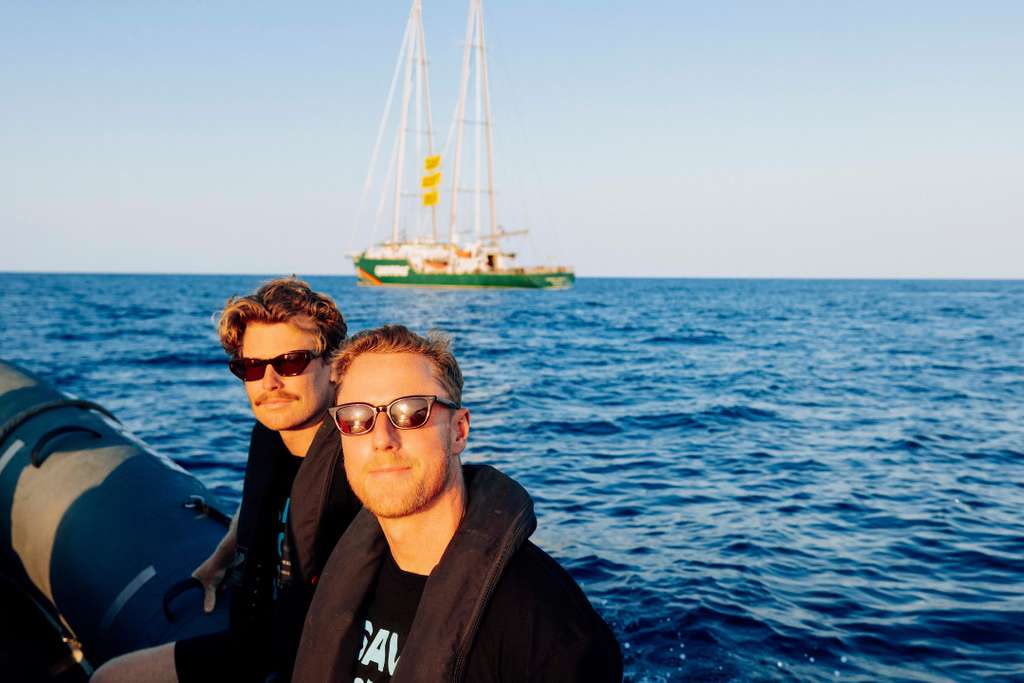
- Watch ‘Coastline’ shot at Scott Reef here and see visuals from the shoot at sea here
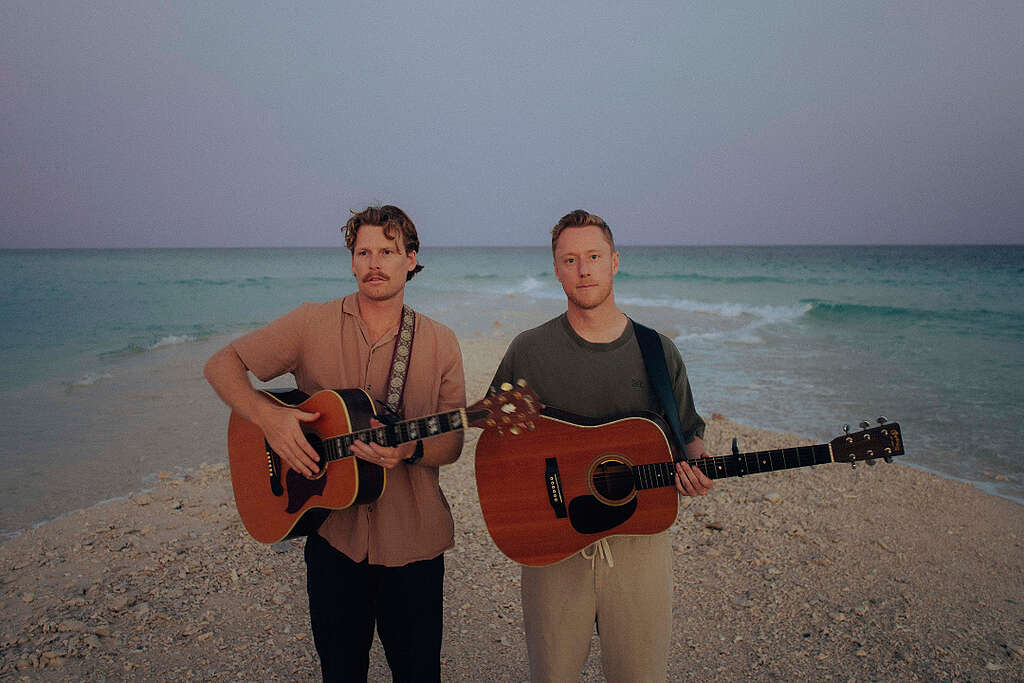
The new music video, in collaboration with Greenpeace Australia Pacific, captures a performance of Hollow Coves’ viral single ‘Coastline’, joining a nationwide push by Australian artists to protect heritage-nominated Scott Reef, located 270 kilometres off WA’s Kimberley coast. The video was shot on multiple cameras including a Bolex 16mm vintage movie camera, and boasts original underwater and aerial footage of Scott Reef.
Scott Reef is home to thousands of marine species, genetically unique green sea turtles and endangered pygmy blue whales but is threatened by oil and gas drilling proposed by multinational corporation Woodside, the Browse project.
Matt Carins, Hollow Coves musician, said: “It would be such a tragedy if gas drilling happened at Scott Reef. It’s such an incredible part of the world and is something that we want to pass on to future generations. Being a father myself, I want to share these places with my kids.
“There’s still hope in saving Scott Reef. I think it’s our time now to spread the word of how beautiful this place is. It may not have the same fame as other reef systems, but it’s just as amazing and just as important.”
Ryan Henderson, Hollow Coves musician, said: “Scott Reef is incredible. We were greeted by a pod of dolphins the first day we arrived. The whole place is brimming with wildlife.
“It would be such a shame to allow gas drilling to go ahead at Scott Reef. We wouldn’t allow drilling at the Great Barrier Reef so why should we allow it at Scott Reef which is also so beautiful and so precious. We want to preserve these places.
“There’s still hope. The Australian Government has an opportunity now to save Scott Reef and be on the right side of history.”
Hannah Schuch, Senior Campaigner at Greenpeace Australia Pacific, said: “It was a privilege to witness Hollow Coves playing their iconic single ‘Coastline’ live from Scott Reef, surrounded by wildlife and tranquil blue water.
“The ecological significance of Scott Reef to thousands of species, many of which are threatened, cannot be understated, but its surreal beauty is something that is so easy to capture and makes a perfect setting for a song like Coastline.
“Hollow Coves’ work is a perfect example of the symbiosis between Australian music and nature, and we are so excited to present this musical and cinematic ode to Scott Reef in collaboration with them.
“Drilling at Scott Reef is an unacceptable proposal, and Environment Minister Murray Watt has a generational opportunity to write a legacy of nature protection by putting a stop to Woodside’s plans and saving Scott Reef.”
Minister Watt is expected to decide if Woodside will be allowed to drill at Scott Reef for the Browse gas project in the coming months.
-ENDS-
Media contact
Emma Sangalli on 0431 513 465 or emma.sangalli@greenpeace.org
High res images and footage of Scott Reef can be found here