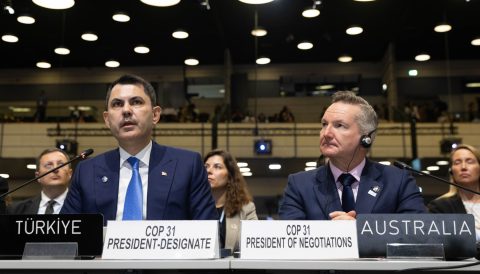
Azerbaijan’s COP29 presidency claimed an early win at the start of the climate summit when countries waved through long-awaited – and controversial – rules laying the foundations for a new UN carbon market, without any debate.
But the approval of the documents setting out key guidelines – or “standards” – for the development of carbon credit projects and carbon removal activities provoked strong opposing reactions.
For some, including proponents of carbon credits and the COP29 presidency itself, the adoption late on the first day of the talks in Baku was a major “breakthrough” that ended a years-long deadlock and paved the way to raise hundreds of billions of dollars for climate action.
“This will be a game-changing tool to direct resources to the developing world,” COP29 President Mukhtar Babayev said.
UN climate chief Simon Stiell told reporters at a press conference on Tuesday that “this is not some bit of arcane UN bureaucracy”, but something that could help countries implement their climate plans “faster and cheaper”.
The Azerbaijan COP presidency put a number to that assertion, claiming that “co-operation across borders” under Article 6 of the Paris Agreement using carbon credits could reduce the cost of carrying out national climate plans by $250 billion every year.
That figure comes from a theoretical modelling exercise conducted in 2019 by the International Emissions Trading Association (IETA), a pro-carbon market group that counts among its members many of the world’s largest fossil fuel companies, including Saudi Aramco, ExxonMobil, Shell and BP.
Climate Home spoke to one carbon market expert who raised doubts over the $250-billion figure due to the number of assumptions made in the study that could be out-of-date by now.
“Rushed” approval
Many close watchers of carbon market talks strongly objected to the “unprecedented” decision to greenlight the rules in the opening plenary of COP29, bypassing the scrutiny of negotiators and observer groups. They voiced concerns not only about the risk of the resulting carbon credit projects producing dubious emission reductions and dragging down climate ambition, but also about the precedent this move sets.
“This decision should have not been rushed through without giving the space to adequately discuss the issues,” said Trishant Dev, programme officer for carbon markets at the Delhi-based Centre for Science and Environment (CSE). “Especially as, in previous years, several countries objected to the inadequate nature of these standards.”

Maria AlJishi, chair of the Article 6.4 Supervisory Body, speaking after a decision on carbon markets was adopted. Photo: UN Climate Change – Kiara Worth
While it caught many by surprise on Monday, the fast-tracked adoption of the rules stemmed from a strategic move made nearly a month ago by the Supervisory Body tasked with overseeing the development of the Article 6.4 crediting mechanism.
After several days of drawn-out discussions, this technical panel decided to directly adopt guidance on carbon-credit methodologies and carbon removals as “standards”, rather than forwarding it as a proposal to be fought over at COP.
Government negotiators were therefore presented with a complete document that they could either accept or reject as a whole without re-arranging any of its contents. They opted for the former, with a strong nudge from the Azerbaijan presidency that has made the “operationalisation” of Article 6 one of its top targets for the climate summit.
More work to be done
While the decision at COP29 rubber-stamped the Supervisory Body’s approval, countries left the door open to asking the technical committee to add more provisions or stronger guardrails on top of the adopted rules. Negotiators will discuss over the next two weeks whether and how to take this forward.
But, regardless of this COP’s outcomes, carbon market experts also urged caution over what Monday’s decision means for long-running efforts to turn the UN carbon market into a reality, as several key building blocks still need to be agreed on before credits can be traded.
COP29 Bulletin Day 2: Aliyev defends fossil fuels, G77 unites on finance goal
“This was certainly one of the biggest steps in terms of operationalising Article 6.4,” Jonathan Crook, a policy expert at Carbon Market Watch, told Climate Home. “However, it’s not like starting in January we’ll see this market up-and-running. We’re quite a long way from there”.
Technical committees operating within the Supervisory Body still need to develop and approve a series of “tools” that developers of carbon credit projects will have to apply to demonstrate that emission reductions or removals are credible, durable and do not create any unintended harm. Additionally, the registry where the credits will be physically traded has not yet been created.
“I wouldn’t expect all of that to be completed before the end of next year, if not 2026,” said Crook.
‘Junk’ credits revived
The first batch of credits likely to be traded under the new UN carbon market are old offsets originally developed under the Kyoto Protocol-era’s Clean Development Mechanism (CDM), starting from the early 2000s. Over 1,200 CDM projects are currently waiting for approval from their host countries to transition into the new system.

Nearly four-fifths of these are renewable energy activities, like solar power plants or wind farms, which experts believe have produced “junk” offsets because the income from the carbon markets was not needed to build them and therefore does not produce “additional” emissions reductions.
Maria AlJishi, chair of the Supervisory Body, said at a press conference in Baku on Tuesday that the adoption of the standards on COP29’s opening day would enable the process of switching CDM projects to the Article 6.4 mechanism to continue.
“This means hopefully that we could be seeing the first issuance of 6.4 credits soon,” she added.
(Reporting by Matteo Civillini; editing by Megan Rowling)
The post Is COP29 “breakthrough” on UN carbon market all it seems? appeared first on Climate Home News.

After witnessing the effects of sea-level rise in the low-lying island nation of Tuvalu, Pacific leaders on Tuesday used the pre-COP31 summit in Fiji to voice their frustration at the difficulties they have experienced in tapping the global climate finance system.
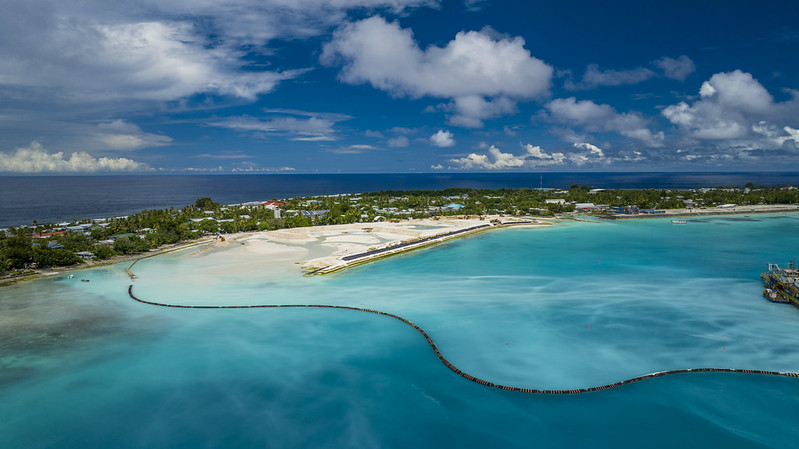
A small group of government leaders, climate negotiators and heads of development banks and climate funds took a trip to Tuvalu’s Funafuti atoll on Tuesday morning, travelling by road over land just 10-20 metres wide to visit a project that is building barriers to keep the sea from the land.
They then flew to Fiji for the pre-COP summit, where several Pacific leaders said they had been let down by the insufficient quantity, bad terms and slow speed of international finance to help them adapt to a warming climate that is bringing higher oceans, drought and more powerful storms to their shores.
“Right now, our islands are like a canoe that has been rammed by a massive foreign ship. Our canoe is taking on water, we are sinking, and what is the world’s response?” asked Palau’s President Surangel Whipps Jr.
“They hand us a tiny patch to cover a gaping hole,” he continued, “but the bureaucratic process just to receive that patch is so slow that the water fills the hole while we wait. Then to rebuild the vessel so that we can survive the next storm, we are offered loans, debt that adds weight to a sinking boat packaged in red tape so thick we can barely access it. And while we wait, the water continues to fill.”

Pacific leaders and Australia called again on governments to invest in the new Pacific Resilience Facility (PRF), which has been designed by the Pacific Islands Forum and is seeking $500 million in investments by COP31 in November.
It has around $180 million so far, but did not receive additional pledges during the UN General Assembly in New York. The PRF aims to invest to generate annual returns which it can give to projects like water tanks for drought-hit communities.
Witnessing sea level rise
The annual pre-COP gathering is usually a low-profile technical meeting of climate negotiators. But this year, Australia – which is the president of negotiations at COP31 – partnered with the Pacific to introduce a “leaders segment” in an attempt to shine a spotlight on climate issues affecting the region.
Fourteen government leaders – from Australia, Timor-Leste, Mauritius and the Pacific – made the trip. They were joined by the European Union’s climate commissioner Wopke Hoekstra, the heads of the Green Climate Fund and the Asian Development Bank and former Australian prime minister Julia Gillard.
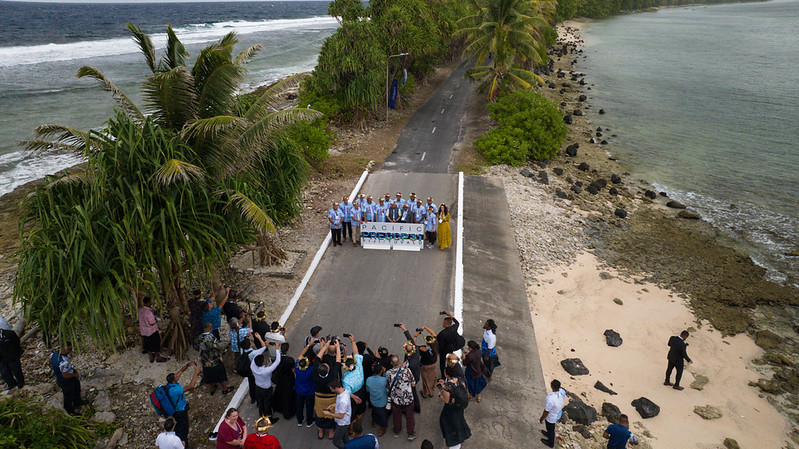
On their return to Fiji, Solomon Islands Prime Minister Matthew Wale told the pre-COP leaders roundtable that the sea level rise they had witnessed was personal for him.
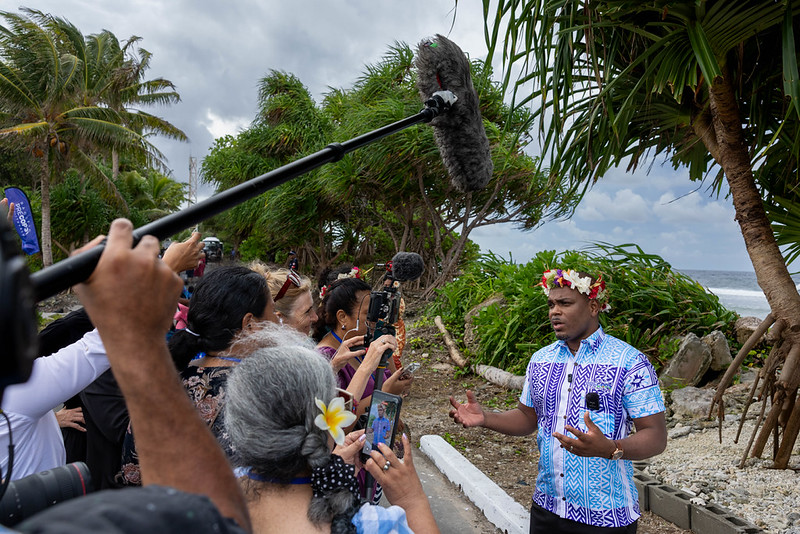
“Tuvalu was not just a site visit for me. I saw the story of my own saltwater people,” he said, adding that he, his daughter and his grandfather had lost their houses to sea level rise and that three-quarters of his electorate live on land that will be underwater in the next 30 years.
From the other side of the world, Antigua and Barbuda’s environment minister Michael Joseph said Tuvalu’s problems felt similar to those of his own Caribbean islands. “I saw vulnerable communities… just metres from the sea and people determined to remain on their land, preserve their culture and way of life,” he said.
A group of Fijian schoolchildren told the leaders it was not just sea level rise the Pacific struggles with but also heatwaves, droughts and storms, which worry their families and prevent them from learning.
Climate finance red-tape
Several Pacific leaders criticised the world’s leaders for not doing enough to combat climate change. Cook Islands Prime Minister Mark Brown expressed disappointment that only two non-Pacific leaders had come to the pre-COP, a fact Australian media widely picked up on to label the event a flop and question its A$20 million (US$14m) price tag.
“We’ve heard a lot of numbers these last two days,” Brown said. “Let me share one of my own. More than 50 invitations extended to world leaders… to see for themselves what high emissions are doing to our nations and our ocean – an ocean that covers nearly one-third of the Earth’s surface.”
-
Pacific islands seek backing for new regional fund ahead of COP31
Pacific leaders will appeal for pledges to a new regional fund designed to swiftly channel climate finance to local communities -
The Pacific made history in the courts – now we must do it in the negotiations
Legal clarity alone will not lead to reduced emissions, more finance or stronger national climate plans – political will is key to meeting states’ obligations -
Civil servants warn fossil fuel exploration could harm New Zealand’s climate reputation
Advice to politicians says revoking a ban on oil and gas drilling could damage relations with Pacific neighbours and risk lawsuits


He called for more climate finance for the Pacific, asking “if the world is prepared to assess our suitability for climate finance, why is it not equally prepared to scrutinise whether those responsible for delivering it are meeting their obligations?”
Like Palau’s president Whipps, Naoero’s President David Adeang criticised the red tape that is hindering access to climate finance as well as a lack of money, complaining especially about “complicated procedures, heavy reporting, delays in approval and disbursement”.
Adeang added that “the way we assess vulnerability matters”, adding that it should be measured by more than income. Naoero, for example, is classified by the World Bank as high-income, restricting which climate finance it is eligible for.
Action plan to improve access
On Thursday, the Australian government will present a statement and action plan on improving access to climate finance for small island developing states and least developed countries, which it is asking other countries and organisations to endorse.
The statement addresses some of these Pacific complaints as well as acknowledging that progress has already been made on simplifying access by multilateral development banks and climate funds.
In Fiji, Asian Development Bank head Masato Kanda said his institution is “tailoring our finance and operations to island realities” because “your children and their children should be able to grow old in the countries their ancestors have called home for millennia”.
The executive director of the Green Climate Fund (GCF), Mafalda Duarte, said that the GCF-backed coastal adaptation project leaders visited in Tuvalu shows that “climate finance works” although – as the project took eight years to implement – “it takes time, and therefore we have no time to waste”.
Australia calls for optimism
While Pacific leaders expressed concern that the world is set to blast past its agreed 1.5C warming limit, endangering their nations, Australia’s Prime Minister Anthony Albanese called for “optimism”. “If people think there is no hope, then they will not strive to get the change that we need,” he said.
He said that when he attended his first COP in 2005, Australia’s renewable energy target was 2%. Its target is now 82% renewable electricity by 2030.
While Albanese promoted Australia’s success at electrifying homes and businesses and rolling out renewables, he has been criticised by climate campaigners for extending the production of fossil fuels, including coal – largely for export.
France’s Minister for Ecological Transition Monique Barbut defended the European Union’s climate action at the pre-COP meeting. She said the continent was heating up and reducing emissions faster and providing more climate finance than anywhere else in the world.
“It is time for all major emitters to step up and do their fair share” on climate finance, she said. Most developing countries with large emissions have fiercely resisted joining the club of climate finance donors, arguing they have played a disproportionately small historic role in causing climate change.
Barbut, as well as Palau’s president Whipps, called for the next flagship scientific assessment report of the Intergovernmental Panel on Climate Change (IPCC) to be finished by COP33 in 2028, in time to inform the next global stocktake of national climate action.
This timeline has been opposed by countries like India, Saudi Arabia and China, who argue it would put an unfair burden on developing countries. Barbut said countries should “support the work of the IPCC rather than sabotage its calendar”.
Barbut said that governments should agree at COP31 to aim to raise the share of “clean electricity” in final energy consumption to 35% by 2035. The Turkish and Australian governments have pushed for this goal although without specifying that the electricity should be “clean”. Barbut added that COP31 should also agree to cut emissions of methane, a particularly potent greenhouse gas.
The post Pacific leaders rail at climate finance failures after pre-COP trip to Tuvalu appeared first on Climate Home News.
Pacific leaders rail at climate finance failures after pre-COP trip to Tuvalu
Jacynta Fa’amau is a Pacific campaigner at global grassroots climate movement 350.org and a secretariat member of Pacific Climate Warriors.
The first thing that struck me was the sheer size of Queensland’s Saraji coal mine. Standing at the edge of the enormous pit, my brain scrambled for words as I scanned the earth’s open wound – a whole island could probably fit inside it.
Looking down, I noticed footprints of an emu and a koala, pressed and dried in what was once a puddle – signs of how drought had driven animals in desperate search of water, so dangerously close to the coal trucks and heavy machinery ahead.
Earlier this year, I joined a small group of Pacific Islanders on a journey through the Bowen Basin to learn from First Nations communities battling Australia’s mammoth coal industry. Of the more than 40 coal mines operating in the area, BHP & Mitsubishi Alliance’s Saraji mine is one of the largest. So it came as a painful shock to us when in August, the Australian government approved the mine’s extension just months after our visit.
-
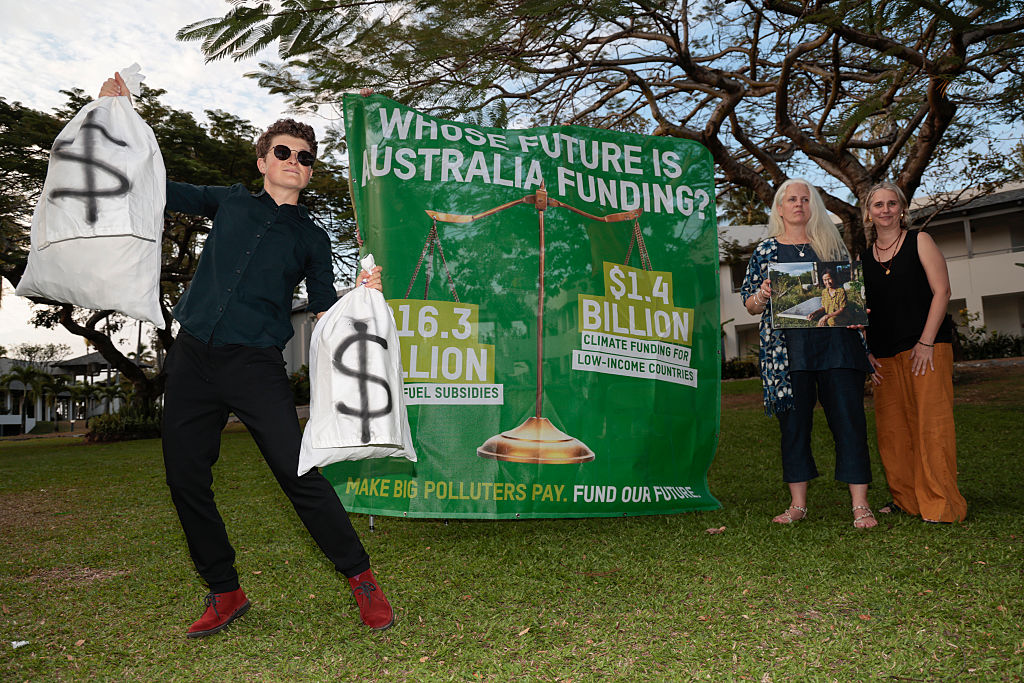
As COP31 co-host, Australia should make its polluters pay for climate damage
With UN climate funds running short on cash, now is the time to start taxing the companies whose emissions are driving harm in the Pacific and other vulnerable parts of the world -
At pre-COP, UN climate chief warns of heat threat to mothers and babies
The spotlight on maternal health came on the first day of the pre-COP31 meeting in Fiji, where Pacific concerns are set to top the agenda as ministers gather for talks
Witnessing coal extraction is devastating. It is bad enough to see what pillaging tonnes of coal can do to a mine’s immediate surroundings: dry creek beds, dwindling wildlife, denuded land. But to know that this coal will be shipped across the ocean, bring air pollution, and eventually lead to the destruction of Pacific islands thousands of miles away is another kind of heartbreak.
Rising ocean waters
I’m an Australian-born Samoan. In 2002, I visited my family home for the first time. My father took me to the rural community where generations of my family were raised. He did not have the words to describe how much has changed since rising ocean waters had taken away almost a third of the beach.
I learned of how we had to relocate my great‑great‑grandparents’ grave to higher ground twice in the last 15 years. Of how my cousins have to paddle out further to sea to catch fish, since warmer waters have destroyed much of the reef. Of how the ocean crashes so close to my uncle’s home that he had to build a new house further away.
We saw reflections of our own climate destruction in the Pacific when we shared these stories with our First Nations relatives at the edge of the Saraji mine. Murrawah Johnson and Teila Watson, both Birri Gubba and Gangulu women, made clear connections between their struggles and ours. “We don’t get to inherit our land and we don’t get to inherit our traditional roles. We are fighting a war on extinction,” Murrawah said.
Coal extraction devastated their lands and cultures – totems have disappeared, fresh water has become scarce – while the effects of using it have devastated ours. “King tide, cyclones, all the violence that has been enacted on your country and people is because of the violence that has been allowed here, to us and our country,” Teila said.
Wearing the mantle of climate leadership
This week, Australia is assuming the mantle of climate leadership as co-president and head of negotiations of this year’s UN Climate Change Conference, COP31. It will lead on deliberating the summit’s priorities as world leaders and climate negotiators descend on Fiji and Tuvalu for the pre-COP meetings.
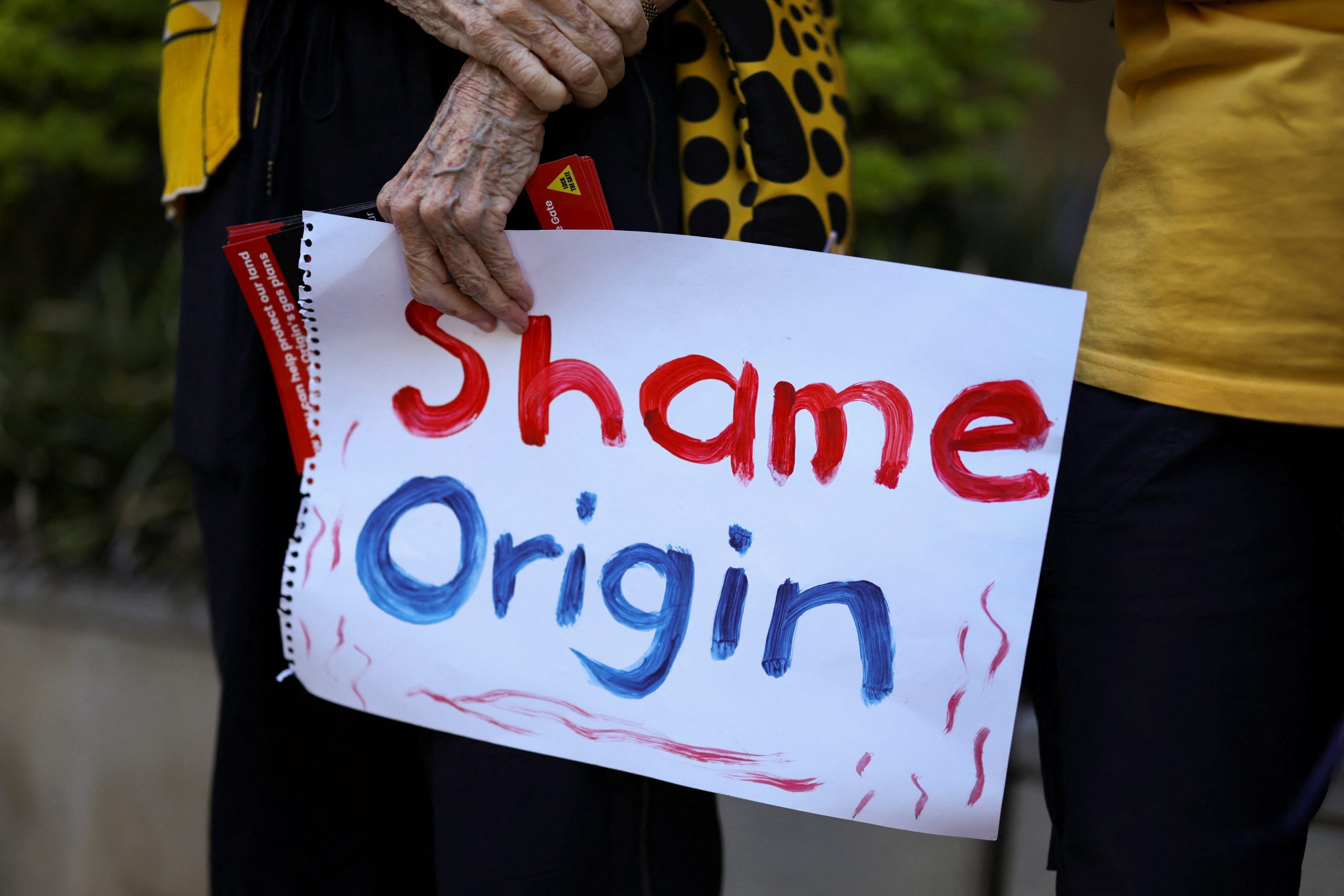
Ironically, just days before the pre-COP began, the New South Wales Independent Planning Commission approved the largest-ever coal project the state has seen, set to emit an extra 800 million tonnes of carbon emissions. I joined the Pacific Climate Warriors and other communities in submitting about 4,000 appeals to oppose the project – yet these all fell on deaf ears.
-
Fossil fuel expansion threatens COP31 hosts’ credibility, experts warn
Türkiye and Australia are pushing coal, oil and gas at home with no national timeline for their own fossil fuel phase-out