

The average bathroom is a plastic problem hiding in plain sight. Take just one item off the shelf: roughly 20 billion toothpaste tubes are thrown away worldwide every year, and almost none of them are recycled. Multiply that across razors, bottles, floss, and swabs, and a single room quietly generates a steady stream of waste that recycling systems were never built to handle.
Personal care products get bought and tossed on a relentless cycle, and most are built from mixed materials that curbside recycling can’t process. The encouraging news is that durable, refillable, and plastic-free alternatives now exist for nearly every one of them, and for a growing number, independent research backs up the environmental case. Here are options for a lower-waste bathroom, along with what the science does and doesn’t say about each.
This article contains affiliate links. If you purchase an item through one of these links, we receive a small commission that helps fund our work.
Toothpaste Tablets
Toothpaste tubes are among the hardest bathroom items to recycle. Most are sheets of plastic laminate wrapped around a thin layer of aluminum, a fused mix of materials that conventional recycling can’t separate. Globally, that adds up to about 20 billion tubes trashed each year.
The industry has responded. Colgate spent more than five years developing a tube made entirely from #2 HDPE, the same recyclable plastic used for milk jugs, and shared the design with competitors. It began rolling the tube out under its Tom’s of Maine brand around 2019 to 2020 and pledged to convert its full portfolio by the end of 2025, a target it reports it has largely met, with major brands representing roughly 90% of the U.S. market committing to the same switch.
There’s a catch worth knowing: “technically recyclable” is not the same as “accepted curbside.” Few material recovery facilities currently sort toothpaste tubes, and in 2024 a federal judge allowed a consumer lawsuit against Colgate to proceed, alleging its recyclability labeling misleads shoppers whose local programs don’t take the tubes. Check whether your program accepts them before tossing one in the bin.
A simpler way to sidestep the tube entirely is the toothpaste tablet. You chew one until it forms a paste, then brush as usual. Unpaste Zero Waste tablets come in plastic-free, home-compostable pouches and are made without preservatives, dyes, or synthetic fragrances. Early zero-waste toothpastes skipped fluoride, which deterred anyone who wanted the cavity protection dentists recommend; Unpaste now sells both a fluoride and a fluoride-free version.
Biodegradable Dental Floss and the PFAS Question
Floss is a small item with an outsized chemistry problem. Conventional floss is usually nylon or a Teflon-type fiber coated to slide between teeth, and some of those coatings are made with PFAS, the “forever chemicals” that don’t break down in the body or the environment.
In a 2019 study in the Journal of Exposure Science & Environmental Epidemiology, researchers at the Silent Spring Institute and the Public Health Institute measured PFAS in the blood of 178 women and found that those who flossed with Oral-B Glide had higher levels of one PFAS than those who didn’t. It was the first study to link a specific flossing product to a higher body burden of these chemicals. The finding is an association rather than proof of cause, the manufacturer disputed it, and Oral-B has since reformulated Glide to remove PTFE. The lasting lesson: floss doesn’t need PFAS to work, and most flosses tested didn’t contain it.
Lucky Teeth floss avoids the issue on both the health and waste fronts. Its original floss is 100% organic silk coated in candelilla plant wax with tea tree and peppermint oils, fully biodegradable and packaged in a refillable glass jar with paper refill boxes instead of a throwaway plastic dispenser. Silk isn’t vegan, so the company also makes plant-based PLA and bamboo-charcoal flosses in the same refillable glass packaging.
Bamboo Toilet Paper
Toilet paper has a forest problem. Much of the pulp in major U.S. brands comes from the Canadian boreal, the largest intact forest on Earth and one of its most carbon-rich, and the industry clear-cuts more than a million acres of it each year, in part to make a single-use product, according to the Natural Resources Defense Council’s ongoing “Issue with Tissue” reporting. Tissue made from recycled content or responsibly sourced bamboo has roughly one-third the carbon footprint of virgin-fiber tissue, and NRDC lists both as the sustainable alternatives.
Bamboo is a fast-growing grass that regenerates without replanting, which is why it has become a popular tree-free option. We’re big fans of Who Gives A Crap’s bamboo TP, and along with Rizzi Home No. 2 bamboo toilet paper is Forest Stewardship Council and Responsible Forestry certified, wrapped in recycled paper rather than plastic, with soy-ink printed designs. Rizzi also claims to cut down on “butt crumble,” which we’ll let you investigate on your own.
Bamboo Cotton Swabs
Plastic-stemmed cotton swabs are among the most common items found on beaches and in waterways, small enough to slip through filters and reach the ocean. The problem is significant enough that the European Union banned single-use plastic cotton bud sticks in 2021.
The Humble Co. makes a fully biodegradable swab with a handle of sustainably grown bamboo and a cotton tip with natural coloring, packaged in recycled paper. The dentist-founded brand notes its swabs are free of PFAS and BPA, and it funds dental care for underserved communities through its SmileOnU program.
Zero-Waste Shaving
Disposable razors are cheap, ubiquitous, and nearly impossible to recycle: the fused plastic handle, rubber grip, and metal blade can’t easily be separated. The most-cited figure, that Americans throw away about 2 billion disposable razors a year, comes from a 1990 EPA estimate the agency stopped tracking in 2019, so the true number today is unknown and likely higher. What’s clear is that a metal safety razor lasts for years and replaces a steady stream of throwaways.

Albatross reusable metal razors come with 10 replacement blades in a hemp bag. The stainless blades ship in a paper envelope, and the company runs a blade take-back program that accepts used blades from any brand, a genuine fix since most curbside programs won’t take loose razor blades and upcycles the steel into new products. Albatross also makes a shaving soap of plant-based oils in a recyclable metal tin, an alternative to aerosol shaving cream.
Bar Soap
Swapping a pump bottle for a bar is one of the better-studied bathroom trades. In a 2009 life-cycle analysis in Environmental Science & Technology, Swiss researchers Annette Koehler and Caroline Wildbolz found that, per wash, liquid soap carries a carbon footprint about 25% higher than bar soap. Liquid formulas take roughly five times more energy to produce the raw materials and nearly 20 times more energy to make the packaging, and people tend to use about seven times more liquid soap by weight per wash than they do bar soap.
The picture isn’t entirely one-sided. The same study found bar soap has a larger land-use impact, because it relies on farmed vegetable oils, and we tend to use more hot water lathering a bar. But on carbon footprint, packaging, and several toxicity measures, the bar comes out ahead. Look for bars sold unwrapped or in paper; Meow Meow Tweet makes a variety of paper-packed soap bars.
Natural Shampoo Bar
Shampoo doesn’t have to come as liquid in a plastic bottle. Solid bars strip out the water that makes up the bulk of liquid shampoo, which means less packaging and less weight to ship, and they often outlast a bottle.
Meow Meow Tweet makes shampoo bars and powder from organic plant oils and butters with steam-distilled and cold-pressed essential oils and organic botanicals. The bars are package-free and ship in a recycled cardboard box with compostable paper wrapping, labels, and tape, while the powders ship in a recyclable aluminum bottle.
Refillable Body Lotion
Some products just work best as liquids, and lotion is one of them, but you can still cut the plastic with a refillable container. Plaine Products’ body lotion comes in an aluminum bottle with a reusable pump. When you run low, you rinse the empty bottle, mail it back in a refill box, and the company refills and reuses it. The formula is plant-based and vegan, and everything ships in recyclable or compostable packaging.
Bamboo Toothbrush
Every plastic toothbrush ever made still exists somewhere. Americans throw out about a billion of them a year, roughly 50 million pounds of waste, and because the nylon bristles are fused into a polypropylene handle, they can’t go through curbside recycling. They persist for centuries.
A bamboo-handled brush swaps the plastic handle for a compostable one. It’s not a flawless fix, since the nylon bristles still have to be pulled out before the handle can be composted, but the life-cycle research is encouraging. A 2020 assessment in the British Dental Journal, the first to run a full life-cycle analysis on toothbrushes, found that manual bamboo brushes and plastic brushes with replaceable heads had the lowest environmental impact of the options studied, while electric toothbrushes had the highest. The Humble Co., maker of the swabs above, is one dentist-founded brand that makes a bamboo toothbrush.
Menstrual Cups
For anyone who menstruates, disposables add up fast. A person can use around 10,000 pads and tampons in a lifetime, and modern pads are more than 90% plastic that can take centuries to break down. A reusable silicone menstrual cup replaces nearly all that waste and lasts for years.
The environmental case is well supported. A 2021 UN Environment Programme review and a 2022 life-cycle assessment both concluded that reusable menstrual cups have the lowest environmental impact of any menstrual product across their full life cycle, lower than tampons, pads, and even reusable cloth pads and period underwear, which need more water to launder. Cups are the lowest-waste option; reusable cloth pads and period underwear still beat disposables, though by how much depends on how they’re washed.
Where to Take What’s Left After Use
Switching products keeps waste out of the bin, but the items you already own still need somewhere to go. For blades, tubes, and packaging you’re retiring, check what your local program accepts using the Earth911 Recycling Search, and see our guides to recycling toothbrushes and toothpaste tubes and recycling tin and steel cans.
Editor’s Note: Originally published by Jennifer Sokolowsky on July 23, 2019, and updated in July 2026 with current products, links, and supporting research.
The post Sustainable Personal Care Products for an Earth-Friendly Bathroom appeared first on Earth911.
https://earth911.com/living-well-being/sustainable-personal-care-products/

Last winter, we kept our house at 60 degrees and our electric bill was STILL $280. I’ve been interested in solar for a long time, but on the long list of house projects (especially when you’re restoring a 200 year old house on the historic registry) some are more pressing than others.
But with a few of those major projects wrapping up, and a daunting bill before me, I figured now was the time for a quick google search on solar panels, and let me tell you….. It can be very overwhelming.
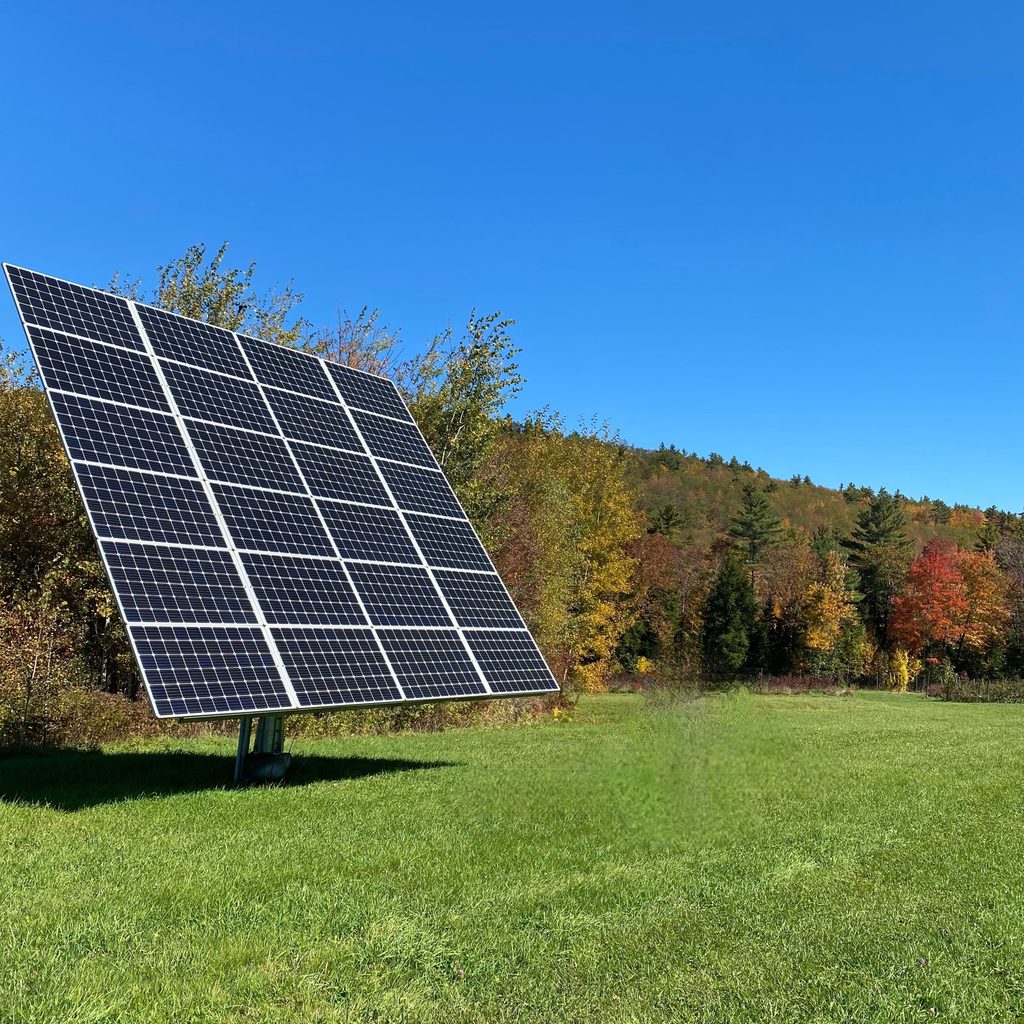
Figuring out the rules (cough, cough, historic society), incentives or rebates if applicable, how much it would cost, how much we could save, etc. felt a little like a part-time job. But, one website made it really easy to compare things, and I am happy to be partnering with Aurora Solar to share that site with you.
Because I think you should be able to easily run the numbers on your house without a lot of hassle!

This post is sponsored by Aurora Solar, but all thoughts and opinions are my own.
If you’ve ever gotten a solar quote, there’s a good chance that Aurora Solar was involved. Aurora was founded in 2013 after its co-founders spent seven months trying to design a solar energy system using a patchwork of different tools.
Afterall, designing a solar system shouldn’t be harder than actually installing one. So they built software specifically for solar professionals. Today, more than 7,000 solar organizations use Aurora, and more than 20 million solar projects have been designed using the platform. They are also the largest solar software provider in the world. Their software is used by roughly 80% of the top 75 residential solar companies in the U.S.
All of this tech has been primarily used by professional installers to map your roof and then create a proposal, but now Aurora is offering this tech to us to help compare quotes.
So instead of having to call a bunch of different installers, I could use the Aurora Solar Marketplace to understand my solar potential, compare estimates, understand my possible savings, look into battery storage and other home electrification incentives, and map out different financing options.
1. know how much electricity the system will actually produce
Before you even get into the price, make sure you understand what you’re actually being quoted.
Two solar systems can have very different prices because they may not be the same size or produce the same amount of electricity. A cheaper system might simply have fewer panels and offset less of your electric bill.
With Aurora, you can compare solar estimates and see the system size, energy production, and how much electricity the system should offset.
You can also upload your utility bill to get a solar estimate based more closely on your actual energy usage, to make the quote accurate for you instead of a ‘generic household’.
2. understand the solar payback period
Aurora calculates things like payback period and lifetime savings, which makes it much easier to understand the long-term finances.
The solar payback period is basically how long it takes for your estimated savings to make up for what you spent on the system, and this is the number that surprised me most!
One estimate had a payback period of around 7 years, and another was closer to 11 years! Over 25 years, two of the estimates I looked at had almost a $13,000 difference in projected savings.
Of course, these are still projections as electricity rates can change (HELLO 2026) but when you’re trying to compare two options for the same house, knowing that one is projected to pay for itself four years sooner is pretty useful information.
3. look beyond the monthly payment
Depending on the installer, you may be looking at a cash purchase, solar loan, lease, or power purchase agreement.
But thankfully with Aurora you can compare the different financing options side-by-side which makes it a lot easier to see the trade-offs. One option may have a lower upfront cost, another may have a lower monthly payment, and another may give you better long-term savings.
4. find out which solar incentives actually apply to you
The minute you start Googling solar, you can find federal incentives, state incentives, utility programs, rebates, net metering, and a whole bunch of information that may or may not even apply to where you live.
And some of the articles ranking at the top of Google are several years old! (RIP to the federal incentives canceled at the end of 2025.) But, Aurora can account for solar incentives when calculating the cost and savings of a system, including state, local, and utility-specific programs.
I would still double check any incentive or tax benefit you’re planning to use before signing a contract, especially because programs and eligibility can change, but having all the relevant information in the same place makes the research process much less overwhelming.
5. research the installer, equipment, and warranties
Aurora lets you compare solar installers based on things like reviews, reputation, pricing, and financing options, which I think is just as important as the actual quote.
I’d also look closely at what equipment is included. What panels are they using? What kind of inverter? How long are the equipment warranties? Is there also a workmanship warranty from the installer? Who handles repairs if something goes wrong five or ten years from now?
And, I know I’ve said it a million times, but it’s nice to see it side-by-side without having to fill out a bunch of forms and be hounded on the phone just to get an idea of what solar may look like.
The post How to Compare Solar Quotes: What to Look For Before You Choose appeared first on Going Zero Waste.
How to Compare Solar Quotes: What to Look For Before You Choose
Green Living
Sustainability In Your Ear: XPRIZE’s David Babson on Why Climate Grand Challenges Need Buyers, Too
Buyers contracted nearly 30 million tons of durable carbon removal in 2025, more than triple the 2024 total, according to CDR.fyi data reported by Heatmap. About 90% of those purchases came from a single company, Microsoft, and suppliers delivered only about 450,000 tons during the year. That is a sliver of the six to 10 billion tons of removal a year that climate scenarios suggest the world will need by 2050. The technology to pull carbon out of the air works, but the customers needed to scale it remain scarce.
Our guest today, David Babson, is executive vice president of the Energy, Climate, and Nature domain at the XPRIZE Foundation. He calls the slow progress a market failure, because the technology is progressing faster than it is being adopted. Babson previously led MIT’s Climate Grand Challenges initiative and was a program director at the U.S. Department of Energy’s ARPA-E. His portfolio includes XPRIZE Carbon Removal, which drew 1,334 teams and whose participants have raised more than $3.3 billion. In April 2025, Mati Carbon won its $50 million grand prize for spreading crushed basalt on smallholder farms in India, where the rock locks away carbon dioxide. “If people could make money taking carbon out of the air and putting it underground, as opposed to only being able to make money taking it from underground and putting it in the air, we would be in a better place,” Babson says. Mati is weathering the slump in part because its rock dust also improves soil health and crop yields, giving farmers a reason to participate that doesn’t depend on carbon credit prices.

XPRIZE’s answer is to change what winners receive. Babson describes “mixed purses” that pair a cash award with a guaranteed buyer through an advance market commitment, a power purchase agreement, or an offtake contract. In one thought experiment, a carbon removal prize would come with a separate $1 billion fund raised from credit buyers, which qualified teams could draw on as they deliver verified tons. XPRIZE is applying the same thinking to a planned series of fusion energy prizes, pairing technical milestones with market mechanisms to build the supply chain that commercial fusion will require. The same gap between invention and adoption shows up in other XPRIZE competitions. On September 23, XPRIZE Wildfire awarded about $4.55 million from its $11 million purse, with defense contractor Anduril Industries taking first place in autonomous fire response along with a $1 million Lockheed Martin bonus. Babson expects costs to fall as fire agencies adopt the tools and as startups license individual components into cheaper platforms, though underfunded agencies will need a way to buy the first systems. He also notes that the competition left fuel management and ground-based autonomy for future prizes. Earlier this year, program director Andrea Santy told us that field testing had moved ahead of drone regulations. In biodiversity, Limelight Rainforest won $5 million for surveying 100 hectares of tropical forest in under 24 hours and identifying more than 250 species. Biodiversity still lacks a price, but Babson argues that once ecosystems can be measured, slow-walking policy becomes “a dereliction of what they should be doing.”
We also discuss the tension inside XPRIZE’s vision of “equitable abundance,” including a $101 million Healthspan prize that could add years of consumption to longer lives. Babson argues that abundant, cheap clean energy would let society move beyond efficiency as its organizing principle, powering uses such as indoor vertical farms that could return millions of acres of farmland to nature. You can follow XPRIZE’s new competitions and get involved in its prize ideation workshops at xprize.org.
- Subscribe to Sustainability In Your Ear on iTunes
- Follow Sustainability In Your Ear on Spreaker, iHeartRadio, or YouTube
Interview Transcript
Mitch Ratcliffe 00:36
Hello. Good morning, good afternoon, or good evening, wherever you are on this beautiful planet of ours. Welcome to Sustainability In Your Ear. This is the podcast conversation about accelerating the transition to a sustainable, carbon-neutral society, and I’m your host, Mitch Ratcliffe. Thanks for joining the conversation today.
Let’s talk about the power and the uses of grand challenge programs to kickstart low-carbon industries and respond to the changing environment. Over the past several years, we’ve talked on the show with leaders of grand challenge programs designed to accelerate progress on humanity’s most difficult challenges, from pulling carbon out of the atmosphere to fighting rapidly growing wildfire threats in cities and rural communities. Many of these competitions have been launched by XPRIZE, whose leaders have shared on the show the stories of these competitions as they launched and unfolded.
Today is a chance to take stock, to look back and think about how climate markets, technology, and politics are changing fast, and how that makes this a good moment to ask the question: Are these programs designed to accelerate progress actually delivering that progress?
Our guest today designs XPRIZE’s climate bets. David Babson is executive vice president of the Energy, Climate, and Nature domain at the XPRIZE Foundation. Before XPRIZE, he was the executive director of MIT’s Climate Grand Challenges initiative and a program director at the U.S. Energy Department’s ARPA-E energy technology research agency.
His portfolio includes the largest incentive in prize history. In 2025, Mati Carbon received a $50 million grand prize for their enhanced rock weathering solution for capturing and drawing down carbon, and XPRIZE now reports that companies participating in its programs have raised $3.3 billion. That carbon removal win arrived just as the removal market hit serious turbulence, and as XPRIZE’s wildfire competition wrapped up with its top prize still unclaimed.
So we’re going to discuss what grand challenges can really accomplish, which winners continue to build and which stall, and what the reasons are, as well as the tensions inside a portfolio that funds both climate solutions and longer human lifespans. We’ll get to the conversation right after this brief commercial break. Stay tuned.
[COMMERCIAL BREAK]
Welcome back to Sustainability In Your Ear, and welcome, David Babson, to Sustainability In Your Ear. How are you doing today?
David Babson 03:10
I’m doing well.
Mitch Ratcliffe 03:11
I’m glad to have you here. You’ve run research portfolios at ARPA-E and MIT. What can a prize purse accomplish that a well-funded grant program can’t, or are they complementary?
David Babson 03:22
They’re absolutely complementary. The way that I think about it is that the value of these different mechanisms for promoting innovation is at different parts of the innovation supply chain, if you will. A prize is not a substitute for the very necessary investments that places like governments make into basic, applied, and advanced research. In fact, those types of investments are really valuable for establishing the innovation ecosystems and the technical capacities to eventually win prizes.
Where the prize is very valuable is somewhat downstream: translating technologies, ideas, and innovations that are coming out of academia and labs to market for scale. It challenges the innovators to imagine those technical capacities as solutions to global challenges, and then the visibility that the prize brings to those translations of technologies de-risks funding to flow to those innovators so they can imagine their uses in practice.
So I actually see them as very complementary, particularly when it comes to solutions in the energy and climate space that require rapid adoption of technologies in markets to have impact. Just having an energy solution or a climate solution is not valuable unless it can be de-risked and connected to markets to scale for impact. And that’s what the prize is actually very good at doing.
Mitch Ratcliffe 05:22
That comes through in the impact report that you all published recently. About 1,300 different organizations were catalyzed. The groups came together, apparently, because of their desire to compete in the competition.
What I’ve found in my work with public-private partnerships, in particular, is that impact investors are looking for that initial traction, and to a degree, the prize and the distribution of money within the prize group is that catalyst that says there’s a real opportunity for an impact profit, something that both does good and is profitable. How does the organization consult with the financial communities that are going to back these companies once your prize has been awarded? Is there a backroom conversation about that, for lack of a better way of putting it?
David Babson 06:10
Not an explicit backroom conversation about it, but the prize itself brings attention to the innovations that are coming out to win the competition. Oftentimes, as you’re noting, these impact investing communities exist, and they are looking for technologies to invest in to have impact.
What the prize is effective at doing is casting a wider net and surfacing the best solutions across the board, where there may have been silos in the past, or there may not have been transparency to individual investors about where to put their money. The prize is capable of elevating all of them, creating better visibility, and therefore, just by its inherent operation, creates better opportunities for investment capital to flow to the right types of teams to have greater impact more quickly.
So we don’t have explicit discussions with those types of investor communities to have them directly connected to individual prizes. But we often consult with investors and experts in industry to inform the metrics that we would want to have demonstrated, so that we know that when teams are winning our competitions, the demonstrations that they do are de-risking capital to flow to those innovators so that they can be translated to market.
Mitch Ratcliffe 07:47
We’re talking about growing industries, which of course means diversifying into a lot of specializations. Once you’ve got this kind of anchor winning team or teams, how does XPRIZE think about propagating the information that’s necessary for the rest of the industry to grow and fill in around them, in order to provide the kind of comprehensive geographic coverage and range of functions that are necessary for the industry to thrive? Is that something that you think about cultivating, like you would in agriculture?
David Babson 08:22
It is something that we think a lot about. With a few of the more recent prize competitions that we’ve run, we have also paired those competitions with a subsequent impact phase, which is designed to further build the community that has been established through the operation of the prize and connect the technologies that came out of the competition to the right types of markets and investors so that they can scale.
So that is one of the things that we’re thinking about in future competitions as well: not just running an innovation competition to surface new innovations, but how do we augment the community building that the prize provides as a way to also promote the back-end business models and industries that can scale those solutions for impact?
Mitch Ratcliffe 09:19
How would you describe the patterns you’re looking for that indicate that an organization can become that durable enterprise? What separates them from the rest? Have you got thoughts about that?
David Babson 09:29
I do have thoughts about it. In a lot of ways, the rigorous metrics that we set up when we’re designing the competition are informed by what experts believe would be the necessary demonstrations to actually generate a solution that is market viable. So a lot of it is very quantitative in terms of how we architect the competition.
But what we’ve also seen is that there are elements of winning teams that can’t always be controlled by just the scientific metrics. A lot of times, it’s the composition of the team, how diverse they are, and the unique mentality that the leaders of the team have in terms of their vision and their ambition. Those are parts that you can’t control for, but the prize model is very effective at also attracting the type of entrepreneurial, big-thinking individuals that actually tend to be behind some of the most successful companies.
Mitch Ratcliffe 10:40
Those big-thinking individuals often struggle with the transition from inventor. And to your point about the academic community often being the source of many of the teams that are competing, that’s not something that academics are necessarily good at. As part of the prize process, do you also begin to coach them on how to staff for the operators who are going to be able to translate the invention into a market success?
David Babson 11:04
Absolutely. On the front end, the prize itself sets a target that is typically beyond what researchers in an academic setting are imagining for what they’re doing. It gives them a way to imagine their technical innovations as scalable solutions to big problems, so that gets them excited to be in the competition. But you’re right: they’re not necessarily all business-minded or have the types of experience that would allow even very, very good solutions to become very strong companies and business models.
So one of the things that we have tried out recently, and it’s a model that we could replicate in future competitions as well, is an accelerator cohort in the carbon removal prize. It was optional for teams to opt into the cohort to get additional guidance and consulting from experts in startups and technology translation. That would help them think about the unique elements of their proposed carbon removal strategy, how they would connect it to markets, and how they would drive greater value for their solutions.
That is something that we can do as part of the competition, because we’re building a community of innovators that are striving toward a shared aim. Therefore, we can better define what an accelerator cohort looks like, so that the guidance that is provided is more effective at actually generating the right type of thinking for scaling the solutions that we’re interested in.
Mitch Ratcliffe 12:52
That kind of accelerator approach gets you ready for market competition, but it doesn’t always get you ready for the market in which you’re going to have to exist as an organization. It’s templated, and the specifics of any individual company’s success are very unique.
Let’s take Mati Carbon as an example. They won the $50 million prize. They are doing carbon drawdown using basalt ground up and mixed into farmers’ fields, but their success is really anchored in the carbon credit market’s growth. How does the prize work with those sources of carbon credit purchases, for instance, Meta or Microsoft, to connect them to these opportunities to make prize winners thriving organizations?
David Babson 13:38
There are some limitations to what we can do in that space. I think the uncertainty and the pullback in commitments to carbon credits and carbon markets is a challenge to the cohort of teams that competed in the carbon removal prize.
Ironically, I think one of the things that is allowing Mati to continue growing on the business plan that they have is that a lot of the value that they’re able to assign to their solution actually goes toward the agricultural implications: the ability for their treated lands to not just remove and store carbon, but to improve soil quality and soil health to improve agricultural yields. So there’s a different value stream that they can draw from. Broadly, it would be much better if there were a great deal more certainty in the market for carbon removal attributes.
Mitch Ratcliffe 14:47
This is a systems thinking problem, and your domain includes nature alongside energy and climate. How do you think differently about designing a prize for an ecosystem as compared to designing one for a technology that has a clear cost curve and an adoption challenge?
David Babson 15:02
I think that it’s a really interesting question, and one that we’ve been thinking about a lot in my domain in particular. As I was saying earlier, it’s not sufficient to just surface new innovations that could be a solution. In order for them to have impact, you have to figure out how you connect those to markets and get them into use, so that they can scale to drive that impact.
So there are two parts of the incentive model that we need to push on. We need to continue the incentive that the traditional non-dilutive purse offers in attracting innovators to demonstrate their potential solutions. But we also need to consider the market mechanisms that would help accelerate the transition of those technologies from the lab into the market.
So we’ve been thinking a lot about how we might develop mixed purses: a purse that includes some of those traditional non-dilutive types of incentives, as well as, potentially in the energy space, an advance market commitment, a power purchase agreement, or an offtake. The prize competition actually sets the metrics that need to be demonstrated and pressure-tests technologies and their capacity to scale, and what teams could win is access to a large power purchase agreement or advance market commitment. In many cases, the competitors in these competitions would value that certain offtake to scale their solutions over a traditional non-dilutive purse. So we’re thinking a lot about that in the energy space.
For nature, as you note, one of the challenges is that some of the markets that exist for potentially financing natural ecosystem restoration or nature-based climate solutions are soft. They’re voluntary markets. The certainty is not there. The other thing that we could do is create a contrived fund that is unique to the competition, but it would require teams that are competing to demonstrate some sort of verified outcome to unlock dollars from that fund. So we can create a market mechanism that would help a lot more teams scale their solutions.
Let’s do a thought experiment. If we ran the carbon removal prize in a similar way, the teams that won awards for their innovations in that competition could have still won those dollar amounts in the non-dilutive fashion. But separately, we could have raised, let’s say, a billion-dollar fund from entities that are buying attributes in that space, and then once teams were qualified, they would be competing to draw down from that fund based on verified output. So we would have actually created a certain market for them to scale in.
Mitch Ratcliffe 18:16
You mentioned a