



- What timeline options were delegates debating?
- How did the timeline discussions unfold?
- What were the main points of disagreement?
- Why is the IPCC in a ‘serious funding crisis’?
- How have scientists reacted?
- What other issues remain unresolved?
- How are the IPCC AR7 reports progressing?
- How might the IPCC use AI and enhance gender inclusivity?

Dr. Dinita Setyawati is Ember’s senior electricity policy analyst for Southeast Asia.
Indonesia’s President Prabowo Subianto has announced a goal to end coal by 2040 – a bold move for a country that produces 62% of its electricity from coal. As the president’s first 100 days in office unfold, there is an urgent need to develop a feasible plan to achieve this ambitious aim.
So far this is lacking. Indonesia’s recently published National Electricity Master Plan (RUKN) 2024-2060 includes phase-out strategies that propose co-firing with biomass fuel and retrofitting existing coal infrastructure with carbon capture and storage technology. These strategies seem to contradict the country’s decarbonisation targets and divert from the renewable energy acceleration needed to meet demand growth by 2040.
Coal-reliant South African provinces falling behind on just transition
Changing historical reliance on fossil power requires systemic change in the power sector. Building on President Prabowo’s announcement, the next step could be developing a blueprint to retire coal power plants with very large emission footprints, including captive coal plants (power stations that are operated off-grid), to ensure a comprehensive transition to clean energy. Without addressing captive coal, a significant portion of Indonesia’s coal emissions would remain unregulated, undermining the country’s climate goals.
At the same time, redesigning the contractual obligations between PLN (Indonesia’s state electricity company) and power producers is necessary to enable a faster reduction in coal power operations. Current contracts often lock PLN into purchasing fixed amounts of coal-generated electricity, limiting the integration of renewables.
More flexibility needed
A key challenge in reducing reliance on coal is improving the flexibility of coal-fired power plants. Downward coal flexibility refers to the ability of coal plants to reduce their output quickly when renewable energy sources are available. Enhancing this capability will allow renewable energy to take priority in the grid, minimising the use of coal power and reducing carbon emissions.
To achieve downward coal flexibility, power plant operators must invest in upgrades and adopt new operational practices that enable quick adjustments to energy demand. This step is crucial to ensure that coal plants do not hinder the growth of renewable energy sources.
With more coal power plants planned to be retired early, accelerating renewable energy deployment should proceed in parallel to buffer the impact of coal plant closures.

One scenario to achieve the coal phase-out target by 2040, while maintaining electricity supply and demand, is to increase the share of renewable energy to 65%. Under this scenario, solar would account for 20%, wind for 11% and other renewables – such as nuclear, geothermal, bioenergy and hydro – would make up 34%.
The calculation includes 68GWh (gigawatt hours) of battery capacity in stationary applications designed for fixed installations, to stabilise solar energy output, based on key parameters such as efficiency, capacity utilisation factor for solar plants, and storage hours.

Funding for early retirement
Successfully retiring coal power plants early will require dedicated financial support. The Indonesian government must collaborate with power plant owners, financiers and international partners to develop viable funding solutions that reduce the financial burden of the transition.
Securing financing will involve exploring various funding mechanisms, such as climate finance, carbon markets and public-private partnerships. By mobilising financial resources, Indonesia can accelerate the coal phase-out process, invest in renewable energy projects and support economic diversification in coal-dependent regions.
With electricity demand projected to grow by around 5% annually in the coming years, expanding solar energy – combined with battery storage to maximise its utilisation – offers significant opportunities to meet rising electricity demand.
Incentives for clean energy
Storage systems are essential for addressing the intermittency of solar power and ensuring a reliable renewable energy supply. However, current policies provide limited incentives for integrating battery storage solutions into solar projects. For example, Presidential Regulation 112 sets a tariff structure that caps battery storage charges at 60% of the base tariff, which may not sufficiently cover the associated costs of battery storage infrastructure.
Indian start-ups mine e-waste for battery minerals but growing industry has a dark side
Trends in electrification of the transport sector further highlight the need for a comprehensive decarbonisation strategy to reduce its reliance on coal. Strengthening the role of private players in the electricity market could unlock substantial financing for Indonesia’s clean energy transition.
Southeast Asian neighbours such as Viet Nam, Malaysia and Thailand have already introduced policies enabling companies to directly purchase renewable energy. Indonesia could consider similar regulations to allow clean electricity procurement for industrial clients.
Expanding renewable energy deployment will also provide Indonesia with significant economic opportunities. The renewable energy sector can create new jobs, attract green investments, and offer access to cleaner and more sustainable power sources. Taking decisive action now will help Indonesia secure long-term economic growth, environmental stability and energy security.
The post Indonesia’s next priority should be finding alternatives to replace coal appeared first on Climate Home News.
Indonesia’s next priority should be finding alternatives to replace coal
Continue Reading
Three countries have been named by the Paris Agreement’s compliance committee for failing to submit a nationally determined contribution (NDC) and repeatedly snubbing offers of help with their climate plans.
After months of internal debate over whether to identify serial non-responders, the Paris Agreement’s Implementation and Compliance Committee (PAICC) named the three countries which have failed to engage with it over their NDCs on Friday.
It named Democratic Republic of Congo, Senegal and North Korea in a footnote of its annual report, adding that it decided to name them “with a view to facilitating engagement”, adding that representatives of the three nations had been invited to its meeting in early 2027 “with the purpose of identifying any challenges and constraints”.
“The Committee noted the importance of Parties engaging with the Committee in a timely manner, while noting that some delays may be due to the national capabilities and circumstances of the Parties”, the report said.
-
Under US pressure, World Bank says it will back gas “where appropriate”
The US wants the World Bank to expand its gas support while climate campaigners are pushing for it to end – its head spoke this week of limited backing for the fossil fuel -
IPCC scientists vow to press on with climate reports despite political deadlock
After governments again failed to agree a timeline, nearly 120 IPCC authors pledged to complete their assessment on time and with full scientific rigour -
Paris Agreement committee snubbed over missing NDC climate plans
Many governments have still not submitted a nationally determined contribution to the UN, breaching a key requirement of the Paris Agreement
In July, PAICC said 12 countries had ignored its repeated attempts to discuss why they had not published an NDC as required every five years under the 2015 Paris accord.
Members of the committee had been divided over whether to name them, but at a September meeting decided to do so in their annual report to the annual climate COP summit.
By the time the report was published on Friday, only Congo, Senegal and North Korea “had not communicated an NDC or submitted a [Biennial Transparency Report] and had not yet responded to any of the Committee’s notifications, despite several reminders issued by the Committee in this regard”.
Rainforest and renewable energy ambitions
The silence from Congo and Senegal is notable because the former is home to much of the Congo Basin rainforest while the latter has sought billions of dollars in climate finance to support its renewable energy ambitions.
After Brazil, Congo has more rainforest than any country in the world. This forest, and the country’s peatlands, absorb huge amounts of greenhouse gas but are fast being lost to expanding farmland, charcoal production, logging and mining.
Senegal signed a Just Energy Transition Partnership with Canada and wealthy European nations in 2023, to help it meet its renewable energy targets under the-then government of Macky Sall. It was chair of the Least Developed Countries group between January 2022 and December 2023.

Tejas Rao, who is researching the PAICC as part of a doctoral thesis at Cambridge University, said the governments of the three countries should engage with the committee.
“Engagement costs these governments very little and the committee has shown it will listen,” he said.
“Silence leaves the committee with no basis to help, and it leaves the [governments] exposed to the narrative that they are simply disengaged,” he told Climate Home News.
Paris Agreement requirement
The 2015 Paris Agreement requires all parties to publish an NDC every five years outlining their emissions reduction targets, with each plan meant to be more ambitious than the country’s last NDC.
The latest set – the third round of plans, with new targets for 2035 – was due in February 2025. While most countries missed this deadline, all but around 30 – mostly small emitters but including Egypt, Vietnam and Argentina – have now submitted them.
Over the year, the PAICC – which is made up of government climate officials from developed and developing countries – has been communicating with governments that have not submitted NDCs and trying to overcome barriers to them doing so.
Some nations have cited exceptional circumstances as the reason for not submitting an NDC, a process that requires a significant amount of work in tracking emissions and consulting on how to curb them across the economy. For example, a letter from a Sudanese official to the PAICC, seen by Climate Home News, said that the country’s civil war had led to the suspension of its NDC preparation.
-
IPCC scientists vow to press on with climate reports despite political deadlock
After governments again failed to agree a timeline, nearly 120 IPCC authors pledged to complete their assessment on time and with full scientific rigour -
Under US pressure, World Bank says it will back gas “where appropriate”
The US wants the World Bank to expand its gas support while climate campaigners are pushing for it to end – its head spoke this week of limited backing for the fossil fuel -
Who shapes climate science? The equity question facing the IPCC
Early completion of the next global climate science assessment reports risks excluding research from the Global South, which is key to ensuring the findings are fair
The US and Iran are not signed up to the Paris Agreement and so do not have active NDCs, nor does Taiwan, which is not a UN member state.
Rao said that because the PAICC is “facilitative and non-punitive”, naming the countries “is meant to open a door, not close one – the invited consultation is the point”.
“In recent months, governments that explained their constraints, whether capacity, finance or domestic process, have been met with follow-up and support rather than sanction, and the number of silent governments has fallen sharply,” Rao said.
The post Paris Agreement committee names three countries snubbing it over NDCs appeared first on Climate Home News.
Paris Agreement committee names three countries snubbing it over NDCs
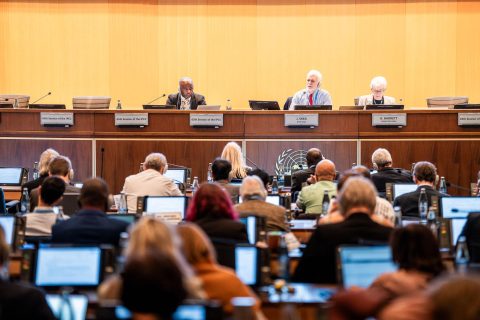
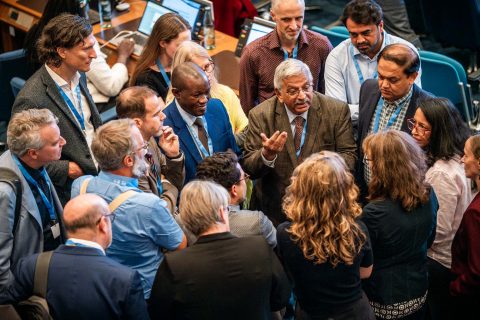
Countries have failed – for the sixth time running – to agree on the timeline for publishing the Intergovernmental Panel on Climate Change’s (IPCC) next set of influential reports.
The IPCC’s