

Due to supportive policies and favorable economics, the world’s renewable power capacity is expected to surge over the rest of this decade, with global additions on course to roughly equal the current power capacity of China, the European Union, India and the U.S. combined, according to a new IEA report.
The Renewables 2024 report, the IEA’s annual publication on the sector, finds that the world is set to add more than 5,500 GW of new renewable energy capacity between this year and 2030. This is almost three times the increase seen between 2017 and 2023.
According to the report, China is set to account for almost 60% of all renewable capacity installed worldwide between now and the end of the decade, based on current market trends and today’s policy settings by governments. That would make China home to almost half of the world’s total renewable power capacity by 2030, up from a third in 2010. While China is adding the biggest volumes of renewables, India is growing at the fastest rate among major economies.
PV alone is forecast to account for 80% of the growth in global renewable capacity between now and 2030, as the result of new large solar power plant construction as well as an increase in rooftop solar installations by companies and households.
The wind sector is also poised for a recovery, with the rate of expansion doubling between 2024 and 2030, compared with the period between 2017 and 2023.
As a result of these trends, nearly 70 countries that collectively account for 80% of global renewable power capacity are poised to reach or surpass their current renewable ambitions for 2030.
The growth is not fully in line with the goal set by nearly 200 governments at the COP28 climate change conference in December 2023 to triple the world’s renewable capacity this decade, as the report forecasts global capacity will reach 2.7 times its 2022 level by 2030.
But IEA analysis indicates that fully meeting the tripling target is possible if governments take near-term opportunities for action. This includes outlining bold plans in the next round of Nationally Determined Contributions under the Paris Agreement due next year, and bolstering international cooperation on bringing down high financing costs in emerging and developing economies, which are restraining renewables’ growth in high-potential regions such as Africa and Southeast Asia.
“Renewables are moving faster than national governments can set targets for. This is mainly driven not just by efforts to lower emissions or boost energy security. It’s increasingly because renewables today offer the cheapest option to add new power plants in almost all countries around the world,” says IEA executive director Fatih Birol.
“This report shows that the growth of renewables, especially solar, will transform electricity systems across the globe this decade. Between now and 2030, the world is on course to add more than 5 500 GW of renewable power capacity, roughly equal the current power capacity of China, the European Union, India and the United States combined. By 2030, we expect renewables to be meeting half of global electricity demand.”
Renewables are on course to generate almost half of global electricity by 2030, with the share of wind and solar PV doubling to 30%, according to the forecast.
Recently, rates of curtailment have been increasing, reaching around 10% in several countries today. To address this, countries should focus on integration measures such as increasing power system flexibility.
Overall, led by the massive growth of renewable electricity, the share of renewables in final energy consumption is forecast to increase to nearly 20% by 2030, up from 13% in 2023.
The report also looks at the state of manufacturing for renewable technologies. Global solar manufacturing capacity is expected to surpass 1,100 GW by the end of this year, more than double projected demand. While this supply glut, concentrated in China, has supported a decline in module prices, which have more than halved since early 2023 as a result, it also means that many manufacturers are seeing financial losses.
Given the growing international focus on industrial competitiveness, solar PV manufacturing capacity is forecast to triple in both India and the United States by 2030. However, producing solar panels in the United States costs three times as much as in China, and in India, it is twice as expensive. According to the report, policymakers should consider how to strike a balance between the additional costs and benefits of local manufacturing, weighing key priorities such as job creation and energy security.
The post IEA: Renewables to Meet Half of Global Electricity Demand by 2030 appeared first on Solar Industry.
IEA: Renewables to Meet Half of Global Electricity Demand by 2030

 All I can say about the me here is that personally I refused, against considerable pressure from my family, to indoctrinate my children into something I myself could not accept.
Is it actually “psychological abuse” to indoctrinate children into monotheistic religion? Whether to take it that far is an open question.
My parents, both atheists, sent my brother and me to Sunday School, as they thought it wrong to cut us off from a modality of growing up in America in the early 1960s. I don’t blame them, but again, it’s not something I was willing to replicate with my own children.
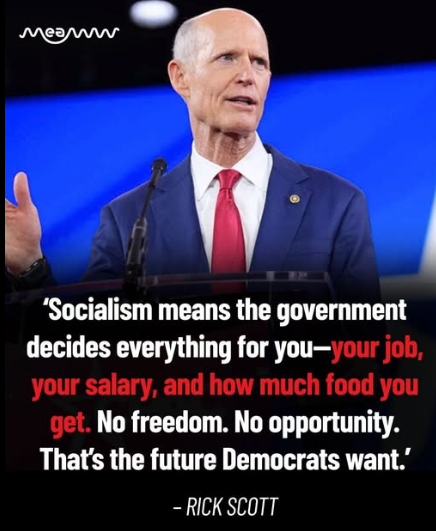 In less than a month, we’re going to learn how many idiots are buying this socialism crap.
Sure, there are people who don’t know anything about the way people live in northern England, New Zealand, Costa Rica, etc. Most of these people couldn’t find these countries on this globe.
But how many can there possibly be?
Clearly, Republicans are desperate, but isn’t asking voters to believe that the Swedes have to rely on the government for their job, salary, and food a bit over-the-top?
 I got the meme here from a neighbor, but I wonder who actually wrote it. There is a ton of propaganda on social media suggesting that we need to normalize the sociopathic criminality of the U.S. president.
It’s true that not every election is an apocalypse, but 2024 was disastrous for the U.S. democracy.
Yes, the country did not end. But it took a giant leap towards authoritarianism.
Even that’s not the end of the world. Democracies fail with great frequency on this planet. I just never thought I’d be living in the biggest socio-political collapse in the last 2000 years.
In an average week, I meet quite a few travelers here from lands all around this planet. Their most common thoughts on what’s happening here: “We simply feel sorry for you.”

Large flotilla brings Pacific voices and message to leaders at Pre-COP meeting: Keep 1.5C Alive
A ‘victory’ for communities as High Court rules climate impacts from coal and gas must be considered even where fossil fuels are exported

Indoctrinating Children into Religion
-
Climate Change1 year ago
Guest post: Why China is still building new coal – and when it might stop
-

 Greenhouse Gases2 years ago
嘉宾来稿:满足中国增长的用电需求 光伏加储能“比新建煤电更实惠”
-
Greenhouse Gases1 year ago
Guest post: Why China is still building new coal – and when it might stop
-

 Climate Change2 years ago
嘉宾来稿:满足中国增长的用电需求 光伏加储能“比新建煤电更实惠”
-

 Renewable Energy12 months ago
Sending Progressive Philanthropist George Soros to Prison?
-
Climate Change2 years ago
Bill Discounting Climate Change in Florida’s Energy Policy Awaits DeSantis’ Approval
-
Greenhouse Gases1 year ago
嘉宾来稿:探究火山喷发如何影响气候预测
-

 Climate Change2 years ago
Analysis: China’s CO2 falls 1% in Q2 2024 in first quarterly drop since Covid-19