

Over the past few years, the U.S. government has made historic investments into the fight against climate change. Hundreds of billions of dollars in tax credits for clean energy made available in the Inflation Reduction act (IRA) are cultivating billions of dollars of private investment in the Southeast. This unprecedented federal action has increased the number of good-paying clean energy jobs in our country and especially here in our region, and the number of jobs created is projected to skyrocket over the next decade. Greenhouse gas emissions across multiple sectors are expected to fall substantially due to electrification and simultaneous decarbonization of our electric grid, and Americans in every corner of the country are gaining access to lower-cost clean energy and energy efficiency upgrades that bring down electricity bills.
But Project 2025, a policy guide published by the Heritage Foundation and written for the next conservative president to follow, threatens this progress and would ensure a future where our health, our safety, and our environment suffer.
The policies prescribed by the Project 2025 plan require a sweeping reconstruction of the federal government and repeal of the transformational laws and rules that have set our nation on a greener path. The IRA and the Bipartisan Infrastructure Law (BIL) are the most significant policy packages to ever address the climate crisis. The authors of Project 2025 call on the next conservative administration to support repeal of both of these monumental laws.
Job Loss
Project 2025 could spell an end to many of the new clean energy jobs that have supported communities who need them the most. Over 270,000 new good-paying and union clean energy jobs have been created since August 2022 when the IRA passed, another 1.5 million potential new jobs are projected over the next decade if we continue on the path we are on. Families have come to rely on this growing industry to support themselves and communities are experiencing renewal due to the economic growth that accompanies clean energy projects. But, according to new research conducted by Energy Innovation, if Project 2025 is implemented there would be 1.7 million jobs lost in 2030 alone and 260,000 jobs lost in 2050. Right now our future includes opportunities for all of us to support and benefit from a cleaner economy. Project 2025 would send us backwards.
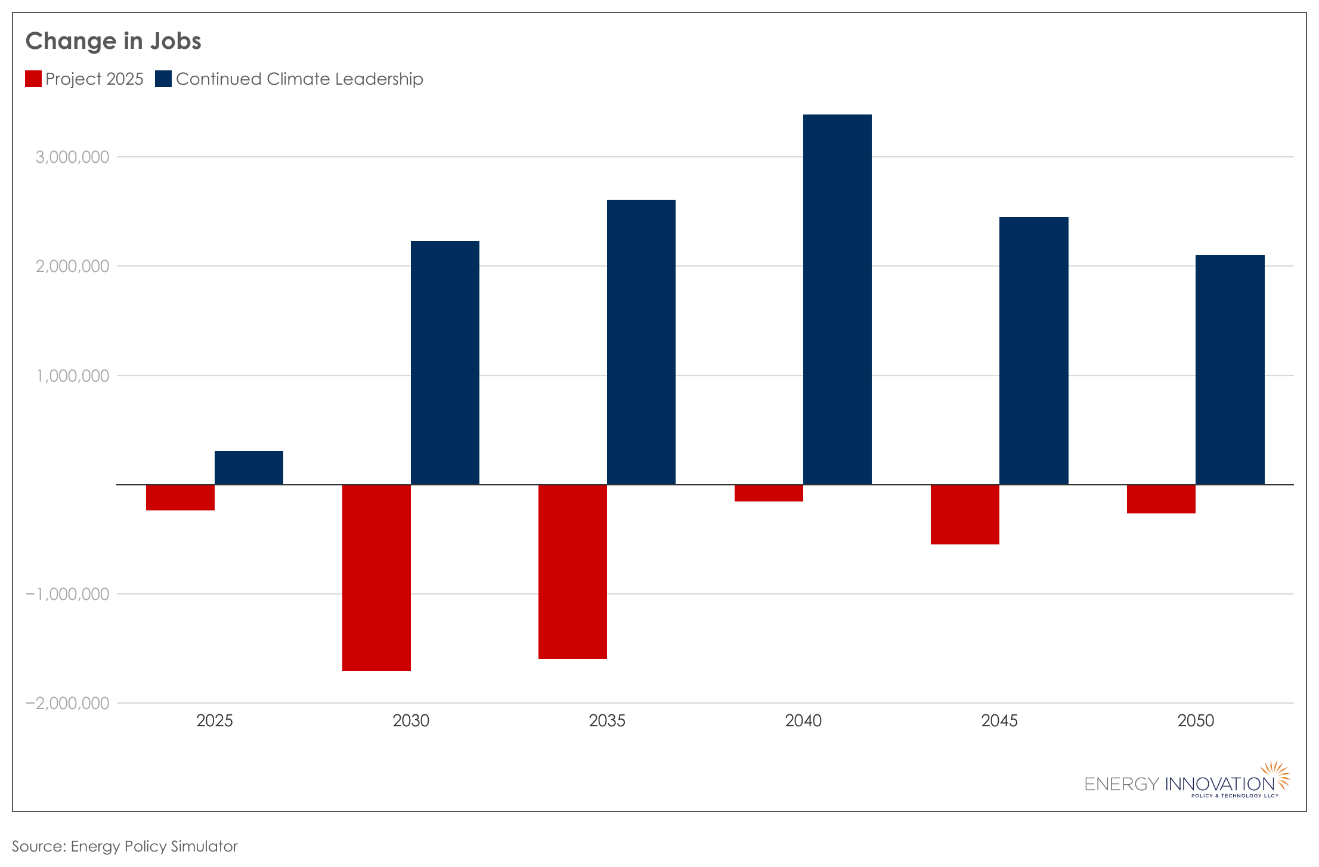
Source: Energy Innovation’s The Second Half Of The Decisive Decade: Potential U.S. Pathways On Climate, Jobs, And Health
Energy Efficient Homes
Hardworking families have gained the freedom to make their homes healthier and more affordable through energy savings made possible by the current administration. Due to tax credits and the Greenhouse Gas Reduction Fund programs, energy efficient upgrades are more affordable and residential clean energy is far more attainable than it was before. In our region alone, around 560,000 households received more than $1.3 billion in residential clean energy and energy efficiency tax credits in tax year 2023.
The agenda laid out in Project 2025 takes away programs that are relieving people of the burden of worrying if keeping their homes cool in the summer and warm in the winter will cost them more than they can handle. If Project 2025 is implemented, low-income families may have a harder time finding the resources and funds to make bill lowering energy efficient upgrades to their homes due to the elimination of the Department of Energy office that oversees the Weatherization Assistance Program (WAP) and the historic home energy rebate programs created by the Inflation Reduction Act. The plan also includes a proposal to eliminate energy efficiency standards for appliances set by the Department of Energy that currently save households $100 per year on average in lower utility bills. Reducing a household’s energy burden puts money back in pockets, and helps avoid choices between the electricity bill and groceries.
Greenhouse Gas Emissions
Together, the IRA, BIL, CHIPS and Science Act, and updated rules from the Environmental Protection Agency (EPA) are making vehicles, power plants, and homes cleaner. These laws have bolstered private investment into utility-scale renewable energy and have created funding for greener infrastructure. The emissions reduction as a result of these policies will bring the U.S. closer to meeting our Paris Agreement goal of reducing net greenhouse gas emissions by 52% below 2005 levels by 2030 and net-zero greenhouse gas emissions by 2050; ultimately providing us and our children with safer air to breathe.
Ensuring clean air for future generations is not one of the policies listed in Project 2025. In fact, federal decisions guided by Project 2025 would lead to the repeal of these policy packages; an increase in oil drilling operations in the Gulf and the Atlantic; and a harmful prioritization of fossil gas. Project 2025 puts the U.S. on track to emit greenhouse gases far above what was projected before any of the new climate policies and standards were put in place.
Climate & Natural Disasters
As the climate warms, once-in-a-generation storms and natural disasters are becoming more frequent, and the damage to our communities is increasing. The National Oceanic and Atmospheric Administration (NOAA) has documented a steady increase in the number of billion-dollar disasters as the climate has warmed, along with deaths as a result of the disasters and heftier price tags. Government tools and services are critical for keeping us informed, safe, and protected. They help us prepare for extreme weather and the process of rebuilding afterward.
Project 2025 calls for the elimination of critical federal programs that would leave us more vulnerable to extreme weather and disasters. For example, it asks the next administration to eliminate NOAA, which includes the National Hurricane Center–a critical source of information for Southeastern communities and residents when hurricanes approach. Privatizing the National Flood Insurance Program, the only source of flood insurance for many Southeast residents for whom private insurance is not available, is also part of the plan. These changes could be catastrophic and financially ruinous for millions of Southeastern residents.
If Project 2025 is carried out, the next conservative administration would take a sledgehammer to the policies and programs that help us make progress on addressing climate change. This would make it impossible to achieve a cleaner economy, endanger public health, and leave us more vulnerable to extreme weather. It’s important that we keep a watchful eye on our elected officials and work to ensure that this dangerous and unpopular public policy agenda is not enacted.
The post How Project 2025 Would Upend the Fight Against Climate Change appeared first on SACE | Southern Alliance for Clean Energy.
How Project 2025 Would Upend the Fight Against Climate Change

 All I can say about the me here is that personally I refused, against considerable pressure from my family, to indoctrinate my children into something I myself could not accept.
Is it actually “psychological abuse” to indoctrinate children into monotheistic religion? Whether to take it that far is an open question.
My parents, both atheists, sent my brother and me to Sunday School, as they thought it wrong to cut us off from a modality of growing up in America in the early 1960s. I don’t blame them, but again, it’s not something I was willing to replicate with my own children.
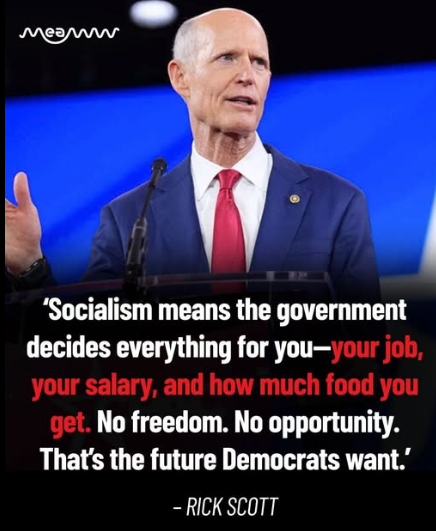 In less than a month, we’re going to learn how many idiots are buying this socialism crap.
Sure, there are people who don’t know anything about the way people live in northern England, New Zealand, Costa Rica, etc. Most of these people couldn’t find these countries on this globe.
But how many can there possibly be?
Clearly, Republicans are desperate, but isn’t asking voters to believe that the Swedes have to rely on the government for their job, salary, and food a bit over-the-top?
 I got the meme here from a neighbor, but I wonder who actually wrote it. There is a ton of propaganda on social media suggesting that we need to normalize the sociopathic criminality of the U.S. president.
It’s true that not every election is an apocalypse, but 2024 was disastrous for the U.S. democracy.
Yes, the country did not end. But it took a giant leap towards authoritarianism.
Even that’s not the end of the world. Democracies fail with great frequency on this planet. I just never thought I’d be living in the biggest socio-political collapse in the last 2000 years.
In an average week, I meet quite a few travelers here from lands all around this planet. Their most common thoughts on what’s happening here: “We simply feel sorry for you.”



-
Climate Change1 year ago
Guest post: Why China is still building new coal – and when it might stop
-

 Greenhouse Gases2 years ago
嘉宾来稿:满足中国增长的用电需求 光伏加储能“比新建煤电更实惠”
-
Greenhouse Gases1 year ago
Guest post: Why China is still building new coal – and when it might stop
-

 Climate Change2 years ago
嘉宾来稿:满足中国增长的用电需求 光伏加储能“比新建煤电更实惠”
-

 Renewable Energy12 months ago
Sending Progressive Philanthropist George Soros to Prison?
-
Climate Change2 years ago
Bill Discounting Climate Change in Florida’s Energy Policy Awaits DeSantis’ Approval
-
Greenhouse Gases1 year ago
嘉宾来稿:探究火山喷发如何影响气候预测
-

 Climate Change2 years ago
Analysis: China’s CO2 falls 1% in Q2 2024 in first quarterly drop since Covid-19