Connect with us

Published

on

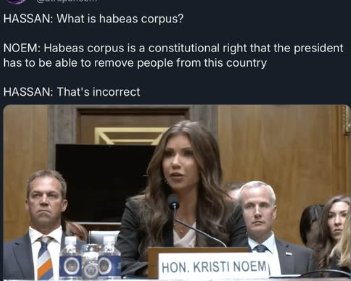
For the record, she actually did say this.

Habeas Corpus

Continue Reading

Renewable Energy

NextEra Buys Dominion, China Outpaces Vestas

Published

on

Weather Guard Lightning Tech

NextEra Buys Dominion, China Outpaces Vestas

NextEra’s $67B all-stock Dominion deal targets data center alley. Plus China’s top five each outpace Vestas, and 80% of Swedish wind producers ran at a loss.

Sign up now for Uptime Tech News, our weekly email update on all things wind technology. This episode is sponsored by Weather Guard Lightning Tech. Learn more about Weather Guard’s StrikeTape Wind Turbine LPS retrofit. Follow the show on FacebookYouTubeTwitterLinkedin and visit Weather Guard on the web. And subscribe to Rosemary Barnes’ YouTube channel here. Have a question we can answer on the show? Email us!

[00:00:00] The Uptime Wind Energy podcast, brought to you by StrikeTape, protecting thousands of wind turbines from lightning damage worldwide. Visit striketape.com. And now, your hosts

Speaker 6: Welcome to the Uptime Wind Energy podcast. I’m your host, Allen Hall, and I’m here with three other people, Matthew Stead, Rosemary Barnes, and, uh, Yolanda Padron down in Texas. Uh, we’re all getting ready to go to American Clean Power in Houston, Texas, where it will be practically 150 degrees and 99% humidity, and we’re all looking forward to those warm, wet days that we will spend

It is very similar to New Orleans. New Orleans was also very warm and very humid. So there’s a trend going on here with American Clean Power, although we were up in Minneapolis not too long ago, uh, but I guess we were in Phoenix too, so we gotta find a middle ground, everybody. Can we go someplace like– [00:01:00] Rosemary says we should always go to the Maldives, Tahiti.

I got a lot of requests from Tahiti from people. We never go there. We never go to Hawaii.

Rosemary Barnes: I’ve suggested Hawaii so many times, and I’ve been told that Americans are not gonna be given permission from their manager to go to Hawaii.

Speaker 6: It’s kinda like Las Vegas.

Rosemary Barnes: Maybe one day we’ll make it to San Diego or something and get, um, beach adjacent facility And if your presentation is too boring, then everyone will be at the beach.

So that will be how we ensure quality control of the speakers, which is a big problem at these events now, right? Like you can’t, um, there’s– It’s more like the norm is fairly boring sales pitches rather than informative discussion.

Speaker 6: We used to have OMNS, when I say we, I mean the wind community used to have OMNS out in San Diego in Coronado at the Del Coronado is, I think that’s the hotel name.

And the one time that I went, I think I’ve been [00:02:00] there, I would say one time, uh, everybody was outside on the, at the beach, basically on the patio. So they’re holding all these talks and discussions, and it’s… I’m looking around, it’s like me and five other people. Everybody else is out there next to the water.

So they had a problem with that. So I guess what they figured, either make it really cold or make it really hot, so it forces everybody into the climate-controlled conditions of, uh, the, uh, auditorium to watch the speakers. Maybe that’s the, the plan. All right. Let’s, let’s, let’s talk about what happened with NextEra and Dominion because there’s going to be a huge merger.

So if you thought utility business was boring, it’s not anymore. NextEra announced a sixty-seven billion dollar all-stock deal to acquire Dominion Energy, a move that would create the largest regulated electricity utility in the world by market cap. Uh, [00:03:00] the combined company would serve about ten million customers accounts across Florida, Virginia, North Carolina, where I’m based, and South Carolina with one hundred and ten gigawatts of generation across renewables, nuclear, and natural gas.

Uh, but the real driver here is data centers, of course. Dominion sits in the heart of Virginia’s data center alley, where it has connected more than four hundred and fifty data centers, and NextEra is building thirty data center hubs through its NextEra Energy Resources subsidiary and has partnered with Google Cloud on paired generation campuses.

So together, they would control about a hundred and thirty gigawatts of large load pipeline. And the question is whether the regulators will let it happen. And I think that’s, having watched some of the news articles over the last several days, uh, the news broke pretty much Sunday morning or late Saturday night that this was happening and [00:04:00] The first thing that came to mind, are the regulators going to let it happen?

And the concern is going to be, and you can well imagine how this plays out, they’re going to drag Dominion and NextEra up to Washington, D.C. and berate them about how electricity rates cannot increase due to data centers. And if they don’t swear to that, then this merger won’t happen. That’s my interpretation of what’s about to happen.

It may not, but how does this play out? How does everybody else on the team at Uptime see this play out?

Matthew Stead: Seems like a good idea to me. So more economies, more geographic diversity, more opportunity for renewables.

Yolanda Padron: I can’t speak to Dominion, um, but being relatively close to the NextEra engineering team, they, they really know their stuff, right?

So I think it’s something that should kind of give us a, a sense of relief here that it, [00:05:00] it’s a big team, but it’s a really smart and competent team taking over a big undertaking.

Speaker 6: You would like to see renewables and data centers work together. This would be the perfect match of the two, right? The, the largest renewable owner management company, along with the biggest data center, uh, region.

Connecting those two would make infinite sense, but in the, our political environment today in the United States, that may be the reason to oppose it.

Matthew Stead: Yeah, why would it be a bad idea?

Speaker 6: Windmills, Matthew. Windmills. Windmills are bad. Can’t even call them wind turbines anymore. They’re windmills.

Rosemary Barnes: I used to mock people for saying windmill instead of wind turbine, but then when I moved to Denmark, um, you know, who, you know, have a firm, firm ownership of modern wind energy, or at least did back 10, 20 years ago They say windmill when they speak English.

Um, the Danish word for it is vindmølle, um, which means windmill. [00:06:00]And so I can’t… I couldn’t maintain that, that energy because like, am I gonna, am I gonna mock these, you know, like everybody at that company knew more about wind energy than I did. Am I gonna mock them for not, not knowing the difference between a windmill and a wind turbine?

No. So yeah, that’s, that’s something that I, I don’t do anymore.

Matthew Stead: That is really valuable to know, um, Rosie. I must admit, I did not know that, and I would mock people saying w- windmill, so thank you for setting me straight.

Rosemary Barnes: Yeah, there are plenty of, um, plenty of people who don’t know the difference between a windmill and a wind turbine and think, “Oh, why you only got three blades with so much air between them?

You know, you’re gonna… Y- if you would just put twice as many blades, you’d get twice as many energy. Everybody who works in wind energy is just an obs- obvious complete and utter idiot.” Um, so there’s that kind of person, but then there’s also the industry. Another fun fact that they call the blades wings.

Uh, um, yeah, in Danish they call them blade wings, which they are. [00:07:00]

Speaker 6: In Spanish, isn’t it shovels? ‘Cause when I always translate those, uh, Spanish questions over to English, it always comes out shovel. At least early on, y- the early versions of Google Translate would translate it to shovel. Like, what are they talking about shovel on a wind turbine?

That doesn’t make any sense.

Yolanda Padron: Yeah, like a shovel or a stick or like a, what you row with.

Speaker 6: Oh, like an oar. Okay, that makes a lot more sense. Okay. Thank you, Yolanda.

Matthew Stead: I think it’s really interesting that, um- We don’t have much material on NextEra, Dominion. Um, yeah, we just don’t think it’s a good– We all think it’s a good idea.

There’s no controversy here.

Speaker 6: Oh, there’ll be controversy. Don’t worry about that. There’s always controversy. Welcome to America.

Matthew Stead: But among the four of us-

Speaker 6: We all think it’s great.

Rosemary Barnes: Well, it’s, um, I mean, some of the interesting facts that I read was that they’ve got 130 gigawatts of load, um, that they’re bringing to the table, and 51 gigawatts of that is contracted data centers.

So that’s, that’s interesting. [00:08:00] And I think large amounts of new data centers on the grid are controversial because in– if you’re not very, very careful about how you integrate them, then you can end up just making electricity more expensive for everybody in the area that doesn’t necessarily get, you know, profit sharing from the data center.

So, um, I think that, uh, like, you know, the wind ind- in the wind industry, we’ve obviously been through and are still in the phase of where social license, um, community acceptance is one of the most important things, maybe the most important thing when you’re developing a new project. And I think that we’re just at the start of that realization for data centers as well.

Companies that are building the, the data centers, they need to do more than what’s required of them because otherwise they have big risks of project delays. It’s millions of dollars delay, um, for the delay for, um, yeah, for every, every day that, um, a data center is held up. And so how can you afford to risk annoying anybody?

[00:09:00] You know, you just wanna be like the just, just perfect, um, addition to the community so that everybody is just happy and, and lets the project proceed. So, yeah, I thought– think that that’s, that’s quite an interesting aspect that I think I’m gonna s- we’re gonna see changing as, you know, all these planned data centers become real data centers.

There’s a real risk that everybody hates data centers soon as much as they, um, hated wind tur- um, wind farms for a while.

Yolanda Padron: For the consumer, aren’t there, like, I don’t know if they’re in Virginia, but aren’t there price caps too for the market? When you’re– When it comes to how expensive the megawatt hour is?

Speaker 6: Not necessarily. Re- remember that AEP in Ohio, uh, was requiring data centers to buy electricity at a certain amount. Because they both basically committed not to raise prices for electricity to the local communities, and that would be really hard to do. And okay, great, if, if they can pull it off, awesome.

But there’s already a lot of [00:10:00] pushback about it, and it hasn’t even gotten to the point of being real yet, so it’s only gonna get worse. I see. And all the data centers are gonna be up in space no matter what. Everybody’s talking about building data centers on the ground. There’s no shot that that’s gonna happen.

I’m just telling you, ’cause they can’t do it. They don’t– They can’t build gas turbines fast enough. There’s just limitations there, and transformers and everything else. It’s gonna be in space. It’s so much easier.

Yolanda Padron: And all the approvals you have to get and everything.

Speaker 6: It will be easier to do it in space In space, you don’t have neighbors.

Matthew Stead: I said it before, it’s just crazy. The key issue around data centers is it’s actually the transmission rather than generation. I mean, you know, at least in Australia, and correct me if I’m wrong, Rosie, but you know, less than half the price in Australia is generation. The other half is sort of retail and transmission and this and that.

And so actually, you know, the generation cost shouldn’t really increase. It’s really the transmission and the, the poles and the wires, which are the problem. And [00:11:00] you know, to your point, Rosie, social, social license for poles and wires.

Rosemary Barnes: I’m actually really surprised at Allen, ’cause normally, Allen and I have this, um, you know, we’ve played out this scenario probably 50 or 100 times over the, over the years with emerging technologies, and it’s always me that’s like, “You know what?

I think, uh, I think there’s something to this one.” Um, and Allen always poo-poos it, and in this case, Allen’s, Allen’s excited. I, I’m on Allen’s– So I also, I also think space data centers is, is a thing that’s more likely to happen than not, at least to some extent. Um, so yeah, but I think, Matt, you’ve got the more mainstream opinion.

Speaker 6: The voice of the common man. I

Yolanda Padron: think for all of our listeners out there, this is the first time Rosie and Allen agree on anything, so round of applause team.

Speaker 6: It won’t last long, Yolande.

Rosemary Barnes: It’s not true because, you know, nine out of 10 new technologies I also think are stupid. Um, so Allen and I agree on the bulk of them, but then of that one in 10, you know, nine out of 10 of those I, I [00:12:00] like and Allen doesn’t, so this is the, you know, the one-tenth of the one-tenth, so.

Speaker 6: I don’t like gas turbines. Can we all agree we don’t like gas turbines? It’s– That would be insane to scale.

Rosemary Barnes: You know what? I, I don’t have a particular problem with gas, gas turbines. I don’t want a lot of new gas turbines. Um, I guess that that’s– We can all agree on, on that. I don’t think the– I think we have most of the gas turbines that we need, or at least, um, will in the next couple of years.

And, um, yeah, I do think that their existence supports faster electrification, um, and faster growth of wind and solar. So I’m definitely not someone that wants to see all gas turbines turned off tomorrow.

Speaker 6: No, I don’t, I don’t want to turn them off. I’m

Matthew Stead: just saying you can’t get to scale.

Speaker 6: Delamination and bond line failures in blades are difficult problems to detect early. These hidden issues can cost you millions in repairs and lost energy production. CIC NDT are specialists to detect these critical flaws before they become [00:13:00] expensive burdens. Their non-destructive test technology penetrates deep into blade materials to find voids and cracks traditional inspections completely miss.

CIC NDT maps every critical defect, delivers actionable reports, and provides support to get your blades back in service. So

Matthew Stead: visit cicndt.com because catching blade problems early will save you

Speaker 6: millions.

Well, for the first time, five Chinese turbine manufacturers have all individually outpaced Danish wind giant Vestas in annual installations. Goldwind topped the global list with twenty-nine point seven gigawatts installed in twenty twenty-five. Behind them, Envision put up twenty-one point eight, Windy nineteen point eight, Mingyang at eighteen point six, and Sany at fifteen point one gigawatts.

Vestas came in [00:14:00] sixth at twelve point nine gigawatts. The Chinese dominance was fueled by an enormous domestic market that has accounted for about ninety-four percent of those five manufacturers’ sales. Uh, but exports are obviously growing out of China too. The five captured nearly sixty percent of the hundred and seventy-eight gigawatts installed globally in twenty twenty-five, a year that saw the world market grow forty percent over twenty twenty-four.

So Vestas still holds the crown for cumulative installations at two hundred and one gigawatts, but the gap in annual volume is now almost impossible to ignore. So Vestas has a lot of competition over in China. The, the amount of, uh, gigawatts coming out of the largest manufacturers in China is quite impressive, almost, well, more than double than what, uh, Vestas is doing, and Vestas is doing a pretty brisk business.

What are, what are the outcomes of this, everyone? Is, can this be sustained in China [00:15:00] for very much longer? Can they continue to, to create at, at that rate?

Rosemary Barnes: Yes. Okay, move, move on to the next segment

Speaker 6: Well, that’s a, that’s a huge amount of gigawatts coming out of China. And if 94% of it’s staying in China, eventually you run out of China to put wind turbines in.

Rosemary Barnes: They– I mean, we’re a long way from running out of places in China to put wind turbines in, because China is gigantic. A lot of it is not that populated. They’ve got a lot of offshore area still. But I just think it’s gonna follow the same playbook as, as solar probably, where you see, you know, early on heaps of domestic market, which is totally rock solid because it’s not relying on people to see a positive business case in doing it.

You know, like it’s really… You know, targets are, are really mandated and people make sure that they are met. Um, and then the incentives are also different as well. Like my understanding is that [00:16:00] there’s a lot of incentives about installation of megawatts, um, and then, you know, the, the operation is like, we’ll figure that out as we go.

The volume, the number of manufacturers that are there, they’ve got, you know, like such a great supply chain all there in the same area, so you can move fast and like I, I don’t see anything can get in the way of, you know, continuing to pump out these turbines at that speed. It’ll keep going until, you know, the government basically decides we’ve got, uh, enough wind energy now and then puts the, the brakes on it.

And, you know, that’s what we’ve just been through in solar recently. China is, um… You know, they’ve just– they’ve got a big economy and they’ve just got like rock solid resolve to follow through on, on things that they commit to. Um, whether we can, you know, argue about whether it’s a smart strategy or not, but you know that they will follow it, they will execute on, on it.

I don’t think anyone would, would say that they won’t. So I think, [00:17:00]can it continue forever? No. But do I think it can continue for another 10 years? Yes. And is that long enough to cause massive problems for any other manufacturer? I think also yes.

Matthew Stead: Hey, Rosie, can I ask you a question? You know, obviously there was some cable was proposed, you know, between Australia and Singapore.

Do you see China going in that direction? You know, putting rather than pipes with gas in it, um, pipes with electrons? Uh,

Rosemary Barnes: I don’t see China– I’m actually working on a video at the moment about a global sub-sea grid, and I just interviewed, um, uh, Xlinks, you know, that was originally a project from Morocco to the UK, and then the other one, which is super cool, um, we might have an argument about the plausibility of it, is NATO L, which is just in like early development stages.

It’s going to connect the UK to Canada. Um, and yeah, so that’s, um, a few thousand kilometers long. The ocean depth is maximum [00:18:00] three, I think, kilometers, maybe even a tiny bit more than that, um, which is like right on the edge of what is possible. N-none of those projects really actually rely on big technological improvements.

Um, they’re possible with today’s technologies. Um, but I don’t see China doing so much of that. I think that one thing that might actually stop that is that, um, when you have big interconnectors like that, I think the engineering part is not the hard, the hard part. I think that the, it’s the politics. I do see them exporting their, um, you know, they’ve got really good ultra high voltage DC technology, but the transmission lines, they have exported a little bit.

There’s some projects in Brazil that are Chinese made. There’s one in India. I don’t actually know if that is Chinese made, but you know, like I could really imagine them also rolling out projects in Africa, for example. Um, but beyond that sort of thing, I, I wouldn’t tip China as the country to, you know, develop a global [00:19:00] sub-sea grid.

Speaker 6: Do you think the low solar prices have hurt the wind manufacturers in China a little bit? Obviously, there’s a lot of solar panels that are able to be shipped immediately, which is what’s happening right now. But turbines, not so much. It’s a little harder to do. But you, you would think that a lot of these countries and communities would be putting in wind But solar is so cheap right now that, that is what is winning at the moment, and it must be hurting the Chinese wind manufacturers, you would think.

Rosemary Barnes: I don’t think they’re really in a competition with each other, um, at the moment. In Australia, I think yes. I think that, um, the, like, roaring success of solar and especially batteries is, um, making wind less appealing to develop. But globally, I think that it’s, you know, it’s a race between, um, fossil fuels and renewables.

It’s a race between energy security and continued reliance on, you know, countries that [00:20:00] you don’t really want to rely on for fossil fuels. I think that those are the, the much bigger, um, competition at the moment. It’s a bit short-sighted because, yeah, wind and solar is really easy for the, the part of the, uh, energy transition that we’re doing now, and, uh, if you just don’t build any wind until you reach the limit of solar and batteries, then you’ll find yourself quite far behind.

So that’s what we’re really struggling with in Australia and finding, like, what is the right level of government, um, support because people… You know, like in an electricity market like Australia, you’re not supposed to rely on governments, you know, planning out the system and deciding what thing to build, and I think that that has been a real strength of the Australian market that it has, you know, the government has got out of the way.

It is hard to see, um, us getting to where we need to go in a orderly fashion without some planning for this, like, lumpy middle part of the energy transition. I don’t know. What do you think, Matt? Is that how you see it in Australia as well?

Matthew Stead: Yeah, I think there’s a place [00:21:00] for everything, and, you know, wind, solar, battery is a perfect match and the right places for the right thing.

Rosemary Barnes: It’s really hard because, you know, like, when you look at the system as a whole, you know, like you plan out what, what full energy system is cheaper and better, you know. Is it the, you know, the current fossil fuel system and all of the, you know, annual maintenance and, um, improvements like, um, extensions that need to go along with that to support, you know, things like data centers and population growth, or is it the fully renewable system?

And, you know, if you look at the end state, then I don’t think that many studies or maybe any studies come to the conclusion that anything other than renewables is the, the cheaper, better system. But it’s just, it doesn’t mean that every step along the way is cheaper, and so you end up with this, yeah, like this hump in the middle that you’ve gotta, you’ve gotta get over if you wanna get from one to the other, and it’s, um, it’s complicated.

Speaker 6: I just listened to a podcast about this half an hour ago, uh, and it [00:22:00] was very contentious. And I won’t get into the details of it, but it was just one or the other. We wanna have all petroleum-based, coal-based generation in the UK, or we want zero emissions. They never got into anywhere in the middle, which is where it’s going to have to be.

So why don’t we talk about that? I– It doesn’t… The political atmosphere of the UK is, is a little unstable, as we’ve all read in the newspapers and seen online. Uh, but it, but it’s just causing the both sides to go to extremes. And on the renewable side, some of the arguments that are being made were so outlandish that I could hardly continue to listen to it.

Same thing on the gas and coal side. Like, what are we gonna do? The UK is really in a pinch. They’re gonna have to do something, and it all– as Rosemary’s pointed out, doing nothing is real ex- it’s gonna be tremendously expensive too. So there’s, there’s gonna have to be a, a reckoning somehow, but it, it’s all tied to the [00:23:00] economy at the moment.

Like most things that happen in a country, decisions are made about what’s happening right now, not what’s gonna happen five years from now.

Yolanda Padron: Right. And to your point, like countries need to protect themselves, right? Like what are you gonna do, bank on world peace?

Speaker 6: That’s a bad bet historically.

Matthew Stead: But, um, how many, how many of those charts have you seen in the last one to years where you’ve got the, the fossil fuel, say the coal generation versus renewable generation?

How many of those, um, charts have crossed over in the last few years where, you know, renewables generation is, is higher than coal generation? It’s just, it’s happening all over the world. It’s just happening, and you look at the graphs, it’s just happening.

Speaker 6: It’s less expensive, so that’s why they’re doing it.

The decision’s made with the dollar. You know, the financing and the bankers and insurance are all gonna drive that, and it’s not gonna be the decision you, the homeowner, are gonna have a lot of influence on. It’s all gonna be done at a higher level, and it’s gonna be whatever’s cheaper and whatever’s available.

Back to Rosemary’s point, [00:24:00] solar is cheap and available, people are gonna do it. Wind is cheap and available, they’re gonna choose it no matter who’s in office, right? I… Yeah, that’s the engineer talking, not the politician.

Matthew Stead: Battery, wind, and solar is only gonna get cheaper. Is, um, is, uh, gas turbines and coal gonna get cheaper?

Speaker 6: They can’t. In order to get the efficiency up where they need to, it’s gonna be super expensive, which is what we’re at today. That’s why gas turbines are s- you can’t mass produce them, and that’s why they cost so much money. It’s a great business if you sell a couple a year. You can’t sell thousands of them.

There’s just not a way to do that. As wind energy professionals, staying informed is crucial, and let’s face it, difficult. That’s why the Uptime podcast recommends PES Wind magazine. PES Wind offers a diverse range of in-depth articles and expert insights that dive into the most pressing issues facing our energy future.

Whether you’re an industry veteran or new to wind, PES Wind has the high-quality content you need. Don’t miss [00:25:00] out. Visit peswind.com today. Over in Sweden, they built all the wind farms, and here at Weather Guard we’ve talked to a number of operators over in Sweden, so has EOLOGIX-PING, uh, and the– So but the wind farms and the customers haven’t really showed up, and researchers in Sweden have analyzed two hundred and forty-four Swedish wind power producers owning more than about thirty-seven hundred turbines covering eighty-five percent of the country’s total wind generation.

So it’s a pretty large study. They found that eighty percent were effectively operating at a loss in twenty twenty-four. The total sector losses reached six point three billion Swedish kronor, uh, about six hundred and twenty million euros. The sector’s profit margins fell to a negative fifty-one percent.

That’s right, negative fifty-one percent. Uh, and here’s the real paradox. Although wind production actually [00:26:00] rose from thirty-four point two to forty point six terawatt-hours, revenues fell for the first time in at least six years. Uh, the more they produced, the less they earned. And the real culprit is overcapacity.

So they have so many turbines up in northern Sweden, uh, that it’s driving the energy prices down, much like Australia. Uh, and the missing link is obviously transmission because it is big demand to the south. It’s just getting the power there. Vattenfall alone lost eight hundred and seventy million euros in its wind business in twenty twenty-four, and one of its subsidiaries curtailed seventeen percent of the potential production because of, uh, shutting the turbines down was less expensive than selling into negative prices, which would make sense.

So the price has gotten so low in Sweden that it’s better just to turn the turbine off and, and eat the loss than to generate power at a, at a negative price. This is a common theme [00:27:00] as wind has grown, and solar for the same matter, is that when you have so much of it, the price of electricity will drop.

And until you can get that power out to other areas that has high demand It becomes a losing proposition. How does this play out? Will the– Now will countries finally take transmission seriously and start to even out the grid? Is that where we’re going?

Yolanda Padron: I mean, I hope so. The idea of curtailing potential energy isn’t something new, right?

It happens here in Texas all the time. It happens in a lot of places all the time, um, just to, to not overflow the grid. And it makes sense, but it doesn’t make sense too much, at least to me, that in the same country you have parts of it where you have an electricity surplus and negative pricing, and other parts of it where you just, you don’t have enough energy for the whole, uh, region, right?

So, uh, I really hope they take it a bit more seriously than they, than they currently are.

Matthew Stead: Uh, I think the interesting thing about Sweden is [00:28:00]that they’ve got a lot of hydro as well, and so those two things tie together. Um, you know, much like Australia, we’re building the, like the largest in the Southern Hemisphere, um, hydro scheme, and, um, maybe that’s part of the missing puzzle is the actual, the storage element.

So if they had more pumped hydro, you know, they could, um, perhaps store that excess energy and then, then reuse it. But, you know, unless there’s no pipes from the north to the south, you know, that’s not gonna help anyone.

Speaker 6: Hydro is expensive. The more recent news articles I’ve seen about pumped hydro is it’s way less expensive to put in wind or put in solar or put in some batteries than to do pumped hydro projects.

It’s complicated. It’s a lot of construction, obviously, and, uh, the pumps and the equipment are not cheap. So, uh, yeah, so although if you do have hydro and it’s currently running, you would leave that alone, but I think some of the newer pumped hydro projects probably won’t happen. Even if they’re on the– have [00:29:00] been planned and, and even started, I think they’re really reevaluating that it’s probably cheaper to do batteries.

Matthew Stead: In Australia, in Snowy 2.0, I think the original budget was, was it 3 billion? And now it’s up to 12 to 15 billion.

Rosemary Barnes: Anybody that was working on that would’ve known that the price was very likely to blow out because that particular project has a really long tunnel. The two reservoirs that, like the reservoirs were existing, so you think, okay, that’s good, you save money.

But the expensive part of pumped hydro is the tunneling and then, and it’s a very long tunnel. Um, and it’s just so super predictable that when you have a super long tunnel, you one, increase the cost a lot, but two, increase the risk of a massive cost blowout. So I think it’s not a good predictor of, of projects as some other ones that are, that are happening.

I think the biggest problem with hydro is that, um, the project lives are so long, like 100 years e- easily, [00:30:00] but that doesn’t mean anything in today’s dollars, y- you know? So it’s like no one can, no company is gonna assign any value to the electricity they’re gonna generate in 100 years time, you know? So it’s, um, it, it’s really hard for it to stack up to, as a project today unless it’s a government doing it.

Matthew Stead: But I mean, once Snowy 2.0 is done, it will still be reasonably cost-effective as a long-term storage source.

Rosemary Barnes: Yeah. If it had been made on time, then I think it would’ve, it would’ve been a real enabler for the energy transition for getting heaps of wind and solar. But it wasn’t done on time, and we barely we- storage isn’t our problem right now.

We have actually got lots of, of storage. That’s not what’s stopping people from building projects. So, um, I think it is a bit of a shame.

Speaker 6: Back to your point, Rosemary, how old hydro is in terms of electricity generation. I, I went to go look up when Niagara River, Niagara Falls in, in the States first [00:31:00] started producing power, 1895.

That’s how long we’ve been using water power in the States to create electricity. Hoover Dam, which also does something very similar, is in the 1930s, 1935, ’36, around that timeframe. So it’s almost been 100 years there too, 90 years. Yeah. It’s, it’s amazing. So you don’t plan for those, those pieces of, uh, infrastructure to run that long, but they do.

That wraps up another episode of the Uptime Wind Energy podcast. And if today’s discussion sparked any questions or ideas, we’d love to hear from you. Reach out to us on LinkedIn, and don’t forget to subscribe so you never miss an episode. And if you found value in today’s conversation, please leave us a review.

It really helps other wind energy professionals discover the show. For Rosie, Yolanda, and Matthew, I’m Allen Hall, and we’ll see you here next week on the Uptime Wind Energy [00:32:00] podcast.

NextEra Buys Dominion, China Outpaces Vestas

Continue Reading

Renewable Energy

Vehicle to Grid

Published

on

No, they’re not. I’m an EV advocate, but I’m not a liar.

V2G (vehicle to grid) may lie in our future, but we’re nowhere near to achieving it.

Vehicle to Grid

Continue Reading

Renewable Energy

Well Here We Are

Published

on

If you’re looking for an indication as to how far the United States has fallen, what our president said at left here is a good measure.

To call it “childish” is an insult to little kids everywhere.

Well Here We Are

Continue Reading

Trending

Copyright © 2022 BreakingClimateChange.com