

Mario Hastings is a community leader and former Toshao of Kako Village in Upper Mazaruni, Guyana.
The Essequibo region of Guyana where I live lies at the heart of Guyana’s economic expansion – it’s one of the fastest-growing economies in the world. Essequibo is also the home of many of Guyana’s Indigenous communities, and we are under siege from all sides.
To the north, there is oil drilling off the coast. To the west, the Venezuelan army threatens to invade as the government covets Essequibo’s natural riches. To the south, fires rage as Brazilian farmers clear the borderlands of rainforest. And in the east, the Guyanese government has traded the rights to the intact forests of the Essequibo for global carbon offsets as well as for gold-mine concessions – often on the same lands – even though many Indigenous communities live in these territories.
Colombia adds nature to the mix with its $40-billion energy transition plan
The Indigenous communities of Guyana, similar to Indigenous communities around the globe, live in the space between economic development and cultural conflict. And that is only when our existence is acknowledged. My village, for example, is not located on any “official” maps even though we have lived on these lands for many generations.
But our continued existence must be a priority to ensure the success of climate solutions linked to our forests.
Guyana’s forests are valued because so many of the 18 million hectares of woodlands within the country’s borders remain undisturbed. Our trees are exceptional for their timber, our soil is rich, and in many places, the mineral wealth underground is unimaginable. And yet, the trees are still standing because of the ways in which we Indigenous Peoples have sustained them and how we live in relation to these forests. No one else cares for these territories in the same way.
“Kept in the dark”
As we have kept our territories intact for generations, Indigenous lands, like the Essequibo region, include a large percentage of forests, sheltering much of the world’s biodiversity and absorbing large quantities of carbon. But carbon credit transactions that ignore Indigenous land rights sabotage the traditional governance systems and our relationship to nature that has kept the forests so valuable.
There have been two rounds of carbon credit sales in Guyana, with payments from international bodies making their way through the government and a few other middlemen until reaching the group of Toshaos (community leaders) who have agreed to the government’s uncompromising terms. The cost of this compliance, however, has been far too steep.
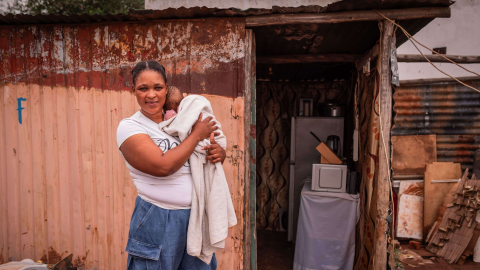
Guyanese community leader Mario Hastings (Photo: Kamikia Kisedje / Nia Tero)
We still do not have access to the carbon credit scheme agreement that the government has signed – even for those communities that the government does recognize. All of us are kept in the dark.
The international organization that authorizes this carbon credit scheme, the Architecture for REDD+ Transactions (ART), has rejected a formal complaint made by the Amerindian Peoples Association about this lack of transparency. And yet, our lands have been given out without our consent and without resolving the issues surrounding the titles to our customary territories.
From where we stand, it does not matter if the land grab is for the gold in the ground – where removing it threatens the trees and rivers – or for the carbon in the trees, which must remain standing. We should be allowed to share our opinions and participate in the decision-making. Instead, we are told that the carbon in the trees on our lands does not belong to our people, it belongs to the state.
Carbon profits for who?
We have complained that the carbon credit scheme fails to provide an adequate process for validating the carbon, and it does not define who has rights to profit off of the carbon. The scheme’s standards do not adhere to ART’s environment and social safeguards. And our communities’ right to free, prior and informed consent (FPIC) has been repeatedly ignored.
Some of the communities were told they could submit sustainability plans, for how they would continue to care for the forests, and in return they would receive payments to subsidize that work and their way of life. But, in doing so, the communities were not surrendering their rights, especially their land rights that the government doesn’t recognize in the first place.
Amazon state that will host COP30 strikes “largest carbon credit sale in history”
Typical of places with a wealth of natural resources that have yet to be exploited, Essequibo is rarely in the lens of global media coverage. Outside interests operate with less restraint when they feel that no one is watching. And so, with the carbon credit markets, Indigenous rights are rarely respected, and no one notices.
If we want to stave off the worst of climate change, however, we need tropical forests to remain upright and to do that, governments need to respect Indigenous rights over our lands and the biodiversity, forests and carbon that we protect. We want to be of service through the stewardship of our territories – and all humanity can benefit.
Climate Home contacted ART about the complaint made by the Amerindian Peoples Association over Guyana’s carbon credit programme. ART responded as follows:
The Architecture for REDD+ Transactions (ART) is a global carbon crediting program that certifies high-integrity emission reductions and removals from protecting and restoring forests at scale. ART operates at a jurisdictional scale to align with Paris Agreement requirements for REDD+ and ensures social integrity by directly aligning with the UN-defined Cancún Safeguards.
Following an initial complaint submitted in March 2023 by the Amerindian Peoples Association (APA), a thorough review was conducted, which included stakeholder interviews and a close examination of the validation and verification process, determining that ART’s processes had been followed. Subsequently, on October 27, 2023, the ART Secretariat dismissed an appeal made by APA, due to the APA’s failure to comply with procedural requirements. A summary of the Appeal Record, as well as all Appeal Record Documents, are available on the ART website.
The post Guyana’s carbon-credit deal to protect forests undermines forest protectors appeared first on Climate Home News.
Guyana’s carbon-credit deal to protect forests undermines its forest protectors

Jacynta Fa’amau is a Pacific campaigner at global grassroots climate movement 350.org and a secretariat member of Pacific Climate Warriors.
The first thing that struck me was the sheer size of Queensland’s Saraji coal mine. Standing at the edge of the enormous pit, my brain scrambled for words as I scanned the earth’s open wound – a whole island could probably fit inside it.
Looking down, I noticed footprints of an emu and a koala, pressed and dried in what was once a puddle – signs of how drought had driven animals in desperate search of water, so dangerously close to the coal trucks and heavy machinery ahead.
Earlier this year, I joined a small group of Pacific Islanders on a journey through the Bowen Basin to learn from First Nations communities battling Australia’s mammoth coal industry. Of the more than 40 coal mines operating in the area, BHP & Mitsubishi Alliance’s Saraji mine is one of the largest. So it came as a painful shock to us when in August, the Australian government approved the mine’s extension just months after our visit.
-
As COP31 co-host, Australia should make its polluters pay for climate damage
With UN climate funds running short on cash, now is the time to start taxing the companies whose emissions are driving harm in the Pacific and other vulnerable parts of the world -
At pre-COP, UN climate chief warns of heat threat to mothers and babies
The spotlight on maternal health came on the first day of the pre-COP31 meeting in Fiji, where Pacific concerns are set to top the agenda as ministers gather for talks

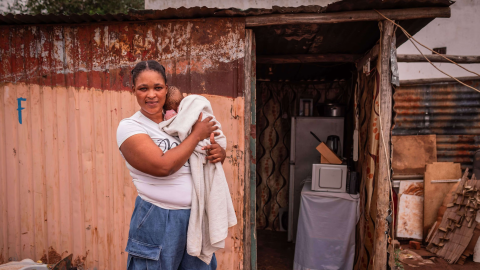
Witnessing coal extraction is devastating. It is bad enough to see what pillaging tonnes of coal can do to a mine’s immediate surroundings: dry creek beds, dwindling wildlife, denuded land. But to know that this coal will be shipped across the ocean, bring air pollution, and eventually lead to the destruction of Pacific islands thousands of miles away is another kind of heartbreak.
Rising ocean waters
I’m an Australian-born Samoan. In 2002, I visited my family home for the first time. My father took me to the rural community where generations of my family were raised. He did not have the words to describe how much has changed since rising ocean waters had taken away almost a third of the beach.
I learned of how we had to relocate my great‑great‑grandparents’ grave to higher ground twice in the last 15 years. Of how my cousins have to paddle out further to sea to catch fish, since warmer waters have destroyed much of the reef. Of how the ocean crashes so close to my uncle’s home that he had to build a new house further away.
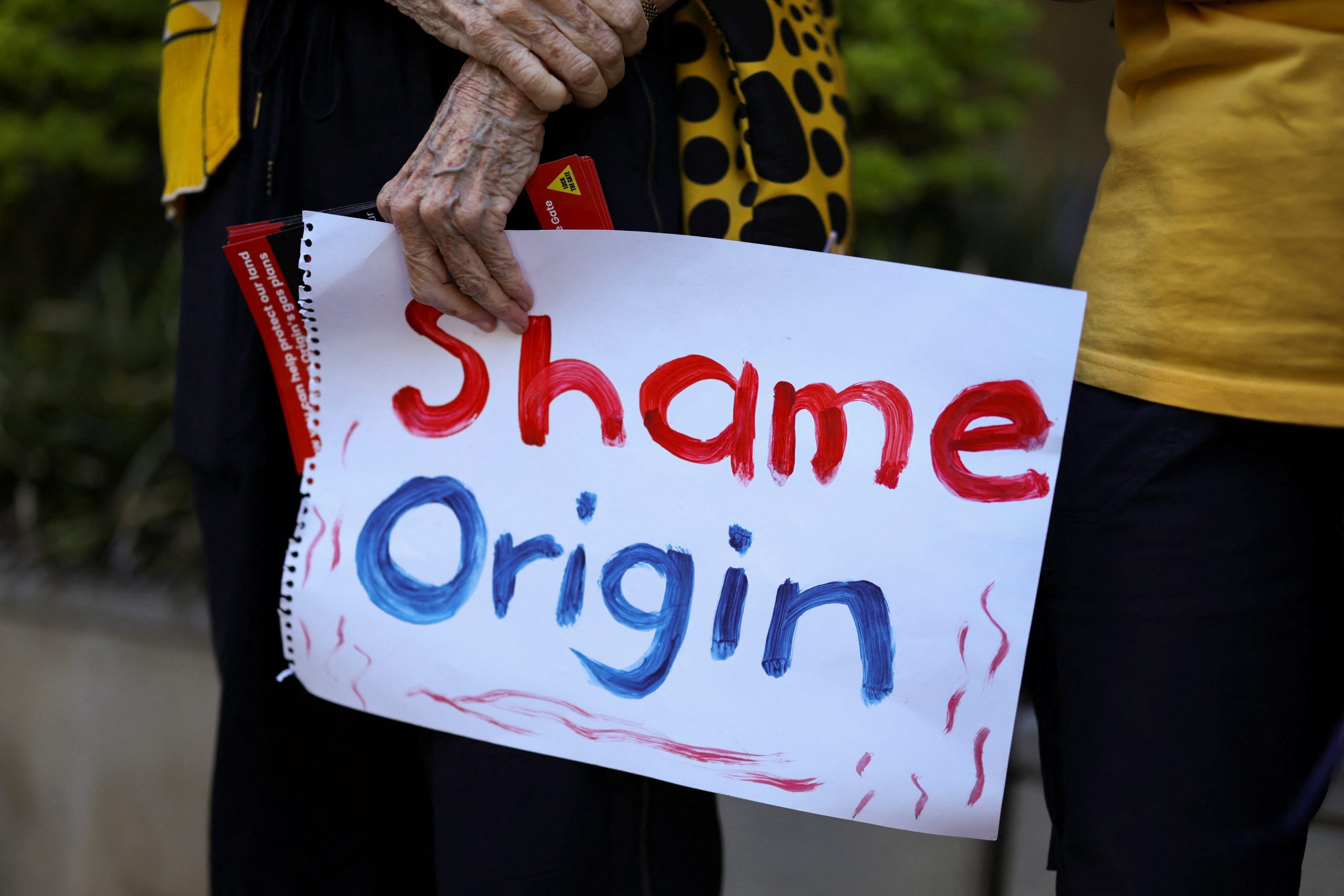
We saw reflections of our own climate destruction in the Pacific when we shared these stories with our First Nations relatives at the edge of the Saraji mine. Murrawah Johnson and Teila Watson, both Birri Gubba and Gangulu women, made clear connections between their struggles and ours. “We don’t get to inherit our land and we don’t get to inherit our traditional roles. We are fighting a war on extinction,” Murrawah said.
Coal extraction devastated their lands and cultures – totems have disappeared, fresh water has become scarce – while the effects of using it have devastated ours. “King tide, cyclones, all the violence that has been enacted on your country and people is because of the violence that has been allowed here, to us and our country,” Teila said.
Wearing the mantle of climate leadership
This week, Australia is assuming the mantle of climate leadership as co-president and head of negotiations of this year’s UN Climate Change Conference, COP31. It will lead on deliberating the summit’s priorities as world leaders and climate negotiators descend on Fiji and Tuvalu for the pre-COP meetings.
Ironically, just days before the pre-COP began, the New South Wales Independent Planning Commission approved the largest-ever coal project the state has seen, set to emit an extra 800 million tonnes of carbon emissions. I joined the Pacific Climate Warriors and other communities in submitting about 4,000 appeals to oppose the project – yet these all fell on deaf ears.
-
Fossil fuel expansion threatens COP31 hosts’ credibility, experts warn
Türkiye and Australia are pushing coal, oil and gas at home with no national timeline for their own fossil fuel phase-out -
This Australian coal community is co-designing its own green future
The mining town of Collie offers a promising example of how to survive – and even thrive – amid the global transition to net-zero emissions
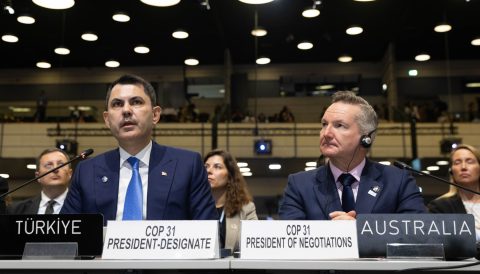

But the fight is not yet over. The project still requires federal approval to proceed, so every promise that Australia makes while at the helm of the climate talks counts. These promises will be measured against actual decisions it makes at home: to either lock us into more decades of climate pollution, or begin shutting down coal and gas once and for all.
Pacific leaders have made it clear that countries must align their policies with the 1.5-degree warming goal, a limit that we already know will be breached within the decade. Any chance of keeping this still within reach requires an immediate end to fossil fuel expansion and concrete plans to phase out existing projects. But success will be an uphill battle if COP31’s own head of negotiations refuses to lead by example.
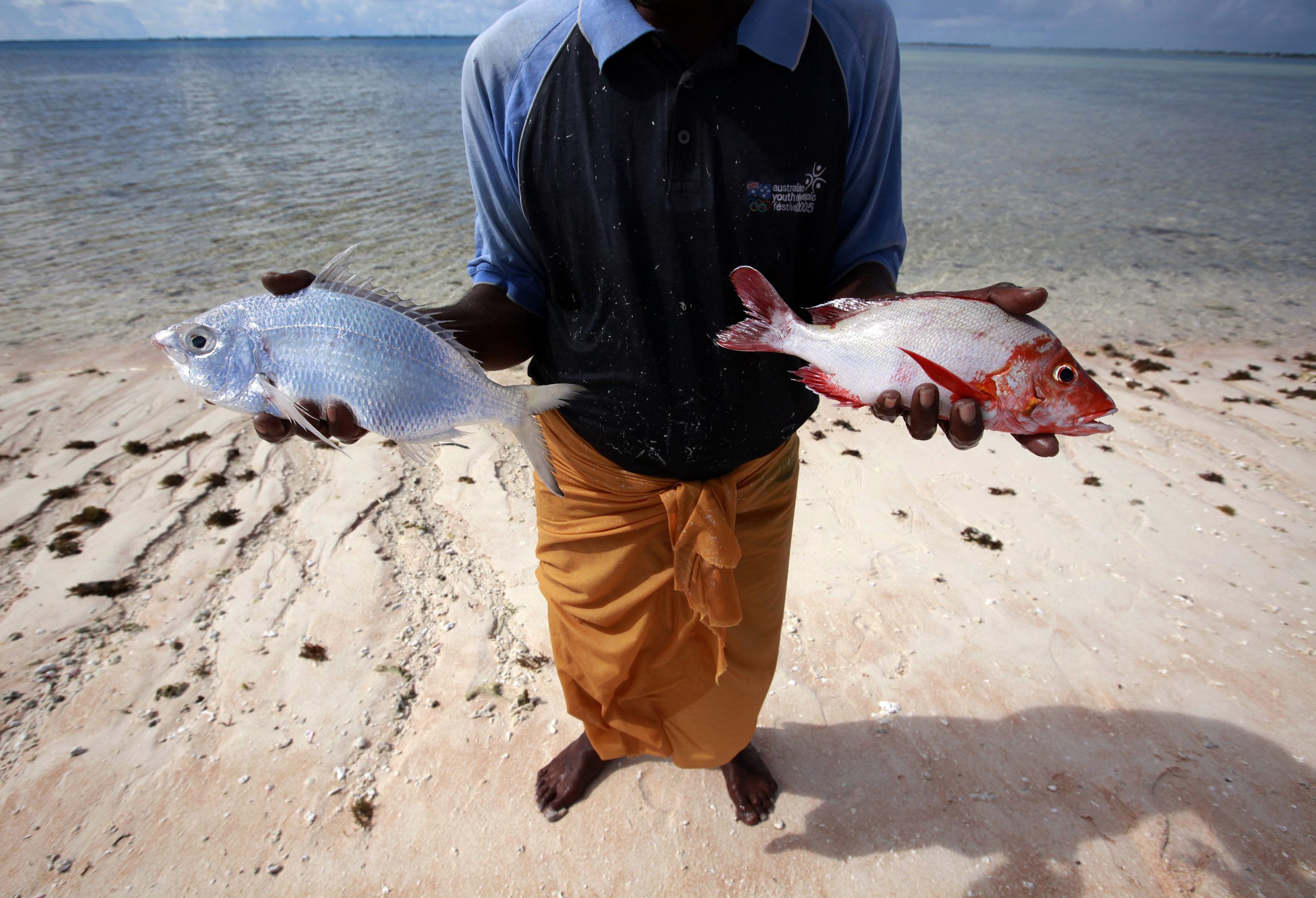
Australia remains the second-largest coal exporter in the world. It is one of the very few industrialised countries under the Paris Agreement’s Annex I that still has no coal phase-out plan. Since 2022, the Albanese government has approved 37 new, expanded or extended coal, oil and gas projects. It is thus unsurprising that its own mitigation policies have been rated by Climate Action Tracker as “insufficient”, even without factoring in fossil fuel exports and related expansion.
Keeping 1.5C alive
Australia must course-correct to earn the mantle it has been given, especially by Pacific nations that backed the country’s bid for the COP31 co-presidency. As a first step, the government must end all coal expansion and explicitly declare a coal phase-out date. It’s the only way to show that it’s capable of leadership that moves beyond endlessly deliberating the “if”, and starts implementing the “how” of keeping the 1.5C target alive.
The dread I felt staring down at the abyss on the edge of that coal mine months ago still exists. I carry it with me as I show up at the pre-COP to demand that leaders heed the calls of Pacific people. But it is tempered with resolve to keep our lands and communities alive. We remain steadfast in our efforts to secure an outcome that protects people everywhere and brings us back below 1.5 degrees as soon as possible.
The post Coal mines and hypocrisy must not be Australia’s COP31 legacy appeared first on Climate Home News.
Coal mines and hypocrisy must not be Australia’s COP31 legacy
When José Antonio Kast took office as Chile’s new president in March, one of his first moves was to put the brakes on plans to expand two protected marine parks – raising doubts about the country’s high-profile bid to host the headquarters of the High Seas Treaty.
But during the UN General Assembly last month, the right-wing leader reaffirmed his leftist predecessor’s ambition for Chile to host the landmark global pact, which came into effect in January and provides a legal framework to protect the waters of the high seas beyond national jurisdiction that cover about two-thirds of the world’s oceans.
Hailing the country’s “maritime vocation”, Kast’s government said the bid to host the treaty’s secretariat in the port city of Valparaíso was state policy and testament to its commitment to multilateralism.
“For the government of Chile, it is of high interest to achieve this recognition, and we will carry out all the efforts to obtain the necessary support,” Foreign Minister Francisco Pérez Mackenna was quoted as saying by local media.
-
At pre-COP, UN climate chief warns of heat threat to mothers and babies
The spotlight on maternal health came on the first day of the pre-COP31 meeting in Fiji, where Pacific concerns are set to top the agenda as ministers gather for talks -
Big banks behind “net zero” alliance continued lending to coal firms
New data shows coal finance has stayed steady at the global level since 2022, as international efforts to cut the ties between lending and emissions faded -
Jordan’s mega-plan for water security risks locking in fossil gas demand
A giant desalination plant will help Jordan confront water scarcity, but solar power’s limited role in the energy-hungry project has raised questions about how climate adaptation finance is being spent


Tough competition from Chinese, Belgian bids
But to garner the votes it needs, Chile must fend off competing bids by Belgium – which has proposed its well-connected capital, Brussels – and China, whose well-funded bid includes the provision of free premises in the coastal city of Xiamen and five years of free utility costs.
Parties to the treaty, formally called the Agreement on Marine Biological Diversity of Areas Beyond National Jurisdiction (BBNJ), will choose the headquarters at their first summit (COP1), in New York from January 11 to January 22, 2027. They will seek consensus, falling back on a two-thirds majority in successive secret ballots.
Chile has offered to provide a restored waterside warehouse “at its own expense” as office space, pitching itself to developing countries as a Global South alternative to Europe-centred Brussels. Among richer countries, it is promoting its democratic credentials and greater transparency as an alternative to China.
Rolling back environmental safeguards at home?
While the South American country remains the top pick among environmental campaigners and other civil society groups, critics of Kast’s government say recent policy moves may make it harder for the country to garner the support it needs.
On March 12, the day after Kast took office, the Environment Ministry withdrew 43 decrees awaiting legal approval, including a push to expand the Mar de Juan Fernández and Nazca-Desventuradas marine parks – vast protected areas in Chile’s Pacific Ocean waters. Both remain under review, the ministry told Climate Home News.
The decrees also included an emission standard for coal power plants and regulations for Chile’s new biodiversity and protected areas service.
A month after holding up the decrees, Kast questioned aspects of Chile’s urban wetlands protection law, suggesting it was sometimes an unjustified obstacle to much-needed housing development, and his administration has also sought to ease the rules on salmon farming in the world’s second-largest producer.
In August, the Constitutional Court