The holidays are here again. ‘Tis the season to hang out with (or just tolerate) family and friends, share (and maybe overindulge in) tasty meals, and enjoy festivities (or stay cozy and binge your comfort show). But no matter how you celebrate, the pressure to consume can be extreme.

Capitalism’s overconsumption machine can make us think that we need to buy everything during the holidays, but as corporations pump out 430 million tonnes of plastic globally, plastic doesn’t need to get the invite to the big holiday party this year. Dodging certain holiday offerings and embracing some new anti-consumption traditions can be small but mighty acts of resistance against capitalism.
Plastic is everywhere, and at this time of year it’s hiding in plain sight at your holiday gatherings. Plastic packaging is the most obvious major source of waste; however, a closer look at what many decorations and gifts are made of reveals all the other ways plastic creeps into our homes. It is in clothing, bags, bedding, childrens’ toys, holiday figurines, electronics, sports equipment, stuffed animals, cosmetics, kitchenware, furniture, the stir stick in your cocktail or mocktail — the list goes on.
Why does this matter? Because plastic pollutes air, water, nature and our bodies, across its entire lifecycle. And it’s causing widespread and devastating harm. Plastic isn’t only a waste and pollution issue, it has morphed into a grave public health concern. The more plastic the industry produces, the more we’re pressured to consume, and the more pollution people and the planet are exposed to.

5 Ways to reduce plastic waste and pollution during Christmas
The season of giving doesn’t have to be giving plastic disaster. We’re here to share 5 ways to beat those consumption blues.
1. Normalize ‘new-to-you’ over brand new gifts.
It’s never been easier to find pre-loved items in our communities. From thrift shops to antique stores, clothing swaps to flea markets, and numerous online platforms, most gift ideas you have can be found used with a bit of time and resourcefulness. Dodging big corps whenever possible isn’t only satisfying, it’s a win for your wallet and the planet. According to Earth Overshoot Day and its partners, by July 24th, 2025 humanity was using nature about 1.8 times faster than the Earth’s ecosystems are able to regenerate, so reducing demand for new materials is part of our collective consumption reduction equation. If you look at the plastic all around you today, it is set to have more than doubled in the next 25 years.
Any signal we can send to big plastic producers and consumer goods companies that plastic isn’t fantastic, can help incentivize them to choose alternatives, and show governments that we support real solutions to the plastic problem.
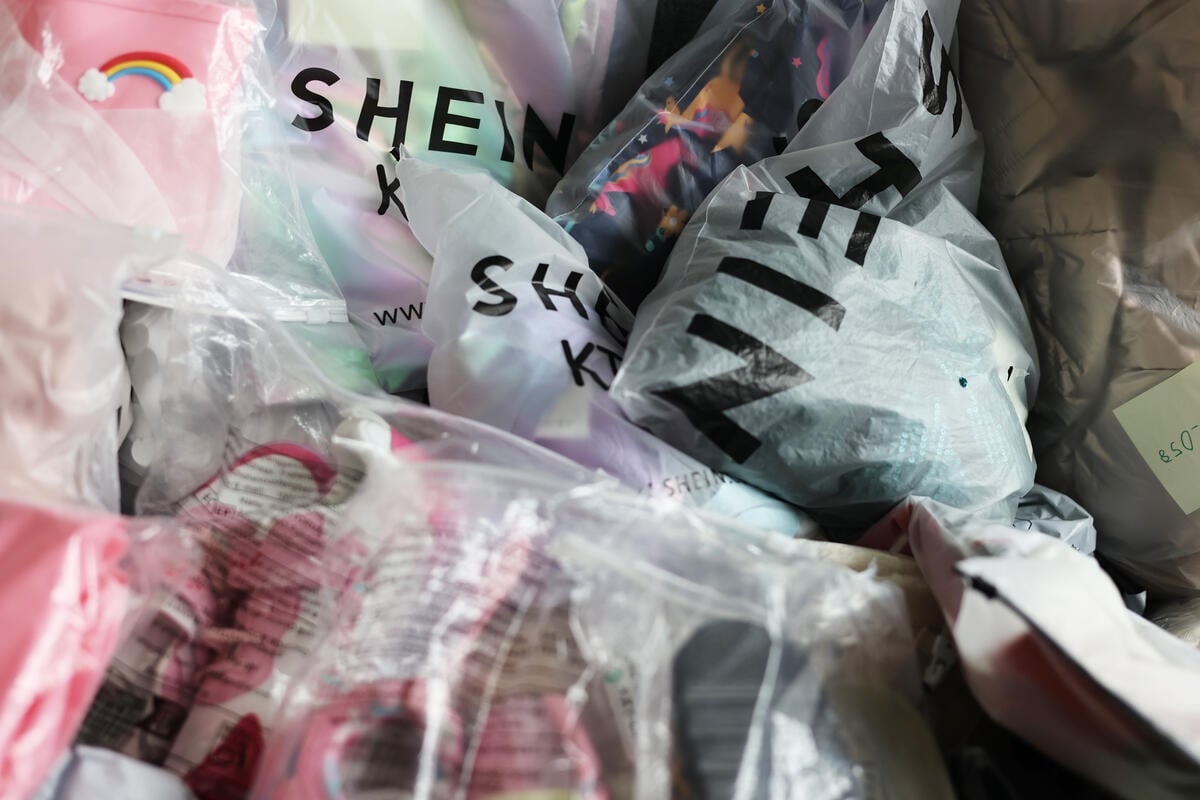
2. Choose your containers and cookware with care
It’s a lovely time of year for meals out and coffee dates but because non-toxic, reusable containers are not yet ubiquitous, bringing your own plastic-free containers whenever possible will reduce your plastic exposure and footprint. Plastic-lined coffee cups, “bioplastic” packaging and cutlery, and even take-out containers labeled as reusable, present an opportunity for contaminating our food and our bodies with microplastics and chemicals. Various kitchenware items in our homes also contain plastic. Large plastic spatulas and spoons, sieves and strainers, cutting boards, storage containers, sippy cups, electric kettles, blenders and Teflon or coated pans all can contain or are made from plastic. Scientists have begun to uncover how using these types of items contributes to our ingestion of microplastics and exposure to potentially toxic chemicals. There’s nothing festive about a charcuterie board seasoned with microplastics.
It’s not easy or affordable to do a full kitchen overhaul, but you can start by doing small changes like ditching plastic cutting boards, never heating plastic, and using stainless steel or cast iron instead of coated pots and pans. When hosting, remember reusable is best — ditch the single-use plates, cups, and cutlery and just use what you have on hand. Crowd source dishware when needed, that’s what friends are for.

3. Glitter isn’t glam, your inner sparkle is enough!
Who doesn’t want a little glitz at this time of year? So much of what is extra sparkly and shiny is a combination of plastic and metal, and it’s nothing but a beautiful nightmare. Glitter shows up in craft supplies, gift wrap, decorations, clothing, cosmetics, kids’ toys, costumes, party hats, and snow globes. Plastic glitter and sequins can easily shed into its surroundings, when clothing is being washed or crafts are being cleaned-up, it can shed down the drain, and when combined with paper or other materials, these products ruin recycling potential, sending them to landfill or incineration. And while some may claim to be biodegradable, it’s really not worth the potential pollution risk.

4. Resist the urge to purge
Out with the old and in with the new can be a useful mantra when letting go of negative vibes or questionable habits, but when it comes to “stuff”, we all need to resist the temptation to get the newer, trendier, or upgraded item. We live in an era where we’re being given mixed messages about simplifying our lives and our relationship with material things. We’re told to buy more, but also buy better. Wide leg jeans today, skinny jeans tomorrow. But purging in the name of decluttering isn’t an act for the planet. It can also overburden donation organizations. Unless the purge is paired with a commitment to minimalist living, chances are a lot of that stuff will eventually be replaced, increasing the resource burden. Buying a bunch of new stuff can result in a bunch more plastic produced, so try to ponder before you purge and consider what might be reused, refurbished, remanufactured, revived, refurnished, repurposed, remade, regifted, rotated out, rotated in, rearranged, reimagined, and/or relocated.

5. Cozy up with a petition to change the world.
Trying to dodge plastic can be exhausting. If you’re feeling overwhelmed, you’re not alone. We can only do so much in this broken plastic-obsessed system. Plastic producers and polluters need to be held accountable, and governments need to act faster to protect the health of people and the planet. The plastic crisis is a global problem demanding a global solution. We urgently need global governments to secure a strong UN Global Plastics Treaty that reduces global production and consumption, ends our reliance on problem plastics and chemicals, and accelerates a justice-centred transition to a reuse-based, zero waste future. Ensure your government doesn’t waste this once-in-a-generation opportunity to end the age of plastic. Sign our petition!
Climate Change
What would Trump’s Venezuela oil plans mean for climate change?
Announcing the capture of Venezuelan President Nicolás Maduro in a raid by US military forces at the weekend, Donald Trump made no secret of his ambitions to revive the South American nation’s ailing oil industry.
“We’re going to have our very large United States oil companies, the biggest anywhere in the world, go in, spend billions of dollars, fix the badly broken infrastructure … and start making money for the country,” the US president told a press conference on Saturday, saying the US would “run” Venezuela.
Venezuela has the largest proven crude oil reserves of any country in the world, but production in the largely state-controlled industry has fallen sharply over the past decade amid rampant corruption, mismanagement and crippling sanctions.
What are the climate risks of an oil production boost?
A significant production boost would unleash vast amounts of planet-heating greenhouse gases, particularly because Venezuela’s tar-like heavy oil requires energy-intensive extraction and processing techniques.
The Venezuelan oil industry’s methane emissions are also among the highest in the world per unit of oil produced, as excess gas is routinely burned rather than captured. Additionally, the country’s abandoned oil wells released at least 3 million metric tons of methane last year, according to the International Energy Agency (IEA).
“If oil production goes up, climate change will get worse sooner, and everybody loses, including the people of Venezuela,” John Sterman, an expert in climate and economics at the Massachusetts Institute of Technology, told Climate Home News.
“The climate damages suffered by Venezuela, along with other countries, will almost certainly outweigh any short-term economic benefit of selling a bit more oil,” Sterman said.
How likely is a new Venezuelan oil boom?
Venezuela’s distinctive dense and sticky oil, coupled with wider energy market dynamics, mean experts do not expect a surge in output in the short, or even longer, term.
Getting the oil out of the ground would require eye-watering levels of investment to bring in the necessary technology and expertise. Restoring Venezuela’s oil production to its late-1990s peak of 3 million barrels a day would require $20 billion more in capital investment than the top five US oil majors combined spent globally in 2024, according to consultancy Rystad Energy.
US Secretary of State Marco Rubio told journalists “we are pretty certain that there will be dramatic interest from Western companies”, without naming any specific firms. By Tuesday, the three biggest US oil companies, ExxonMobil, Chevron and ConocoPhillips, had not yet held any discussions with the Trump administration about Maduro’s removal, Reuters reported, but a meeting was expected by the end of the week.
According to a BloombergNEF analysis, the three US companies have cheaper and more stable investment options in Guyana, which borders Venezuela, along with Alaska and the Gulf of Mexico. It said the companies would need “stronger incentives” to lift production in Venezuela.
Does the world need more oil from Venezuela?
Oil majors might need a lot of convincing to pour cash into projects that could take years to yield results, especially when the world is in the midst of an oil glut. In 2025, crude oil production significantly outpaced demand, pushing prices down to the lowest level since the COVID-19 pandemic, according to the Energy Information Administration (EIA), a US federal agency.
With oil demand expected to peak around 2030 under a scenario based on governments’ stated climate policies, as outlined by the IEA, any increase in Venezuelan oil output risks entering a market that may be smaller and more competitive by the time new supplies come online.
In China, currently the biggest importer of Venezuelan crude, oil demand for fuel production has already flatlined due to the strong adoption of electric vehicles.
Does the US have other reasons to control Venezuela’s oil?
Geopolitics, rather than economics, might have played a bigger role in the US intervention.
Rubio said that while the US did not need Venezuela’s oil, it would not let the country’s oil industry be controlled by US adversaries, such as China, Russia and Iran.
“This is where we live, and we’re not going to allow the Western Hemisphere to be a base of operation for adversaries, competitors, and rivals of the United States,” Rubio said. “It’s as simple as that”.
“New era of climate extremes” as global warming fuels devastating impacts in 2025
In response, Colombia’s environment minister Irene Vélez said on X that the US “attack” on Venezuela paved the way for “a new fossil colonialism and the end of peaceful multilateralism”.
A group of Latin American countries including Brazil, Mexico and Chile issued a statement expressing concern over “any attempt at governmental control, administration, or external appropriation of natural or strategic resources, which would be incompatible with international law”.
How can the world protect itself from militarism over fossil fuels?
Climate advocates say the lesson that countries reliant on fossil fuel imports should draw from Trump’s actions in Venezuela is to shift away from oil and gas as fast as possible.
Mads Christensen, executive director at Greenpeace International, said “the only safe path forward is a just transition away from fossil fuels, one that protects health, safeguards ecosystems, and supports communities rather than sacrificing them for short-term profit”.
At COP30, more than 80 countries publicly endorsed the creation of a fossil fuel transition roadmap. The initiative will move its first steps this year under the Brazilian presidency, in partnership with the Colombian government, which will host the first global conference dedicated to the issue.
“This weekend’s events should be a nudge to them all to get to work this January and start drafting emergency plans to implement this,” said Mike Davis, chief executive of the Global Witness campaign group. “The longer they delay – and the fossil fuel lobbying machine will try and delay – the weaker their strategic positions will be.”
The post What would Trump’s Venezuela oil plans mean for climate change? appeared first on Climate Home News.
What would Trump’s Venezuela oil plans mean for climate change?
Climate Change
Indian law enforcement targets climate activists accused of opposing fossil fuels
Indian police have raided the homes and offices of high-profile Indian climate activists, on the orders of the government’s Enforcement Directorate, accusing them of jeopardising India’s energy security by campaigning against fossil fuels.
The Delhi home and offices of Harjeet Singh and his partner Jyoti Awasthi, who are co-founders of Satat Sampada Private Limited (SSPL) and Satat Sampada Climate Foundation, were searched on Monday in an operation that led to Singh’s arrest, according to a press release by the Enforcement Directorate (ED).
A statement issued on Wednesday by Satat Sampada, which promotes organic farming, sustainable development, climate action and environmental friendly solutions, said Singh had been granted bail on Tuesday by the District Court of Ghaziabad “on the merits of the case”.
The Hindustan Times reported, based on conversations with anonymous officials, that the ED had also searched the home of Sanjay Vashisht, director of Climate Action Network South Asia.
While the ED has not publicly announced its raid on Vashisht’s residence, it said that Satat Sampada was investigated on suspicion of illegally using around $667,000 in funding from outside India “to promote the agenda of the Fossil Fuel Non-Proliferation Treaty (FF-NPT) within India”.
Singh’s social media profiles state that he is a strategic advisor to the FFNPT Initiative. It is a non-governmental campaign that advocates for a “concrete, binding plan to end the expansion of new coal, oil and gas projects and manage a global transition away from fossil fuels”. Eighteen countries – mainly small islands – have so far backed the idea, along with 145 cities and subnational governments including India’s Kolkata.
India’s ED said on the FFNPT that while “presented as a climate initiative, its adoption could expose India to legal challenges in international forums like the International Court of Justice (ICJ) and severely compromise the nation’s energy security and economic development”.
The FFNPT Initiative declined to comment on the reports of Singh’s arrest.
In the statement issued by Satat Sampada on their behalf, Singh and Aswathi, who serves as its CEO, highlighted media reports about the raid and arrest, saying: “We categorically state that the allegations being reported are baseless, biased, and misleading.”
Warning of further crackdown
The Hindustan Times cited an anonymous ED official saying: “We received intelligence around the COP30 [climate summit] that some climate activists were campaigning against fossil fuels at the behest of some foreign organizations…This is when we decided to look at [Singh’s] foreign funding”. Another officer added that “similar activists or organisations whose climate campaigns may be inimical to India’s energy security are under the scanner”.
The ED said it suspected that Satat Sampada had received money from campaign groups like Climate Action Network and Stand.Earth, which in turn had received funds from “prior reference category” NGOs like Rockefeller Philanthrophy Advisors. Indian individuals and organisations are supposed to obtain permission from India’s Ministry of Home Affairs to receive funds from foreign donor agencies included in this “prior reference category”.
The ED’s statement did not mention finding any evidence in the search that Satat Sampada breached this requirements. But it said that bottles of liquor were discovered at Singh’s home which were “beyond the permissible limits”.
Singh was arrested on suspicion of breaching excise laws for the state of Uttar Pradesh. The ED’s statement and the Hindustan Times do not state that Awasthi and Vashisht were arrested.
Singh and Aswathi said in their statement that, during the ED search, “we fully cooperated and provided all relevant information and documentary evidence. We remain willing to extend complete cooperation and furnish any further information required by the competent authorities.”
“We urge media organisations to report responsibly and avoid speculation. We reiterate our faith in due process and the rule of law,” they added.
Climate Action Network International and its South Asia branch have been contacted for comment.
Climate justice advocate
Singh is a veteran international climate campaigner who has been particularly vocal on the responsibility of rich countries with historically high emissions to provide finance to help developing nations like India cut their emissions, adapt to climate change and deal with the loss and damage caused by global warming.
At COP30, Singh praised the Indian government for turning the “pressure back on wealthy nations, making it clear that the path to 1.5C requires the Global North to reach net zero far earlier than current target dates and finally deliver the trillions in finance owed”.
In 2020, India passed the Indian Foreign Contribution (Regulation) Amendment Bill which restricted foreign funding for Indian civil society groups. A December 2025 research paper in environmental politics pointed to this as an example of a growing trend among governments to repress climate activists by restricting funding.
In 2021, the Indian government arrested young climate activist Disha Ravi on suspicion of sedition for supporting protests by farmers against government policies. Nearly five years later, she remains on bail with conditions preventing her from travelling abroad.
India has yet to publish its latest national climate action plan, which it was due to submit to the United Nations climate body in 2025 along with other countries, around 70 of which have yet to do so.
The post Indian law enforcement targets climate activists accused of opposing fossil fuels appeared first on Climate Home News.
Indian law enforcement targets climate activists accused of opposing fossil fuels
Climate Change
India, Vietnam and Argentina fail to submit climate plans in 2025
India, Vietnam and Argentina are among the roughly 70 nations that did not submit updated climate plans to the United Nations in 2025, despite the 2015 Paris Agreement’s requirement that countries do so every five years.
According to Climate Action Tracker, about three-fifths of countries have submitted their latest nationally determined contributions (NDCs) to the UN climate body. Most of them landed in late 2025 and outline targets and measures to cut planet-heating emissions and adapt to climate impacts through to 2035.
Those countries that have formally submitted new NDCs include all G20 nations except India and Argentina. The Trump administration, meanwhile, has indicated it will not deliver on the US’s Biden-era NDC as it pulls the world’s second-largest emitting country out of the Paris Agreement. Saudi Arabia submitted its NDC, which does not contain any firm emissions reduction targets, on December 31.
Many of the governments that have not submitted NDCs are low-emitting small or poorer nations, especially in Africa. But major economies that have not submitted an NDC – some of which also have energy transition deals with donors – include Egypt, the Philippines and Vietnam.
The United Nations tried to encourage on-time submission of this third round of NDCs by setting soft deadlines. Just 13 countries met a first February 10 deadline and around 60 of the 195 signatories to the Paris Agreement met a September deadline, allowing them to be included in a key UN synthesis report.
The UN’s Paris Agreement Compliance Committee – made up of climate negotiators from different governments – has expressed concern about governments not submitting NDCs, or doing so late, and asked them to explain themselves.
After talking to governments that missed the February deadline, it found a host of obstacles including insufficient financial support; technical challenges like a lack of data or problems coordinating across sectors and including different groups; and other issues like political instability or genocide.
India keeps world guessing
The Indian government has been tight-lipped on its NDC, although an unnamed official told the Indian Express back in February that it was in “no hurry”.
The official added that the NDC would reflect India’s disappointment at the new global climate finance goal for 2035, agreed at COP29 in 2024. India has repeatedly argued that without sufficient climate finance, developing countries cannot be as ambitious as they would like to be in reducing emissions.
Some media outlets and analysts were expecting India to announced its NDC at COP30 in November. Instead, the Indian government said only during the summit that it would submit an NDC “on time”, with environment minister Bhupender Yadav telling reporters it would be “by December”.
Argentina sets emissions caps but no NDC
The right-wing government of Argentina, which has considered leaving the Paris Agreement, unveiled caps on the country’s emissions for 2030 and 2035 in an online event on November 3, but has yet to formalise those targets in an NDC.
At the event and in subsequent communications with Climate Home News, Undersecretary of the Environment Fernando Brom said the country would present its NDC during the first week of COP30. But that did not happen, although Argentinian negotiators participated in the climate summit.
Some local experts have pointed to November’s trade deal with the US as one of the reasons for the delay in submitting the NDC, while others cited the government’s disinterest in the climate agenda.
In contrast, the governments of Egypt and Vietnam have faced less scrutiny and have not publicly commented on whether and when their NDCs will be released.
In August, the Vietnamese government said it was “actively advancing the update” of its NDC. The country has a Just Energy Transition partnership with rich nations, but the International Energy Agency predicts coal use will continue to grow there until at least 2030, driven by power-hungry manufacturing.
The Philippines government has organised consultation events on its new NDC but has not said when it will be released.
This article originally said that Saudi Arabia had not submitted its NDC in 2025. Climate Home News later learned that the Saudi NDC was submitted to the UN climate body on December 31 by email but not published on the UNFCCC website until the start of 2026. The article has been amended to reflect this information.
The post India, Vietnam and Argentina fail to submit climate plans in 2025 appeared first on Climate Home News.
India, Vietnam and Argentina fail to submit climate plans in 2025
-
Greenhouse Gases5 months ago
Guest post: Why China is still building new coal – and when it might stop
-
Climate Change5 months ago
Guest post: Why China is still building new coal – and when it might stop
-
Climate Change2 years ago
Spanish-language misinformation on renewable energy spreads online, report shows
-
Greenhouse Gases2 years ago嘉宾来稿:满足中国增长的用电需求 光伏加储能“比新建煤电更实惠”
-
Climate Change Videos2 years ago
The toxic gas flares fuelling Nigeria’s climate change – BBC News
-

Climate Change2 years ago嘉宾来稿:满足中国增长的用电需求 光伏加储能“比新建煤电更实惠”
-
Carbon Footprint2 years agoUS SEC’s Climate Disclosure Rules Spur Renewed Interest in Carbon Credits
-
Climate Change2 years ago
Bill Discounting Climate Change in Florida’s Energy Policy Awaits DeSantis’ Approval
