

Weather Guard Lightning Tech

GE Vernova Q2 Results, Massive Iberdrola Share Sale
The Uptime hosts review GE Vernova’s Q2 financials, noting strong gas turbine orders and delays in onshore wind. They discuss PTC impacts on future turbine orders and Iberdrola’s €5 billion share sale for power grid expansions. An update on Vineyard Wind highlights ongoing blade issues and legal complexities. The wind farm of the week is the Nobles Two Wind Farm in Minnesota. Register for the next SkySpecs Webinar!
Sign up now for Uptime Tech News, our weekly email update on all things wind technology. This episode is sponsored by Weather Guard Lightning Tech. Learn more about Weather Guard’s StrikeTape Wind Turbine LPS retrofit. Follow the show on Facebook, YouTube, Twitter, Linkedin and visit Weather Guard on the web. And subscribe to Rosemary Barnes’ YouTube channel here. Have a question we can answer on the show? Email us!
You are listening to the Uptime Wind Energy Podcast brought to you by build turbines.com. Learn, train, and be a part of the Clean Energy Revolution. Visit build turbines.com today. Now, here’s your host. Alan Hall, Joel Saxon, Phil Ro, and Rosemary Barnes.
Allen Hall: Welcome back to the Uptime Wind Energy Podcast. I’m Alan Hall from the Queen City, Charlotte, North Carolina, and I got Phil Totaro in Santa Barbara, Cali, and Joel is back in the Lone Star state of Texas near Austin.
And. Uh, Q2 results came out from GE Renova. In fact, they had a little webinar this morning to discuss it. Uh, a lot of different aspects to ge. Renova, as we all know, nuclear sort of high voltage, little tiny bit transmission, but, uh, wind of course gas turbines. So they are definitely setting the course for [00:01:00] a gas turbine world.
And Phil, how, how far out are orders for their gas turbine products?
Phil Totaro: The last I heard talking to somebody from GE who said it was 2031 at this point, um, although things can be accelerated depending on if you’re willing to pay a bit of a premium, they can, uh, you know, move you up in the queue, so to speak.
Um, but it’s, uh, you know, it’s a pretty, uh, far off thing. Um, and unfortunately. You know, it looks like GE hasn’t announced a lot of new orders for onshore wind, but nobody has in the United States. Everybody was waiting in Q1 and Q2 to see what the outcome of the production tax credit, uh, changes were gonna be.
Now that we have definitive, you know, legislation on that. Um, it’s going to actually trigger a lot of safe harbor orders, uh, assuming that companies can actually deliver turbines. [00:02:00] Um, because in order to safe harbor, you actually have to physically receive and store, um, something equivalent to 5% of the CapEx cost of the project.
So that has to happen now before. Uh, July, 2026. And because of that, uh, I think you’re actually gonna see a lot of companies that had been holding off on placing their turbine supply orders. Uh, all of those are gonna start getting announced in Q3 and Q4, so it’s gonna be like a monster quarter. Uh, that’s gonna more than make up for any shortcomings from, uh, from this past quarter.
Joel Saxum: This is a, I’m, I’m dreaming here. Uh, could you see that this thing is, this legislation, the way it sits right now, all of a sudden all these orders come in and people are buying turbines to safe harbor them. And it’s just making that, that renewable industry economy just churn for a year. And then it comes down to it.
And like that is taking notice of by the administration, taking notice of like, Hey, actually there is demand for this renewable [00:03:00] energy. There is a ton of jobs happening here. There’s all kinds of people trucking, there’s all kinds of people delivering. And then like, maybe we should relax and change these things because this, they’re still moving forward.
Could you see that changing?
Phil Totaro: That is unlikely. But they’re definitely, I mean, we know how politics works, and this isn’t exclusive to any, you know, the current administration or any administration. They’re gonna take credit for the fact that the industry’s gonna be on a tear between now and July of next year.
One, because they changed, um, when the PTC phase out starts. But here’s the, here’s the real trick, Joel, and that’s something that everybody’s missed. There, the, the current rules, even though there’s an executive order to revise the rules for, uh, what constitutes the qualification for startup construction, the current rules that have been in place since 2013 still exist right now.
So there’s this huge gap in a window where if you safe harbor today. [00:04:00]Before the rules are changed, you can still, you still have four years from the time you safe harbor to actually, um, utilizing those turbines on the project that you safe harbor ’em forged. And keep in mind as well, when the IRS rules change, they’re not, it’s not a light switch, doesn’t happen immediately.
They make. Recommended changes that then become final, that’s likely to happen at the end of the year. So there’s a huge window now, and that’s goes back to my earlier comment, why everybody’s been waiting on announcing their turbine orders, but there’s gonna be a huge deluge of, of orders that are gonna happen between now and the end of this calendar year.
So, so Phil, let go,
Joel Saxum: go back to your, with GE or conversation between you and Alan about GE having. The equivalent of a lightning lane like you would at Disney pay a couple dollars extra and you get to go to the front of the line. Um, will there be a lightning lane from these OEMs because there’s only so much capacity, right?
Will there be a lightning lane from the OEMs to get things in the next year? [00:05:00] Wind turbines.
Phil Totaro: Yeah. ’cause again, it, it’s a good question. The problem again is it’s just whatever is already in order books, I, it’s, it’s gonna be a big challenge. And, and this is actually why it’s like a really good op opportunity for companies like Nordex to be honest.
Um, because you know, if, if Vestus and GE have full order books and you can’t. Get them to deliver you turbines fast enough where you’re gonna be able to qualify for, you know, safe harbor, uh, and qualify for PTC. Whatever these changes are gonna end up being, um, you know, by July of next year, everybody’s gonna be racing to deliver something.
At that point or, and, and I mean, keep in mind that when they change these, these PTC qualification rules at the IRS, what they’re likely to do is combine the safe harbor requirement with the physical construction requirement so that you have to be [00:06:00] doing both. Because right now it’s an either or. They’re probably gonna make that an and and that’s gonna be the biggest change
Allen Hall: in Spanish energy, giant iro.
Has announced, hold on tight. A 5 billion euro share sale, which, uh, the largest in Europe this year to fund massive expansion in its power grid networks, particularly in two places the United States and the United Kingdom. And the company will focus on transmission and distribution infrastructure. With regulated assets, uh, which are expected to more than triple.
Uh, so their growth is going to be big, but they have to fundraise a little bit. And Phil is a little more, it’s happening behind the scenes, right? So ebaa, although they’re issuing, uh, more shares to raise about $5 billion, and it looks like there’s a discount on those shares, so you can, um, what it looked like to me, make a couple of percentage points if you bought these shares.[00:07:00]
They’re still looking at selling some assets to fundraise some more because it looks like Berroa is going big time in transmission.
Phil Totaro: Yes, so it was publicly reported today as we record that they’ve hired a bank to look at, uh, up to $4 billion, or I’m sorry, 4 billion euros worth of asset sales in Mexico.
Um, one because the Mexican market is kind of going nowhere fast, even with the, uh, the change in their, uh, political leadership. Um, but second. You know, as you mentioned, Alan, they, they wanna be able to take this money, uh, from, you know, asset sales from capital raise and plow it into transmission assets, which, you know, they’ve basically.
Pivoted their attitude. It’s not that they’re going to necessarily stop doing, um, you know, renewables project build out, but they definitely want to be a bigger player in the [00:08:00] transmission space because regardless of whatever power generation gets put on the grid, it’s gonna have to have more grid, uh, to accommodate the, the increasing demand that we see globally.
Is that the safest bet in renewables, the transmission? Well, uh, yes, except if you’re grain belt express. Ouch.
Allen Hall: But if you know you’re gonna put on some sort of electric generation, be it gas, be it nuclear, be it solar, be it wind, whatever, it’s still gonna be electricity and they’re gonna still need to be able to deliver it.
That would make transmission the linchpin to all of it. That’s what we’ve been saying on the podcast for what, the last
Phil Totaro: two years? A hundred percent. I mean. That’s, that’s always been the case. And, and you know, I’ve even said this, I, I believe Rosemary said it about, uh, Australia as well. What we’ve seen in terms of capacity build out in renewable energy is that we build where there’s existing transmission and there’s also been kind of relatively [00:09:00] high sustained winds.
So for those familiar with it, it’s like IEC class one kind of wind sites. A lot of that. You know, those were the turbines that we deployed, you know, 20, 25, 30 years ago. Uh, you know, back in, I wanna say around 2011, we shifted down into Class two wind. So something like, you know, eight or so meters per second.
Now we’re at class three or Class S wind, where it’s maybe six and a half to seven meters per second. And now we’re starting to repower the, the project sites that have class one winds. When you build new transmission, it opens up more wind regime or you know, more space for solar or whatever, but it. New build out of transmission necessarily unlocks more capacity additions in all wind regimes and in all wind classes.
Uh, so the more transmission can get built, the more opportunity there is for. You know, wind and solar, but any [00:10:00] form of power generation really. Well,
Joel Saxum: it makes absolute sense for an eroll, right? Because they’re into all kinds of stuff. They’re into battery storage, solar, wind. So basically they’re, they’re, they’re hedging their operational assets by building this transmission.
And we know we need it. Uh, and, and it’s not just the US and UK that needs this, this transmission buildup. The global grid needs to be optimized in a better way. Now one of the big ones like, okay, I’m sitting down here in Texas, right? So I watch a lot stuff. Um, there is a bunch of power lines in Texas, in West Texas that can come back to Dallas, back to San Antonio, back through Austin, to Houston, and it’s called Crez.
They call it cre. The crez line, CREZ. What it, what it stands for is competitive renewable energy zone. So basically it’s a 765 kilovolt line or line that go out west to gather all of that wind resource and bring it to the cities. Ercot did that a while ago. Um, and maybe Phil, you know, the year [00:11:00] they did it, I don’t remember what it was, but other states, other, other areas, other countries should look at that as an op, as a, as a.
Framework, and I think Uber Patrol sees that as like, this is the next thing we need to do this to be able to expand everything else. With the addition of these AI data centers, we’ve had guests on talking about different loads and spikes and these kind of things that we need to be able to manage better in the grid.
And if we don’t, we’re gonna start hurting ourselves. So, uh, I think this is a great move by able draw.
Allen Hall: Are you worried about unexpected blade root failures and the high cost of repairs? Meet eco pitch by Onyx Insight. The standard in blade root monitoring. Onyx state-of-the-art sensor tracks blade root movement in real time, delivering continuous data to keep your wind farm running smoothly and efficiently.
With eco pitch, you can catch problems early, saving hundreds of thousands of dollars. Field tested on over 3000 blades. It’s proven reliability at your fingertips. Choose Eco pitch for peace [00:12:00] of mind. Contact Onyx Insight today to schedule your demo of Eco Pitch and experience the future of blade monitoring.
Well, an update from the new Bedford L newspaper in Massachusetts on the status of vineyard wind. It’s pretty hard to get any information outta ge. Renova and Ebert patrol on vineyard wind at the moment. And rightfully so, they’re trying to keep their head down and get this project done. It is America’s first commercial scale offshore wind farm, and it’s making some progress now.
Uh, 17 turbines are connected to the grid up from four, just a couple of months ago, and it’s gonna be and finished about a 800 megawatt project and. They’re still having a little bit of trouble it looks like, uh, in terms of getting turbines planted and some of the satellite imagery and the reporting that was done here by Anastasia Lenin in, in the new Bedford [00:13:00] Light is interesting because, uh, although there’s what about 40 turbines in the water at the minute?
Joel, is it roughly half of them still need blades replaced?
Joel Saxum: Yeah, well I think some of that is conjecture. We’re not a hundred percent sure. The only people that know this is, you know, GE and the contractors on site, to be honest with you. Right. We, we know that there’s some that need to be done and they are taking them and then bringing ’em all the way over to France, fixing them there, and then bringing ’em back, which is a crazy concept.
But hey, that’s what happens when you have the Jones Act. I’m sorry, we did that to ourselves. Um, so we do know that that’s still an ongoing project. We also know some people that have been around that project. Uh, so GEs doing, in my opinion, ge iss doing the right thing here by getting these things built, fixed, done in the factory, uh, done in, you know, quality controlled facilities, uh, rather than hanging them and try to fix things up tower.
Because to be honest with you, that happens in the wind industry quite often. Um, on [00:14:00] onshore construction projects, not offshore construction projects. You’ll see blades come to site, get dropped off, have an issue, and they just basically do an engineering assessment and say, is this this? You’re gonna hurt this thing if we hang it right now?
No. So they’re like, all right, keep it moving. Get that crane, get them hung up. So then you have blade crews come afterwards, after the project is ready to go, and they’re up internally and externally fixing blades on ropes or in baskets or whatever like that. Of course, that’s inefficient and it’s not the best quality control for a repair.
But that’s how you keep construction timelines moving. So it’s a. A common practice in the wind industry,
Allen Hall: it looks like. Uh, GE Renovo has brought in a second jack up vessel also to expedite some of this work, uh, wind pace, which is a jack up vessel from Denmark, from what it looks like is now on site. I, I guess they’re trying to finish this project, right?
They would like to be done in 2025. I do think it’s gonna run over into 2026 a little bit. I mean, that’s what the current outlet outlook is because they, uh, extended [00:15:00] a lease at the New Bedford Marine Commerce terminal through June of 2026. So there must be a little bit of work going on. Uh, but that’s gotta cost you even over hundreds of thousands of dollars to do that.
Joel Saxum: That’s hundreds of thousands of dollars a day. A jack, a jack with a crane on it to expedite blade work is big dollars. Your hundreds of thousands of dollars a day. That’s why everything we say offshore, this is an old oil and gas thing. If it goes offshore, add a zero on the end of it because that’s what, that’s how it works.
Um, Alan, let me ask you this one, are they working year round on these sites? Because I know some of our, our North Atlantic friends and offshore wind, they shut down for parts of the winter. They don’t do construction in the winter.
Allen Hall: I don’t think they’ll shut down. I think they worked a good bit of time over last winter.
I don’t think it was completely shut down. It couldn’t have been. The only thing they were waiting for was really to get the blades back where they could get going again. And obviously they had a lot of work to do to, to [00:16:00] suss out what the problem was and figure out a way to get the blades updated properly.
Uh, that amount of money equals what Joel just, just say. Starting today, it’s, we’re in the middle of July. Say it’s gonna run to early 2026, say February, 2026. How much money are we talking about then? How many millions of dollars?
Joel Saxum: Uh, I’m gonna go with 220 extra days. That vessel is more than likely. Now that vessel does not come by itself.
Usually that vessel’s gonna come with a its own feeder, barge, crew, and all that good stuff, right? So 30 to 35 million extra. Just for that vessel. Now, you, we haven’t taken into consideration the cost of shipping all those blades back to France and fixing ’em and coming back across, I’m just talking about on onsite construction costs.
Allen Hall: Well, if you look at the QT results from GE Renovo on the wind side, they’re predicting EBITDA losses, uh, summer in the 200 [00:17:00] to $400 million range. And I, I have to wonder if a good bit of that is offshore, but I know we’ve been talking about this quite a bit internally. It may not be all offshore. And that’s Phil’s point.
Phil was saying that, that the offshore business may not be losing as much as we think we, there could be a considerable amount of losses onshore at the minute. Of course we don’t
Joel Saxum: know this because we’re not deep into this project. Right. But there may be some GE shared costs, some e shared cost, you know, so like the vineyard wind may be taking some of that on GE may be taking some of that on.
And this is the big and. There may be an insurance policy, it’s insurance policy that’s taking on some of that. And, and if there isn’t taking on right now, guarantee you there’s a court battle going on somewhere to see who is gonna pay for it. So like, I don’t, I don’t know if GEs taking the full hit for that stuff or, and or if GE did, then they more than likely have a construction policy somewhere that may be handling some of the costs.[00:18:00]
I’m not a hundred percent sure. Right.
Allen Hall: Can we, the reason they’re delayed. Primarily is because of the blade issues.
Joel Saxum: Are the blade issues. So this is where what you start digging down, doing RCA, all this stuff, is the blade issues negligent or the blade issues horse majeure,
Allen Hall: it’s contract
Joel Saxum: language.
Allen Hall: How are you going to define the failure or the problem that happened in the blades?
I don’t wanna use the word failure, but the problems they have with the blade. How would you classify them?
Joel Saxum: Exactly. And then you have bi too, so like, and an insurance policy may be picking up. You may be paying for the property damage. Maybe the insurance policy is paying for the business interruption where you were supposed to be done.
Whatever drop dead date was 800 megawatts of production should, should be rolling at some point in time. And, and there, there was a date to that and a business interruption cost, construction insurance policy. And if it overruns and it can be pointed back to things they couldn’t control, insurance will pick that, those that up.
But they have to be able to point at something [00:19:00] classified as something they couldn’t control. In the contract link, and I don’t know exactly what that contract looks like.
Allen Hall: Me either, but you know, they must be discussing it internally. They have to.
Joel Saxum: Oh, there’s, oh, there’s, there’s, there is hundreds of lawyers spooled up on this thing.
And Gary, and they have been since last summer when this happened.
Allen Hall: Does that explain some of the, uh, framing of the blade issue and. Not hearing a lot about the factory up in gas bay and all of that is the consequences on the backside are worse than, could be, worse than just the quality problems they had in Gas Bay.
Joel Saxum: Think about the, like a, any kind of legal happening, right? The first thing the lawyers like, don’t talk to anybody, don’t tell anybody this, that, you know, don’t you know you ran over your neighbor’s dog. Don’t talk to him. Like that’s the first thing, like, we need to control this. You know what I mean? Um. So absolutely.
When people are like, why aren’t you sharing this? [00:20:00] Why aren’t you this? It’s because they’re posturing for hundreds of millions of dollars of lawsuits and insurance claims possibly, and you don’t know which way it’s gonna go. So immediately, the legal teams from ge, like you said, a long time ago, they probably swooped in like hawks on these places and were like, zipper, zipper, zipper gag order.
Stop talking. Don’t say anything. And that’s, to be honest with you, that’s, that’s, that’s what they have to do. That’s. That’s, that’s business and, and in the United States specifically being an extremely litigious society. That’s just the reality of doing business here.
Allen Hall: Don’t let blade damage catch you off guard OGs.
Ping sensors detect issues before they become expensive. Time consuming problems from ice buildup and lightning strikes to pitch misalignment in internal blade cracks. OG Ping has you covered The cutting edge sensors are easy to install, giving you the power to stop damage before it’s too late. Visit eLog ping.com and take control of your turbine’s health today.[00:21:00]
Well, it, it gets to my subsequent question because I thought we were gonna go down this avenue. Canadian law, American law, French law, there’s a lot of legal systems involved in this, I would assume. My guess is that they didn’t sign a contract. Well, maybe they did. Maybe they signed a contract that was based on Massachusetts court law and that’s what they ended up doing because it’s a Massachusetts project.
I doubt it though. You see what I’m saying? All, all, all the legal aspects about why are we sending blades over to France to get repaired instead of up back up to Canada. There’s a lot of moving pieces here that never really made sense, and maybe it all is derived from, uh, the litigation standpoint. Like we just.
Need to find a way to do one to do this right. I think GE Renova gotta give him some credit, flooded the place with engineers to figure out what was happening, and then started to get in front of it. And this goes back to the, [00:22:00] we haven’t talked about on the podcast, but GE Renova sounded like a $10 million agreement with the city of Nantucket about the problem they have with the broken blade, right?
So GE is trying to settle this thing as quickly as they can, but. It has to be. It is a, my guess is, is a global court case on some level. ’cause Ebore is involved. G Renova, Canada, France,
Joel Saxum: I gotta say Yes, absolutely. Because things, because contracts cross, right? So like you and I sign a contract together when you and I sign a contract together for whatever it’s, you know, like.
We’re gonna eat cheese sandwiches every Tuesday at 10, whatever we say this, this contract is written by the laws of the state of Texas, or the laws of the state of Delaware where something’s incorporated, or the laws of North Carolina where you live, whatever. We dictate that. However, if you have a GE turbine supply agreement, a vineyard wind, which has an roa and.[00:23:00]
Ted, you have, so you have a Danish company. You have a Spanish company. They’ve created a jv. That JV may or may sit in the United States, or The Bahamas, who knows, right? Delaware would be a good choice. So you have those entities with things all over the place, and then you’ve got an insurance policy that more than likely is written out of London.
So you end up in all these, these and, and those contracts. So that con that that insurance policy may be written between them and the Delaware entity of of vineyard wind. Great. But now that thing references someone else in a turbine supply agreement and that contract is written between this country and that country.
So we’re gonna fight it out in these court laws. All of a sudden gets really freaking cloudy and you end up with, I don’t know, lawyers from, you ever see the TV show seats? Oh
Allen Hall: yeah.
Joel Saxum: You end up with those guys, those $2,000 an hour people hanging around, you know, that’s what’s, [00:24:00] that’s
Allen Hall 2025: what’s happening. I’m sure.
Go back to, to my sort of original question about this. It looks like GE Vernova is trying to one, wrap this project up. They’ve brought another jack-up vessel in to try to, my guess is reduce the business interruption costs. But two is just looking to finish this project, and I wonder if they’re just negotiating this behind the scenes to just clear the deck when the last turbine goes in and they flip on the power.
GE Vernova from an installation standpoint and a contractual standpoint just considers it done. They’re gonna settle up with everybody. At the end and there’s not gonna be any lawsuits. I wonder if that’s happening right now. ’cause it does feel like Vernova is a little flush with cash right now and wants to finish this.
Joel Saxum: I bet. Yes.
And
there’s the concept in general, people say throwing in good money after bad. I mean technically you’re doing that if you are GE here. But at the end of the day, like you don’t wanna drag this thing out. You wanna get it done and, you’re reducing [00:25:00] your risk exposure.
Just get this thing done. Hit it off the books. We’ve said we’re not gonna do offshore, we’re not taking extra orders and stuff right now. However, we’re gonna build an 18 gigawatt machine up in Norway. But there’s a strategic thing that we’ve listened to Scott Straza, talk about for a while and vi Abate talk about for a while about where ge it was wind businesses going.
And you can see that they’re executing on that by trying to get this thing done and off the books operationally so they can move forward. ’cause it is. I mean, it’s gotta be a drag. I would imagine you see another a hundred to 200 layoffs as soon as this thing’s done at ge.
Allen Hall: Oh, on the offshore side? Sure.
Yeah. Yeah. They just want to be, want to be out. Yeah, because onshore business is not bad. They’re, they’re, they’re trying to do a couple of things simultaneously, which is always hard for a big company to do. On offshore wind, they’re trying to get out of it. But Joel, you’re right, they’re linked this turbine in doorway.
Okay, sure. Unsure wise, [00:26:00] you know, the orders are coming in and the, if they’re having any issues, it’s outside the United States generally. They’re having some trouble selling some onshore turbines overseas, which I get. And they’re also trying to improve the performance of the existing onshore fleet, which, so you hear a lot of.
Talk about that in the industry that you’re each trying to improve the operations of the turbines. Great. That just goes back to they’re trying to right the ship and make this thing profitable because you’re trying to be profitable at the end of 2024. We’re now, we’re in mid 2025. We haven’t quite gotten that yet.
We’re a couple hundred million dollars short. But if the offshore, which is vineyard wind, if vineyard wind was wrapped up, I think they would be in decent shape. Not great shape, but decent shape.
Joel Saxum: So, like you said, they’re, they’re trying to right the ship in the seal. Now you and I have both been doing some GE wind farms in the last few weeks and talked with some people there and you know, a lot of ’em are on FSA and, and when GE originally rolled out [00:27:00] this hub and spoke model here in the states, you’re a, you’re a technician, you’re here, but you might service these, I don’t know, two to 10 wind farms within two hours of your house or however it works that everybody was up in arms.
What, what the hell is going on here? I can’t, this technician here, this technician here. That’s been about a year and a half, two years.
Allen Hall: Yeah. 18 months-ish. Right. Maybe, maybe two years. Yeah. And what I,
Joel Saxum: what I felt the, the, the feeling in the field, now this is intrinsic, this is anecdotal, right? Is that that’s settled down a bit and the people.
The people are like, Hey, I normally have these same four technicians all the time. ’cause I think the operators, they complained enough where they’re like, stop sending me a new guy every day. So they got the same, the same teams, right? The same 1, 2, 3, depending on the size of the, the farm. 1, 2, 3, 4, 5 guys, you know?
And then, okay, if quarterly or yearly maintenance pops up, you might see a couple extra two or three coming in or an OR or an ISP that’s contracted by GE to come in to help [00:28:00] with yearly and quarterly maintenances and those kind of things. But for the most part. People know the turbines. I mean, it comes as simple as this.
Like these sites are a pain in the butt to get around on. That’s where like we use the dispatch app whenever we’re out, right? Because it’s like I need to find ’em a way to this turbine. Thanks. Thanks. So I can map my way there.
Allen Hall: Shout out dispatch.
Joel Saxum: Yeah, thanks Alex and Reed and team. Um, but either way, just that simple thing of having new technicians all the time that they can’t get around site, that cuts your efficiency down.
That cuts. Now, if you’re not efficient, getting to the turbine. You’re not gonna be efficient in fixing it, right? You’re gonna have more downtime. And then in, and the big thing here is liquidated damages. Like you gotta make sure those turbines are up and running. So I see, I, I feel and see that in the field, GE is doing a little bit better.
Um, also to to note, right? We we’re always on wind farms, a lot of times on wind farms with these two x machines or the late version. One X is the one, six is the one eights, those kind of things. Now they’ve had some soak time in the field. So [00:29:00] they have the people know more about them. The troubleshooting is a little bit more
Allen Hall: sussed out.
I’ve lost track of the generation of the blaze that are out there. 6, 7, 8.
Joel Saxum: Yeah, we’re on like generation nine, the two, blah, blah, blah. But either way, the machines themselves have been installed since the 56 9 and the, and the 62 2 2 Xs and been in the field shirt man, six, seven years now. But like. You’ve, you’ve got people that know how to fix these things by now in ge, as long as you don’t have turnover, the maintenance should be getting better.
The service should be, the uptime should be increasing. That’s, that’s the goal. Um, you know, they do have some, I don’t wanna say serial issues, but most of them have been sorted through. So
Allen Hall: the big problem, I think for GE as they try to. Get the machine running again, o obviously, uh, there’s a discussion about small modular reactors within GE and maybe having a deal up in, was it in Canada today?[00:30:00]
And there’s money rolling in on some of the other divisions, and rightly so. A lot of the staff that was at GE was to say, say three, four years ago is gone. And we’ve run into those really some really great former GE people. At the operations side all over that know, uh, where, uh, the problems lie in those turbines.
And I, I, I always wonder when we run into a GE person that worked at GE Turnover for a while, and that was on the other side of the fence, that is gotta be a big pain point for GE Renova because those engineers are smart enough to know, and there’s a network of them. It’s not just a couple, a handful.
There’s. Hundreds that are all connected to one another that can talk to one another now and can say, Hey, we need to get this fixed. We need to raise this issue. We need to raise that issue. We need to get this resolved. That’s gotta be sort of a burden on. I, I think the [00:31:00] renova onshore business that they didn’t really anticipate that there’s so many smart people who had insight into what was happening behind the seeds that are now able to push the right buttons.
They know how to push the buttons, and they know how the internal workings, uh, of GE renova operate. I, I, I think they got another 12 months of trying to suss out that, that business, don’t you? I think it is gonna be 2026 before they’re clean, profitable, making some money.
Joel Saxum: Yeah, I’ll, I’ll give the, let’s talk about that one for a second.
All these fantastic engineers and asset manager type people that are in the market now, some of them have landed as, some of them have done their own independent consultant things. Some have landed at ISPs, but some have landed at, they’ve landed at operators and they become, I’m now the GE specialist here at this, at this place.
The advantage that those peoples had, so, so I would say, say this to an operator. Hire one of them. Hire one of them [00:32:00] because the advantage that they have that we don’t say I’m, and by we, I’m pointing at myself, but I mean Alan, myself, like the weather guard team, anybody who’s in an aftermarket type company, uh, or an ISP even.
We don’t have the advantage of knowing the org chart and who to contact and where to push this button and what, what, uh, what finger to pull on and, and where we can find the person that we need to talk to about this solution. We don’t have that. So we are constantly asking people like, Hey, do you, do you know someone here so we can Yes.
And those connections we made. Those people know the people. They know the persons that sat, that sat in their team. Oh, this guy was the, uh, he was the gearbox guru. This guy knew all the, he was the charge of the generators. He, this guy was the blade person, and he, he actually was the blade person for this specific blade model, blah, blah, blah, blah.
Call him like, it’s, it’s amazing to have that network. So I think that, yeah, it’s a, um, what would you call it, like a sleeping dragon or something like that? Not necessarily a sleeping dragon, but like, they let loose this like this. [00:33:00]These teams and now the teams are coalescing on the outside going like, oh, we know how to fix this.
Allen Hall: Right? If you listened to people who have left Siemens cesa or Vestus, a lot of them, because they’re in Northern Europe, end up in oil and gas. Weirdly enough, at least the ones that I know ended up in oil and gas, they don’t necessarily stay in the wind industry. They’re like, that was fun. I learned a lot, and now I’m moving on to some other.
Job outside of wind in the us that’s not necessarily the case. They don’t do that. They tend to stay in when a significant portion of them, so the, the vestas in the semen ESAs of the world don’t really have that problem. Ge Ver Nova does, I think it’s a unique situation to them. It’s gonna be a. Uh, it’s, it’s when you start thinking about the scope of the problem and when they announced their Q2 results, I, I thought, oh, they’re trying to clean things up.
That’s great. And they’re trying to finish vineyard wind. Awesome. Good on them. But it may go on a little longer [00:34:00] than we think because there’s so many smart people out there who know how Renova operates. The Wind Farm of
Joel Saxum: the week this week is the Nobles two Wind Farm up in Minnesota. And the reason we’re focusing on Minnesota this week is ’cause I want to talk a little bit about their clean electricity and renewable portfolio standards, because they’re one of the first ones to really start changing these things besides, uh, California.
So in early 2 20 23, the in Minnesota House require all electric utilities to achieve a hundred percent carbon free electricity by 2040 as a, as a law. Their interim targets are 80% by 20, 30, 60% for non-public utilities, but public utilities, 80% and 90% by 2035, and then a hundred percent by 2040. So these carbon free sources include wind, solar, hydroelectric, biomass, nuclear, which has been in the news lately, and clean hydrogen.
And so there’s, there’s some nuanced rules and things around that. But the renewable portfolio standard says they gotta be moving [00:35:00] towards renewables. So that brings us to our wind. Yeah. Our wind farm of the week. Uh, the, the Nobles Two Wind Farm and this is in Wilmont, uh, in southwest Minnesota. It’s approximately, uh, 15 miles north of Worthington.
If you’re from that area, you know that area. Worthington’s a big farm community. Uh, it’s a 250 megawatt wind farm, uh, powered by 74 Vest is turbines. The V 1 36, which we are familiar with. They can started construction in August of 2019, and the construction contractor on this one was Mortenson. Uh, this Noble’s two Power is owned by an, uh, a joint venture that has 10 Nasca and elite and Bright Canyon energy.
So we know the elite team. They’re up there in Duluth, Minnesota, 10 Nasca, of course, big operator, uh, and uh, big maintenance company. They do a lot of that stuff. There is a 20 year PPA on this project with Minnesota Power. One of the other things I wanted to focus on, so what that that [00:36:00] legislation did in Minnesota is it said, we’re gonna do this.
It’s gonna be development based. We got a lot of things to do, but just this one project bought brought over $15 million in contracts awarded to local businesses. That is the, that’s the crux of, so how we get things done here in America and the rural communities. Worthington being a farm community, right?
We’ve. You pass some legislation that makes sense, and then you bring $15 million worth of local contracts just during construction. That doesn’t count the, the 15 local employees for permanent staff, um, that are gonna be hired there. The $1 million in county tax revenue every year, the $15,000 to the communities, the every year, the $30,000 donations to the local first responders, and all of the amazing things that these renewable energy developments do.
So, uh, for that, the Tenasia team there with, uh, elite and Bright Canyon Energy, year Nobles two wind [00:37:00] charm. Up there in Minnesota is the wind charm of the week.
Allen Hall: And that’s gonna do it for this week’s Uptime Wind Energy podcast. Thanks for joining us, and we’ll see you here. Same time, same place. For the Uptime Winner Energy podcast next week.
https://weatherguardwind.com/vernova-q2-iberdrola-share/

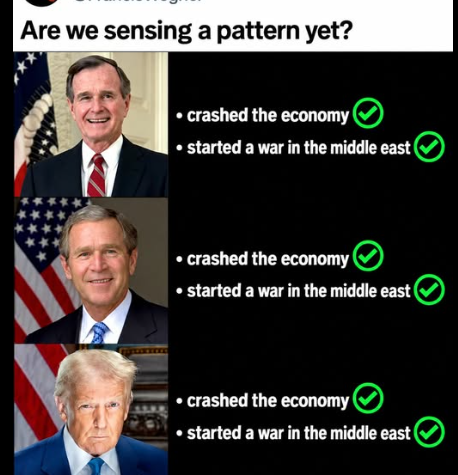 I’m not sure it’s as simple as this, insofar as Bush 41 and 43 weren’t criminal sociopaths.
I happened to be driving through Manhattan on the very day that Colin Powell was addressing the United Nations just a few miles away and claimed, and I think honestly, that Saddam Hussein had “weapons of mass destruction,” and must be stopped by a U.S. military invasion.
Contrast that against what we’re doing in Iran. Fifteen years ago, the Joint Comprehensive Plan of Action (JCPOA), included Iran, the P5+1 nations (the United States, China, Russia, France, the United Kingdom, and Germany), alongside the European Union made an agreement in which most of the developed world agreed that Iran must not have a nuclear weapon.
That stood firmly in place until Trump’s latest war crime, which is costing lives and choking the world economy, solely to defend our president’s neuroses.
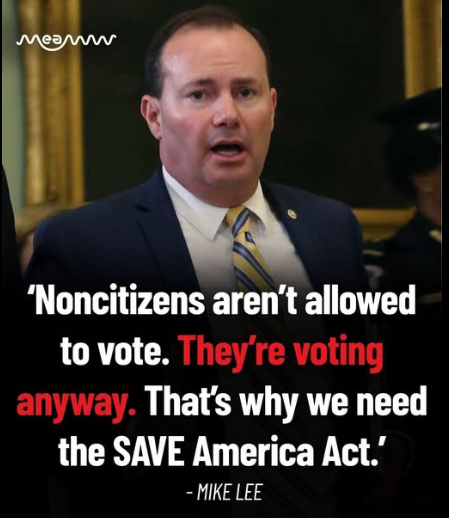 The Brennan Center at NYU’s seminal report on this issue, The Truth About Voter Fraud, found that most reported incidents of voter fraud are actually traceable to other sources, such as clerical errors or bad data matching practices. The report reviewed elections that had been meticulously studied for voter fraud and found incident rates between 0.0003 percent and 0.0025 percent.
Does that stop liars like Mike Lee from spreading disinformation of the subject? Of course not.
There is no judgement day. There is no Saint Peter standing in front of the Pearly Gates discerning good from evil and acting according.
That’s a lucky break for Mike Lee.
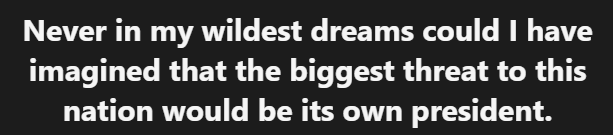 For most of our lives, many of us boomers have believed that the biggest threat to the United States was our president, starting with Tricky Dick Nixon, the inventor of the “trickle-down economics,” liar Ronald Reagan, and GW (the moron) Bush.
But yes, none of us was prepared for the cold, calculating criminal who is Donald Trump.
There Were Prior Threats to the Nation Stemming from the White House



-

 Greenhouse Gases2 years ago
嘉宾来稿:满足中国增长的用电需求 光伏加储能“比新建煤电更实惠”
-
Climate Change1 year ago
Guest post: Why China is still building new coal – and when it might stop
-
Greenhouse Gases1 year ago
Guest post: Why China is still building new coal – and when it might stop
-

 Climate Change2 years ago
嘉宾来稿:满足中国增长的用电需求 光伏加储能“比新建煤电更实惠”
-
Climate Change2 years ago
Bill Discounting Climate Change in Florida’s Energy Policy Awaits DeSantis’ Approval
-

 Renewable Energy11 months ago
Sending Progressive Philanthropist George Soros to Prison?
-
Greenhouse Gases1 year ago
嘉宾来稿:探究火山喷发如何影响气候预测
-

 Climate Change2 years ago
Analysis: China’s CO2 falls 1% in Q2 2024 in first quarterly drop since Covid-19