

Weather Guard Lightning Tech
Europe Weighs Chinese Turbines Against Energy Independence
Allen covers the debate over Chinese wind turbines in Europe, from data security concerns and unfair subsidies to the risk of trading one energy dependency for another.
Sign up now for Uptime Tech News, our weekly email update on all things wind technology. This episode is sponsored by Weather Guard Lightning Tech. Learn more about Weather Guard’s StrikeTape Wind Turbine LPS retrofit. Follow the show on Facebook, YouTube, Twitter, Linkedin and visit Weather Guard on the web. And subscribe to Rosemary Barnes’ YouTube channel here. Have a question we can answer on the show? Email us!
Wind energy is one of Europe’s great strengths.
Providing twenty percent of European electricity today.
Over half by 2050.
That’s the plan.
Competitive. Homegrown. Quick to build.
Almost every wind turbine spinning in Europe today was made in Europe.
By European companies.
Assembled in European factories.
Hundreds of factories across the continent make components for wind turbines.
Over Four hundred thousand Europeans punch the clock in wind energy.
Every new turbine generates sixteen million euros of economic activity.
And this week, proof of that investment.
In Germany, the He Dreiht offshore wind farm just sent its first power into the grid.
Nine hundred sixty megawatts.
Germany’s largest offshore wind farm.
VESTAS turbines standing one hundred forty-two meters tall.
Sixty-four turbines total.
All commissioned by summer 2026.
NILS DE BAAR of VESTAS said the fifteen megawatt turbine sets new standards in offshore wind power.
European technology.
European manufacturing.
European energy.
In Ireland, more European investment.
SSE and FUTURENERGY IRELAND tapped NORDEX to build the Wind Farm in County Donegal.
Twelve turbines.
Sixty megawatts.
One hundred thirty-eight million dollars.
Forty thousand Irish homes powered when those blades turn in 2027.
And in Scotland and Italy, floating wind is consolidating.
NADARA is acquiring BLUEFLOAT ENERGY’s stake in ten floating offshore projects.
BROADSHORE. BELLROCK. SINCLAIR. SCARABEN.
Nearly three gigawatts of floating wind now under single European ownership.
Today’s wind farms save Europe one hundred billion cubic meters of gas imports every year.
In Britain alone, consumers saved one hundred four billion pounds between 2010 and 2023.
That’s after factoring in the cost of building the wind farms.
Wind means lower energy bills.
Wind means independence.
But here comes the temptation.
Chinese turbines are cheaper.
Much cheaper.
And in times of strained budgets and rising costs…
That’s hard to ignore.
GILES DICKSON is the CEO of WINDEUROPE.
He says…
Think about what you’re buying.
The European Commission launched an inquiry last year.
They suspect Chinese manufacturers offer prices and payment terms backed by unfair government subsidies.
European manufacturers can’t legally offer the same deferred payment deals.
OECD rules won’t allow it.
Then there’s energy security.
Europe just weaned itself off Russian gas.
Painfully.
Expensively.
Three years later, high energy prices still drag on the economy.
Does Europe want another dangerous dependency?
This time on imported equipment instead of imported fuel?
And as Giles points out – a modern wind turbine has hundreds of sensors.
Hundreds.
Gathering performance data.
Monitoring operations.
European law prohibits exporting that data to China.
But Chinese law allows Beijing to require Chinese companies to send data home from overseas operations.
There’s a contradiction.
Someone’s going to break the law.
And those sensors?
They don’t just collect data.
They can control equipment.
The European Union and NATO are voicing concerns.
The wind industry has invested over fourteen billion euros in new and expanded European factories in just the last two years.
That’s commitment.
That’s confidence.
And the rest of the world is taking notice.
In Japan, FAIRWIND just signed a strategic partnership with WIND ENERGY PARTNERS in YOKOHAMA.
MATT CROSSAN, FAIRWIND’s Asia Pacific Director, said Japan’s wind sector is still young compared to Europe.
But government support and investment are driving expansion.
They want European expertise.
European experience.
European standards.
Wind energy is the last strategic clean tech sector with a truly European footprint.
The last one.
Solar panels. Batteries. Electric vehicles.
Those have already migrated elsewhere.
But Wind remains.
For now.
Four hundred forty thousand workers.
Two hundred fifty factories.
Fourteen billion euros in new investment.
One hundred billion cubic meters of gas imports avoided every year.
Germany’s largest offshore wind farm now feeding the grid.
Ireland building new capacity.
Scotland consolidating floating wind.
Japan seeking European partners.
Europe can buy cheaper today.
Or build stronger tomorrow.
GILES DICKSON is sounding the alarm. But, will Europe listen?
That’s the wind industry news on the 1st of December 2025.
https://weatherguardwind.com/europe-chinese-turbines/

 The United States seems set on propelling itself backwards.
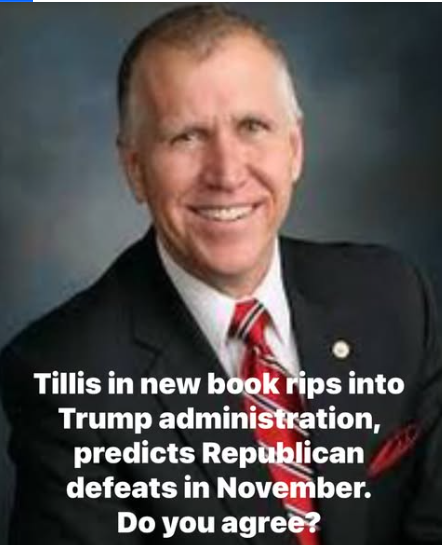 Maybe, as they say, “Hell has a special place reserved in it” for people like Thom Tillis, Republican Senator from North Carolina, who enabled Trump to rape and destroy the United States.
That was until it became clear to Tillis that he could jump ship, write a scathing book about the president, get all over mainstream news promoting it, and go on to enjoy another chapter of political success.
That we Americans are so stupid that we accept this blatant hypocrisy and criminality is sad proof that we’re not the people we were 20 years ago. Maybe what many people are saying are correct: we deserved what we got.
Here’s a short video from Elle Cordova that reminds us that science is something of a rarity in human history.
The great tyrants of history have done their best to cause the people they ruled to reject science, simply to ensure the masses are ignorant, terrified, superstitious, and thus easily controlled.
The current political administration is particularly engrossed in the rejection of science. I wonder why.



-
Climate Change1 year ago
Guest post: Why China is still building new coal – and when it might stop
-

 Greenhouse Gases2 years ago
嘉宾来稿:满足中国增长的用电需求 光伏加储能“比新建煤电更实惠”
-
Greenhouse Gases1 year ago
Guest post: Why China is still building new coal – and when it might stop
-

 Climate Change2 years ago
嘉宾来稿:满足中国增长的用电需求 光伏加储能“比新建煤电更实惠”
-

 Renewable Energy12 months ago
Sending Progressive Philanthropist George Soros to Prison?
-
Climate Change2 years ago
Bill Discounting Climate Change in Florida’s Energy Policy Awaits DeSantis’ Approval
-
Greenhouse Gases1 year ago
嘉宾来稿:探究火山喷发如何影响气候预测
-

 Climate Change2 years ago
Analysis: China’s CO2 falls 1% in Q2 2024 in first quarterly drop since Covid-19