

Weather Guard Lightning Tech

Drone Scandal Exposes Wind Energy’s China Crisis
Chinese-made drones disguised as wind turbine parts were intercepted in Italy, sparking debate on China’s role in the global wind energy market. Allen, Phil, and Joel explore how European manufacturers like Vestas and Siemens Gamesa can compete against subsidized Chinese firms such as Goldwind and Mingyang. Do EU protectionist policies address China’s growing influence in renewable energy? In other news, Statkraft has reduced its target for renewables, the UK has lifted their onshore wind ban, Archer is moving into the offshore wind industry, and Louisiana is installing their first wind turbine.
Visit AMI’s website to book a spot at the Wind Turbine Blades conference!
Sign up now for Uptime Tech News, our weekly email update on all things wind technology. This episode is sponsored by Weather Guard Lightning Tech. Learn more about Weather Guard’s StrikeTape Wind Turbine LPS retrofit. Follow the show on Facebook, YouTube, Twitter, Linkedin and visit Weather Guard on the web. And subscribe to Rosemary Barnes’ YouTube channel here. Have a question we can answer on the show? Email us!
Pardalote Consulting – https://www.pardaloteconsulting.com
Weather Guard Lightning Tech – www.weatherguardwind.com
Intelstor – https://www.intelstor.com
Allen Hall: Welcome to the Uptime Wind Energy Podcast. I’m Allen Hall, and I’ll be bringing you this week’s top stories in the wind energy sector. We start with a significant announcement from Statkraft, the Norwegian energy giant. The company has revealed plans to reduce its target for building solar PV, battery energy storage systems and wind farms from 2026 onwards.
Statkraft is adjusting its development rate for solar, battery and onshore wind from two and a half to three gigawatts to two and a half gigawatts. Even more notably, their offshore wind targets have been cut from 10 gigawatts to 68 gigawatts by 2040. This shift comes as Statcraft aims to prioritize investments in its home country of Norway.
The company cites challenging market conditions for the entire renewable energy industry as a reason for this strategic adjustment. Despite these reductions, Stackraft remains committed to expanding its hydropower capabilities with plans to initiate at least five major capacity upgrade projects in Norway by 2030.
Moving to England, the de facto ban on onshore wind development has been lifted with immediate effect. This decision is part of a broader commitment to double the capacity of onshore wind in Britain by 2030. and boost energy independence. The policy change places onshore wind on equal footing with other energy development in the National Planning Policy Framework.
This move is expected to significantly accelerate the growth of onshore wind in England. The government has also announced plans to streamline the planning process for large onshore wind proposals by potentially incorporating them in the nationally significant infrastructure project regime. This could lead to faster determinations on planning applications for these projects.
In corporate news, oilfield services firm Archer has made a strategic move into the floating offshore wind sector. For The company has fully acquired Moreld Ocean Wind, a Norwegian floating offshore wind solutions provider. This acquisition includes a minority stake in Osergy. U. S. French technology company.
Morelde Ocean Wind specializes in project management and engineering for the fabrication and assembly of floating wind structures. With a team of about 30 engineers based in Norway, Morelde Ocean Wind is currently engaged in various studies and engineering contracts for some of the world’s largest energy companies.
This acquisition positions Archer to capitalize on the growing floating offshore wind market and support its energy customers ambitions in the energy transition. Exciting developments are also happening in Louisiana, where the state’s first wind turbine has arrived at Avondale Global Gateway. After a transatlantic journey from Ireland, the onshore turbine is now being prepared for installation at the Port Fortran Coastal Wetlands Park.
The project led by Gulf Wind Technology marks a crucial step towards realizing the full technical and economic potential for offshore wind in the Gulf of Mexico. The arrival of this turbine not only demonstrates Louisiana’s readiness to support offshore wind, but it also showcases the state’s pre built infrastructure that could easily become part of the offshore wind supply chain.
Lastly, in an unusual turn of events, Italian authorities have seized Chinese made wing long drones off the coast of southern Italy. These drones, apparently headed to Libya, were disguised as wind turbine parts in an attempt to evade the United Nations arms embargo on Libya. The disassembled drones were found in crates marked as containing parts for wind turbines.
Highlighting the complex geopolitical issues that can intersect the wind energy sector. Mark your calendars for AMI’s Wind Turbine Blades Conference happening October 2nd and 3rd in historic Boston, Massachusetts. This two day event, which is similar to the well established edition in Europe, will bring together the whole blade value chain to examine market outlook, innovations in blade materials, design, manufacturing, testing, and lifecycle management, with a special focus on the North American market.
Gain insights from experts from Vestas, Nordex, TPI, and DNV, along with scientists and engineers from the National Renewable Energy Laboratory and the Oak Ridge National Laboratory. Plan your trip to Boston this fall by visiting the link in the show notes or just Google 2024 Blades Boston. That’s this week’s top energy news stories.
Now let’s welcome our co hosts, CEO and founder of IntelStor, Phil Totaro, and the Chief Commercial Officer of Weather Guard, Joel Saxum.
As I talked about at the top of the program, I think made a real critical mistake recently over in Italy, where they were trying to, from what it looks like, ship like a UAV, a big drone, sized, a big airplane, basically over to Libya through Italy, and they marked the drone components with the wind turbine language.
So this is a wind turbine access. This is a wind turbine component. And they also put some wind turbine blade sections into these containers also. So it was a mixed bag of once you open these shipping containers. This is a huge problem that with all, everything is happening on the wind front with China and the Europeans where right now Germany is doing an investigation and the EU is doing an investigation into China, wind turbines coming into the European Union.
Once. This was found out, I don’t know how the EU just doesn’t heavily penalize China and prohibits them from entering the EU market. And I would see the United States doing something similar.
Joel Saxum: I think one thing to note here too, and we’re talking drones now, we talked about, yeah, this is a UAV. This is, this thing is akin to what the United States has in the MQ 9 Reaper.
Like it’s a long duration, like you can put surface to air missile or air, or I guess it wouldn’t be surface to air. It’d be air to surface, air to ground missiles on this thing. And they’ve been used. These drones have been regularly used in that conflict within the Libyan, with the Libyan government.
So the Libyan government likes these things. They’ve been trying to get their hands on them as many of as possible. So I can see some spinning going on here about who’s responsible. How did they get them? Is the Libyan government actually trying to import them or is the Chinese sending them to them?
But the biggest thing here is I haven’t heard anything about it in the Western news. Like I’ve seen it pop up on a couple of websites and stuff. And I’ve looked at the pictures and went through, like what you’re on websites like. Thewarzone. com and stuff like that, and you’re like, okay, you can see this it’s here, but I haven’t heard anything from anybody in our government, I haven’t heard anything from anybody in European government talk about this, or what the ramifications could be.
Allen Hall: Phil, are they going to be allowed to say anything? If I’m the EU right now, I’m probably saying nothing, and I’m looking through more shipping containers that have come from China.
Philip Totaro: Yeah, which, it begs the question, why was this going through Italy in the first place? Like, why, if you’re trying to get something from China to Libya, can’t you just, there’s ways to just deliver it that don’t involve Italy, particularly where there’s an ongoing, investigation into amongst other things, Chinese made, wind technology, solar technology, battery technology, etc.
That is, is already putting quite a big spotlight on the Chinese and their manufacturing practices and their export practices in the first place. Nothing leaves China without some kind of government rubber stamp. So unless somebody was doing something on the sly, I’m not even sure how these got out of China like this in the first place.
And for it to be packaged up and for them to be pretending that it’s wind turbines Is curious, very curious.
Joel Saxum: That’s the that’s probably one of the worst things you could try to hide it as.
Philip Totaro: So that’s what I’m saying. If you’re trying to sneak something into Libya, just do that. I’m not trying to encourage espionage here.
I’m just pointing out, like, why would you send it through Italy in the first place? It doesn’t make any sense.
Allen Hall: Do you think the Italians knew that was coming or that they had indications that this had happened? Obviously. The U. S. military and the European Union is monitoring what’s happening in Libya, so if they saw drones appear over there, they must have thought they’re coming from somewhere, they must be shipping them there, I wonder where they get shipping them through and figure, did the research and figured out it was maybe Italy.
Cause it just seems like if that’s the storage container you’re going to open, it’s pretty lucky, right? There’s a lot of storage containers running through Italy.
Joel Saxum: It sounds like they’ve also taken other suspect containers, like from that same vessel and held them aside as well. There’s, there, they found this one, yes, but in one of the reports I’m reading is that they found a handful of other ones and they’re gonna.
Allen Hall: So does this give the EU the now almost unilateral power to stop all Chinese wind development in the EU? They just needed an excuse, right? They needed something to happen. There is a big push, but the OEMs in Europe would be happy. To cut off chinese suppliers in the you.
Philip Totaro: Yeah so let’s okay let’s sub let’s segregate this whole drones is wind turbines thing from the rest of this because it is i mean it’s related but it’s not really the same thing.
The EU investigation into Chinese wind turbine manufacturing and import into the EU market. Let’s deconstruct what’s going on there. First is, there are international agreements related to tariffs and duties that are applied to goods from different countries, including things that might contain Chinese steel. There’s already pre existing tariffs on that in the EU, in the U. S., in other countries as well and so those are things that everybody’s got to abide by. There’s also international agreements on if your government so China’s government subsidizes Industries, including solar wind both through direct subsidies by providing, cash or other tax incentives to these companies for domestic production of, goods or services related to these industries. Or. support through things like the Belt and Road Initiative that China’s had, where they will provide preferred financing, frankly Chinese companies can’t seem to get from western financiers, to help Chinese companies, project developers, and OEMs get sales in markets that they probably wouldn’t otherwise get.
And so that’s what the EU’s investigating. And again, they started investigating it in, I think it was six or seven different countries. They’ve now added Germany as a result of Lux Cara signing a deal a conditional order. At this point with Minyang to supply 18. 5 up to 18. 5 megawatt turbines for a less than 300 megawatt project site that Luxkara wants to build in Germany.
And why Luxkara did this is it’s either get these cheap made Chinese turbines to build the project, or we can’t really afford to build the project if we try to get, Vestas or GE or Siemens turbines because they’re too expensive for the size of the project. And that’s just the reality for them.
It’s either cheap Chinese made product or nothing. Again, it’s a conditional order. Whether or not that order goes through is, going to be subject to all the outcome of these investigations. The tariffs that will almost inevitably be implied to, Chinese made wind turbine goods from legitimate companies.
Again, not disguised as drones or drones disguised as wind turbines, whatever, but the reality of this is, the, basically what the EU is saying is that it’s unfair to Vestas, Nordex, Enercon, Siemens, Gamesa, to have cheap made Chinese goods being brought into the EU market and sold at a discount to what they’re able to produce. Because if it’s being manufactured in China, they’re taking advantage of cheaper labor, cheaper raw material cost, and the subsidies from the government that I mentioned, again, in the form of either cash or, Um, tax breaks that, that, other companies don’t enjoy. Now that’s what’s going on.
So let’s look at, there’s one of two ways you can deal with this. One is you can be protectionist and you can, tax the crap out of, an import duty, the crap out of Chinese made goods, and that’ll get the price of, the Chinese goods back up to the same price as what you would get.
If you were buying it from a European company, that’s one way to do it. I have a different approach that I would recommend we take in terms of international trade, which is, look, China’s not going away anytime soon. And if you’re fearful that they’re gaining in power, you can address that in kind of one of two ways.
You can work with them and control the rate of their expansion in the world. Or you can, find ways to leverage them like exchanging, like we’ll let you import, up to, let’s say three gigawatts worth of your Chinese wind turbines a year. If you give us access to such and such mega tons.
Of terbium, which we use to make permanent magnets for wind turbines and EVs.
Allen Hall: Do you think the EU and China have that kind of relationship? And more broadly, does the United States and China have that kind of relationship? Because I don’t think they do at the moment.
Philip Totaro: No. And that’s exactly the point, is what we’ve done so far, and what we are looking to continue to do, is maintain this protectionist stance.
My point with that is, protectionism is not going to solve Vestas problem, Nordex’s problem, Enercon’s problem, and Siemens Gamesis problem, which is they can’t sell wind turbines, whether it’s in the EU or outside, where, by the way, the EU’s reach only extends that much. It’s the EU. If you’re talking about other Eastern European markets, Africa, Southeast Asia, other markets, where, and South America for that matter, where, the Chinese are also gaining prominence.
The reason that they’re able to take their export finance from China, their goods from China, and go do turnkey projects in places like Brazil, for example. or Australia is because there’s no domestic manufacturers that those countries have to protect. Here’s the, but that’s the rub to this. Where is, besides applying import duties, what exactly is it that the EU is doing to protect Vestas, Siemens and GE for that matter, that also has some, factories in Germany, etc.
But that’s my problem with this whole thing. Protectionism, frankly, from a trade perspective, doesn’t really work. It slows them down, but it’s a speed bump. My whole point is, let’s control them. Let’s actually work with them to get something out of them in exchange for them going and doing what they’re gonna do anyway.
Allen Hall: There’s a global situation as it stands right now in terms of what’s happening in Eastern Europe. And also in Taiwan, prohibit that, and I’ll add to it, right? So if you’re paying close attention, you see the Belt and Road effort in Brazil at the moment, and the United States has not been willing to even talk about that, as far as I can see.
I see nothing in the press about it. And that exists in Eastern, pretty much all of Eastern Europe, Africa, as you pointed out, right? There’s, none of those situations are being addressed internally. If you’re watching the United States political action, State Department, you see almost nothing. The China just walks in, starts pouring in money, and the U.
S., it just looks the other way at the minute. Now, I know the State Department are here defending themselves, they would say no, we’re having negotiations with China all the time, which is probably true. But the reality is that the balance of power in the renewable sector is heavily weighted towards China, right?
And we haven’t really shifted that in the last four years at all. In fact, we’re probably getting more lopsided than we have been previously. So what do you think they’re going to, what do you think the EU is going to be able to do? Like, how do they even address it? How does the US even address it?
Philip Totaro: If you’re going to just apply countervailing duties on Chinese imported goods, it’s going to slow down, but not stop, the rate at which Chinese goods are imported. It also does encourage these Chinese companies to domesticate their production, which, by the way, Envision Energy is doing in Spain right now with a massive factory for EV batteries.
Mingyang is talking about a factory in the UK, they’re talking about a factory in Germany. I don’t know that this little order from Luxcar that they got would be enough, because it’s only 16 turbines, but, that’s not gonna be enough to get a factory in Germany going, if that gives them a beachhead in that market, that would necessarily encourage them to make the foreign investment in creating the factory in the country and creating jobs in a tax base.
Which, if that’s what you’re trying to do as a government, then do that! What’s the difference if it’s a, if it’s a Chinese owned company or some Malta owned company, or an Australian owned company, or a Brazilian owned company?
Allen Hall: I’ll give you the problem with it, which is, how much of a Vestas turbine is sourced from China today?
Philip Totaro: A ton of it. I don’t know the number, but it’s high. It’s, yeah, it’s more than 10. It’s around maybe 40 to 50 percent of the components inside a Western made wind turbine are already being sourced from China. And we’ve talked recently on the show about EU based companies, including some in Denmark that are shutting down their manufacturing facilities in Denmark and relocating to India and China specifically to take advantage of a lower cost of production. And because at the end of the day, we as consumers, want to pay less. Everybody just wants to pay less. And so unless you have human rights concerns about China, and you’re gonna say that’s gonna preclude me from buying Chinese made goods if I’m given a choice between a Chinese thing at, 75 or even 50 percent cost versus an EU made thing, Then, as long as quality is comparable, and that’s debatable, but as long as quality is comparable, why am I not gonna ever choose the Chinese made thing if it’s cheaper?
Joel Saxum: But that’s the that’s where we’re at, though. It’s not just the capitalism part of it. It’s the human rights part. I know someone that works for the State Department that is a trade lawyer for the United States. And that’s what her concern is most of the time when they’re going to any of these things.
Yes, it needs to be fair economically. We want to level playing field when we come in and out. That’s where we do these tariffs. However, the biggest, one of the biggest problems is in the manufacturing. There is the human rights violations that China’s either accused of or guilty of or not guilty of. I don’t know.
I’m not there. But that’s on the table. So that’s, I think that’s a big part of actually the European unions. Quote, unquote, investigation into it in the wind space as well.
Philip Totaro: And look I’ll agree that’s an important consideration, although I would say it’s outside the, we’re now getting off into a discussion that’s not really wind energy anymore if we’re talking about human rights record.
But my point with all of this is, you can apply countervailing duties, you can be protectionist, you can try and, solve the problem that way. If you’re the EU government or even the US government. But that’s not really going to end up protecting the US based companies or the EU based companies that are trying to sell product not only in their domestic market, Maybe that helps protect those domestic markets, but it certainly doesn’t protect them globally.
Which is more of the concern, especially for the European manufacturers, where they’re the ones who are going up and competing against the Chinese in, in all these other markets. Brazil, Vestas against Goldwind and other Chinese companies in Brazil. In, throughout Eastern Europe, you’ve got You know, Shanghai Electric, you’ve got Envision Energy, you’ve got Goldwind, you’ve got Dongfang has even sold turbines, Dongfang even sold turbines to Bolivia.
And that’s the point, is if, it’s got nothing to do with the EU or the US, but my, that’s why I’m saying, my point here is, if you want to be able to control China, you can do it from a protectionist standpoint, I don’t think that’s gonna work. I think the way to work with China is to get them to give us something.
in exchange for them being able to go and proliferate their power and their control over all these foreign countries now. Let’s get them to give us more access to raw materials so that we can take advantage of fabricating steel in the United States, but with cheaper raw material to be able to do it.
Or make magnets, or make whatever. You’re suggesting quid pro quo, Phil. I’m suggesting that protectionism isn’t working, so let’s try something else, instead of another hundred years worth of protectionism, Joel.
Allen Hall: But isn’t that the trade off that Australia makes right now?
Joel Saxum: That’s what they do.
Allen Hall: Yeah, and it’s not going so well for Australia.
And my point of view, I’m sure Australia thinks otherwise, but in the balance of power, it seems to be very lopsided. Obviously China’s a much bigger country, population wise, Australia is at the moment and economy wise, so they’re in a little bit in the driver’s seat, but if the EU, my take on it, the problem has been is that when we put politicians in the middle of this, they either get weak need.
Or they say a lot of great stuff and nothing ever happens. Meanwhile, the mom and pop, the small startups, the small companies, the small businesses that exist that do supply to the wind industry get obliterated. And when the politicians come in to regurgitate this industry that has just been wiped off the map in their country, What do they do?
They want to do something big and flashy, so they want to put a blade plant in. This is what’s happening in America right now. They’re going to put a blade plant in, they’re going to put a big nacelle plant in, they’re going to make it look great, but every, almost every component that factor would use is being sourced from China.
So if I’m China, like I won, I absolutely won unless I’m sourcing my fiberglass from the States or Denmark or somewhere. Unless I’m sourcing my steel from America or the Europe, European somewhere, Poland, then what do I have? I have basically assembled Chinese components in an American or European shell.
So it isn’t the problem that we should start smaller and try to then build it up that way.
Philip Totaro: But why don’t we start by, as I mentioned before, Protectionism isn’t gonna help. The vestiges of the world, et cetera, et cetera. You want to know what is if we start getting the European union or the U S government to start subsidizing the companies the way, and this is obviously a slippery slope, but let’s start competing with China in the U S we used to take U S money, go out, do foreign direct investment for turnkey infrastructure projects like roads, like power generation facilities, like Anything in Africa, in South America, Central America Eastern Europe, India.
We don’t do that anymore because a lot of people in the U. S. said, Why are we spending our money out there in the rest of the world? And that starts getting, again, into a political discussion. But the reality is, if we don’t go and do that, China’s going too. If the European Union doesn’t go and start spending money on helping to facilitate companies like Vestas or Siemens Gamesa get projects built in the EU and outside the EU, then China’s going to take over.
They are slowly accumulating wealth in China that they are going to start deploying capital in a way that we’re not going to be able to compete with in the future. If you want to start small, Allen Let’s do that, but this is the other way that, besides protectionism, that you can solve the problem.
Allen Hall: I I’m with you, Phil.
I, I think that’s an approach, right? What has been in China’s inflation rate over the last four or five years? Did it hit 9% like it hit did in the States? No, it hasn’t. It’s hit two or 3%, right? Because they, they have a different currency. They got a different monetary structure. They gotta have a different economy, right?
They can handle their own economics in a different way because of the way the government’s structured versus what the United States has done. But when you throw four, five, six, eight, nine percent inflation on an industry, a small business in America that’s trying to compete against China, you’re totally screwed because you’re six percent behind from the start on the, on borrowing money.
So if you’re trying to borrow money against a Chinese manufacturer, You are way behind the power curve here. There’s no way you’re going to be able to do that. Even if you can get the employees and the tech and everything set up what the United States has done on the inflation front and Europeans have followed along on that matter of fact.
Has really killed some of these smaller wind energy businesses and solar businesses and renewable energy businesses in the larger context. Am I missing something here? It seems so obvious. We’ve done it to ourselves.
Philip Totaro: Yes, exactly. And we continue to do it to ourselves, by the way, by A, keeping interest rates where they are, number one.
And B the complete. Unwillingness to actually, it’s , let’s hands off, let the market work kind of thing, but the Chinese aren’t hands off, let the market work. Whether it’s a communist regime, or a democratic regime, or a republic regime, or whatever your system of government is doesn’t really matter, because at the end of the day, what they’re doing, and it may come from communist roots or whatever, but at the end of the day, what they’re doing is they are supporting their domestic industry in a way that matters.
The EU companies, the U. S. companies, we don’t have that luxury. We don’t get the same level of treatment, and that’s what everyone’s really complaining about. They just want to level playing field. So you can either tax the crap out of Chinese goods and level the playing field, or you can level the playing field by getting off your ass and start putting money behind US companies or European companies to make sure that they can compete in a global market.
Allen Hall: Not wiping their hands of the inflation rate, which is what I felt like when we were going through that a year or so ago, two years ago, it was being done.
Oh, it’s transitory. Don’t worry about it. If you’re trying to run a small business, you have to worry about that. That is a super critical function of your business. You can’t raise prices as fast as inflation is going up. Not as a small business. You can’t, cause you don’t control that marketplace.
So you have to just eat it and which is what happened to a lot of the smaller manufacturers in the renewable business is they collapse under that inflationary trend that it still hasn’t gotten to where back we have been historically, which is generally 2%, 3%. So we’re like 50 percent over our normal rate of inflation at the minute.
That’s a big deal versus China. They’re at 0. 2 percent year over year right now. So I see it a little bit different. I feel the Chinese are not I’m trying to discover it’s pretty smart, right? They know how to play that game. And I feel like we’re still learning how to play the game or we’re being soft shoed a story, which is only going to hurt us in not only the short term, which it is right now, but over the next five to 10 years, it’s really going to hurt.
And it would be very difficult to pull away from China.
Joel Saxum: I think that’s Phil’s argument, right? That the protectionism is we feel as Western governments, like we have the upper hand, we know what we’re doing, we’re going to do this. But in the grand scheme of things, the Chinese government is the ones that are building and building and building.
And if we just keep playing the tit for tat with tariffs, they’re going to keep building building, and then we’re not going to be able to catch them. I think Phil, that’s a good argument. How to fight that? I’m not sure because then you feel like you’re boxing and someone is consistently hitting you right in the beltline, that’s just about illegal, but not quite, and you feel like they’re not playing by the rules, but they’re still gonna beat you eventually, do you go down there?
Do you hit someone in the beltline? Do you stoop to that level? I guess is what our government would be saying. Do we go and play
Philip Totaro: in the mud with them? In a hundred years, we can all celebrate how morally superior we are when we’re all speaking Mandarin because China has friggin taken over the world!
And that’s what I said, that’s the problem.
Joel Saxum: That’s what will happen because we the moral superiority is a perfect way to put it. Because that’s what’s happening at the higher levels of government or the decision makers here saying our moral superiority, we’re not gonna do that, we’re not gonna go play in the mud, we’re not gonna play like that, but, at the end of the day It doesn’t matter if you, if, if you end up losing.
Allen Hall: Yeah, I don’t feel like we’re competing at the minute. Does anybody on this panel think we’re competing?
Philip Totaro: Not on a level playing field. Which, again, goes back to why the EU triggered the investigation in the first place. Not a level playing field. But again, there’s two ways, or multiple ways, of solving that level playing field.
Protectionism and countervailing duties on Chinese imported goods is one way. I don’t think that’s getting the job done because that’s not solving the root cause of the problem for the domestic companies in the EU that can’t manufacture goods at a cheap enough rate. They don’t get the same raw material costs.
They don’t have the same labor costs. And I’m not just talking about, like cheaper labor because of foreign trade or whatever, or cheaper labor rates, it’s also all the overhead that they have, all the pensions look what socialism has done in Europe to, it’s great for society.
And I’m sure Denmark is you 99th year in a row, the happiest country in the world, which is great when the government pays for 95 percent of what you need. But, if you’re losing business to China, how happy are you, really? Eventually, it’ll catch up with you. Eventually, it’s gonna catch up, right?
Joel Saxum: It’s gonna, if it continues going in this way, history will look at it like a great experiment for a while that ended up failing. As busy wind energy professionals, staying informed is crucial. And let’s face it, difficult. That’s why the Uptime Podcast recommends P. E. S. Wind magazine. PES Wind offers a diverse range of in depth articles and expert insights that dive into the most pressing issues facing our energy future.
Whether you’re an industry veteran or new to wind, PES Wind has the high quality content you need. Don’t miss out. Visit PESWind. com today.
Allen Hall: In this quarter’s PES Wind magazine, a lot of good articles. If you haven’t checked it out, go ahead and go to PESWind. com and download a copy or read it online. Joel, I was reading about Renuware and they’re a company in Southampton, England in the UK, of course, down way down South that is a supply company and provides a lot of epoxies, adhesives, coatings to the wind industry and also to the, it looks like the shipping industry.
Obviously it’s a lot of shipping down there, a lot of ships and boy the, you and I deal with. Adhesives all the time as part of strike tape. And we know how difficult it is to get a hold of the material you need when you need it. And when I read this article, it’s Oh, this is a company that we’re probably should be working with just for the challenges anywhere in the world.
And when we go to the UK and put strike tape on the UK. Getting a lot of materials and get them on site is always an issue. And Renuware is trying to take that hurdle out of your way. It’s pretty innovative.
Joel Saxum: Yeah. So I spoke with some people from Renuware not too long ago, and the company really cut its teeth in that maritime world, right?
There’s a lot of coatings, whether it be, we’re talking wind turbine blades and proxies and resins and that kind of stuff here. But when you look in the, Northern Europe there, which is where they’re based, there’s a lot of shipping. So they’re, they’ve been giving coatings for whether it’s paint or anti rust stuff or biofouling to the maritime and vessels and shipping industry for a long time, and it just makes sense that when you’re doing coatings in one space, you start, then they started doing coatings in the, offshore infrastructure, world paint, coating jackets and monopile stuff like that.
And right over into wind turbine blades, it’s just an, it’s a neighboring market, so it just makes sense. And since they already had built up the company scaled it up in the Marine world man, they have the back office, they’ve got all the warehousing support, they’ve got the expertise of being a really good cog in the supply chain to keep the wind industry moving.
So Reneware’s really, and they told me some of the people they’re working with over there. I was like, Oh, I know them. Oh, I know them. Oh, I know them. I know them. So they’re working with a lot of the big industry players over there.
Philip Totaro: It looks like Reneware also does a lot of work with. UV curing on prepreg, and while we don’t typically use a lot of prepreg anymore in blade fabrication, there’s a lot of repair work out there that requires requires prepreg, as I’m sure both of they’re positioned in terms of the the scale and scope of product offerings that they bring to the table.
Allen Hall: So if you haven’t checked out Renuware, go download the PES Wind magazine at PESwind. com and learn all about them. This week’s
Joel Saxum: Wind Farm of the Week is a next era wind farm in northwest Indiana called Jordan Creek.
So Jordan Creek Wind Farm is near Williamsport, Indiana, next to the Illinois border. The 71, 000 acre project has a nameplate capacity of 400 megawatts. So to make up those 400 megawatts of production, you have 131 GE 2. 8 machines. And also one they got a little mixed bag. So you got, and then you got one 2.
5 machine and 14, 2. 3 machines. So there’s a total of 146 turbines out there. The reason this one is on the wind farm of the week this week is there’s some really interesting information about it online. Now, a lot of these wind farms, when they’re being built, they’re Permitted going through the process with federal agencies or local agencies, county governments, all this stuff.
They have some rules and regulations they have to abide by, but this one was easy to find some pretty cool little bullet point lists on. So lots of interesting things. If you’re not used to the way wind farms are built. One of them was they use no eminent domain for the project. So eminent domain would be if you’re taking private land for the use of public good.
Next era said, Nope, we’re not doing that. We’re going to have great relationships with everybody on site. So we want to make sure we don’t use eminent domain. They also had a rule where the collection and transmission lines must be underground. They had another one was a 1550 foot setback from the center of any wind turbine to a dwelling.
And this is of a non participating landowner. So if you didn’t have wind turbines on your property, you had to be 1500 feet away. Then they set noise limits between 10 p. m. And seven a. m. Of residential dwellings of not participants and non participants. And they had him set at 45 I know the decibel thing is hard to understand, but that’s small.
They also have shadow flicker limits of 30 hours per year at residential dwellings of non participants. So that’s the amount of time that the shadows would cast basically over the windows of non participants. And then they had a lot of cool notes in there about Hey, this is how you’re going to handle crop.
Damages during construction. This is how you handle drain tile damage during construction. Another neat one was they have to next era has to subsidize the local farmers that are close to the wind farm for his crop spring. Because the air, they basically, the small airlines and airplane or airlines, the small airplanes around there have charged them a little bit extra to fly near the wind turbines.
So next era has to pay them like 50 cents an acre when they crop spray around it. But the last one I thought that was pretty cool was they have a good neighbor policy. So the good neighbor policy states for any landowner that’s located less than a half mile from a turbine, next area’s got to hand them a 1, 500 check every year.
You see some of the things that happen with the permitting process here for the Jordan Creek Wind Farm in Northwest Indiana. So that you guys are our wind farm of the week.
Allen Hall: That’s going to do it for this week’s Uptime Wind Energy podcast. Thanks for listening. And please give us a five star rating on your podcast platform and subscribe in the show notes below to Uptime Tech News, our weekly newsletter.
And check out Rosemary’s YouTube channel, Engineering with Rosie, and we’ll see you here next week on the Uptime Wind Energy podcast.
https://weatherguardwind.com/drone-scandal-wind-energy-china-crisis/

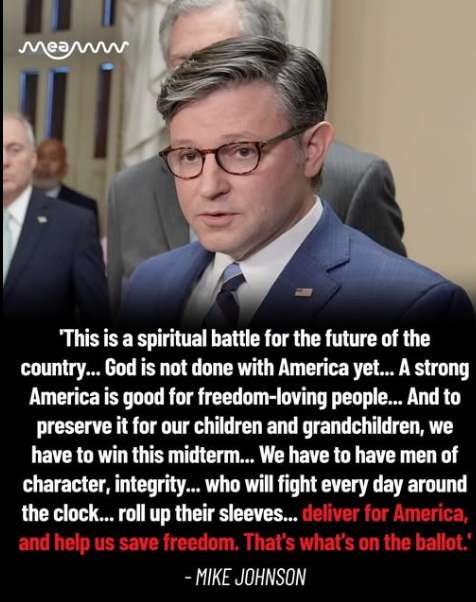 Sadly, a significant number of U.S. voters believe what House Speaker Mike Johnson says here, i.e., that “God isn’t finished with America yet,” and that “We need people (from the Republican party) of character and integrity,” as if there are any.
But what is that number, roughly?
After living through the first 18 month of Trump’s second term, with all the lies, the incompetence, and the corruption, this number has dwindled to a point that the Republicans are bracing themselves for the worst.
Republicans Manipulate American’s Ignorance — and it Doesn’t Take Too Much Skill
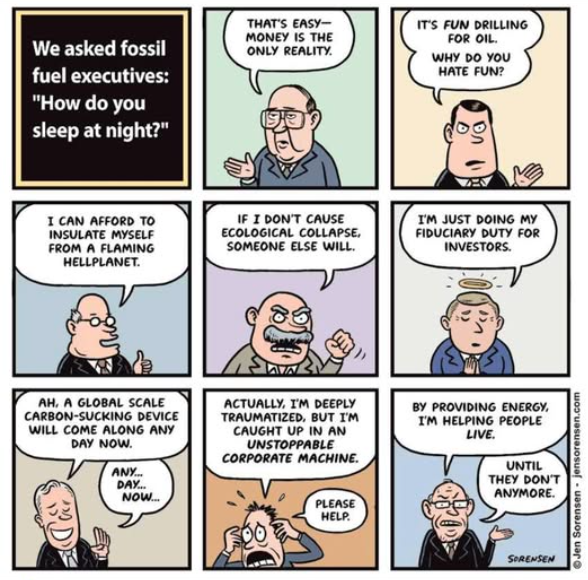
 I’m sure some of these excuses are extremely common in the minds of those making huge profits by destroying our planet.



-
Climate Change1 year ago
Guest post: Why China is still building new coal – and when it might stop
-
Greenhouse Gases1 year ago
Guest post: Why China is still building new coal – and when it might stop
-

 Greenhouse Gases2 years ago
嘉宾来稿:满足中国增长的用电需求 光伏加储能“比新建煤电更实惠”
-

 Climate Change2 years ago
嘉宾来稿:满足中国增长的用电需求 光伏加储能“比新建煤电更实惠”
-
Climate Change2 years ago
Bill Discounting Climate Change in Florida’s Energy Policy Awaits DeSantis’ Approval
-

 Renewable Energy10 months ago
Sending Progressive Philanthropist George Soros to Prison?
-
Greenhouse Gases1 year ago
嘉宾来稿:探究火山喷发如何影响气候预测
-

 Carbon Footprint2 years ago
US SEC’s Climate Disclosure Rules Spur Renewed Interest in Carbon Credits