

Weather Guard Lightning Tech
Dominion Absorbs $800M in Tariffs, Nordex Profits Double
Allen covers Dominion’s $800M tariff hit, Eversource’s 84% profit drop, Nordex’s record quarter, and a looming floating wind vessel shortage.
Sign up now for Uptime Tech News, our weekly newsletter on all things wind technology. This episode is sponsored by Weather Guard Lightning Tech. Learn more about Weather Guard’s StrikeTape Wind Turbine LPS retrofit. Follow the show on YouTube, Linkedin and visit Weather Guard on the web. And subscribe to Rosemary’s “Engineering with Rosie” YouTube channel here. Have a question we can answer on the show? Email us!
Good Monday, everyone.
Let us start this week with a number. Eight hundred million dollars. That is what tariffs on steel and aluminum added to Dominion Energy’s Coastal Virginia Offshore Wind project. Dominion President Bob Blue shared the damage on a second-quarter earnings call. Two hundred and thirty million dollars … just in the latest quarter alone. That is on top of the five hundred and eighty million from the quarter before.
The project is eighty-one percent complete. Thirty-one turbines are already spinning … producing more than four hundred and fifty megawatts. But the finish line just moved. Completion is now expected by the end of twenty twenty-seven. Weather delays. Vessel maintenance. And some particularly complicated turbines to install. Blue says the project will still save customers money. And Dominion expects to pocket more than five hundred million dollars in savings from grid upgrade cost shifts. The total price tag … eleven-point-six billion dollars.
Now … if Dominion is feeling the squeeze in Virginia … Eversource up in New England is feeling something worse. The utility’s second-quarter profit dropped eighty-four percent. Net income fell to just fifty-three-point-seven million dollars. Why? A one-hundred-and-sixty-four-million-dollar charge tied to the offshore wind projects they already sold. South Fork Wind. Revolution Wind. Eversource got out of offshore wind back in twenty twenty-four … but the bills keep coming. Higher-than-expected payments to Global Infrastructure Partners are dragging down the bottom line.
So one company builds through the pain. Another walks away … and still pays for it.
But here is some good news. Over in Hamburg, Germany … Nordex just posted a quarter that would make any CEO smile. Sales up sixteen percent. EBITDA … more than doubled … to two hundred and twenty-four million euros. Margins hit ten-point-three percent. Net income … one hundred and eleven million euros. Up from thirty-one million a year ago. And orders? Up thirty-two percent. Three-point-one gigawatts of new turbine orders in just one quarter. Their total order book now stands at eighteen-point-four billion euros. Nordex CEO José Luis Blanco confirmed the full-year guidance. The onshore wind giant is not just surviving. It is thriving.
Now … let us go to sea. Classification society ABS says floating offshore wind is about to create a brand-new problem. Not enough ships. A new report says demand for large anchor-handling vessels and multipurpose support vessels will surge as floating wind projects go from small demonstrations to full commercial scale.
Here is the number that tells the story. A single one-gigawatt floating wind farm needs about one hundred and ninety-eight anchors … and nearly two hundred kilometers of mooring lines. That is far more than a single deepwater oil and gas platform. ABS says shortages in certain vessel classes could hit as early as twenty twenty-nine. Global floating wind capacity is expected to grow from about two hundred and seventy megawatts today … to fourteen gigawatts by twenty forty. The race for ships … has begun.
And speaking of ships … Japan just finished building one. Mitsui O.S.K. Lines held a naming ceremony in Nagasaki for the Wind Whale. Japan’s first coastal deck carrier built specifically for offshore wind. One hundred and forty-nine meters long. A flush deck designed so that monopiles, towers, blades and nacelles can roll right on from the stern. It even has dynamic positioning … so it can transfer cargo directly to installation vessels at sea. Built in China by Taizhou Sanfu Ship Engineering … the Wind Whale will carry foundations from a factory in Okayama to construction sites around Japan. A country that once built ships for oil … now builds them for wind.
And finally … back home in Iowa. The state Supreme Court ruled that the CEO of Global Fiberglass Solutions can be held personally liable for dumping thirteen hundred used wind turbine blades across the state. CEO Donald Lilly and another executive argued they were never in Iowa. The court disagreed. Lilly signed the contracts. Iowa Attorney General Brenna Bird put it plainly. They were hired to recycle used wind turbine blades. Instead … they dumped them. Four hundred blades piled up along Interstate 35 near Ellsworth alone.
The lesson? You can build an industry on clean energy. But you still have to clean up after yourself.
So what does all of this mean … if you work in wind?
It means the money is real now. Projects are not getting canceled. They are getting more expensive. And that changes the math for every engineer, every project manager, every supply chain director reading a bid today. Tariffs come and go. But an eleven-billion-dollar project does not stop on a dime.
It means the vessels you need may not be there when you need them. If you are planning a floating wind project for the early twenty thirties … your vessel strategy should already be on paper.
It means manufacturers who kept their discipline … who held their margins and grew their order books … are the ones writing the next chapter.
And it means accountability is coming to every corner of this business. You cannot just build turbines. You have to manage the turbines. This industry asked the world to trust it with the future of energy. That trust comes with responsibility.
And that is the state of the wind industry for August 3rd, 2026.

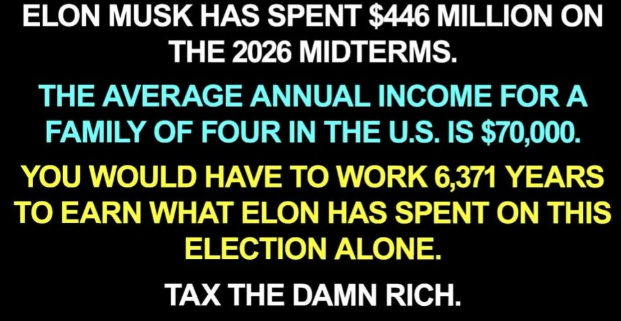 What we have here in the United States, in terms of money in politics, is a full-on disease. Tax cuts for billionaires, corruption and the uber-rich’s ownership of our lawmaking processes, the destruction of our educational system, institutionalized racism, the rejection of science, limited access to healthcare, and devastation of the natural environment are all heading this nation to a horrible end.
Is there hope? Many young and energetic people believe there is.
Is It Healthy for Our Country to Allow Billionaires to Own Congress?
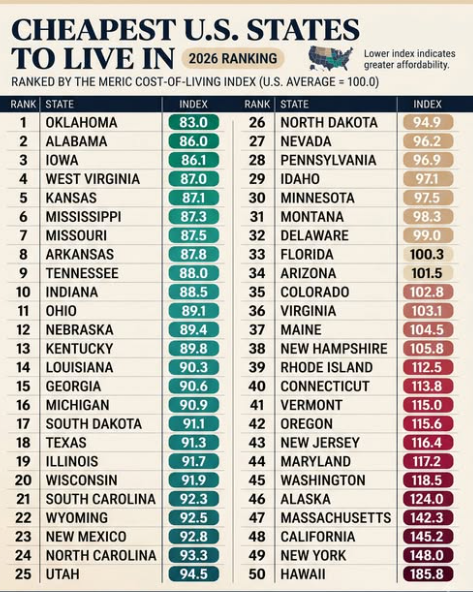 About 40 years ago, I used to lie in bed on Sunday mornings with my coffee and Los Angeles Times opened to the real estate section: “Homes in Other States.” I recall voicing some level of buyer’s remorse, having just paid more for a who-cares house in Southern California, where I could have bought half a county in Oklahoma or Mississippi.
My girlfriend at the time, now my wife, would ask me, “But do you think you’d be happy living in West Virginia, with some of the most poorly-educated people in the country? Do you think that would forward your career and your overall life satisfaction?” She had a point, to be sure.
Today’s MAGA conspiracy theorists will tell you that people are leaving California in droves, because of things like environmental regulations. Yet that doesn’t explain why the Golden State, if it were a country, would have the fourth largest economy on the planet, and a house here identical to one in Alabama whose value there may be $200K would fetch about $1.2 million here.
People don’t come here for the wide-open freeways. We’re here for the beauty, the sophistication of so many people, highly educated people, and unparalleled business opportunities.
There’s a reason that Google, Oracle, Apple, Nvidia, Adobe, Salesforce, Facebook, Visa, Wells Fargo, Disney, etc. aren’t located in Arkansas or Louisiana.
 At left we have John Fetterman talking to people so stupid they’ll believe that it would have been wrong for the British colonists to oppose King George III in the late 18th Century, or for the people of Germany and Italy in the 1930s to stand up against Hitler and Mussolini. What about the people in today’s dictatorships, i.e., the people in Russia, China, North Korea, or any of the other 50+ authoritarian regimes around the world?
Morons tend to agree with the loudest, most aggressive voice of nationalism, regardless of how little sense it makes.
It’s a great moment of opportunity for Fetterman.



-
Climate Change1 year ago
Guest post: Why China is still building new coal – and when it might stop
-

 Greenhouse Gases2 years ago
嘉宾来稿:满足中国增长的用电需求 光伏加储能“比新建煤电更实惠”
-
Greenhouse Gases1 year ago
Guest post: Why China is still building new coal – and when it might stop
-

 Climate Change2 years ago
嘉宾来稿:满足中国增长的用电需求 光伏加储能“比新建煤电更实惠”
-

 Renewable Energy1 year ago
Sending Progressive Philanthropist George Soros to Prison?
-
Greenhouse Gases1 year ago
嘉宾来稿:探究火山喷发如何影响气候预测
-

 Climate Change2 years ago
Analysis: China’s CO2 falls 1% in Q2 2024 in first quarterly drop since Covid-19
-

 Climate Change1 year ago
嘉宾来稿:探究火山喷发如何影响气候预测