

Welcome to Carbon Brief’s DeBriefed.
An essential guide to the week’s key developments relating to climate change.
This week
1.5C looms
1.5C EXAMINED: The run of record heat last year suggests the world is close to exceeding the Paris Agreement’s target of limiting global temperatures to 1.5C above pre-industrial levels, according to two new studies covered by the Press Association. In 2024, annual average temperatures reached 1.5C for the first time. However, the Paris goal is measured as a 20-year average – meaning breaching 1.5C in a single year does not yet show the target has been crossed, the publication noted.
BREACH IN REACH: The first of the two studies “looked at real-world observations of already reached warming levels…and showed that the first single years exceeding each threshold have consistently fallen with the first 20-year period which averaged the same level of warming”, said the newswire. The findings suggest the Paris goal could be crossed within 10 years – unless there are “stringent” emissions cuts, Agence France-Presse reported. This is in-line with recent estimates from the Intergovernmental Panel on Climate Change and Carbon Brief.
HEAT GOES ON: The second study explored what the run of temperatures above 1.5C from July 2023 to June 2024 could mean for the Paris Agreement, the Independent reported. It continued: “The study shows that having 12 consecutive months above 1.5C means there’s a 76% chance that we’ve already hit that long-term warming threshold under current climate policies. If this trend continues for 18 consecutive months, the research says, the breach of the Paris Agreement threshold will be virtually certain. January 2025 was the 19th month to cross that mark.”
Around the world
- BP SWITCH: According to the Times, BP’s chief executive – under pressure from an activist investor – has pledged to “fundamentally reset” the company’s strategy, which is expected to involve a formal ditching of its target to cut oil and gas output and a further scaling back of its renewables projects.
- 35% RENEWABLE: Under Indonesia’s new electricity plan, the country aims to increase its renewable energy share from 12% to 35% in 2034 by expanding solar, battery, hydro and geothermal capacity, reported Reuters.
- ‘EXISTENTIAL THREAT’: A first-of-its kind German government report found that climate change poses an “existential threat” to the European Union due to its “destabilising and unequal” effects, reported Politico.
- COAL ON A HIGH: As covered by Carbon Brief, China’s construction of coal-fired power plants reached a new 10-year high in 2024, according to a report by the Centre for Research on Energy and Clean Air and Global Energy Monitor.
- ‘100% SUSTAINABLE WOOD’: The UK government agreed a new deal for the Drax power plant – which burns wood pellets to generate electricity – halving its subsidies and requiring all wood to come from “100% sustainable” sources, the Guardian said. Carbon Brief’s Simon Evans had more details.
- INDIA DEALS: Reuters reported that Nigeria is seeking assistance from India with its energy transition plans. Meanwhile, BBC News reported on the US and India agreeing a new deal that will see more American oil and gas imported by Delhi.
57%
The annual increase in second-hand EV sales in the UK from 2023 to 2024, with 188,382 cars changing hands in 2024, reported BusinessGreen.
Latest climate research
- New research in npj Climate Action showed that the more pronounced local climate change effects become, the stronger the relationship between a person’s education level and their level of “climate concern”.
- A new study published in Nature Cities showed that people in more disadvantaged neighbourhoods are more exposed to floods, based on studying nearly 45,000 neighbourhoods in eight Latin American countries between 2000 and 2018.
- Carbon emissions from permafrost “may pose a considerable risk” to climate mitigation efforts, “even if net-zero and negative emissions are achieved”, according to a new study published in Science Advances.
(For more, see Carbon Brief’s in-depth daily summaries of the top climate news stories on Monday, Tuesday, Wednesday, Thursday and Friday.)
Captured
Nearly 95% of countries miss UN climate pledge deadline
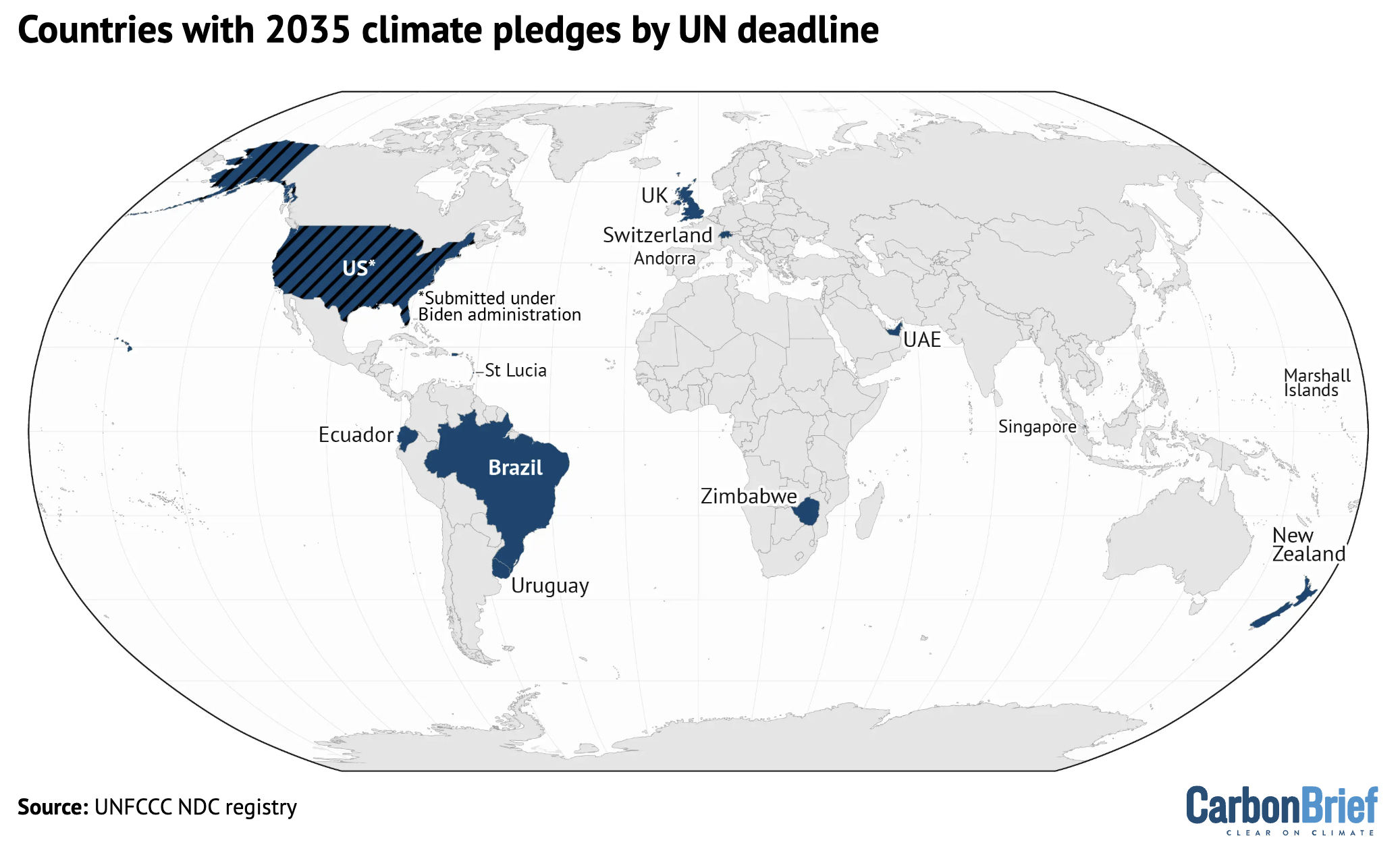
Nearly 95% of countries have missed a UN deadline to submit new climate pledges for 2035, Carbon Brief analysis shows. Just 13 of the 195 parties – highlighted on the map above – signed up to the Paris Agreement published their new emissions-cutting plans, known as “nationally determined contributions” (NDCs), by the 10 February deadline. Countries missing the deadline represent 83% of global emissions and nearly 80% of the world’s economy, according to Carbon Brief analysis. The US submitted its NDC under the previous Biden administration and has now announced plans to withdraw from the Paris Agreement.
Spotlight
From faint idea to ‘forest twice the size of London’
This week, Carbon Brief takes you behind the scenes of its recent rapid analysis on UK airport expansion.
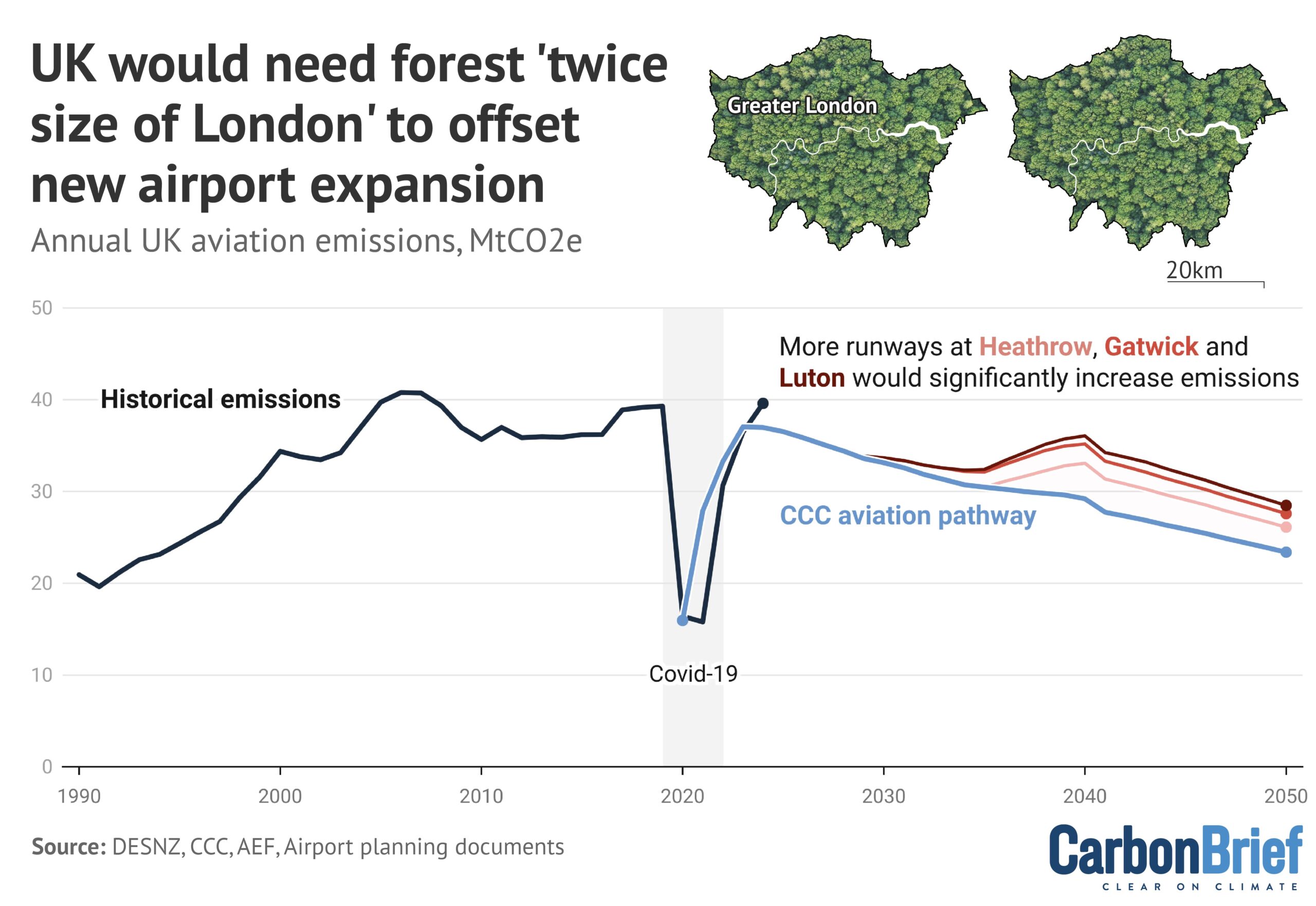
At the end of January, Carbon Brief published an analysis showing that a forest “twice the size of London” would be needed to offset the emissions from the UK government’s proposed airport expansion.
It was covered widely in the press, featured on an ITV current affairs show and was cited twice by MPs in UK parliament.
The analysis – by myself, Carbon Brief’s data scientist, and policy correspondent Josh Gabbatiss – came together in just a few days. Below, I explain how we undertook the rapid analysis.
Heathrow third runway
In January, UK chancellor Rachel Reeves signalled that the UK government was planning to back a third runway at Heathrow airport, along with the expansion of two other London airports, Luton and Gatwick.
We decided to examine what the “climate cost” of such an expansion would be. The UK has so far done little to align its aviation sector with its net-zero target and this seemed like it could make that target even harder to reach.
The question was how should we go about this? Carbon Brief has previously published a guest post showing that airport expansion was not net-zero compatible and others had published more recent emissions analysis. What more could we add?
For a new angle, we wanted to focus on the extra emissions that would result specifically from the expansion of the three airports.
Calculating airport emissions
We noted that Carbon Brief’s guest post had used estimates for the average emissions per passenger to calculate the extra emissions in the year 2050 from the Climate Change Committee (CCC), the UK’s official climate advisers.
But calculating the extra emissions for a single year more than two decades in the future did not feel sufficient because the expansions would be operational years before 2050 – and it is the cumulative that matters for global temperatures.
However, calculating cumulative emissions would require modelling based on airport expansion dates.
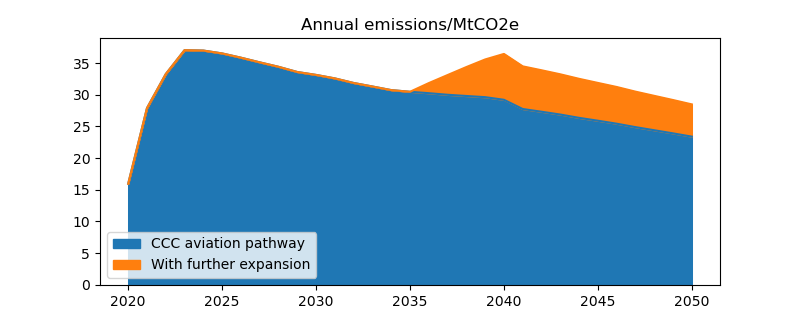
Assuming the expansions are fully operational by 2040 and using CCC modelling, I produced the first rough chart (below) using pandas, a data analysis tool designed for the Python coding language.
This showed that the expansion of Heathrow, Luton and Gatwick would produce an extra 81m tonnes of carbon dioxide equivalent (CO2e) by 2050 (in orange on the chart below).
Forest figures
After calculating the extra emissions from the UK’s planned airport expansion, we decided that we needed to come up with a way of contextualising the number for our readers.
This is a common issue for us at Carbon Brief – how to communicate the scale of emissions. The average person does not necessarily know how to interpret 81m tonnes.
It can help to compare it to something more grounded and visible. In this case, we decided to work out how many trees would be needed to absorb all the extra emissions.
First, I redid the analysis with more accurate information on airport-expansion timelines from the Aviation Environment Federation, an NGO focused on the climate impacts of flying, which updated the total to 92m tonnes.
For converting this to trees, I drew on the methods of a previous analysis to get the emissions absorbed per hectare of forest planted over its lifetime.
From this, and assuming that the new forest is planted in 2028, I could calculate the forest area that would need to be planted so that by 2050 it has offset the extra aviation emissions from 2028 to 2050.
Using this, we got a forest “twice the size of Greater London”.
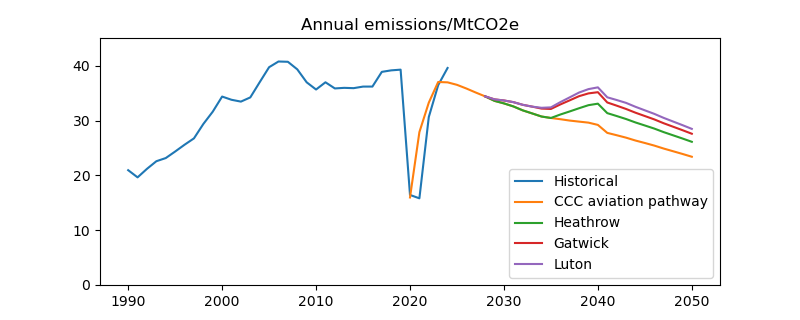
For more context, I added the historical emissions from the aviation sector and separated out each airport’s contribution in the updated chart (below).
Visualising the headline
The last step of the analysis was to present it in Carbon Brief style. I sent the data to our multimedia team and asked them to add two London-shaped forests to the chart.
Armed with the headline and caption text, the multimedia team turned the data into something visually captivating that could tell the story on its own.
If such work interests you, consider applying for our data-analyst vacancy. Deadline: 9am GMT 17 February
Watch, read, listen
CLIMATE BOWL: Super Bowl viewers in Los Angeles were shown the first-ever climate advert from a nonprofit group, showing the progress of climate change through the timeline of a young girl.
BIG SIX WASHING: A DeSmog investigation outlined how the six largest communication companies present themselves as climate friendly while helping to promote fossil fuels.
‘TOTAL WIPEOUT’: A France24 video report highlighted how some lower altitude ski towns are adapting to their new snow-scarce reality in the face of climate change.
Coming up
- 15-16 February: 38th African Union Summit: assembly of the heads of state, Addis Adaba, Ethiopia
- 17-19 February: UN Environment Programme UrbanShift Africa Forum, Nairobi, Kenya
- 17-21 February: 18th session of the Intersessional Working Group on reduction of greenhouse gas emissions from ships, London
Pick of the jobs
- World Resources Institute, programme lead, Latin America Clean Energy Coalition | Salary: Unknown. Location: Brazil, Mexico or Colombia
- Potsdam Institute for Climate Impact Research, postdoctoral researcher AMOC | Salary: €4,630 per month. Location: Potsdam, Germany
- Action for the Climate Emergency, director of renewables, UK, | Salary: £80,000-£90,000. Location: Remote, UK
- InfluenceMap, analyst, climate change (India-focused), UK-based | Salary: £29,000. Location: London (hybrid)
DeBriefed is edited by Daisy Dunne. Please send any tips or feedback to debriefed@carbonbrief.org.
This is an online version of Carbon Brief’s weekly DeBriefed email newsletter. Subscribe for free here.


The post DeBriefed 14 February 2025: Nearly 95% of countries miss UN climate deadline; 1.5C on horizon; Behind-the-scenes of CB analysis appeared first on Carbon Brief.

Saturday, 17 October 2026
7.18 AM AWST
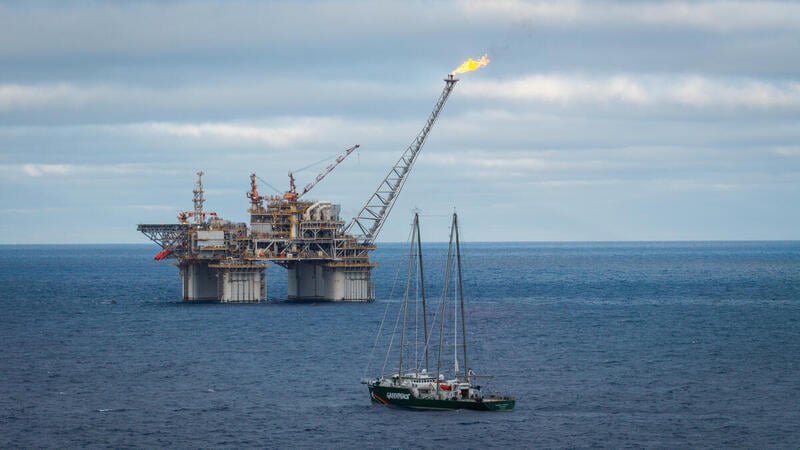
Hi folks! We’re joining you live from the Rainbow Warrior where we will be providing you with updates as our four activists continue scaling and occupying Woodside’s gas platform. The activists are peacefully protesting against Woodside’s latest gas expansion plans, the Browse project, which would see up to 57 toxic wells drilled at Scott Reef.
“Right now our activists are scaling Woodside’s massive Floating Production Unit. They are scaling the South-East pillar and the underside of the Helideck. They’ll be setting up camp soon and have plenty of provisions with them – so stick around!”
5:45 AM AWST
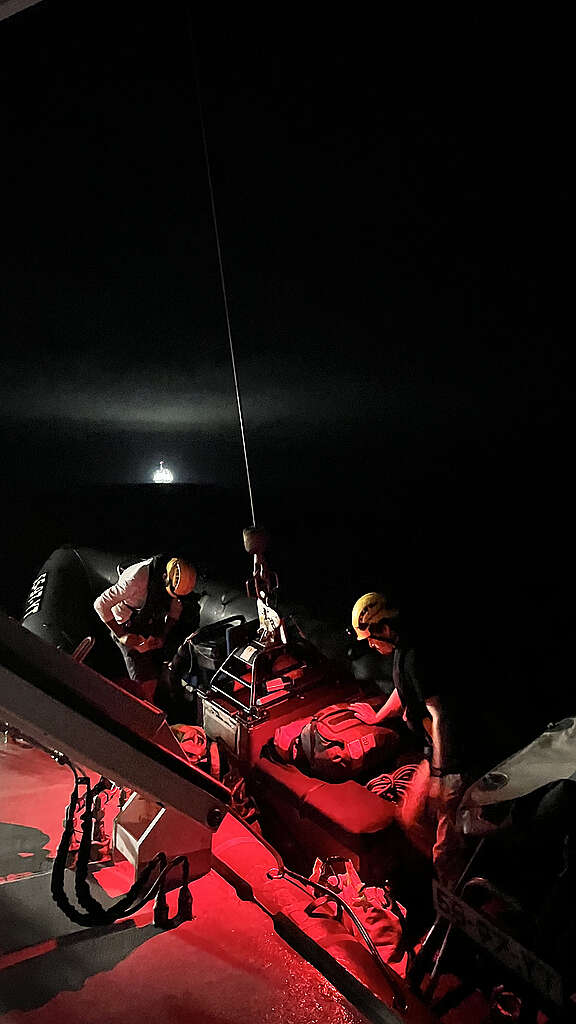
Our RHIBS are in the water! We’ve deployed our four activists and our ship crew on our small fast boats, headed to the gas platform. We’re carrying crew and equipment, plenty of food, all of our safety climbing gear, some big banners, cameras and a whole lot of heart… someone even has something to read after they get settled in.
5:26 AM AWST
Before sunrise activists prepared to launch RHIBS from the Rainbow Warrior.
Looking for a front seat view?
You can follow along with the Live Rainbow Warrior bow cam here!
Looking for more?
Follow us on Instagram for a peek behind the scenes and hear from our Rainbow Warrior crew.
Live blog: Greenpeace activists occupy Woodside gas project to save Scott Reef
Climate Change
Greenpeace activists climb and occupy Woodside’s Scarborough gas project calling on the Australian government to “Stop Woodside’s Dirty Gas” and “Save Scott Reef”
PERTH, Saturday 17 October 2026 — Four Greenpeace Australia Pacific activists are scaling and occupying a Floating Production Unit at Woodside’s Scarborough gas project off the coast of Western Australia, displaying banners reading: “Stop Woodside’s Dirty Gas. Save Scott Reef.”
- Photos and video available here and here. More will be uploaded throughout the day.
- Content and live updates will be uploaded to a live blog and to Instagram
Early this morning at 05:45 AWST, Greenpeace Australia Pacific activists launched from the Rainbow Warrior, Greenpeace’s flagship vessel, scaling and attaching themselves to a Floating Production Unit (FPU), a key piece of gas processing infrastructure at the Scarborough gas field over 200km off the coast of Exmouth.
Woodside has since confirmed it has initiated a temporary shut down of the FPU.
Greenpeace Australia Pacific is occupying the gas platform in peaceful protest of Woodside’s plans to drill for oil and gas at Scott Reef as part of its Browse proposal.
David Ritter, CEO at Greenpeace Australia Pacific, said: “Greenpeace Australia Pacific is taking action today to expose the unacceptable risk to Scott Reef posed by Woodside’s plans.
“Australians love our oceans. Woodside’s reckless Browse gas proposal would turn the magnificent Scott Reef into an industrial gas zone. Woodside wants to drill up to 57 toxic wells around Scott Reef, Australia’s largest oceanic reef, home to nesting green sea turtles, and endangered species like pygmy blue whales and the dusky sea snake; it is a place like nowhere else on Earth.
“Woodside has an alarming track record of oil spills, incidents and environmental neglect, and can’t be trusted with our oceans. From whaling in Albany in the seventies, to Woodside’s threat to Scott Reef today, there’s more than fifty years of history, of Greenpeace taking action off WA’s coasts to protect our oceans.
“There’s no future in new gas projects. Our future is in secure homegrown renewable energy, green industry and exports, where communities and places like Scott Reef are protected — there’s no future in dirty gas shipped offshore.
“The prospect of drilling for oil or gas on the Great Barrier Reef would be considered absolute madness today, but that is exactly the decision before the government: save Scott Reef or risk its destruction at the hands of a gas corporation.”
From aboard the Floating Production Unit, Dr Chris Holden, Greenpeace Australia Pacific activist said: “As a doctor, when I see new fossil fuel projects like Woodside’s Browse project being put forward, I can’t help but think about the impact this is going to have on the health of our communities and planet, and feel a sense of duty to act.
“Not only will this project do irrevocable harm to nature at Scott Reef, it will have a terrible impact on our climate, putting all of our lives at risk.
“On the Rainbow Warrior I’m carrying a copy of the 2025 Lancet countdown report, which warns that health impacts of climate change are worsening, with millions dying needlessly each year due to fossil fuel dependence, growing emissions, and failure to adequately adapt.
“With warnings like this from the leading global health professionals, our government simply can’t allow fossil fuel projects like Woodside’s Browse project to go ahead. It is their duty to do what is in the best interest of our communities.”
Almost half a million people have signed a petition calling on the government to Save Scott Reef and Woodside’s Browse gas project.
-ENDS-
Notes:
- Dial-in, SimSat and Zoom interviews with Geoff Bice, WA Campaign Lead at Greenpeace Australia Pacific, currently aboard the Rainbow Warrior, can be organised separately
Media contact:
Greenpeace Australia Pacific media team on +61 406 231 892 or +61 407 581 404
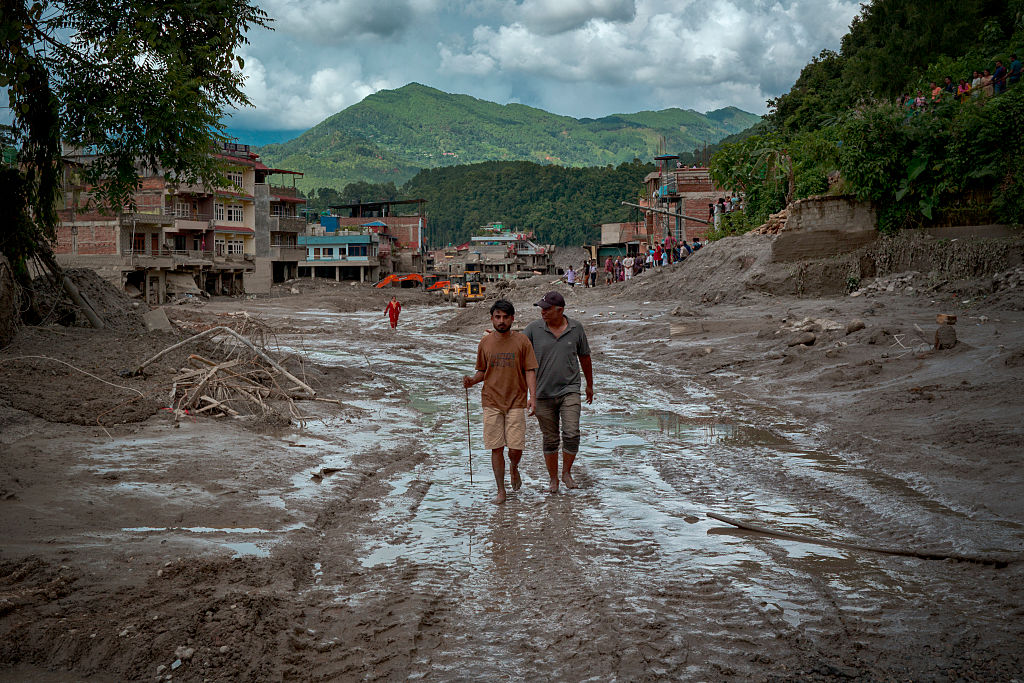
The board of the Fund for Responding to Loss and Damage (FRLD) will decide on Thursday on whether to “provisionally set aside” $20 million for Nepal to deal with some of the effects of the climate-driven flood it suffered in August.
The motion, seen by Climate Home News, has been drafted by a group of board members from both developed and developing countries and so is likely to pass easily at the fund’s first-ever extraordinary board meeting on October 22.
It invites the government of Nepal to submit a proposal for how to use the money, with the board then deciding at one of its regular board meetings whether to approve the proposal or not.
While Nepali officials have described $20 million as merely “symbolic” in the face of the $4.8 billion estimated costs of recovery and reconstruction, it would be the first time the new FRLD – agreed in 2022 months after devastating floods in Pakistan – has set aside money for a specific disaster.
Until now the fund has only taken requests through a single call for proposals, launched at COP30 in Belém last November, that gave countries six months to submit requests.
Most of the 180 projects the FRLD is currently considering are designed to help countries avoid damage from future climate disasters, for example by strengthening responses to floods in Bangladesh and Lagos.
The draft decision says Nepal’s proposal will serve as a pilot for how funding requests can be submitted outside of the fund’s current timetable. That could let governments seek funds quickly after a climate disaster strikes, rather than waiting for the next call.
This arrangement would set the fund apart from other United Nations