

Welcome to Carbon Brief’s Cropped.
We handpick and explain the most important stories at the intersection of climate, land, food and nature over the past fortnight.
This is an online version of Carbon Brief’s fortnightly Cropped email newsletter. Subscribe for free here.
Key developments
Brazil agri investigations
BOATLOAD OF BEEF: Major shipping firms transported more than half a million tonnes of beef and leather from slaughterhouses “linked to tropical forest destruction in Brazil” over the course of two years, the Bureau of Investigative Journalism (TBIJ) reported. Data showed that 12 meat plants run by Brazil’s top three beef companies were linked to an area of forest loss “three times the size of London” from 2021-23. Shipping firms then moved “hundreds of consignments” of beef and leather from these meat plants to Europe, the US and China in 2022-23, TBIJ found. Alex Wijeratna from environmental campaign group Mighty Earth told the outlet: “Major shipping companies are the silent enablers in the billion-dollar global trade of deforestation-risk commodities.”
DEFORESTATION LINKS: Separately, a report found that around 80% of Brazil’s major beef and leather organisations, plus their financiers, “have made no commitments to stop deforestation”, the Associated Press said. The report from nonprofit Global Canopy ranked meat giant JBS as the “most likely to be buying cattle and cow leather from recently deforested land” – despite the company being one of the few that have made public pledges to halt supply chain deforestation in future. JBS told the newswire that the report’s methodology provided a simplistic and inaccurate assessment of deforestation risk and ignored other factors, such as corporate policies.
MULTIPLE CRISES: Elsewhere, a new report covered by Carbon Brief found that “siloed” approaches to tackling the interconnected issues of biodiversity, climate change, food, water and health are not “fully effective”. The report from the Intergovernmental Science-Policy Platform on Biodiversity and Ecosystem Services (IPBES) found that focusing on a single element of these issues at the expense of the others will have negative impacts for humans and the planet. A second IPBES report looked at the “urgent and necessary” need for “transformative change” to tackle biodiversity loss and nature decline. Inger Andersen, executive director of the UN Environment Programme, said it “offers a roadmap for addressing the drivers of the nature crisis with tools for action across sectors and society”, Down to Earth reported.
Desertification COP ends in disarray
NO DROUGHT DEAL: The COP16 desertification summit in Riyadh, Saudi Arabia, ended with no agreement on a “legally binding response to drought”, the Financial Times reported. Countries need more time to agree on the “best way” to deal with this “critical issue”, the head of the UN Convention to Combat Desertification (UNCCD), Ibrahim Thiaw, said. The FT noted: “African countries in particular pushed for the establishment of a legally binding drought protocol, while the US and EU bloc sought a framework that was less economically onerous, but was ready to be operational.” This outcome follows the recent “failure” to reach key agreements at biodiversity talks in Colombia and plastics talks in South Korea, the newspaper said.
ENDING: Countries signed off on some outcomes at the Riyadh COP, including to set up “official groupings for Indigenous peoples and local communities”, Climate Home News reported. Governments also agreed to extend the desertification convention’s remit “beyond drylands, to cover grasslands, shrublands, woodlands, savanna and tundra”, the outlet said. On the other hand, the summit left a “lot of loose ends”, including on finance, according to Think Landscape. In total, $12bn was pledged at COP16 to tackle desertification, drought and land degradation – but an estimated $355bn will be needed each year by 2030, the outlet noted.
DRY LAND: Almost 78% of land around the world “likely became permanently drier” between 1990 and 2020, according to a UN report covered by Down to Earth. The report, released during COP16, said that 4.3m square kilometres of “previously humid landscapes” have turned into drylands over those three decades. The outlet said: “This transition has dire implications for agriculture, ecosystems and the livelihoods of those dependent on these regions, as reduced rainfall affects crops, pastures, people and nature.”
Spotlight
The top five food, land and nature stories of 2024
For the final Cropped issue of the year, Carbon Brief rounds up our selection of the five food, land and nature stories that marked 2024. Cropped will return to your inbox on 15 January 2025.
SEVERE DROUGHT: In February, Carbon Brief covered research revealing that half of the Amazon will face “unprecedented” stress that could lead to a tipping point by 2050. Such stress – the result of a combination of factors, including climate change, deforestation, biodiversity loss and extreme weather – may convert vast rainforest areas into savannas. In October, Brazil’s Globo Rural reported that the drought in the southern Amazon – ongoing since 2023 – reached “critical levels”, hindering river navigation and isolating riverside communities.
SKYROCKETING FOOD COSTS: This year saw a global rise in food prices, from olive oil and oranges through to cocoa and coffee. Carbon Brief consulted a range of scientists and policy experts to best understand the factors behind the spiking prices, including extreme weather events, high input costs, geopolitical conflicts and increasing demand. The Financial Times reported that climate change is a major trigger for these prices, as it is “reducing crop yields, squeezing supplies and driving up prices”. Carbon Brief produced five charts that highlight climate impacts on food production and prices for various crops in the EU, UK, US and China.
DE- AND REFORESTATION: A report by the Forest Declaration Assessment noted that the world is “not on track to meet” its goals to halt and reverse deforestation and forest degradation by 2030. According to the report, the world has “barely made a dent in curbing deforestation”. In June this year, the EU Council gave the final sign-off to a nature law aiming to restore 30% of degraded habitats, including forests, rivers and wetlands by 2030, as Carbon Brief reported. EU countries will start implementing their restoration plans in July 2026, according to Earth.org.
MASS BLEACHING: This year also saw the “most extensive on record” event of coral bleaching, Reuters reported, citing the US National Oceanic Atmospheric Administration (NOAA). Satellite data revealed 77% of the world’s coral reef areas have undergone heat stress, leading to bleaching events, against a backdrop of “near-record ocean temperatures across the world”. Scientists dubbed this the “fourth global coral bleaching”.
THREE COPS: Three COPs in a row closed out the year. Carbon Brief covered the COP16 biodiversity summit in Cali, which will resume in Rome in February 2025 to address unresolved issues, such as creating a new fund under the COP and a monitoring framework for countries’ progress in tackling biodiversity loss. Carbon Brief also reported on the COP29 climate talks in Baku, where food and nature featured “pretty weakly” in the negotiations, according to observers. The year ended with the UN desertification conference in Riyadh, which ended last week and failed to agree on a legally binding drought protocol, Inter Press Service reported.
News and views
‘EPIC’ MIGRATION: Climate change may have led a humpback whale to undertake “one of the longest and most unusual migrations ever recorded”, BBC News reported. The whale traveled from the Pacific Ocean to the Indian Ocean, covering a distance of 13,000 kilometres. Scientists described it as an “epic” migration and said it could have been driven by a reduction of food availability due to climate change or the search for a mate.
PRICING BIODIVERSITY: Investors are “increasingly interested in addressing biodiversity risks in their portfolios” and putting a price on biodiversity through the creation of “green” funds, the Financial Times reported. The outlet cited experts in biodiversity investments who said the sector is becoming more aware of the impacts of biodiversity loss on inflation and GDP. It also said that the topic drew more attention at the COP16 biodiversity summit, held in Colombia this year, than at previous biodiversity summits. Separately, a recent study outlined a new framework for defining what a unit of nature is, as well as the risks of biodiversity credits.
FARMER FRUSTRATIONS: In Spain, tens of thousands of farmers took to the streets of Madrid to protest against a trade agreement between the EU and Mercosur countries in South America, Euractiv reported. The deal, which has been in the works for 25 years, would “create a free-trade zone spanning more than 700m people”, Politico said. It was given the final green light on 6 December, but has not yet taken effect, the outlet noted, adding that it is “furiously opposed by France, which fears that a glut of cheap poultry and beef imports would undercut its farmers”. Elsewhere, DeSmog and other outlets compiled a database of interests and “side jobs” of politicians on an EU agriculture committee. In the UK, farmers protested in London over tax changes, according to Reuters.
RISKY BUSINESS: Bloomberg reported on the risks of an “unusual insurance policy” to aid disaster recovery that is “gaining ground” in Asia, Africa and the Caribbean. The policy, known as parametric insurance, provides a payout only when a “specific metric is triggered”, such as low rainfall levels harming crop growth. The outlet spoke to people in a small Malawi village which has received “only a trickle” of a payout from this policy. Chilimani has been hit by floods, cyclones and now its “worst drought in decades”, which has “obliterated the harvest of corn, the main food”, Bloomberg said. One villager told the outlet: “It’s the worst time of our lives…Everything has become unpredictable.”
Watch, read, listen
LAND RIGHTS: The Africa Daily podcast from the BBC World Service explored whether a recent “major land policy shift” in Zimbabwe will “empower black farmers”.
‘SACRED’ CENOTES: An Associated Press video covered the Indigenous Mayans’ quest to obtain personhood status for their “sacred cenotes”, a group of subterranean lakes in Mexico.
RISKY SHIFT: Farmers and fishermen are starting to work at night in response to extreme heat. Grist navigated the “new dangers” these changes may lead to.
HOPEFUL NOTE: The Guardian detailed “five UK biodiversity success stories” – including butterfly comebacks and helping a river “start from scratch”.
New science
- A new study in the Proceedings of the National Academy of Sciences found that less than a quarter of tropical rainforests are of “high integrity”, meaning they are “intact and undisturbed”. The researchers analysed forest areas inhabited by 16,396 species of terrestrial vertebrates, finding that species threatened with extinction were especially affected by the loss of habitat.
- Species extinctions will “accelerate rapidly” if global temperatures go beyond 1.5C above pre-industrial levels, a Science meta-analysis study suggested. The research synthesised the findings of 485 studies and more than 5m projections of future extinctions.
- Deforestation-induced climate change has made soybean and maize crop shortages “more frequent and severe”, according to new research published in Nature Sustainability. The authors examined the effects of climate change on these crops in the Cerrado, a vast savanna in eastern Brazil.
In the diary
- 16-20 December: 68th meeting of the Global Environment Facility Council | Online
- 25-27 February: Resumed session of Convention on Biological Diversity COP16 | Rome, Italy
Cropped is researched and written by Dr Giuliana Viglione, Aruna Chandrasekhar, Daisy Dunne, Orla Dwyer and Yanine Quiroz. Please send tips and feedback to cropped@carbonbrief.org
The post Cropped 18 December 2024: No UN deal for drought; Brazil beef investigations; New IPBES reports appeared first on Carbon Brief.
Cropped 18 December 2024: No UN deal for drought; Brazil beef investigations; New IPBES reports

After witnessing the effects of sea-level rise in the low-lying island nation of Tuvalu, Pacific leaders on Tuesday used the pre-COP31 summit in Fiji to voice their frustration at the difficulties they have experienced in tapping the global climate finance system.
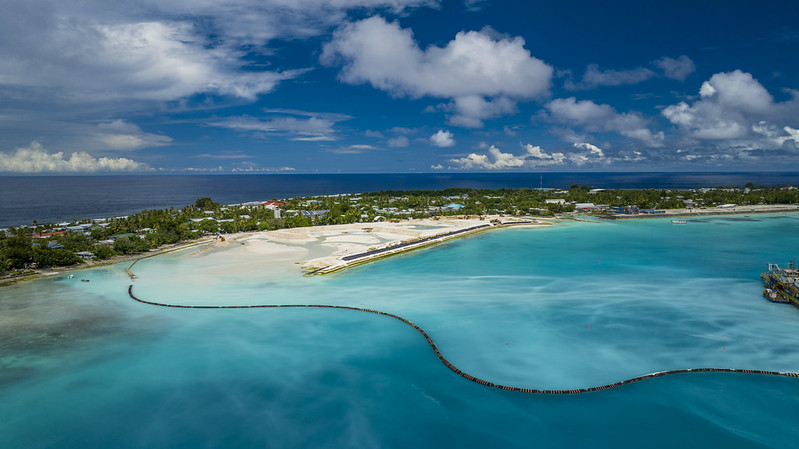
A small group of government leaders, climate negotiators and heads of development banks and climate funds took a trip to Tuvalu’s Funafuti atoll on Tuesday morning, travelling by road over land just 10-20 metres wide to visit a project that is building barriers to keep the sea from the land.
They then flew to Fiji for the pre-COP summit, where several Pacific leaders said they had been let down by the insufficient quantity, bad terms and slow speed of international finance to help them adapt to a warming climate that is bringing higher oceans, drought and more powerful storms to their shores.
“Right now, our islands are like a canoe that has been rammed by a massive foreign ship. Our canoe is taking on water, we are sinking, and what is the world’s response?” asked Palau’s President Surangel Whipps Jr.
“They hand us a tiny patch to cover a gaping hole,” he continued, “but the bureaucratic process just to receive that patch is so slow that the water fills the hole while we wait. Then to rebuild the vessel so that we can survive the next storm, we are offered loans, debt that adds weight to a sinking boat packaged in red tape so thick we can barely access it. And while we wait, the water continues to fill.”
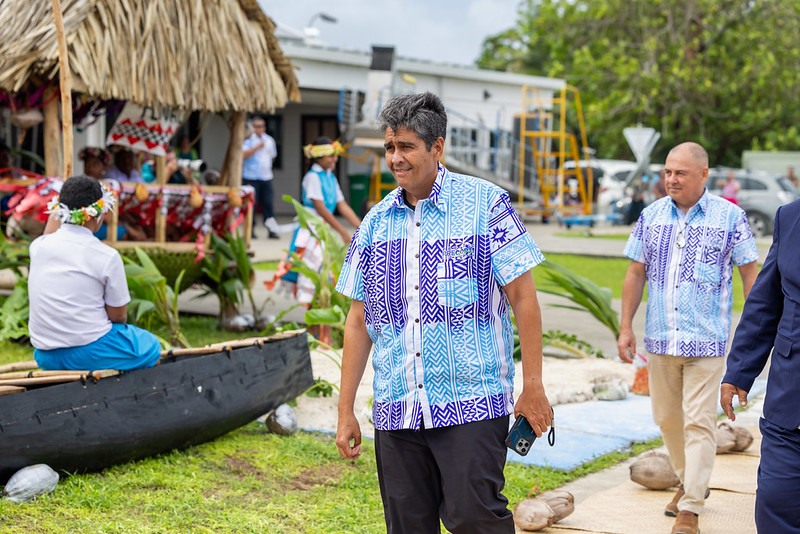
Pacific leaders and Australia called again on governments to invest in the new Pacific Resilience Facility (PRF), which has been designed by the Pacific Islands Forum and is seeking $500 million in investments by COP31 in November.
It has around $180 million so far, but did not receive additional pledges during the UN General Assembly in New York. The PRF aims to invest to generate annual returns which it can give to projects like water tanks for drought-hit communities.
Witnessing sea level rise
The annual pre-COP gathering is usually a low-profile technical meeting of climate negotiators. But this year, Australia – which is the president of negotiations at COP31 – partnered with the Pacific to introduce a “leaders segment” in an attempt to shine a spotlight on climate issues affecting the region.
Fourteen government leaders – from Australia, Timor-Leste, Mauritius and the Pacific – made the trip. They were joined by the European Union’s climate commissioner Wopke Hoekstra, the heads of the Green Climate Fund and the Asian Development Bank and former Australian prime minister Julia Gillard.
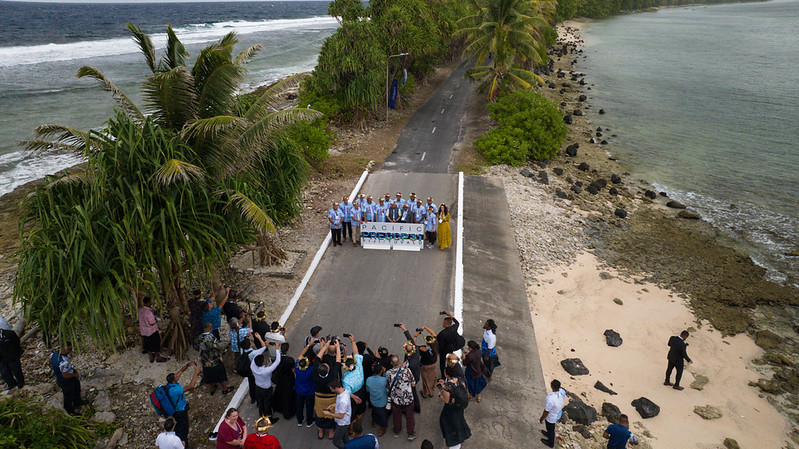
On their return to Fiji, Solomon Islands Prime Minister Matthew Wale told the pre-COP leaders roundtable that the sea level rise they had witnessed was personal for him.
“Tuvalu was not just a site visit for me. I saw the story of my own saltwater people,” he said, adding that he, his daughter and his grandfather had lost their houses to sea level rise and that three-quarters of his electorate live on land that will be underwater in the next 30 years.
From the other side of the world, Antigua and Barbuda’s environment minister Michael Joseph said Tuvalu’s problems felt similar to those of his own Caribbean islands. “I saw vulnerable communities… just metres from the sea and people determined to remain on their land, preserve their culture and way of life,” he said.
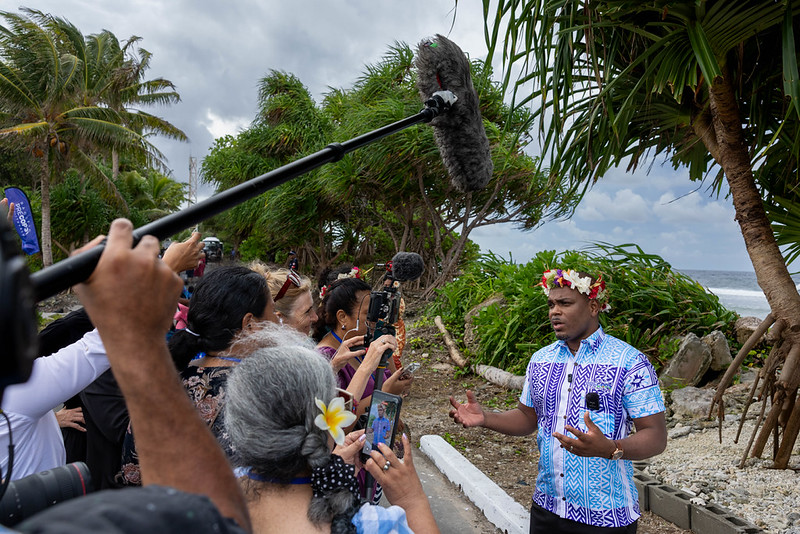
A group of Fijian schoolchildren told the leaders it was not just sea level rise the Pacific struggles with but also heatwaves, droughts and storms, which worry their families and prevent them from learning.
Climate finance red-tape
Several Pacific leaders criticised the world’s leaders for not doing enough to combat climate change. Cook Islands Prime Minister Mark Brown expressed disappointment that only two non-Pacific leaders had come to the pre-COP, a fact Australian media widely picked up on to label the event a flop and question its A$20 million (US$14m) price tag.
“We’ve heard a lot of numbers these last two days,” Brown said. “Let me share one of my own. More than 50 invitations extended to world leaders… to see for themselves what high emissions are doing to our nations and our ocean – an ocean that covers nearly one-third of the Earth’s surface.”
-
Pacific islands seek backing for new regional fund ahead of COP31
Pacific leaders will appeal for pledges to a new regional fund designed to swiftly channel climate finance to local communities -
The Pacific made history in the courts – now we must do it in the negotiations
Legal clarity alone will not lead to reduced emissions, more finance or stronger national climate plans – political will is key to meeting states’ obligations -
Civil servants warn fossil fuel exploration could harm New Zealand’s climate reputation
Advice to politicians says revoking a ban on oil and gas drilling could damage relations with Pacific neighbours and risk lawsuits
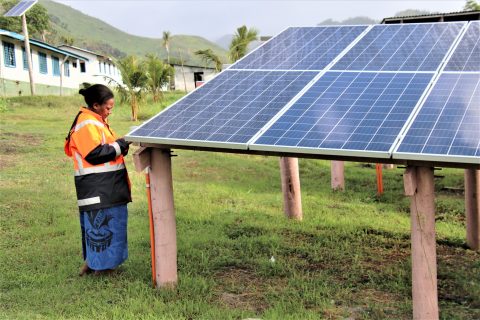


He called for more climate finance for the Pacific, asking “if the world is prepared to assess our suitability for climate finance, why is it not equally prepared to scrutinise whether those responsible for delivering it are meeting their obligations?”
Like Palau’s president Whipps, Naoero’s President David Adeang criticised the red tape that is hindering access to climate finance as well as a lack of money, complaining especially about “complicated procedures, heavy reporting, delays in approval and disbursement”.
Adeang added that “the way we assess vulnerability matters”, adding that it should be measured by more than income. Naoero, for example, is classified by the World Bank as high-income, restricting which climate finance it is eligible for.
Action plan to improve access
On Thursday, the Australian government will present a statement and action plan on improving access to climate finance for small island developing states and least developed countries, which it is asking other countries and organisations to endorse.
The statement addresses some of these Pacific complaints as well as acknowledging that progress has already been made on simplifying access by multilateral development banks and climate funds.
In Fiji, Asian Development Bank head Masato Kanda said his institution is “tailoring our finance and operations to island realities” because “your children and their children should be able to grow old in the countries their ancestors have called home for millennia”.
The executive director of the Green Climate Fund (GCF), Mafalda Duarte, said that the GCF-backed coastal adaptation project leaders visited in Tuvalu shows that “climate finance works” although – as the project took eight years to implement – “it takes time, and therefore we have no time to waste”.
Australia calls for optimism
While Pacific leaders expressed concern that the world is set to blast past its agreed 1.5C warming limit, endangering their nations, Australia’s Prime Minister Anthony Albanese called for “optimism”. “If people think there is no hope, then they will not strive to get the change that we need,” he said.
He said that when he attended his first COP in 2005, Australia’s renewable energy target was 2%. Its target is now 82% renewable electricity by 2030.
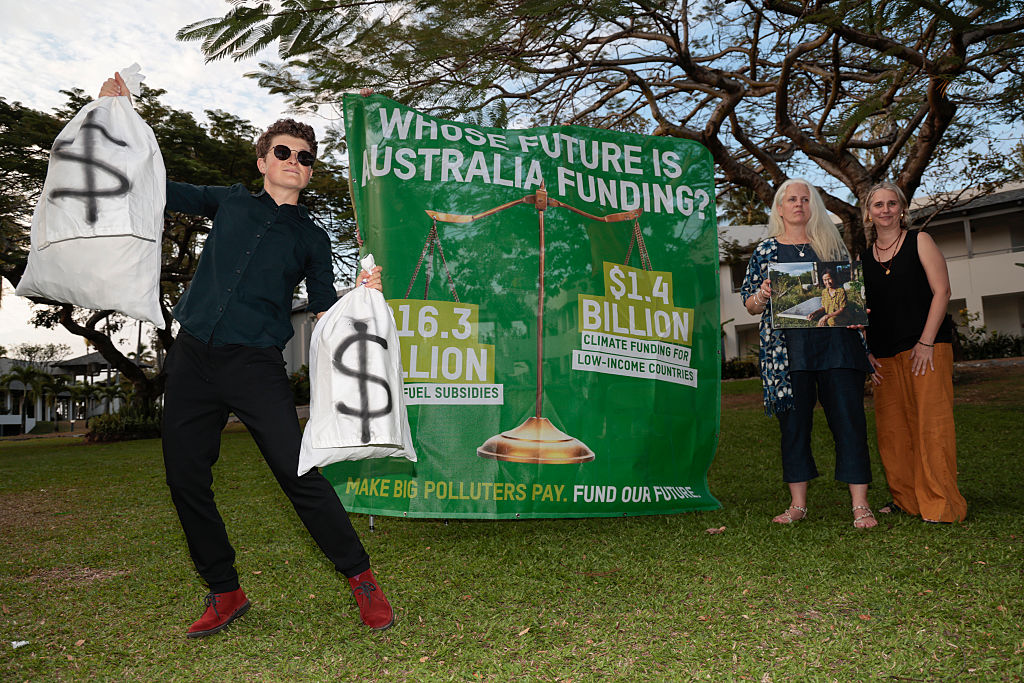
While Albanese promoted Australia’s success at electrifying homes and businesses and rolling out renewables, he has been criticised by climate campaigners for extending the production of fossil fuels, including coal – largely for export.
France’s Minister for Ecological Transition Monique Barbut defended the European Union’s climate action at the pre-COP meeting. She said the continent was heating up and reducing emissions faster and providing more climate finance than anywhere else in the world.
“It is time for all major emitters to step up and do their fair share” on climate finance, she said. Most developing countries with large emissions have fiercely resisted joining the club of climate finance donors, arguing they have played a disproportionately small historic role in causing climate change.
Barbut, as well as Palau’s president Whipps, called for the next flagship scientific assessment report of the Intergovernmental Panel on Climate Change (IPCC) to be finished by COP33 in 2028, in time to inform the next global stocktake of national climate action.
This timeline has been opposed by countries like India, Saudi Arabia and China, who argue it would put an unfair burden on developing countries. Barbut said countries should “support the work of the IPCC rather than sabotage its calendar”.
Barbut said that governments should agree at COP31 to aim to raise the share of “clean electricity” in final energy consumption to 35% by 2035. The Turkish and Australian governments have pushed for this goal although without specifying that the electricity should be “clean”. Barbut added that COP31 should also agree to cut emissions of methane, a particularly potent greenhouse gas.
The post Pacific leaders rail at climate finance failures after pre-COP trip to Tuvalu appeared first on Climate Home News.
Pacific leaders rail at climate finance failures after pre-COP trip to Tuvalu
Jacynta Fa’amau is a Pacific campaigner at global grassroots climate movement 350.org and a secretariat member of Pacific Climate Warriors.
The first thing that struck me was the sheer size of Queensland’s Saraji coal mine. Standing at the edge of the enormous pit, my brain scrambled for words as I scanned the earth’s open wound – a whole island could probably fit inside it.
Looking down, I noticed footprints of an emu and a koala, pressed and dried in what was once a puddle – signs of how drought had driven animals in desperate search of water, so dangerously close to the coal trucks and heavy machinery ahead.
Earlier this year, I joined a small group of Pacific Islanders on a journey through the Bowen Basin to learn from First Nations communities battling Australia’s mammoth coal industry. Of the more than 40 coal mines operating in the area, BHP & Mitsubishi Alliance’s Saraji mine is one of the largest. So it came as a painful shock to us when in August, the Australian government approved the mine’s extension just months after our visit.