

We handpick and explain the most important stories at the intersection of climate, land, food and nature over the past fortnight.
This is an online version of Carbon Brief’s fortnightly Cropped email newsletter. Subscribe for free here.
Key developments
Forests under fire
‘ONEROUS REQUIREMENTS’: A letter from 18 EU member states called for the bloc to “delay and further simplify” the forthcoming application of new rules to curb global deforestation, according to Bloomberg. The letter said the regulation, due to take effect in December, “does not sufficiently take into account countries with effective forest protection laws and a negligible risk of causing deforestation”, the outlet said. The Financial Times added that Indonesia also demanded EU “policymakers cut back on ‘onerous’ requirements”, citing the challenges facing smallholder farmers and producers.
‘ILLICIT TIMBER TRADE’: Illegal loggers are “profit[ing] from Brazil’s carbon credit projects”, Reuters analysis found. Companies have invested “hundreds of millions of dollars” into these conservation projects. But at least 24 of 36 projects in the Brazilian Amazon examined by the newswire “involved landowners, developers or forestry firms that have been punished by Brazil’s environmental agency Ibama for their roles in illegal deforestation”. Offences ranged from “clear-cutting the rainforest without authorisation” to “entering false information in a government timber tracking system”, Reuters said. It is a “failure of the whole idea”, said Raoni Rajão, who formerly ran Brazil’s environment ministry’s programme combating deforestation.
WILDFIRES ABLAZE: Elsewhere, wildfires “fanned” by extreme heat across France, Spain, Greece and other parts of Europe resulted in forced evacuations and “major firefighting operations”, the Independent reported. According to Reuters, 227,000 hectares of land has burned in Europe since the beginning of 2025, “more than double the average for this time of year over the past two decades”. More than 100 wildfires burned in a central Canadian province, the New York Times said, while fires in a Syrian coastal mountain region “overwhelm[ed]” emergency services, according to CNN.
Ag emissions projected to rise
EMISSIONS INCREASE: A new report by the Organisation for Economic Co-operation and Development (OECD) and the UN Food and Agriculture Organization (FAO) estimated that the growth of farming and livestock production worldwide will increase the sector’s greenhouse gas emissions by 6% by 2034. However, yield improvements derived from changed farming practices mean that global agricultural carbon intensity will actually decrease over the next decade, the report found. FAO director general Qu Dongyu said in a press release: “Lower carbon intensity of agrifood systems is also welcome, but we can do better.”
LIVESTOCK IMPACT: According to the report, the main drivers of the expected rise in emissions include the increase of ruminants and livestock (70% of the projected global emissions), followed by the use of synthetic fertilisers (28%), rice cultivation and other activities, such as burning crop residues. The largest increases are expected in south Asia and sub-Saharan Africa, the report said. Agricultural emissions are projected to rise in these two regions by 14% and 8%, respectively, by 2034, partly due to the expansion of ruminant herds, it noted.
YIELD DISPARITY: The report also estimated that current differences in agricultural yields between developed and developing countries will not have “significant changes” over the next decade. For instance, yields of maize are higher in North America, compared to the rest of the world. This is attributed to several factors, including gaps in access to finance and modern technologies, the report noted. The authors offered solutions for increasing agricultural yields while mitigating emissions from the sector, including increasing productivity, manure management and addressing both production and consumption of livestock products.
Spotlight
Climate impacts for US lobsters
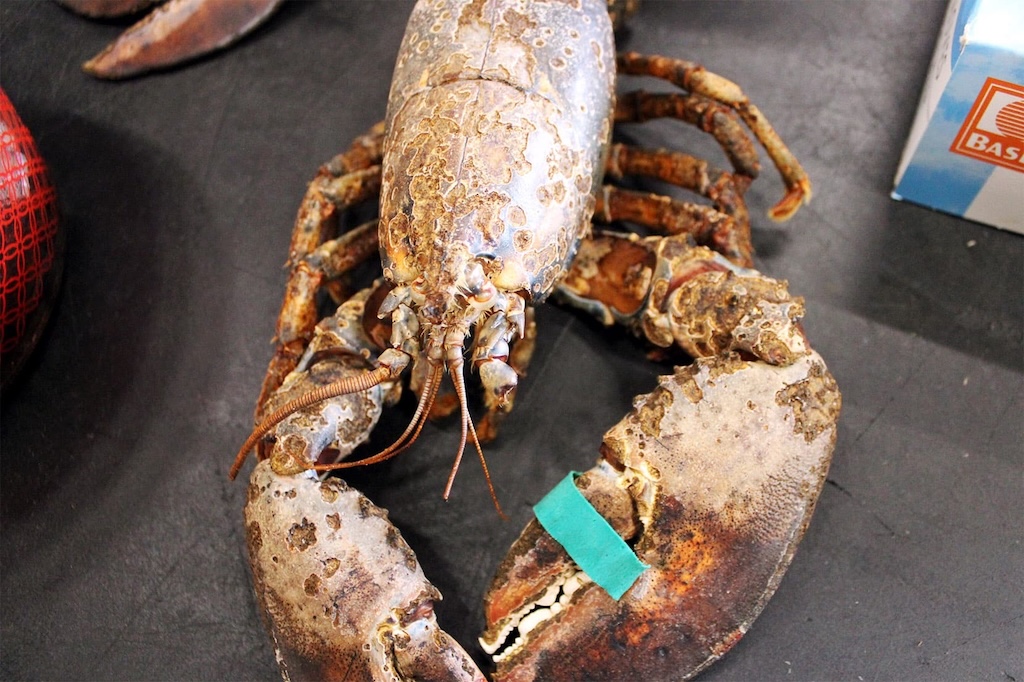
This week, Carbon Brief food, land and nature reporter Orla Dwyer explores how climate change is impacting US lobsters, after recently attending a science workshop as part of the Metcalf Fellowship at the University of Rhode Island.
Scaly? Check. Covered in scabs resembling cigarette burns? Check. Yes, that lobster has epizootic shell disease – and climate change is making it worse.
This disease – first recorded in the north-eastern US region of New England in the 1990s – acts as a “manifestation of an environment that is increasingly inhospitable to lobsters,” said Dr Ben Gutzler, a post-doctoral research fellow at the Wells Reserve at Laudholm in Maine.
He told Carbon Brief that the disease is one indication of the “stress” lobsters are under due to warmer ocean conditions, which leave them more vulnerable to these kinds of ailments.
Gutzler co-authored new research that assessed more than 1,000 peer-reviewed studies on American lobsters published over the past 25 years.
The research found that epizootic shell disease currently affects as much as half of lobsters in parts of southern New England, where overall lobster numbers have plummeted in recent decades.
Warmer oceans fuelled the spread of the disease-causing bacteria, Gutzler said, telling Carbon Brief:
“The warmer water leads to faster microbial growth, because everything happens faster at warmer temperatures…Once [lobsters] get a nick on their shell that provides that portal of entry, the microbes can just go gangbusters.”
The disease causes lesions to form on a lobster’s shell and can reduce their growth and impact reproduction. In severe cases, the sores grow, spread beneath the shell and enter the lobster’s tissue, eventually damaging their internal organs and gills.
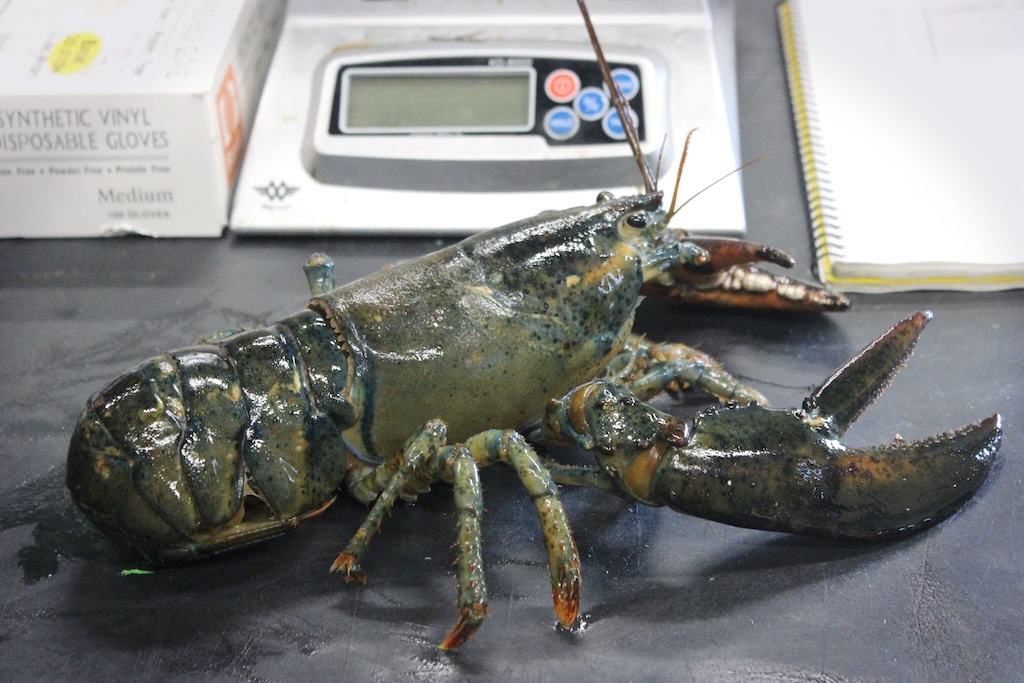
’Leprosy’ lobsters
Carbon Brief recently spoke to researchers at the University of Rhode Island about the impact climate change is having on lobsters in New England, where the vast majority of the US lobster industry is located.
They explained that lobsters are cold-water creatures, generally most comfortable in waters of around 16C. The north-eastern Atlantic waters are warming faster than the global average and lobsters in the region are struggling as a result.
Although epizootic shell disease looks unpleasant, Gutzler said that it does not impact the taste of a lobster:
“It just becomes annoying for the fishermen, because nobody wants to eat a lobster that looks like it has leprosy.”
This disease is far from the only way lobsters are affected by the impacts of climate change. Warmer, more acidic oceans are impacting the areas in which lobsters settle and grow in abundance. Gutzler added:
“There’s a whole suite of things driven by ocean temperature that all add up to: it’s harder to be a lobster and successfully complete your life cycle in this new thermal regime.”
News and views
POLICY CONTRADICTIONS: Labour proposals to “weaken environmental regulations for small housebuilders” in the UK would exempt 97% of planning approvals from the “requirement to replace destroyed nature”, the Guardian reported. The plans could “destroy 215,000 hectares of nature in England”, it added. Meanwhile, the UK government released a new food strategy for England, promising to “improve environment and health”, according to BusinessGreen. The strategy “promises [a] wave of fresh policies to tackle emissions [and] curb nature impacts”, the outlet said, adding that campaigners “have repeatedly warned the UK remains off track to meet targets to reverse nature loss by 2030”.
‘GREEN GREAT WALL’: China has completed a “sand control belt” that spans the Badain Jaran, Tenegger and Ulan Buh deserts in the westernmost part of Inner Mongolia, according to the South China Morning Post. The green belt, stretching 1,856km, represents the “latest phase” in China’s “decades-long efforts to curb desertification”, the outlet said. Similar projects to combat desertification include Africa’s ‘Great Green Wall Initiative’, which China supports through “sharing technology expertise and funding”, it added.
SALTY: Thousands of salt farmers in the western India state of Gujarat are undertaking an “unlikely green revolution” by switching from diesel to solar-powered water pumps, JUST Stories reported. The outlet noted that 80% of India’s salt is produced in Gujarat, where the “vast majority” of salt workers are women. The salt pan workers, known as Agariyas, have been “steadily replacing” their pumps with help from a self-employed women’s trade union, the outlet said. Mary Robinson, climate advocate and former president of Ireland, said this initiative is “one of the most stunning examples of a truly just transition”.
ALL OVER THE WORLD: A report from the UN Convention to Combat Desertification found that the 2023-24 drought, which was exacerbated by El Niño, affected wide swathes of the planet, including the Mediterranean, Amazon basin, Panama, Mexico and south-east Asia. According to the report, the drought’s impacts varied by region, but generally included water supply shortages, agricultural failures and power rationing. Human and livestock deaths were recorded in eastern Africa, while the Amazon released more carbon into the atmosphere as a result of the drought.
HYDRO-POWERED: Women in Somalia who have been displaced by conflict and climate change are growing spinach, tomatoes and leafy greens with hydroponics, instead of planting them in the soil, Deutsche Welle reported. The hydroponics project was launched by the not-for-profit SOS Children’s Villages in 2022 in “response to the country’s worsening droughts and floods, which have devastated traditional agriculture”. The project is carried out in 41 solar-powered greenhouses and allows women to earn up to €43 a month, per person. The outlet quoted a farmer who said: “These beautiful farms have changed our lives.”
Watch, read, listen
SWEET COEXISTENCE: Euronews Green explored whether wild pollinators and honeybees can co-exist and assessed the risk of pollinator extinction in the EU.
‘MEDIOCRE’ MILK: A joint investigation by DeSmog and the Premium Times examined how a milk powder produced using Irish dairy is being sold in west Africa under a “carefully constructed” image of being “healthy and sustainable”.
BIG SHIFT: This NPR Short Wave podcast addressed how ocean currents, such as the Antarctic Circumpolar Current, are shifting due to climate change.
PLANT POWER: The Guardian spoke to “rainforest gardeners” at a botanical sanctuary in Kerala, which is a “haven for more than 2,000 native plant species from southern India”.
New science
- A new review article, published in Nature, found that marine heatwaves have intensified since around 1980 due to human-driven climate change, resulting in “biological, ecological and socioeconomic change in almost all oceans and seas”. The authors wrote that reducing greenhouse gas emissions is the “only long-term solution”.
- A PLOS One study found that 80% of areas with the highest potential for flowering plant discoveries in Brazil are not within protected areas, but 50% of them lie in Indigenous lands. The study highlighted the “urgent need” to expand collection efforts, protected areas and collaboration with Indigenous peoples, the authors said.
- Cropland productivity “stagnated” in most parts of southern Africa over the past 20 years, according to research published in Nature Food. The findings are in contrast to official crop statistics and, although climate change influenced annual fluctuations in productivity, the study authors said climate trends do not explain the stagnation.
In the diary
- 7-25 July: 30th session of the International Seabed Authority (part two) | Kingston, Jamaica
- 23-31 July: 15th meeting of the conference of the contracting parties to the Ramsar Convention on Wetlands | Victoria Falls, Zimbabwe
- 24 July: EU-China summit | Beijing
- 27-29 July: Second UN food systems summit stocktake | Addis Ababa, Ethiopia
Cropped is researched and written by Dr Giuliana Viglione, Aruna Chandrasekhar, Daisy Dunne, Orla Dwyer and Yanine Quiroz. Please send tips and feedback to cropped@carbonbrief.org
The post Cropped 16 July 2025: EU deforestation law pushback; Agri emissions; US lobster disease appeared first on Carbon Brief.
Cropped 16 July 2025: EU deforestation law pushback; Agri emissions; US lobster disease

Farmers and fishermen in the Maldives have long relied on an ancient calendar to guide their daily lives.
The Nakaiy system divides the year into 27 distinct periods, each named after a star or constellation in the night sky.
Any one period in the calendar tells you about expected weather and tidal patterns, navigational routes, and fishing conditions. The Nakaiy was created through centuries of careful observation and local knowledge, passed down through families as an essential tool for survival.
But things are now changing. The climate crisis is leading to more extreme weather events across the Indian Ocean island nation and upending the Nakaiy calendar.
“When you go and speak to communities and ask them what kind of impacts they are facing, a lot of elders will tell you that the weather, it doesn’t follow the calendar anymore,” explained Aishath Reesha Suhail, a programme officer in the Maldives’ Ministry of Tourism and Environment.
As the effects of climate change worsen, it is a real prospect that the Nakaiy may be abandoned by local people, representing a major cultural loss to the Maldives.
‘Systemic and growing threat’
With extreme weather becoming the norm, communities are observing a domino effect of consequences in their everyday lives. The slow onset of heritage loss is now being seen across continents, but notably among small islands in remote parts of the ocean.
“Climate change represents a systemic and growing threat to cultural heritage worldwide,” a UNESCO spokesperson told Climate Home, adding that the World Heritage Committee has identified climate change as “one of the most significant long-term risks affecting properties across all regions.”
UNESCO, the UN body for education, science and culture, defines the loss of cultural heritage as “the erosion of traditional knowledge systems, craftsmanship, social practices and identity, particularly where communities are displaced or livelihoods disrupted”. A clear example is historical sites and even entire islands washed into the ocean as a result of rising sea levels and coastal erosion.
The Maldives is dealing with such a situation now. The Koagannu Cemetery is a 900-year-old resting place, located on the country’s southernmost atoll, a mere 50 metres from the shoreline. The monument’s intricate coral gravestones are being actively threatened by the encroaching Indian Ocean.
The government and local community have responded to this challenge with emergency protection measures. Sandbags and concrete structures have been installed along the coastline, complemented by large numbers of palm trees to create a seawall. A wider solution is ‘beach nourishment’, a common practice in the Maldives where sand from elsewhere is brought in to replace what has been lost through erosion. Taken together, these solutions have so far protected the cemetery.
Among the many issues climate change creates, cultural heritage is not always front of mind. In the Maldives, one of the main barriers people face is awareness. “Most of what we are dealing with relates to the erosion of our islands along with areas such as fisheries… but we are quite limited in our capacity to do something about it,“ Suhail said.
“We don’t understand the full breadth of the issue at present because we haven’t been able to do extensive research on the matter,” she added. However, assessing the extent of the damage – and how to respond effectively – is a key priority for the government, outlined in its latest climate plan, known as a Nationally Determined Contribution, and as part of its National Adaptation Plan process.
Fishing is at the core of the country’s culture and identity, employing thousands of people. Most dishes include fish – “we have it for breakfast, lunch and dinner,” Suhail noted – but the climate crisis and overfishing are shifting how and when communities can fish. Tuna makes up 98% of all fish caught in the Maldives, but warmer ocean temperatures are changing migratory patterns, pushing the species into deeper, colder waters.
As a critical economic and cultural resource, the government has outlined a range of solutions to protect the fisheries sector in its first Biennial Transparency Report to the UN. These include using real-time tracking data to improve the efficiency of fishing operations; investing in canneries to increase fish storage; and diversifying away from tuna through marine farming.

Culture and nature go hand-in-hand
The same pattern is playing out elsewhere.
Palau and the Maldives are not close to one another. The two states are separated by around 4,000 miles and sit in different corners of the ocean. But both are experiencing very similar climate challenges, based on their position as a set of scattered, low-lying islands surrounded by an imposing body of blue water.
In the same way as the Maldives, Palau’s cultural heritage is closely tied to “land, coastlines and traditional food systems,” according to Toni Soalabla, at the Palau Office of Climate Change.
“Many of the places that hold stories, history and identity of our communities are located along the coast and are increasingly exposed to erosion and sea level rise,” she said.
One of these places is Ngerutechei village, reportedly the oldest in Palau, and home to ancient stone paths and carvings. The village provides a glimpse into the past social values and culture of the people in this western Pacific nation.
As part of the development of Palau’s National Adaptation Plan, the government has worked with local leaders to identify similar sites of cultural significance. The plan encourages communities to use their own knowledge to create protective measures for these sites.
Climate change is also prompting communities to take up traditional land and food practices again. These include cultivating taro, a stable food source that has historically supported water, soil and food security on the islands.
“These systems developed over generations in response to local environmental conditions, so strengthening them today is both a climate adaptation measure and a way of maintaining cultural knowledge that might otherwise fade,” said Soalabla.
Cultural practices in Palau have developed alongside the natural ecosystems that people rely on to survive. It is within this context that researchers believe adaptation policies should be created. Recognising this relationship “can strengthen both community identity and environmental resilience at the same time”, according to Soalabla.


Heritage on the global stage
The issue of cultural loss has not gone unnoticed in international climate negotiations.
Small island states such as the Maldives have used their role at the UN to push for greater awareness and action, with some key successes.
In 2015, the Paris Agreement established a Global Goal on Adaptation (GGA) which recognised that countries needed to do something about climate change now and not later. However, it took six years before a framework and a set of adaptation targets were agreed at the UN climate summit in Glasgow to pursue this goal.
From this came the establishment of seven overall themes – from poverty eradication to access to health – to guide adaptation action and a set of around 60 indicators to measure progress against the targets.
World leaders invited to see Pacific climate destruction before COP31
Emilie Beauchamp, an adaptation specialist at the International Institute for Sustainable Development (IISD), said that “cultural heritage was highlighted as one of the global priorities [of the GGA Framework] and is one of the seven themes, so it is considered very important by the international community.”
The much-debated set of indicators, only finalised in Belém at last year’s COP30, include five related to cultural heritage with a focus on preserving cultural practices and important sites that are “guided by traditional knowledge, Indigenous Peoples’ knowledge and local knowledge systems”. A spokesperson for UNESCO said the inclusion of heritage indicators “marks an important recognition that climate impacts extend beyond economic losses”.
While critics said the set of final indicators was rushed through by the Brazilian presidency, they now serve as guidance for national governments that wish to implement plans to protect their common heritage. The missing piece of the puzzle remains how to finance these plans – something notably absent from the Belém text, which made clear that the adaptation indicators “do not create new financial obligations or commitments, nor liability or compensation”.
The lack of financial commitments proved disappointing for many small states grappling with how to prevent their cultural history from being entirely forgotten, especially at a time when adaptation finance remains below requirements. A recent UNEP report found that developing nations would need an estimated US$310 billion per year in 2035 to adapt to climate change, while current public financing was around $26 billion.
At these low levels “only a small percentage of what the framework outlines could be implemented,” according to Beauchamp.

The challenge of cultural heritage
When looking at low-lying islands on a map, they can appear as specks of land amid a vast ocean. Many of the stories from these remote places go unnoticed. But the specks represent millennia of human culture that is slowly being lost to the ocean.
While the international community has now recognised the problem and solutions exist, the recurring issue of scarce finance may prevent governments from taking sustained action. Island communities have already been forced to move home as sea levels rise, leaving behind their cultural connections to a place.
The value of any cultural asset, or of human heritage, can be judged by how it is engaged with over generations. Without human intervention, many historical sites, language, cuisine and other local customs would become a forgotten part of history. The rapid onset of climate change brings the role of cultural heritage into sharp relief, challenging communities to decide in real time what they value, what deserves saving, and how to achieve that.
Stories of cultural loss are not confined to small islands but it is here where the challenge is presenting most acutely. The experiences of these vulnerable nations in protecting their heritage will provide the litmus test for effective adaptation responses elsewhere.
Adam Wentworth is a freelance writer based in Brighton, UK.
(Main image: The Isdhoo Havitha is an ancient Buddhist monastery in the Maldives, located moments from the shoreline. Photo: Ashwa Faheem)
The post Island nations fight to save cultural heritage from climate change appeared first on Climate Home News.
Island nations fight to save cultural heritage from climate change
The invasive emerald ash borer, native to northeast Asia, has spread to 37 states over the past quarter century, killing nearly all of the ash trees it infests. But in Maine, a coalition of basketmakers, scientists and government officials are plotting a future for their trees.
Each strip of wood in Richard Silliboy’s hands started as a year of an ash tree’s life.
Climate Change
Toxic Ocean Crisis in Papua New Guinea Sparks Mass Marine Die-Off and Public Health Emergency
Thousands of dead fish are washing ashore and people are falling ill too, as officials investigate possible sources of contamination.
It started in December, when dead fish began washing ashore New Ireland—a mountainous island in Papua New Guinea’s New Ireland Province, flanked by the Pacific Ocean and the Bismarck Sea.
Toxic Ocean Crisis in Papua New Guinea Sparks Mass Marine Die-Off and Public Health Emergency


Sustainability In Your Ear: Schneider Electric’s Steve Wilhite Maps the Renewable Energy Transition

The West Is Burning Before Summer Even Starts, and It’s No Accident
Island nations fight to save cultural heritage from climate change
-
Climate Change8 months ago
Guest post: Why China is still building new coal – and when it might stop
-
Greenhouse Gases8 months ago
Guest post: Why China is still building new coal – and when it might stop
-

 Greenhouse Gases2 years ago
嘉宾来稿:满足中国增长的用电需求 光伏加储能“比新建煤电更实惠”
-
Climate Change2 years ago
Bill Discounting Climate Change in Florida’s Energy Policy Awaits DeSantis’ Approval
-

 Climate Change2 years ago
嘉宾来稿:满足中国增长的用电需求 光伏加储能“比新建煤电更实惠”
-
Climate Change Videos2 years ago
The toxic gas flares fuelling Nigeria’s climate change – BBC News
-

 Renewable Energy5 months ago
Sending Progressive Philanthropist George Soros to Prison?
-

 Carbon Footprint2 years ago
US SEC’s Climate Disclosure Rules Spur Renewed Interest in Carbon Credits