Connect with us

Published

on

Undoubtedly, installing a commercial solar system in 2026 is one of the smartest long-term decisions any Australian business can make.

The underlying reason is pretty straightforward!

With electricity prices rising and sustainability becoming increasingly important, solar offers both financial savings and reputational benefits.

But one of the biggest questions business owners face early on is this:

What size solar system do we actually need?

Go too small, and you won’t see the savings you were hoping for. Go too big, and you risk overcapitalising or exporting excess energy at low feed-in rates.

Therefore, the right answer sits somewhere in the middle, and finding it requires more than just a guess.

In this guide, we’ll walk you through the three key steps that determine the right commercial solar system size for your business:

  1. Load analysis
  2. Roof or site assessment
  3. System design considerations

So let’s break down how to help you make a confident decision.

Step 1: Understanding Your Business Energy Load

This is where it all starts: before panels, inverters, or roof space are even discussed, the most important piece of the puzzle is your energy usage, not just how much you use, but when you use it.

Most businesses start by looking at their electricity bill and focusing on the total kilowatt-hours (kWh) used per month or year.

While that number matters, it’s only part of the story. Look beyond the total kWh because, for solar, the timing of your energy use is critical.

Consider an office, manufacturing facility, medical centre, or retail business that uses most of its electricity between 9 am and 4 pm; it is far more “solar-friendly” than one that uses most of its power overnight, such as cold storage or 24/7 operations.

Daytime vs After-Hours Usage

Before installing solar in your commercial property, ask yourself these:

  • Are your main operations running during daylight hours?
  • Do heavy machines, HVAC systems, or production lines operate while the sun is up?
  • Does usage drop significantly after business hours?

The more energy you use during the day, the more of your business solar power you’ll consume directly, which is where the biggest savings are.

However, in some cases, exporting excess energy back to the grid is beneficial, but feed-in tariffs are usually much lower than what you pay for electricity. For greater financial outcomes, it’s better to install battery storage.

Interval Data: A Standard Method

In Australia, for a proper load analysis, solar professionals typically review interval data, typically 15 or 30 minute usage from your electricity retailer.

This data shows your:

  • Daily load patterns
  • Peak demand times
  • Seasonal variations like summer vs winter

This level of detail allows system sizing to be tailored specifically to your business, rather than depending on rough averages.

Step 2: Roof and Site Assessment – What Can Your Building Actually Handle?

Once energy usage is understood, the next question becomes: where will the system go?

Thinking the same? Here’s your answer!

For most commercial systems, the roof is the obvious choice, but not all roofs are equal in size.

Available Roof Space

Solar panels take up space, and commercial systems can require significant space. The rough estimation says:

  • 100kW system is needed for a roof of 500–600 square metres
  • 200kW system is needed for a roof of 1,000–1,200 square metres

However, usable space is often less than the total roof area. Factors that reduce usable space include:

  • HVAC units
  • Skylights
  • Roof access paths
  • Setback requirements
  • Fire safety regulations

Roof Orientation and Tilt

In Australia, north-facing panels generally produce the most energy, but east- and west-facing systems can still perform very well, especially for businesses with high daytime energy requirements.

Also, flat roofs are common on commercial buildings and offer flexibility, as panels can be tilted and oriented at any time using mounting frames.

Structural Integrity

One overlooked factor is whether the roof can physically support the system.

Commercial solar systems add weight, and while it’s usually well within limits, older buildings or lightweight structures may need a structural engineer’s approval.

Therefore, it’s far better to identify this early than be surprised later in the project.

Ground-Mounted and Carport Options

If your roof space is limited, don’t stress out, there are alternative ways, such as:

  • Ground-mounted solar systems
  • Solar carports over parking areas

Even these options can increase the system’s potential size but come with higher costs and planning considerations.

Step 3: Matching System Size to Business Needs

A common problem or misconception about solar panels is that bigger is always better. In reality, the best-sized system is one that aligns closely with your energy profile and business goals.

Self-Consumption

Do you know that the highest financial return comes from using solar energy directly on-site?

This is why many commercial systems are designed to offset 60-80% of daytime energy use, rather than 100% of total annual consumption.

Oversizing a system may result in:

  • Excess exports at low feed-in tariffs
  • Longer payback periods
  • Underutilised capital

A perfectly designed system balances generation with actual energy demand.

Future-Proofing

Above all these, it’s also important to think ahead. Therefore, businesses should consider:

Sometimes installing a slightly larger system, or choosing inverters that support future expansion, makes sense. The goal is to give scalability to your system, not blind oversizing.

Demand Charges and Peak Loads

Many Australian businesses pay demand charges based on their highest usage intervals.

While solar can help reduce daytime demand, it won’t always eliminate peaks, especially if they occur early morning or late afternoon.

In some cases, system design may focus on shaving peaks rather than just maximising total generation.

Which Components Make a Great Commercial Solar System?

A great commercial solar system comes down to a few essential components working together in sync.

Together, these ensure maximum energy output, safety, and return on investment. So, here’s a list:

  1. Solar panels: High-efficiency, durable, long warranties
  2. Inverters: Reliable DC-to-AC conversion and system control
  3. Mounting & racking: Strong, site-specific structural support
  4. Monitoring: Real-time performance tracking and alerts
  5. Safety & protection: Grounding, rapid shutdown, surge and fault protection
  6. Engineering & design: Proper system layout, permitting, and grid compliance

Operations & maintenance: Ongoing inspections to ensure long-term performance

Commercial Solar Batteries: Should They Affect System Size?

In Australia the battery storage is becoming more common, but it’s not always necessary upfront.

For many businesses, only solar panel systems offer the best return on investment. However, batteries tend to make more sense when:

  • Evening or overnight usage is high
  • Demand charges are significant
  • Backup power is critical
  • Time-of-use tariffs are extreme

Nowadays, most businesses choose to design a battery-ready solar system, allowing storage to be added later as prices in the Australian energy market decline.

Which System is Best for You? The Decision Behind the Panels

Now you might be wondering which solar system best fits your life.

We know every home needs a different solar story. So, beyond the numbers, choosing the right commercial solar system size is about confidence.

Panel Type Options

  • Monocrystalline solar Panels: These panels have the highest efficiency and are ideal when the roof or land space is limited.
  • Polycrystalline Solar Panels: They are also a strong choice for Australian businesses seeking a lower upfront cost and are satisfied with slightly reduced efficiency.
  • Bifacial Solar Panels: They are super-efficient as they generate power from both sides. They are best suited for ground-mounted systems or highly reflective surfaces.

Selecting the right panel type helps ensure your commercial solar system delivers maximum performance and long-term value, so choose wisely.

However, in large-scale commercial properties, business owners often have many concerns. For instance:

  • Making the wrong investment.
  • Disrupting operations during commercial solar installation.
  • Dealing with complex approvals.
  • Understanding long-term performance.

Keep in mind that a good, accredited solar partner doesn’t just sell you panels; they explain the “why” behind the system size, show realistic projections, and design around how your business actually operates.

Work with Cyanergy| Your Reputable Solar Installer

Well, in the end note, if you are still looking for the right commercial solar system size, honestly, there’s no one-size-fits-all answer.

Every Australian business is different. Whether a warehouse in Victoria, a winery in Queensland, or a medical centre in New South Wales will all have very different solar needs, even if their electricity bills look similar.

Choosing the right commercial solar system size ultimately comes down to understanding your energy usage, making proper use of roof space, and designing a system that fits your business for the long term.

When those pieces align, solar stops being a guessing game and becomes what it should be.

It’s a smart, reliable investment that works quietly in the background while your business gets on with what it does best.

For more informative content and to schedule a proper energy audit, contact Cyanergy today!

Our solar experts will answer all your questions, making the energy transition process hassle-free and faster.

Your Solution Is Just a Click Away

The post Choosing the Right Commercial Solar System Size for Business appeared first on Cyanergy.

Choosing the Right Commercial Solar System Size for Business

Continue Reading

Renewable Energy

As Europe Shuns Chinese Turbines and Components, Who Will Fill the Gap?

Published

on

Weather Guard Lightning Tech
As Europe Shuns Chinese Turbines and Components, Who Will Fill the Gap?

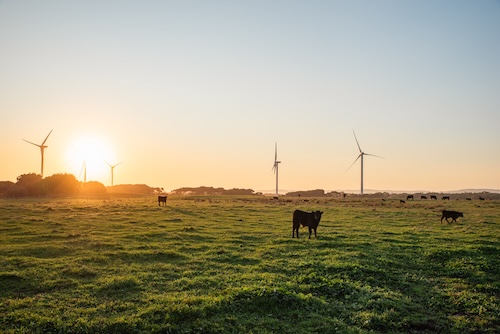
While most of Europe has spent most of this year itemizing reasons it cannot, should not, and will not use Chinese wind turbines or components, accusations and arm-twisting tactics have garnered most of the attention.

But we invite you to consider a future – maybe just five, or ten years from now?- in which those same countries and companies are eagerly awaiting orders from wind turbine manufacturing facilities in… India.
What?!
You know that the country has a lot of installed wind.

You may think – and many in the industry would agree – that India’s blade manufacturers are a few revs behind blade-makers elsewhere in the world. But the country is newly committed to manufacturing and it’s busy installing more – provided that it’s made in India, with Indian technology, by Indian workers.
Of course, similar domestic-focused policy currents are running through European countries – where wind OEMs are almost inarguably a decade ahead of Indian manufacturers. But there’s an important reason why we say, “watch India” in wind turbine manufacturing.

It’s because you might learn something.

If you follow The Uptime Wind Energy Podcast, you probably heard this discussion a few weeks ago. It wasn’t the headline story – we try to highlight as many major news items and trends that we can, and follow up as credible information becomes available. India’s quiet moves to strengthen its own renewable energy industries didn’t grab the headlines. But it comprised a good bit of our panelists’ discussion.

With India’s expanding manufacturing capacity, and Suzlon’s strategic offerings for the European market (Blue Sky), there are reasons for European developers to take a closer look at Indian manufacturers.

If Europe continues to squelch deals with Chinese manufacturers due to data security issues, India is a relatively obvious candidate to fill the void, for several reasons:

  • The country has depth and breadth in R&D: India (Suzlon, specifically) has a track record of involvement and relationships across the continent, as it operates research and development centers in Germany, the Netherlands, and Denmark.
  • Indian service providers have reach: Inox and Adoni Wind operate multiple wind turbine manufacturing plants and wind farms throughout several Indian states, and Apraava Energy has been commissioning wind projects, working with multiple OEMs, for more than 16 years.
  • The country’s energy sector has size: Tata Power is estimated to be worth about US$16 billion and employs 22,000 people.

And major manufacturers from other countries have had a strong presence in the country for years:

  • GE Vernova has turbine blade and nacelle manufacturing operations and multiple tech/R&D centers in India;
  • Vestas has a R&D technology center in Chennai; and
  • China’s SANY Wind has had assembly facilities in India since 2017, and in 2024, it signed a licensing agreement with JSW allowing SANY to manufacture blades and generators for JSW – enabling JSW Neo Energy to produce wind turbine generators and major components in-country.

So while there is hard data suggesting that India is already a global hub for wind turbines, sometimes the real strength comes from soft skills. Like sharing information.

We’ve noticed that Indian manufactures aren’t stingy with information. They share what they learn in the field and on the shop floor, so that the whole industry can move faster to solve problems. That bodes well for the industry overall, and particularly well for companies who figure out how to solve problems that some manufacturers aren’t even ready to admit to having.

We’ll be watching India with a great deal of interest in the coming months. Subscribe to The Uptime Wind Energy Podcast and follow along with us.

We’re not financial analysts. We’re engineers who watch the wind industry very closely. This is what we’ve noticed, and we thought it was worth sharing.

Where do you think you’ll be looking for solutions, components, and service providers in the next few years or the next decade? Tell us what you think. We’d love to hear from you.
Uptime Wind Energy Podcast Logo

As Europe Shuns Chinese Turbines and Components, Who Will Fill the Gap?

Continue Reading

Renewable Energy

When You Write for Idiots, You Can Get Away with Anything

Published

on

To the author of the meme here:

“Either” refers to two choices; “any” refers to three or more.

More importantly, it’s amazing how shamelessly the ultra-right wing exaggerates.  The left side of the Democratic party would like to see the United States look like social democracies in places like Scandinavia.  Having government programs that benefit the common person, e.g., Social Security, public schools, emergency relief, libraries, environmental responsibility, etc., does not equate to Stalinism.

When You Write for Idiots, You Can Get Away with Anything

Continue Reading

Renewable Energy

Are Muslims “Dangerous?”

Published

on

Some of my old prep school chums from the Class of 1973 convene via Zoom approximately every six weeks for a 90-minute discussion of current events, science, and anything else that sounds interesting.

Our professions range from medicine, law, finance, and business management. All from highly ranked colleges.  Over 50% hold doctorate degrees.

Here’s something I find fascinating about the group: it includes one right-wing conservative.  I don’t mean a Reaganite; I mean a Trump supporter.  This guy is incapable of any thought that doesn’t come directly from Nexsmax.

It’s almost eerie how closely he toes the line of the far-right.  Yesterday he echoed the Newsmax talking point and told the group that all Muslims holding public office are “very dangerous” and should be removed.

Now, the rest of us are sitting there, dumbfounded at this idea, unwilling waste our breath on this racist and utterly preposterous concept.

All this raises the question: How are our political viewpoints formed?  How much of this is genetics?  Epigenetics?  Early childhood experiences? How do take a boy from among the best environments and turn him into someone who struggles to understand the most basic principles on which our country was founded?

https://www.2greenenergy.com/2026/11/09/principles-country-was-founded/

Continue Reading