

Case Study: How StrikeTape Transformed Wind Operations On Japan’s Lightning-Prone Coast
Zero Lightning Damage in 8 Months
A major wind farm operation located along the Sea of Japan coastline experienced devastating lightning damage. Frequent strikes damaged wind turbine blades, causing unscheduled downtime and emergency repairs. The operator turned to Weather Guard Lightning Tech’s StrikeTape technology for a solution. The results were clear: in the eight months following installation, the turbines experienced zero blade damage, compared to 249 lightning strikes and 12 severely damaged blades in the previous period.
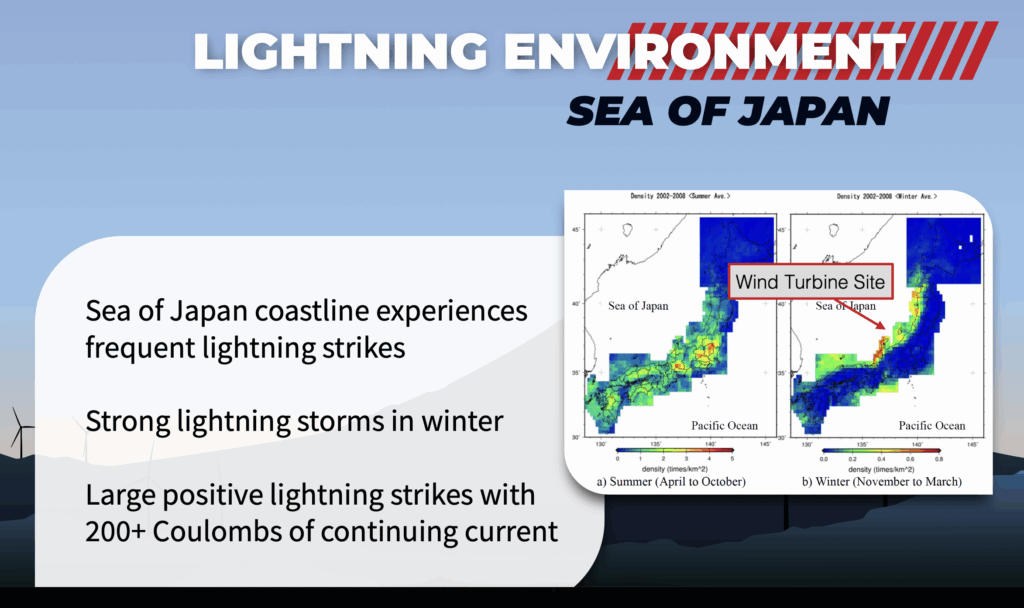
The Challenge: Sea of Japan Coastline Lightning Environment
The Sea of Japan coastline is one of the world’s most challenging lightning environments for wind energy operations. This region experiences frequent lightning strikes throughout the year, with particularly severe storms during winter months. The combination of maritime weather patterns and topographical features creates what meteorologists describe as large positive lightning strikes with 100+ kiloamperes of continuing current – some of the most destructive lightning conditions on Earth.
Mounting Damage Threatened Wind Project’s Profitability
Before identifying and implementing the StrikeTape solution, the wind farm was experiencing frequent, catastrophic lightning-related damage. It was obvious that the turbine’s built-in LPS wasn’t protecting the equipment.
- 249 confirmed lightning strikes to turbines over the monitoring period
- 12 turbine blades suffered severe damage requiring extensive repairs or replacement
- Repeated damage to blade trailing edges from lightning strikes
- Operations frequently disrupted by emergency repairs and safety inspections
- Mounting maintenance costs threatened project profitability
The facility was caught in a vicious cycle: lightning would strike, blades would suffer damage, operations would halt for repairs, and the cycle would repeat. Operations managers onsite identified StrikeTape as a potential solution.
Evaluating StrikeTape Lightning Protection Solution Technology
Owing to both its design features and technical specifications, Weather Guard Lightning Tech’s StrikeTape represents a breakthrough in wind turbine lightning protection. Unlike traditional systems that rely on bulky receptors and down conductors, StrikeTape uses advanced conductive polymer technology and materials that integrate seamlessly with turbine blade surfaces.
Key technical features the operations team considered included StrikeTape’s use of advanced materials that had been rain-erosion and high-current tested. They also considered that similar designs and materials have been approved for use in commercial, private and military aircraft, and field tested in aviation, for more than 30 years.
Advanced Materials:
- Gold-plated and reinforced construction for maximum conductivity
- Aerospace-grade substrate for long-term durability
- Only 1mm thick profile for minimal aerodynamic impact
- 10mm width for optimal lightning attachment
Installation Advantages: Simple, Efficient Process
StrikeTape’s professional installation process is efficient, and can be completed by a technician up tower or when the blade is on the ground for other maintenance, such as during a repowering project or scheduled repair. The typical installation expectation is:
- 10 minutes per blade for application
- 12 blades per day installation capacity
- 45 minute total installation time for complete turbine protection
- 13 feet of StrikeTape per blade application
The installation process offers significant advantages over traditional lightning protection systems, including:
- Minimal Downtime: Quick installation during routine maintenance windows
- No Structural Modifications: No drilling or permanent alterations to blade structure
- Scalable Application: Can be applied to existing turbines without major retrofitting
- Immediate Protection: Full lightning protection active immediately upon installation
Remarkable Results: Complete Elimination of Lightning Damage
The transformation was immediate and dramatic. Over eight months of intensive monitoring following StrikeTape installation, the results exceeded all expectations. Although strike activity remained high, the turbines experienced no lightning damage.
Strike Activity: Still High, Damage: Zero
- 96 lightning strikes recorded hitting turbines during the 8-month, post-installation monitoring period
- 0 blades damaged despite continued lightning activity
- Zero lightning-related downtime since installation completion
The data tells a compelling story: lightning didn’t stop striking the turbines, but the devastating damage completely disappeared.
Visual Inspection: Evidence of Protection
Post-installation inspections revealed clear evidence of StrikeTape’s effectiveness:
- Visible signs of lightning strikes along the StrikeTape trailing edges
- Lightning receptors melted along the radius between tip and trailing edge, exactly where designed
- StrikeTape remains intact and continues providing protection
- No structural blade damage despite direct lightning attachment
This visual evidence confirms that StrikeTape is successfully attracting and safely conducting lightning strikes away from vulnerable blade structures.
The Technology Behind the Success: How it Works
StrikeTape’s effectiveness stems from its innovative approach to lightning protection: Rather than trying to prevent lightning strikes, the system provides preferred attachment points and safe conduction paths.
- Lightning Attraction: The conductive polymer material creates preferred attachment points for lightning
- Safe Conduction: Strikes are safely conducted along the StrikeTape pathway
- Energy Dissipation: Lightning energy is harmlessly directed away from blade structures
- Continued Protection: The system remains functional even after multiple strikes
Beyond Damage Prevention: Operational Excellence
While the primary goal of the StrikeTape installation was to eliminate lightning damage at the wind farm, benefits extended beyond reducing downtime and repair expenditures.
Operational Reliability
- More Predictable Maintenance Schedules as lightning-related emergency repairs were eliminated
- Improved Equipment Availability and Production because turbines remained in operation during storm seasons
- Enhanced Safety Record due to reduced risk to maintenance personnel
Financial Impact
- Reduced Repair Costs: No blade replacement or major lightning repairs
- Reduced Insurance Claims: Improved risk profile with potential of premium reductions
- Revenue Protection: Maintained power generation during peak wind season
Long-Term Asset Protection
- Extended Blade Life: Protection from cumulative lightning damage
- Maintained Performance: No aerodynamic degradation from lightning damage
- Asset Value Preservation: Protected investment in wind generation assets
Lessons for the Global Wind Industry
This case study provides valuable insights for wind operators worldwide, even if they face a less challenging lightning environment. The remarkable success of this StrikeTape installation on Japan’s high-intensity lightning-prone coast demonstrates that advanced lightning protection technology like StrikeTape can fundamentally change how the wind industry approaches lightning risk.
Lightning Doesn’t Have to Mean Damage
The traditional assumption that lightning strikes inevitably cause turbine damage has been proven false. With proper protection technology, turbines can safely handle direct lightning strikes without operational impact.
Quick Implementation of Retrofit Solution Can Yield Immediate Results
Unlike major infrastructure upgrades, advanced lightning protection can be implemented quickly during routine maintenance, providing immediate operational benefits.
Investment Protection Pays Dividends
The cost of proactive lightning protection is minimal compared to the ongoing expense of lightning damage repairs and operational disruptions.
As wind farms continue expanding into lightning-prone regions worldwide, this Japanese installation provides a roadmap for operational success in even the most challenging environments.
The Bottom Line
Eight months of operation with zero lightning damage despite 96 lightning strikes represented more than just technical success; for the wind farm operators in this challenging lightning environment, it was an operational transformation. The lesson for wind projects is clear: lightning is inevitable, but lightning damage is preventable.
For more information about StrikeTape lightning protection technology and installation services, contact Weather Guard Wind at 1.413.217.1139 or info@wglightning.com.
About Weather Guard Wind: Weather Guard Wind specializes in advanced lightning protection solutions for wind energy applications, with installations protecting turbines worldwide in the most challenging lightning environments.
https://weatherguardwind.com/case-study-how-striketape-transformed-wind-operations-on-japans-lightning-prone-coast/

 I suppose there are people who believe that the radical left is on a path to make Christianity illegal, and perhaps to install Islam as the official religion of the United States. This is remarkable for two reasons:
a) Every schoolchild in America learns about the First Amendment’s guarantee of freedom of religion at a very young age, and
b) This country made it successfully though 250 years with no one being ignorant enough to bring up this ridiculous concern.
One would hope that this figure of near 60% would indirectly translate into Trump’s ouster before he can take full control of the U.S. government.
We vote Trump’s stooges out of office in November and replace them people of honor. Trump is impeached, convicted and removed. From there, justice takes its course.
Nordex Q3 Orders Jump 30%, Vestas Bets on Australia
Nordex Q3 orders jump 30% and Vestas lands about a gigawatt in Australia. Plus why turbine factories skip Australia, high project costs, and whether batteries can replace coal.
The Uptime Wind Energy Podcast is brought to you by Weather Guard Lightning Tech, creators of the StrikeTape Ultra LPS retrofit. Subscribe to Uptime’s Substack newsletter. And check out Rosemary’s “Engineering with Rosie” Youtube channel. Have a question we can answer on the show? Email us!



-
Climate Change1 year ago
Guest post: Why China is still building new coal – and when it might stop
-

 Greenhouse Gases2 years ago
嘉宾来稿:满足中国增长的用电需求 光伏加储能“比新建煤电更实惠”
-
Greenhouse Gases1 year ago
Guest post: Why China is still building new coal – and when it might stop
-

 Climate Change2 years ago
嘉宾来稿:满足中国增长的用电需求 光伏加储能“比新建煤电更实惠”
-

 Renewable Energy12 months ago
Sending Progressive Philanthropist George Soros to Prison?
-
Climate Change2 years ago
Bill Discounting Climate Change in Florida’s Energy Policy Awaits DeSantis’ Approval
-
Greenhouse Gases1 year ago
嘉宾来稿:探究火山喷发如何影响气候预测
-

 Climate Change2 years ago
Analysis: China’s CO2 falls 1% in Q2 2024 in first quarterly drop since Covid-19