

We would all like to buy the most environmentally friendly appliances available. But in real life, energy efficiency is only one of many factors we need to consider when we’re making major purchases. If you’re dealing with a narrow galley kitchen, living in a tiny house, or dealing with any number of awkward kitchen configurations, the dimensions of your new refrigerator might be your top priority. Fortunately, if a counter-depth refrigerator is non-negotiable, there are extremely efficient options.
The refrigerators in the original 2021 version of this guide are either discontinued, superseded, or now five years into an appliance lifecycle that averages 10–14 years. A lot has changed — and not just the model numbers.
Counter-depth refrigerators have closed much of the capacity gap with standard-depth models. In 2024, LG and Samsung introduced counter-depth models reaching 26.5–27 cubic feet, nearly matching standard-depth capacity without jutting past your cabinets.
Even better, refrigerant reform is also essentially complete: R-600a, which has a global warming potential 500 times lower than previous refrigerants, is now the industry standard across virtually all new household refrigerators sold in the U.S. You no longer need to check the door sticker for refrigerant type — it’s almost certainly R-600a. One new nuance: R-600a is flammable. This doesn’t create meaningful safety risk in normal use, but it does mean sealed-system repairs must be performed by a technician with hydrocarbon-rated recovery equipment. Ask before scheduling service.
This article contains affiliate links. If you purchase an item through one of these links, we receive a small commission that helps fund our Recycling Directory.
How to Choose a Counter-Depth Refrigerator
Counter-depth isn’t a single spec, it’s a range. True counter-depth refrigerators, which are 24- to 25-inches deep, offer a counter-flush look but are relatively rare. Most models marketed as counter-depth run 27–30 inches deep are still meaningfully shallower than standard-depth units, which range from 32 to 36 inches. Be sure to measure your space carefully before shopping.
- Fit first. Measure the opening width, depth (including door swing clearance and handle protrusion), and height. Leave at least 1 inch on each side and top for ventilation. Note any door swing obstructions, such as islands, adjacent cabinets, dishwasher handles.
- Right-size for your household. The commonly cited rule is that each person needs 4 to 6 cubic feet of total capacity. A household of two can usually work with 16–20 cubic foot fridge; three to four people generally need 20–26 cubic feet. Don’t oversize, as a mostly empty refrigerator is less efficient than one that’s three-quarters full.
- Freezer configuration. Top-freezer models remain the most energy-efficient configuration per cubic foot. Bottom-freezer designs put fresh food at eye level but add mechanical complexity. French-door models are most popular and offer the widest variety but use more energy and generate more service calls than simpler designs.
- Energy consumption, not just certification. Energy Star certification means a model uses at least 10% less energy than the federal minimum. That’s a floor, not a ceiling. Check the yellow EnergyGuide label on the appliance for estimated annual kWh; typically the difference between the best and worst Energy Star-certified counter-depth models can be 200+ kWh per year, a $20–$40 annual gap at annual utility rates.
- Refrigerant. As of 2025, R-600a is effectively universal in new U.S. refrigerators. Verify on the data plate inside the fresh-food compartment.
- Features that raise energy use. Through-door ice and water dispensers, in-door ice makers, anti-sweat heaters, and smart screens all increase electricity consumption. If you don’t need them, the most efficient models skip them. Internal water dispensers are a reasonable middle ground that provide convenience without an exterior mechanism that uses electricity.
- Reliability data. French-door models with ice makers generate significantly more service calls than simpler designs. Yale Appliance’s 2026 service data, based on 33,190 service calls, ranks LG and GE as the most reliable counter-depth French-door brands, with Bosch leading on temperature stability. Consumer Reports members can find long-term predicted reliability rankings by brand at consumerreports.org, where GE brands and Bosch consistently rank near the top for long-term predicted reliability.
- Service access. A reliable brand is only as good as the technicians who can fix it. GE has the broadest national service network. Bosch and LG are well-supported in most metros. Samsung has historically had longer repair wait times, a real consideration for a decade-long appliance relationship.
- Don’t forget disposal. When your old refrigerator goes, the R-600a refrigerant must be recovered by a certified technician before recycling. Use Earth911’s recycling search to find appliance recyclers near you, and confirm that they are an EPA Responsible Appliance Disposal (RAD) partner to ensure proper refrigerant handling.
The Best Counter-Depth Refrigerators in 2026
The original article featured models from 2021, most of which are discontinued. Here are current alternatives organized by configuration, prioritizing Energy Star certification, current availability, and documented reliability.
Best for Energy Efficiency: Frigidaire FFTR1835VW (Top Freezer)
Top-freezer models remain the most efficient configuration available. The Frigidaire FFTR1835VW is an 18.3 cu. ft. Energy Star–certified top-freezer with a 30-inch depth, which is significantly shallower than standard models. It uses approximately 369 kWh/year, forgoes energy-intensive features like an ice maker and through-door dispenser, and includes humidity-controlled crisper drawers and an auto-defrost function. It’s also garage-ready (tested from 38°F to 110°F) and ADA compliant. No smart features, no ice maker; just efficient, reliable cold storage.
 Depth: 30 in. | Capacity: 18.3 cu. ft. | Est. energy: ~369 kWh/yr | Price range: $600–$750
Best Value French Door (33″): Samsung RF18A5101SR
For smaller kitchens that want a French-door design without a full 36-inch footprint, the Samsung RF18A5101SR is a 33-inch-wide counter-depth model with 17.5 cu. ft. total capacity. Its Twin Cooling Plus system uses two independent evaporators to keep refrigerator and freezer air separate to extend food life and limit odor transfer. It includes an ice maker, Wi-Fi connectivity via Samsung’s SmartThings app, Power Cool and Power Freeze modes, and Energy Star certification. The 33-inch width is a significant advantage for kitchens with narrower openings. Note: Samsung’s service network can have longer wait times in some regions — check availability before purchasing.
 Depth: 28.5 in. | Capacity: 17.5 cu. ft. | Est. energy: ~448 kWh/yr | Price range: $1,100–$1,500
Best Large-Capacity Counter-Depth: LG LRFLC2706S (Counter-Depth MAX)
The LG LRFLC2706S resolves what was long the core counter-depth trade-off: it delivers 26.5 cu. ft. of storage in a counter-depth footprint — previously only achievable with a standard-depth unit. The Counter-Depth MAX uses thinner walls and advanced insulation to achieve this. It includes an internal water dispenser (no exterior mechanism, which reduces complexity), an ice maker, Door Cooling+ for even temperature distribution, a PrintProof stainless finish, and Wi-Fi via LG’s ThinQ app. Energy Star certified. Yale Appliance’s 2026 reliability data ranks LG as one of the top performers for first-year service rates in this category.
 Depth: 29.25 in. | Capacity: 26.5 cu. ft. | Est. energy: ~632 kWh/yr | Price range: $1,700–$2,200
Best for Food Preservation: Bosch 800 Series B36CT80SNS
No other freestanding counter-depth refrigerator matches Bosch’s food preservation system. The B36CT80SNS uses dual compressors and dual evaporators, keeping refrigerator and freezer air completely separate to prevent humidity fluctuations that accelerate produce spoilage and limits odor transfer. Bosch’s FarmFresh System includes VitaFreshPro automatic temperature and humidity balancing for different food types and SuperCool/SuperFreeze modes for rapid chilling of new groceries. The adjustable FlexBar adds organizational flexibility. Energy Star certified. Yale’s 2026 service data shows Bosch’s first-year service rate at 12.7% — higher than LG but with notably fewer cooling failures; its strength is sustained temperature stability rather than low failure probability.
 Depth: 24 in. (case); 29 in. with handles | Capacity: 21 cu. ft. | Est. energy: ~530 kWh/yr | Price range: $2,800–$3,500
Best Premium Option: GE Profile PVD28BYNFS (4-Door French Door)
The GE Profile PVD28BYNFS is a 4-door, 27.9 cu. ft. French-door model with a door-in-door design for quick-access storage without opening the main compartment — reducing cold air loss on high-traffic items. GE’s TwinChill dual evaporators maintain optimal humidity and temperature in fresh-food and freezer sections independently. Includes a hands-free, sensor-controlled AutoFill water dispenser, an adjustable-temperature middle drawer with four preset modes for meat, beverage, snacks, and wine, as well as an LED light wall and Wi-Fi. Energy Star certified with an estimated operating cost of approximately $91/year. GE has the widest service network of any major appliance brand, which matters over a 10+ year ownership horizon.
 Depth: 36.75 in. (standard depth; counter-depth version also available) | Capacity: 27.9 cu. ft. | Est. energy: ~760 kWh/yr (est. $91/yr operating cost) | Price range: $2,400–$3,200
Counter-Depth Refrigerator Comparison
| Model | Config | Depth | Capacity | Est. kWh/yr | Price Range | Best For |
| Frigidaire FFTR1835VW | Top freezer | 30 in. | 18.3 cu. ft. | ~369 | $600–$750 | Max efficiency, budget buyers, small households |
| Samsung RF18A5101SR | French door | 28.5 in. | 17.5 cu. ft. | ~448 | $1,100–$1,500 | Narrow kitchens (33″), mid-budget |
| LG LRFLC2706S | French door | 29.25 in. | 26.5 cu. ft. | ~632 | $1,700–$2,200 | Families needing standard-depth capacity with counter-depth fit |
| Bosch 800 Series B36CT80SNS | French door | 24/29 in. | 21 cu. ft. | ~530 | $2,800–$3,500 | Food preservation, open kitchens, long food storage |
| GE Profile PVD28BYNFS | 4-door French door | 36.75 in.* | 27.9 cu. ft. | ~760 | $2,400–$3,200 | Entertainers, home cooks, service reliability |
*GE Profile PVD28BYNFS is primarily standard-depth; a counter-depth version is available at select retailers.
Getting the Most From Your Refrigerator
The most efficient refrigerator you can buy is the one you already own, as long as it’s working properly. To make your fridge last longer, take these simple steps:
- Set the refrigerator to 35–38°F and the freezer to 0°F. These are the optimal food-safe temperatures.
- Clean condenser coils 1–2 times per year. Dusty coils force the compressor to work harder.
- Check door seals. If a dollar bill slides out easily when the door is closed, the gasket needs replacing.
- Keep it three-quarters full. Both overfilled and mostly empty refrigerators are less efficient.
- Turn off the anti-sweat heater if your climate doesn’t require it, as it’s one of the bigger phantom draws.
Editor’s Note: Originally published on March 24, 2021, this article was substantially updated in April 2026.
The post Buyer’s Guide: Most Efficient Counter-Depth Refrigerators appeared first on Earth911.
https://earth911.com/home-garden/efficient-counter-depth-refrigerators/

Just like fashion has been overrun by fast fashion, home goods and furniture have similarly seen a rapid decline in quality. Rugs are no exception.
And similar to fashion, these cheap goods come at a high cost — namely, to the planet and to people. In fact carpet and rug production is rampant with exploitation.
On the other hand, fair trade rugs present the best of what a rug can bring to your home: artistry, craftsmanship, and heritage.
The brands featured in this guide are partnering with (and fairly paying!) skilled artisans who are using generations-old — and sometimes even centuries-old — techniques. These artisans are sustaining long lines of crafts, preserving their cultural diversity, and celebrating the richness of their time-honored crafts.
There’s simply no replacement for a timeless, quality artisan-made rug — they’re like pieces of art you can lay out on your floor or hang on your walls.
So, enjoy browsing through this guide to sustainable rug brands listed out below and best of luck on your search for the right fair trade rug!
Where to Find Ethical and Fair Trade Rugs
Note that this guide includes affiliates and partners. As always, brands must meet high standards for ethics and sustainability to be featured and all opinions are my own.
1. Obakki
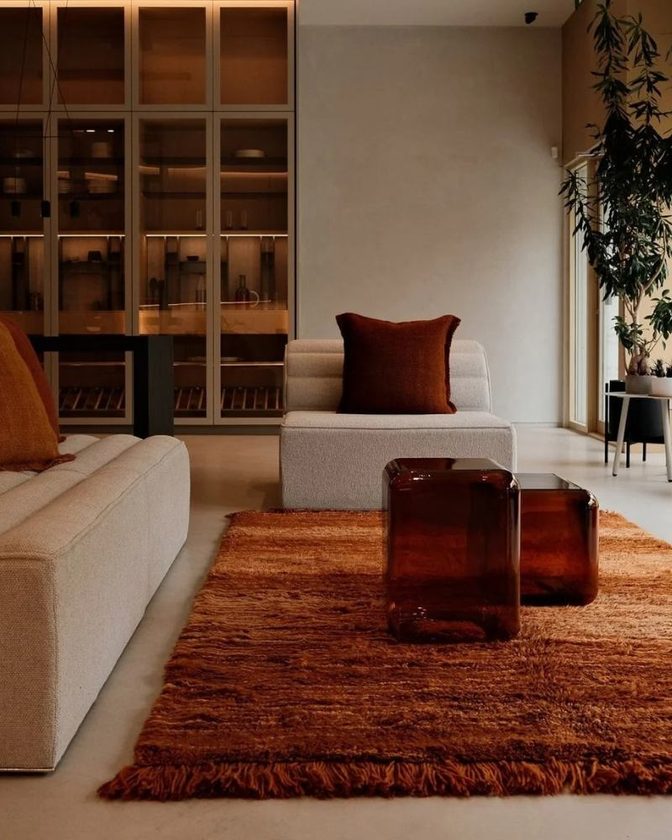
Best for: warm-hued handwoven wool rugs
Categories: Area Rugs, Runners, Accent Rugs
Obakki partners with artisan weavers primarily in Oaxaca, Mexico — including individual makers like José — who hand-dyes and weaves rugs on a traditional pedal loom using locally sourced sheep’s wool and natural dyes derived from native plants. The brand also works with Rrres Design Studio, a Latin American studio dedicated to preserving traditional Oaxacan weaving techniques, and sources handwoven textiles from artisan communities beyond Mexico as well, including Morocco.
Each rug is made from 100% wool with no synthetic dyes or backing. Most pieces are made-to-order with a 4-8 week production window, shipped directly from the artisan partners.
Price Range: $460 – $4,159
Conscious Qualities: Natural Fibers, Natural Dyes, Craft Preservation
2. Kiliim
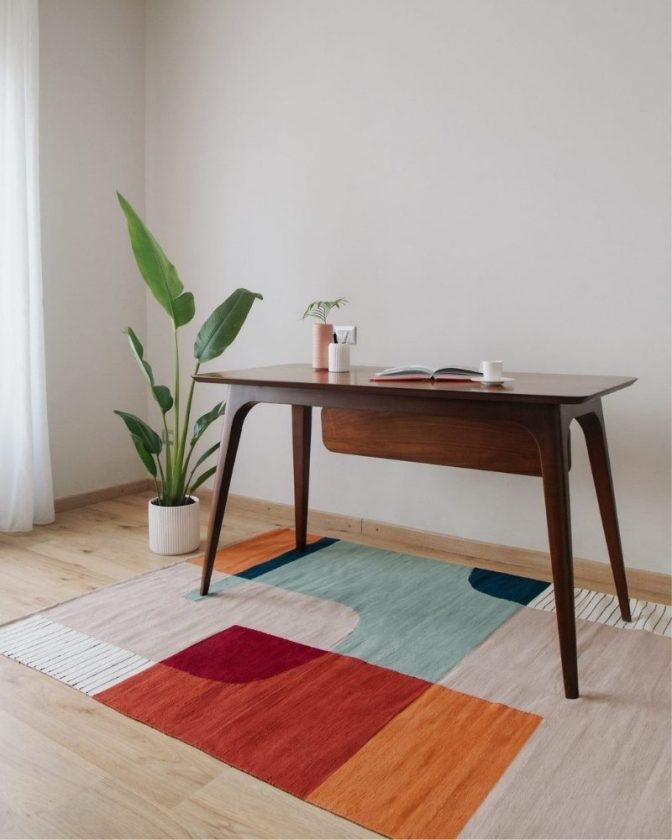
Best for: modern wool kilim rugs
Categories: Area Rugs, Accent Rugs
If you’re well-versed in rug terminology, you may recognize that this brand’s name looks similar to the word kilim.
Kiliim’s rug are made using authentic kilim rug craftsmanship by artisans in Egypt coming from generations of kilim artisans. To ensure ethical production and to support the preservation of this heritage craft, Kiliim pays living wages to all artisans.
Price Range: $95 – $4,812
Conscious Qualities: Ethical Production, Heritage Craft Preservation, Natural Fibers
3. Urban Natural
Best for: browsing fair trade rugs in lots of styles and sizes
Categories: Outdoor, Area Rugs, and Accent Rugs
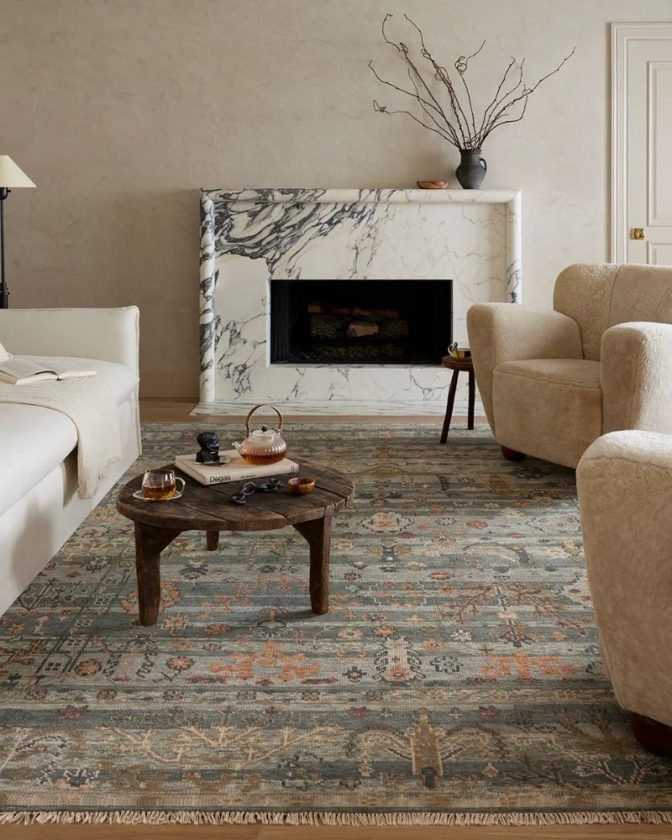
This natural home and lifestyle retailer has a beautifully curated selection of sustainably-made rugs crafted with materials like jute, sisal, wool, and cotton.
Several brands on Urban Natural are also ethically hand-loomed or hand-knotted, such as Loloi — a GoodWeave partner — and Jaipur Living — a brand that partners with thousands of local artisans to sustain heritage crafts.
Price Range: $259 – $9,755
Conscious Qualities: Eco-Conscious Materials
4. LOOMY
Best for: pet-friendly and performance rugs
Categories: Area Rugs, Accent Rugs, Runners, Outdoor Rugs
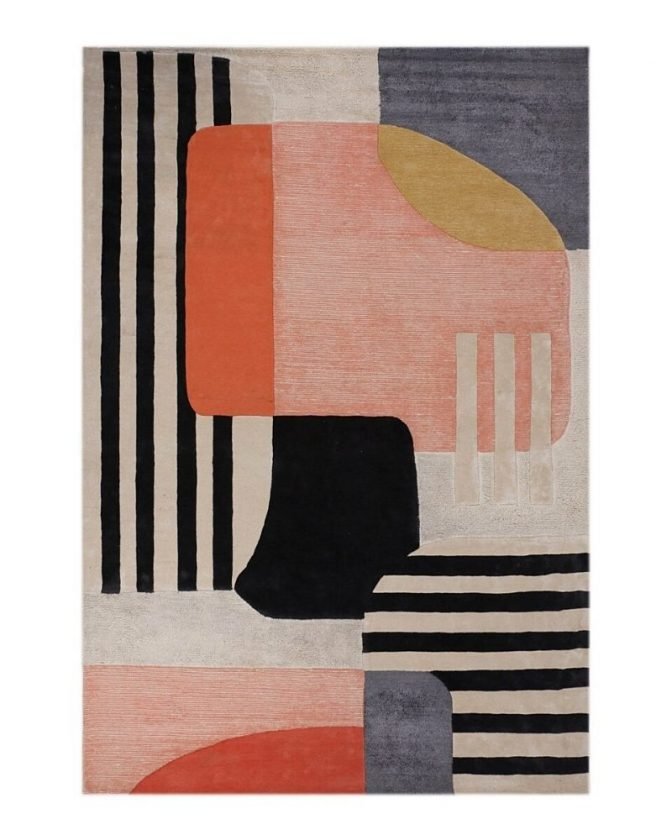
Founded by a weaver, LOOMY is dedicated to crafting beautiful artisan-made rugs that will last for decades to come.
LOOMY partners with highly-skilled artisan weavers who craft quality rugs made from eco-minded materials like banana silk, jute, and recycled cotton, plus performance options made from 100% recycled polyester built to withstand whatever life brings you.
Price Range: $298 – $8,298
Conscious Qualities: Natural Fibers, Craft Preservation, Vintage Options
5. West Elm
Best for: fair trade rugs in on-trend mainstream styles
Categories: Area Rugs, Accent Rugs
West Elm is bringing ethical rugs to a broader market with their collection of Fair Trade Certified wool and cotton rugs. While I recommend browsing the smaller shops listed above first, West Elm is supporting the movement to responsibly-made, fair trade rugs.
Price Range: $$$
Conscious Qualities: Fair Trade production, Majority Natural Materials
6. Jubi
Best for: Modern rugs in vibrant prints
Categories: Accent Rugs, Circle Rugs, Runners
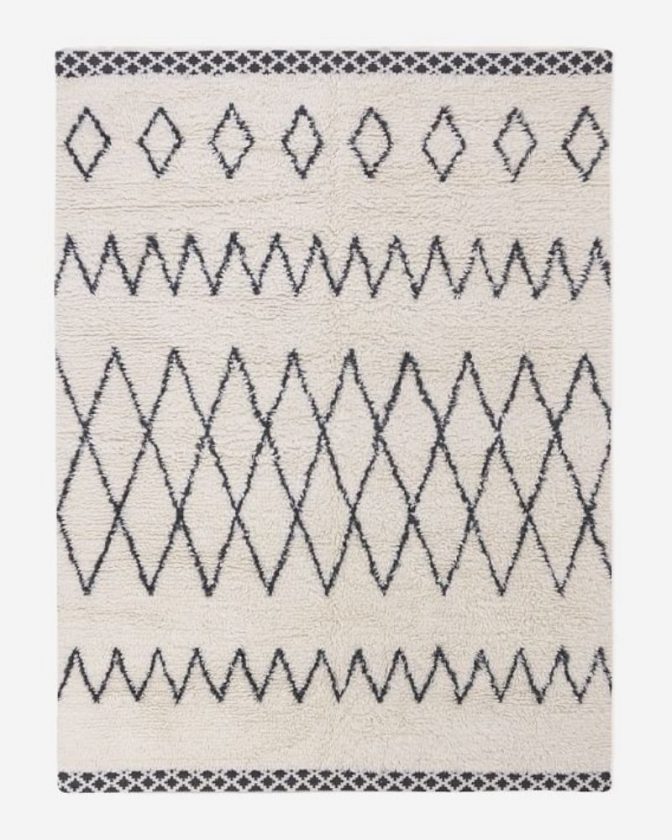
Jubi is a Brooklyn studio founded by textile designer Cassie Dagostino. Every rug is handmade from New Zealand wool by fourth-generation weaving families in Bhadohi, India using traditional techniques. Each rug is made-to-order, meaning no excess stock. Since everything is made to order, expect between 3 and 7 weeks for your rug, depending on the technique used.
Conscious Qualities: Pays Above Market Rates, 100% Wool, Made-to-Order
Price Range: $228 – $668
Shipping: Free worldwide shipping

7. Rejuvenation
Best for: Classic rug styles made in Fair Trade factories
Categories: Accent Rugs, Runners, Area Rugs
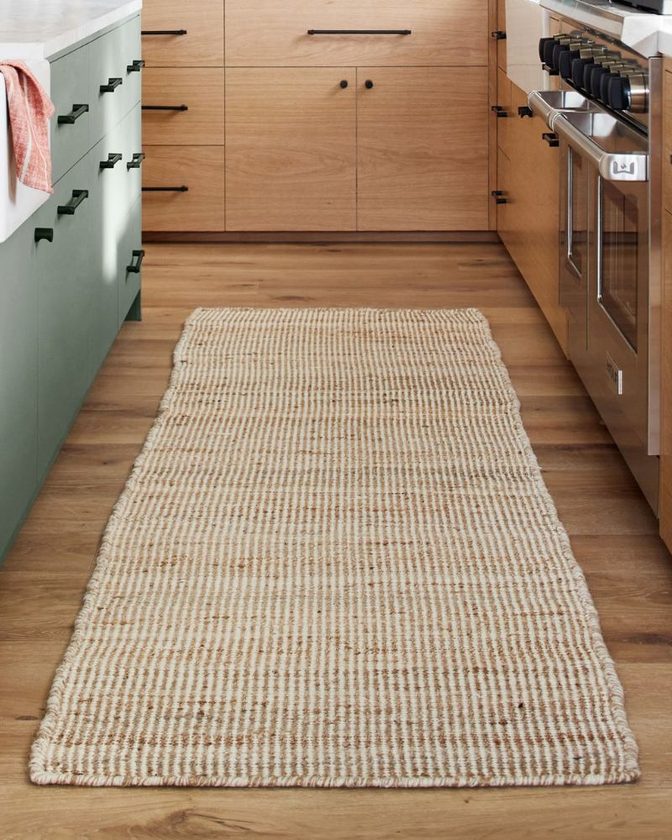
Home retailer Rejuvenation has a selection of rugs made in Fair Trade Certified factories. Their collection includes undyed hand-loomed rugs to geometric flatwoven wool rugs. And while I’d typically avoid synthetics, it tends to be unavoidable for outdoor rugs — so Rejuvenation’s Fair Trade 100% recycled poly rug is a good option.
Conscious Qualities: Fair Trade Certified, Mostly Natural Materials
Price Range: $79 – $1,649
Shipping: Contiguous U.S. shipping for 10% of product price (add $20 for HI, AK, and US. territorries)
Liked this guide to ethical rugs? You might also enjoy:
Ethical Home Decor Brands to Curate a Beautiful, Conscious Space
Eco-Friendly Furniture to Furnish Your Home Sustainably
Fair Trade and Eco-Friendly Blankets to Cozy Up With
The post 5 Best Ethical Fair Trade Rugs to Elevate Your Space appeared first on Conscious Life & Style.
As a longtime book lover, I may be biased, but I think a full bookshelf is one of the most beautiful additions to a space. There’s nothing better than seeing a showcase of your favorite reads alongside a TBR list.
A bookcase, though, can of course be used for all sorts of purposes from placing your favorite photos of family and friends to showcasing treasured vintage finds.
Whatever the case, this guide will help you find the right sustainable bookshelf for your living room, office, or wherever you like to cozy up with a good read!
So what make a bookcase more sustainable? What makes a bookshelf non-toxic?
First of all: sustainable and non-toxic are two overlapping — but distinct — criteria. And both of those terms can come with a lot of opinions and varying definitions.
When it comes to sustainable bookcases, I look for:
- Responsibly Sourced Materials: most bookshelves are made primarily with wood. While natural, unsustainable wood sourcing can be a cause of deforestation, so we want to see that the wood was from responsibly managed forests or made from reclaimed or repurposed wood. Some bookshelves may feature metal, in which case recycled materials here are important.
- High Quality Construction: sustainability includes longevity — how long will you be able to use that furniture piece before it goes to the landfill and gets replaced? Look for transparency around craftsmanship and woodworking processes. Another sign of quality is the length of warranty a company has for its products.
- Ethically Made: this one is straightforward in theory — were the people making it paid fairly and working in safe conditions? — but is unfortunately not always easy to find information. In this category, I look for transparency in practices, what relationship the brand has with the manufacturer (some produce in-house which is the best case scenario for transparency!), where it was made, and how well the makers were paid.
Ideally a sustainable bookshelf would also be non-toxic — as toxic chemical fumes aren’t exactly sustainable! But this isn’t always the case. For example, if a company prioritizes upcycled materials, they don’t necessarily have control over what inputs were part of the original materials. And sometimes a company focuses more on ethical artisan partnerships and sustainable wood sourcing, more than, say, using non-toxic finishes.
But when it comes to non-toxic bookshelves, this is what I look for. (Note that non-toxic doesn’t necessarily mean safe for all chemical sensitivities. Nor does it mean zero potentially irritating chemicals.)
- Solid Wood (where possible): MDF or pressed wood contains glue to stick the various wood pieces together, which can contain added formaldehyde. I prefer solid wood, or if it is engineered wood, I’d make sure the company is transparent around the type of glue used and/or they at least have a product certification like GREENGUARD. (More on that in a second.)
- Low or Zero VOC Finishes: most wood furniture is completed with some sort of finish to provide a protection against scratches or moisture. Many of these finishes are synthetic, and some can contain high levels of toxic chemicals. Look for a natural finish like linseed oil or beeswax or a low VOC synthetic finish.
Relevant Certifications
You’ll see a few certifications referenced throughout this guide. Here’s what each one covers:
- FSC Certified = the wood sourcing was responsibly managed; this is not a finish, foam, or textile guarantee.
- GREENGUARD / GREENGUARD Gold Certified = the finished product was tested for low chemical emissions, including VOCs, with Gold representing the stricter tier.
- Fair Trade Certified
 = verifies that a factory meets standards for fair wages, safe working conditions, and ethical labor practices.
 - Cradle to Cradle Certified (Gold) = evaluates a product or material across material health, circularity, clean air/climate, water/soil stewardship, and social fairness.
Where to Find Sustainable Bookcases and Shelving
I’m always a secondhand first proponent, and that goes for furniture, too. While your local thrift store might not have used bookshelves, check for dedicated furniture resale shops near you or estate sales. (I use EstateSales.net to find ones near me.) You can also find gently used pieces on online marketplaces like Facebook Marketplace, OfferUp or AptDeco.
If you can’t find something you love secondhand, and you don’t want to DIY your own bookshelf, then the next best choice is to shop from one of the sustainable furniture companies below. (If you’re simply looking for a bookstand, I’d suggest browsing Etsy for a collection of solid wood, bamboo, and reclaimed wood book stands and cookbook stands!)
Note that this guide includes affiliate links, which means we may earn a small commission if you purchase through these links which helps us continue to run this website and create resources like these. As always all brands meet strict sustainability criteria and are brands we love — and that we think you’ll love too!
1. Medley
Best for: low VOC wood bookcases
Medley’s bookshelves are elegant and elevated, perfect for a living room. Each piece is made with 100% solid FSC-certified hardwood for the tops and sides, though low-VOC CARB 2 compliant plywood is used for the shelves.
Every eco-friendly bookcase is handcrafted in the US (California or North Carolina) and completed with a low-VOC wood finish.
Price: $2,395 – $2,995
Materials: White Maple, American Walnut Wood
Conscious Qualities: Made-to-Order, US-Made, FSC-Certified Wood, Natural Finish