

Weather Guard Lightning Tech

Blades Europe 2023: An Inside Look at Key Wind Industry Trends in Europe
Allen and Joel recap their experience at the 2023 Blades Europe Forum, discussing key differences between the European and American wind industries. They touch on topics like thermal imaging for blade inspections, EU-funded blade research projects focused on actionable results, perspectives on the value of FSAs, and handling the data deluge from modern turbine sensors. They also recount visiting Aerones’ extensive Riga facilities, detailing how the drone services provider has grown into a sizable global operation. Overall, they found Blades Europe to be more academically focused than the American version and gained several useful wind industry insights from the Amsterdam conference.
Sign up now for Uptime Tech News, our weekly email update on all things wind technology. This episode is sponsored by Weather Guard Lightning Tech. Learn more about Weather Guard’s StrikeTape Wind Turbine LPS retrofit. Follow the show on Facebook, YouTube, Twitter, Linkedin and visit Weather Guard on the web. And subscribe to Rosemary Barnes’ YouTube channel here. Have a question we can answer on the show? Email us!
Pardalote Consulting – https://www.pardaloteconsulting.com
Weather Guard Lightning Tech – www.weatherguardwind.com
Intelstor – https://www.intelstor.com
Allen Hall: We went to the Van Gogh Museum before Blades Europe. And that was one of the cooler things we saw in Amsterdam. We didn’t have a long time there, but it was fascinating to see the self portraits. That was the little highlight was a bunch of self portraits by Van Gogh of himself, with the ear, without the ear.
Both ears, both still there. Yeah. And he looked like a guy from Northern Europe, right? So there’s an early, there’s actually a photograph of him as, I don’t know, 18, 19 year old kid, and he’s like clean shaven. He’s got both ears. He looks like a person you’d run into on the street today. A lot of tourists come through Amsterdam, of course, a lot of UK youth that we noticed were running around having a good time and good for them. But yeah, a crazy week on the road. We spent the whole week over in Europe. We went to Amsterdam, we went to Riga, Latvia, and then we ended our tour in Copenhagen for a night.
So a whirlwind tour and stay tuned because we have a lot to discuss about Blades Europe Forum.
Welcome to the Uptime Wind Energy Podcast. I am your host, Allen Hall, and I’m here with Joel Saxum. And we just got back from Blades Europe Forum 2023 in Amsterdam, the Netherlands. And we sat through all the sessions, at least the vast majority of them, so that you didn’t have to. And we wanted to touch on some of the highlights that we saw at the Blades Europe forum.
Because there was a lot of good information there and a lot of good discussion points. And as Joel and I discussed in between sessions and at dinner the United States and Europe are going in different directions. And I wrote a LinkedIn post about it, which got a lot of traffic. So we should talk about that too, Joel, while we’re at it.
Joel Saxum: Like Allen was saying, one of the things we notice here is, okay the audience at Blades USA, when you’re there, if you’re in the Blades world in the United States, you’ve probably been to Blades USA, or at least one of your colleagues has. The reason being is it’s a lot of operators, right? So there’s performance engineers, there’s an eng, performance analysts.
There’s blade engineers, there’s mechanical engineers, there’s all these asset managers. There’s the people responsible for making sure that the blades are running on. Your wind farms are at blades. You Blades, USA, right? I think, what was the last year, about 200 people there Allen in, in Austin?
Allen Hall: Yeah, maybe a little more.
Joel Saxum: Yeah, so to get a little bit of a different view on it this event is, you would think, an on the outside of carbon copy. Haymarket puts on this, it’s through Wind Power Monthly. Blades USA, Blades Europe. Same logos, same everything. However, the Blades Europe conference was very much more research based.
So what we found there is some, some service providers. The drone companies were there. Clobotics was there. Skyspecs was there. Our friends at Aerones were there. Of course, the Weather Guard Lightning Tech with our Strike Tape product. A couple others along the same lines. And then the other half of the audience was a lot of researchers.
There was the couple of asset managers and from, a few companies that we knew, but for the most part, Fraunhofer Institute, DTU, so there was a lot of representation from the universities in Europe that are doing all this newer research into what, what can be done with turbines or with turbine blades.
Allen Hall: And just on the operator side, one of the key pieces I noticed early on, I think it was a discussion from Statkraft, which is based in Norway, is they were looking at thermal imaging and the use of thermal imaging to detect cracks and the size of cracks on blades out in the water. And they provided some images, they’ve done some really early work on this, and it was surprising because the, and the reason they brought this up was it’s actionable.
And I want to keep this key point here as we discuss what happened at Blades Europe. Actionable. It’s something I could use today to make a decision about what I need to do tomorrow. And when Statkraft brought up the thermal imaging photos, and there were some really interesting photos there, I wish they would publish some of that because it was amazing.
What you can see on the outside on a normal drone image is relatively small compared to what is underneath the paint. And in the proper situations, thermal imaging can show you crack progression, the real size of the cracks. It’s looking beneath the surface. It’s a little tricky to perform, but Boy, if you can get it right.
The data was just really useful straightaway as to what the next steps were. And Joel you saw that presentation too. What did you think of the Statkraft, uh, presentation?
Joel Saxum: The idea behind Thermal and Blades is not new, right? I think A BJ drones is trying to do this for a while. There’s a couple other drone companies out there trying to make this happen.
However, the, just the nature of blades makes it difficult. To do, usually, inspections of blades, you have to stop the blades, okay? As soon as you stop the blades, motion stops. So motion creates heat. That’s one of the problems. And the other problems are, that homogenous surface of a blade with a gel coat on it is shiny.
It’s not matte. So shiny reflects the IR waves. So you’re automatically at a at a loss there when you’re trying to get data. So then there was like, should we heat the blade and then see which parts of the blade, basically cool off faster and or retain heat more. And that’s, that was a thought process.
So there’s a lot of different ways to think about this, but all of them boil down to the same concept. If you’re a blade technician. You’ve been on a crack, right? So if you open up that crack, sometimes it gets deeper and deeper and larger and larger. You can’t see everything until you open it up.
And the reason is the reason that you may be able to see it with thermal is the idea of basically friction creates heat. So as that blade bends and moves. If you had a say this is your blade your biax structure and your laminate underneath. If that’s moving in one spot, all of that, or like this, all of those points will be basically the same temperature.
But if you have a crack, and it starts doing this, then you create friction at that point, and that point creates heat, and that heat dissipates not just on the crack, but it dissipates broadly. Across the structure there. So you’re able to see the thing in thermal imagery, but it’s very difficult because it has, the conditions have to be just perfect.
It can’t be a sunny day. It can’t be a day with a lot of moisture in the air. There’s a lot of a lot of trouble in thermal imagery. And that’s not native to blades. That’s thermal imagery in general. It’s very difficult to remote sense. However again, like Allen was saying, these at Blades Europe, a lot of Hey, this is the things that we’re trying to solve.
These are the problems that we’re working on. We are Statkraft. This is what we’re working on. We are Fraunhofer Institute. This is what we’re working on. We, this is I’m I’m from DTU. This is what we’re working on. And some of them were, it was like, getting together the old, the band, right?
All these researchers know each other and then once they leave a university, they usually go to an operator, and they stay in touch, and they work together and these kind of things. It was a lot of hey, we’ve been working on, one of, one of them that I listened to was, we’ve been working on this project for a few years, this is our update.
But it’s actionable research that’s being applied into the wind industry.
Allen Hall: And that reminds me of another project just down those lines, right? The Netherlands has funded a project called Airtub, Airtub. Right, which is a drone based system to essentially take a little vehicle onto a blade to do, of all things, ultrasonic inspection, NDD.
So the presentation of that was like, wow, okay, so they’re out there flying this drone, they’re doing, they’re showing sort of the basics and what they’re learning as they’re going along with this project. Actionable, right? Because NDT on blades is something that everybody wants to do or needs to do.
And on top of it, it’s, it was funded by the Dutch, right? They were funding, that was, it’s part of the sort of the aerospace research center for the Netherlands. So it’s a Dutch funded effort to go look at this. Really fascinating to watch because short term, in terms of things that would happen in America, this is relatively short term.
And. Results, published results. So as we’re talking about those results on stage, I’m Googling their site and pulling off the reports for that Airtub, uh, study. I’m like, wow. Okay. This is really cool. Now I can list on one hand, a number of times that I’ve downloaded anything from an American university having to do with research actionable on wind turbines.
It just doesn’t happen. And I, the whole week, I’m just, whoever’s presenting, I am trying to figure out if they presented before and what have they published and what does it mean to me, really cool stuff. And I thought, man, there is a big difference between what’s happening in Europe and what’s happening in the United States and particularly in offshore, like the offshore work and the the amount of effort there to think ahead.
Remarkable.
Joel Saxum: Yeah take for instance that Airtub project. So the Airtub project is not new, right? It’s a couple years old. But when they came out with the Airtub project, and the list of stakeholders for the Airtub project is massive. You have everything from Eneco, who is a, an offshore asset owner, to LM Windpower, and TU Delft, and the actual, the company that sponsors the whole thing called World Class Maintenance, which is actually not a company, it’s an organization.
So you had, I think the stakeholder list on this thing, 40 companies on it. They’re all working together on this. So when they had initially announced this project had some EU funding, which is great. But it also had a lot of funding from all the stakeholders and they came together and said, hey, we know we have a problem to solve and we need solutions for it.
Of course, offshore wind. Very expensive for operations and maintenance. We know this. So they created a roadmap for this project that included a lot of things that a lot of companies are doing right now on their own, right? But they wanted to make this a cohesive effort to get all of these things done with one solution.
So we know that offshore or wind turbine NDT is being done. We know that Bladebug is working on it. We know that our friends at Aerones are working on it. We know that, force technology already does it. Nobody does it in the, the most efficient fashion because it’s tough.
You have to get sensors up tower and you have specialized people and all these things. We know this. But the Airtub project is like, hey, we’re going to make a drone platform. That drone platform is going to scale itself. It needs to do inspection. It needs to do NDT. It needs to do repairs, it needs to do this, it needs to do that, so they have all these things lined out, and it is, uh, transparent, the project’s very transparent every, stage they get done with, they put a big report out, hey, here’s how you can use this, here’s how, what we’re doing, all the good things and they’re up on stage, talking about it, and Looking for feedback and looking for more ideas and more thought process.
It’s just a little bit different of an atmosphere.
Allen Hall: Yeah it definitely was the, some of the forums and the discussions offline, I thought were really fascinating. I, we met Arthwind was there, so I don’t want to always give, talk names here because I don’t know, it’s fair to everybody, but when talking to Arthwin d man.
They’re really working hard, those guys in Brazil. They’re all, they come all the way out to the, to Amsterdam to watch some of these presentations and they act the representative there was really good at asking questions, very specific questions. Again, actionable stuff. So that was part of the great discussion that I saw was Arthwind coming in and saying, what about this?
What about this? What about this? We have looked at these things already and we know that these are problem areas and how do you solve those? The one that really stands out the most, I think Arthwind provided some information on, or guidance on, was the segmented blade concept, right? You’re gonna, you’re gonna make your blades in Germany, you’re gonna make them in little pieces, then you’re gonna send these pieces in a context box on a ship to wherever it’s gonna go, then you’re gonna take it and assemble it in like an erector set kind of fashion.
And everybody in the audience is yeah, like we, we’ve been through a couple of efforts on segmented blades, particularly LMG, and it hasn’t worked out so well, but that’s, that’s early, I think, still in this process. But I do, it’s one of those fascinating times where you’re like throwing out a concept.
And it’s getting the market feedback. That’s what it felt like to me. Hey, this is a possible thing. We could make segmented blades in Germany and ship them all over the world and they can assemble them on site. It does have some advantages. It certainly does. But then the feedback from the industry was like it’s been rough doing that.
So we don’t think this is real. You need to flesh it out a little bit more, which is a fair criticism, in my opinion, is that you want to know that now rather than after, a hundred million dollars spent on this technology, which may not be used. It’s the same thing with Airtub. They’re attacking the problem small, making sure they’re getting actionable data out of it that people would use, and then expanding the program.
Once they find that avenue, they’re going to go right down it. And that feedback loop, which is happening at Blades Europe, was, I think, a really important part of the piece of the industry, which gets omitted, at least on the engineering side.
Joel Saxum: Yeah, to speak to that, one of the things they did at the conference, they made sure that there was time at the end of every presentation for Q& A.
Right? This is, Blades Europe, Blades USA, both of them, it’s an intimate setting. There’s not 10, 000 people walking around a conference, right? There’s 50, 100, 200 people in one room, and all of those people are the same people that you see from one, one panel, or, one speaker to the next thing you have dinner, you have lunch with them, dinner with them, breakfast with them.
So they did make some time and you heard some really good questions from specific people in the audience all over the audience for almost all of these things. One of the things that I like about, they did it at Blades USA in the past, they did it at Blades Europe this time, is the panels. Because panels to me really invites the feedback, right?
So on some of these panels one of them they had about building inspection strategies. for proactive repairs and blade life extension. So you got different voices up there, right? You had a VP of engineering from MiSTRAs, right? So you had some people in the CMS space, you had asset integrity managers for offshore, you had a structural engineer, and then you had a financial asset owner all sitting on stage talking about The different ways that they approach the same problems, because it’s not, doesn’t, not the same, right?
An asset engineer approaches it one way, a person in the field approaches it another way, someone in the ISP space approaches it one way, a financial owner does it a completely different way. So having all those people on stage for these panels was, I think, I would like to see more of those. And more encouraging, yeah, more encouraging the Q& A from the crowd directed at some of these people, because that’s the forum where you can share information.
We’re always talking, no matter what situation we’re in, ah, the OEMs are hiding this, and we can’t get this information here, and blah, blah, blah, blah, blah. But when you can sit up there and have a panel at one of these things with experts from all realms of the supply chain sitting around, talking.
When it gets to the point where it’s almost like a BS session, which happens more in the U. S. than in Europe, it’s a little bit more, more little more stringent over there. But when it gets to that point where you’re just hey, what about this? What about this guy sit here? And someone just stands up in the crowd and goes, I think this!
Those are the, those are my favorite ones.
Allen Hall: Those are the best because I think it’s where the problems get raised and ideas are actually thrown out. And experience comes out, right? That we’ve tried this and this works or this doesn’t work. And I do agree with you that those discussions are really key.
One of the going down that same thought process, we, there was a discussion about FSAs, which I thought was fascinating because obviously there’s a lot of FSA talk right now. And you can watch Vestas at the moment is really leveraging themselves in GE and Siemens as well, is that they’re all.
Pushing towards full service agreements because of the revenue stream and trying to encompass more and more activity on the repairs side. The operators were of the opposite opinion about FSAs, which were, after a couple of years, you don’t need them. After, once the warranties are over, you just don’t need them.
And there was a variety of feedback as to why, but it mostly had to do with just the level of service that they got once the blades had been around for a couple of years and the turbines had been around a couple of years. And it was shocking to hear the sort of The open opinion about that one of the questions was raised, should we buy a 20 year or 25 year FSA?
And pretty much everybody around me was like, no, that’s crazy. It’s not worth it. You can do a lot more with your own process, internal processes. If you have it laid out and you have it in the staff to manage it, obviously a lot of operators in Europe have that. Where the FSA doesn’t make any sense and it was really fascinating to watch that kind of murmur in the crowd ooh, we’re talking about FSAs, ooh, there’s a difference of opinion there’s some OEMs listening into this, but we’re just going to tell them what we think, which is, We don’t need you, uh, very odd, but yeah, I think that explains a lot where the industry is.
Joel Saxum: Yeah. We’ve talked about that, at length on the podcast before, even with Phil Tatar over at Intel store, their data actually shows that some of the better performing wind farms are the ones that have, leaned off of FSAs and have gone to self either self management or ISP management.
And one of the kind of the things I heard in I’ll say in an alleyway in Amsterdam was that. One of the large, one of the largest operators in Australia recently has made a strategic move to get away from FSAs. Now, if you know anything about the Australian market, they’ve almost exclusively been operations through a full service agreement with the OEMs.
And I think that they’re, people are starting to finally get fed up with them. Because at the end of the day, a lot of times, if you have an FSA with an OEM, You’re ending up with a subcontractor to an ISP on your wind farm anyways. So why do that, and it’s, it makes sense in certain areas where, you may not have an engineering or fine or prowess, if you’re a financial asset owner.
You’re not an engineering company. You’re not an asset management company. People tend to sign those FSAs. It might be better off for you to look to the independent market instead of the OEM for an FSA, there’s quite a few options out there, but the, yeah, like Allen said, the majority of the whispers we heard there are the same things that are being mirrored being said in the States, that people are Starting to shy away from FSAs.
Allen Hall: Yeah, which makes you a little bit nervous for the OEM status or health status there, right? Because they’re relying upon those FSAs to make up for the lower cost you have to sell the turbines for. Yeah, the industry may not be supportive of that future. And one other thing I want to talk about on the technical side, because I, the whole time I’m sitting there, Thinking about the amount of data that is being generated from these turbines.
And remember Sensory gave a really good presentation about the different things that they can do by monitoring and learning and using some machine learning algorithms to get smart about what’s happening in the turbine, thinking, man, that’s a lot of data. Yeah, that’s a lot of data. I think they, they touched on the amount of data from their system.
Ooh, that’s a lot. And then watching NerthLabs and Sky Specs and a couple others Even the thermal imaging Ooh, there’s a lot of data that’s coming off these turbines. And how do you manage that? Especially as you get into more remote locations, if you get further offshore, how are you going to manage all that data?
And the obvious answer was Starlink, right? SpaceX system, right? So I started asking them Oh, are you using the SpaceX system to upload and download data? No. And I thought that was just really weird. Like, why would you not? In the days when you need to have a lot of data transfer at remote locations, why is Starlink not at the sort of top of priorities?
And maybe it is, I just can’t say it, but Boy oh boy it seems like an obvious answer to a very complex problem.
Joel Saxum: I have a Starlink setup, right? It’s in a backpack. So I have a backpack that I can literally, if I’m in my pickup, I can plug it into my truck, anywhere I am. And I have 200 megabytes down and 50 megabytes up.
There’s no, that, that’s as good as a wired connection almost anywhere on Earth. Yeah, the amount of data there, and then the other side of that is the amount of data up and managed from the field, but, the, as we get further and further down the line of creating all this data, I know, I do know that there’s people that have gotten away from AI in general just because of the, kind of the problems it can bring.
However, We’re almost going to have to start getting back into some AI, at least for the basic insights and the basic management of data, because when it becomes to be so much, operators will tell us all the time man, we get stuck in a data like quagmire. We get so much that we can’t even make the insights out of it that we should.
And at the end of the day, they just want to be told what to do. An operator says, Don’t give me 35 gigabytes of inspection data for one turbine. Give me the things I need to fix, and if I need to fix them now or next year. That’s what I want to know. I don’t want to have to sort through all this stuff.
I think that you’ll start to see and you’re seeing this in every industry, no matter what, but AI is a tool, and to be honest with you, I don’t really care if that’s your, don’t use it, this is me, don’t use it as marketing, just use it and make it happen, in the background, tell me that you’re gonna give me the best insights that you can from the data that’s being collected, whether it’s from a CMS or from a drone inspection or from SCADA, I don’t care, just give me the answers instead of, Telling me all the things that you can do.
Allen Hall: And I do think that is you could feel it, right? You saw two different approaches to data control and data interpretation. You saw AI used a lot by the professors. You saw machine learning used by the people in the industry. And I thought that was a really unique difference. Like they understand if you’re actually doing it, it’s just algorithms, right?
We’re applying this algorithm to this. Dataset to filter it. That’s what it is. It’s filtering. It’s not artificial intelligence, but in the theoretical world of the professors, it’s artificial intelligence. That’s the way they do these things. So we’re at this world, we’re at this weird break point where it’s still coding and it’s still trying to filtering and it’s learning.
But we are starting to, I think, things I’ve seen are making the transition over, like the computers and the systems are a lot smarter, they’re able to make some of the determinations by themselves, they are iterating into smarter, quote unquote, algorithms. And I think that’s really helpful for the industry because they’re right.
If we’re all looking for blade damage, then we need to be smart about how we look for blade damage.
Joel Saxum: Yeah, I think you’ll start to see. Some more uses and I’m going to go to, I’m going to give you another one. We went AI, ML. You’re going to start to see more uses for machine vision. In the wind industry and that can be targeted.
So when we start getting NDT up there, you don’t want to have to go to an NDT report or study or inspection on your entire blade. You want to actively use while on site, while local, you want to use some machine vision to be able to pick out the areas that you actually need to inspect. And then move on with it, right?
So that’s going to be the next iteration. Once you don’t have a technician up there to do NDT, it’ll be machine vision based. And then as, of course, as we start seeing more and more of these repair robots at the show and blades USA or blades Europe, sorry, we saw the Sparrow robot from Clobotics did leading edge repair, same concept as the Vestas robot, where they have the blade horizontal at 90 degrees to gravity, and they set the LEP robot on there.
So we’re seeing some more advances in LEP robots, our friends Rones over in Latvia, they’re starting to do more and more things with their robots that’s outside of just LEP repair, and that’s going to be all, or mostly all reliant on machine vision to be able to make those decisions in real time that are proper, correct, and once you get robots doing certain things.
AI, machine vision, machine learning, like it’s all tools of the future, but they’re going to be, they’re used now.
Allen Hall: Oh, yeah, absolutely. And I do want to touch upon the venue and Kind of how that went. Now, it was in Amsterdam, which is a central point for a lot of people, right? Particularly in Europe, but not so much in the United States.
But Amsterdam itself, nice city, obviously a modern European city, but it has a couple, some rough edges. You gotta admit, it has a little bit of rough edges around it still. And there, there’s a lot of rebuilding, like we were in a facility that was It’s an old Lutheran church, probably even built in the 1600s, which was really cool.
Parts of it really cool.
Joel Saxum: Besides the fact that the heat didn’t work.
Allen Hall: Which is what happens when a, you have a 400, 500 year old church, it’s just going to be drafty. But I think the difference between Blade Europe and Blade USA is just in the sort of the format, the layout, who’s there, and the vibe that’s generated there.
I’m an engineer. You can’t hit me with enough data. I will always be able to take more data in if you’re willing to give it to me. And it’s where Blade USA tends to be a little more salesy. Blade Europe is definitely more educational for sure. And if that’s your, if that’s your thing, you want to see some of the data, that’s the place to go.
I pulled out a lot out of Blade Europe. I wish I could have pulled out more. I wish it was, they had more people attending it. Cause I think that some of the discussions have been a little more livelier. I do appreciate it. The clobotics demonstrations were good. There’s a lot of good stuff that happened.
Joel Saxum: Yeah, I’d like to see some, like you said, the If you got some more financial asset owners and some more actual asset operators in the room, I think that tying the research projects back to the people that will actually be using them in the EU and around that would be advantageous for the whole platform.
And then that also gives that feedback, right? Because I think there is some things like we talked about the segmented blade idea that Fraunhofer in Germany was working on in my mind. And if I’m Be honest in a hundred percent of the minds that I spoke to about it while at the show, they’re like, why are they working on this project?
It’s nobody’s going to use it. We’re looking at one segmented blade that’s available in the market right now that is failing regularly. And they’re tight and that’s a two piece blade. And this is going to be a 12 piece blade. And so that’s what’s man, they need a little bit of a reality check on this project.
It’d be nice to get some other people that might actually buy the technology in the room to say we’re not buying that stuff. Or maybe I’m completely wrong. And they said, yeah, go ahead. But yeah, more, I would like to see more asset owners involved in the, asset owners, managers involved in the conversations over that.
The one, I was just thinking about this, Joel, was one of the things that was not a constant focus was leading edge protection. Weirdly. It, there was discussion about it, but it wasn’t like everybody has leading edge protection problems. Here’s all the research that’s going on. That has slowed down a little bit.
I assume that’s because of some products. Yeah, and I think everybody
knows that, right? That’s, that would be we beat that dead horse for a while, right? So it’s the same thing like, we were at was it Blades USA two years ago or something? I remember like all of the presentations were all drone companies.
It’s we’ve got it. Drone inspections are what we do. And there’s some data to be had. And everybody has a platform and everybody has a way of looking at data damages. And everybody has their system. We get that now. Which one is best? Now that’s subjective depending on your needs. And I think that the next one that we could see is a big focus on CMS and digital twins.
Looking from, yeah, looking from other industries that have the same thing, like oil and gas, digital twin is a huge thing. And digital twin, whether you say we were saying IOT, Internet of Things, CMS, that’s all the same. It’s instrumentation in the field that brings back to a dashboard.
They’re all the same. That’ll be the next focus.
Allen Hall: I disagree, because the digital trend makes me insane. Because I think it’s such a complicated problem, and we’re, the industry and the turbans are changing so fast, that even if you were to instrument several of them, I don’t think it’s going to capture all the variability that is going on inside of things like blades or gearboxes.
Where the twin is going to be that valuable to you see what.
Joel Saxum: And I’ll tell you why I disagree with the Allen and why I disagree is this the fact that we’ve had such growth in makes and models and blade types and gearbox types and all these different things in the last 10 years that when we get to the stage outside of the US, of course, because of PTC funds.
And repowering outside of the U. S. when we get to the stage, which we’re coming to shortly, of end of life extension. You ha almost will have to instrument these things to understand what’s going on. Because there’ll be places where, Hey, this was design life 20 years, when you’re coming up on year 16, 17, you’re probably gonna wanna know if you gotta decommission that thing at 20, or if you can push it to 25.
That will be all digital twin instrumentation process. Now, like I said, in the U. S., Not as big of a thing, right? Because PTC is there. And we’re just gonna pop the gearbox off, put a new one on, and rebuild the blade, or put new blades on anyways. We’re repowering, not a big deal, but the rest of the world doesn’t do that yet.
Or it won’t do that, or their policies don’t support it. So the rest of the world has, and if you get the same thing, all of these Siemens 3. 2s up to the, even the megawatt offshore wind turbines that were put in 10 years ago, they’re getting to the stage now where more monitoring lifetime extension.
And I think that’s where we’re going to start to see more of this CMS stuff, where we’ve seen a lot of CMS companies pop up in the last few years. I think that it’s going to become more and more to the forefront as we, as the fleet, as the global fleet ages.
Allen Hall: I think you’re right. The digital twin in the States is dead.
Joel Saxum: Unless some state or some agency requires it for something, it’s not going to, they’re just not going to invest in it.
Allen Hall: So we left Amsterdam and then took a quick flight over to Riga, Latvia. To meet with Aerones and this is part of our tour of Europe for that week. And we brought horrible weather everywhere we went.
It was, we just, we fly into Riga. It is a complete snow storm, practically white out, we get in a taxi. It is like skating to the airport. It was a little crazy. It’s like a road rally on ice. But the, yeah, that was insane. So we, we did go visit Aerones. And Dainis and Greta took us through the factory and it is a factory and we’re going to have a separate episode, just devoted to it, give you all the insights and there’s a lot of cool video that went along with that.
But holy smokes, this is way beyond a startup. They have a lot of people on staff that are creating some really cool robots and some, they have some new tech and their capabilities are expanded. And it was just eye opening what they have going there, because unless you visited it, you would not realize.
They have grown to that stature.
Joel Saxum: Yeah, I’ve been following Aerones for a few years now, since really coming into the wind industry, watching them. This, hey, we’re, we clean towers. And then it was, we clean towers, we do LPS testing. We do this, we do that. All of a sudden their, their offerings grew and grew.
And we watched them get up, a big big investment here not too long ago, about, six, nine months ago. And we got the opportunity, of course, they’re friends of the podcast, we’ve had them on, we’ve talked to them a few times, we got the opportunity to go visit their office. And to be honest with you, even while knowing them, I was thinking, ah, 50 people, a warehouse in Latvia, and, some engineers in the corner, whatever, we got there, and it was like, A five story building, four floors.
This floor is finance, and this floor is analytics, and this floor is engineering, and this floor is operations. And then the, oh, we gotta go to the building next door to check out manufacturing. There was an R& D room, test room, manufacturing lab, CNC. There’s, they have two, 250 plus employees.
They’re working all over the world, they’re mobilizing kit everywhere, they have, they’re big enough right now, you can understand this if you’ve been in any kind of industry, they’re big enough right now where they have a complete supply chain department. That’s crazy. And they’re, have their setup there ready to expand.
They’re thinking that in the next 6 months, they’ll take over another floor of the office building, the last, one of the last floors, and then in the next year, expand into the next facility over, which is, just a 10 meter walk out the backside of their warehouse is another one. That’s a carbon copy that they can expand into.
So very, eye opening, like you said, Allen. We walked in and, oh, man, we took this tour and it was crazy. When we did a good interview with Greta and Dainis over there as well. We’ll post that here not too long, but take a listen to that one to see where they’re at and what they’ve got going on.
And if you have any questions, be sure to reach out to them.
Allen Hall: Yeah. And flew through Copenhagen on the way home. We we avoided the big snowstorm in Germany. Joel didn’t on the way back because we brought snow. All over Europe, they should thank us for that early Christmas snow, but we did stop in Copenhagen on the way back and did the Christmas market thing for an evening and obviously Copenhagen in Christmas time is quite beautiful.
And I will say the same thing about Riga. Dainis and Greta took us on a little bit of a tour of Riga. It’s a modern city on parts of it. It’s has older historic parts, but all of it is tremendously beautiful. It’s holy moly, you would not believe the skyline and the sites and the river and the bridges and the restaurants and the whoa.
Joel Saxum: Everybody we ran into there was nice, helpful. You get a little bit of the cold faced Eastern European look, but. At the end of that, they crack a smile. And I tell you what you can get some fantastic food for good prices.
Allen Hall: Oh my gosh. We had the best meal. That was amazing. And Riga.
And I wouldn’t have guessed it. I just didn’t expect it to be that modern. I kept saying to everybody, that’s a modern building. Was that built last year? No, we just take care of our things . Having come out of the United States, you’re like, oh, a little wear and tear is pretty obvious in a lot of cities, but not in Riga right now.
Man, there’s a lot of activity going on there, and it seems like it’s bustling. It’s one of those vibrant. European cities that has a lot going for it at the moment. So it’s cool to see our own there and to see how they’re going to grow.
Joel Saxum: Wow. Yeah. If you get an opportunity from the team over there and invite to come over, highly recommend to do it.
Allen Hall: That’s going to do it for this week’s Uptime Wind Energy podcast. Thanks for listening. Please give us a five star rating on your podcast platform and subscribe in the show notes below to Uptime Tech News, our weekly newsletter. And check out Rosemary’s YouTube channel, Engineering with Rosie, and we’ll see you here next week on the Uptime Wind Energy Podcast.
Blades Europe 2023: An Inside Look at Key Wind Industry Trends in Europe

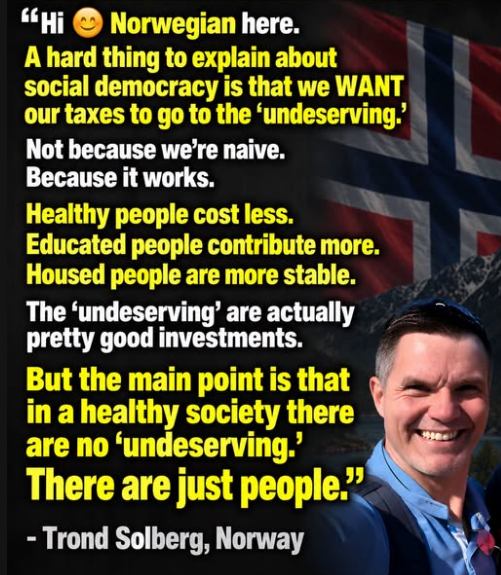 At left is an interesting twist on the case for social democracies. In short: Investing in people pays off.
As they say, Education is expensive, but the cost of ignorance is far higher.
 Have we hit the tipping point on climate change? For example, has the melting permafrost in the Arctic released so much methane that a runaway feedback loop has been established?
As suggested at left, an analogous question could be asked about the level corruption in the U.S. government.
Weather Guard Lightning Tech
Nordex Outsells Vestas, GE Vernova Rebuilds Wind Team
Nordex closes in on Vestas in onshore orders, GE Vernova rebuilds its wind team, Nexxis buys BladeBug, and wooden blades draw doubts.
The Uptime Wind Energy Podcast is brought to you by Weather Guard Lightning Tech, creators of the StrikeTape Ultra LPS retrofit. Subscribe to Uptime’s Substack newsletter. And check out Rosemary’s “Engineering with Rosie” Youtube channel. Have a question we can answer on the show? Email us!



-
Climate Change1 year ago
Guest post: Why China is still building new coal – and when it might stop
-

 Greenhouse Gases2 years ago
嘉宾来稿:满足中国增长的用电需求 光伏加储能“比新建煤电更实惠”
-
Greenhouse Gases1 year ago
Guest post: Why China is still building new coal – and when it might stop
-

 Climate Change2 years ago
嘉宾来稿:满足中国增长的用电需求 光伏加储能“比新建煤电更实惠”
-

 Renewable Energy11 months ago
Sending Progressive Philanthropist George Soros to Prison?
-
Climate Change2 years ago
Bill Discounting Climate Change in Florida’s Energy Policy Awaits DeSantis’ Approval
-
Greenhouse Gases1 year ago
嘉宾来稿:探究火山喷发如何影响气候预测
-

 Carbon Footprint2 years ago
US SEC’s Climate Disclosure Rules Spur Renewed Interest in Carbon Credits