

Weather Guard Lightning Tech
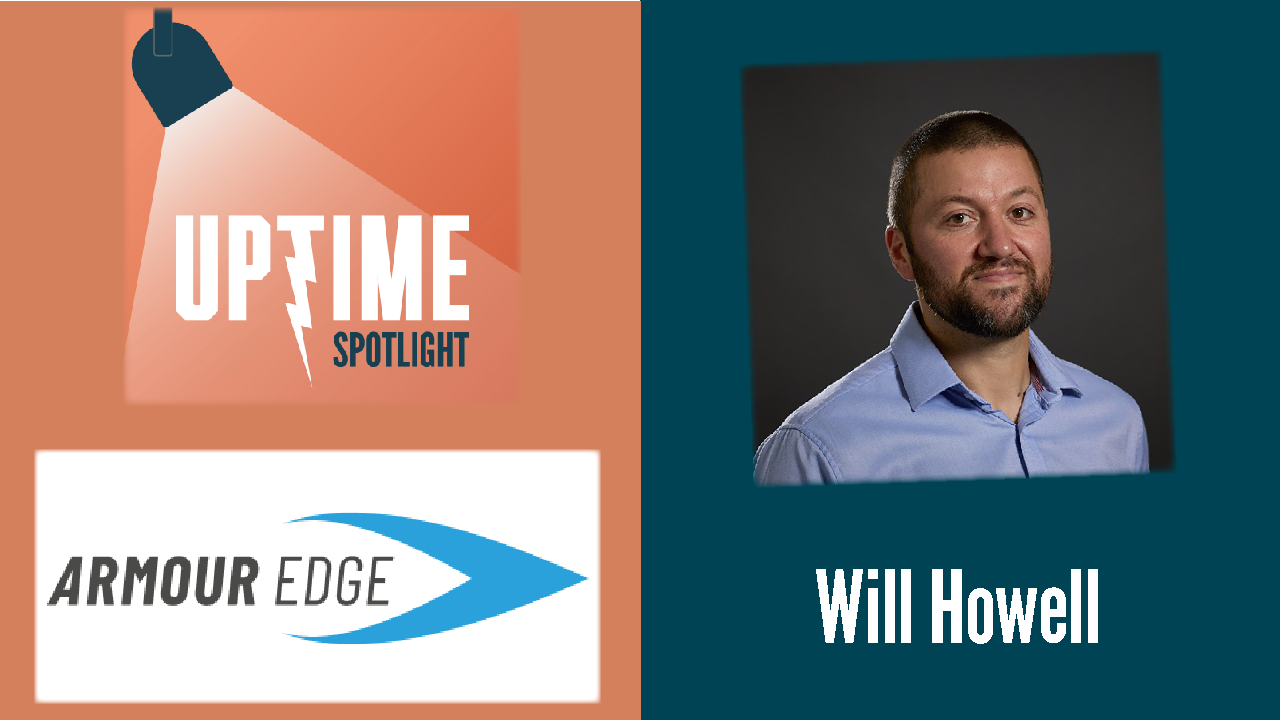
Armour Edge Expands Manufacturing and Blade Database
Allen and Joel are joined by Will Howell from Armour Edge in Edinburgh, Scotland. They discuss how Armour Edge’s semi-rigid polymer shields protect against leading edge erosion in harsh environments, the simplified installation process designed for rope access technicians, and the company’s expansion into North American manufacturing ahead of the 2026 blade season.
Sign up now for Uptime Tech News, our weekly newsletter on all things wind technology. This episode is sponsored by Weather Guard Lightning Tech. Learn more about Weather Guard’s StrikeTape Wind Turbine LPS retrofit. Follow the show on YouTube, Linkedin and visit Weather Guard on the web. And subscribe to Rosemary’s “Engineering with Rosie” YouTube channel here. Have a question we can answer on the show? Email us!
Allen Hall: Will welcome back to the program.
Will Howell: Thanks so much for having me guys. Nice to see you.
Allen Hall: So Edinborough is the home of Armor Edge.
Will Howell: Yes, indeed.
Allen Hall: Yeah. And we went to visit your facility a couple of days ago.
Really impressive. There’s a lot going on there.
Will Howell: Absolutely. Absolutely. Yeah. So the, we’ve been in the facility for, um, a couple of years now, and it’s really just all part of our expansion as we continue to.
To, uh, grow as a business?
Allen Hall: Uh, well the thing that struck me first was efficiency. If you’re gonna be in wind, do you need to be efficient?
Will Howell: Yeah,
Allen Hall: exactly. You have
Will Howell: to
be,
Will Howell: look, we know that we are a, a relatively small team, but we’re, we are, we are very reactive and we are gonna be always responding to the, the requests.
The, the market drive for us internationally now is where we are really focusing. And even though we’ve got our small base from there, we’re exporting internationally around the world. And so. Yeah, I’m, I’m, I’m glad you guys came by and kind of saw what we’re up to.
Joel Saxum: If we could ask one thing, this is what we would ask.
Turn up the heat. Turn down the wind. Turn off the rain.
Will Howell: Yeah, I’m [00:01:00] sorry about that. Yeah. Yeah, it’s, uh, there’s not much we can do about that at the moment.
Joel Saxum: Well, I’ll tell you what, if, if you’re talking leading Edge protection products, leading edge protection shield. Born from an area that’s rainy, that has heavy rain erosion, that understands,
Will Howell: we know, we know rain.
We know rain. Yes. Look, we’ve been out in the North Sea now for over, over, over five years. These things are just being abused by Mother Nature out there and, you know, but we’ve, we are, we’re getting really good results consistently. Um, the products lasting really well against that, against that weather.
And I think what’s interesting for us as well is it’s, it’s not just the Scottish rain and the ice and the snow. We’re, we’re getting good results out in the. The planes in the Midwest as well now. Yeah. And yeah, so yeah, very uh, universal products, we hope,
Joel Saxum: I mean, so this is one of the things we always talk about.
When you talk wind turbine blades and you listen to the manufacturers, a lot of them sit in Denmark where the problem is mist in the air, it is rain, it is droplet size. It’s all the conversation you hear. But where we [00:02:00] see wind is dust, bugs, those kind of things. Like, it’s, it’s different stuff, right? So like I’m, I live in Texas.
One of the things that’s beautiful about my home in Austin is when I look to the west in the, at, in the evening, it’s bright red skies all the time. Well, that means there’s dust in the air.
Will Howell: Yeah.
Joel Saxum: Right. And that’s, and when I look west, what am I looking at? 23,000 turbines out in West Texas. Right. So everything out there is getting beat up where we look at, um, inspections of turbines and we see turbines that are 1, 2, 3 years old that look like they’ve been in operation for 15 years.
Will Howell: Yeah. Yeah.
Joel Saxum: There’s nothing left of them.
Will Howell: I know. And. You know, people use analogies like, oh, it looks like it’s been sand sandblasted. But it it has, it has, it is sandblasted, you know, we’ve, we’ve now conducted testing where we have literally taken kind of aerospace level testing and blasted sand at these shields, and they’re super resilient.
But it has to be that universal products of resisting the water droplet that the mist, that side [00:03:00] of the, of the erosion problem, but also the particulate matter in the air. And there’ve been some of the. Places that we’ve installed. There was actually one site where they had a local, um, open cast mining nearby, and there was like marble particulate matter in the air.
And these machines were getting trash in a couple couple of seasons. And again, we’ve been on there now for, I think now is our third year in that particular site. And again, really good results.
Joel Saxum: Well, I think, um, I mean, we did take some B roll when we were at your facility. And again, thanks for welcoming Sam.
We love doing those. It’s, uh, but you showed us your installation methodology, and maybe we’ll show some of that with our producer Claire on mm-hmm. On this video. Uh, but the, the way you guys design your installation methodology to be simple and robust, easy for the technicians to make sure they can’t get it wrong in the field because they got enough other things to worry about.
Will Howell: Uh, you know, I think, I think that’s been a big part of our, of our kind of design ethos since the, since the early days in the, in the r and d phase, it wasn’t only finding a robust material for the LEP Shields, a robust. [00:04:00]Adhesive to bond them on, but it’s the, it’s the kind of higher level. How do you actually get that onto a blade in the field by a rope or standing in a platform up in the, up in the winds And so, yeah, understanding what the technicians are having to go through in order to install this stuff.
And that then feeds into your quality. ’cause you can have the best lab results in the world from your perfect installation sitting in a factory somewhere. But actually it’s the guys on ropes that are doing the, doing the hard work out there.
Joel Saxum: We see that all the time with our, like with our lightning protection products like.
People, can you give us this lab test? Like we can, we’ll stack you up with lab tests. Mm-hmm. But what we really wanna show you is the test from the field.
Will Howell: Yeah, yeah, yeah.
Joel Saxum: The test that where it’s been sitting, soaking, getting hit by lightning. Mm-hmm. All of these things for years and years and years. Yeah.
That’s the results we wanna show you. ’cause those are real.
Will Howell: Absolutely. Yeah, yeah, yeah. Makes
Allen Hall: the demo you gave us to install the shields and it’s basically a series of shields that go along the leading edge of the blade, sort of two parts of that one. Obviously you’re trying to recover the lost power, the a EP, that’s, that tends to be the big thing, [00:05:00] except in some locations, like Joel’s pointed out, it’s not that the leading edge is just kind of lightly beat up.
It’s really beat up.
Will Howell: Yeah. Yeah.
Allen Hall: And you’re trying to prevent that from happening or to just to provide some protection, uh, if you’re just sort of category three, and I, I wanna walk through that for a minute because the demo you did was really interesting and I. It, it made sense once you watch the process happen.
Mm-hmm. It’s really clear, but you’re able to take sort of cat three damage on the leading edge and not have to go back and do a lot of repair to it, which is where the vast majority of the funds are used to sort of get the blade to a point you can apply leading product. Oh yeah. Yeah. With Armor Edge, you don’t really need to do that.
Will Howell: Yeah. And I think that that that really comes into the. Into the value proposition of the, of the whole, of the whole process. If the labor costs and the downtime of the machines, there’s so much value in that. And so if you can reduce the repair time or just remove it completely, because you can install [00:06:00] directly on top of existing erosion, you’ve really saved some significant cost out of the, out of the job.
And that’s really only just by function of the design of the shields. We are a, a semi rigid polymer material, so we don’t conform to the existing erosion that’s on the surface. So. Yes. If you, if you have a cap four or five and you have some structural glass repair that needs to happen to maintain the integrity of the blades, you still need to complete that repair.
You don’t need to go any further. So if you’ve only got a one, two, or three, you’re talking the fillers, the putties on, on the surface. You don’t need to, to replace those. Just apply our high build adhesive, get the shield on top, and you’re finished.
Allen Hall: And so you start at the tip with a, a tip. Shield and then you work your way, kind of Lego wise up up the leading edge of the blade.
Yeah,
Will Howell: yeah, yeah.
Allen Hall: It’s really straightforward and, and the, the system you’re using, the adhesives you’re using, and the techniques are really adapted for the technician. What I watched you do, I’m like, oh, wow, this is really [00:07:00] slick because there’s been a lot of thought going into this. You have done this.
Hundreds of times yourself before you’ve shipped it out to
Will Howell: the world. Yeah, exactly. And, and that was, that was a big part of the, part of the r and d process is to, again, as I said, it’s, it’s not just affecting these applications in a lab environment. It’s saying, how does this feel up on a rope? How does it feel strapped into your work, into your work position?
You’re handling stuff with your gear off your belt, and it’s a, it’s a, it’s a very difficult position to be installing any bit of, any bit of kit on. And if we can. Make that as an intuitive and as simpler process as possible, that’s gonna lead to quality installations down down the line.
Joel Saxum: Yeah. One of the things I really liked when you were showing us the installation was the fact that you had your own tools that you developed for it.
Yeah. Yeah. Right. And it wasn’t, we’re not talking $10,000 tools here, but, but it was something that was. Specific, your scraper that you use to spread things around. Mm-hmm. That makes sense for that application. That helps the technician in the field.
Will Howell: Yeah.
Joel Saxum: And that was from
Will Howell: direct market feedback.
Absolutely. [00:08:00] And so you’re not only getting feedback from the technicians every season. And we are, we are, we are really careful to get these, to get that feedback, have these washup meetings, you know, maybe a bit of constructive criticism. Criticism in the early days and build that into your design revs.
Yeah. But as you say, hands, tools or processes, it’s all just. Quality steps. As we, as we, as we kind of move on.
Joel Saxum: I do, I do wanna make sure for anybody listening or watching this on YouTube, that that, that they know that this is not the actual final problem. These are trade show things. It’s not a bunch of little shells like this.
You’re about a meter long. They’re about meter
Will Howell: long. Yeah. Yeah. Full size. And again, even the, even the length is optimized for, um, kind of rope access. We feel a meter is about as long as you can handle as a, as a kind of single, single piece. The. Adhesive is kind of curing during the time that you’re installing the shields.
So a meter is good, you just just move on. Depending on what the customer’s looking for, that can be 10, maybe even 15 shields on [00:09:00] longer. Yeah, installations. Look, blades are getting bigger. The leading edge, erosion problems getting worse. So yeah, up about 15, 15 shields is probably about a maximum length that we tend to do in the field.
Joel Saxum: So let’s you, you, you mentioned customers we’re talking about what they wanna see. Let’s talk customers a little bit. What does the geographic footprint look like for you guys commercially going into next year? Where, where do the installs go and what’s your focus?
Will Howell: Well, at the moment we are, we are spread internationally.
Uh, obviously we are based here in Edinburgh and starting our out in the, out in the North Sea. Um, but over the past few seasons, our, our biggest market has been, has been North America. Um, so we’ve, we’ve really started to expand out there and that. I, I think even this season, again, it’s gonna be our biggest, our biggest market.
Um,
Joel Saxum: wha wha
Will Howell: okay. So yeah, the North American market’s gonna continue to be our biggest, um, installation base. So, um, this year we are probably on another thousand blades [00:10:00] or so, last season, um, this, this year significantly more, more than that. It’s been interesting for us to see the. The continued growth of the market, but also the, a bit of additional interest early on in this season or even pre, pre-season Now, we’re only coming up to Christmas as we record this.
Um, so the big step for us is gonna be not only expanding our European operation that you guys have seen, um, here from, from Edinburg to, to support the market here, but also looking at the manufacturing in America. So in North America, we’re gonna have. A couple of different manufacturing sites. We’re able to supply customers locally, which is not only gonna be reducing lead times, but also removing the the tariff burden, the import cost, any additional additional steps so we’re able to respond quicker to our customers over there.
Joel Saxum: Thanks for bringing the jobs to the states too.
Will Howell: Oh, there we go. Love those.
Allen Hall: There’s a lot of variety of wind turbines in the US and around the world, and you’re actively scanning blaze [00:11:00] because the shields are specifically molded for each different blade type. How many models do you have already scanned and ready to go?
Will Howell: So at the moment, um, I believe the database sits about 45 designs or so. Um, so obviously there, there are more designs than that out there, out there in the wild. But we’ve, we’ve made a big effort to try and focus on the really key, key OEMs, the really key blades types that are particularly, particularly prevalent.
Um, so yeah, we’ve got a lot of designs. We’ve got a lot of existing tooling, so we can make part. Very quickly. Again, trying to be as reactive as we, as we can to, to our, to our customer base. But as you say, that database is continually growing. So we have maybe some of the, the less popular blade models that we haven’t yet got to some of the out, the kind of fringe shoulder, shoulder models.
Um, we’ll be trying to scan a few more of those. This, this coming season, just to keep on building up that, that kind of knowledge, knowledge base.
Allen Hall: So what does that look like now that you have this large database and. Uh, the sort of the [00:12:00] molds to make the product. Mm-hmm. You can do things at scale, I assume now you’re, you’re talking about thousands of blades for this upcoming season.
Will Howell: Yeah, I mean, it’s, uh, when we, when we approach our manufacturing partners, obviously what we’re talking about are individual tools and then making plastic polymer parts from those, from those tools. And so when we start talking about wind farms with just a few hundred machines, then that’s maybe a few thousand parts.
But for these, for these manufacturers, that is small fry. So our ability to scale from the point of having those tools is very rapid. So our approach to the market and our ease of scaling very quickly has just, it’s, again, it is part of our, it’s part of our model. That’s why we can engage now in local manufacturer, like in North America to, to support the market there.
And it’s not only North Americas, we start to grow in, [00:13:00] um, in Europe here and as well as some of other target target markets. We’ve got some, some smaller in stores in India and in Australia. These are also targets where potentially we could start Manu Manufacturing as well in the future to assist in our scale up.
Allen Hall: What, what is your lead time right now That’s from, from, from the point of, I call up will say, well, I’ve got a GE 62 2. I probably have 500 of them. What does that lead time look like?
Will Howell: So, uh, 6 2 2 is a very good example. It’s a very prevalent blade. Um, we’ve, we’ve had a number of projects for this, so we’ve got tooling ready to, ready to go.
You’re probably talking around four to six weeks to get that. That’s fast material out. Yeah. Um, if it was a new design, it would be, it would be longer, but still you’re only up at 10 to 12 weeks for a new, a new design. So, yeah, it’s, it’s, uh, you know, as you guys have seen it, it’s quite an involved process.
We’ve had a lot of. Design evolution to get here, but we’re quite a finesse process now.
Joel Saxum: Yeah, that was the exact question I was gonna ask because it’s one we get asked all the time too, right? What? What? Hey, and now it’s, we’re, [00:14:00] we’re sitting at the end of the year coming into the new year and in the United States, our blade season in the southern part of the states.
Right. You’re south Texas, you’re starting in the next two months, right? Oh yeah. You’re starting end of January, beginning of February, and then that starts to roll north as we go. And by May we’re in full swing Absolutely. Across North America. So. If you’re a manufacturer listening to this, or a manufacturer, if you’re an operator listening to this and, um, you’re thinking, Hey, maybe, maybe I’d like to, if I don’t wanna roll it all out, maybe I’d like to try a couple.
We’re gonna do an LEP campaign. Let’s get this stuff out there and see what it looks like. Um, you need to get ahold of will.
Allen Hall: Oh, you should, and you should try it. I think a lot of the operators haven’t dabbled too much. They’ve seen a lot of products on the market, a lot of sort of, uh, chemical mixing apply.
A polymer to the leading edge tapes, products, tapes, paint, yeah. All, all of that. And the, the, the harder products haven’t seen as much favor, but the, the issue is, is that all the softer products, I’ll call them, wear easy or particularly with [00:15:00] dirt.
Joel Saxum: To me this is set it and forget it. Right. So this is a, this is an uptime podcast consultant type thing.
I have always felt in the last, I don’t know, four or five years of my career that I get access to a lot of the. Subject matter experts and the products and solutions that are like top tier, right? These are the ones that I would, yeah, so I think a lot of times like, man, if I wasn’t, if I, Joel Saxon owned a wind farm and I was an operator, I would do this.
I would do that. I would, you know, I’d have Pete Andrews from me both here on here earlier today and I’d be doing these kind, but I would put a product like your under the armor edge shields on simply because to me, this is set it and forget it. Yeah, yeah. I’m gonna do it once and I’m done.
Will Howell: That’s it. You know, and we’ve got, we’ve got the initial lab test to kind of validate the really long lifetime of our products.
But again, now we have the field data to back that up as there are many, many happy, happy customers in varying conditions. And, and yeah, it’s, it’s, it’s performing well. Interesting what you’re saying though, about. The lead time of the, um, products. You know, we’ve, we’ve really tried to [00:16:00] drive that down as much as, as much as possible.
And look, we know the, the planning world out there is not, is not a perfect science, and there’s always gonna be people coming to us with super short, short lead times. But as we’ve scaled, that’s another, another issue that we’re trying to combat. So now that we have many years under our belt, our stock holding is increasing.
We can do small projects, pretty much X stock. So we have. A stock of parts now that are available within a few days to ship out. It might just be a few, a few, a few machines. It could be a, a spot repair or a trial. Right, right, right. But we’ve got those, we’ve got those parts ready to go. So yeah, if anyone’s interested, even in a very short, short time scale, contact us.
I mean, we may be able to help you out very, very quickly.
Joel Saxum: We’ve all heard about product. Disappearing outta the back of technician pickups in hotel parking lots too. Sometimes you just need an extra turbines worth the kit while you’re on site.
Allen Hall: That is for sure. And will I, if you, people haven’t heard of Armor Edge, which is hard to believe, [00:17:00] but I do run across them occasionally.
Where should they go to learn more? How did they get ahold of you to, to set up a 2026 trial?
Will Howell: Yeah, so, um, I mean, our. Our, our website@armedge.com and that’s the, the UK spelling of arm edge with you in there. Yeah, yeah. Um, yeah, please come to the, come to the website. You can contact us through there. Um, I’m available on, on LinkedIn.
Um, yeah, you can contact us anytime. Anytime. We, we do travel between, uh, the uk. Again, our US is a big, big market, so if you’re gonna be at any of the trade shows, you can come and come and say, Hey, and arrange a, arrange a time to. Time to talk. Yeah. Which, which of the trade shows are gonna be at this year?
So we’ve got, um, blades, uh, the end of end of February, uh, in the US we’ve got, uh, the A-C-P-O-O and M event, um, event. And that’s the start of the start of March. Just before that, we’ll be, um, we’ve got one of our representatives in Australia at the Woma, [00:18:00] um, show as well. So, yeah. Yeah, it’s, uh, that’s the kind of the start, the start of the year as we move on.
Um. Again, there’s gonna be a lot of, uh, interaction with customers and suppliers. So even outside the shows you, you might be able to get a hold of us, look out for us. Um, but I think coming up to the summer, we’ve then got the clean power event. We like to visit, visit that for a bit more of a higher, higher level view of what’s, uh, going on in, in the industry as well.
Allen Hall: Well, will thank you so much for allowing us to get behind the scenes and. See the, the shop and see the, uh, demonstration of the installation of the shields. It was wonderful to see that. And thank you for joining us today.
Will Howell: No, great. Thank you very much for your time again. Appreciate it.

 Seriously?
Do you know anyone stupid enough to believe that the world’s kings and sultans “looted and plundered?”
I happy to say that I don’t.
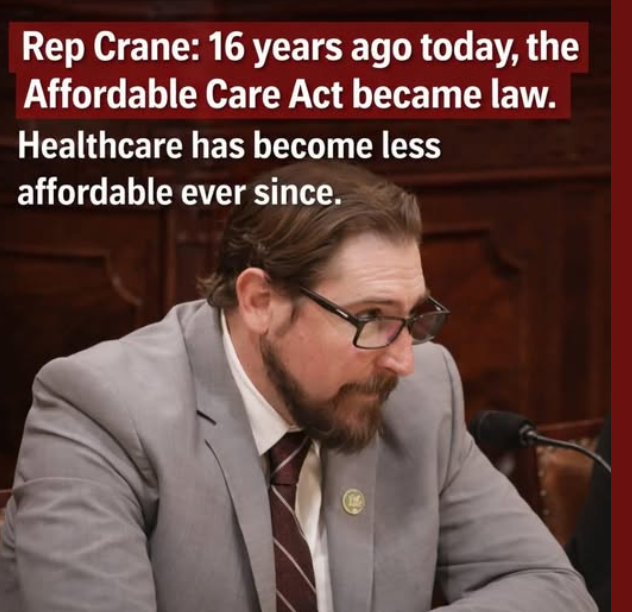
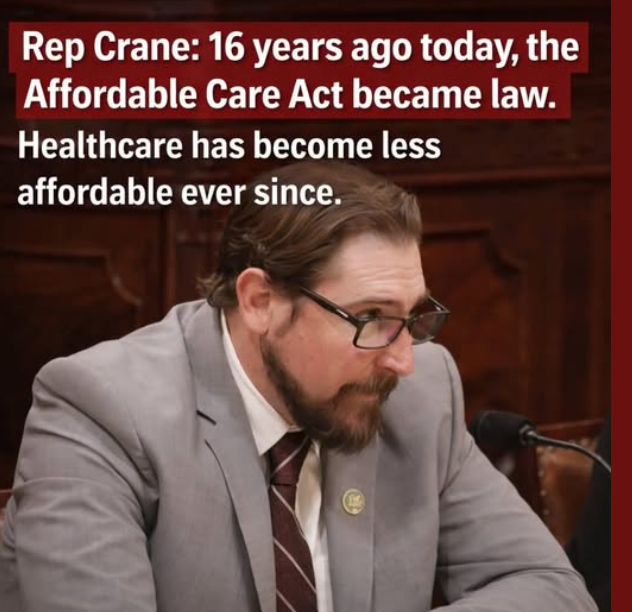 It appears that the idiot who composed the meme at left wants us to believe that the ACA is the reason that healthcare prices have risen.
Not shortages of doctors and nurses? Not declining education and worsening diets? Not poverty?
Another Exercise in the Difference Between Correlation and Causation
 Could someone please explain why there isn’t enough evidence to prosecute and convict these people for second-degree murder based on the videos that almost all Americans have seen dozens of times?
Why second-degree murder and not manslaughter? You don’t fire three rounds into someone’s head at close range without the intent to kill them.
Why won’t self-defense work? Rewatch the videos.
Why No Prosecutions in Minnesota? Something Doesn’t Add Up Here


-
Greenhouse Gases8 months ago
Guest post: Why China is still building new coal – and when it might stop
-
Climate Change8 months ago
Guest post: Why China is still building new coal – and when it might stop
-

 Greenhouse Gases2 years ago
嘉宾来稿:满足中国增长的用电需求 光伏加储能“比新建煤电更实惠”
-
Climate Change2 years ago
Bill Discounting Climate Change in Florida’s Energy Policy Awaits DeSantis’ Approval
-

 Climate Change2 years ago
嘉宾来稿:满足中国增长的用电需求 光伏加储能“比新建煤电更实惠”
-
Climate Change Videos2 years ago
The toxic gas flares fuelling Nigeria’s climate change – BBC News
-

 Carbon Footprint2 years ago
US SEC’s Climate Disclosure Rules Spur Renewed Interest in Carbon Credits
-

 Renewable Energy5 months ago
Sending Progressive Philanthropist George Soros to Prison?