

To predict the future, you have to create it. This was the phrase I connected with this Juneteenth as I thought about the stories of my ancestors and how they flow into the stories of the future.
When I Think of Juneteenth, I Think of Energy
Jasmine Graham, Executive Director of the Mid-Hudson Energy Transition, recently spoke on “Climate with Kiana” about energy justice. She reminded the audience, “The very first form of energy to be commodified was the unpaid physical labor of enslaved people.”
Juneteenth is not only about the past – it is also a day to think about the present and the future. June 19th, 1865 was a day in history that signaled the end of chattel slavery for Black enslaved people in America, but it did not uproot the sociocultural norms and connected systems of exploitation of people and planet’s energy and the marginalization of Black communities and beyond.
From the historic discriminatory practices of redlining to build out our US highway systems to the current unethical land use and labor practices seen within green tech and manufacturing projects, there is still much work to be done to manifest a world where the collective descendants of an energy system based in enslavement are free and healthy. Transforming our energy and mobility systems is an opening and opportunity to build a better future based on just principles and a respect of life and livelihood.
Black Communities Cannot Breathe
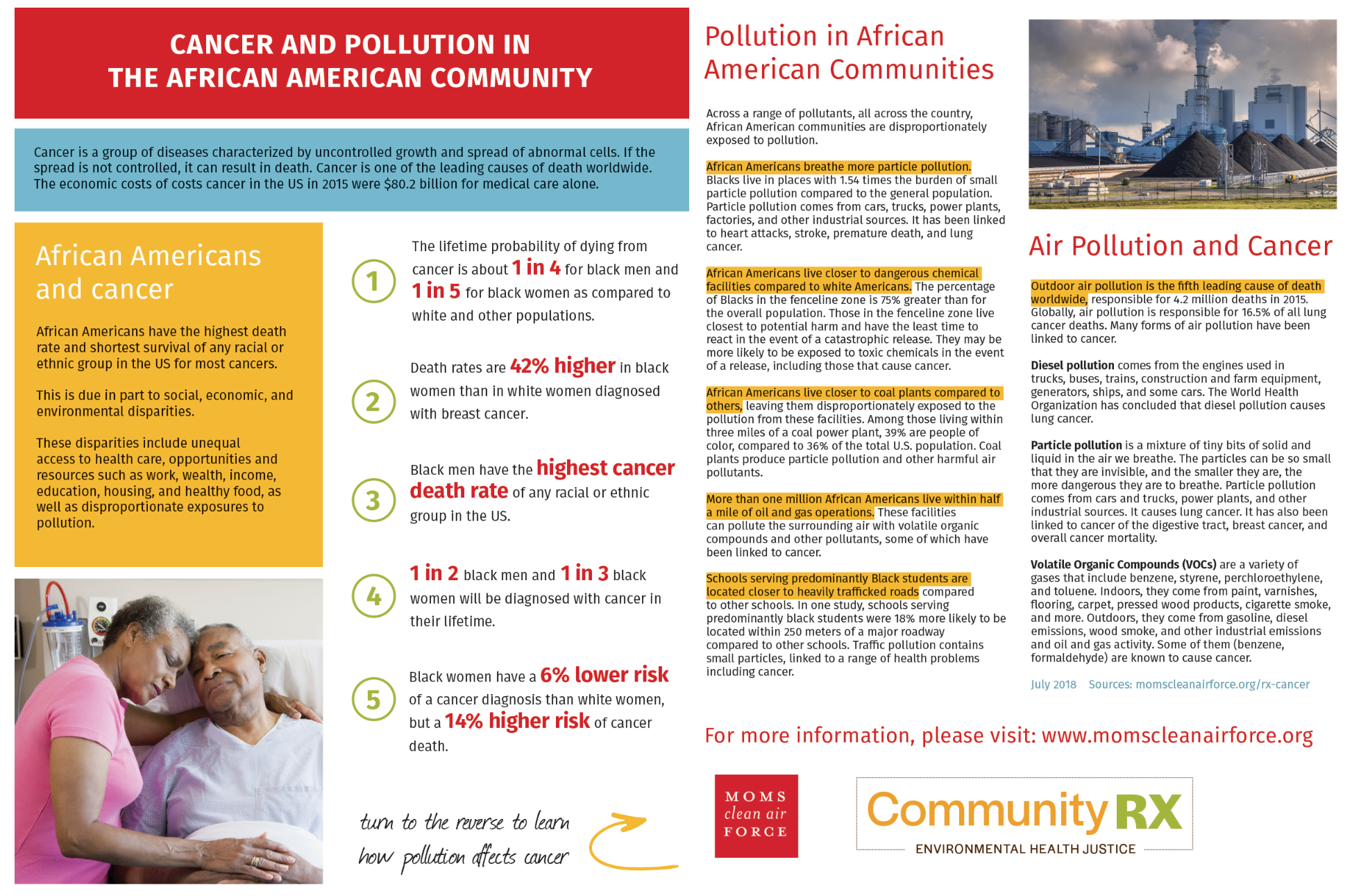
Black Americans are 75 percent more likely than other Americans to live in areas situated near facilities that produce hazardous waste. In Albany, Georgia, a majorly Black town in Southwest Georgia, there are seven brownfield sites and two superfund sites just within a mile radius from the center of town. Similarly as concerning, Black American seniors are three times more likely to die from exposure to particle pollution than white seniors. In an article from Capital B Atlanta, it was shared that in a pocket of neighborhoods in Northwest Atlanta “…there are wastewater treatment plants, a train yard, a power plant, a concrete facility, and an asphalt plant. Within the same 3-mile radius, more than 150 jets depart and arrive from Fulton County Airport each day, emitting toxic exhaust that irritates airways.” To imagine this impact plus the major polluting heavy-duty vehicles that make rounds every day, I can feel my throat constrict and my chest burn. As a Black person seeing these impacts first hand, the weight of living in a world that doesn’t value the health of all bodies feels heavy and grim.
Why Should I Keep Hope?
Environmental anxiety, also known as climate anxiety or eco-anxiety, are terms that have grown in popularity. The constant weight of the destruction of our environment and people looms over us every second. Social media shows us flowers blooming in Antarctica, children in body bags, fires sweeping through the wilderness, and leaders continuing to make decisions that see all the world’s creatures and resources as things to be exploited and depleted. The current reality in front of my eyes scares me and makes me question– what’s the point if the world is doomed?
And then I think about my ancestors. I think about all the meanings of Juneteenth. I imagine what it must have felt like for my enslaved ancestors. To live in a world where they were only valued for their metabolic energy and how daunting and hopeless it must have felt. But still, my ancestors laughed, danced, and took action toward change to predict and create a future that saw them free.
I imagine my grandmother, who used to have rocks and glass bottles thrown at her head at segregated concerts, but still, she chose to continue showing up and dancing with her friends.
I imagine my mother as a child living as part of the first Black families on the street. Waking up one night to the sound of screeching tires and a car packed with dynamite in the front yard. Yet still, my mother continued to play in that exact front yard the next day.
When I imagine my ancestors’ feelings, it always astonishes me; on the flip side of their pain is their capacity for joy. So how did they do it? How did they continue to find joy in a painful world? The answer I’ve come to is because they didn’t let others write their future for them.
In Dianne D. Glave’s book, Rooted in the Earth: Reclaiming the African American Environmental Heritage, the author boldly uses creative storytelling to recreate Black naturalists’ stories of the past to explore and reclaim the Black experience of the natural world. Glave demonstrated in each chapter how jumping into the psyche of past ancestors can aid us in understanding the world of then and its connections to now. Traveling through space and time is an imaginative and organizing power that is braided into the culture, spirituality, and philosophy of Black people.
“Black People are Self-Sufficient” – Stacey Robinson’s Tenets of Afrofuturism
Recently coined as Afrofuturism in many circles, it is a movement that imagines alternate futures or reimagines history through a lens that centers on Black experiences, identities, and perspectives from practices rooted in ancient Africa. From drumming, weaving, and metallurgy to recent historical practices in the Black dysphoria like spoken word, miming, and hip-hop culture, these are just a few of the many modes of communicative practices and knowledge production methods that guide and inform Black knowers throughout the world.
To take a page from Glave’s method, I imagined a scene. A future that sees a young Black girl traveling in her neighborhood. A vision shaped by intergenerational justice and the ability to breathe deeply. A dream of joy and freedom. Here’s a clip from my envisioned future:
Skipping out onto the porch, she is greeted with an intermingling roux of sounds. Laughter and the gentle whispers of rustling leaves spirals around her and into the mountain of curls on her head. The ground pulsates with a deep bass of footsteps pounding the sidewalk. The air is crisp and invigorating, carrying with it the sweet aroma of blooming flowers and the earthy scent of mammals sweating. Other children confidently run before her, playing a serious game of freeze tag, all hoping to be frozen under the cool shade of a poplar tree.
With jubilation, she begins to stride forward through the gumbo of sounds. As she walks through her neighborhood, her ears perk as she passes the melodious symphony of red cardinals and matriarchs gossiping away. The constant chirping soothing her soul and awakening her senses as she rounds the corner.
Syncopated and energetic beats blast through a speaker. The crunch and scrapes of high-top sneakers on cardboard slice the air as dancers glide, stomp, and spin. A pack of excited onlookers tapping their screens gather to capture the scene. The girl couldn’t help but match her pace to the groove as she shimmied by.
Moving further down the street, applauding rows of crows perched between two poles enjoy the linemen’s finale. Workers piling into their humming trucks to head towards warm dinners and much deserved rest time. Their vehicle weaves into the buzzing flow of cars, bikes, and trains on their journey home.
A few blocks down, the girl comes to a leisurely stop. A person with hair like cattails stands next to her, each loc standing taut at their scalp as they wait under the roof of a covered bench. She gasps as she realizes sitting next to her is one of the healers of the neighborhood. An elder who acts as a conduit to understanding the world. A million thoughts run wild like frenzied mice in her mind as she wonders what she should say. Should she ask about her life? The history of the town? Maybe she could just-
“Are you going to get on the bus, sweetheart?” they softly ask. Confused, the girl switches her gaze to see the bus quietly sneak up on them. The elder laughs and holds out their hand, “You mind helping me to a seat?”
Holding onto their hand, the girl leads them towards a spacious seat near the front. Feeling a little embarrassed about getting lost in her thoughts, she stays quiet.
“You know,” the elder says, breaking the silence, “Back when I was your age, these buses would spit out black smoke. The kind that makes your eyes water and your lungs burn.”
“Really?” The girl asks in surprise, happy the elder wants to make conversation.
“Yes,” they lament. “Every time we breathed, it was killing us back then. Cancer, asthma. The sky was hazy from all the pollution. We knew we had to do something about it, cause they weren’t doing anything to help us. We had to create a better future for ourselves.”
The girl’s eyes are wide as they continue to tell harrowing stories of joy, pain, wins, and losses all the way to their bus stop. These histories fascinate her but also make her realize the unfinished work that still needs to be done to honor the elders’ work. In this moment, as the nuances of daily existence and the whir of the bus surrounds them, a profound sense of peace and gratitude washed over the girl. She was thankful in that moment to hear and experience the clear rhythm of conversation, environment, and life. She took a deep breath and smiled.
Electric Black Futures
To lean on the words of Outkast, “the South got something to say”. The South is a hotbed of innovation and through the rapid creation of electric vehicle (EV) and battery hubs, this region is being put in a unique position to shape and influence a mobility culture that works better for everyone.
Georgia is one of the states being tailored as an EV hub and is positioned to receive billions of dollars in benefits from this emerging clean technology. Initiatives like Electric Black Futures, a recently launched project advocating for crafting just e-mobility futures and narratives in Black communities in Georgia, are an opportunity to reimagine an energy and transportation system that sees communities as people, not products.
By bolstering and connecting the preexisting visions and work of Black knowers to the cross-sector work of the electric transportation field, it allows us to address and dismantle oppressive energy and mobility practices from production to consumption. Expanding upon the collective efforts of environmental justice reimagining work that’s happening in Georgia has the potential to evolve an energy system based in pain into an energy system based in joy.
As the mother of the environmental justice movement, Hazel M. Johnson said, “It’s all very well to embrace saving the rain forests and conserving endangered animal species, but such global initiatives don’t even begin to impact communities inhabited by people of color.” The electric transition is a people transition as much as it is an emissions solution. As transformational funding funnels into states like Georgia, Black and other marginalized communities who experience the worst and first of environmental degradation and climate impacts must have their knowledge and minds at the helm of ideating and implementing solutions that are self-sufficient, sustainable, and transcend the barriers of our past and current energy system. As Juneteenth teaches us, freedom is not won until freedom is felt by all, people and planet must be considered as we paint a future toward collective wellness.
Electric Black Futures is a collaborative program between Southern Alliance for Clean Energy, EVNoire, and Clean Cities Georgia, committed to invigorating e-mobility leadership and job opportunities in Black communities in Atlanta, Savannah, and Albany, Georgia. By centering communities’ knowledge, vision, culture, and imagination, this project aims to put more Black hands at the helm of driving the direction and crafting the electric future. To learn more, visit the Electric Black Futures website, sign up for email updates, or email info@electricblackfutures.org.
Stay Updated With Electric Black Futures
The post A Time to Reimagine our Energy Future appeared first on SACE | Southern Alliance for Clean Energy.

Weather Guard Lightning Tech
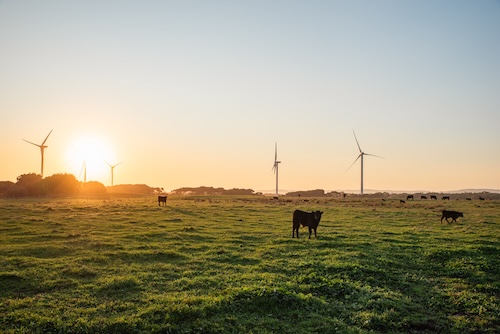
As Europe Shuns Chinese Turbines and Components, Who Will Fill the Gap?
While most of Europe has spent most of this year itemizing reasons it cannot, should not, and will not use Chinese wind turbines or components, accusations and arm-twisting tactics have garnered most of the attention.
But we invite you to consider a future – maybe just five, or ten years from now?- in which those same countries and companies are eagerly awaiting orders from wind turbine manufacturing facilities in… India.
What?!
You know that the country has a lot of installed wind.
You may think – and many in the industry would agree – that India’s blade manufacturers are a few revs behind blade-makers elsewhere in the world. But the country is newly committed to manufacturing and it’s busy installing more – provided that it’s made in India, with Indian technology, by Indian workers.
Of course, similar domestic-focused policy currents are running through European countries – where wind OEMs are almost inarguably a decade ahead of Indian manufacturers. But there’s an important reason why we say, “watch India” in wind turbine manufacturing.
It’s because you might learn something.
If you follow The Uptime Wind Energy Podcast, you probably heard this discussion a few weeks ago. It wasn’t the headline story – we try to highlight as many major news items and trends that we can, and follow up as credible information becomes available. India’s quiet moves to strengthen its own renewable energy industries didn’t grab the headlines. But it comprised a good bit of our panelists’ discussion.
With India’s expanding manufacturing capacity, and Suzlon’s strategic offerings for the European market (Blue Sky), there are reasons for European developers to take a closer look at Indian manufacturers.
If Europe continues to squelch deals with Chinese manufacturers due to data security issues, India is a relatively obvious candidate to fill the void, for several reasons:
- The country has depth and breadth in R&D: India (Suzlon, specifically) has a track record of involvement and relationships across the continent, as it operates research and development centers in Germany, the Netherlands, and Denmark.
- Indian service providers have reach: Inox and Adoni Wind operate multiple wind turbine manufacturing plants and wind farms throughout several Indian states, and Apraava Energy has been commissioning wind projects, working with multiple OEMs, for more than 16 years.
- The country’s energy sector has size: Tata Power is estimated to be worth about US$16 billion and employs 22,000 people.
And major manufacturers from other countries have had a strong presence in the country for years:
- GE Vernova has turbine blade and nacelle manufacturing operations and multiple tech/R&D centers in India;
- Vestas has a R&D technology center in Chennai; and
- China’s SANY Wind has had assembly facilities in India since 2017, and in 2024, it signed a licensing agreement with JSW allowing SANY to manufacture blades and generators for JSW – enabling JSW Neo Energy to produce wind turbine generators and major components in-country.
So while there is hard data suggesting that India is already a global hub for wind turbines, sometimes the real strength comes from soft skills. Like sharing information.
We’ve noticed that Indian manufactures aren’t stingy with information. They share what they learn in the field and on the shop floor, so that the whole industry can move faster to solve problems. That bodes well for the industry overall, and particularly well for companies who figure out how to solve problems that some manufacturers aren’t even ready to admit to having.
We’ll be watching India with a great deal of interest in the coming months. Subscribe to The Uptime Wind Energy Podcast and follow along with us.
We’re not financial analysts. We’re engineers who watch the wind industry very closely. This is what we’ve noticed, and we thought it was worth sharing.
Where do you think you’ll be looking for solutions, components, and service providers in the next few years or the next decade? Tell us what you think. We’d love to hear from you.
As Europe Shuns Chinese Turbines and Components, Who Will Fill the Gap?
 To the author of the meme here:
“Either” refers to two choices; “any” refers to three or more.
More importantly, it’s amazing how shamelessly the ultra-right wing exaggerates. The left side of the Democratic party would like to see the United States look like social democracies in places like Scandinavia. Having government programs that benefit the common person, e.g., Social Security, public schools, emergency relief, libraries, environmental responsibility, etc., does not equate to Stalinism.
 Some of my old prep school chums from the Class of 1973 convene via Zoom approximately every six weeks for a 90-minute discussion of current events, science, and anything else that sounds interesting.
Our professions range from medicine, law, finance, and business management. All from highly ranked colleges. Over 50% hold doctorate degrees.
Here’s something I find fascinating about the group: it includes one right-wing conservative. I don’t mean a Reaganite; I mean a Trump supporter. This guy is incapable of any thought that doesn’t come directly from Nexsmax.
It’s almost eerie how closely he toes the line of the far-right. Yesterday he echoed the Newsmax talking point and told the group that all Muslims holding public office are “very dangerous” and should be removed.
Now, the rest of us are sitting there, dumbfounded at this idea, unwilling waste our breath on this racist and utterly preposterous concept.
All this raises the question: How are our political viewpoints formed? How much of this is genetics? Epigenetics? Early childhood experiences? How do take a boy from among the best environments and turn him into someone who struggles to understand the most basic principles on which our country was founded?
https://www.2greenenergy.com/2026/11/09/principles-country-was-founded/



-
Climate Change1 year ago
Guest post: Why China is still building new coal – and when it might stop
-
Greenhouse Gases1 year ago
Guest post: Why China is still building new coal – and when it might stop
-

 Greenhouse Gases2 years ago
嘉宾来稿:满足中国增长的用电需求 光伏加储能“比新建煤电更实惠”
-

 Climate Change2 years ago
嘉宾来稿:满足中国增长的用电需求 光伏加储能“比新建煤电更实惠”
-

 Renewable Energy1 year ago
Sending Progressive Philanthropist George Soros to Prison?
-
Greenhouse Gases1 year ago
嘉宾来稿:探究火山喷发如何影响气候预测
-

 Climate Change2 years ago
Analysis: China’s CO2 falls 1% in Q2 2024 in first quarterly drop since Covid-19
-

 Climate Change1 year ago
嘉宾来稿:探究火山喷发如何影响气候预测