

Weather Guard Lightning Tech
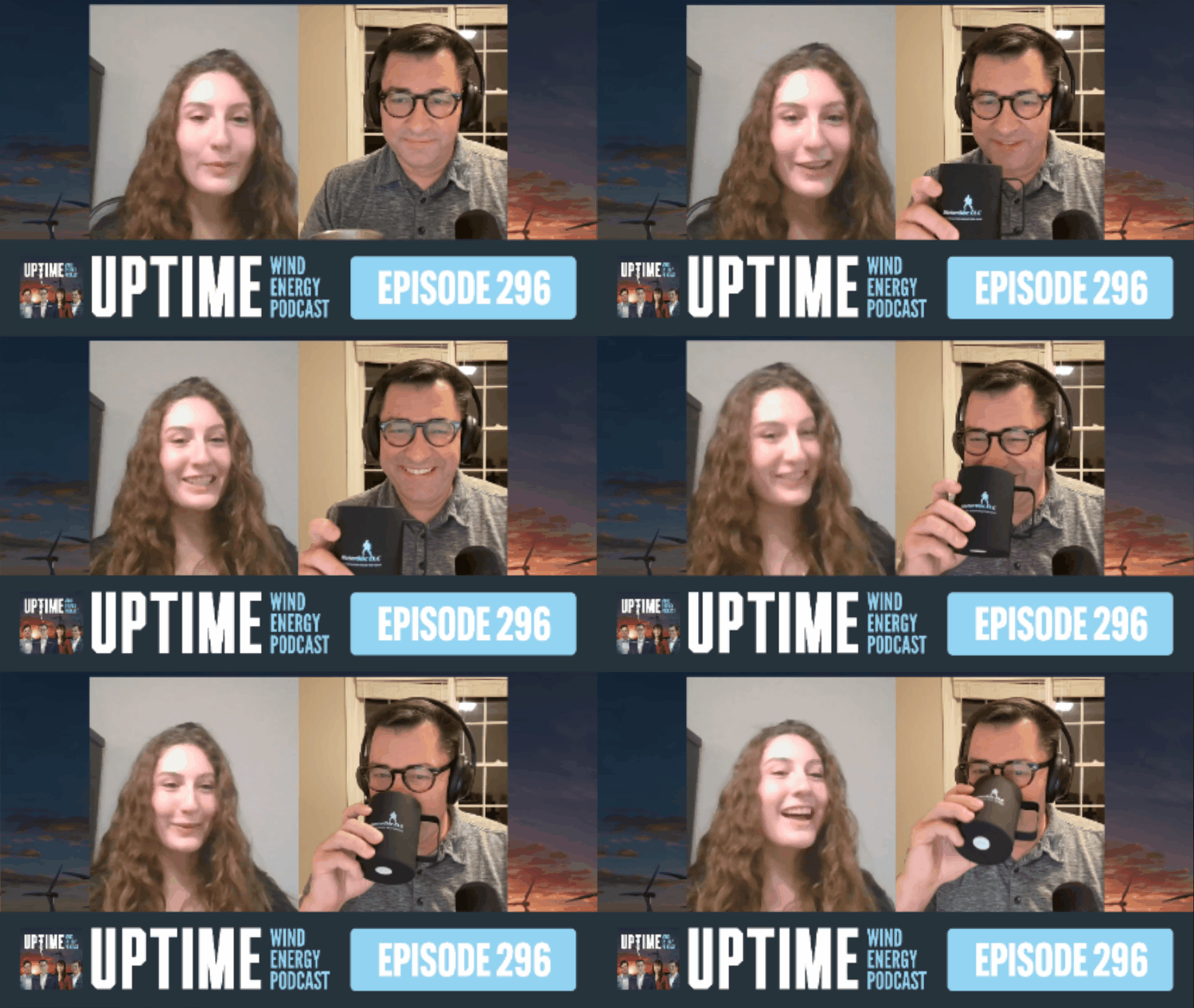
Statkraft Sells Offshore Wind, Torsional Blade Testing
Allen and Yolanda discuss Statkraft’s workforce cuts and sale of its Swedish offshore wind projects. They also cover ORE Catapult’s partnership with Bladena to conduct torsional testing on an 88-meter blade, and the upcoming Wind Energy O&M Australia conference.
Register for ORE Catapult’s Offshore Wind Supply Chain Spotlight event!
Visit CICNDT to learn more!
Sign up now for Uptime Tech News, our weekly email update on all things wind technology. This episode is sponsored by Weather Guard Lightning Tech. Learn more about Weather Guard’s StrikeTape Wind Turbine LPS retrofit. Follow the show on Facebook, YouTube, Twitter, Linkedin and visit Weather Guard on the web. And subscribe to Rosemary Barnes’ YouTube channel here. Have a question we can answer on the show? Email us!
You are listening to the Uptime Wind Energy Podcast brought to you by build turbines.com. Learn, train, and be a part of the Clean Energy Revolution. Visit build turbines.com today. Now here’s your hosts, Alan Hall, Joel Saxon, Phil Totaro, and Rosemary Barnes.
Allen Hall: Welcome to the Uptime Wind Energy Podcast. I’m your host, Allen Hall in the Queen city of Charlotte, North Carolina.
I have Yolanda Padron in of all places, Austin, Texas. We’re together to talk to this week’s news and there’s a lot going on, but before we do, I want to highlight that Joel Saxon and I will be in Edinburgh, Scotland for the re Catapult UK offshore supply chain spotlight. That’s on December 11th, which is a Thursday.
We’re gonna attend that event. We’re excited to meet with everybody. Over in the UK and in Scotland. Um, a lot of people that we know and have been on the podcast over a number of years [00:01:00] are gonna be at that event. If you’re interested in attending the OE Catapult UK Offshore Supply Chain spotlight, just Google it.
It’s really inexpensive to attend, and I hope to see most of you there, Yolanda. There’s some big news over in Scandinavia today, uh, as, as we’re reading these stories, uh, the Norwegian State owned Utility Stack Craft, and it’s also one of Europe’s largest renewable energy companies. As, uh, as we know, I’ve been spending a lot of money in new markets and new technologies.
Uh, they are in electric vehicle charging biofuels and some offshore wind development. Off the eastern coast of Sweden. So between Finland and Sweden, they’re also involved in district heating. So Stack Craft’s a really large company with a broad scope, uh, but they’re running into a little bit of financial difficulty.
And this past July, they announced some [00:02:00] workforce reductions, and those are starting to kick in. They have 168 fewer employees, uh, by the end of this third quarter. 330 more expected to leave by the end of the year when all the dive are complete. This is the worrisome part. Roughly 1000 people will longer work for the company.
Now, as part of the restructuring of Stack Craft, they are going to or have sold their offshore portfolio to Zephyr Renewable. Which is another Norwegian company. So Stack Craft is the Norwegian state owned renewable energy company. Zephyr is an independent company, far as I can tell my recollection that’s the case.
So they agreed to acquire the bot, the uh, offshore Sigma and Lambda North projects, which makes Zephyr the largest offshore wind developer. Sweden, not Norway, [00:03:00] in Sweden. Obviously there’s some regulatory approvals that need to happen to make this go, but it does seem like Norway still is heavily involved in Sweden.
Yolanda, with all the movement in offshore wind, we’re seeing big state owned companies. Pulling themselves out of offshore wind and looks like sort of free market, capitalistic companies are going head first into offshore wind. How does that change the landscape and what should we be expecting here over the next year or two?
Yolanda Padron: We, we’ve seen a large reduction in the, the workforce in offshore wind in all of these state owned companies that you mentioned. Uh, something that I think will be really interesting to see will be that different approach. Of, you know, having these companies be a bit more like traditional corporations that you see, not necessarily having them, [00:04:00] um, be so tied to whatever politically is happening in the government at the moment, or whatever is happening between governments at a time, um, and seeing exactly what value.
The different aspects of a company are bringing into what that company is making into, um, what, uh, the revenue of that company is, and not just kind of what is, what is considered to be the best way forward by governments. Do you agree? Is that something that you’re sensing too?
Allen Hall: The COP 30 just wrapped down in the rainforest of Brazil, and there has not been a lot of agreement news coming out of that summit.
Uh, I think next year it’s gonna move to Turkey, but Australia’s involved heavily. It was supposed to be in Adelaide at one point and then it’s moved to Turkey. [00:05:00] So there doesn’t seem to be a lot of consensus globally about what should be happening for renewables, and it feels like. The state owned companies are, uh, getting heavily leveraged and losing money trying to get their footing back underneath of them, so they’re gonna have to divest of something to get back to the core of what they were doing.
That’s an interesting development because I think one of the question marks regarding sort of these state owned companies was how fast were they willing to develop the technology? How much risk were they willing to take? Being backed by governments gets a little political at times, right? So they, they want to have a, a steady stream of revenue coming from these operations.
And when they don’t, the politicians step in and, uh, lean on the company is a good bit. Does the move to more, uh, standalone companies that are investing sort of venture capital money and bank money taking loans? I assume most of this [00:06:00] does that. Change how the offshore industry looks at itself. One and two, what the OEMs are thinking.
Because if they were going to sell to an TED or an Ecuador, or a stack raft or vattenfall, any of them, uh, you know, when you’re going to that sales discussion that they’re backed by billions and billions and billions of, of kroner or whatever the, the currency is. So you may not have to. Really be aggressive on pricing.
Now you’re dealing with companies that are heavily leveraged and don’t have that banking of a government. Do you think there’s gonna be a tightening of what that marketplace looks like or more pressure to go look towards China for offshore wind turbines?
Yolanda Padron: It’ll definitely get a bit more audited internally, exactly what decisions are made and and how objective teams are.
I think that there’s. [00:07:00] In all of the companies that you mentioned, there’s some semblance of things that maybe happened because of what was going on politically or, or because of ties that certain governments had to each other, or certain governments had to specific corporations, um, which was a, a great way for those companies to operate at the time and what was, what made sense.
But now that it’s. A third party who genuinely, you know, needs that cash flow in from that business or that part of the business, it’ll, I think you’ll definitely start seeing some, some greater efficiencies going on within
Allen Hall: these teams. Well, I would hope so. If you think about the way the United States moved pre, uh, the current administration.
There were a number of US based companies sort of going 50 50 on a lot of the [00:08:00] offshore development, and then they slowly started backing away. The only one that’s still really in it is Dominion, was the coastal offshore, um, coastal Virginia offshore wind project that is still progressing at a good pace.
But, uh, everybody else that was involved in, and they’re not the same kind of structure as an Ecuador is. They’re not, uh, there’s kinda state-owned entities in the United States and states can’t have deficits, unlike nations can. So the US deficit obviously is massively large, but state deficits don’t really exist.
So those electric companies can’t get highly leveraged where they’re gonna bleed cash. It’s just not a thing. It’s gonna happen. So I think I saw the precursors to some of this offshore turbulence happening in the United States as the. They didn’t see a lot of profit coming from the state electric companies.
That seems to be flowing into Europe now pretty heavily. That started about six months [00:09:00] ago. How are they gonna structure some of these offshore projects now? Are they just gonna put them on hold and wait for interest rates to come down so that the margins go up? Is is that really the play? Is that you have the plot of land?
You already have all the, the filings and the paperwork and authorization to do a project at some point, is it just now a matter of waiting where the time is? Right. Financially,
Yolanda Padron: that question will be answered by each specific company and see what, what makes sense to them. I don’t think that it makes sense to stall projects that if you already have the permits in, if you already have everything in, and just to, to see when the time is right, because.
Everything’s been ramping up to that moment, right? Like, uh, the water’s always already flowing. Um, but it, it’ll, it’ll definitely be interesting to see what approach, like where, where each company finds themselves. I, they’ll have to rely on [00:10:00] what information has come out in the past and maybe try to analyze it, try to see exactly where things went wrong, or try to pinpoint what.
Decisions to not make. Again, knowing what they know now, but with everything already flowing and everything already in queue, it’ll have to be something that’s done sooner rather than later to not lose any of that momentum of the projects because they’re not reinventing the wheel.
Allen Hall: Siemens is developing what a 20 odd megawatt, offshore turbine?
22 megawatt, if I remember right. 21, 22. Something in there. Obviously Ming Yang and some others are talking about upwards of 15 megawatts in the turbine. If you have a lot of capital at risk and not a lot of government backing in it, are you going to step down and stay in the 15 megawatt range offshore because there’s some little bit of history, or are you gonna just roll the dice?
Some new technology knowing that you can get the, the dollar per megawatt [00:11:00] down. If you bought a Chinese wind turbine, put it in the water. Do you roll that? Do you roll that dice and take the risk? Or is the safer bet and maybe the financing bet gonna play out easier by using a Vestus 15 megawatt turbine or a Siemens older offshore turbine that has a track record with it.
Yolanda Padron: I think initially it’ll have to be. Using what’s already been established and kind of the devil, you know? Right. I, I think it’ll, there’s a lot of companies that are coming together and, and using what’s done in the field and what operational information they have to be able to, to. Take that information and to create new studies that could be done on these new blades, on these new technologies, uh, to be able to take that next step into innovation without compromising any [00:12:00] of the, of the money, any of the aspects really like lowering your risk
Allen Hall: portfolio.
Yeah. ’cause the risk goes all the way down to the OEMs, right. If the developer fails and the OEM doesn’t get paid. It, it’s a. Catastrophic down the chain event that Siemens investors are looking to avoid, obviously. So they’re gonna be also looking at the financing of these companies to decide whether they’re going to sell them turbines and.
The question comes up is how much are they gonna ask for a deposit before they will deliver the first turbine? It may be most of the money up front. Uh, it generally is, unless you’re a big developer. So this is gonna be an interesting, uh, turning point for the offshore wind industry. And I know in 2026 we’re gonna see a lot more news about it, and probably some names we haven’t heard of in a while.
Coming back into offshore wind. Don’t miss the UK Offshore Wind Supply Chain Spotlight 2025 in Edinburg on December 11th. Over 550 delegates and 100 exhibitors will be at this game changing event. [00:13:00] Connect with decision makers, explore market ready innovations and secure the partnerships to accelerate your growth.
Register now and take your place at the center of the UK’s offshore Wind future. Just visit supply chain spotlight.co.uk and register today. Well, as we all know, the offshore wind industry has sort of a problem, which is now starting to come more prevalent, which is the first generation of offshore wind turbines that prove that the technology could work at scale or getting old.
We’re also developing a lot of new wind turbines, so the blade links are getting much longer. We don’t have a lot of design history on them. Decommissioning is expensive. Of course, anything offshore is expensive. What if we can make those blades last longer offshore, how would we do that? Well, that question has come up a number of times at many of the, the conferences that I have attended, and it looks like ORI Catapult, which is based in the UK and has their test center [00:14:00] in Blythe, England, is working with Blade Dina, which is a Danish engineering company that’s now owned by Res.
So if you haven’t. Seeing anything from Blade Dina, you’re not paying attention. You should go to the website and check them out. Uh, they have all kinds of great little technology and I call it little technology, but innovative technology to make blades last longer. So some really cool things from the group of Blade Dina, but they’re gonna be working with re catapult to test an 88 meter blade for torsion.
And I’m an electrical engineer. I’m gonna admit it up front, Yolanda. I don’t know a lot about torsional testing. I’ve seen it done a little bit on aircraft wings, but I haven’t seen it done on wind turbine blades. And my understanding, talking to a lot of blade experts like yourself is when you start to twist a blade, it’s not that easy to simulate the loads of wind loads that would happen normally on a turbine in the laboratory.
Yolanda Padron: Absolutely. I think this is going to be so [00:15:00] exciting as someone in operations, traditionally in operations, uh, because I think a lot of the, the technology that we’ve seen so far and the development of a lot of these wind projects has been from teams that are very theory based. And so they’ve, they’ve seen what simulations can be done on a computer, and those are great and those are perfect, but.
As everyone knows, the world is a crazy place. And so there’s so many factors that you might not even think to consider before going into operations and operating this, uh, wind farm for 10, 20 years. And so something that Blade Dina is doing is bringing a lot of that operational information and seeing, like applying that to the blade testing to be able to, to get us to.
The next step of being able to innovate while knowing a little bit [00:16:00]more of what exactly you’re putting on there and not taking as big a risk.
Allen Hall: Does the lack of torsional testing increase the risk? Because if you listen to, uh, a, a lot of blade structure people, one of the things that’s discussed, and Blaina has been working on this for a couple of years, I went back.
Two or three years to see what some of the discussions were. They’ve been working with DTU for quite a while, but Dina has, uh, but they think that some of the aging issues are really related to torsion, not to flap wise or edgewise movement of the blade, if that’s the case, particularly on longer blades, newer blades, where they’re lighter.
If that’s the case, is there momentum in the industry to create a standard on how to. Do this testing because I, I know it’s gonna be difficult. I, I can imagine all the people from Blaina that are working on it, and if you’ve met the Blaina folk, there [00:17:00] are pretty bright people and they’ve been working with DTU for a number of years.
Everybody in this is super smart. But when you try to get something into an IEC standard, you try to simplify where it can be repeatable. Is this. Uh, is it even possible to get a repeatable torsion test or is it gonna be very specific to the blade type and, or it is just gonna be thousands of hours of engineering even to get to a torsion test?
Yolanda Padron: I think right now it’ll be the thousands of hours of engineering that we’re seeing, which isn’t great, but hopefully soon there, there could be some sort of. A way to, to get all of these teams together and to create a bit of a more robust standard. Of course, these standards aren’t always perfect. We’ve seen that in, in other aspects such as lightning, but it at least gets you a starting point to, to be able to, to have everyone being compliance with, with a similar [00:18:00] testing parameters.
Allen Hall: When I was at DTU, oh boy, it’s probably been a year and a half, maybe two years ago. Yikes. A lot has happened. We were able to look at, uh, blades that had come off the first offshore wind project off the coast of Denmark. These blades were built like a tank. They could live another 20, 30 years. I think they had been on in the water for 20 plus years.
If I remember correctly. I was just dumbfounded by it, like, wow. That’s a long time for a piece of fiberglass to, to be out in such a harsh environment. And when they started to structurally test it to see how much life it had left in it, it was, this thing could last a lot longer. We could keep these blades turned a lot longer.
Is that a good design philosophy though? Are should we be doing torsional testing to extend the lifetime to. 40, 50 years because I’m concerned now that the, well, the reality is you like to have everything fall apart at once. The gearbox to fail, the generator to fail, the [00:19:00] blades, to fail, the tower, to fail all of it at the same time.
That’s your like ideal engineering design. And Rosemary always says the same thing, like you want everything to fall apart and the same day. 25 years out because at 25 years out, there’s probably a new turbine design that’s gonna be so much massively better. It makes sense to do it. 20 years is a long time.
Does it make sense to be doing torsional testing to extend the lifetime of these blades past like the 20 year lifespan? Or is, or, or is the economics of it such like, if we can make these turbines in 50 years, we’re gonna do it regardless of what the bearings will hold.
Yolanda Padron: From, from speaking to different people in the field, there’s a lot of appetite to try to extend the, the blade lifetime as long as the permits are.
So if it’s a 50 year permit to try to get it to those 50 years as much as possible, so you don’t have to do a lot of that paperwork and a lot of the, if you have to do [00:20:00] anything related to the mono piles, it’s a bit of a nightmare. Uh, and just trying to, to see that, and of course. I agree that in a perfect world, everything would fail at once, but it doesn’t.
Right? And so there you are seeing in the lifetime maybe you have to do a gearbox replacement here and there. And so, and having the, the blades not be the main issue or not having blades in the water and pieces as long as possible or in those 50 years, then you can also tackle some of the other long-term solutions to see if you, if you can have that wind farm.
For those 50 years or if you are going to have to sort of either replace some of the turbines or, or eat up some of that time left over in the permit that you have.
Allen Hall: Yeah, because I think the industry is moving that way to test gear boxes and to test bearings. RD test systems has made a number of advancements and test beds to do just that, to, [00:21:00] to test these 15, 20, 25 megawatt turbines for lifetime, which we haven’t done.
As much of this probably the industry should have. It does seem like we’re trying to get all the components through some sort of life testing, whatever that is, but we haven’t really understood what life testing means, particularly with blades. Right? So the, the issue of torsion, which is popped its head up probably every six months.
There’s a question about should we be testing for torsion that. Is in line with bearing testing that’s in line with gearbox testing. If we are able to do that, where we spend a little more money on the development side and the durability side, that would dramatically lower the cost of operations, right?
Yolanda Padron: Absolutely. It, it’d lower the cost of operations. It would lower the ask. Now that. A lot of these companies are transition, are [00:22:00]transitioning to be a bit more privatized. It’ll lower the risk long term for, for getting some of those financial loans out, for these projects to actually take place. And, you know, you’ll, you’re having a, a site last 50 years, you’re going to go through different cycles.
Different political cycles. So you won’t have that, um, you won’t have that to, to factor in too much, into, into your risk of whether, whether or not you, you have a permit today and don’t have it tomorrow.
Allen Hall: It does bring the industry to a interesting, uh, crossroads if we can put a little more money into the blades to make them last 25 years.
Pretty regularly like the, the, you’re almost guaranteeing it because of the technology that bleeding that’s gonna develop with Ory Catapult and you get the gearbox and you can get the generator and bearings all to do the same thing. [00:23:00] Are you willing to pay a little bit more for that turbine? Because I think in today’s world or last year’s world, the answer was no.
I wanted the cheapest blade. I wanted the cheapest, uh, to sell. I could get, I wanna put ’em on a tower, I’m gonna call it done. And then at least in the United States, like repower, it’s boom, 10 years it’s gonna repower. So I don’t care about year 20. I don’t even care about year 11, honestly, that those days have are gone for a little while, at least.
Do you think that there’s appetite for say, a 10% price increase? Maybe a 15% say 20. Let’s just go crazy and say it’s a 20% price increase to then know, hey, we have some lifecycle testing. We’re really confident in the durability these turbines is. There’s a trade off there somewhere there, right?
Yolanda Padron: Yeah. I mean, spending 10, 20% of CapEx to it, it.
Will, if you can dramatically increase [00:24:00] the, the lifetime of the blades and not just from the initial 10 years, making them 20 years like we’re talking about, but some of these blades are failing before they hit that 10 year mark because of that lack of testing, right. That we’ve seen, we’ve talked to so many people about, and it’s an unfortunate reality.
But it is a reality, right? And so it is something that if you’re, you’re either losing money just from having to do a lot of repairs or replacements, or you’re losing money from all of the downtime and not having that generation until you can get those blade repairs or replacements. So in spending a little bit more upfront, I, I feel like there should be.
Great appetite from a lot of these companies to, to spend that money and not have to worry about that in the long term.
Allen Hall: Yeah, I think the 20 26, 27, Joel would always say it’s 2027, but let’s just say 2027. If you have an [00:25:00] opportunity to buy a really hard and vested turbine or a new ing y, twin headed dragon and turbine, whatever, they’re gonna call this thing.
I think they’re gonna stick to the European turbine. I really do. I think the lifetime matters here. And having security in the testing to show that it’s gonna live that long will make all the little difference to the insurance market, to the finance market. And they’re gonna force, uh, the developers’ hands that’s coming,
Yolanda Padron: you know, developing of a project.
Of course, we see so many projects and operations and everything. Um, but developing a project does take years to happen. So if you’re developing a project and you think, you know, this is great because I can have this project be developed and it will take me and it’ll be alive for a really long time and it’ll be great and I’ll, I’ll be able to, to see that it’s a different, it’s a different business case too, of how much money you’re going to bring into the [00:26:00]company by generating a lot more and a lot more time and having to spend less upfront in all of the permitting.
Because if instead of having to develop two projects, I can just develop one and it’ll last as long as two projects, then. Do you really have your business case made for you? Especially if it’s just a 10 to 20% increase instead of a doubling of all of the costs and effort.
Speaker 4: Australia’s wind farms are growing fast, but are your operations keeping up?
Join us February 17th and 18th at Melbourne’s Poolman on the park for Wind Energy o and M Australia 2026, where you’ll connect with the experts solving real problems in maintenance asset management. And OEM relations. Walk away with practical strategies to cut costs and boost uptime that you can use the moment you’re back on site.
Register now at W om a 2020 six.com. Wind Energy, o and m Australia is created [00:27:00] by Wind professionals for wind professionals. Because this industry needs solutions, not speeches,
Allen Hall: I know Yolanda and I are preparing to go to Woma Wind Energy, o and m Australia, 2026 in February. Everybody’s getting their tickets and their plans made.
If you haven’t done that, you need to go onto the website, woma WMA 2020 six.com and register to attend the event. There’s a, there’s only 250 tickets, Yolanda, that’s not a lot. We sold out last year. I think it’s gonna be hard to get a ticket here pretty soon. You want to be there because we’re gonna be talking about everything operations and trying to make turbines in Australia last longer with less cost.
And Australians are very, um, adept at making things work. I’ve seen some of their magic up close. It’s quite impressive. Uh, so I’m gonna learn a lot this year. What are you looking forward to at Wilma 26? Yolanda. [00:28:00]
Yolanda Padron: I think it’s going to be so exciting to have such a, a relatively small group compared to the different conferences, but even just the fact that it’s everybody talking to each other who’s seen so many different modes of failure and so many different environments, and just everybody coming together to talk solutions or to even just establish relationships for when that problem inevitably arises without having it.
Having, I mean, something that I always have so much anxiety about whenever I go to conferences is just like getting bombarded by salespeople all the time, and so this is just going to be great Asset managers, engineers, having everybody in there and having everybody talking the same language and learning from each other, which will be very valuable.
At least for me.
Allen Hall: It’s always sharing. That’s what I enjoy. And it’s not even necessarily during some of the presentations and the round tables and the, [00:29:00] the panels as much as when you’re having coffee out in the break area or you’re going to dinner at night, or uh, meeting before everything starts in the morning.
You just get to learn so much about the wind industry and where people are struggling, where they’re succeeding, how they dealt with some of these problems. That’s the way the industry gets stronger. We can’t all remain in our little foxholes, not looking upside, afraid to poke our head up and look around a little bit.
We, we have to be talking to one another and understanding how others have attacked the same problem. And I always feel like once we do that, life gets a lot easier. I don’t know why we’re make it so hard and wind other industries like to talk to one another. We seem somehow close ourselves off. And uh, the one thing I’ve learned in Melbourne last year was.
Australians are willing to describe how they have fixed these problems. And I’m just like dumbfounded. Like, wow, that was brilliant. You didn’t get to to Europe and talk about what’s going on [00:30:00] there. So the exchange of information is wonderful, and I know Yolanda, you’re gonna have a great time and so are everybody listening to this podcast.
Go to Woma, WOMA 2020 six.com and register. It’s not that much money, but it is a great time and a wonderful learning experience. That wraps up another episode of the Uptime Wind Energy Podcast. And if today’s discussion sparked any questions or ideas, we’d love to hear from you. Reach out to us on LinkedIn and don’t for, and don’t forget to subscribe so you never miss an episode.
And if you found value in today’s conversation, please leave us a review. It really helps other wind energy professionals discover the show and we’ll catch you on the next episode of the Uptime Wind Energy Podcast. This time next [00:31:00] week.
https://weatherguardwind.com/statkraft-offshore-torsional/

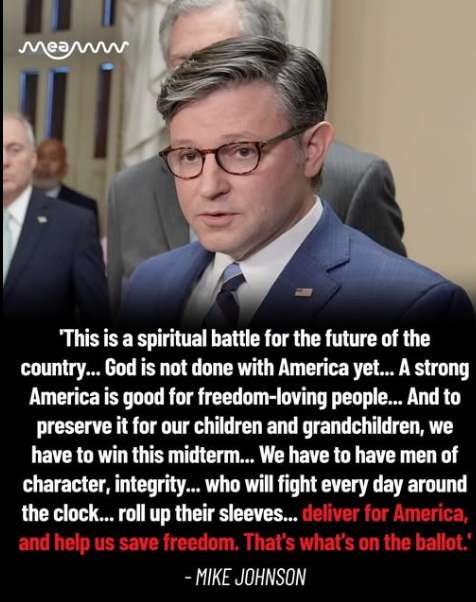 Sadly, a significant number of U.S. voters believe what House Speaker Mike Johnson says here, i.e., that “God isn’t finished with America yet,” and that “We need people (from the Republican party) of character and integrity,” as if there are any.
But what is that number, roughly?
After living through the first 18 month of Trump’s second term, with all the lies, the incompetence, and the corruption, this number has dwindled to a point that the Republicans are bracing themselves for the worst.
Republicans Manipulate American’s Ignorance — and it Doesn’t Take Too Much Skill
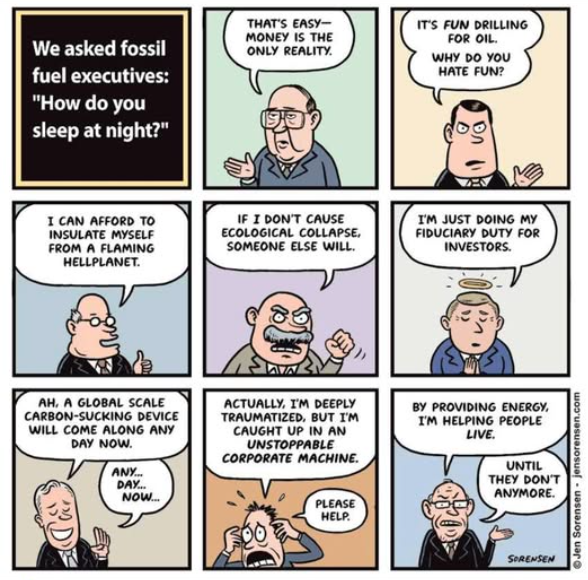
 I’m sure some of these excuses are extremely common in the minds of those making huge profits by destroying our planet.



-
Climate Change1 year ago
Guest post: Why China is still building new coal – and when it might stop
-
Greenhouse Gases1 year ago
Guest post: Why China is still building new coal – and when it might stop
-

 Greenhouse Gases2 years ago
嘉宾来稿:满足中国增长的用电需求 光伏加储能“比新建煤电更实惠”
-

 Climate Change2 years ago
嘉宾来稿:满足中国增长的用电需求 光伏加储能“比新建煤电更实惠”
-
Climate Change2 years ago
Bill Discounting Climate Change in Florida’s Energy Policy Awaits DeSantis’ Approval
-

 Renewable Energy10 months ago
Sending Progressive Philanthropist George Soros to Prison?
-
Greenhouse Gases1 year ago
嘉宾来稿:探究火山喷发如何影响气候预测
-

 Carbon Footprint2 years ago
US SEC’s Climate Disclosure Rules Spur Renewed Interest in Carbon Credits