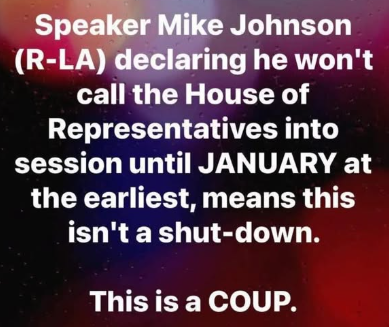
Some folks believe that Congress will not re-open until after the midterms, when, the GOP hopes, it was enough votes to prevent the Epstein files from being released.
Renewable Energy
Ummm, the Vast Majority of Earth’s Citizens Want to See Trump Dead
Eric Trump is usually depicted in the press as a moron. Is this fair? Is he really this stupid?
Is he not aware that the vast majority of the Earth’s population wants to see his father dead?
FWIW, I’m a rare exception. If Trump dies before the American people have the opportunity to see how close the U.S. came to being the next Russia, China, Turkey, North Korea, or the other 50+ authoritarian regimes on this planet, we will never be able to repudiate fascist dictatorship.
Ummm, the Vast Majority of Earth’s Citizens Want to See Trump Dead
Renewable Energy
Advanced Rail Energy Storage
Can be done. Cost inefficient as hell. Huge energy losses.
Highly doubt Switzerland built one. They’re not morons.
Renewable Energy
White House Misses Appeal Deadline, France Targets Chinese Magnets
Weather Guard Lightning Tech

White House Misses Appeal Deadline, France Targets Chinese Magnets
The crew discusses the White House missing its offshore wind appeal deadline, France’s 12 GW tender with restrictions on Chinese permanent magnets, and WOMA 2027 planning.
Sign up now for Uptime Tech News, our weekly newsletter on all things wind technology. This episode is sponsored by Weather Guard Lightning Tech. Learn more about Weather Guard’s StrikeTape Wind Turbine LPS retrofit. Follow the show on YouTube, Linkedin and visit Weather Guard on the web. And subscribe to Rosemary’s “Engineering with Rosie” YouTube channel here. Have a question we can answer on the show? Email us!

The Uptime Wind Energy Podcast brought to you by Strike Tape, protecting thousands of wind turbines from lightning damage worldwide. Visit strike tape.com. And now your hosts.
Allen Hall: Welcome to the Uptime Wind Energy Podcast. I’m your host, Allen. I’m here with Rosemary Barnes, who is in Australia, and our newest guest is Nikki Briggs, who is the new CCO of Weather Guard Lightning Tech. Welcome to the show, Nikki.
Nikki Briggs: Thank you. Nice to, nice to be here.
Allen Hall: So there’s the full docket, and Nikki’s gonna get indoctrinated today to the podcast, and she’s gonna be holding on tight because we have a really, uh, very controversial podcast.
I think once Rosemary gets in here and starts talking about. Offshore wind. And I wanna lead off this week ’cause it is a big deal, although not many people are talking about it, that, uh, the White House missed a deadline to file an [00:01:00] appeal against all the offshore wind farms in the United States. And the feeling was, is that there was gonna be an appeal and they’re gonna push to slow down those projects or cancel those projects.
And obviously, uh, one of the purchasers of one of the sites decided to sell it back to the US for about a. Billion US dollars, but the administration missed a key deadline for appeals, uh, which may indicate that they have other things to do besides fight offshore wind Now. The question really remains is, is this going to continue on that nothing is going to happen.
Uh, hopefully all the wind projects that are being built at the moment will complete and we’ll be providing power to all the onshore locations, particularly up and down along the East coast. But, uh, there’s still a long way to go here. Rosemary, I know there’s been a lot of concern about what’s happened in the United States on offshore [00:02:00] wind for several months now.
You think this is gonna be just a change of direction because there’s other things happening in the world.
Rosemary Barnes: To me, it just sounded like too hard to, unlikely to actually succeed and kind of keeps on drawing attention back to the issue. So better to just kind of let it quietly fade away and not talk about it anymore.
Allen Hall: And there is a financial emphasis for those companies that have these wind farms because if they can get their projects done. They get paid sooner. They can produce power, obviously they’re gonna get paid sooner. So there is a big incentive to push, push, push, push. And a lot of the projects are delivering power right now.
And I think the, the biggest one, which is uh, dominion Energy’s Project of Coastal Virginia, offshore Wind is doing that. So. All these wind projects that are kinder in a way I think are going to finish, which is gonna be a, a big relief to a lot of the states.
Rosemary Barnes: I don’t wanna talk about us, um, politics because I am not living there.
But don’t you have midterms coming up and potential [00:03:00] for the situation to dramatically change? Like, my understanding is that the expectation is that there will be. More, um, democratic involvement in, in decision making after the midterms. And so surely, you know, like if they don’t, if they’re not acting now, then things are likely to be easier from here on out.
Is that, is that a correct interpretation of what’s going on over there?
Allen Hall: Not correct. And Nikki, you can jump in here too. Congress can change and does every two years there’s elections in the US and so the full House of Representatives is voted in or out. So all 435 members of the House of Representatives have an election, but about a third of the Senate has an election.
So the Senate doesn’t change as dramatically as the House does, but, uh, for everything that’s been codified into law, which happened a year and a half ago, uh, the executive branch can kind of do what they [00:04:00] want there. So there will be very little that Congress can do. Once a law is a pass and the executive branch can continue on,
Rosemary Barnes: it’s two year terms for your house of reps.
Allen Hall: Yeah. It’s two years terms. Yeah.
Rosemary Barnes: That’s not very long. That’s not very good job security.
Allen Hall: It was never meant to be
Rosemary Barnes: in school. About a thousand years ago, I learned that, um, the Australian government is, is, is largely based on a combination of um, UK and. US government basically. But I think it’s a lot closer to the us.
Um, and yeah, we have, I, I think we have not, we haven’t got fixed terms, but it’s usually about every three years and yeah, you lose a few, a few months, but we don’t, we don’t do the big song and dance about it that you do with all of the, um, pre-selection and all that stuff. We don’t do that. So our, our system is a lot quicker.
Um, so yeah, I just wonder like how, how do you actually govern when you have to spend half of your time worried about, um, getting in and then you can only make plans for basically one year [00:05:00] ahead or two years ahead, like at the absolute maximum.
Allen Hall: That’s the problem with House of Representative is you nailed it right on the head, which is they’re constantly fundraising and trying to get to the next election.
Two years is a short amount of time anymore. They didn’t used to do it like that, where the last six months, maybe a year were campaign time, but pretty much once they get an election over, which happens in November, they’re already campaigning for the next one. So it does lead to a lot of chaos where things don’t happen in the House of Representatives like.
They used to maybe 20, 25 years ago. It’s changed dramatically and I don’t think Australia has that same issue weirdly enough. Although I would say you’re becoming more like the US in a lot of ways. That’s not one of them.
Rosemary Barnes: We’ve got some, there’s some things in place, like one of the advantages of basing our system on other countries as we could take.
Take the bits that worked and see what, what we could already see what didn’t really work and um, you know, try to, try to take it, um, try to take care of that, ensure that it couldn’t happen. [00:06:00] So
Allen Hall: the offshore wind piece in America rolls into other offshore wind, uh, across Europe in that, uh, although US is reconsidering offshore wind in some sense.
Europe is not. In fact, uh, France is getting very active. So you remember the France has been trying to launch, uh, offshore wind tenders for about two years. So you keep hearing France is gonna go to offshore wind, and then it didn’t really happen. Well, that political gridlock is, uh, over really how to pay for the renewables, uh, and how they’re gonna try to finance this thing.
Meanwhile, uh, France has, uh. Less than what? Two gigawatts of offshore wind operating against a, a national target of about 15 gigawatts by 2035. Uh, so there’s a lot of catching up to do the 12. They just had a 12 gigawatt package. They announced where, uh, they, they’re [00:07:00] attempting to really catch up all at once, uh, but buried inside of this tender.
Is a supply chain rule, which is very unique. So coming outta Scotland and all the things that happen with Ming Yang in Scotland, France is doing something very similar. France is limiting the percentage or the quantity of permanent magnets that can come from China. So France is saying, Hey, they don’t wanna get locked into an offshore, offshore wind supply chain that involves China specifically for, but they’re probably the most important ingredient, which is.
Permanent magnets. The Netherlands is moving ahead also and has offered two one gigawatt offshore wind farms, and it’ll be permitting those pretty quickly. So all of a sudden, the offshore wind effort for some of the countries that have been quiet in Netherlands in particular, and then France, all of a sudden probably ’cause of what’s happening in the.
The straight in the Middle East have decided to speed up their offshore wind [00:08:00] projects. Is this gonna be the right move? Do you think they’re gonna stick with this process of, of completing these projects or is this a spur of the moment decision that they’re gonna change their minds later on in the next year or two once things calm down to the Middle East?
Rosemary Barnes: Yeah. I mean, if it is a, a knee jerk response to the. Specific right now problem and doesn’t seem very well advised because it’s gonna be years before they actually see any electricity entering their grid. I mean, France is a bit different to other European countries ’cause they’ve got so much nuclear and in general, uh, I think with the exception of like the year before last, they had that summer where it was really hot.
They had heat waves and they had to shut down a lot of. Nuclear power plants because the cooling water was too hot. They, they couldn’t, they couldn’t put it back into the river. And, um, yeah, uh, river levels were too low in some cases. So in, in that year, they did have to import energy. Um, but in general, their energy exporters.
So I don’t, I, I would be surprised if this [00:09:00] was in direct response to, you know, that I don’t think they have an electricity crisis right now. Um, and, uh, yeah, I think it’s probably more of a long-term plan.
Allen Hall: Are they gonna force the OEMs to build product in country? GE already has an offshore wind blade factory in France.
And, uh, they can get a lot of components in Europe for sure. You could actually dictate what percentage of the wind turbine is built in France and what is built in Europe and what’s gonna be left to be imported in from China. You think this is where everybody is headed?
Rosemary Barnes: Yeah. I mean, I think it is. Smart move to make sure that you don’t have one single country locking down any critical part of your supply chain.
So I’ll agree with that. I haven’t seen the exact wording, but it’s not like it’s just banned that anything comes from China. I mean, that would be a good way to make sure that you didn’t ever get a timely, uh, a project completed in time. Um. So, you know, that makes sense. But, you know, if no one [00:10:00] project can use a hundred percent Chinese magnets or I, I don’t know the wording, maybe they’re allowed to buy, um, the rare Earth materials from China and then turn them into magnets locally.
I don’t, I don’t know what the wording is, but, um, it is going to require that, you know, some new manufacturers start up and I just wonder what kind of support they’re gonna provide for that and what kind of guarantees, because it’s not, um. So straightforward to just start up a new manufacturing facility for something that has never been made in that, in that area before.
Um, you know, there’s a lot of risk and hard to get financing. They’re gonna want to have some, um, guarantees from the government or some support to, you know, make sure that the risk benefit is worth it.
Allen Hall: I think that’s probably the most important part of this, is the business aspect. You can’t spool up a 20 year business.
In a year that’s hard to do and you’re not gonna do it if the supply chain can willy-nilly switch to an external supply chain to China, for example. So if you do set up [00:11:00] something complicated in France, I would almost bet that they would have to pass something in law and lock it in before you see a lot of investment happening that way.
Similar things happen in the UK really is uh, with all the offshore wind growth and wanting to build turbines in the country. They’re gonna have to put some barriers in to keep the Chinese out, which they’re obviously doing
Rosemary Barnes: or provide direct support. They don’t necessarily need to make it a law. I think like the way we would do it in Australia is that the government would either co-invest or they would, you know, underride a loan or um, you know, guarantee revenue or something, something like that, to make all the pieces fall into place.
I don’t think, um, law is the only way to do it.
Allen Hall: France obviously is gonna be able to choose from a couple of wind OEMs. Where do you think they’ll go is It’s pretty much right now, I guess it’s Siemens and Vestas for sure. I’m not even sure GE is offering a offshore wind turbine at the moment. Does France [00:12:00] have a Siemens or Vestas stake at the minute?
Rosemary Barnes: Not that I know of, but what’s happening to the um, Bel Factory? The GE Blade Factory? That was. They were making blades for hall aids, which is the troubled platform that kind of turned them off. Offshore wind altogether. Um, yeah, I don’t, I don’t know what’s happened to that one.
Allen Hall: Remember that GE sold the LM factory, what up in Poland and Vestas ended up buying that?
I wonder if something similar happened here.
Rosemary Barnes: Uh, yeah. I dunno. I need to, we should have, we should have looked it up before we started recording.
Allen Hall: The thing about this podcast is that we start putting the puzzle pieces together. Before the, the pieces are out on the table. And when you see the way that GE has really slowed down offshore, obviously they talked about it a number of times that they don’t like the offshore business and would like to finish vineyard wind and all the commitments they have and then pause until they can make sure they’re gonna make money on offshore wind.
Vestas is going crazy and has made a lot of sales, [00:13:00] and I know Siemens is trying to get back into that offshore market. So you really have two players. If you are not gonna choose a Chinese turbine, you see image and you have Vestas. But onshoring, that work is an obvious, uh, French move, I think just like it was in the uk.
Rosemary Barnes: I mean, assuming that they are not gonna be choosing, uh, Chinese manufacturers, given that they’re trying to move away from that, um, yeah. Complete dominance, but I mean, why couldn’t Ming Yang or someone supply turbines but just, you know, get their, their magnets from a local supplier instead? I mean, it’s very common that, you know, like European manufacturers, if they wanna sell in India, then they have to have a certain local, um, you know, amount of local manufacturing.
So. Why wouldn’t a, a Chinese company do the same thing? So, yeah, I don’t think they’ve only got two choices, but. Those will be the obvious ones.
Allen Hall: As wind energy professionals, staying informed is crucial, and let’s face it difficult. That’s why the Uptime podcast [00:14:00] recommends PES Wind Magazine. PES Wind offers a diverse range of in-depth articles and expert insights that dive into the most pressing issues facing our energy future.
Whether you’re an industry veteran or new to wind, PES Wind has the high quality content you need. Don’t miss out. Visit PES wind.com today. So Rosemary, after the successful WMA 2026 event in Melbourne, in which I know I mispronounced, but you’re just gonna have to let it go. There’s been a a ton of inquiries about WMA 2027 and I.
I’m thinking, man, we just finished moment 2026. You ready for 2027? The answer is yes, we need to go.
Rosemary Barnes: I think it’s because the, um, certain other Australian wind energy events are spamming everyone’s inboxes with like multiple emails a day, months out. It’s got everyone thinking, gee, this conference is super annoying.
Thought about that [00:15:00] non annoying conference that I went to.
Nikki Briggs: Yeah. Well I’m not pestering people, but if anybody wants to, you know, get signed up to be a sponsor for WMA 2027, reach out to me because, you know, we’re that not annoying conference. So, um, we gotta have good sponsors. And
Rosemary Barnes: that is true. That is one thing about, about Wilmar is we keep it really cheap for attendees, but it is still a high quality conference.
And the main way that we’re able to do that is because we have really good sponsors that. Um, yeah, they, they provide money obviously, to pay for, uh, a large chunk of the event, but they also don’t expect to be allowed to get up and sell at people. Um, yeah, I, I don’t even know how we managed to get such great sponsors that are, you know, happy with that trade off, but I guess that, yeah, they’ve figured out that it isn’t actually that beneficial to get up and give a sales pitch to people who.
Receptive to it. It is much better to just get up and talk about all the things that you know, and then the people who have problems that can be solved by what you [00:16:00] do will naturally get in touch with you. I mean. I think it works better. That’s, that’s my entire sales sales approach. And I guess everybody at the, at the conference, that’s what, yeah, that’s what we’re relying on.
I think it’s a better way
Nikki Briggs: and we’re here to help and save you money.
Allen Hall: Yeah. And the Woma 2027 website is up. Just Google. It’s, and we’re looking for sponsors, although a number of sponsors, pretty much everybody from 26 who wants to be back into twenties. 27. So we’ll be, uh, reaching out to all of you and making sure that happens.
But the conference is probably gonna get bigger in 2027 just because of the demand. So we’ll be looking for a, a couple of more key sponsors. We want you to get involved as soon as possible. You should do that by, in the us. You can do that by getting a hold of, of Nikki. It’s Nikki, N-I-K-K-I dot Briggs, B-R-I-G-G s@wglightning.com.
Or you can just go to Nikki’s LinkedIn page and send her an InMail and, uh, get ahold of her that way or [00:17:00] connect with her on LinkedIn and she’d be glad to help you. Now, Rosemary, I know one of the things we talked about was, uh, some of the expansion of topics for 2027. There was a lot of feedback and we are paying close attention.
And thanks to everybody who sent us feedback on the conference, uh, the number of five star reviews are really high, and I, I’m, I’m still a little shocked and um, maybe embarrassed by like, wow. Uh, that’s awesome. But we wanna expand on some of the topics for next year, and we’re talking about doing a blade masterclass and that which would involve rosemary.
Maybe some others talking about some of the blade issues that exist around the world. And Rosemary, what are you thinking about?
Rosemary Barnes: Yeah, describing how the process works. ’cause that’s the, that’s probably one of the main things, or the main value that I bring to Australia is the time that I spent working at a, um, um.
Wind turbine blade manufacturer, and you know, how does the design process work? What kind of testing do they do? What [00:18:00] does certification mean? Um, all those sorts of things. Uh, they, you might think, oh, I don’t really care about that ’cause I just use the blade once I’ve got it. But anytime you run into a problem, you do need to kind of know how all that stuff works, basically.
So, um, yeah, we’ll give a, a masterclass on that topic and so you can come and get. You know, a bit of an understanding about how that works. Ask whatever questions that you’ve got that relate to your specific problems, but then, you know, even if you don’t have a problem now in the future when something comes up, you’ll have that knowledge to fall back on.
And it just really helps to be able to know when something’s not right, um, when something wasn’t done right. Um, yeah, I mean there are always at some point an argument about, you know, who’s gonna pay. So it is really helpful to know if things have been done the way that they said that they would be. The way they should be.
Um, yeah, but I’m also. I’m really keen to hear about what to include in the main conference. ’cause you know, it can’t be the same every year. Um, I’m super focused on, on blades and I, I think we, I [00:19:00] mean, blades is the biggest, the biggest topic in wind turbine o and m, so it makes sense that we would be focused on that and we’re, we will, but I have less of, um, yeah, in depth knowledge about what non blade issues people are really struggling with at the moment.
So definitely be keen to hear from. Viewers about, um, sorry, I’ll say that again. Definitely be keen to hear about potential attendees about what topics they would wanna see covered to make sure that, yeah, it’s interesting and fresh every year.
Allen Hall: Can I circle back on the masterclass a little bit because I had my own little, little mini masterclass this past week looking at the IE specification for wind turbine blades, and I don’t know what prompted me to read that document.
I thought it was gonna be a lot thicker than it was, and I was shocked at the lack of detail that on the requirement side, I always think the blade people must have millions of requirements to go [00:20:00] do. And it’s gonna be very technical and a lot of check boxes there, but turns out maybe not as many as I thought there would be.
Rosemary Barnes: Oh yeah. That’s interesting that you’re, you’re surprised. Um. I mean, I haven’t worked with it closely since when I was doing my PhD, uh, the PhD was on, there was a, yeah, design of a family, family of wind turbine blades. And so, you know, I was looking at the standard to see what, um, load cases that you had to consider, you know, like the 50 year extreme gust is one of the big ones.
And then, you know, various operational loads and that sort of thing. Um, it’s never gonna cover absolutely everything. But I, yeah. What, what, what issues do you see that are, are missing from it?
Allen Hall: Well, when, when I look at the airplane world and we qualify an airplane with the Federal Authority, whoever that could be, it could be Yasa in Europe, could be the FAA in the United States, there’s a pages, there are books of requirements and [00:21:00] guidance materials and details of things you must do to show that the airplane is.
Safe to go fly. I figured the wind turbine world would’ve adapted that to some level to have very specific requirements on design margins and, and maybe they’re there as an electrical engineer. I can’t suss all that out, but I can usually tell how rigorous the requirements are by the weight of the document.
Usually those documents make a lot of noise when you drop ’em on the desk. This was, uh, a very soft whimper. I thought, well, okay, maybe there’s a lot here I’m missing. I’m sure that I am. I’m an electrical guy. I’m gonna admit it. Right now, I don’t understand all the structural things, but on the airplane side, I know that the airplanes have a lot to do and the requirements are crazy hard, but maybe there’s a lot more tolerance in wind.
Rosemary Barnes: They do include safety margins, and there is, uh. A lot more, a lot more tolerance in wind as [00:22:00] there should be because people aren’t flying and wind turbines. You know, like if there was somebody like physically seated inside every blade 24 7, then I think that you would see that the, the standard would be, would be tightened up because you know, like every tightening of the standard is going to result in an increase in cost.
So I mean, the biggest difference that I. I I see between, um, arrow and wind, aside from the, the safety issue is the maintenance. There is annual maintenance and they are maintained more than that. They’re, they’re constantly doing stuff, but like if it’s possible to design it to last for 20 or 30 years without needing maintenance, and that’s the way that you want it to be.
In general, blades are not supposed to be maintained until there’s a problem. Um, you know, it’s not like. Places where you know that you’re gonna be replacing grease or, um, you know, anything, anything like that that’s built for accessibility. The blades are certainly, certainly not. So yeah, I mean, [00:23:00]you’re definitely not maintaining in the same way as you are with, um, aerospace or Yeah, just aviation.
Allen Hall: Howard Pinrose has the, for motor dock, has the Chaos and Caffeine podcast. Which is on YouTube and I watch that. Typically Saturday morning, I think that’s when it comes out. It’s on the weekend. And his last, uh, podcast was about the studies about general maintenance. Back to Rosemary, your point that performing general maintenance, regardless of how much there is, is less costly than trying to fix it on the fly.
And that if you devote. Sufficient resources to keeping the equipment maintained in the, in the way it was intended to. You’re gonna have significantly less problems. Uh, and lower costs, but it’s surprising. Wind doesn’t do that
Rosemary Barnes: well, but I mean, the difference is that wind is designed to not be maintained.
So it’s, it’s not easier engineering, or not [00:24:00] engineering. It’s not like lazy. It’s actually the opposite. It’s actually really hard to design something that won’t need to be maintained for 30 years. I mean, think about another machine that is not supposed to be looked at for 30 years and you know, that will go through the stress that a wind turbine blade does.
But you know, if you think of. Yeah, anything that’s inside your blade, like think about, um, the lightning cable in a blade. Um, you know, like the, if it, if it breaks, you have to cut open the blade to get into it. And, um, most of the length of the blade, that would be, that would be what you would do. It’s huge, huge, huge repair.
Um, so, you know, you design it so that that will very rarely happen in theory, you know, if everything’s working well, maybe the lightning cable is a bad example because, um, the lightning protection system is. Almost certainly the, the least well-functioning part of a, a wind turbine, I’d say. But you know, like you think about in every other part of the blade structure, you know, you design it so that it will last for 30 years easily.
Um, and then [00:25:00] it’s only when several things go wrong that you would end up having to go in and do that. Um, that maintenance.
Allen Hall: This should be kind of a woma topic actually, because is it even conceivable that you could have minimal maintenance on such a. Heavy industrial piece of equipment for 30 years versus every other machine in human operation that can’t do that.
What other machine, I’m sure somebody will write in about that. And if you, if you know what, a machine will operate for 30 years with no maintenance, please send us a note because I don’t know what that is.
Rosemary Barnes: No, I, I think Brent turbines are really, are really special and I think that it is, uh, like commonly misunderstood that, um, you know.
Not maintaining for 30 years is, you know, somehow not in engineering correctly or making the engineering easier, but it’s the opposite. You’re making the engineering harder. The same with manufacturing of, um, the blades specifically or anything made out of composite materials. Like the tolerances are huge, but the fact is that that makes the engineering harder, not easier because it has to work at [00:26:00] any, you know, if the web is here or if it’s a hundred millimeters this way, it’s still has to work exactly the same for the exact same amount of time.
So to make it low cost and reliable for that amount of time with that little maintenance is a huge job. Um, and you know, one world record that I know that wind turbines have is that the blades are the largest, like single piece component of any human made structure. There is nothing, there’s nothing bigger than, um, a wind turbine blade.
Like a bridge is made of multiple different members and a airplane. Has, you know, two, two wings that don’t even, even the span of most airplanes isn’t, um, both wings together isn’t the same as the longest wind turbine blades. Like, there’s not, there’s no one big single component that’s bigger than a wind turbine blade.
Not to mention the strain. Um, they bend a lot that they, they really, they really bend a lot. That’s a very. Difficult operating environment. They do millions of, of fatigue cycles in their [00:27:00] lifetime. Uh, it’s just like, you know, they’re, they’re breaking records all over the place. It’s a, it’s a super cool thing to mark on as an engineer, to be honest.
Allen Hall: Okay. So at Walmart 2026, I know that was one of the discussions that popped up, uh, on the panel, was what should we expect for a lifetime? Or sort of a less re a reduced level of maintenance on a wind turbine. And the answer was maybe a year. And I thought that was a very Australian way of answering that question.
It’s, it’s a real answer. I think, uh, the people that operate wind turbines know that that probably is true. You got about a year and then you gotta get on it. But financial investors don’t necessarily have that opinion about it. They think you just turn it on, let it run 30 years and collect all this money and.
What we’re learning is it’s, it’s a complicated problem. And Rosemary, I think you’re 100% right. All the variables that happen during the manufacturing and the design of a wind turbine have to incorporate safety features that keep that operating for 30 years. That’s really hard to do, [00:28:00] and you’d have no way to really verify it once you shove it out the door, especially the first thousand you make.
It’s almost an impossible task.
Rosemary Barnes: Yeah, I mean there obviously there is heaps of maintenance that needs to be done to, to wind turbines, even if it is incredibly low maintenance compared to other kinds of machines. And if you are skipping that kind of maintenance or doing it incorrectly, then that is definitely a very um, Australia relevant issue.
You know, everyone’s on these full service agreements. Sometimes not for the full lifetime of the the turbine. So you can imagine if you’re kind of like half-assing your maintenance for the, those first 10 years, then you’re just sending a, you know, time bomb to the next person to take over that contract.
So. That’s a real challenge, but I’d see it with blades where it’s like, oh, they’re just quietly fixing, um, damages. They get the same damage over and over again and they just quietly fix it and not say anything and, or, you know, not really raise it like maybe you’re technically getting the reports, but it’s never flagged that, you know, Hey, this is a serial issue and no one’s ever investigating.
What’s the [00:29:00] real root cause of this? It might be that, you know, they’re fixing it well enough to last to the end of the FSA period. And then, yeah. Oh hey. Turns out your whole fleet has a serial issue that you need to take care of now with, without the backing of the manufacturer, which, um, you know, obviously makes it about 10 times harder.
Allen Hall: And that’s why you want to go to Wilma 2027 because we’re gonna to talk about that issue in a. About 20 others during the two day event. At least that’s what it’s scheduled for right now. Maybe it’ll go to a third day. Rosemary, maybe we need to add a third day because of all the topics
Rosemary Barnes: we need to move to a beach location.
If we’re gonna start going for multiple days,
Allen Hall: Rosemary wants to have it in Fiji or was it Tahiti? What was the other place you were saying you would like to go to?
Rosemary Barnes: Tahiti would be fine. Um, Maldives is what I was saying, but yeah, I will accept that. It’s not that. Logical to run Australia. Um, win o and m event offshore.
Allen Hall: We wanna send a congratulations to Yolanda and [00:30:00]Manuel as they have gotten married down in Mexico, uh, with all friends and family, several hundred attendees as I have learned. So congratulations to those two. And Yolanda will be back on the podcast. In the next week or two, that wraps up another episode of the Uptime Wind Energy Podcast.
If today’s discussion sparked any questions or ideas, we’d love for to hear from you, just reach out to us on LinkedIn and don’t forget to subscribe. So if you never miss an episode. And if you found value in today’s conversation, please leave us a review. It helps other wind energy professionals discover the show.
For Rosie and Nikki, I’m Allen Hall, and we’ll see you here next week on the Uptime Wind Energy [00:31:00] Podcast.
White House Misses Appeal Deadline, France Targets Chinese Magnets
-
Climate Change8 months ago
Guest post: Why China is still building new coal – and when it might stop
-
Greenhouse Gases8 months ago
Guest post: Why China is still building new coal – and when it might stop
-
Greenhouse Gases2 years ago嘉宾来稿:满足中国增长的用电需求 光伏加储能“比新建煤电更实惠”
-

Climate Change2 years ago
Bill Discounting Climate Change in Florida’s Energy Policy Awaits DeSantis’ Approval
-
Climate Change2 years ago嘉宾来稿:满足中国增长的用电需求 光伏加储能“比新建煤电更实惠”
-
Climate Change Videos2 years ago
The toxic gas flares fuelling Nigeria’s climate change – BBC News
-
Renewable Energy6 months agoSending Progressive Philanthropist George Soros to Prison?
-
Carbon Footprint2 years agoUS SEC’s Climate Disclosure Rules Spur Renewed Interest in Carbon Credits