

Weather Guard Lightning Tech
Mingyang UK Manufacturing, RWE Cargo Drones
Register for the next SkySpecs Webinar! Allen, Joel, Rosemary, joined by Yolanda Padron, discuss RWE’s pilot project using drones to transport equipment uptower. Plus Mingyang has announced plans to invest $2B into a UK offshore wind manufacturing center. And Renvo’ article in PES Wind Magazine highlights the needs for a convenient spare parts marketplace in the wind industry.
Sign up now for Uptime Tech News, our weekly email update on all things wind technology. This episode is sponsored by Weather Guard Lightning Tech. Learn more about Weather Guard’s StrikeTape Wind Turbine LPS retrofit. Follow the show on Facebook, YouTube, Twitter, Linkedin and visit Weather Guard on the web. And subscribe to Rosemary Barnes’ YouTube channel here. Have a question we can answer on the show? Email us!
You are listening to the Uptime Wind Energy Podcast brought to you by build turbines.com. Learn, train, and be a part of the Clean Energy Revolution. Visit build turbines.com today. Now here’s your hosts, Alan Hall, Joel Saxon, Phil Totaro, and Rosemary Barnes. Welcome to the Uptime Wind Energy Podcast. I’m your host, Alan Hall in the Queen city of Charlotte, North Carolina.
And I. Have everybody else on the podcast is in the same state. Rosemary is in Texas, in Houston, Texas. Joel’s in Austin, Texas, and our newest employee, Yolanda Barone, is in Austin, Texas. Yolanda, welcome to the podcast. You’re, uh, just joined us a couple of days ago and we’re super excited to have you.
There’s been a lot going on in the wind business. Uh, Rosemary’s actually over here for a conference and Joel’s been helping [00:01:00] out at that conference. Just so everybody knows, Yolanda’s gonna be our blade expert at Weather Guard helping us with a, a number of issues that operators have around the world, uh, for things that Rosie can’t take care of.
Call in Yolanda. So leading off this week, an interesting story from RWE and a big press release about it. Joel, uh, RDB has achieved a breakthrough in offshore wind logistics. By successfully testing cargo drones at its German wind farms, and, uh, the first time in German offshore airspace. Both long range autonomous drones and short distant cargo drones have been used in daily wind farm operations.
Uh, the pilot project demonstrated how different drone types can deliver spare parts, tools, and supplies to turbines. Uh, they were able to move up. About 10 kilograms, which is like roughly 25 pounds over about 40 kilometers. [00:02:00] That’s a pretty good rate. Uh, this is unique though to Europe because I think in the United States we’re not even allowed to do this, right?
Um, you can, it just depends on getting special permits. So it’s called a bv, LOS or BV loss, uh, beyond visual line of sight. Uh, so you can get, if you have specific, uh, software packages and you’re not over a major city and certain things, you can get those kind of, um, certificates from the FAA, but they’re not easy.
Uh, the, the cool thing about this is, I mean, let’s just put our technician hat on for a second. Even an onshore wind farm. I’m up tower and I go, oh, Alan and Rosemary and Yolanda and I are up tower and, and I go, who brought up the 10 millimeter socket? And none of us did. Now we have to draw short straws to see you, has to climb all the way down and get the 10 millimeter and come all the way back up.
Whereas with a drone, you could just fly up, land on the nelle and you have your tool, but it also means that you don’t have to [00:03:00] bring everything that you might conceivably need with you up there. So like when you are climbing towers every day, you’ve, you’re taking so much junk with you every time you go up, every time you go down and.
Like it sounds easy. Oh, they’ve got elevators in there. And that’s true. You don’t have to like put it in a backpack and climb up a ladder with it. Um, in towers that have a lift, but it’s still, once you get to the top of the lift, you still have to climb up a ladder to get into the nasal. And then if you’ve gotta get out into the hub.
And so you are still like picking up huge bags of stuff and um, yeah. Hauling them above your head. Always definitely exceeding the limit that you’ve just done your special training to promise that you’ll never lift more than 20 kilos. Um, you, yeah, it’s just like, it’s crazy the amount of stuff that you go schlep around with you because you don’t wanna have to go back down if you forget something.
So this means you can take up your toolkit for what you’re expected to need. Of course, you’ve got a lot of bulky safety [00:04:00] equipment that you have to take up ’cause you don’t know when you’re gonna need that. Um, but yeah, it’s gonna massively reduce the amount of stuff that you need to take up. Rosa, you bring up a lot of good points.
Right? And that’s just the, the daily active operations. And we’re, and we’re, I’m just thinking right now with Onshore Wind Farm, now go offshore and it’s, it’s boat landings into transition pieces. The, the amount of HSE risk just to transfer onto, uh, a tower or off of a tower to get components. It’s that much more complicated.
It’s that much more HSE risk. So. This makes absolute sense and these technologies have been kind of floating around for a while. Um, and one of the big things was, you know, of course it’s just the basics of drone stuff. So it’s can we safely lift this much, can we get the permits to lift this much?
Because like the CAA over in the EU there, they had a limit for a long time as well of, I think it was. 25 kilograms or something like that for like the whole drone setup couldn’t, it, couldn’t exceed that. Um, so you have to get certain permits [00:05:00] to do all these different things, but then it was, how do we safely precision land and take off and deliver the stuff?
So new advancements in, um, LOC localization, so like slam technologies, um, simultaneous location and mapping. So not just relying on GPS, but actually sensing what’s around you, whether it has, you know, a QR type. April, April tag codes that the drone camera follows and then kind of maps itself onto. Or if it’s has that, uh, the ability to see the blades and make sure it doesn’t run into them autonomously.
So the, the drone world has matured enough where this technology is like something that’s pretty normal now. You can see these things, drones, landing autonomously on boats that are driving by themselves and on the back of cars. Like it’s pretty cool stuff. Uh, but it was only gonna be so long until it made its way into industrial uses.
And this is a great one. You’re reducing risk, you’re reducing time, uh, saving money, all of the, you’re, you’re literally ticking [00:06:00] every box for operations. That makes this cool. I, I really like this. Uh, kudos to R to B for, for making this happen. Well, Yolanda, they should be doing this onshore too, right?
Because a lot of o and m buildings are not necessarily close to the wind farm. How many wind farms in Texas have we driven? Ooh. Five, 10 miles just to get to the turbine. Man, it would be a lot easier just to have a drone, wouldn’t it? Yeah, absolutely. I mean, it, it would save the team so much time and just so much effort.
Like Rosie was saying, to climb those turbines. The way we’re doing it now is with electric truck, right? Isn’t that, uh, RWE was doing a lot of the Ford, what’s the Ford Electric pickup truck, Joel? Wasn’t that RWE or was that Orad? That was Vestas. The Ford Lightning, we could just buy a bunch of cyber trucks and they could drive themselves out to the site, I suppose, if they can last through all the potholes on these sites.
That’s another thing you have to think about is technician time and the wear and tear on vehicles and stuff. If you at these o and m buildings, if you could, yeah, grab that piece of kit and, oh, I’m at, I’m at, uh, [00:07:00] tower, you know, WTG 17, but also the drone delivers you, your, your nuts and bolts or your package or whatever your name may or your lunch maybe.
That would be a good one too. Cup of coffee. What do I feel like the majority use of this drone technology will be for lunch? Hot lunch to the top of the tower. Come on. I’m sure I’ve told this story before, but I think it was New Brunswick when I climbed there, everybody had this specific electric crockpot that they would bring up with them and they would plug it in first thing, like as soon as they got up to the um, miss Cell, they would plug in their crockpot and then they would have a hot lunch.
And I had something that I had bought from the seven 11 ’cause that’s all there was in town. It was, it was miserable every single day. Here’s a question for you. I’m gonna ask this one. Maybe we should ask Alex Forer from Enertech this one. But, um, so as a, as a, um, a, a young worker in northern Wisconsin, I learned how to warm up my lunch and or breakfast on the intake manifold of a log [00:08:00] skidder by wrapping it in tinfoil and putting it into a certain puff spot in the motor.
Is there a thing in the tower up tower in the Nelle that gets hot enough? If you had a tinfoil wrapped, say a panini or something, that you could actually warm it up up there. The gearbox is warm. If it was running overnight, if the turbine was running overnight, you can sit some somewhere on the drive train.
It’s all pretty warm. That was my hot tip. When I, um, uh, when I was commissioning, uh, some turbines in Sweden, uh, the client demanded that I was, that we had an engineer there. Of the whole every day for the commissioning period of several months. So me and an electrical engineer traded off. He had actual work to do, but I was just there to satisfy the client.
So I just brought my laptop on and sat on the. Sat on the gearbox and um, I did get to see the Northern lights on some of those trips, so, you know, maybe it was worth it. Are you worried about unexpected blade root failures and the high cost of repairs? Meet eco Pitch by Onyx Insight. The standard in blade root monitoring Onyx iss [00:09:00] state-of-the-art sensor tracks blade root movement in real time, delivering continuous data to keep your wind farm running smoothly and efficiently.
With Eco Pitch, you can catch problems early, saving hundreds of thousands of dollars. Field tested on over 3000 blades. It’s proven reliability at your fingertips. Choose Eco Pitch for peace of mind. Contact Onyx Insight today to schedule your demo of Eagle Pitch and experience the future of blade monitoring.
Well over in the uk, China’s Ming Yang Smart Energy, has announced plans to invest up to 1.5 billion pounds. That’s about $2 billion into a. Offshore wind turbine manufacturing facility and, and that’d be the UK’s first fully integrated offshore wind turbine manufacturing facility. Uh, a three phase project would provide up to 1500 new jobs and create an offshore wind hub.
Which would serve the UK and the rest of Europe. [00:10:00] Uh, phase one was supposed to include up to 750 million pounds to build a manufacturing facility for turbine to sell some blades with the first production planned in late 2028, and, and it would grow on from there. This is a big story in the UK and I’ve seen a little bit back and forth in editorials regarding whether the UK should allow Ming Yang to build this factory.
Obviously the, the Vestas of the world and Siemens ESAs would not be happy. Intercon Nordex would not be happy with this. And I would think that, uh, there’d be pressure on the UK government not to allow for a myriad of reasons. But, uh, a lot of articles more recently are. Proponents of this saying it will be the cheapest way to develop offshore wind in the UK and around Europe is to use a, a lower cost manufacturer like Min Yang and [00:11:00] Rosemary.
You probably have the most, uh, direct hand knowledge of Chinese manufacturing since you’ve been over in China. Looking at some of the manufacturing capabilities. What is the chance of this kind of facility being built in Scotland? Um, I’m not sure. I think that there’s two issues. The first is that the UK has or at least wants to have its own manufacturing capabilities.
Then there’s factor two, which is that they have legitimate, like they have real net zero goals that, you know, the government seems to be legitimately, um, trying to achieve. It’s a reverse situation of what happened 10, 20 years ago when, you know, wind energy came out of Europe. They developed the, the technology.
Yeah, there was a little bit of stuff going on in America too, but predominantly it was Europe that, you know, like developed, um, modern wind turbines as we know them today, and the manufacturing methods for the hard stuff like blades. [00:12:00] Um, and then all of the manufacturers, uh. Um, opened factories in China where at the time it was a lot cheaper to manufacture.
Um, and, you know, close to some other markets. China got really, really great at building wind turbines. Um, and then, you know, they started, um, developing their own companies, their own designs, but they had lots of labor that knew, knew how to do it ’cause they’d worked in the factories. You know, they, they had those skills.
So this is the opportunity to learn from, um, this company. Uh, you know, there’ll be UK workers working there and they’ll learn some things and there’ll be a bit of information sharing. It doesn’t even, you don’t even have to believe that China has surpassed the west in wind turbine technology, which I personally don’t believe that they have yet.
Um, but it is different and, you know, you can always learn something from, um, yeah, from, from getting a bit of a, you know. A little bit of diversity of ideas and, uh, going and seeing how somebody else does it, it’s [00:13:00]always gonna help. I would say China is not really open to sharing information. You, we know very little of how, uh, China operates as turbines or how they manufacture ’em, or what their performance is, or how they have done over long periods of time or.
What upgrades have been made and there’s just so many unknowns there. How can they avoid that if they, like, do you think the UK government is gonna let them staff it entirely by, um, temporary Chinese workers? Like there’s no way. I mean, and they definitely shouldn’t. So how can they possibly avoid the knowledge getting out if they have a factory that is stuffed by, um, UK.
Uh, people, then they’re gonna learn some things, and that’s, you know, if you, the more that they also, China is selling more and more turbines outside of China and they don’t usually maintain even, you know, do the full service agreement themselves. So people necessarily have to learn about it. They, they, there is no option if you wanna sell outside of China and manufacture outside of China, but that [00:14:00] knowledge is gonna get shared.
I mean, we all, we, we all learn that. 20 years ago, you know, is it knowledge worth having? I don’t know if we know that yet. I don’t think we can say that we, yes, yes or no. I don’t think we know that yet. I’ve got no doubt that it’s worth having. I think that this, this is an interesting point though with people, if you say the people thing, right, you’ve got, you know, they’re gonna, they’re saying three phase project, providing up to 1500 new jobs, and right now they’re looking at Inverness, which is way north in Scotland, and 1500 jobs up there would be man, huge for that, that local area.
And you’re, you’re correct in saying that there’s no way they’re gonna staff this with like, transient workers. So that leads me to, to this question. One of the reasons Ming people even look at a Ming Yang turbine, in theory it during a TSA or an RF PS style, time of the project is because of cost. Well, one of the reasons that the cost is way lower is because raw materials and manpower is way cheaper in China.
Well now if you have to get your raw materials to or [00:15:00] from, uh, you know, Northern Europe, into the, into uk and you’re paying local wages, are those turbines still gonna be as advantageously cheap? To even think about. Does that make sense? You’re right. But how could they possibly have got past the back of the envelope calculation for whether they should proceed if they weren’t sure that it was gonna be cheaper?
Yeah. And that, and that’s what I’m, that’s what I’m, yeah. What I’m, what I’m asking like in when they go to the uk, so we’ve heard the number before that if you were to buy a megawatt to megawatt onshore turbine, it’s, it was 30% of the cost of a Western one. And if you’re, and if that still is rings true, great, but there’s no way it’s still gonna be that cheap it, but it might only, it might be 70% of the cost of offshore turbine made by Siemens or Vestas.
That 30% savings might get just some people to pull the trigger. Well, it isn’t like a European manufacturers don’t have facilities. UK Vestas has the Isle of White facility. Siemens has a big Blade factory and Hull. Right. So [00:16:00]does GE have any facilities in the uk? Maybe there’s a research facility in the uk.
Rosemary, they had isle of some stuff on, um, on Southampton, uh, but not major manufacturing. We’ve talked about great British energy of them being the lead and, and developing energy in the uk. Why don’t they just start their own wind turbine manufacturing facility? They have the resources to do it. You could bring in people to, to obviously to help run it and, uh, use technology.
You know, we, we, even if you had a hire a, a vest as to come in and take over the plant and to do the day-to-day stuff. It’s all being built in country, which is ultimately the goal right? Is to try to get jobs in Scotland. Yeah. I mean the, the cool thing about this project, the way they’re proposing it is, is that it is going to be, um, fully integrated.
It’s going to be everything. It’s not gonna be a Blade factory and ne it’s gonna be everything in one spot. I think that’s great because that doesn’t exist elsewhere in the world. [00:17:00] Super plan. Um, but. What is the, what’s the catalyst here? What is the kickoff? What’s the trigger? How does Ming Yang end up doing this?
Is it, do they have to get an order for 400 megawatts of offshore turbine? Or they’re not just gonna build a, it’s not gonna be, if you build it, they will come. That’s not gonna happen. I thought, uh, they had been shortlisted for a couple of offshore projects. They’re shortlisted for Green volt. For green volt, but I thought there was a second one.
But Rosie, you, you would know this more than any of us. If, if someone says, if, uh, you now got the turbine supply agreement, great. Now you have to start a factory. Is that even plausible from turbine supply agreement to a maybe, I don’t know, 18 months, some year down the line, are you gonna have a fully integrated wind turbine manufacturing facility ready to kick out a turbine?
I know that, um, the general, you know, um, off the record opinion from people that I’ve talked to is that they’re totally doubtful whether it’s going to go ahead, that it just kind of keeps on kicking along as a [00:18:00] maybe indefinitely. It’s all global companies that are involved. Everyone’s gonna be once bitten, twice shy.
It’s, it’s hard to open. Wind turbine factories. I mean, something that I’ve worked on a fair bit in Australia with governments here that wanna have wind turbine manufacturing, but nobody wants to make sure that companies have certainty about their pipeline. And so no one wants to build a factory. Like you don’t even need to induce someone that much to build a factory.
Like you don’t need to give them huge tax, tax breaks or free land. Like all that stuff is is nice, but the critical thing that you have to have is. You need to know that you’re gonna be able to sell whatever you’re making. It’s gonna, you know, if you can make one every day, you need to be able to sell one every day.
You can’t, um, you know, sell one every day for eight months, and then you don’t know when your next project is gonna be. Like, that’s just, you need a decade’s worth of pipeline that’s pretty certain. And nowhere in the world really has that. But you know what, if there’s anywhere that has the, um, [00:19:00]like the size of the economy and the, you know, like tendency to place.
Big bets, it’s the Chinese government. And I wouldn’t be surprised if they, you know, saw it. If they think it’s strategic for them to have factories outside of China, then they will give whatever guarantees they need to make sure it happens. And that’s something that, like in the West, we’re not prepared to make those kind of commitments.
We’re gonna lose. And it’s not, it’s not by any means just wind energy. It’s everything that China is dominating at the moment. That’s how they do it. They do it by going big. Early, not worrying about losing money, not worrying about that. You know, 990 of the thousand startup companies are gonna fail. You know, they only care that they’re gonna have the 10, or, you know, the one or two left at the end.
And, um, they’re the only ones that have the, you know, that are playing that strategy. Yolanda, on the development side, the wind turbine history for Min Yang is not well known. How [00:20:00] much risk is that put into a project? And as a developer, what would you be thinking about if this factory is built? Is it something that you would try to mitigate with extra insurance, or could you even get insurance?
Would you look for additional funding for repairs that you just haven’t thought about? How would this even be approached without having a lot of information available to your teams? Right. You can’t really. See what the full risk profile of a project like this would be. Right. So it would be a little bit difficult to get the funding to, to put in all those values to a forecasting for a site.
So would the Ming Yang have to fund the project in a sense? Would they have to provide the financing for their own turbines or find someone that’ll provide the financing? I think, yeah. I think your traditional bank, your traditional banks would be hard to come by. Right. The people that are, that are.
Backstopping, all these other programs. I think that you would have to have someone in the [00:21:00] Chinese government, like Rosie was kind of mentioning, or Ming Yang themselves, offer the credit facility to get one of these things off the ground. ’cause insurance isn’t gonna play with it either. You gotta get the insurance and the finance to agree that the risk profile is low enough to make it happen.
And I don’t think you’re gonna have the traditional, like, like downtown London isn’t gonna jump on this. I think you’re gonna have to have some, someone from China or Minging themselves, backstop it. So we’re not talking about a million and a, or sorry, a billion and a half pounds. We’re now thinking it’s somewhere north of 5 billion pounds.
Yeah. Wouldn’t binging have to know that before they decided to move forward that it’s not one and a half, it’s 3, 4, 5 times that probably. But that goes right along with what Rosie said. They’re willing to, you’ve seen that, you’ve seen ’em take on industries elsewhere in Africa, in South America. Where they’re just pouring money into these places to get ’em off the ground and not worried about the losses as much.
’cause they know that [00:22:00] I, you say it way, way, said it way better than I did, Rosie. But they know they need to just kind of get their foot in the door and they’re gonna have to maybe lose some money. And take some risk by doing it themselves. As wind energy professionals, staying informed is crucial, and let’s face it difficult.
That’s why the Uptime podcast recommends PES Wind Magazine. PES Wind offers a diverse range of in-depth articles and expert insights that dive into the most pressing issues facing our energy future. Whether you’re an industry veteran or new to wind, PES Wind has the high quality content you need. Don’t miss out.
Visit PES wind.com today. Well in this quarter’s, PES WIN Magazine, of which you can download yourself@pswin.com, a number of great articles. I’ve been reading one on Revo, which is a slightly different company. Joel and I were talking about it before we were recording today, and Joel described it as the eBay of wind turbines.
So I guess that’s sort of true, Joel, but [00:23:00] they connect sellers of decommissioned turbines with buyers and seeking basic cost effective solutions for repurposing those wind turbines, which is great. Uh, obviously Rosemary talks a lot about recycling of wind turbines. This is an easy way to do it, but it’s, it’s a difficult problem, right, trying to connect buyers.
Uh, uh, to sellers of older wind turbines. Where is this data? Where is this Amazon? Where is this eBay of spare parts? And then there’s the complications behind that, and the complications behind that being valuations of them. Um, how do we get the right people in, in line to make a a transaction happen? How do we get the logistics completed?
Is this a, you know, down to the serial numbers of certain things? Is it compatible with my wind farm? Do I need a different invert or are we at, you know, I mean there’s the basic questions. Is it 50 hertz or 60 hertz? Like, but that’s, those are things that not everybody’s thinking about. And me, uh, from a, my personal standpoint, I’ve been a part of some of these transactions from a, from a distance just [00:24:00] watching and, and seeing the moves.
And they get really complicated. And I think that’s what Revo ISS trying to solve here is access to these parts. Uh, access to the consultants that can, you know, help evaluate or value your equipment, and then tailor made support to making the transaction happen. And that’s what’s really, really needed in the marketplace because there is capability of this.
We heard from the insurance industry about how they can’t find obsolete parts, and we’ve heard from, uh, people that are extending, doing life asset extensions. And like right now, if you need a, I don’t know, send me on mm. 92 blade. Good luck. Unless you know the right people who know the right people who know the right people, you’re not gonna find it.
’cause it’s not like you can just go down to Home Depot and buy one. Uh, so that’s what Red Vote’s trying to do here is, um, solve some of those problems in the industry. And Yolanda, having worked for a large operator in the United States, is this something that even the larger operators could use? It does seem like it is difficult to find.
[00:25:00] Parts for older turbines or just to replace an older turbine? Yeah, absolutely. I think especially as operators start moving towards using ISPs a lot more, they can’t necessarily get things from the factory level that you would typically see from an OOEM, right? So even if you’re replacing something as small as like a LPS receptor, it’s really, there are parts that are really difficult to come by.
So if there could be an eBay type. Forum for people to get those things from site to site, that would definitely help out and help lessen the downtime that you have from just not having, uh, a part to replace on site in Rosemary. In Australia, there’s a lot of, uh, rural businesses, farms across the country.
They could buy a turbine for about 600,000 euros per megawatt. That’s a pretty good discount. It may make sense in a lot of smaller. Operations, not big industrial wind farms, but if you had a, a cattle farm or [00:26:00] mines. And mines. Yeah. Yeah. Mines are starting to generate more and more of their power from.
Solar because Australians are familiar with and comfortable with solar. Um, not so many mines getting into wind energy. There’s a few, there’s a gold mine, um, I think it’s called Agnew Gold Mine. And of course there’s recent news about Fortescue. They’re moving ahead on their plans to put a whole lot of, uh, wind power into Western Australia.
But smaller mines, I think it could make sense. I think one of the issues with, um, wind energy for mines is that. It’s not easy for them to get wind turbine techs out there, right? They do a lot of fly in, fly out work and um, they don’t wanna add probably another specialized kind of, um, employees. So some of these older wind turbines were much more the kind that any, you know, anybody who can maintain mine equipment would be able to maintain a wind turbine.
So I do think it makes a lot of sense. Well, you should check out the Revo article in PES Wind. Just go to ps wind.com. [00:27:00] And download your copy. So when this episode comes out, it will be next week. Uh, and so I’m saying this as next week, but future me, I will be in Copenhagen. So I’ll be visiting some, some local, uh, vendors, clients, friends, uh, the wind industry operators as a whole.
Uh, so reach out to me, uh, Joel dot saxon@wglightning.com or shoot me a text, uh, 832-593-2782. We’ll grab a cup of coffee, talk wind, uh, but I will be in Copenhagen all week. So, uh, hit me up. That wraps up another episode of the Uptime Wind Energy Podcast. If today’s discussion sparked any questions or ideas, we’d love to hear from you, and you can reach out to us on LinkedIn.
Even Yolanda, you can reach on LinkedIn, so don’t forget to subscribe. And if you found. Value in today’s conversation, please leave us a review. It really helps other wind energy professionals discover the show and we’ll catch you here next week on the Uptime Wind Energy [00:28:00] Podcast.
https://weatherguardwind.com/mingyang-rwe-drones/

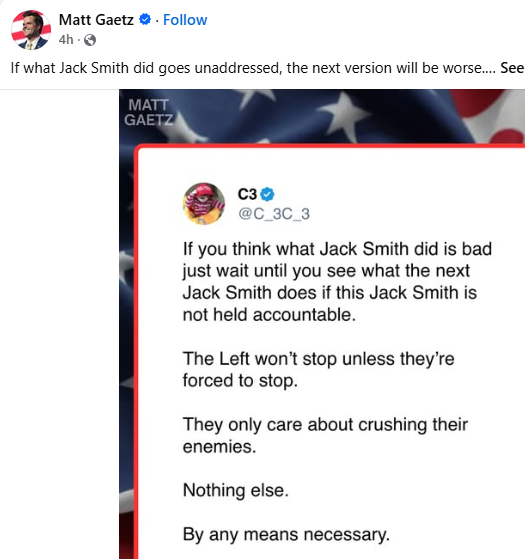 If I were sex criminal Matt Gaetz, this is exactly what I’d be flooding out on social media. But will it work?
What do clear-thinking Americans find more likely? a) Jack Smith hates Republicans and America too, or b) Jack Smith has spent his entire adult life honestly prosecuting the most high-level criminals domestically and abroad?
Weather Guard Lightning Tech
How CICNDT Qualifies Inspectors for Complex Blade Scans
Jeremy Heinks, founder and CEO of CICNDT, joins to discuss the inspector shortage, Level III oversight, blade samples, drone thermal limits, and IEC updates.
The Uptime Wind Energy Podcast is brought to you by Weather Guard Lightning Tech, creators of the StrikeTape Ultra LPS retrofit. Subscribe to Uptime’s Substack newsletter. And check out Rosemary’s “Engineering with Rosie” Youtube channel. Have a question we can answer on the show? Email us!
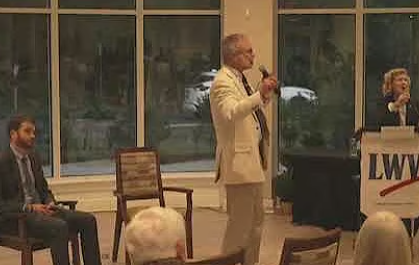 MAGA Maryland rep Andy Harris tried to tell his audience that diesel prices are up because of the Democrats and their environment regulations.
The result? Uncontrollable laughter. Check it out.



