
France is weighing a bold proposal to use surplus nuclear energy in Bitcoin mining, turning unused power into millions in revenue. The five-year pilot is backed by the far-right Rassemblement National (RN) party. It would use EDF (Électricité de France)’s excess electricity during low-demand hours, with heat reuse systems warming homes and greenhouses.
If approved, it could make France the first EU nation to weave crypto mining into its official energy strategy.
From Waste to Wealth: The Surplus Power Plan
France’s far-right party, RN, is backing a bold plan that could repurpose surplus nuclear electricity to power Bitcoin mining. MP Aurélien Lopez-Liguori introduced an initiative for a five-year pilot program. It aims to use excess energy from EDF-run nuclear plants for crypto mining.
The pilot allows Bitcoin mining to run only when nuclear energy is more than needed, like at night. This way, it uses power that would otherwise be wasted. Developers say one gigawatt of extra nuclear power could make $100–150 million in BTC revenue each year.
The plan also includes heat reuse systems that will capture waste heat from mining rigs. The heat can then warm homes, greenhouses, or industrial facilities. This model is already in use across Scandinavia.
Why Nuclear? France’s Energy Context
France, the EU’s top nuclear energy producer, gets over 70% of its electricity from nuclear plants. This amounts to 338,000 GWh each year. However, during low-demand periods, power supply often surpasses consumption.
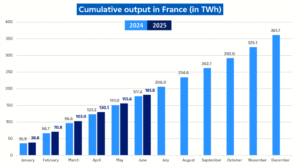
France occasionally sells extra power at negative prices. Sometimes, it even pays for nearby countries to take this power, leading to losses of hundreds of millions. Bitcoin mining offers a way to monetize this surplus and ease grid stress.
Mining rigs can quickly adjust their load, providing a flexible buffer that stabilizes grid operations. This strategy supports wider energy transition goals. It helps manage inflexible nuclear output more effectively.
Political 180: From Crypto Ban to Bitcoin Boost
This move marks a dramatic shift in RN’s stance on crypto. In 2016, Marine Le Pen condemned cryptocurrencies as elitist tools and pledged to ban them. By 2022, she softened her position to support regulation. In 2025, she supports Bitcoin mining as a smart economic tool. This shows a wider trend of political practicality.
However, not all RN lawmakers agree. Jean-Philippe Tanguy, the party’s finance chief, argues that Bitcoin undermines centralized monetary control.
Meanwhile, the left and green parties oppose the plan due to its environmental impact, pointing to Bitcoin’s intensive energy use. Approval will require navigating internal party splits and environmental scrutiny.
Potential Benefits and Concerns
Supporters of the proposal see several clear advantages. First, surplus nuclear power can generate revenue. Estimates show it could bring in $100–150 million each year for every 1 GW of excess output.
Second, bitcoin mining facilities can be a flexible load for the grid. They absorb extra electricity when demand is low. Then, they can power down fast when demand rises. This helps stabilize the system.
Third, the heat generated by mining rigs could be captured and reused to warm buildings or support greenhouse agriculture. This improves overall energy efficiency.
However, critics raise valid concerns:
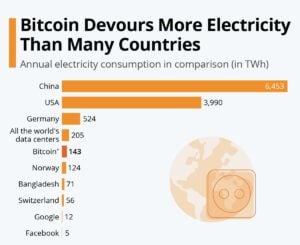
- Environmental impact: Despite cleaner power, increased Bitcoin mining still uses heavy energy. The chart above shows that Bitcoin alone utilizes more power than most countries.
- Regulatory challenges: The proposal needs strong legal and policy backing—June’s similar amendment failed on procedural grounds.
- Public perception: Tying climate-smart infrastructure to crypto may provoke resistance.
INTERESTING READ: The Energy Debate: How Bitcoin Mining, Blockchain, and Cryptocurrency Shape Our Carbon Future
Global Trends: Nuclear Meets Bitcoin Mining
This move in France aligns with growing interest worldwide in matching crypto mining with low-carbon energy. Here are some major facts to know:
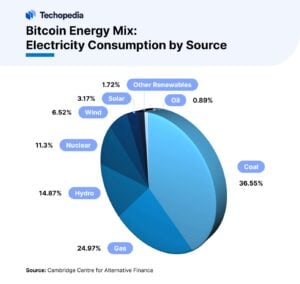
- Clean Energy Uptake: More than 52% of global Bitcoin mining now runs on sustainable energy. Of this, about 11% comes from nuclear sources.
- Fuel Mix Shifts: Coal and gas once dominated Bitcoin’s electricity supply. But the share of nuclear has roughly doubled from 4% in 2021 to over 11%.
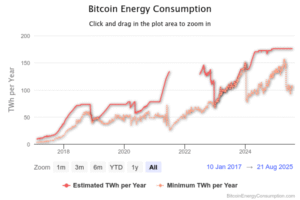
- Energy Use Scale: Bitcoin mining is energy-intensive—estimated at 176–180 terawatt-hours (TWh) annually, on par with national consumption by countries like Poland or Egypt.
- Hashrate Surge: The Bitcoin network’s computing power, or hashrate, continues to rise. As of May 2025, it exceeded 831 exahashes per second (EH/s), a 77% jump from its 2024 low.
- Adaptation to Costs: With mining profitability squeezed, miners seek cheap, stable energy like nuclear to stay competitive.
Analysts at ScottMadden argued that Bitcoin mining paired with nuclear energy offers a compelling value proposition—a clean energy use case that could diversify utility income. The business case has only grown stronger as Bitcoin prices rose from about $9,275 in 2020 to over $47,000 by 2021.
France isn’t alone in exploring this pairing. Studies suggest that Bitcoin mining might use extra power wisely. This could cut waste and help the grid stay flexible. For example, South Korean researchers found surplus electricity could be a new revenue stream for the power utility while stabilizing the grid.
Moreover, academic models propose a zero-emissions energy system. This system combines nuclear power with crypto-mining. In this setup, mining serves as a flexible load that helps balance demand. Also, many devices around the world already rely on constant nuclear power.
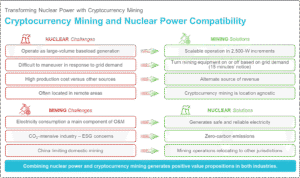
The Road Ahead: Regulation, Revenue, and Resistance
If the pilot moves forward, EDF and lawmakers would need to finalize guidelines, site mining hubs near existing infrastructure, and ensure regulatory oversight. A six-month feasibility review by the French Council of State is planned, followed by expansion if the pilot succeeds.
When that happens, France could become the first EU nation to legally integrate Bitcoin mining into its energy roadmap. It could turn an economic burden—unused power—into a revenue stream while mitigating grid stress. This would spark debate across Europe—might other nuclear-rich countries follow suit?
From a crypto standpoint, the move elevates mining from underground activity to a strategic industrial asset, redefining its role in the energy economy.
However, the plan still faces political, environmental, and technical hurdles. Yet, as the proposal gains traction, it may shape how nations view the intersection of crypto, energy policymaking, and sustainability.
The post France Eyes Bitcoin Mining Powered by Surplus Nuclear Energy appeared first on Carbon Credits.
Carbon Footprint
Industries with the biggest nature footprints and what their decarbonisation looks like
A corporate carbon footprint is never just an accounting figure. It maps onto real ecosystems. Before a product leaves the factory gate, something on the ground has already paid the cost. A forest has been converted. A river has been depleted. A patch of savannah that was once home to dozens of species now grows a single crop in every direction.
![]()
Carbon Footprint
Apple, Amazon Lead 60+ Firms to Ease Global Carbon Reporting Rules
More than 60 global companies, including Apple, Amazon, BYD, Salesforce, Mars, and Schneider Electric, are pushing back against proposed changes to global emissions reporting rules. The group is calling for more flexibility under the Greenhouse Gas Protocol (GHG Protocol), the most widely used framework for measuring corporate carbon footprints.
The companies submitted a joint statement asking that new requirements, especially those affecting Scope 2 emissions, remain optional rather than mandatory. Their letter stated:
“To drive critical climate progress, it’s imperative that we get this revision right. We strongly urge the GHGP to improve upon the existing guidance, but not stymie critical electricity decarbonization investments by mandating a change that fundamentally threatens participation in this voluntary market, which acts as the linchpin in decarbonization across nearly all sectors of the economy. The revised guidance must encourage more clean energy procurement and enable more impactful corporate action, not unintentionally discourage it.”
The debate comes at a critical time. Corporate climate disclosures now influence trillions of dollars in capital flows, while stricter reporting rules are being introduced across major economies.
The Rulebook for Carbon: What the GHG Protocol Is and Why It’s Being Updated
The Greenhouse Gas Protocol is the world’s most widely used system for measuring corporate emissions. It is used by over 90% of companies that report greenhouse gas data globally, making it the foundation of most climate disclosures.
It divides emissions into three categories:
- Scope 1: Direct emissions from operations
- Scope 2: Emissions from purchased electricity
- Scope 3: Emissions across the value chain

The current Scope 2 rules were introduced in 2015, but energy markets have changed since then. Renewable energy has expanded, and companies now play a major role in funding clean power.
Corporate buyers have already supported more than 100 gigawatts (GW) of renewable energy capacity globally through voluntary purchases. This shows how influential the current system has been.
The GHG Protocol is now updating its rules to improve accuracy and transparency. The revision process includes input from more than 45 experts across industry, government, and academia, reflecting its global importance.
Scope 2 Shake-Up: The Battle Over Real-Time Carbon Tracking
The proposed update would shift how companies report electricity emissions. Instead of using flexible systems like renewable energy certificates (RECs), companies would need to match their electricity use with clean energy that is:
- Generated at the same time, and
- Located in the same grid region.
This is known as “24/7” or hourly or real-time matching. It aims to reflect the actual impact of electricity use on the grid. Companies, including Apple and Amazon, say this shift could create challenges.

According to industry feedback, stricter rules could raise energy costs and limit access to renewable energy in some regions. It can also slow corporate investment in new clean energy projects.
The concern is that many markets do not yet have enough renewable supply for real-time matching. Infrastructure for tracking hourly emissions is also still developing.
This creates a key tension. The new rules could improve accuracy and reduce greenwashing. But they may also make it harder for companies to scale clean energy quickly.
The outcome will shape how companies measure emissions, invest in renewables, and meet net-zero targets in the years ahead.
Why More Than 60 Companies Oppose the Changes
The companies argue that stricter rules could slow climate progress rather than accelerate it. Their main concern is cost and feasibility. Many regions still lack enough renewable energy to support real-time matching. For global companies, aligning energy use across different grids is complex.
In their joint statement, the group warned that mandatory changes could:
- Increase electricity prices,
- Reduce participation in voluntary clean energy markets, and
- Slow investment in renewable energy projects.
They argue that current market-based systems, such as RECs, have helped scale clean energy quickly over the past decade. Removing flexibility could weaken that momentum.
This reflects a broader tension between accuracy and scalability in climate reporting.
Big Tech Pushback: Apple and Amazon’s Climate Progress
Despite their push for flexibility, both companies have made measurable progress on emissions reduction.
Apple reports that it has reduced its total greenhouse gas emissions by more than 60% compared to 2015 levels, even as revenue grew significantly. The company is targeting carbon neutrality across its entire value chain by 2030. It also reported that supplier renewable energy use helped avoid over 26 million metric tons of CO₂ emissions in 2025 alone.

In addition, about 30% of materials used in Apple products in 2025 were recycled, showing a shift toward circular manufacturing.
Amazon has also set a net-zero target for 2040 under its Climate Pledge. The company is one of the world’s largest corporate buyers of renewable energy and continues to invest heavily in clean power, logistics electrification, and low-carbon infrastructure.

Both companies argue that flexible accounting frameworks have supported these investments at scale.
The Bigger Challenge: Scope 3 and Digital Emissions
The debate over Scope 2 reporting is only part of a larger issue. For most large companies, Scope 3 emissions account for more than 70% of total emissions. These include supply chains, product use, and outsourced services.
In the technology sector, emissions are rising due to:
- Data centers,
- Cloud computing, and
- Artificial intelligence workloads.
Global data centers already consume about 415–460 terawatt-hours (TWh) of electricity per year, equal to roughly 1.5%–2% of global power demand. This figure is expected to increase sharply. The International Energy Agency estimates that data center electricity demand could double by 2030, driven largely by AI.
This creates a major reporting challenge. Even with cleaner electricity, total emissions can rise as digital demand grows.
Climate Reporting Rules Are Tightening Globally
The pushback comes as climate disclosure requirements are expanding and becoming more standardized across major economies. What was once voluntary ESG reporting is steadily shifting toward mandatory, audit-ready climate transparency.
In the European Union, the Corporate Sustainability Reporting Directive (CSRD) is now active. It requires large companies and, later, listed SMEs, to share detailed sustainability data. This data must match the European Sustainability Reporting Standards (ESRS). This includes granular reporting on emissions across Scope 1, 2, and increasingly Scope 3 value chains.
In the United States, the Securities and Exchange Commission (SEC) aims for mandatory climate-related disclosures for public companies. This includes governance, risk exposure, and emissions reporting. However, some parts of the rule face legal and political scrutiny.
The United Kingdom has included climate disclosure through TCFD requirements. Now, it is moving toward ISSB-based global standards to make comparisons easier. Similarly, Canada is progressing with ISSB-aligned mandatory reporting frameworks for large public issuers.
In Asia, momentum is also accelerating. Japan is introducing the Sustainability Standards Board of Japan (SSBJ) rules that match ISSB standards. Meanwhile, China is tightening ESG disclosure rules for listed companies through updates from its securities regulators. Singapore has also mandated climate reporting for listed companies, with phased Scope 3 expansion.
A clear trend is forming across jurisdictions: climate disclosure is aligning with ISSB global standards. There’s a growing focus on assurance, comparability, and transparency in value-chain emissions.
This regulatory tightening raises the bar significantly for corporations. The challenge is clear. Companies must:
- Align with multiple evolving disclosure regimes,
- Ensure emissions data is verifiable and auditable, and
- Expand reporting across complex global supply chains.
Balancing operational growth with compliance is becoming increasingly complex as climate regulation converges and intensifies worldwide.
A Turning Point for Global Carbon Accounting
The outcome of this debate could shape global carbon accounting standards for years.
If stricter rules are adopted, emissions reporting will become more precise. This could improve transparency and reduce greenwashing risks. However, it may also increase compliance costs and limit flexibility.
If the proposed changes remain optional, companies may continue using current accounting methods. This could support faster clean energy investment, but may leave gaps in reporting accuracy.
The new rules could take effect as early as next year, making this a near-term decision for global companies.
The push by Apple, Amazon, and other companies highlights a key tension in climate strategy. On one side is the need for accurate, real-time emissions reporting. On the other is the need for flexible systems that support large-scale clean energy investment.
As digital infrastructure expands and energy demand rises, how emissions are measured will matter as much as how they are reduced. The next phase of climate action will depend not just on targets—but on the systems used to track them.
The post Apple, Amazon Lead 60+ Firms to Ease Global Carbon Reporting Rules appeared first on Carbon Credits.
Carbon Footprint
Mastercard Beats 2025 Emissions Targets as Revenue Rises 16%, Breaking the Growth vs Carbon Trade-Off
Mastercard says it has exceeded its 2025 emissions reduction targets while continuing to grow its global business. The company reduced emissions across its operations even as revenue increased strongly in 2025.
The update comes from Mastercard’s official sustainability and technology disclosure published in 2026. It confirms progress toward its long-term goal of net-zero emissions by 2040, covering its full value chain.
The results are important for the financial technology sector. Digital payments depend heavily on data centers and cloud systems, which are energy-intensive and linked to rising global emissions.
Breaking the Pattern: Emissions Fall While Revenue Rises
In 2025, Mastercard surpassed its interim climate targets compared with a 2016 baseline. The company reported a 44% reduction in Scope 1 and Scope 2 emissions, beating its target of 38%. It also achieved a 46% reduction in Scope 3 emissions, far exceeding its 20% target.
At the same time, Mastercard recorded 16% revenue growth in 2025. This shows that emissions reductions continued even as the business expanded. Mastercard Chief Sustainability Officer Ellen Jackowski and Senior Vice President of Data and Governance Adam Tenzer wrote:
“These results reflect a comprehensive approach built on renewable energy investment and procurement, supply chain engagement, and embedding environmental sustainability into everyday business decisions.”
The company also reported a 1% year-on-year decline in total emissions, marking the third consecutive year of emissions reduction. This is important because digital payment networks usually grow with higher computing demand.
Mastercard says this trend reflects improved efficiency across its operations, better infrastructure use, and increased reliance on cleaner energy sources.

The Hidden Footprint: Why Data Centers Drive Mastercard’s Emissions
A large share of Mastercard’s emissions comes from its digital infrastructure. According to the company’s sustainability report, data centers account for about 60% of Scope 1 and Scope 2 emissions. Technology-related goods and services make up roughly one-third of Scope 3 emissions.
This reflects how modern financial systems operate. Digital payments, fraud detection, and AI-based analytics require a large-scale computing infrastructure.
Global data centers already consume about 415–460 TWh of electricity per year, equal to roughly 1.5%–2% of global electricity demand. This number is expected to rise as AI usage expands.
Mastercard’s challenge is similar to that of other digital companies. Higher transaction volume usually leads to greater computing needs. This can raise emissions unless we improve efficiency.
To manage this, the company is focusing on renewable energy procurement, hardware consolidation, and more efficient software systems.
Carbon-Aware Technology Becomes Core to Operations
Mastercard is integrating sustainability directly into its technology systems rather than treating it as a separate reporting function. Since 2023, the company has developed a patent-pending system that assigns a Sustainability Score to its technology infrastructure. This system measures environmental impact in real time.
It tracks factors such as:
- Energy use in kilowatt-hours,
- Regional carbon intensity of electricity,
- Server utilization rates,
- Hardware lifecycle efficiency, and
- Data processing location.
This allows engineers to design systems with lower carbon impact.
The company also uses carbon-aware software design. This means computing workloads can be adjusted to reduce energy use when carbon intensity is high in certain regions.
This approach reflects a wider trend in the technology and financial sectors. More companies are now including carbon tracking in their main infrastructure choices. They no longer see it just as a reporting task.
Powering Payments: Mastercard’s Net-Zero Playbook
Mastercard has committed to reaching net-zero emissions by 2040, covering Scope 1, Scope 2, and Scope 3 emissions across its value chain. The target is aligned with science-based climate pathways and includes operations, suppliers, and technology infrastructure.
To achieve this, the company is focusing on four main areas.
-
Increasing renewable energy use in operations
Mastercard already powers its global operations with 100% renewable electricity. This covers offices and data centers in multiple regions.
The company has also achieved a 46% reduction in total Scope 1, 2, and 3 emissions compared to its 2016 baseline. It continues to use renewable energy purchasing to maintain this progress.
In 2024, Mastercard procured over 112,000 MWh of renewable electricity, supporting lower emissions from its global operations.
-
Improving energy efficiency in data centers
Data centers account for about 60% of Mastercard’s Scope 1 and 2 emissions. To reduce this, Mastercard is upgrading servers, cutting unused computing capacity, and improving workload efficiency. It also uses real-time monitoring to reduce energy waste.
These improvements helped keep operational emissions stable in 2024, even as computing demand increased. Efficiency gains combined with renewable energy use supported this outcome.
-
Working with suppliers to reduce emissions
Around 75%–76% of Mastercard’s total emissions come from its value chain. This includes cloud providers, technology partners, and hardware suppliers.
To address this, Mastercard works with suppliers to set emissions targets and improve reporting. More than 70% of its suppliers now have their own climate reduction goals.
-
Upgrading and consolidating hardware systems
Mastercard is reducing emissions by improving its hardware systems. It decommissions unused servers, consolidates infrastructure, and shifts to more efficient cloud platforms.
Technology goods and services account for about one-third of Scope 3 emissions. By reducing unnecessary hardware and extending equipment life, Mastercard lowers both energy use and manufacturing-related emissions while maintaining system performance.
Renewable energy procurement is central to its strategy. It’s crucial for powering data centers, as they account for most of their operational emissions.
Mastercard works with suppliers because a large part of emissions comes from the value chain. This includes technology manufacturing and cloud services. By 2025, the company exceeded several short-term climate goals. This shows early progress on its long-term net-zero path.

ESG Pressure Hits Fintech: The New Rules of Digital Finance
Mastercard’s results come during a period of rising ESG pressure across the financial sector. Banks, payment networks, and fintech companies must now disclose emissions. This is especially true for Scope 3 emissions, which cover supply chain and digital infrastructure impacts.
Several global trends are shaping the industry:
- Growing regulatory focus on climate disclosure,
- Rising investor demand for ESG transparency,
- Expansion of digital payments and cloud computing, and
- Increased energy use from AI and data processing.
Data centers are becoming a major focus area because they link financial services to energy consumption. In Mastercard’s case, they are the largest source of operational emissions.
At the same time, financial institutions are expected to align with net-zero targets between 2040 and 2050. This depends on regional regulations and climate frameworks. Mastercard’s early progress places it ahead of many peers in meeting short-term emissions goals.
Decoupling Growth From Emissions
One of the most important signals from Mastercard’s 2025 results is the separation of business growth from emissions.
The company achieved 16% revenue growth while reducing total emissions by 1% year-on-year. This marks a continued pattern of emissions decline alongside business expansion.
Mastercard attributes this to improved system efficiency, renewable energy use, and better infrastructure management. In simple terms, the company is processing more transactions without a matching rise in emissions.
This trend is important because digital payment systems normally scale with computing demand. Without efficiency gains, emissions would typically rise with business growth.
Looking ahead, demand will continue to grow. Global payments revenue is projected to reach around $3.1 trillion by 2028, according to McKinsey & Company, growing at close to 10% annually.

Global data center electricity demand might double by 2030. This rise is mainly due to AI workloads, says the International Energy Agency. Mastercard’s results show that tech upgrades can lower the carbon impact of digital finance. This is true even as global usage rises.
The Takeaway: Fintech’s Proof That Growth and Emissions Can Split
Mastercard’s 2025 sustainability performance shows measurable progress toward its net-zero goal. At the same time, major challenges remain. Data centers continue to be the largest emissions source, and global digital activity is still expanding rapidly due to AI and cloud computing.
Mastercard’s approach shows how financial technology companies are adapting. Sustainability is no longer a separate goal. It is becoming part of how digital systems are designed and operated.
The next test will be whether these efficiency gains can continue to outpace the rapid growth of global digital payments and AI-driven financial systems.
The post Mastercard Beats 2025 Emissions Targets as Revenue Rises 16%, Breaking the Growth vs Carbon Trade-Off appeared first on Carbon Credits.
-
Greenhouse Gases9 months ago
Guest post: Why China is still building new coal – and when it might stop
-
Climate Change9 months ago
Guest post: Why China is still building new coal – and when it might stop
-
Greenhouse Gases2 years ago嘉宾来稿:满足中国增长的用电需求 光伏加储能“比新建煤电更实惠”
-

Climate Change2 years ago
Bill Discounting Climate Change in Florida’s Energy Policy Awaits DeSantis’ Approval
-
Climate Change2 years ago嘉宾来稿:满足中国增长的用电需求 光伏加储能“比新建煤电更实惠”
-
Renewable Energy7 months agoSending Progressive Philanthropist George Soros to Prison?
-
Carbon Footprint2 years agoUS SEC’s Climate Disclosure Rules Spur Renewed Interest in Carbon Credits
-
Greenhouse Gases10 months ago
嘉宾来稿:探究火山喷发如何影响气候预测


