

Transsolar and WattCarbon are partnering to invest in rooftop solar projects in West Virginia, with the aim of reducing 200 tons of carbon emissions this year.
Transsolar purchased the energy attribute certificates (EACs) from West Virginia solar developer, Solar Holler, through WattCarbon’s OpenEAC Exchange.
Informally known as “coal country,” 89% of West Virginia’s grid is coal-based. Solar Holler is working to transform the Appalachian area into hubs of renewable energy production.
WattCarbon is providing measurement and verification services to certify hourly solar generation from Solar Holler projects, which will be tracked by WattCarbon’s EAC registry, WEATS.
WEATS is an independent, hourly registry for certifying and tracking Energy Attribute Certificates that fulfill the standards of the OpenEAC Alliance. It connects directly to energy and carbon data sources for each project, and provides a traceable report for all carbon reduction claims.
“Part of Transsolar’s mission is to decarbonize the built environment,” says Tommaso Bitossi, Transsolar’s associate partner.
“We realize that supporting the construction of new renewable energy sources is essential to this process. This is why we decided to fund Solar Holler in a grid which needs to be decarbonized as soon as possible. In WattCarbon we found a partner who sees climate action in the same way as us, that is: you are either decarbonizing, or you are not.”
The post Transsolar, WattCarbon Partner on Decarbonizing Domestic Coal Country appeared first on Solar Industry.
Transsolar, WattCarbon Partner on Decarbonizing Coal Country

 Sadly, a significant number of U.S. voters believe what House Speaker Mike Johnson says here, i.e., that “God isn’t finished with America yet,” and that “We need people (from the Republican party) of character and integrity,” as if there are any.
But what is that number, roughly?
After living through the first 18 month of Trump’s second term, with all the lies, the incompetence, and the corruption, this number has dwindled to a point that the Republicans are bracing themselves for the worst.
Republicans Manipulate American’s Ignorance — and it Doesn’t Take Too Much Skill
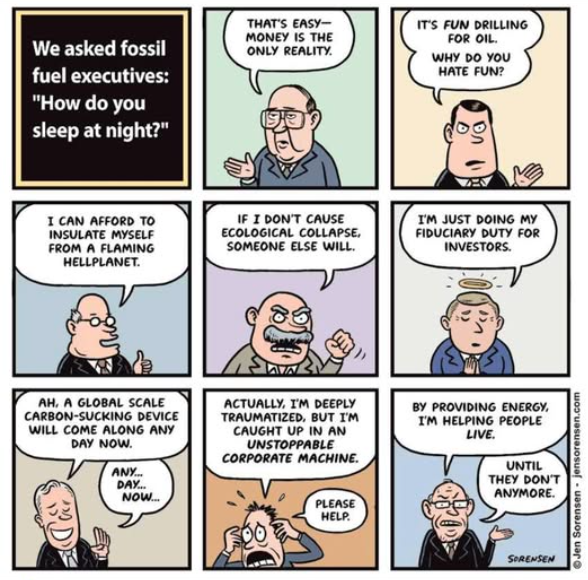
 I’m sure some of these excuses are extremely common in the minds of those making huge profits by destroying our planet.



-
Climate Change1 year ago
Guest post: Why China is still building new coal – and when it might stop
-
Greenhouse Gases1 year ago
Guest post: Why China is still building new coal – and when it might stop
-

 Greenhouse Gases2 years ago
嘉宾来稿:满足中国增长的用电需求 光伏加储能“比新建煤电更实惠”
-

 Climate Change2 years ago
嘉宾来稿:满足中国增长的用电需求 光伏加储能“比新建煤电更实惠”
-
Climate Change2 years ago
Bill Discounting Climate Change in Florida’s Energy Policy Awaits DeSantis’ Approval
-

 Renewable Energy10 months ago
Sending Progressive Philanthropist George Soros to Prison?
-
Greenhouse Gases1 year ago
嘉宾来稿:探究火山喷发如何影响气候预测
-

 Carbon Footprint2 years ago
US SEC’s Climate Disclosure Rules Spur Renewed Interest in Carbon Credits