

Nana Antwi-Boasiako Amoah is chair of the African Group of Negotiators on Climate Change. Charles Wanguhu is director of the Enzi Ijayo Africa Initiative and Africa Futures Policy Hub.
A COP held in Africa does not automatically deliver for Africa. That matters now, with COP31 in Antalya ahead and COP32 in Addis Ababa on the horizon. What counts is not where the world gathers, or what it pledges, but whether climate finance reaches African countries on terms they can use.
Without real progress on finance and implementation at Antalya, an African-hosted COP will simply inherit the same unmet promises.
Africa accounts for about 4% of global emissions, yet carries a wildly disproportionate share of the cost, losing an estimated 2%-5% of GDP each year to climate extremes, money pulled from classrooms and clinics into disaster response.
The finance meant to help it adapt arrives in a trickle. Developing countries will need an estimated $305 billion a year for adaptation alone by 2035, according to the latest UN Adaptation Gap Report. In 2024, international public adaptation finance stood at $28 billion-$32 billion, just a $1 billion increase over the previous year. That gap is the difference between plans on paper and protection on the ground.
Predictable, grant-based funding
The problem is not only how much, but on what terms. Too much arrives as loans rather than grants, deepening a debt burden that already crowds out spending on essentials in health, education and multipliers of development like affordable and accessible energy. The cost of capital has become the real tax on African ambition. A fairer financial system is not charity. It is the precondition for delivery.
-
Africa wants adaptation finance on COP31 agenda, raising risk of a fight
The African Group wants dedicated space on tripling adaptation finance, the Green Climate Fund and trade, setting up a possible clash -
Why COP31 needs to start talking about just transition finance
Funding that helps workers and communities navigate the clean energy switch remains overlooked, splintered and poorly tracked – a blindspot that could undermine climate goals -
Turkish giant sponsoring COP31 cut climate goals then cashed in on oil boom
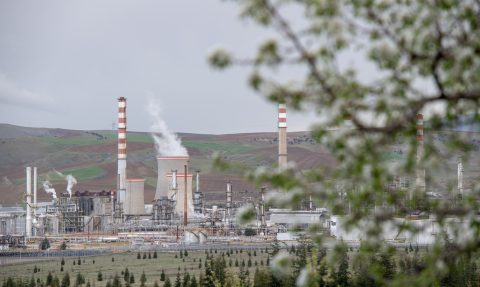
COP31 sponsors should be screened for “climate integrity”. Yet Koç Holding has become a top partner while its oil refiner runs flat out and its climate targets slip
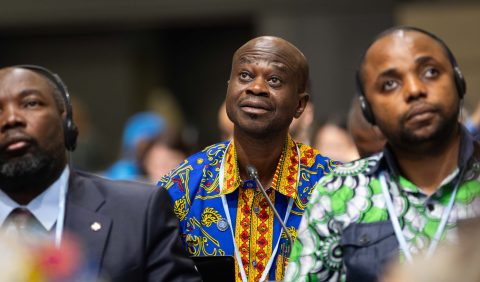
So, Africa comes to Antalya with a collective strong proposition. This is no longer a slogan: across the continent, states are building shared positions and common pavilions, learning to bargain as a bloc. We will press for finance that is predictable and grant-based, and for adaptation finance to be at least tripled, to around $120 billion a year by 2035. Even that would fall short of what the continent actually needs.
The goal this forms part of, which was agreed at the Baku COP – $300 billion a year – is a floor, not a ceiling; the real benchmark is the $1.3 trillion from all sources sketched out in the Baku-to-Belém Roadmap. And we will ask for direct access, so resources reach the institutions and communities that must use them, and for mechanisms that track whether commitments are met.
Powering green industrialisation
Finance is not an end in itself. Pledges become results when finance builds economies, creates jobs and strengthens productive capacity – the grids, the processing and the skills that let African economies add value to what they produce rather than exporting it raw.
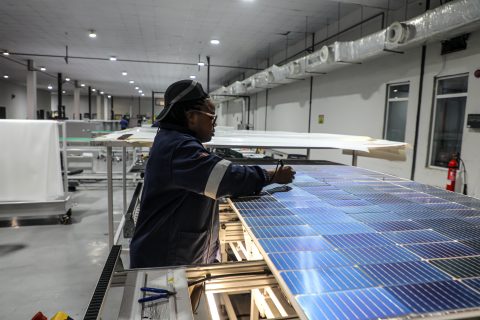
Here we should be honest with ourselves. Value addition is an energy story before it is a minerals story. There is little point in curbing raw exports if there is no reliable power to run the smelter. Credibility means pairing the call to process at home with a plan to power it.
Other enablers of a just transition become crucial. Trade, for instance, can be an enabler of a low-carbon transition by facilitating the exchange of low-carbon goods. However, it has increasingly become a hindrance, particularly for African countries.
-
Tensions set to flare over trade at COP31 as China makes it a priority
After difficult talks in Belém last year, trade is likely to remain a sticking point at COP31 despite Brazil’s efforts to contain the issue to a series of dialogues -
African governments strengthen waste rules as solar and battery use surges
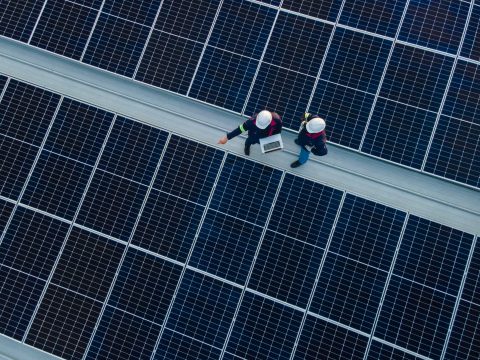
With solar panels, batteries and inverters spreading, officials want to bolster weak recycling systems to protect the environment and reuse key materials

The use of unilateral trade measures has disproportionate impacts on market access and industrial capabilities, consigning African countries to the export of raw materials. The poor sequencing of these measures and lack of flexibilities, exemptions and targeted support are likely to cause harm.
At COP31, we will push for an agenda item on trade to create a specific space as an enabler of systematic discussion on the impact of trade‑related climate measures.
Communities at the table
This is where the design of co-operation matters as much as its scale. The proposed Just Transition Mechanism should be country-led and grant-based, so it adds capacity rather than debt. It should fund the things that make diversification real – reliable power (smarter grids and delivery networks), local processing, and the skills to run them – and it should put workers and affected communities at the table, not merely in the communiqué. Get that design right, and diversification builds new industries and jobs rather than leaving communities behind.
Antalya opens into a vacuum in global climate leadership. Africa can help fill it, not with grievance but with a credible voice on delivery and finance. An implementation COP must be judged by implementation.
The question is plain. Does the finance follow the ambition, and does it reach the economies and the people who need it? Africa will be watching the answer.
The post COP31 must deliver finance for Africa or there will be no implementation appeared first on Climate Home News.
COP31 must deliver finance for Africa or there will be no implementation

International funding to help developing countries protect their communities, infrastructure and economies from climate impacts remains far below what is needed, a new United Nations report has found, leaving vulnerable nations increasingly exposed as global warming heads past 1.5C.
The UN Environment Programme’s (UNEP) 2026 Adaptation Gap Report estimates that developing countries will need about $305 billion a year to adapt by 2035 in today’s prices, or around $420 billion once inflation is taken into account. Yet international public adaptation finance from developed countries reached only $28.2-31.7 billion in 2024, a modest increase on the previous year.
The estimate is slightly below last year’s $310-365 billion, mainly because UNEP now relies more on countries’ own assessment of costs reported through their nationally determined contributions (NDCs) and national adaptation plans (NAPs).
-
Africa wants adaptation finance on COP31 agenda, raising risk of a fight
The African Group wants dedicated space on tripling adaptation finance, the Green Climate Fund and trade, setting up a possible clash -
New data shows rich nations likely missed 2025 goal to double adaptation finance
OECD figures suggest developed countries have not met a target to deliver $40 billion a year to help poorer nations adapt to climate change, as aid cuts bite -
COP30 fails to land deal on fossil fuel transition but triples finance for climate adaptation
Instead of a global agreement to create roadmaps to shift away from fossil fuels and end deforestation, Brazil announces voluntary initiatives


UN secretary-general António Guterres said the gap in adaptation finance is not measured in money alone but in the lives, livelihoods and futures that are lost in the process.
He called on developed countries to deliver “fast, simple, accessible support” to vulnerable countries, adding that development banks must also scale up their financing. “We know who is most at risk. We know what works. What is missing is the money and the political will. The choice is simple – invest in adaptation today or pay for catastrophe tomorrow,” he said.
At COP30 last year, countries agreed to at least triple adaptation finance for developing nations by 2035. Depending on whether that is measured from current flows or from the $40 billion that rich nations were meant to reach in 2025 under an earlier pledge, tripling would deliver $85-120 billion a year. Even if it is achieved, UNEP says, that would cover only 20-29% of developing countries’ needs in 2035.
The report warns the pledge may be less ambitious than it looks. The COP30 decision sets no baseline year, does not adjust for inflation and allows money that developing countries channel through multilateral development banks (MDBs) to count towards the target. Taking all of this into account, developed countries’ own contribution in 2035 could be as low as $45-66 billion a year in 2025 prices.
“The world is not ready to adapt to current climatic conditions, never mind what overshoot of 1.5°C will bring,” said Inger Andersen, UNEP executive director, calling on governments to intensify efforts to increase adaptation finance.
Global South countries step up
While funding from rich nations flatlines, adaptation finance flowing between developing countries is growing, though it is nowhere near enough to close the gap.
The UNEP report estimates that developing countries contributed $9.65 billion towards international public adaptation finance in 2024, more than double the $3.81 billion recorded in 2019. That is about a quarter of all international public adaptation finance.
The report does not break the figure down by country. “These are voluntary contributions that capacitated developing countries provide via their shares in the MDBs but also through direct South-South cooperation,” said Henry Neufeldt, the report’s lead author, at a press conference on Wednesday.
Fatima Denton, the report’s co-author, said it is “comforting” to see South-South learning and cooperation because countries with similar ecosystems face similar challenges.
Loss and damage mounting
Without stronger action to cut emissions and adapt, climate-related losses and damages will keep rising, the report says, overwhelming the limited resources of the Fund for Responding to Loss and Damage (FRLD), whose complex procedures also make support hard to access.
Last month, the fund’s board agreed to set aside $20 million for Nepal’s recovery from the devastating climate-driven flood it suffered in August. It is the first money the fund has allocated since its creation, but Nepali officials called the sum symbolic against estimated recovery costs of $4.8 billion. Nepal must now submit a proposal setting out how it will use the money.
The FRLD has yet to approve any projects from its first funding round, when it received nearly 180 submissions, requiring around $2.8 billion – an amount that dwarfed the around $350 million available to allocate.
Loss and damage fund delays first project approvals as needs dwarf resources
Mattias Söderberg, global climate lead at DanChurchAid, said the risk of loss and damage grows when adaptation falls short, as communities become more exposed to increasingly severe climate impacts.
“When we fail to invest in adaptation today, we risk paying a much higher price tomorrow. And that price is not only measured in dollars. It is measured in lives lost, homes destroyed and futures taken away,” Söderberg added.
A failure to match climate ambition
Ahead of COP31 starting on Monday in Antalya, climate campaigners are calling on rich governments to set out how to close the remaining gap and meet developing countries’ full adaptation needs.
Pooja Dave, adaptation lead at Climate Action Network International, said COP31 must agree a credible plan to deliver at least US$120 billion a year in adaptation finance well before 2035, through new and additional public, grant-based funding that reaches the communities most at risk.
“People have a right to a climate safe world and protection from climate impacts. Adaptation is not charity. It is a legal and moral obligation,” Dave said.
Mohamed Adow, director of Kenya-based climate change think tank Power Shift Africa, said COP31 must establish a clear starting point, milestones and a credible delivery plan, especially on how public finance, in the form of grants not loans, must reach those most at risk
“Communities facing floods and droughts cannot wait until 2035 to find out what this promise means,” he said.
The post COP30 adaptation pledge would meet under a third of poorer nations’ needs, UN warns appeared first on Climate Home News.
https://www.climatechangenews.com/2026/11/04/cop30-adaptation-pledge-would-meet-under-a-third-of-poorer-nations-needs-un-warns/
Climate Change
The great disaster divide: How the super-rich are profiting from global climate suffering
Alex Maitland, Nafkote Dabi and Pubudini Wickramaratne work on climate and inequality for Oxfam International.
Few places on Earth have escaped the deadly effects of climate breakdown in 2026. In the early half of the year, devastating floods swept through Ghana, Nigeria, Côte d’Ivoire and other West African countries while August flash floods in Nepal, caused by a glacier collapse, affected over 80,000 people.
India endured a prolonged extreme heatwave in May, followed by the weakest monsoon in 20 years. Excess deaths from the European heatwaves are likely to have topped 50,000. And 2026 is on track to be one of the hottest years on record.
The effects of these disasters have not been caused nor felt equally. Disasters discriminate: the less you have, the more you stand to lose.
While everyday people died in heatwaves, the super-rich built snow rooms in their mansions. As families fled from wildfires, the rich were evacuated by helicopter to five-star hotels. As flash floods wiped out entire villages, luxury properties stood protected by high-end private flood defence systems.
What’s even more galling is that the same people that have done the most to drive climate chaos can pay to insulate themselves from its effects and are now finding new ways to profit from disaster.
Oxfam’s latest report “Disaster Divide” sets out exactly how climate breakdown is deepening inequality and enriching a tiny few.
Unequal emissions
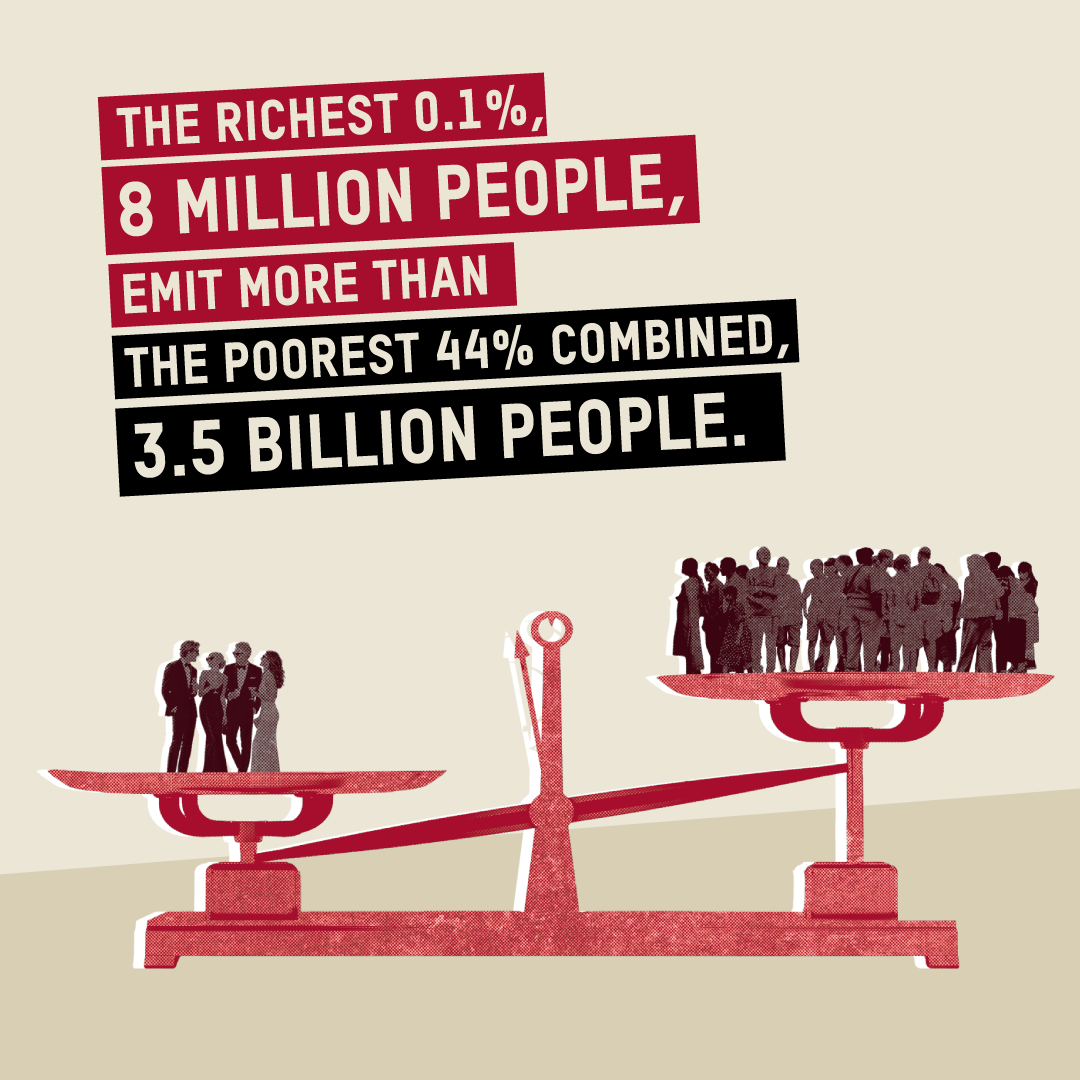
Billionaires and the super-rich are destroying the planet at a wildly disproportionate rate. The richest 0.1% (roughly 8 million people) emit more carbon than the poorest 3.5 billion people, almost half of humanity.
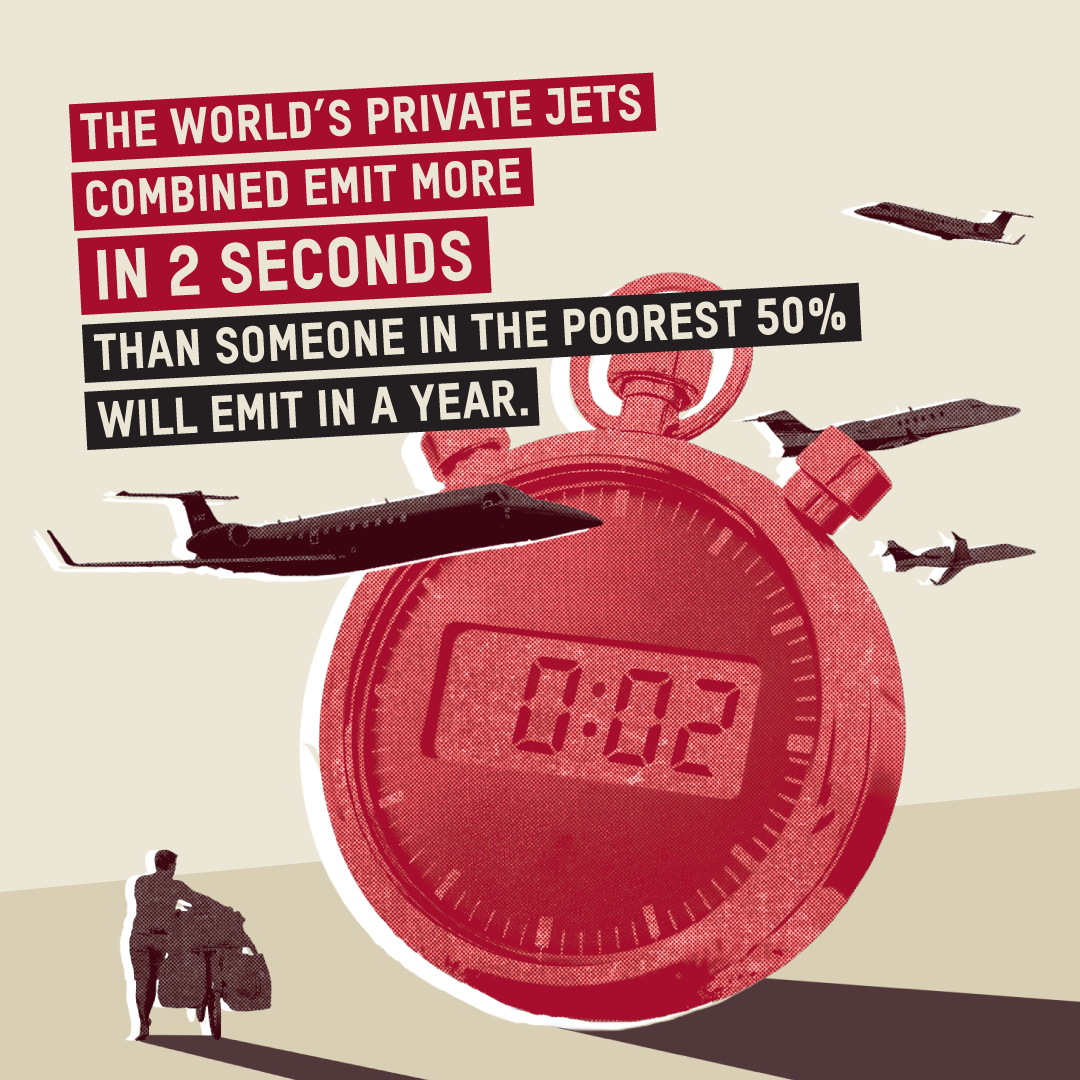
There is perhaps no starker symbol of wasteful emissions than travel by private jet. Every two seconds, the world’s private jets pump out more carbon than someone in the poorest 50% of the world will emit in an entire year.
But the climate impacts of the super-rich go far beyond their luxury lifestyles. How they invest their fortunes helps determine which high-carbon infrastructure gets built.
About 70% of billionaire investments are in “high climate-impact sectors” such as oil, gas or chemicals. The economic damage linked to individual billionaires’ investments can run into billions of dollars. Mexican oligarch Carlos Slim’s investments, for example, caused $3.7 billion of environmental damage in 2024, and French fashion titan Bernard Arnault, owner of Louis Vuitton, was responsible for $1.7 billion in damage, our calculations show.
Emissions of the rich drive climate disasters
For the first time, Oxfam combines the Stockholm Environment Institute (SEI)’s carbon inequality data with climate attribution models to link the emissions of the super-rich to extreme weather events.
The richest 1% are responsible for 20% of global warming since 1990, 100 times more per person, than someone in the poorest half of humanity.
The data also shows how the rich increase the likelihood of extreme heat occurring: a person from the richest 0.1% has contributed 125 times more than the average person to extreme heat events.
Inequality is what turns extreme weather events into disaster. In more unequal countries, disasters cause higher death tolls, inflict greater damage and affect more people.
Inequality also determines who can survive, endure and recover. A study of floods in Mumbai, India, found that lower-income households had to spend 15 times more than rich households to repair and replace damaged assets.
Billionaires escape climate consequences
Climate impacts are also deeply unequal along gender lines. A review of 130 studies found that women and girls were more affected than men and boys by climate-related health impacts in 68% of cases. Climate disasters exacerbate pre-existing gender inequality: gender-based violence increases during and after extreme weather events, with two-thirds of studies identifying increases in intimate partner or domestic violence following floods, storms or droughts.
“Coordinated backlash”: Activists say COP30 gender spat reflects wider threat
For millions of people, the consequences of climate chaos go further still: being forced to leave their homes and communities. UN Migration projects that, if the international community fails to act, as many as 1 billion people (around 10% of the world’s population) will have been displaced by 2050. The majority of those displaced will be in the Global South, but rich people are quietly joining their ranks.
Billionaires are buying islands and building fortified compounds and underground bunkers — tech billionaires are increasingly at the forefront of this trend. This is a form of climate apartheid: the super-rich use their wealth and power to escape the consequences of the crises they largely helped create.
Destroying the food system
Climate change is lowering food production and pushing food prices higher. Low-income households are more exposed to high food prices because it makes up the greatest share of their overall spending. People in low- or lower-middle-income countries spend almost three times as much of their income on food as people in high-income countries.
Some of the richest people in the world and their corporations are directly benefiting, exploiting rising food prices and uneven food production to reap large profits.
In 2024, extreme weather damaged West African cocoa harvests, resulting in prices jumping around 230% year-on-year but accruing no gains to cocoa farmers. The same year, heavy rains in Indonesia and droughts in Brazil and Vietnam contributed to a surge in coffee prices, with a 39% increase on the previous year’s average. Coffee-trading corporations, the intermediary traders of the supply chains, made huge profits as a result.