Nana Antwi-Boasiako Amoah is chair of the African Group of Negotiators on Climate Change. Charles Wanguhu is director of the Enzi Ijayo Africa Initiative and Africa Futures Policy Hub.
A COP held in Africa does not automatically deliver for Africa. That matters now, with COP31 in Antalya ahead and COP32 in Addis Ababa on the horizon. What counts is not where the world gathers, or what it pledges, but whether climate finance reaches African countries on terms they can use.
Without real progress on finance and implementation at Antalya, an African-hosted COP will simply inherit the same unmet promises.
Africa accounts for about 4% of global emissions, yet carries a wildly disproportionate share of the cost, losing an estimated 2%-5% of GDP each year to climate extremes, money pulled from classrooms and clinics into disaster response.
The finance meant to help it adapt arrives in a trickle. Developing countries will need an estimated $305 billion a year for adaptation alone by 2035, according to the latest UN Adaptation Gap Report. In 2024, international public adaptation finance stood at $28 billion-$32 billion, just a $1 billion increase over the previous year. That gap is the difference between plans on paper and protection on the ground.
Predictable, grant-based funding
The problem is not only how much, but on what terms. Too much arrives as loans rather than grants, deepening a debt burden that already crowds out spending on essentials in health, education and multipliers of development like affordable and accessible energy. The cost of capital has become the real tax on African ambition. A fairer financial system is not charity. It is the precondition for delivery.
-
Africa wants adaptation finance on COP31 agenda, raising risk of a fight
The African Group wants dedicated space on tripling adaptation finance, the Green Climate Fund and trade, setting up a possible clash -
Why COP31 needs to start talking about just transition finance
Funding that helps workers and communities navigate the clean energy switch remains overlooked, splintered and poorly tracked – a blindspot that could undermine climate goals -
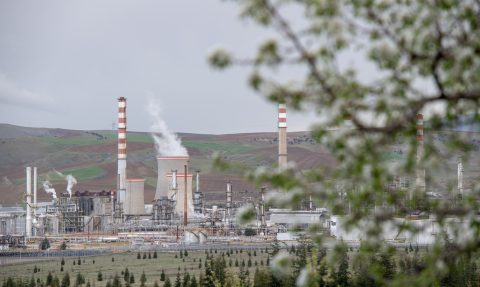
Turkish giant sponsoring COP31 cut climate goals then cashed in on oil boom
COP31 sponsors should be screened for “climate integrity”. Yet Koç Holding has become a top partner while its oil refiner runs flat out and its climate targets slip
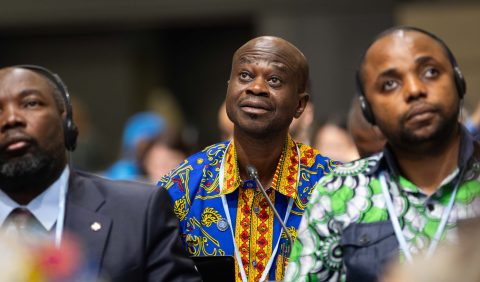
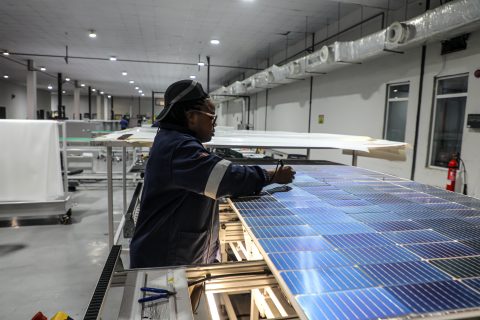
So, Africa comes to Antalya with a collective strong proposition. This is no longer a slogan: across the continent, states are building shared positions and common pavilions, learning to bargain as a bloc. We will press for finance that is predictable and grant-based, and for adaptation finance to be at least tripled, to around $120 billion a year by 2035. Even that would fall short of what the continent actually needs.
The goal this forms part of, which was agreed at the Baku COP – $300 billion a year – is a floor, not a ceiling; the real benchmark is the $1.3 trillion from all sources sketched out in the Baku-to-Belém Roadmap. And we will ask for direct access, so resources reach the institutions and communities that must use them, and for mechanisms that track whether commitments are met.
Powering green industrialisation
Finance is not an end in itself. Pledges become results when finance builds economies, creates jobs and strengthens productive capacity – the grids, the processing and the skills that let African economies add value to what they produce rather than exporting it raw.
Here we should be honest with ourselves. Value addition is an energy story before it is a minerals story. There is little point in curbing raw exports if there is no reliable power to run the smelter. Credibility means pairing the call to process at home with a plan to power it.
Other enablers of a just transition become crucial. Trade, for instance, can be an enabler of a low-carbon transition by facilitating the exchange of low-carbon goods. However, it has increasingly become a hindrance, particularly for African countries.
-
Tensions set to flare over trade at COP31 as China makes it a priority
After difficult talks in Belém last year, trade is likely to remain a sticking point at COP31 despite Brazil’s efforts to contain the issue to a series of dialogues -
African governments strengthen waste rules as solar and battery use surges
With solar panels, batteries and inverters spreading, officials want to bolster weak recycling systems to protect the environment and reuse key materials
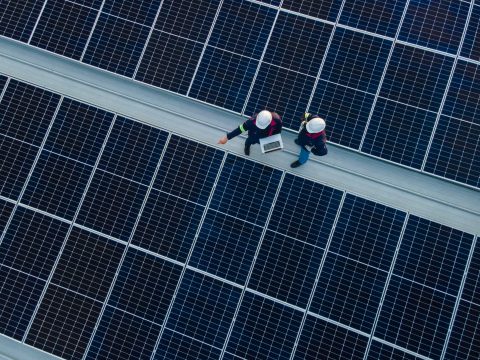

The use of unilateral trade measures has disproportionate impacts on market access and industrial capabilities, consigning African countries to the export of raw materials. The poor sequencing of these measures and lack of flexibilities, exemptions and targeted support are likely to cause harm.
At COP31, we will push for an agenda item on trade to create a specific space as an enabler of systematic discussion on the impact of trade‑related climate measures.
Communities at the table
This is where the design of co-operation matters as much as its scale. The proposed Just Transition Mechanism should be country-led and grant-based, so it adds capacity rather than debt. It should fund the things that make diversification real – reliable power (smarter grids and delivery networks), local processing, and the skills to run them – and it should put workers and affected communities at the table, not merely in the communiqué. Get that design right, and diversification builds new industries and jobs rather than leaving communities behind.
Antalya opens into a vacuum in global climate leadership. Africa can help fill it, not with grievance but with a credible voice on delivery and finance. An implementation COP must be judged by implementation.
The question is plain. Does the finance follow the ambition, and does it reach the economies and the people who need it? Africa will be watching the answer.
The post COP31 must deliver finance for Africa or there will be no implementation appeared first on Climate Home News.
COP31 must deliver finance for Africa or there will be no implementation

At India’s ocean technology institute in Chennai, scientists have been developing a range of hi-tech mining equipment that can operate 5 or 6 kilometres underwater – from a remote-control submarine to a seabed soil tester and slurry pump.
Their task: to ensure that India is ready if deep-sea mining takes off by building the technology and knowledge about how – and where – critical minerals can be extracted from the depths of the ocean, even as dozens of nations call for a moratorium on this activity.
After a series of successful deep-water equipment tests in recent years, government officials say big strides have been made.
“(India) has made significant progress in building the scientific and technological foundations for deep-sea mining,” a spokesperson for the Ministry of Earth Sciences, which oversees the institute, told Climate Home News.
Deep-sea ambitions
Highlighting the country’s ambitions, it signed a second contract last year with the International Seabed Authority (ISA), the UN body that regulates the deep ocean floor, to explore polymetallic sulphides, which contain minerals such as copper and zinc – key ingredients in clean energy technologies such as wind turbines and storage batteries.
Besides the two polymetallic sulphide contracts, it holds an ISA exploration contract for polymetallic nodules in the Central Indian Ocean Basin. China and South Korea are the only other countries with three ISA exploration contracts directly under government control.
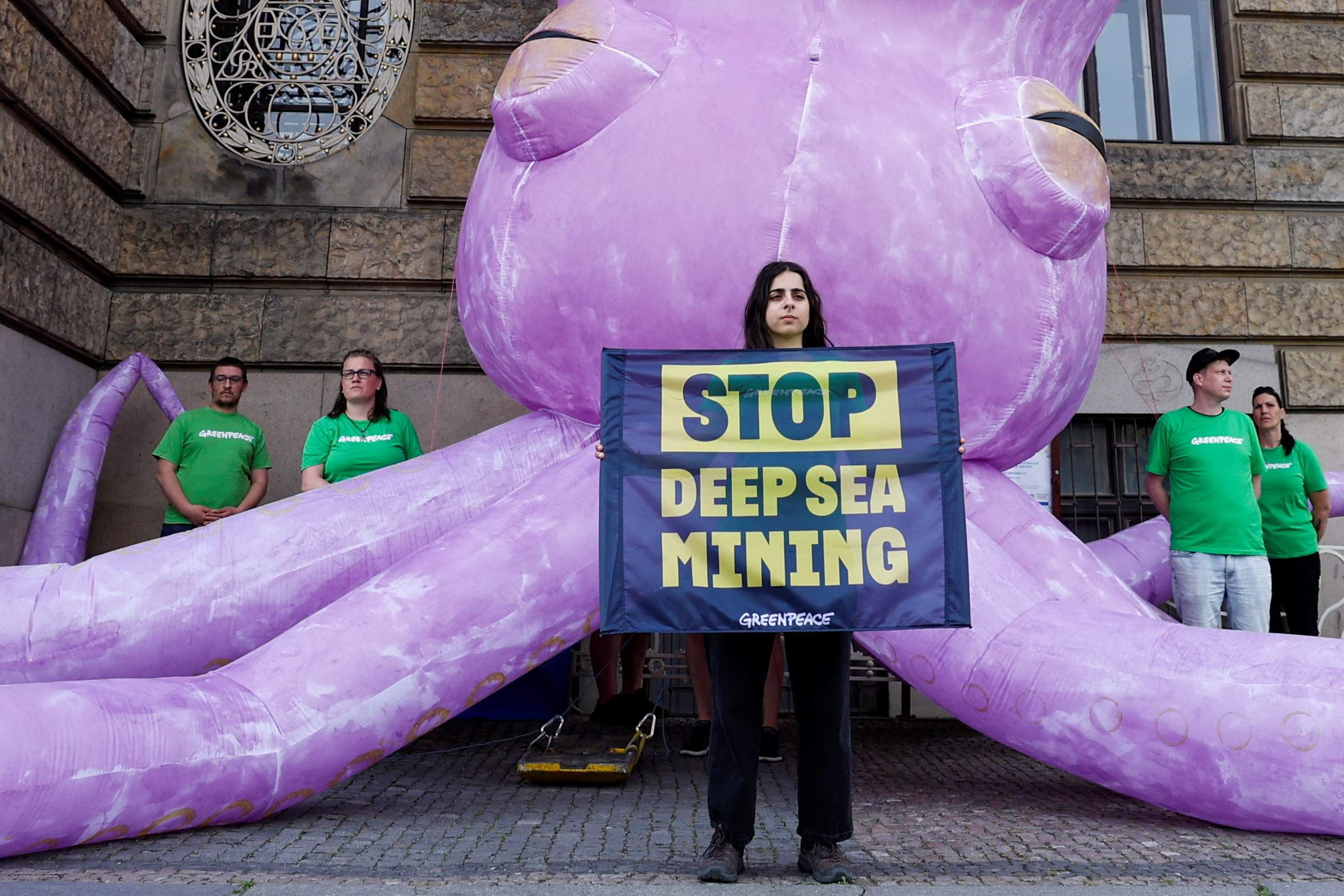
Yet deep-sea mining is controversial for its potential impacts on the ocean floor, a little-studied, undisturbed ecosystem that should be protected by a precautionary pause on the activity, marine scientists say.
A coalition of 46 countries is pushing for a moratorium on deep-sea mining, until enough scientific evidence shows the ecosystem impacts can be reduced.
Despite this push, ISA contract-holders are still racing to develop the technical capabilities to mine the ocean floor, betting that commercial-scale operations will eventually be permitted and prove economically viable. India, an emerging clean-tech powerhouse, does not want to fall behind competitors, government officials told Climate Home News.
-
Race to host High Seas Treaty HQ heats up as Chile reaffirms bid
Chile’s ocean protection record and concerns over a rival Chinese bid keep it in play, despite questions over the Kast government’s environmental policies -
As marine heat breaks records, countries seek ocean roadmap at COP31
Africa and the EU are leading a push for COP31 to deliver a roadmap that lays out measures to protect fast-warming oceans -
Governments weigh response to US going alone on deep-sea mining
At annual talks in Kingston, the International Seabed Authority (ISA) launched legal processes to challenge a unilateral US push for deep-sea mining

Since India obtained its first ISA exploration contract more than two decades ago, extensive survey work has been undertaken in the 75,000-square-km contract area in the Central Indian Ocean Basin, which is estimated to hold hundreds of millions of tonnes of polymetallic nodule resources, according to the Indian government.
More recently, survey work has identified several potential locations in the polymetallic sulphide areas.
The seabed survey work and the deep-sea mining tools being developed in Chennai put India among only a small group of countries to have made such progress. China is another leader in mapping the ocean floor for potential mineral resources that could one day be extracted.
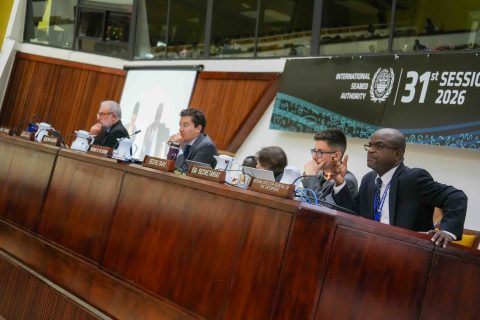
At a meeting in Jamaica in July, the ISA continued negotiations on rules for commercial deep-sea mining but failed to adopt the Mining Code. Delegates agreed that further work had to be carried out to resolve outstanding issues, with the ISA tasked with devising a roadmap towards hopeful adoption.
Technical and regulatory hurdles
Even if a regulatory framework is established, commercial development remains a distant prospect in the exploration contract areas awarded to India by the ISA, government officials and experts say.
“There is still quite a distance to be covered to convert the resource to reserves,” the ministry spokesperson said.
Pradeep Singh, an ocean governance expert at the Oceano Azul Foundation, a Portugal-based international nonprofit, described India’s deep-sea mining programme as being firmly in “an exploratory phase”.
“There is still a lot more work left to be done in order to achieve sustained extraction technology, address operational hurdles (such as shipboard processing and trans-shipment), and develop onshore refining,” Singh told Climate Home News.
“It would also appear, from publicly available information, that none of the programmes will be ready to move into the exploitation phase anytime soon,” Singh added.
Deep-sea real estate
Instead, the government’s longer-term vision for India’s ISA contracts is centred on “a combination of mineral/resource security, indigenous technology development, scientific capability and eventual industrial readiness”, the ministry spokesperson said.
But for as long as deep-sea mining remains commercially unviable, Singh said securing exploratory licences may be more about “real estate and as a projection of dominance”.
“The competition at the moment – if any – is more about investing in deep-sea operational capabilities rather than mineral resource extraction itself (which is currently not competitive),” Singh said.
Threat to ocean biodiversity
In tandem with India’s deep-sea mineral survey work, years of research by government environmental scientist Dr. Rengaiyan Periasamy on Indian Ocean ridges highlight the risks that future deep-sea mining poses to ocean biodiversity.
“Our studies have led to the discovery of more than 10 new species,” Periasamy told Climate Home News from the Kochi-based Centre for Marine Living Resources & Ecology, which also operates under the Ministry of Earth Sciences.
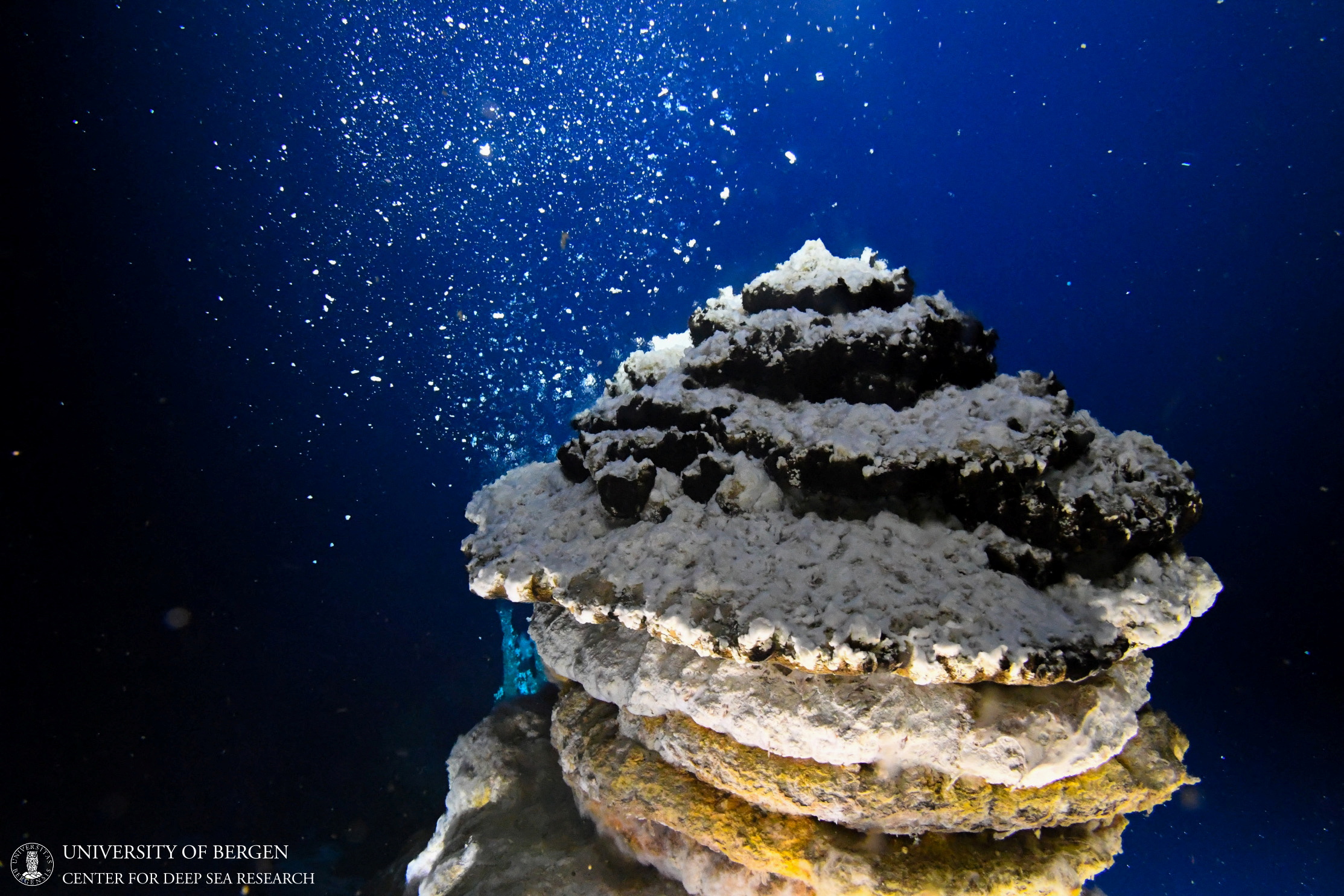
They warn that deep-sea mining could cause habitat destruction, persistent sediment plumes and disruption of ecosystem processes throughout the water column, with potentially irreversible impacts occurring before many species and ecosystems are fully understood.

Major fisheries could also be severely impacted, according to campaigners.
“No country has conducted enough scientific research to capture the full scope of environmental impacts of deep-sea mining,” said a spokesperson for the Deep-Sea Conservation Coalition, an international environmental advocacy group focused on protecting deep-ocean ecosystems.
“We know more about the surface of the moon than we do about any deep-sea environment,” the spokesperson added.
The post India builds deep-sea capacity in bet on critical minerals future appeared first on Climate Home News.
India builds deep-sea capacity in bet on critical minerals future
Following this year’s UN COP17 biodiversity conference, Carbon Brief’s journalists hosted a livestream to explain what happened at the summit.
Carbon Brief’s Orla Dwyer and Aruna Chandrasekhar have been on the ground in Yerevan, Armenia, over the past two weeks, covering the negotiations.
They were joined on the livestream by associate editors Dr Giuliana Viglione and Daisy Dunne, who were following the talks from Washington DC and London, respectively.
Carbon Brief has also published its 10,000-word explainer of COP17, which lays out the key outcomes in detail.