

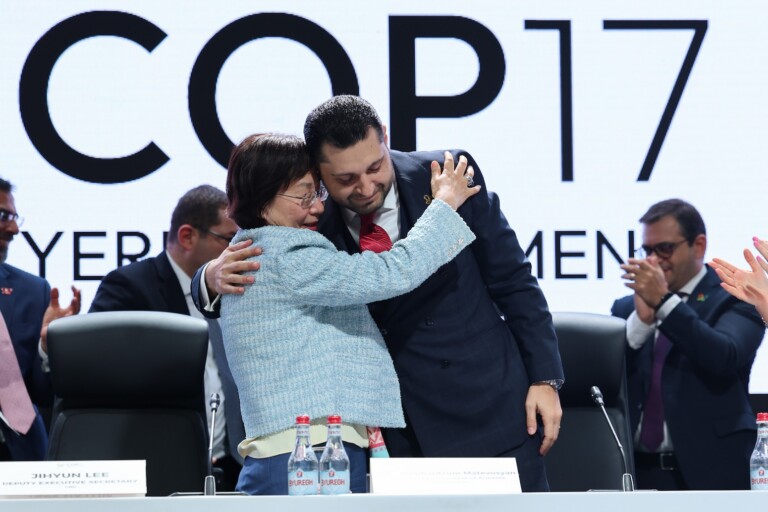
Following this year’s UN COP17 biodiversity conference, Carbon Brief’s journalists hosted a livestream to explain what happened at the summit.
Carbon Brief’s Orla Dwyer and Aruna Chandrasekhar have been on the ground in Yerevan, Armenia, over the past two weeks, covering the negotiations.
They were joined on the livestream by associate editors Dr Giuliana Viglione and Daisy Dunne, who were following the talks from Washington DC and London, respectively.
Carbon Brief has also published its 10,000-word explainer of COP17, which lays out the key outcomes in detail.

Membership
Support award-winning climate journalism
Orla and Aruna kicked off the livestream by explaining the biggest issues at the event, including biodiversity finance and the first “global review” of progress towards reversing nature loss.
The four journalists then took live questions from the audience in an “ask me anything” format, covering issues such as “nature-harming subsidies”, marine biodiversity and the status of the Cali fund, which is meant to raise private-sector finance.
A recording of the webinar (below) is now available to watch on YouTube.

The post CB Live: Carbon Brief’s team at COP17 on the nature talks’ key outcomes appeared first on Carbon Brief.
CB Live: Carbon Brief’s team at COP17 on the nature talks’ key outcomes

Climate Change
Woodside adds geotechnical surveys in endangered whale foraging area to risky Scott Reef drilling plans
SYDNEY, Wednesday 4 November 2026 — In response to Woodside recently submitting geotechnical survey plans at Scott Reef to the National Offshore Petroleum Safety and Environmental Management Authority (NOPSEMA), the following comments can be attributed to Hannah Schuch, Senior Campaigner at Greenpeace Australia Pacific:
“‘Geotechnical survey’ is a vague term for high-volume subsea blasting, and Woodside wants to do this in significant foraging habitat for endangered pygmy blue whales, and within metres of vulnerable turtle nesting grounds at magnificent Scott Reef – it’s ludicrous.
“This plan from Woodside piles on the existing harms that could come from its reckless plans to drill for gas at Scott Reef, which WA’s environmental watchdog deemed ‘serious, significant and irreversible’ in a letter to Woodside that was published just last week.
“Pygmy blue whales rely on Scott Reef as a feeding area on their migrations up and down the WA coast. Scott Reef is the last foraging ground for this endangered species before Perth, thousands of kilometres south.
“Industrial activity at Scott Reef, like drilling or blasting, could force whales away from vital habitats and off their migration pathways and, according to independent expert analyses, have deadly consequences for pygmy blue whales and green turtles – it is a completely unacceptable plan and should not be allowed to go ahead.
“The risks to marine life from Woodside’s reckless nature and climate-wrecking plans at Scott Reef are overwhelming. The Federal Environment Minister has an opportunity to define Australia’s record on nature protection by saving Scott Reef once and for all.”
-ENDS-
Media contact
Emma Sangalli on 0431 513 465 or emma.sangalli@greenpeace.org
High res images and footage of Scott Reef can be found here
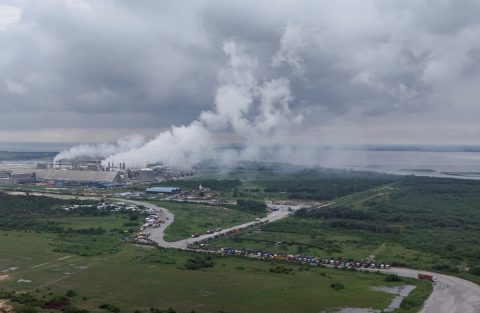
Brazil’s COP30 presidency has unveiled a much-anticipated plan to halt forest loss around the world, saying a global target to end deforestation by 2030 remains within reach using existing national and international tools, but requires more finance behind it and everyone to go “faster and further”.
COP30 President André Corrêa do Lago told a press conference to launch the new roadmap in Brasilia that, while some countries pushed back against a global blueprint, it was developed as a way to inspire governments, business and civil society to focus on meeting commitments to protect forests.
“It’s all processes that already exist. All instruments that already exist. That’s one of the best conclusions: everyone can start acting today,” do Lago said.
The voluntary deforestation roadmap, along with another on transitioning away from fossil fuels, was promised by Brazil in the final hours of last year’s COP30 in the Amazon city of Belém after countries could not agree to include it in the formal Mutirão outcome.
Do Lago reiterated on Tuesday that the roadmap is not an official UN document, but rather a guide to implement targets already agreed three years ago at COP28 in Dubai, when countries took stock of national climate policies and agreed to halt and reverse forest loss by 2030.
Last year, global deforestation declined by 15% – the largest drop in recent years, achieved in large part thanks to Brazil’s tougher enforcement against illegal expansion of cattle-ranching – but countries remain far off track for the drop needed to achieve the COP28 target.
Former Brazilian environment minister Marina Silva, a close ally of newly re-elected President Lula da Silva and one of the main advocates of the roadmap, celebrated its launch and described it as “not a new path but a new way of walking” towards the global goal.
-
Africa launches long-delayed energy bank to finance fossil fuel projects
The Africa Energy Bank’s main aim is financing oil and gas projects, underscoring support among many African governments for continued fossil fuel development -
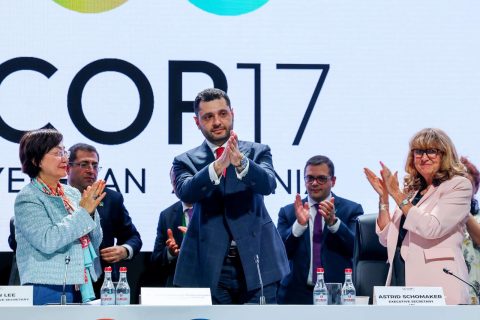
COP17 delivers fragile deal to boost conservation and funding for nature
After a two-week stalemate, countries agreed to invite wealthy emerging economies like China to assume donor status and help fund biodiversity protection as finance falls short -
Canada, EU agree deeper cooperation on energy and cleantech supply chains
Both sides have pledged to strengthen investment and trade cooperation to make cleantech supply chains more resilient to shocks

What’s included in the roadmap?
The roadmap compiles a menu of policies to reverse deforestation and restore the world’s forests at both the national and international level, informed by more than 180 contributions from governments, civil society, the private sector and others. It focuses on ways countries can ramp up forest conservation, sustainable management and restoration, while tackling deforestation and forest degradation.
At the country level, it urges each government to follow a four-point plan, starting with identifying the drivers of deforestation in its territory, adjusting existing policies such as climate and biodiversity plans to address those drivers, setting targets according to available resources, and then implementing measures to reach them.
At the international level, it urges countries to co-operate on diverting trade-related incentives away from forest-destructive activities, and to strengthen prosecution of cross-border environmental crimes at the UN Convention against Transnational Organised Crime (UNTOC). It also calls for collaboration on forest monitoring platforms and developing unified indicators for tracking progress.
The document also identifies the next UN Global Stocktake of climate policies in 2028 as a key milestone when countries will have a last chance to review forest policies before the end of the decade.
Do Lago said some countries might want the roadmap to become a contribution to the next stocktake, adding that this document is “the first contribution for that discussion”, which will start at COP31 in Antalya and continue until COP33.

Finance boost needed
To achieve the 2030 global target, the roadmap also says a major scale-up of financial resources will be required. The UN estimates that $84.5 billion was channelled into forest protection in 2023, which will need to increase to more than $300 billion a year by 2030. Nearly 90% of finance going to forests comes from domestic government budgets in developing countries, rather than international aid or private-sector investment.
The roadmap suggests that, since countries are already paying to look after their forests, they can act in two main ways: diverting domestic support away from nature-damaging activities, and building demand for “verified forest outcomes” such as paying to keep forests standing or creating forest-positive subsidies.
In the case of international finance, the document identifies several initiatives seeking to channel new public and private funds towards forest protection, including paying for carbon sinks – known as REDD+ in technical jargon – as well as through the newly established Paris Agreement carbon market.
The roadmap also singles out recent efforts to shift more private finance into solutions for nature, such as the Brazil-led Tropical Forest Forever Facility (TFFF) launched last year in Belém.
“The great challenge is not new policies, but scalability and acceleration to arrive at 2030 as promised, having ramped up efforts to end deforestation and forest degradation,” COP30 CEO and veteran climate diplomat Ana Toni said at the press conference.
Timeline requires quick implementation
Damian Fleming, senior director for forests at green group WWF International, said the roadmap “gets many of the fundamentals right” including on governance, regulatory and legal enforcement, community rights, finance, and the need to tackle degradation as well as deforestation.
However, he added that “the challenge now is speed” with 2030 just a few years away. “Countries need to use [the roadmap] to turbocharge action for results on the ground,” he said, urging governments to pursue deforestation-free supply chains and respect the rights of Indigenous peoples.
Anders Haug Larsen, director of international advocacy at the Rainforest Foundation Norway, highlighted the wide range of partners that can drive the anti-deforestation plan forward, adding he hoped that rainforest nations would now step up to champion it.
“Tropical forests are too important for fragmented approaches,” he said. “The roadmap can help bring together governments, Indigenous Peoples, investors and existing initiatives behind a common goal: ending deforestation and keeping forests standing.”
Natalie Unterstell, founder of the Talanoa Institute, a Brazilian climate think-tank, said the roadmap builds on Brazil’s “successful experience” of reducing deforestation, which has dropped to a record-low level, going beyond a simple focus on law enforcement but also identifying business and finance opportunities that bring positive results.
“The next step is for other governments and incoming COP presidencies to take ownership of this agenda, turn the proposed pathways into co-ordinated action, and use the 2028 Global Stocktake to assess collective progress. With only four years left, the roadmap needs a coalition of countries committed to delivering it,” she told Climate Home News.
The post COP30 roadmap says faster use of existing tools can halt forest loss by 2030 appeared first on Climate Home News.
COP30 roadmap says faster use of existing tools can halt forest loss by 2030
Brazil has proposed a voluntary timetable to speed up the world’s transition away from fossil fuels (TAFF), fulfilling the promise it made to draw up the first global roadmap at last year’s UN climate summit in Belém.
Through a “TAFF Mutirão”, named after the Indigenous Brazilian term for collective effort, the COP30 presidency sets out three stages for cutting the world’s reliance on oil, gas and coal up to 2033.
Countries are first encouraged to draw up national transition plans by 2028 in time to feed into the next global stocktake, the UN’s five-yearly review of progress on climate action. During the same period, Brazil’s blueprint suggests governments could take early steps such as reforming fossil fuel subsidies or stopping methane leaks at oil and gas sites.
-
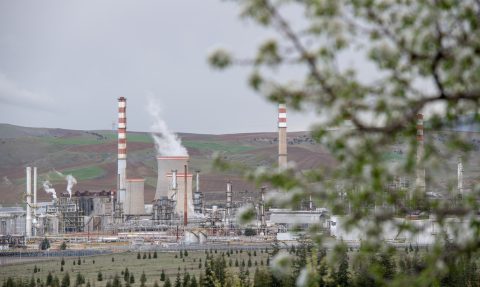
Turkish giant sponsoring COP31 cut climate goals then cashed in on oil boom
COP31 sponsors should be screened for “climate integrity”. Yet Koç Holding has become a top partner while its oil refiner runs flat out and its climate targets slip -
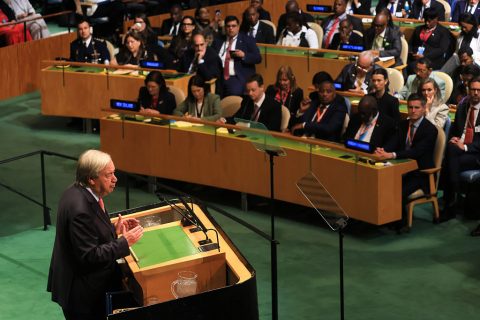
UN chief urges countries to adopt fossil fuel transition plans with timelines
In his last speech to the UN General Assembly, António Guterres for the first time called on every nation to deliver a plan to phase out coal, oil and gas while protecting workers -
European, island states seek clear future for global roadmap to cut fossil fuels
Some European, small island and other nations argue the forthcoming roadmap should be part of UN climate talks, while Russia has resisted this idea

In 2029 and 2030, Brazil sees the focus shifting to building an alternative energy system, by prioritising clean power, electric transport and heating, more efficient energy use and by rolling out the power grids and batteries that support them.
Only in the final stage, from 2031 to 2033, does the roadma