

At India’s ocean technology institute in Chennai, scientists have been developing a range of hi-tech mining equipment that can operate 5 or 6 kilometres underwater – from a remote-control submarine to a seabed soil tester and slurry pump.
Their task: to ensure that India is ready if deep-sea mining takes off by building the technology and knowledge about how – and where – critical minerals can be extracted from the depths of the ocean, even as dozens of nations call for a moratorium on this activity.
After a series of successful deep-water equipment tests in recent years, government officials say big strides have been made.
“(India) has made significant progress in building the scientific and technological foundations for deep-sea mining,” a spokesperson for the Ministry of Earth Sciences, which oversees the institute, told Climate Home News.
Deep-sea ambitions
Highlighting the country’s ambitions, it signed a second contract last year with the International Seabed Authority (ISA), the UN body that regulates the deep ocean floor, to explore polymetallic sulphides, which contain minerals such as copper and zinc – key ingredients in clean energy technologies such as wind turbines and storage batteries.
Besides the two polymetallic sulphide contracts, it holds an ISA exploration contract for polymetallic nodules in the Central Indian Ocean Basin. China and South Korea are the only other countries with three ISA exploration contracts directly under government control.
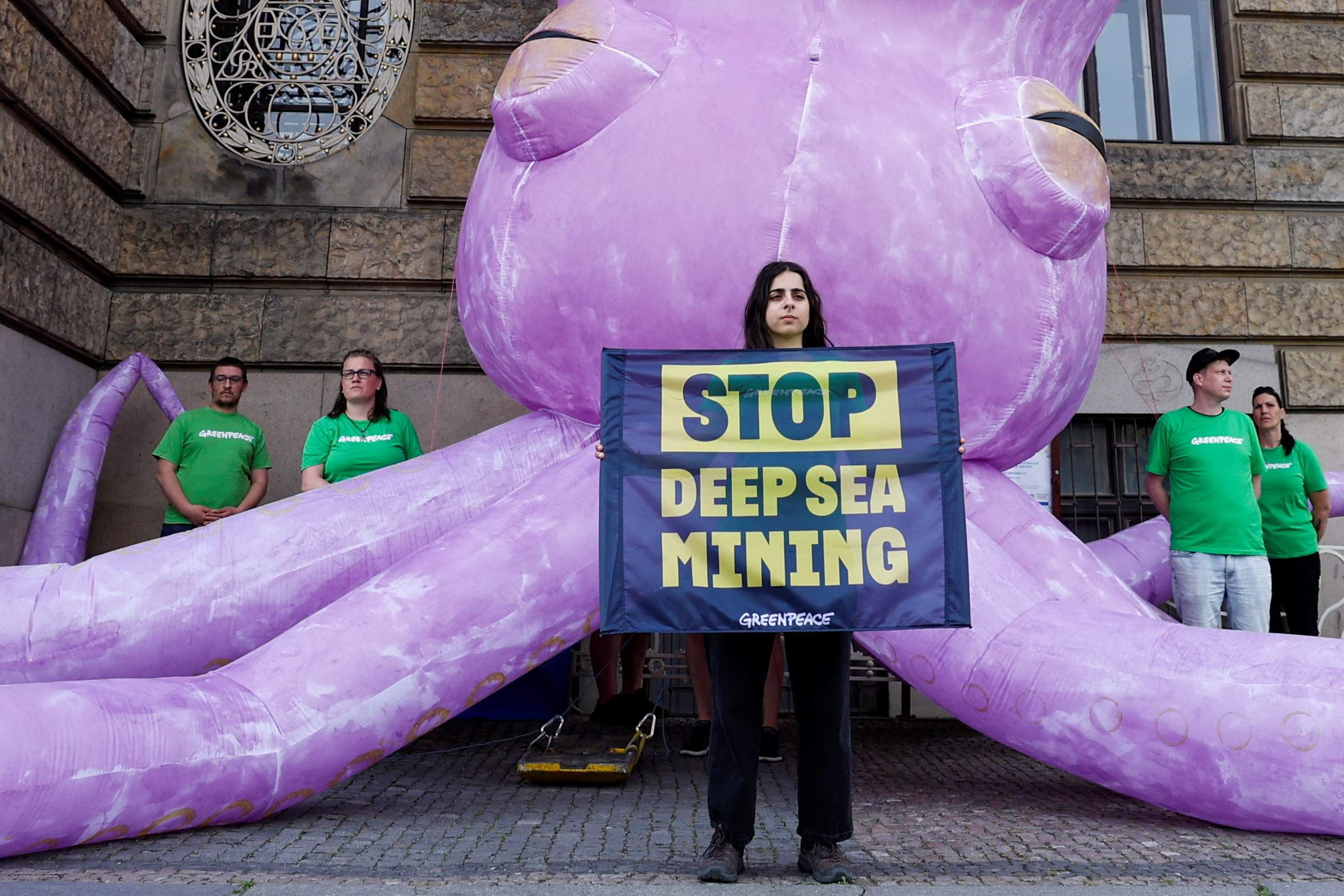
Yet deep-sea mining is controversial for its potential impacts on the ocean floor, a little-studied, undisturbed ecosystem that should be protected by a precautionary pause on the activity, marine scientists say.
A coalition of 46 countries is pushing for a moratorium on deep-sea mining, until enough scientific evidence shows the ecosystem impacts can be reduced.
Despite this push, ISA contract-holders are still racing to develop the technical capabilities to mine the ocean floor, betting that commercial-scale operations will eventually be permitted and prove economically viable. India, an emerging clean-tech powerhouse, does not want to fall behind competitors, government officials told Climate Home News.
-
Race to host High Seas Treaty HQ heats up as Chile reaffirms bid
Chile’s ocean protection record and concerns over a rival Chinese bid keep it in play, despite questions over the Kast government’s environmental policies -
As marine heat breaks records, countries seek ocean roadmap at COP31
Africa and the EU are leading a push for COP31 to deliver a roadmap that lays out measures to protect fast-warming oceans -
Governments weigh response to US going alone on deep-sea mining
At annual talks in Kingston, the International Seabed Authority (ISA) launched legal processes to challenge a unilateral US push for deep-sea mining

Since India obtained its first ISA exploration contract more than two decades ago, extensive survey work has been undertaken in the 75,000-square-km contract area in the Central Indian Ocean Basin, which is estimated to hold hundreds of millions of tonnes of polymetallic nodule resources, according to the Indian government.
More recently, survey work has identified several potential locations in the polymetallic sulphide areas.
The seabed survey work and the deep-sea mining tools being developed in Chennai put India among only a small group of countries to have made such progress. China is another leader in mapping the ocean floor for potential mineral resources that could one day be extracted.
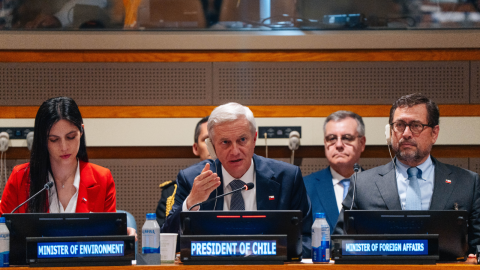
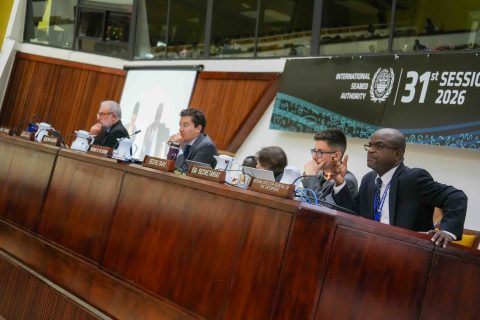
At a meeting in Jamaica in July, the ISA continued negotiations on rules for commercial deep-sea mining but failed to adopt the Mining Code. Delegates agreed that further work had to be carried out to resolve outstanding issues, with the ISA tasked with devising a roadmap towards hopeful adoption.
Technical and regulatory hurdles
Even if a regulatory framework is established, commercial development remains a distant prospect in the exploration contract areas awarded to India by the ISA, government officials and experts say.
“There is still quite a distance to be covered to convert the resource to reserves,” the ministry spokesperson said.
Pradeep Singh, an ocean governance expert at the Oceano Azul Foundation, a Portugal-based international nonprofit, described India’s deep-sea mining programme as being firmly in “an exploratory phase”.
“There is still a lot more work left to be done in order to achieve sustained extraction technology, address operational hurdles (such as shipboard processing and trans-shipment), and develop onshore refining,” Singh told Climate Home News.
“It would also appear, from publicly available information, that none of the programmes will be ready to move into the exploitation phase anytime soon,” Singh added.
Deep-sea real estate
Instead, the government’s longer-term vision for India’s ISA contracts is centred on “a combination of mineral/resource security, indigenous technology development, scientific capability and eventual industrial readiness”, the ministry spokesperson said.
But for as long as deep-sea mining remains commercially unviable, Singh said securing exploratory licences may be more about “real estate and as a projection of dominance”.
“The competition at the moment – if any – is more about investing in deep-sea operational capabilities rather than mineral resource extraction itself (which is currently not competitive),” Singh said.
Threat to ocean biodiversity
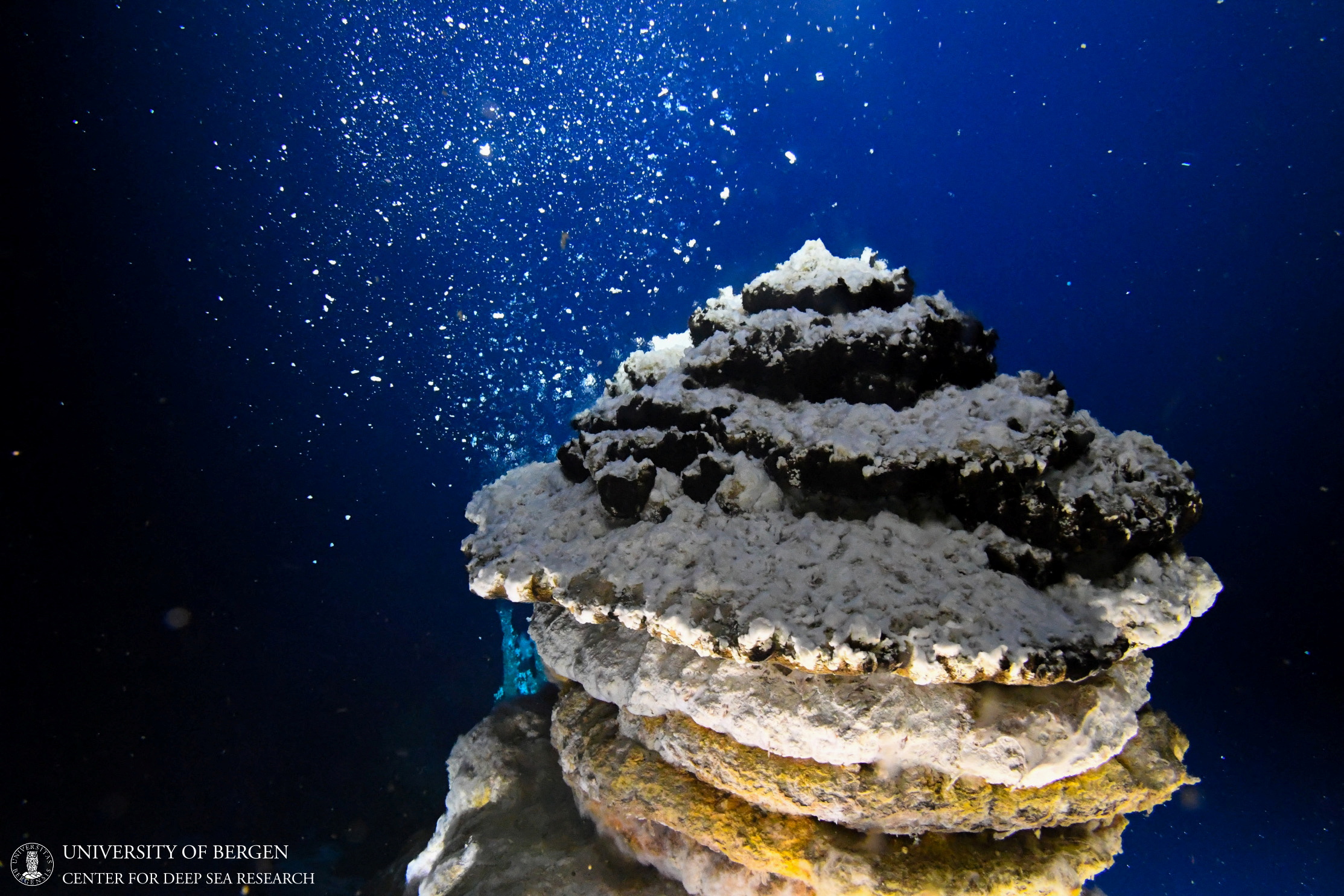
In tandem with India’s deep-sea mineral survey work, years of research by government environmental scientist Dr. Rengaiyan Periasamy on Indian Ocean ridges highlight the risks that future deep-sea mining poses to ocean biodiversity.
“Our studies have led to the discovery of more than 10 new species,” Periasamy told Climate Home News from the Kochi-based Centre for Marine Living Resources & Ecology, which also operates under the Ministry of Earth Sciences.
They warn that deep-sea mining could cause habitat destruction, persistent sediment plumes and disruption of ecosystem processes throughout the water column, with potentially irreversible impacts occurring before many species and ecosystems are fully understood.

Major fisheries could also be severely impacted, according to campaigners.
“No country has conducted enough scientific research to capture the full scope of environmental impacts of deep-sea mining,” said a spokesperson for the Deep-Sea Conservation Coalition, an international environmental advocacy group focused on protecting deep-ocean ecosystems.
“We know more about the surface of the moon than we do about any deep-sea environment,” the spokesperson added.
The post India builds deep-sea capacity in bet on critical minerals future appeared first on Climate Home News.
India builds deep-sea capacity in bet on critical minerals future

Dan Ioschpe is the Climate High-Level Champion for COP30.
A year ago at COP30 in Belém, we said this would be the decade of implementation for climate action. Simply put, implementation is the fastest way to promote sustainable socio-economic development. But implementation is not about words. It is about action, on the ground, at speed and scale.
COP31 in Antalya demonstrated why the implementation of the Paris Agreement must extend well beyond the two weeks of a climate conference. Despite political divisions, businesses, investors, governments, cities and communities came with results and remained committed to scaling climate action, showing that the real economy does not wait.
That is why continuity matters. In Belém, the Global Climate Action Agenda was given a new structure, with six thematic axes, and Plans to Accelerate Solutions (PAS). Because that structure carries work from one COP to the next, progress can compound. And progress is now something we can measure.
This year’s Yearbook of Global Climate Action shows that 87% of PAS reported progress, while 38% of the 40 with quantitative targets are on track or ahead of their goals. It highlights where the gaps remain.
Grids stretching halfway around the world
The strongest signal from Antalya came from electrification. The Electrification Delivery Package brings together more than 200 actions from over 180 organisations, involving over 150 countries plus the European Union – together over two-thirds of global GDP – and more than 260 businesses with over $4 trillion in annual revenue.
The results are already visible on the ground. Members of the Utilities for Net Zero Alliance built more than 21,000 kilometres of grid in 2025, up from 14,000 km the year before – enough to stretch halfway around the world. From grids, storage and renewable power to energy access, the foundations of a modern, interconnected system are coming together at speed and scale.
-
Australia and South Korea’s clean energy deal could boost low-carbon trade
The deal aims to connect Australia’s renewable resources with Korean industries’ clean energy demand, potentially transforming a relationship built on coal and gas -
After COP31, our chance to save climate diplomacy lies in global shipping
If COP31’s high ambition countries can show the same resolve at London shipping talks, a climate breakthrough is possible next week

The Global Climate Action Agenda is helping connect these investments and shift from individual solutions to economy-wide transformation. Electrification is simply the fastest way to foster sustainable socioeconomic development – efficiently, affordably, and securely.
On transport, 13 zero-emission freight corridors are now in development across six continents, covering more than 29,000 km of roads. That is already ahead of the Global Green Road Corridors Initiative’s goal of ten corridors by 2026.
Sustainable aviation fuel starts to take off
Progress is also visible on sustainable aviation fuel (SAF), a solution approaching a positive tipping point. One in three new sustainable industry investment decisions this year was for SAF, a sign of how quickly the market is developing, including through an Action Agenda plan to decarbonise aviation.
Projects that have reached final investment decision represent around 7 million tonnes of SAF a year, or 3% of today’s jet fuel use. But the wider pipeline stands at 31 million tonnes – around 11% of the existing market. Once sustainable solutions capture 5-10% of an established market, growth can become self-reinforcing as costs fall, supply chains mature and investors gain confidence. Across heavy industry more broadly, 36 deep decarbonisation projects reached final investment decision this year – a record.

On nature, the Tropical Forest Forever Facility has reached $8.3 billion in commitments towards its $10-billion initial target, and the Global Fund for Coral Reefs announced $30 million in new reef financing across 22 developing countries.
With the launch of the Rio Synergies Group for Action, implementation will be at the centre of the three Rio Conventions on climate, biodiversity and land, and 17 governments are now backing the Intergovernmental Land Tenure Commitment to strengthen the rights of Indigenous Peoples and local communities.
On food and agriculture, solutions range from methane-reducing practices reaching more than 5,000 smallholders to food recovery initiatives now reaching 40.5 million people, cutting food waste and emissions at the same time. Some 66 million hectares are now under regenerative landscape projects.
Accelerator to support two solutions per year
Antalya also laid the groundwork for progress. Mandated by the Mutirão Decision in Belém, the Global Implementation Accelerator established its governance and operational framework at COP31. Each year, two solutions – one on mitigation and one on adaptation – will be selected for coordinated support, informed by independent expert assessment and mobilising the capabilities of a dedicated partner network.
The Accelerator builds on the Action Agenda, bringing governments, businesses, finance and technical expertise together to accelerate solutions with the potential to reach positive tipping points.
None of this happened by accident. It was possible because a structure is in place that allows progress to compound – connecting political guidelines with investments, infrastructure and sustainable socio-economic development.
This is the Global Climate Action Agenda at work: a multi-year engine for the implementation of the Paris Agreement, guided by a shared vision towards 2030. And I am optimistic about what comes next.
In Belém, we collectively revamped its structure and strengthened its foundations. In Antalya, we demonstrated the value of continuity. The opportunity now is to deepen its reach across regions, strengthening implementation on the ground with speed and scale.
From Antalya to Addis Ababa and beyond, the work continues 365 days a year, 24 hours a day.
The post Despite political divisions, COP31 showed the real economy does not wait appeared first on Climate Home News.
https://www.climatechangenews.com/2026/11/26/despite-political-divisions-cop31-showed-the-real-economy-does-not-wait/